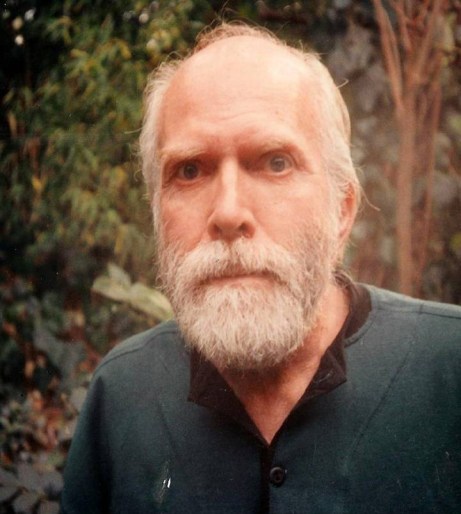
Robert Adams (1928-1997), who I think I can rightly call a devotee of Ramana Maharshi, taught in his later years in the USA. From what I’ve read of his teachings, they are incredibly similar to the verbal teachings of Ramana Maharshi, and also have a sense of openness, precision and clarity.
I’ve trawled through a few of his writings and put together some excerpts that I hope will be of benefit to the seeker of spiritual enlightenment. This is not meant to represent the complete scope of Robert Adam’s teachings, but just to highlight some key points that leapt out to me as I read through. I particularly concentrated on the role of thought in Robert Adam’s teachings.
I have bolded some phrases that seemed important to me and also interspersed some very brief comments in red. Again, I hope this is of benefit to you.
Firstly, some teachings about ‘no thoughts’, which will be expanded upon later on. In the initial quotes Robert says ‘no thoughts’, but in the later quotes he explains exactly what this means.
Sitting here quietly, peaceful, without thoughts then you are the unblemished Self. The ultimate reality, this is you right now. As soon as you start thinking about it, it goes away, it changes, it’s not you any longer, it’s your humanhood. So when I say to adore your Self I am referring to adoring yourself as God, as the ultimate reality which is really you. But if you think of yourself as a human being with problems who makes mistakes you cannot adore yourself at all. You condemn yourself you put yourself down.
Liberation means that you’re totally and completely free, without thoughts. There are no thoughts in the Self. If there were thoughts in the Self, it wouldn’t be the Self. For the Self is only one and all-pervading. When you become absorbed in the Self, it’s completely different than what you ever believed. It’s not explainable. But as far as you’re concerned, you become totally free, happy, peaceful. There is no longer anyone to argue with or become upset over. This is the Self.
It’s very simple, no thoughts and you’re free.
Now a bit about a method of creating a state in which there are no thoughts:
See what you’re doing now. You’re thinking. That spoils it. Learn to stay without thought. Even if for a few seconds. It’s hard isn’t it. This is the reason you have to ask yourself, “To whom do these thoughts come?” It’s only a modality to cause you to stop thinking. (slight pause)
Some of you are beginning to feel what I’m talking about. No thoughts. Nothing to remember. Nothing to do. When thoughts come to you about your affairs, about your predicament, realize that you have surrendered your affairs and your predicament to the Self and all is well.
In other words there should be no situation that appears strong enough to set you off. Feeling miserable or feeling too happy. No thing should have that power. It’s called the thoughtless state.
It’s really not that hard. Let go. Close your eyes, it’ll help. If you have to do something, observe your breath. But if you can’t, forget about your breath. After all, to whom does the breath come? To the body. Since there is no body there is no breath. Then what is? I-am. What is I-am? Silence. Open your heart, let go. There is no past, no future. No thing can ever harm you. You exist in eternity. Be still. The breath does not exist any longer. There never was a body.
There is only that. Silence.
Your job is to stop thinking. To remove the thoughts. The thoughts are your Master now. That make you feel sad or happy, good or bad. Why do you feel this way? For your thoughts since you were a little kid have been impressed by the world conditions, by your parents, by your school, by your church and they have convinced you and programmed you to believe this is good, this is bad, this is right, this is wrong. Only when you have this are you successful. If you don’t have certain things you are a failure. It is the thoughts that tell you these things. Again if there are no thoughts there is noone left to tell you anything. This is called liberation, moksha, freedom. You begin where you are now. You begin with yourself. You question yourself. You inquire, “Who am I?” You sit in the silence. If thoughts come you inquire, “To whom do they come? You become still.”
When the mind is quiet the thoughts subside. When there are no thoughts there is the self. So all these practices are really to quieten the mind, not for any other purpose. No matter what form of sadhana you’re practicing. Whether you’re a Jnana or bhakta or karmic yoga or anything else they’re really the same. All of these practices are simply to quieten the mind. To make the mind one pointed. When the mind becomes one pointed self-inquiry becomes very easy. Then the mind will disappear completely and you’ll be free.
And what about feelings?
Body sensations are the same as thoughts. As you keep inquiring, “Who am I?” And you stay in the space between the answer, between the question. Then the body thoughts become less and less and the thoughts become less and less, they’re the same thing. The feelings and the thoughts are nothing as you practice sel finquiry. You ask, “Who does this come to? It comes to me. I think this. Who am I?” And when you keep still your body sensations will slow down, as well as your thoughts. And soon there will be no body sensations, there will be no thoughts. There will be nothing. So body sensations are the same as thoughts. When one goes the other goes also. You cannot have body sensations without thoughts. There has to be a thought about a body sensation. So when the thoughts dissipate, the body sensations will also dissipate.
Is no-thoughts the same as self-realisation?
The no mind state is when you’ve come from practicing, to the place in the silence. Where there are no thoughts bothering you any longer. You get there through self inquiry. That is the fastest way. But that is not self-realization. Self-realization is when the mind is pulled into the spiritual heart…
…Liberation, moksha, self-realization is when the mind that’s left over in the silence is pulled completely into the spiritual heart. At that time your whole mind, the I dissolves completely and you are free.
So the no mind state is a very high state. It’s the state of bliss. But there is still somebody left to experience the bliss. When the bliss is pulled into the heart there is no one left to experience anything. Therefore you no longer say, “I’m in the no mind state.” At that time there is nothing to say. Can you understand that?
I’m scared. What will happen if I don’t think?
The thoughts and the ego are synonymous. As the thoughts slow down, the ego slows down, and begins to also disappear with the thoughts. When there are no thoughts, there’s no ego. When there’s no ego, there’s nobody left to think. Then the question you will ask is, “How do I function without thinking?” As I mentioned in the beginning, the sage’s thoughts are like a burnt rope. They appear to be real, but they’re not. In other words, your thoughts are not real. They are false. How do you function without thoughts? Very well, thank you.
Many of you still believe you have to have thoughts to function. You think you’ll become a vegetable, but you will be spontaneous without thoughts. You’ll be motivated by the Self. You will know what to do, where to go, whom to speak to, whom not to speak to, much better than you do now, much, much better. Things will happen to you spontaneously. Everything we always talk about is very paradoxical, and the paradox here is, even though you have no thoughts, you will still think about certain things. It has to be done. But there’s absolutely no thinker alive. There’s no thinker. There is no one left to think, yet you still appear to be thinking about certain things, so you can function. It’s similar to what we were discussing on Sunday. People always ask me, “What do you see? Do you see the world?” Of course I see the world. If I didn’t see the world, I wouldn’t be able to function. But I see the world as the Self. In other words, I see the world as images on reality, like in the movies, the images on the screen. I’m able to see the screen and the images at the same time. I see reality and I see the images. So it is with the thoughts, the same thing with the thoughts. You appear to be thinking, but you’re not thinking. This is a very important point to remember. You will think whatever you have to think about, but the thoughts will be dead, like the burnt rope, like the fan with the plug pulled out, but the blades are still spinning, until they stop.
But can we really stop our thoughts? It that actually possible?
Now really, no Sage on this earth or anywhere else really stops the thoughts. As long as you see a body, and you call that body the Sage, there will always be some sort of thinking in that body, some sort of thought. For instance I can be sitting here and I’ll say to myself “when I go home I’m going to eat a dish of ice-cream”. This is a thought. But what happens when I say it and what happens when you say it?
When I say it, when I think it, it is similar to a burned rope. A burned rope may appear to be strong, but when you pick it up, it turns to ashes. It’s burned. There’s nothing there. When you say it, it is like a real rope, not burned. You give it energy, you give it power. Again when the Sage thinks of something, it is like a fan that has been pulled out of the socket. It’s still turning, but there’s no power. The power is dead. The power has been cut off. In other words, the source of a Saint is dead. The source of the Sage has no power, no power whatsoever. This is why it is said, a Sage does not think. A Sage has no thoughts. What it really means is that the Sage’s thoughts are dead.
When the thoughts are dead, you live in ABSOLUTE REALITY. You live in PURE AWARENESS. When the thoughts are dead you live in SAT-CHIT-ANANDA, in NIRVANA. So what do you have to do to also cease thinking, so the thoughts can become dead? You simply do not attach yourself to the thoughts. By not attaching yourself to the thoughts, by not reacting to the thoughts, by not responding to the thoughts, they lose their power and begin to fade away. Yet do not give them any energy. Do not give them any power. Do not say to yourself, I have to stop my thoughts. Do nothing like this. Just slow down, slow down. Let the thoughts do what they may. Allow the thoughts to go their own way. Do nothing with your thoughts. Do not think about them. Do not fight them. And above all, do not try to stop them. You may think this is so difficult, but it’s not.
It’s like when you first wake up, before the thoughts come. You’re still drowsy from sleep. And when the first thoughts come to you, you hardly pay any attention to them. That’s the attitude to have.
A different approach to/clarification of the practice – no need to remove thoughts
It has come to my attention that many of you are trying to stop your thoughts, control your thoughts. You cannot really do this. Trying to stop your thoughts, as Ramana Maharshi says, is like a thief becoming a policeman to catch the thief. In other words, the thief that becomes the policeman will not catch the thief, because he is the thief himself.. And so it is with our minds. When we use the mind to stop the thoughts, the mind will not stop the thoughts at all, because the mind wants to go on living.
Stopping the thoughts is annihilating the mind, and the mind does not wish to be annihilated. The mind wants to live on to fill you full of nonsense, superstitions. Therefore we do not try to stop, the thoughts. What do we really do? We do absolutely nothing. There is really nothing you have to do to make the thoughts cease. Always remember when you do things according to the Sadhanas you’ve learned, the spiritual exercise you’ve practice, the meditations, the yoga. This will make you free for a couple of moments, and then the thoughts will come back to you with full force, knocking you over. You cannot stop the mind or control the mind with spiritual practice.
Again you cause the thoughts to cease by doing absolutely nothing. By being your SELF. And all the scriptures we read, unless the mind stops spinning there will be no realization, no liberation. Only when the mind stops, the thoughts cease to be, is there liberation. Yet we use the words “to stop the mind, to stop, the thoughts”. This is sort of a misnomer. For again you have to use the mind to stop the thoughts, and the mind does not want to do this. It does not wish to cease thinking.
Yet by ceasing to think, you do acquire unalloyed happiness, infinite peace, Divine Bliss. When the thoughts do stop, these verities come forward, and you become free. You do not have to watch the thoughts, analyze the thoughts, be the witness to the thoughts, or observe the thoughts in any way whatsoever. All of these symptoms simply make the mind stronger really.
Ignore the thoughts completely, totally, absolutely. Again, do not fight your thoughts. Ignoring your thoughts is not fighting your thoughts. Do not try to change your thoughts. Above all do not try to stop your thoughts.
What is the best way to deal with thoughts?
It makes no difference if the thoughts are good or bad, they’re both impostors. In reality there are no good thoughts, there are no bad thoughts. We’re not trying to replace bad thoughts for good thoughts. We’re trying to LEAVE THE THOUGHTS ALONE. Not to do a thing about them. I want to make this perfectly clear. This is the highest way to handle your thoughts.
Do not be in conflict with your thoughts and the self. When there is no conflict there are no thoughts. Thoughts only appear because there’s conflict. By conflict I mean, you’re worrying about getting rid of your thoughts, you’re doing sadhana, meditation, pranayamas, japa. All of these things cause conflict. For aren’t you saying, “I’m doing these things to become liberated. I’m doing these things to become free.”
The reason there’s a the conflict is because you’re already free and liberated. Therefore when you give yourself the information that you have to do something to become liberated, there is immediately conflict. This is the only problem you have. It is your conflict. And this conflict comes from programming when you were a child, from samskaras, from previous existence, things that you took with you, the habits that are inside of you, that you believe you are.
This is where the conflict comes from. For it tells you, “I’m just a human being, I’m just a frail body. I have to suffer sometimes, sometimes I have to be happy.” This is all a lie. There never was a you that has to suffer. There never was a you that has to be happy.
Thoughts are an optical illusion:
Do not analyze what I am saying. Do not even agree with what I’m saying. Just be open. Open your heart by remaining still, silent. Allow the thoughts to come, do try not to stop them. Do not judge your thoughts, analyze your thoughts, or try to change your thoughts, or try to remove your thoughts. This will put you back in conflict with your thoughts. Do not even observe your thoughts. Do not even be the witness to your thoughts. Why? Because in reality there are no thoughts. The thoughts that you think you’re thinking, are an optical illusion. It is false imagination. Don’t you see? Everything that you’re thinking about is false. There is no thinker and there are no thoughts. So why have you been practicing all these exercises all of your life? It’s like a person in the ocean going in search for water. Awaken. Be free. Be yourself.
I know it’s difficult for some of you to think that you have to do absolutely nothing to become free, because you’re already free.
No thoughts can liberate you
Just the idea of wanting to awaken is a mistake. Just the feeling that I want to become awake, I want to become self-realized, I want to be liberated, is a mistake, for it’s part of the thinking process, and the thinking process can never liberate you. There are no thoughts that can liberate you. There are no emotions or feelings that can liberate you, awaken you, make you free.
Question: So when you say don’t think, you don’t mean stop all your thoughts. You mean stop identifying with the thoughts that are occurring.
R: Yes. Thoughts come before the thinker comes on the picture.
Question : So is there any point where they stop, where the thoughts do stop?
R: The thoughts do stop, yes, and you just act spontaneously. But they appear like thoughts, but they are no longer thoughts. For instance if I think I’m getting up off this chair, the thought had to come to me spontaneously, but that’s the end. So I’m not really thinking about getting off the chair. I just did it.
Q: That’s like the end, the duration, is no longer present. The thought arose, died, there was no concern.
R: That’s right.
Q: There is no separation between the thought and the action.
R: Exactly. It’s all one.
Q: So really what happened is you lost all sense of division like there was separate thought entities. They come, they end, another one comes, it’s just like, right?
R: There’s no beginning and no end.
Q: So actually non-duality is the real thing, even with thoughts, and what appears to appear is the I or the one concerned with the thoughts, and that’s when duality surges up.
Does a Jnani have thoughts?
Question: Robert I have a problem with this thing about thoughts, ultimately thoughts are the manifestation of the Self. I don’t know if I’m wrong but, if that’s the case the thoughts are non-dual per se. Duality comes only when there is somebody who believes they’re the thinker. So thoughts per se like in the case of the Jnani, he has thoughts but there is nobody to think about? I mean that’s the way I see it.
R: The Self is self-contained and the Self really does not manifest thoughts to begin with. Thoughts are an illusion and like you say, the Jnani does have thoughts. But the thoughts of the Jnani can only goes this far and they stop. But they do not bring on any more karma, they do not disturb the Jnani at all. They have no value whatsoever to the Jnani. The thoughts come very lightly, very slowly, they come and they go, they come and they go. There is no permanent thought. But the thoughts do not come from the Self. The Self is the Self. They appear to come from the Self. Just like the world appears, the body appears, the thoughts appear.
Therefore when you follow the I like we said in the beginning and we realize the thoughts and the body is attached to the I, when the I goes everything else goes. Thoughts go and everything goes. So don’t try to really stop your thoughts, get rid of the I that thinks the thoughts. See the difference? Whenever I tell you stop thinking, I mean catch the I that thinks. Find the source of the I that thinks. And the thoughts will stop by themselves.
Question: Robert, in several traditions I see, I think they talk about realization it comes along with the elimination of thoughts. Is that true or is the thinker which is creating that and thoughts are still happening in the Jnani? Of course I believe that thoughts are happening in the Jnani it’s just that he doesn’t identify with them or he doesn’t think?
R: That’s true. They like bounce off. The thoughts come and disappear at the same time. They come and they’re gone, they come and they’re gone.
Q: That’s right, you don’t dwell on them do you?
R: Exactly.
Q: But the Jnani or the realized one doesn’t see them as factual things.
R: Indeed that’s right. No the thoughts are just return to nothing. They come and they melt. Like ice. They come and they melt and they go, and they come and they melt and they go.
Q: No clinging whatsoever?
R: No clinging, no attachment.
Q: So that’s what it means, elimination of thoughts?
R: Yes, you can say that.
Q: Because actually thoughts will always happen, within the nature of things while you are living in this world.
R: It’s not like the thoughts that the average person has. The thoughts that come to me. I realize that they’re not real. So I just look at them and they go away.
Q: So they acquire a new quality?
R: They’re a different quality of thought. But you’re right as long as there’s something present, some part of the body is still present, thoughts come, but they don’t come to me. They just pass through. Like empty mind.
Do thoughts even exist?
In reality there are no thoughts. There is no one trying to stop them. There is no liberation, there is no bondage. There is nothing. You’re using the same nothing to stop your thoughts. Do nothing. Because you are nothing. Nothing plus nothing makes nothing. Can you see why I tell you to do nothing now? Because you’re using your real nature when you do nothing. YOU are your SELF YOU are the ABSOLUTE REALITY when you are NOTHING. Consequently when you are doing something to stop your thoughts, you’re fooling yourself. Nothing will ever happen. Like I say, you will acquire a little peace, that’s it. But by slowing yourself down, saying nothing, hearing nothing, doing nothing, being nothing, your thoughts will stop completely, totally absolutely. And as I mentioned before, you will feel beautiful happiness, peace of mind, bliss, you’ll be free.
Consciousness has no thoughts. (SB: But if consciousness is all there is how can thought be outside of all there is.) Thought is not outside of all there is, thought is part of the ego, part of the non-existence. Thought does not really exist. It’s like the body that doesn’t really exist. And the world does not really exist. And the mind does not really exist. And karma does not really exist. So thought does not really exist.
Q: So the motion doesn’t really exist?
R: Motion doesn’t really exist.
Q: That is why it’s an illusion. It just appears pretty real.
R: An illusion does not really exist.
What about the doer?
Question: And the difference is between those thoughts which have a claim in it and those thoughts which do not.
R: Have a claim?
Q: Yeah, those claims that I’m doing something.
R: You have to realize, “I am not the doer.” And when those thoughts come, ask yourself, “To whom do they come?” And they’ll disappear. Is that what you mean?
Q: No, because you were talking about the thoughts of a Jnani that they had different thoughts and I would take it that those thoughts don’t have any claim of doing?
R: Oh I see what you mean, right. That’s right.
Q: And other thoughts have a claim of doing.
R: Yes.
Q: So there’s a difference between those which have a claim and those which don’t.
R: A Jnani has no attachment to his thoughts whatsoever. They mean nothing, they’re valueless.
Does the ‘illusion of life’ disappear when you are self-realised?
There’s only consciousness and whatever appears in consciousness is an image…Like still life and when you realize who you are, you realize that you are the consciousness and not the still life. And the still life becomes an illusion. But it’s still there. But you’re aware that it’s not reality. You realize that everything is non reality. But it exists as an image in the Self.
Like the images in the mirror. They appear to exist. But you can’t do anything with them, because if you try to grab them you grab the mirror not the image. Consciousness is the same way. When you try to grab anything, you find it’s illusory. It doesn’t exist. Only consciousness exists.
So you ask, what about everything in the room, it appears to be real. That’s part of the dream, it’s part of the illusion. When you have a dream, you dream that everything exists, the world exists, the universe exists, people exist and you’re going through all kinds of periods, problems and delusions, but then you wake up and it’s gone. So when you wake up you laugh, for you realize it has all been a dream and only the Self exists, and you are that.
Does consciousness even exist?
Q: But when you say that consciousness exists that’s looking at it from a relative point of view. In itself consciousness doesn’t have a feeling of I exist.
R: Of course, you’re right. But to explain it you have to use some words…There is no consciousness, there is no existence, there’s no Self. So let’s keep still then.
Final ‘thoughts’!
It is the I, or the thinker, or the knower who has to be eliminated. For in reality there is absolutely nothing to know. If you are all-pervading, omnipresent, omniscient, omnipotent, what else do you want? You’ve got everything. You are everything.
So when you try to know something, you’re making a grave mistake. This is a very important point. Remember this. In Advaita Vedanta, the knower is the last to go. What comes after the knower? Silence! There is nothing else.
The highest path of Jnana is no thinker left to think at all. Nobody is home. There is a total blank. There is no one around to do any thinking or preparing anything or trying to solve a problem or trying to do anything. At that stage you’re totally free.
You always have to think. Why do you have to think? You think you have to think, yet there is no thinker. You think you have to know, yet there is no knower. You think you have to be. There is no being. There just is, and you are that is-ness.



 Tom Das