Ramana Maharshi: Q. Is Hitler really a divine instrument in God’s hands? Why does Bhagavan wear no clothes? Occult powers, Milarepa | Aham Sphurana

The following is taken from Aham Sphurana 19th July 1936

A convivial, middle-aged Caucasian asked –
Questioner: I understand that according to Bhagavan, Reality refers to consciousness unsullied by thought.

Bhagavan Sri Ramana Maharshi: What you comprehend, or think you are able to apprehend, can never be Reality. That suble space in which this fleeting you, as you are now falsely imagining yourself to be, ceases to exist, so exposing the actual, permanent you lying underneath as true Being, is Reality.

Q.: It is said that this mountain Arunachala posseses a powerful spiritual energy. If I carry away rocks from the mountain back home, will the mountain’s power accompany me? From which portion of the Hill should rocks be gathered for maximum beneficious effect?

B.: Is there any use in going on rock-hunting expeditions? The contumacious [Tom: stubborn and disobedient] mind must be introverted and destroyed. That [regaining the natural state of Self] is the only worthwhile thing to do in life.

Q.: I am interested in experimenting with alternate forms of medicine. What is Bhagavan’s opinion on Hahnemann’s system of ‘Like-cures-like.’? How can diluting a substance make its effect upon the patient more potent?

B.: [no answer]

Q.: What is Bhagavan’s opinion on the present German Chancellor? Today morning I met a Brahmin in this place, who confidently asserts that he is a divine incarnation, or a servile instrument in God’s hands, meant to ruthlessly put down injustice wherever it occurs in the world, commencing from Germany. Is deployment of violence justified to root out injustice? Does not Mr. Gandhi advocate –

At that moment, an excited voice, in strained English, suddenly announced into the air from the back of the Hall –

‘I am convinced that Sri Hitler and Sri Bhagawan are in the same supreme state of Brahmajnana [Tom: Brahman-knowledge, ie. self-knowledge]. But perhaps Hitler may be a Brahma-rakshasha [Tom: an evil spirit arisen from a sinful or fallen Brahmin].Nevertheless he is also a Jnani, nothing inferior to that… Has not his deputy said, “Do not seek Hitler with the mind. It is through the Heart that you shall succeed in finding Him.”? Is this not Bhagawan’s teaching verbatim, when people question Him about finding God? Hitler may use violent methods because it is his ordained style of functioning. Nonetheless, He is an avatar. I know… Consider his inspiring words – “It is a necessity of human evolution that the individual should be imbued with the spirit of sacrifice in favour of the common weal, and that he should not be influenced by the morbid notions of those knaves who pretend to know better than Nature and who have the impudence to criticize her decrees.”, “The Strong is Mightiest Alone.”, “Man has become great through perpetual struggle. In perpetual peace his greatness must decline.”, “He who would live must fight. He who does not wish to fight in this world, where perpetual struggle is the only permanent law of life, has not the right to exist.”, “The sledgehammer of fate which strikes down the one so easily suddenly finds the counter-impact of Steel when it strikes at the other.”, and many more. Are these not the words of a Jnani? Is it not self-evident that it must be so? If Bhagavan will give permission I want to read out more, so that everyone can be benifitted by these holy words uttered by a great Jnani.’

There was no response from Bhagavan. The brahmin retreated into silence.

Q.: Yes, this is the man. What is to be made out of his outlandish claims? Is Herr Hitler really a divine instrument in God’s hands?

B.: நாம் எல்ேலாேம அவரால் ஆட்ைவக்கப்பட்ட ைகப்பாைவகள் தாேன. [All sentient beings are verily divine instruments in the hands of the Supreme Lord {Parameshwara}.]

Q.: Sri Bhagawan wears only underwear. I hear, whilst living in the Hill, He was totally nude. What is the philosophy behind it? Is it aversion to luxury? Will being nude help in Realising the Self?

B.: Mental nudity is the way to the Self.

Q.: And what is that?

B.: Mind denuded of vrittis.

Q.: What is a vritti?

B.: A strand of modification in and of pure consciousness.

Q.: Still, what is the reason Bhagavan won’t wear any clothes?

B.: Have you come all the way from the New World only to ask this question?

Q.: It is said that the Jnani never sleeps. Is it true? Do you never sleep?

B.: On the other hand, I am always asleep. I have permanently put myself to Eternal Sleep from which no waking could ever be possible.

Q.: Bhagavan is now talking to me. How can he be asleep? Is he talking in his sleep, then?

B.: Yes.

Q.: I am beginning to guess there is a hidden layer of meaning in all your answers…

B.: The Jnani’s mind is asleep in Brahman. It is awake to Brahman but unaware of anything else – rather, there is no ‘anything else’ for him, apart from Brahman, to be aware of. “I” am not talking to “you”; these [are appearances that] are inseperable from Brahman. Their substratum or vasthu [Tom: truth or reality] is Brahman only. There cannot be a not-Brahman. What IS, is only Brahman. What IS NOT, cannot BE. Thus the import of Sri Krishna’s wisely enunciated words: Nasatho vidyathey bhavo nabhavo vidyathey sathaha [Tom: ‘Of the unreal, there is no being; of the Real, there is no non-being…’ This is the first section of Bhagavad Gita verse 16.2]

Q.: The yogi smears his body all over with ash from the crematorium. What is the purpose?

B.: To remember: ‘One day I shall likewise be reduced into ash.’

Q.: Why keep on reflecting upon such a macabre truth?

B.: To get rid of the idea, ‘I am this body.’; so long as such an idea, or any other vritti, remains, Realisation cannot be had, even in dreams.

Q.: How, and why, did the Absolute Self or ‘the Brahman’ fall from his high state of Godhood, and become the mind?

B.: He never fell.

Q.: What then is to account for the existence of the mind?

B.: Its own ignorance.

Q.: How did that ignorance arise?

B.: On the false strength of the one who meaninglessly asserts, ‘I am ignorant.’.

Q.: If the assertion ‘I am ignorant.’ is wrong, all are then Jnanis.

B.: Quite so.

Q.: I am also a Jnani like Bhagavan, then? Am I not a mere mortal?

B.: In fact, all are only Jnanis – at least in my vision it is so. One who feels otherwise should ask himself, ‘Who is the one who admits the apparent truth of his own ignorance?’.

Q.: Back to Who-am-I? again, I see!

B.: It is the only useful thing to do.

Q.: What is the purport of this investigation? I mean – what does it aim to reach?

B.: Subjective awareness maintained without volition and without effort is the objective of Atma-vichara.

Q.: If everything is a dream, right now what is the position? I mean: Is Bhagavan appearing in my dream? Or am I appearing in Bhagavan’s dream?

B.: Bhagavan does not dream. He is the Real.

Q.: So it is I who have imagined the great Ramana Maharshi, thus bringing him into existence! How great I must be, to have created not only this whole cosmos, but also Ramana Maharshi himself!

B.: [laughs]

Q.: You see the – pardon me – the absurdity of your thesis that the world is a dream… ?

B.: The world of name and form is the merest of illusions. Only the substratum underlying it is Real and True. Only by right Experience can this be further understood.

Q.: Can you give me ‘the saktipada’? It is said to be transfer of psychic energy from master to pupil.

B.: Who is the master and who is the pupil? In whose point of view?

Q.: I humbly pray that my request be considered favourably.

B.: Catch hold of the “I-Current” and remain still. It will give you all you need.

Q.: How to discover this psychic current?

B.: Once all thoughts have subsided, a steady stream of subjective consciousness remains as the residue. Hold on to it without effort and without volition. It will lead you to the Goal invariably.

Q.: There is said to have lived a saint called ‘Sadasiva Brahmendral’ in South India. He is said to have bodily manifested at the same measured time, at various different locations, perfectly simultaneously! Further, according to the same legend or story, once for some reason the King of the land became furious with him and ordered that his arms be chopped off. This was done.

The saint merely picked up the severed arms with his mouth, and holding them by the skin, betwixt his rows of teeth, demurely walked away from the place, blood trailing along in his wake. Even the slightest twitch of pain could not be observed in him. The king then begged for forgiveness. The saint said nothing; he seemed to be unaware of his environment; he would not even care to look at anyone. Just then, a beetle was about to drown in the pool of blood lying on the ground. Moved by compassion for the hapless creature, the saint dropped his severed arms from his mouth; instead of falling on the ground, the arms magically attached themselves in their original positions, and functioned normally! The saint rescued the beetle, which everyone else noticed only now, and went his way as if nothing at all had happened. What are we to make out of this story? Many otherwise normal people seem to believe in it!

B.: The world is under no obligation to produce forth only those events which lie within the horizon of your ability to comprehend.

Q.: So the supernatural… is real?

B.: Only as real as you are – you as the body or mind.

Q.: If I also try to get occult or thaumaturgic powers such as reading others’ thoughts, moving physical objects using the mind, manifesting objects and making them vanish, predicting the future, spontaneously coming to know of events happening far away, transmutation of base metals into gold, etc., will they carry me towards or away from Realisation of the Brahman?

B.: The latter.

Q.: Why so – may I know?

B.: Because the powers are exercised using the mind. Patanjali himself says, Bahirakalpita vrittir mahavideha tataha prakashavaranakshayaha [Tom: The ‘great bodiless state’ is a state of ‘mind’ that functions outside the body and is unimagined. From this, the covering of the light is destroyed.]. From this it is obvious that the Atman will never reveal itself unless and until one has transcended the mind in its entireity. Whilst I was living in Virupaksha-cave, in 1902 or 1903, a man came who showed me many tricks of the sort you mention. Then he drove Palanisamy out, and showed me his crowing act. Do you know what this crowning act was?

Q.: I am eager to hear it.

B.: [in English] He slanted his body. The lower jaw remained on the neck. The rest of his head rolled off. I picked it up and parted the hair in a neat manner. The half-mouth in my hand, somehow produced the sound ‘Thank you!’ – in English. I smiled at it and fitted it back.

I and another in the Hall who could understand English were horrified; the American coolly said –

Q.: Oh! Really! Bhagavan is sure it was not a mere dream?

B.: [waving at the Hall] As much as all this is.

Q.: Will the omnipotent Bhagavan do the same trick himself now and show me, so that I am convinced?

B.: What you should be convinced about is this – such powers are worthless. They lead you away from peace. The illusionist, once his head was safely back on, wept and wept in front of me. He had learnt these tricks from an occultist by serving him like a dog for three decades; only now did he see the pointlessness, the futility and the evil repercussions of it all. Now he was tempted to perform these everywhere. As a result of the distraction, he was unable to find the time for genuine spiritual pursuits. His peace of mind was now totally extinct. He begged me to take the powers away. To that effect, I gesticulated him to circumambulate the Hill that very night. He replied that it was ammavasai that night, hence he would not be able to see his way. I signalled it was all the better that he be not guided by his perfidious senses, but rather by God’s grace. Thanking me, he went away. I never saw him thereafter. A few days later Palanisamy, it seems, chanced to meet him near the Sona theertham. He had followed my advice, and now was bereft of his psychic abilities. He sent his many thanks to me through Palanisamy. I never heard of him since. So, what is the observation? Even one with such advanced powers finds them a nuisance. Thus you should aim for Realisation and Realisation alone.

Q.: But it is all said to be pre-determined: ‘One shall be able to Realise only if destiny permits it.’ Who knows what she permits? I have heard that Bhagavan himself is not even a determinist, but an absolute fatalist. Am I right?

B.: Destiny cannot so much as cause a ripple upon the introverted mind. Let her do what she will with the body. You merge in the Self.

Q.: ‘Destiny is powerless to disturb the introverted mind.’ Very well. Now – has she the power to thwart a mind that is endeavouring to introvert itself? If yes, what is the use of engaging in spiritual practices?

B.: That power goes on diminishing the more and more the introversion becomes intense.

Q.: I will now frame the question in a slightly different way – If everything is predestined, are my thoughts also predestined?

B.: Do you choose to forsake the Self and think, or do you choose to inhere in the Heart? This is the only choice given to you at any given point in time. The only freedom given to you is to turn inward and drown yourself in the Heart. This is the one and only free-will allowed to man.

Q.: I find nowadays that my faculty of memory often gives me the slip. What is the remedy?

B.: Forgetting [also the fact of] your forgetfulness.

Q.: Is it true that for the south-Indian and Japanese people, Realisation comes easily relative to other cultures on the Earth, on account of conducive psychological constitution caused by appropriate upbringing?

B.: It may or may not be true. But can you help your place of birth? Can it be retroactively changed? Impossible. So, make the best out of the prevailing circumstances and try to direct the mind into the Heart here and now. All other pursuits are ultimately proved futile.

Q.: Am I under any moral obligation to Realise the Self? Is it my rightful duty? Or do I have a choice to remain an ignoramus, should I so please? Is it wrong morally not to Realise?

B.: If and once you practically understand the personal-self to be an illusion [or delusion], the inescapable obligation [to Realise] does devolve on you invariably and automatically.

Q.: The direct means to regain the Absolute – according to Bhagavan, it is the one and only ‘Who-am-I?’ investigation, is that not so?

B.: Yes.

Q.: Why so?

At this point, Bhagavan said something to an attendant, whereupon the latter extracted a heavy-looking volume from the book-case in the Hall. The book was handed to Bhagawan. He opened it once and it had opened onto the very page he had been aiming for; this curious knack I have already noticed many times in the master. He handed the open book to the interpreter, and gave him some instructions. Presently the interpreter read as follows –

The following are the words of the Tibetian Yogi Milarepa:

‘Oh! Ignorant mortal! When you run after your thoughts, you are verily a dog chasing a stick. Everytime a stick is thrown, you run after it. Instead be like a lion. The lion, rather than chasing the stick, turns to face the thrower. One only throws a stick at a lion once.

‘Oh! Ignorant mortal! Know this for certain – all worldly pursuits have but one unavoidable and inevitable end, and that is sorrow. Accquisition ends in dispersion, building in destruction, meetings in seperation, births in death, and so on. Knowing this, one should, from the very beginning, renounce accquisition, accumulation, and the like.

‘Oh! Ignorant mortal! How long will you go on dreaming, rotting in this odious marsh of births and deaths? Do you not want to taste the sweet, intoxicating nectar of immortality? For this, investigate your “I”. Do not entertain hopes or ambition for Realisation, but sincerely practise all your life.’

Q.: Are there pre-requisites or qualifications needed for one who wishes to follow this path of inquiry?

B.: Only one – complete absence of belief in the world as an objectively real, self-supporting, or continuous entity.
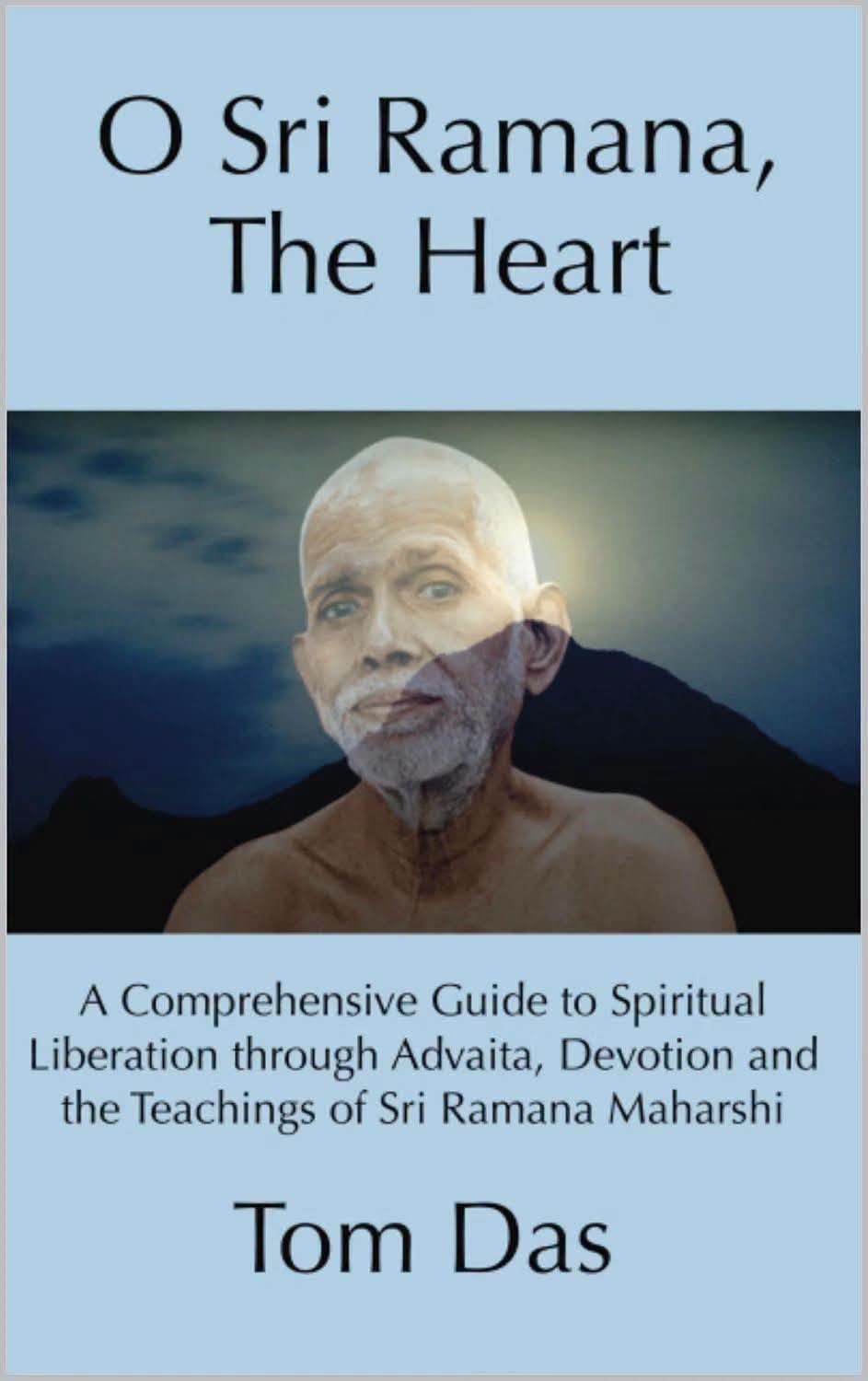
Sri Ramana Maharshi on the heavenly realm of Shambala and the secret of Mount Kailash | Aham Sphurana

The following is taken from Aham Sphurana 19th July 1936:

Sri Bhagavan [Ramana Maharshi] was given a sheet of paper filled with questions. He asked the interpreter to read them out:

1. The heavenly realm of Shambala is said to be located somewhere in Tibet. One who merely visits it once is said to be absorbed in Bliss forever. Is it so? Is it acceptable for ordinary mortals to aspire to locate and enter the place? Does the place actually exist, or is it a mere mythical construct? If it is there, how to find it, since the mountainous region is largely unchartered?

2. What is the secret of Mount Kailash? Does Lord Shiva really reside at the top of the peak?

3. It is said that if a sinner touches the mountain, he suddenly ages 2 decades in a span of 2 minutes. Is this true?

4. Is Mt. Kailash the axis mundi of the earth? Does it give access to the hidden realms of heaven that are frequently mentioned in the Hindu scriptures?

At this point, Bhagavan asked the interpreter to stop reading, and said to the young man who had presented the questions:

Bhagavan Sri Ramana Maharshi: Look here, I don’t know anything about such things.

Questioner: But B. is widely regarded as a Sarvagnar [Tom: ‘all knowing’ or omniscient].

B.: People foist on me whatever they like. What am I to do? The kingdom of Heaven you seek is within. It is to be found by turning the mind inward, not by journeying to all sorts of impossible places.

Q.: If all places are the same, why did Bhagavan leave Madurai and come to Tiruvannamalai?

B.: Always the same question! You want to go to all sorts of exotic locations. I did not [personally] desire to go anywhere; rather, I was pulled here.

Q.: The same fascination you have for Mount Arunachala, I have for Mount Kailash. What is wrong in it? Both are dwelling places of Shiva.

B.: Right. You may do as fancy pleases you. Why solicit my opinion?

Q.: It is difficult to reach the mountain. Not many have succeeded. I want Bhagavan’s blessings so that I may succeed in safely reaching there. If I once have darshan of the mountain, it will do. Even if I drop dead the next moment, it
matters nothing. Will Bhagavan please Bless my endeavour? I plan to start 2 weeks hence.

B.: [smiles]

Q.: Can I take it that Bhagavan’s blessings for my journey are descended upon me?

B.: Yes.

[Tom’s comments: what is it that we really need to know for liberation?]

Ramana Maharshi: If I am not the body, why do I feel physical pain? Aham Sphurana

The following is taken from Aham Sphurana 17th July 1936:

Questioner: Is it really true that I am not this body?

Bhagavan Sri Ramana Maharshi: Yes.

Q.: If so, when some damage is suffered by the body, why do I feel pain? If, say, a piece of burning coal falls on somebody near me, I do not feel anything, but that person alone feels the pain. Likewise if a thorn pricks my foot I alone feel the pain, but not the one walking by my side.

B.: Does the body cry out, saying, ‘I am feeling pain!’? You associate yourself with your body and speak of it as your “I”. The body is only in the mind. All pain apparently suffered by the body is as imaginary as the body itself. The body cannot know anything. It is insentient flesh and bone. Notions of pain spring from our own imagination only. Thus, in deep slumber, the mind being inactive, there is no pain.

Q.: Suppose I have a piece of metal wire in my hand. If I cut it into pieces, the metal cannot be aware that it is being cut, because it is insentient. Whereas, if a living body were to so much as be scratched, it explodes with agony. In what sense, therefore, does Bhagavan mean that the body is insentient?

B.: True the body experiences the physical stimulus of pain if it is injured, but why should that fact create a thought in the mind, “I am feeling pain”? Physical pain creates mental agony because of the following reason – the mind assumes itself to be the body and appropriates to itself the bodily identity, because in the absence of such false self-objectification it cannot survive or thrive. If the idea “I am the body” is abandoned, everything, including pain suffered by the body, is only Bliss.

Q.: But I am aware of the pain if the body is injured!

B.: When the body is injured, in the case of the unenlightened one, the following happens – his body feels the physical stimulus of pain, and his mind spontaneously manifests the thought, “I am injured”, causing him to become mentally agitated; the reason for the manifestation of such thought is the underlying erroneous idea “I am the body”. In one who is free from the mistaken idea of accepting the body for the Self, injury of the body causes no disturbance to his peace. Each one is indeed the Self, but absurdly confounds himself with the not-Self and so needlessly suffers on account of such dehatma-buddhi [Tom: the idea ‘I am the body’; deha = body; atma = self; buddhi = intellect or understanding or knowledge].

Q.: The question still remains – if, as postulated by Sri Bhagavan, the body is insentient, how can it and why does it feel pain at all?

B.: The word “pain” is employed because there is a prejudice in the mind against such stimuli. When the mind is dissolved in Pure Consciousness [Tom: ‘Pure Consciousness’ means consciousness devoid of arising phoenomena/objects], its prejudices also disappear. For the enlightened one, therefore, pain and pleasure are physical stimuli that stand on an equal footing. He does not covet the one and abhor the other; nor does he abhor the one and covet the other. Mind gone, there remains no yardstick by means of which one sensation is to be regarded as pain and another as pleasure.

Q.: Sri Bhagavan seriously means to say he is unable to tell the difference between the sensation that ensues when an insect bites his leg and the one that ensues when someone is massaging it?

B.: That they are different sensations is self-evident; that the one is abhorrent and the other agreeable is mere mental judgement from which the Jnani is quite free. He himself seeks out neither pain nor pleasure, but accepts what comes his way without resisting; in Jnana only automatic acceptance remains.

[Tom’s comments: we can see here that Bhagavan is answering on the level of dristi-sristi vada]

Q.: For Jnanis it is different; what of the common man?

B.: You also are a Jnani; only, you think otherwise!

Q.: How could that be?

B.: The option of turning inwards and quietly allowing the mind to plunge and dissolve in the Self is equally available for all. It is not the fiefdom of a select few. All are verily only the Self.

Q.: That does not satisfy me. I am unable to Realise it for myself.

B.: So long as worldly attachments are present the mind cannot be succesfully turned inwards.

Q.: How to eliminate worldly attchment?

B.: By turning the mind inwards.

Q.: Really!

B.: The more you hold on to the Self or retain the mind in its native state of subjective-awareness-sustained-effortlessly-and-volitionlessly, the more the mental tendancies and worldly attachments wither off; the lesser the mental tendancies and worldly attachments, the easier does become retention of the mind in its native state of subjective-awareness-sustained-effortlessly-and-volitionlessly. [Tom: like the phrase ‘Pure Consciousness’ used above, this ‘native state’, native referring to the birth-place or source, means consciousness of Pure Subjectivity only, devoid of any airisng phenomena/ appearances/ objects]

Q.: Which comes first?

B.: The sadhaka recognises and reflects upon the ephemeral nature of the objective world and the transient nature of his own body. He gets fed up with material pleasures, because they eventually lead only to sorrow, when their enjoyment becomes, for any reason, impossible. He asks himself if a more permanent experience of life might not be possible. Then he discovers the Ajata-advaita doctrine. Initially he is not convinced, and argues that if it were a dream there would be no possibility of corroboration, but that here his relatives and friends are able to confirm the evidence provided by his senses; he also asks why the same dream should be repeated everyday, were it all only a dream – according to him, here he sees the same sun, moon and earth everyday, whereas in his dreams he finds himself in new worlds moment to moment. Eventually it dawns upon him that everything he thinks he knows, including an understanding of the apparent permanency of the world he believes himself to live in, is only thought or imagination.

Then at the intellectual level he understands the truth – that the names and forms constituting the world are fictitious. This sparks a search for the substratum said to be underlying them, which alone is said to be Real by the wise. He hears the teaching that the source of the mind, Beingness, is the gateway to the Real Self. Then he begins the practice of quietening the mind by vichara or any other method, tackling various distractions as and when they arise, by withdrawing attention from them and fixing it on Beingness or the Self. The beginning is only becoming fed-up with the evanescent nature of the world and the fugacious attractions it has to offer.

Q.: The boubts Bhagavan mentioned – they are my doubts also. Why is everyone witnessing the same dream? The sun moon etc. are seen by all.

B.: In turn those ‘all’ are seen by you only. In deep slumber when there is no mind, nothing is available to be seen, but your existence is a constant.

Q.: Why do I dream the same dream everyday? For instance yesterday I came to the ashram and had darshan of Bhagawan; he was sitting on the same sofa in exactly the same manner. Today I am seeing Bhagawan and tomorrow also it is going to be the same Bhagawan.

B.: The future is a mere mental projection. The past is a mere memory. Have you not had dreams where the places you visit look extremely familiar?

Q.: At least is the present real?

B.: Anything seen cannot be Real. What is seen is not Pratyaksha [Tom: directly known]. It is not self-evident, because there is a subject-object relationship involved. It is merely sensory information that is fed into the mind by the strength of its own evil faculty of avidya-maya. That alone is Real which shines by its own light.

You are asking about the objects of the world. Can such objects exist without a YOU, a perceiver? When there is no perceiver, as in swoon or deep slumber, is there anything to be perceived? No. What is the inference? The objects owe the appearance of their apparent existence to you only. They are merely mental creations. The appearance of this enormous cosmos around you is merely… a mental information. The mind is fiction. Therefore the ‘objects’ manufactured by it are also fictitious. Have not the least doubt about it.

Q.: If everything is unreal, can we conclude that bondage and liberation are also unreal?

B.: Yes.

Q.: Then why should I try to obtain Liberation? Let me remain as I am.

B.: Exactly!

Q.: I do not understand.

B.: Remaining as you are is the loftiest Sadhana.

Q.: How can remaining in ignorance be sadhana?

B.: You think that you are in ignorance. When you do not think at all, what remains is only wisdom. Removal of the screen of thought is all that is required for Reality to be revealed. Since you want a sadhana by means of which you may reach this thought-free state, vichara is suggested. Actually there is no need for any sadhana for one who has mastered the art of remaining as he is – the art of Being. That is the import of the advice Summa Iru [Tom: ‘be still’ or ‘just be’]. People generally misunderstand it. It does not mean keeping the body idle. It means keeping the mind still or free from thought. Remain perpetually absorbed in the thought-free I-Current. This will automatically lead you to the Sahaja-stithi [Tom: Natural state] without requirement for further effort.

Q.: Is even desire for Liberation an obstacle to Liberation?

B.: Yes.

S>M>

Q.: Why has God created the world? I want to know why.

B.: Did God come and tell you that He has created the world?

Q.: I see creation around me. There must be some reason for creation.

B.: You say “I see.”; if you see that seer, all your doubts will be resolved.

Q.: I do not understand.

B.: Is there anything to be seen in sleep?

Q.: No.

B.: Continue to remain in the state where there is nothing to be seen.

Q.: Should I always be sleeping?

B.: Not seeing anything while remaining AWARE is Realisation. That is God and that is everything.

Q.: Awareness of what?

B.: Being.

O Bhagwan, Amidst your Eyes lie the Immortal Ocean – a Poem by Aman

The following is a poem written by Aman, an attendee at Satsang, and this is shared with their permission:

O Bhagwan,
Amidst your Eyes lie the Immortal Ocean,
The Self that I am,
Which revealed itself in the Luminous rays of Your eyes,
May the waves of Love drown me deeper,
May all objects dissolve,
Revealing You alone that is Real.

O Bhagwan,
Gently lying covered in loin cloth,
Which is like a single look from the Sun,
Revealing the Light of my Being;
All multiplicity begins to vanish,
And that Love alone remains.

The mind seeks constant experience,
Arrive and dwell in the Ocean that needs absolutely nothing.
Reveal me as The Absolute,
The pure existence that alone is Truth,
The pure consciousness that is the substratum,
Which reveals no objects existed,
The pure limitless fullness,
The nectar of infinite light.

O it is the splendour of Your sun
Which fills my being with its vastness,
Dissolving all trace of myself
Lost within this illumination,
The splendour of Bliss,
Revealing It alone exists

The cave of the Heart,
Dissolution of the I-thought,
Absolute Consciousness
All things become inert;
What seemed like a mirage,
Merely droplet of sweetness upon the tongue of limitless Nectar,
Nothing compares to Thee;
What appears other,
Merely the fancy of the mind,
The imagination’s finite copies dreaming

But who dreams?
Who sees objects?
And all at once
It starts to be only Bhagwan

Take me where
Nothing was created,
Nothing existed,
Nothing needed to happen,
Beyond time,
Beyond conception,
Do you feel this Serenity?

Infinite Love so fulfilled
And in Bliss;
Why would stirring, movement, or creation have to occur?
The Nectar of Peace,
The ocean that rests in tranquility,
The hum amidst the Silence.

Om Shanti Shanti Shanti Om

Om Namo Bhagavate Sri Arunuchala Ramanaya Om

Ramana Maharshi: How to rid oneself of the ‘I am the body’ idea? | Manonasa | Aham Sphurana

The following is taken from the text Aham Sphurana, 19th September 1936:

Questioner: In ‘Ulysses’ we find Mr. Joyce to have deployed the words, “And we stuffing food in one hole and out behind: food, chyle, blood, dung, earth, food: have to feed it like stoking an engine.” I am frequently beginning to think on such lines now-a-days. We feed and clothe the body; we find for it a warm shelter to live under. In return, what is our gain? The body keeps getting new diseases and fills us with agony and misery by putting us in pain. This is a traitorous body which returns evil for good. I don’t want it anymore. Is the body a gift from God? Is it a sin to refuse to remain in acceptance of it anymore?

Bhagavan Sri Ramana Maharshi: It is not so easy to get rid of the body. Physical annihilation of the body might remove it from this earthly realm, but again your mind will find another body for you. The body was manufactured only by the mind. There is only one way to kill the body: that is to kill the mind. Mind dead, not only does the body die, but also the whole of the cosmos. Our effort must therefore be directed toward killing the mind, not the body.

[Tom: Bhagavan is stating that it is the mind, also known as ego or ignorance, that ‘manufactures’ or creates/projects the body as well as the world and entire cosmos. If we merely kill the body, the mind will project a new body to inhabit, so samsara does not end. However, if we kill the mind, that is realise the self and thereby destroy ego/ignorance, then all that will remain is the worldless formless Self]

The body is not a gift from God inasmuch as God never asked you to take the form of the body – i.e., to imagine that you are one and identical with the body. You ask what is gained by holding on to the body. Who is it who says he is holding on to what he refers to as being his body? Discover the identity of that villain. Then you Realise that you never did have any body. The body has nothing to do with you.

You are bodiless always. Realise It. How? The same Mr. Joyce mentioned by you also writes, “…remember, my dear boys, that we have been sent into this world for one thing and for one thing alone: to do God’s holy will and to save our immortal souls. All else is worthless. One thing alone is needful, the salvation of one’s soul. What doth it profit a man to gain the whole world if he suffer the loss of his immortal soul? Ah, my dear boys, believe me there is nothing in this wretched world that can make up for such a loss.” If the soul is immortal how can it be lost? So, what is attempted to be communicated? The Immortal and Imperishable Soul is seemingly lost because of avarana [Tom: the veiling power of tamas]. That is the meaning. To tear asunder this veil of iniquity is the one and only relevant goal of one’s life.

Q.: And it can be accomplished by asking oneself, ‘Who am I?’?

B.: People who come here say, I practise the investigation ‘Who am I?’ for an hour each day, or for a few hours each day. What can we say to them? It is not a practice that is to be pursued a few hours each day. It is a fundamental change or shift in the direction in which one’s extroverted mind happens to incumbently be oriented. Relentlessly pursue the investigation day-in and dayout till the Self is Realised.

Q.: How can the investigation, which seeks to curb thought, be at all combined with activities that necessarily entail thinking?

B.: With persistent practise of the practice, activities – that you now think are being done by you – will automatically go on effortlessly. Your intervention will then be unnecessary – in fact, impedimentous. We are under the impression that we do things. What is the fact? It is the Higher Power that does everything. Is it the chiselled figures found at and forming part of the base of the Rajagopuram that bear the weight of the same? Is it not the earth that bears the entire load? Yet those sculpted figures have facial features that are wildly contorted with the evident strain of carrying the huge structure. It is a clever, artistic sham. Likewise here. The ego never does anything, but simply appropriates to itself credit for the body’s actions, which happen exclusively and spontaneously in accordance with Ishwara’s pre-destined script for it.

In other words, thoughts do not cause action to take place. Actions always go on only of their own accord: only we assign to them a spurious sense of personal doership or individual agency, and suffer thinking that free-will is real.

Q.: But actions follow thoughts. First I think and decide; then I act accordingly.

B.: That is just what is NOT true.

Q.: How so?

B.: The apparent causal-synchronicity between thought and action is a sham. That alone transpires which is destined to transpire. The preceding thought motivating the [body’s] action is not the result of free-will. Why? Because there is no such thing as free-will. How then is there cohesion between thought, which occurs first, and action, which occurs in subsequent concatenation? It is because the extroverted mind is also subject to destiny, just as the body’s actions are subject to destiny.

Q.: How cheerless to think that free-will is a myth…

B.: It cannot be denied that from the standpoint of the individual person free-will is indispensable. But where is the need to be an individual person when you can BE THAT?

Ramana Maharshi: Jnanis and Avatars – Aurobindo, Meher Baba, Krishna, Jesus, Buddha | Ask and ye shall receive Aham Sphurana

The following is taken from the text Aham Sphurana, 7th July 1936. Please see here to find out more about this text:

Questioner: Yes, some say Aurobindo is the Avatar of the age, while others say it is Meher Baba; still others say it was the late Sai Baba. Yet others maintain that Sri Krishna was the last Avatar in the Anthropomorphic form, before Kalki Avatar arrives at the time of Cosmic Dissolution. For others it is Buddha, Ramakrishna or Confucius. Will Bhagavan tell us in what way His experience of consciousness is superior to that of these, since, allegedly, they seem to be mere Avatars, and not Jnanis? And really who is the Avatar corresponding to this Era in Mankind’s history, a particularly tumultous one – Germany has announced her intention to rearm herself, an indication of the belligerent attitude of the National Socialist Government? Surely an Avatar is necessary from age to age to look after the world to ensure that mankind’s evil-doing collectively remains lesser than his acts of benignness? Jnanis do not act in the world, except to ensure the merest existence of the physical body, is that not so? So, where is the Avatar who is going to look after our poor mortal selves- and also the world?

Bhagavan Sri Ramana Maharshi: Experience of Consciousness, if genuine, naturally precludes ‘others’; thus there is nothing superior or inferior, because there is no second, no other, nothing foreign or alien to or apart from the One Immutable Absolute Self – so the question of comparison is, simply, nullity.

All True Masters are ONE, not because they identify themselves with something in common, but because commonly the faculty of identification [of one thing with another] does not exist in any of them. As for Avatars, each one sees an Avatarapurusha [Tom: purusha means person] according to his own mental convictions and predispositions – to establish the finality of one’s own viewpoint admist others will result only in fruitless skirmishes. You may continue to believe in whatever pleases your own fancy, but expecting corroboration from others for your weltanschauung [Tom: world view] of the universe will serve only to increase your sense of mental unrest and agitate the mind further.

Q.: So the idea of the Avatarapurusha, God-manifest/God-incarnate, who comes down from age to age, is just… a fallacy, only as good as a fairy-tale? Do not the Holy books of the various faiths speak of these blessed beings, whom we might worship – since manifestation makes available a form to worship – so that we might elevate ourselves to the zenith of spiritual perfection and purity, puissance and divinity? Jesus, Mahomet, Zoraster, Buddha – what about them? Specifically does not Krishna say, parithranaya sadhunam… etc.? How can these considerations be ignored?

B.: Your mental predilections and proclivities foist upon you the erronous idea that there is a God outside your Self, and that He sends down messengers to guide you and show you the way to reach Him. If you keep on journeying, you will never reach. Therefore, I say, enough searching – call off the search and be yourself, nothing more. The great masters – each in his own tongue, but each from the same Heart – yearned to give you this message only – BE YOUR SELF.

The Masters you mentioned, and others, each doubtless had – and has and continues to have always – his specific, special or unique role in man’s spiritual evolution, but the zenith spoken of by you will certainly not be reached by discussing the question, ‘How can all of these Mahanubhavars be right? On what points do they contradict themselves? Is it not our imminent task-on-hand to clear up these apparent contradictions and seeming mutual inconsistencies? Will that not endow us with special spiritual merit?’ Men waste entire lifetimes – fruitlessly – like this. This effort, if harnessed fully to keeping one’s Latchiyam [Tom: aim or target or goal] fixed entirely on Self or Reality, would have resulted in Mukthi long ago. Instead, countless lives have been frittered away on account of these wrong and foolish ideas about reaching Truth by using the Buddhi or the resoning faculty, when, in fact, precisely subsidence of that faculty results in revelation of Self or Reality. What a pity.

Q.: It is still not clear. The Avatara Purusha – is he just a mental concept like the gandharvas, rakshasas, bhutas, etc.? Has not this tangible world witnessed the advent of many such great men, Bhagavan himself not excluded?

B.: The trouble arises when we use their teachings to satisfy our intellectual palate and appetite. To the unwise, it does not occur to try and practise, instead of using it as a subject of discussion at gatherings of philosophers and metaphycists.

Therefore I say – Do not try to write essays on it. Do not try to present articles of great erudition on it. Do not try to gain followers for your newly discovered maxim or device-of-apotheosis or precept-of-ancient wisdom. Do not conceptualise it mentally and then, getting trapped in those very concepts, moan and complain that you ‘see no progress’. Do not go on discussing or talking about it. Do not tell yourself, ‘First I shall obtain intellectual mastery over the technique and subsequently shall begin the application thereof.’

Instead – plunge into the practice HERE and NOW; stick to the teachings of any one Mahanubhavar, and all will come right in the end.

Masters are there only to show you the way – man fogs the fulfilment of their purpose by merely theorising or intellectualising about their respective lives, advents and teachings, such as asking – Is this one or that one a Siddhapurusha, Muktha-purusha or an Avatara-purusha? Of course these are your mental concepts only. In fact, the Master, being not at all different from the formless Absolute seated in the tabernacle of the Sacred Heart of Man, is really synonymous with your own True Self – why seek him anywhere else?

Q.: For myself I am now convinced, but I am worried about the hopeless spiritual condition of the world, which seems to be enveloped in profuse darkness. When will all the people of the world wake up to the fact that they are living in the ghastly darkness of ignorance, and understand that the world around them is a dream, so that they can obtain genuine illumination? What about those unfortunate ignorant millions of the world, who have never met a genuine Sadhguru in their life? Supposing their prarabdha-karma dictates that they spend the entireity of their lives being relentlessly tossed around in the evil sea of avidya maya, as a result of the Guru’s accquaintance never coming to transpire- what then? For how many lifetimes more will their ordeal of ignorance have to last, and when at last would such unfortunate ones meet their Guru- so that through Him their redemption could be vouchsafed for certain? Such unfortunate persons, never having had the extreme good fortune of meeting B. during his blessed sojourn on this Earth, which, owing to his stay here has become itself a sanctified land, must needs count themselves exceedingly unlucky- what, therefore, would Bhagavan have them do? What can they do? What will be their fate?

B.: The fate of each one depends upon his merit. Take care of yourself and others can take care of themselves.

This answer was evidently not to the questioner’s liking. He seemed to toy with the idea of placing forth additional arguments before Bhagavan as to why mercy ought not to be showered in profusion upon the ‘ignorant’ masses of the world, until Chadwick pacified him with the following words:-

“Bhagawan has said that when longing for God or intensity of meditation has reached a feverish intensity/pitch, the Guru automatically manifests before the devotee.”

Even then, the man seemed about to say something, when the Hall’s attention was riveted by Bhagavan’s voice suddenly reading from Scripture the words of a Jewish Carpenter no less a genius in the realm of Spirit, the heartthrob of many a lonley, man-forsaken soul yearning for Divine acceptance –

“Ask, ye shall receive; Seek, ye shall find; Knock, it shall be opened unto thee.”

Ramana Maharshi on Aurobindo’s Intergral Yoga – bringing Divinity back down into the world after Self-Realisation | Aham Sphurana

The following is taken from the text Aham Sphurana, 7th July 1936. Please see here to find out more about this text:

Questioner: I am aware that Bhagavan is a solipsist. However, to dismiss all human problems as being imaginary requires a giant leap of faith towards the Idealism end of the spectrum.

Bhagavan Sri Ramana Maharshi: It merely needs disillusionment with materialism.

Q.: According to Sri Aurobindo’s claims, he has probed beyond the experience of the Vedic Rishis. What is Sri Bhagavan’s opinion? Is it authentic or not?

B.: Aurobindo’s talk of bringing down divine consciousness from above overlooks the same being already Self-effulgent in the Heart. Reality simply IS. Where arises the question of moving it from place to place, etc.? People keep asking me about Sri Aurobindo’s yoga system; and if I give my reply according to my capacity, they go away disgruntled saying, “These Jnanis are always contradicting each other.” What can I do?

Q.: What about Sri Aurobindo’s claim that one must commence from Self-Realisation and then proceed to bring down the Divine to the Earth?

B.: Let us first Realize and then discuss, if need be; not now.

[Tom’s comments: Sri Aurobindo’s view was that once the truth was realised, it should be ‘brought back down’ into the level of the world, in what he called Purna Yoga or Intergral Yoga. Sri Aurobindo rejected the notion of Shankara or Vedanta that the world was unreal or ‘maya’, stating that the world is a real expression of the divine, and that the purpose of spiritual teachings is not nirvana or escape from samsara, but instead to enrich and enliven the lives of people here in this world and help people live divine lives here on Earth. Sri Aurobindo felt that the Vedic rishi’s had discovered the Truth, but had not learnt to or were not able to or even inclined to bring it back down to Earth, and that the notion of the world being an illusion was a result of the failure to bring the Divine back down to the Earth.

Here is a link to a chapter on Integral Yoga by Sri Aurobindo for those interested on these points, where he defines Purna Yoga and explains his view on the above points I have made: https://sri-aurobindo.co.in/workings/sa/37_28/02_004_e.htm

Sri Ramana in response to the questioner is saying how can Truth be ‘moved’ anywhere, let alone ‘back down’ into the world? ‘Reality simply IS’. The implication is that the very notion of bringing truth back into the world is based on ignorance or non-realisation of the actual truth]

Q.: What is the ultimate purpose of a man’s life?

B.: To find an answer to the question of “Why am I, apparently, limited to, and therefore by, a body? Am I nothing more?”. This question finally resolves itself into the question of “Who am I, who am apparently bound by this limitation of being or carrying a body?”. This much is certain: one who foolishly takes his bodily existence for granted, who thinks that it is an inevitable finality that he is, in fact, born, will never succeed in the Quest no matter what austerities or penance he might perform.

Only the Unborn can know the Unborn. The Unborn knows itself only – that is, it knows no birth or death. The intellectual understanding that the bodily existence is futile, undesirable, useless and delusory is the very first step towards Realisation. If you accept the existence of limitations [Tom: eg. if you accept or start with the premise that you are a body-mind entity, or that the world is real], any Sadhana performed will have precisely only one result – it will make the Ego grow stronger and stronger and stronger. One who wants to transcend limitation should cease to imagine himself to be limited – that will do; yes, it indeed is as simple as that. Instead of simply giving up the unreal, people want to do Sadhana to eradicate it! Is it not funny?!

Q.: Is Sadhana not useful?

B.: Only if it is done without assuming the existence of limitations. The only useful Sadhana is the investigation “Who am I?”. Everything else is just “release-of-concept-gas” [movement of mental ideas or churning of vrittis within the mind], because existence of limitations is implicitly assumed and accepted. If non-existent limitations are accepted to exist, how can any Sadhana performed on the basis of that wrong acceptence have any use, and how can such spurious Sadhana help you transcend those very limitations?

Q.: The logic seems to suggest that the Self can be discovered by the mind.

B.: The dead mind becomes the Self or discovers itself to be the Self.

Q.: I understand Nietzsche talks about the concept of Eternal Reccurrance of the same in Also sprach Zarathustra. Does B. agree with it? Each time the universe is recreated after the cosmic dissolution, does it exactly repeat itself? If that were to be true, both free-will and Self-Realisation would be impossible. If everything is going to unfold now exactly as it did previously, my incumbent free will is obviously just a myth. If everything is going to unfold in exactly the same manner in the future as now, I am never going to escape from the cycle of births and deaths!

B.: All these are only mental concepts. Even now you are not born. Realize it.

Q.: The body was born.

B.: Are you it?

Q.: It is part of me – Bhagavan’s teachings tell me that I am Brahman and therefore immanent everywhere.

B.: Leave Brahman alone. Talk about yourself first. Who are you?

Q.: I really don’t know… I am Pure Consciousness, is it not?

B.: Is Pure Consciousness now conversing with me? Is it is saying, “I am Brahman.”, etc.?

Q.: Then what is the answer?

B.: The effortless thought-free state is the answer.

Q.: How to attain it?

B.: There is no question of attaining anything. BE – don’t ask how to be. It is your very nature.

Q.: I am unable to realize it.

B.: This is also only a thought. Get rid of it and all will be well.

Q. I have heard of the Jnana-vichara technique expounded by Sri Bhagavan. How could asking oneself the question ‘Who am I?’ lead to transcendence of mind, when asking the question itself is only an activity initiated and sustained on the level of the mind?

B.: The vichara begins with the mind and ends in the Self. Mind turned fully inward discovers itself to be the Self.

Chadwick was asked by Bhagavan to give the man Bhagavan’s ‘Who am I?’ to read. He read it and then asked –

Q.: I find it shocking to consider seriously Advaita’s proclamation that the Jagrat state [Tom: waking state] is nothing better than a dream. It amounts to saying that I am now dreaming whereas I believe to the contrary, that whatever I am experiencing through the senses exist independantly of my perception thereof… How is it that the numerous disciples of yours – or followers or devotees or worshippers or afficionados or whatever it is that one would be justified in calling them take gladly to the idea that the world – the same world they experience everyday – is a dream?

B.: You say it is the same world you saw yesterday that you are seeing today. How do you know that? Through memory. Memories are also illusory. They create a deceptive fabric of intellectual continuity where in fact none exists.

What actually exists is only Beingness or Self. Even in dreams you have memories, go to familiar places, etc. How is it? Jagrat or Swapna, the same mind draws the poisonous veil of objectification or differentiation over the pure Self, hiding it. This veil is called the screen of avidya maya. Don’t ask, who cast this veil? Instead, ask, who sees the veil? Then you will see there was never any veil. This is called Self-Realisation. The desire to do sadhana to attain it is itself meaningless because it presupposes the existence of someone apart from the Self who is doing Sadhana to reach the Self.

Q.: Is it the realisation you speak of as Sahaja Nirvikalpa Samadhi? Should I not do any Sadhana? Is Sadhana useless then?

B.: Yes, it is the same realisation. Sadhana is the means to gain the Self. Only the idea “I am doing Sadhana” renders the Sadhana totally pointless and useless. Sadhana becomes natural if attraction to worldly pleasures stands removed. Desire for worldly pleasures take to their heels when you realise the world is only a dream.

Q.: I still find it impossible to believe this solid world could only be a mere dream.

B.: [smiling] Two different categories of spiritual aspirants or sadhakas exist. One is the Spülauftrag [Kritopasaka] and the other is the Wischauftrag [Akritopasaka]. [Bhagavan sometimes used words in the questioner’s native tongue to drive the impact home, or where technical terms were involved.]

[Tom: Kritopasaka refers to those who have done sadhana previously, eg. in a previous life, and so who are mature seekers, akriopasaka is the opposite; Spulauftrag (‘rinsing task’) means that task which only needs to be washed or rinsed, whereas Wischauftrag (‘wiping task’) refers to a task in which some wiping or scrubbing is first required before rinsing/washing can take place]

The former is born with the intellectual conviction, born of aeons of serious and steadfast spiritual practice directed along the correct channel [that of making the mind turn Selfwards or Sourcewards], that the cosmos he sees around him is the merest of illusions, and that expending one’s mental faculties upon it would be the ruin of one’s inherent nature of abiding peace and unshakeable happiness; whereas the latter is shocked and unsettled when informed that there is no difference – for all practical purposes – between the Jagrat [Tom: waking] and swapna [Tom: dream] states.

The firm intellectual conviction that the perceived cosmos is seen, owing to delusion, as being constituted by multiple disparate entities while the truth is that it is vested in the same Substratum, Adhishtanum [Tom: substratum], or Sadhvasthu [Tom: Sad = true or real; vastu = thing or substance or reality] as the Seer, is born only as a result of arduous spiritual practice which is possible only if the Sadhguru’s abundant Grace is available as a catalyst, which Grace descends unto him alone who perpetually bathes his heart in the effulgent glow of unselfish and non-reciprocation-expecting love of God, Humanity or any other single-minded ideal of pure, ecstatic devotion or parabhakti, and this intellectual conviction [as to the world’s objective unreality] is the seed of Jnana that grows into the tree that chokes the poisonous weed of Egotism or Ahankara at its root, destroying it once and for all, such seed having been planted long ago in the fathomless, dark misty depths of the mind by way of the Supremely merciful glance of Grace of the infinitely compassionate Sadhguru.

Q.: So, the widely held perception that without a Guru, even Atmajigyasa [Tom: the desire for self-knowledge], leave alone Atmasakshatkara [Tom: Self-realisation], is totally impossible, is…?

[he left his words trailing in the air, for the Sage to rythimically conclude,]

B.: Unequivocally and absolutely correct.

Sri Ramana Maharshi – Q. If Ajata-Advaita is the truth, then why do you recommend Bhakti to some? LET GO OF EVERYTHING | Aham Sphurana

Questioner: When Sri Bhagavan is actually of the opinion that Ajata-advaita is the only truth, why does he recommend Bhakti to some people who come here? Is it not doing them an injustice?

Bhagavan Sri Ramana Maharshi: What do you know about Bhakti?

Q.: I know that it posits duality by making the sadhaka [Tom: seeker] presuppose the existence of a personal God; whereas, according to Bhagavan, from the stand-point of Truth or Reality the personal God does not exist at all.

B.: When, as a result of supreme unconditional Love for God, the mind melts away without the slightest trace of residue, it is Realisation of the non-dual Self.

Q.: My question is why people are not being discouraged by Bhagawan from continuing their dualistic practices of ritual worship, when the personal God does not even exist according to the Ajata-advaita school, which is the system of philosophy endorsed by Bhagawan.

B.: Worship of name and form is also a means to Realise the Nameless and Formless, provided there is motiveless Love- that is to say, unconditional surrender.

Q.: How so?

B.: Obsessive fixation on any one particular thought to the exclusion of all else, is the way. The one who does Jnana-vichara asks himself ‘Who-am-I?’ every time a thought occurs. The thought disappears and he is re-absorbed into the current of pure consciousness. The one who yearns in fathomlessly intense longing Love for God severs thoughts as and when they arise, by telling himself that it is not for him to think thoughts in which his beloved finds no place. Always immersed in thoughts of his beloved, he speedily reaches the stage where it has become fully obvious to him that rather than think about his beloved and thus cognise him indirectly, he might experience his beloved directly by feeeling-contact, which is the same as self-immersion in the current of divine Love latent in the sadhaka always. Is this current different from pure consciousness? No. So, Bhakti or Jnana, the aim is the same: total destruction of thought. Only those desperate to escape from samsara, no matter what the cost or price might be, Realise; the others remain sadhakas.

Imagine you have fallen into a cataleptic condition caused by an unfortunate concussion to the head. You are mistaken for dead and deposited inside an opulent ebony-wood coffin. The exquisitely carved lid is nailed shut and you are lowered deep into the bowels of the earth. Next the earth is filled in, a monumental stela is erected over the spot, eulogies are read out and then everybody disperses. Minutes later you wake up and all the sensory information that your brain had been unconsiously registering all this while flashes in upon you in a moment. Being trapped in this situation, the same exact desperation you would feel then, if you are able to feel now for being stuck in samsara – for there is not much difference – Realisation is assured; else you may go on contentedly telling yourself, ‘Once I am done with these my toilsome wordly responsibilities, I shall focus myself exclusively to the cause of discovery of my true Self…’ or other similar drivel, life after imaginary life…

Have you seen fish captured in a net? The complacent ones become food, but some jump about so uncontrollably that they manage to fall back into the ocean. Likewise, Sri Ramakrishna describes a high-souled creature known as the Homa bird. For one who is wont to postpone Realisation to the future, this ‘future’ never arrives. Till he goes to the grave, one concern after the other occupies him. Increasingly frustrated, each time he tells himself, ‘Immediately after solving this problem I shall be in a position to commence my steadfast sadhana, which even the heavens will not be able to shake…

But let me wait until this one last fleeting problem is solved, for I do not want anything else to occupy my attention once I have commenced my assiduous sadhana…’. Invariably, once one problem is over the next reveals itself soon after. It is like chasing your own shadow when the sun is behind you. Can you ever catch it? Therefore, Realisation is in the here and now. When Hanuman was asked what day of the week it was, he said, ‘Brother, I know naught about these things. To me only Rama exists.’. So, that is the attitude of the ideal sadhaka. Mundane matters do not succeed in gaining access to his mind. Yet he may be impeccably discharging countless professional and household duties. The onlooker might think, ‘Oh! poor man. What an encumbered life is this!’. In fact one who has altogether surrrendered is not doing anything.

Q.: Should not one try to discover one’s true Self by the dint of one’s own efforts, rather than soliciting the assistance of imaginary deities, who really do not exist at all, according to Bhagavan’s teaching?

B.: If you are real in this body and mind they are too. You cannot be selective in your approach to the Truth.

Q.: My body is a tangible physical existence. The gods mentioned in the scriptures are not to be found anywhere.

B.: The one fiction is gross; the other is subtle.

Q.: How long should Jnana-vichara be practised?

B.: Until the natural state is regained. Consider this ancient story from Thracia:

Once upon a time, a hungry fox, seeing some bread and meat left behind by shepherds in the hollow of an aged oak-tree, stealthily crept into the hole and obtained for himself a hearty meal. When he finished eating, his stomach was so full that he was not able to get out. He began to groan and lament his fate.

Another Fox passing by heard his cries, and coming up, inquired the cause of his complaining. On learning what had happened, he said unto him, “Ah! you will have to remain there, my friend, until you become such as you were when you crept in; and then you will easily get out.”

So, without regaining the primal state of mind, escape from the infernal abyss known as samsara is not possible.

Q.: What is this natural state of the mind?

B.: Subjective-awareness-sustained-effortlessly-and-volitionlessly.

Q.: How can I not make an effort to do something and yet do it? It sounds quixotic and ridiculous.

B.: You are so used to doing that your true nature of restful non-doing has become alien to you. Since your departure from the natural state has plunged you into an ocean of unending activity, you are become quite alienated from your natural state of blissful inactivity. So you are framing the absurd question, ‘What can I do to regain the natural state?’. It is like asking, ‘In order for the maximum amount of light to be facilitated to spill forth from this lantern, in what position shall I hold my hand in front of the lens?’. If you simply take your hand away, the light shines clear and bright. So, let go of the ego, and the Self is revealed.

But people will not understand this. They want formulas, concepts, methods – in short, they want something they can ‘do’. Whenever they have wanted something in their lives, they have done something to obtain it, and probably succeeded. So they think Enlightenment can also be won this way.

Many charlatans also cater to the psychological requirements of such gullible people, prescribing mental exercises for them that plunge their minds into a state of delibrately sustained bliss; thus, the poor victims think they have successfully Enlightened themselves! [laughs] Alas, no! No amount of doing or ‘meditating’ can reveal the Self. The loftiest, most useful and most legitimate advice that can be given to an aspirant for Realisation is simply Summa Iru [Tom: ‘Just be’ or ‘be still’].

But people want a formula by means of which this can be acheived: therefore the Jnana-vichara is prescribed. One who is desperate enough in his want to Realise will not waste time in gossip; he will abandon everything; thus, only the Self remains.

Do not be attached to the body and do not aim at satisfaction of the never-ending requirements of the personal self; these are transient, illusory appearances in the One Real THAT. Whatever is born will certainly die. What is perishable is bound to perish. Why entrust your attachment unto something that is doomed to disappear one day?

Samsara is like a glowing red iron rod that one holds in one’s hand, wearing the glove of avidya maya. The evil power of avidya maya never allows the full might of the misery of samsara to impress itself upon your mind; nor is the pain withheld altogether. If you were to actually feel the full heat of the iron rod, you would instantly drop it, and avidya maya would be cheated out of her fun. So, the pain is given to you in manageable doses, so that you think foolishly, ‘Oh! this life is a mixture of happiness and sorrow.’; such an attitude allows the yearning for more experience of samsara to be still present in you.

One who longs for God with all his heart is helped by God in the following manner: the glove is forcibly ripped apart. So, one who is a devout Bhakta may sometimes have to face stupendous tragedies that may make people remark, ‘This is how God rewards his most sincere worshippers.’. This sarcastic statement is actually true in the literal sense. Whilst the glove is still on you can never be persuaded into dropping the red iron rod; once it is gone, discarding the furiously hot rod is inevitable, because, now, unlike before, the pain is too enormous to manage. ‘Totally letting go of all the mind’s contents’ is the only sadhana that is effective for Realisation, not ‘destroying the mind’. Mind, being fictitious, cannot be destroyed anymore than it is possible to kill a snake that one sees in a rope. When we talk of manonasha, it merely refers to a state where the illusion of the world is absent: that is all. How are you going to destroy what never was and what cannot be? If you want Realisation, all you need to do is this: LET GO OF EVERYTHING. In fact, all who have Realised have done only this in the end, having given up all sadhana to be useless skulduggery.

Q.: Is sadhana not necessary to Realise?

B.: The only genuine sadhana is to give up all sadhana. The aim of all practices is only to give up all practices.

[Tom’s comments: ‘give up all practices means to give up all practices’ together with the ‘I’ that is doing them; if only the former is given up, ignorance or the ‘I thought’ still remains, and this is not liberating]

The above excerpt is taken from Aham Sphurana, 28th July 1936, see here for more information on this text.