Mystical Islam: Shams of Tabriz’s 40 Rules of Love

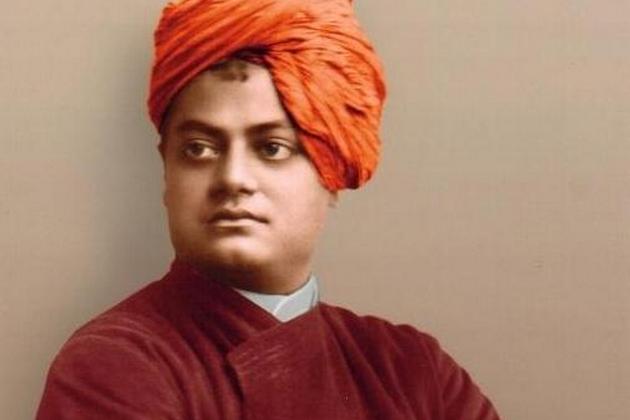
A page from The Works of Shams Tabrizi ('Dīvān-e Šams-e Tabrīzī')
A page from The Works of Shams Tabrizi (‘Dīvān-e Šams-e Tabrīzī’)

Shams Tabrizi was a Muslim who lived in Persia in the 12th and 13th centuries. His main claim to fame now is for being the teacher of Rumi, the Persian Islamic scholar, mystic and poet who was recently described as the most popular poet in the USA.

Anyway, I hope you enjoy these gems from the master’s master, originally posted by another blogger:

teamthevision's avatarThe Vision Weekly

Rule 1

How we see God is a direct reflection of how we see ourselves. If God brings to mind mostly fear and blame, it means there is too much fear and blame welled inside us. If we see God as full of love and compassion, so are we.

Rule 2

The path to the Truth is a labour of the heart, not of the head. Make your heart your primary guide! Not your mind. Meet, challenge and ultimately prevail over your nafs with your heart. Knowing your ego will lead you to the knowledge of God.

Rule 3

You can study God through everything and everyone in the universe, because God is not confined in a mosque, synagogue or church. But if you are still in need of knowing where exactly His abode is, there is only one place to look for him: in the heart of a true…

View original post 2,572 more words

Ramakant Maharaj: Meditation is the anti-virus for illusion

Selfless Self RM

The following is an excerpt from ‘Selfless Self: Talks with Shri Ramakant Maharaj‘, page 15. To find out more, click on the hyperlinks above.

YOU ARE ALMIGHTY. ALMIGHTY GOD, OMNIPRESENT.

YOUR PRESENCE IS EVERYWHERE.

YOU ARE BEYOND THE SKY

THERE IS NO INDIVIDUALITY.

Questioner: [laughing] I find it hard to believe that this ‘little me’ is all of that! If I am all of that, as you say, how is it I am not aware of this? And if I’m not, then how can I start becoming aware of my Self?

Maharaj: How can I? There is no ‘I’ at all. There is no ‘You’ and there is no ‘I’. Everything is just like the sky. You see, even when the Master tells you that you are Almightly, that you are Ultimate Truth, you are not accepting it. You are not able to accept that Truth because you’re caught up in all sorts of illusionary thoughts. You are considering yourself as ‘little me’, and that is making you blind to your Innate Power.

The remedy for this, a very simple remedy for this, as I have said, is meditation. Meditation is the anti-virus for illusion.

The meaning of life

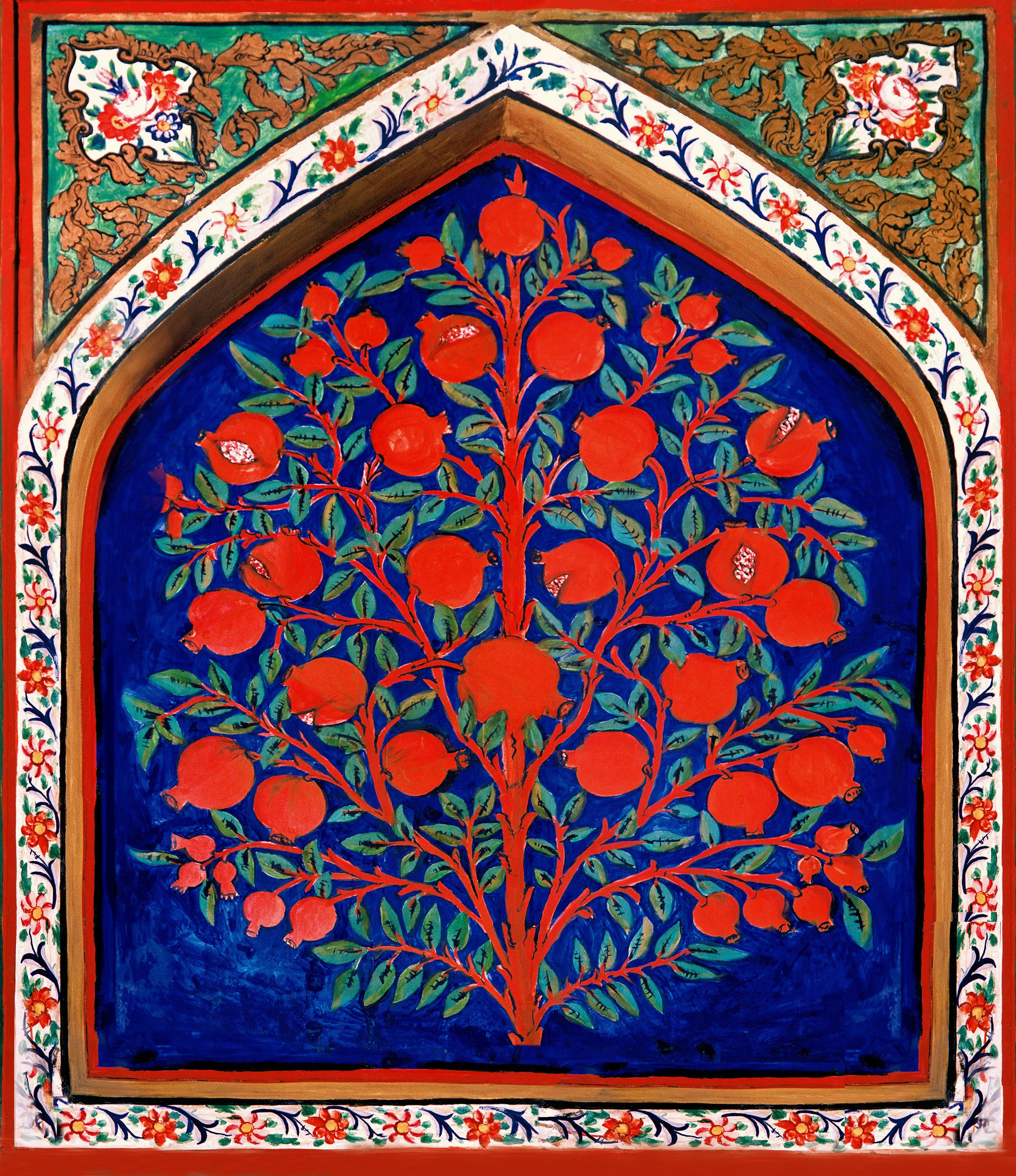
Tree of life, Palace of Shaki Khan, Azerbaijan

How can we eloquently speak about life’s most precious and deepest aspects? Can we really say life is like this or like that? Can we fully describe what a sunset feels like, or can we fully convey our (my) mixed-up emotions when we hear about a devastating earthquake in Nepal? Even more basically, can we even begin to describe what it feels like to exist as a human being? It is easy to describe the parts of a car – we have a whole vocabulary for this – but the sense of existing that we all know and take for granted is more iffy.

It is almost as if the more basic and essential something is, the less easy it is to articulate, with complex and superficial matters being much easier to pin down.

Continue reading

Isha Upanishad: That is full, this is full

full-moon

“That is full, this is full,
From that fullness comes this fullness,
If you take away this fullness from that fullness,
Only fullness remains”
Invocatory verse of Isha Upanishad

Gandhi famously declared the Isha Upanishad to be the summit of human wisdom. He said if all the scriptures in the world were lost, as long as the first verse of the Isha Upanishad remained then Hinduism would last forever.

To the rational mind devoid of spiritual experience this verse makes little sense – how can you take fullness from fullness, and for fullness to still remain? However to the one whose heart has glimpsed the Lord, the poetry reverberates and delights.

That is full, this is full…I can imagine the anonymous rishi (seer or wise person) who composed the verse pointing  away from him when saying ‘that’ and pointing near him or even perhaps towards himself when saying ‘this’. That is full, this is full…We are surrounded by the infinite. That is the infinite, I am also the infinite. The infinite is everywhere, nothing is not it. Nothing is limited, everything is free and unbound, one.

In the invocation above, the sanskrit word that has been translated as ‘full’ ispurna. Purna can also be translated as complete, whole, infinite, limitless or perfect. Taking this into account, what does it mean? It means that we are already whole and complete. You are whole and complete, I am whole and complete – already. You do not have to make yourself whole. Sadhana (spiritual practice) will not make you complete – it cannot. Sadhana can only reveal the completeness that is already here.

The problem for a spiritual seeker is not that they are un-enlightened or deficient in any way. It is that they do not realise they are already enlightened and whole.

This lack of realisation of one’s true nature is called ignorance, meaning that you do not see what is already the case, you do not know your true identity as That which is already full.

This ignorance or misunderstanding of reality has been demonstrated using many metaphors in the classic texts of vedanta, such as the woman who thinks she has lost her necklace only for a look in the mirror to reveal it is on her neck. The snake on the dimly lit ground that scares the man was actually a rope all along; when revealed by the light the rope is seen and the man’s fear is abated. Or when ten men have crossed a river the group leader becomes worried when he can only count nine men on the other side. A passer-by reassures the leader: he has merely forgotten to count himself.

In all these examples, all was well the entire time, only the protagonist made a mistake. The protagonist did not need to make things well, they only needed to see things clearly. The mirror, the light and the passerby in the analogies above represent the scripture or guru that reveals the mistake and thus ends suffering.

The solution to suffering and lack is therefore not one of self-improvement in which you build your small-shallow self up into some perfect super-duper being: you are already the perfect super-duper being. In fact we are all that One Being. We just don’t see it. All we have to do is look deeply at reality as it is now and investigate it and our assumptions about it. Then we can see for ourselves that the sense of lack is based on illusion and that we are already free.

As Jesus said, “seek and ye shall find” and “the truth shall set you free”.
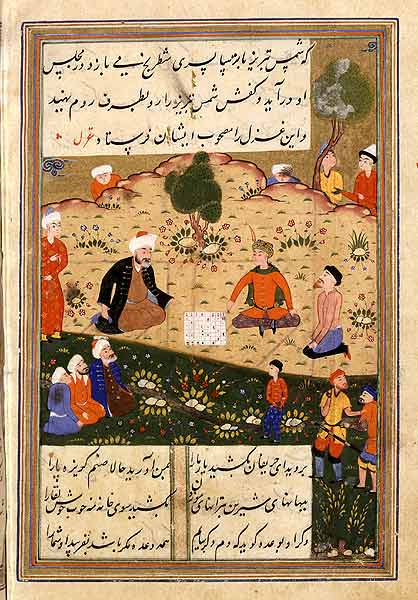
Swami Vivekananda: You can know God directly

swami-vivekananda

“What right has a man to say he has a soul if he does not feel it, or that there is a God if he does not see Him? If there is a God we must see Him, if there is a soul we must perceive it; otherwise it is better not to believe.”

Swami Vivekananda

As a child I totally rejected religion. I must admit that a part of me did want to believe in God; I saw the strength and certainty it gave people. But the bigger (better?) part of me thought it all seemed so silly and nonsensical. Continue reading

A meditation: how to transcend the ego in 4 steps

girl meditating

Meditation is healing and nourishing. It is like hitting the reset button, allowing us to recharge and connect with ourselves and with life. The essence of meditation is to be silent. Why? Because in that silence the everyday activities of thought are allowed to subside. We are then able to come into contact directly with life, with what is. The distorting filter of the thought-based ego is no longer in the way. Continue reading

A Quaker Silence

AssemblyOfQuakers

I went to Quaker meeting for worship today on Easter Sunday. We sit in silence for an hour, and if anyone is moved to speak they do so. The idea is that it is the Silence that speaks, not the ego, Silence being that ever-present Presence, also known as God (or whatever other word you want to use).

‘Not by reading do you get the truth. Be quiet, that is truth. Be still, that is God.’
from Face to Face with Sri Ramana Maharshi, ch. 100

Continue reading

Every effort takes you further away

I have often become repeatedly frustrated with spiritual seeking, wondering which spiritual teaching is best, which practice to do, and what is the absolute truth. There are so many flavours of spirituality and non-duality on offer that I have often found myself confused. And at the end of so many years of seeking, what do I really know? Despite having read some of the most profound texts from many of the great ancient traditions and contemporary teachers, I often feel that I still have no clue. And in many ways I don’t really have a clue. But what I keep on remembering is that there is no-self. And with that remembering of that phrase can come a clear seeing that there is no person here. Continue reading

Don’t take spiritual concepts too seriously

pine cone

“The Tao that can be spoken is not the eternal Tao” Tao te ching, verse 1

We don’t need to take spiritual concepts too seriously. They are there to guide us, to point us in the right direction only. The reality they point to cannot be described. When we start to take teachings too seriously we miss this point and start to become dogmatic.

Any interpretations that are set up and established as truth become meaningless phrases” Bankei

I’ve met people who follow Advaita Vedanta who say that consciousness is what we really are, and others who say what we are is beyond consciousness. Both of these are useful teachings, but don’t take them too seriously, either one of them. Both are useful and untrue. If you take a single position as being true, then that is a belief. Your attachment to a conceptual truth indicates the belief in ego/individuality that underlies it. Continue reading

Ramana: chose the guru who gives you peace

Ramana smiling

Question: There are a number of spiritual teachers teaching various paths. Whom should one take for one’s Guru?

Sri Ramana Maharshi: Choose that one where you find you get shanti (peace).

From Day by Day with Bhagavan p.169

Continue reading