eg. I have a feeling/perception that all is one and everything is interconnected. Therefore everything in the universe is actually one and interconnected.
It just so happens that in the so-called ‘West’ there has been a rapid development of science in the last few centuries. If we want to understand how things work, if we want to develop technologies and medicine, we turn to ‘Western’ science.
Also, it just so happens that when it comes to introspection and exploration of subjective inner states of consciousness, the so-called ‘East’ has had the historical monopoly. There have been a few thousand years of rigorous exploration of consciousness through meditative, contemplative, tantric and various other practices. This has allowed humans to discover and access mental states in which truths about our minds and subjective experience can be discovered and experienced first-hand without the need for belief. Continue reading →
“It’s not true that you came into this world. You came out of it, in the same way a flower comes out of a plant or a fruit comes out of a tree. An apple tree apples, the solar system peoples…You are a function of this total galaxy”
Alan Watts
Questioner: If my real self is peace and love, why is it so restless?
Nisargadatta Mahara: It is not your real being that is restless, but its reflection in the mind appears restless because the mind is restless. It is just like the reflection of the moon in the water stirred by the wind. The wind of desire stirs the mind and the ‘me’, which is but a reflection of the Self in the mind, appears changeful. But these ideas of movement, of restlessness, of pleasure and pain are all in the mind. The Self stands beyond the mind, aware, but unconcerned. Continue reading →
No sadhanas are required
No sadhana (spiritual practice) can lead to self realisation. No map can take you to where you already are, and no practice can transform you into that which you always have been.
All sadhanas such as meditation, mindfulness, mantra, puja, selfless service and devotion – all sadhanas are for the illusory individual. They are an extension of greed/egotism. It is this web of illusion, all hinged upon the idea of being a person with a body and mind, that prevents the obvious from being ‘seen’. Continue reading →
Ramana Maharshi: As I said already, that which is, is peace. All that we need do is to keep quiet.
Peace is our real nature. We spoil it. What is required is that we cease to spoil it. We are not going to create peace anew. There is space in a hall, for instance. We fill up the place with various articles. If we want space, all that we need do is to remove all those articles, and we get space.
Similarly if we remove all the rubbish, all the thoughts, from our minds, the peace will become manifest. That which is obstructing the peace has to be removed. Peace is the only reality.
“Truly, truly, I say to you, whoever believes in me will also do the works that I do; and greater works than these will he do, because I am going to the Father.”
John 14:12
People often argue away this one, but it seems clear to me, especially in the context of John 14 and the other Gospels, that Jesus is saying if you follow his teachings, then you will do greater things than Jesus.
Jesus often claimed in John’s Gospel that he did nothing by himself and that it was the Father in him that did everything. Jesus’s constant message to humanity was to turn away from the world and towards God, realise that God is Love, to love one another, to see the Kingdom of Heaven is within, and to surrender to God’s will. Not the worst teachings in the world, eh?
There is no non-duality in non-duality. What do I mean by that? Non-duality is non-conceptual. This means there is also no sense of non-duality in it. If you think this is all about oneness, then that’s not non-duality. That’s a concept of oneness. Same with non-duality. If you think this is all about non-duality or ‘x’ ‘y’ or ‘z’ other concepts, then that’s also wrong. There are no concepts in non-duality, yet all concepts operate within it. Continue reading →
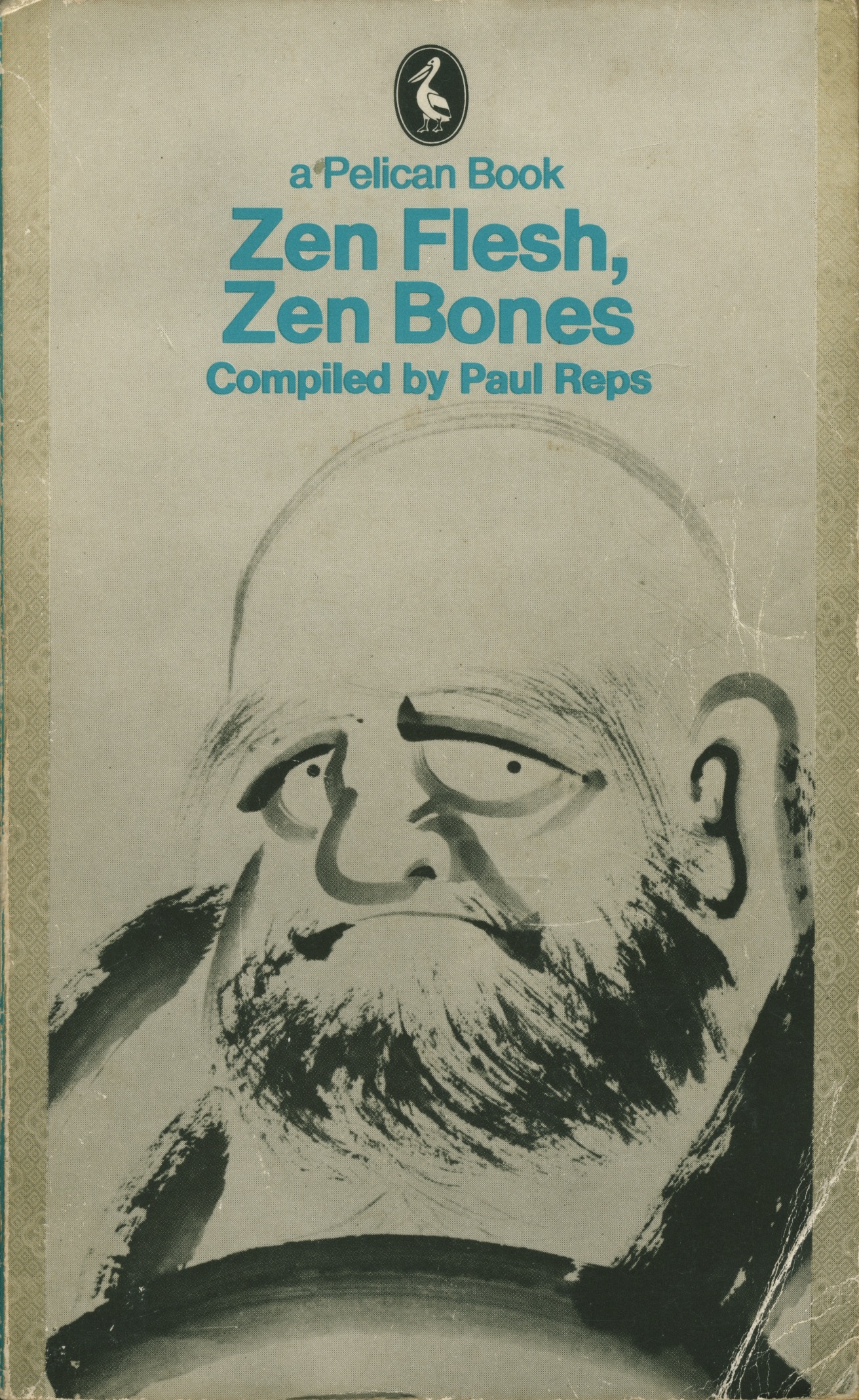
Another short story taken from the glorious little collection, Zen Flesh, Zen Bones:
The Thief Who Became a Disciple
One evening as Shichiri Kojun was reciting sutras (Buddhist scriptures) a thief with a sharp sword entered, demanding either his money or his life. Shichiri told him: ‘Do not disturb me. You an find the money in that drawer.’ Then he resumed his recitation.
A little while afterwards he stopped and called: ‘Don’t take it all. I need some to pay taxes with tomorrow.’
The intruder gathered up most of the money and started to leave. ‘Thank a person when you receive a gift,’ Shichiri added. The man thanked him and made off.
A few days afterwards the fellow was caught and confessed, among others, the offence against Shichiri. When Shichiri was called as a witness he said: ‘This man is no thief, at least as far as I am concerned. I gave him the money and he thanked me for it.’
After he had finished his prison term, the men went to Shichiri and became his disciple.