Freedom is everywhere. There is only freedom.
There is no individual freedom, only freedom, which is ‘freedom’ from individuality.
You can’t even say ‘freedom from individuality’ – that’s too much.
There is only freedom.
See it at once!
Freedom is everywhere. There is only freedom.
There is no individual freedom, only freedom, which is ‘freedom’ from individuality.
You can’t even say ‘freedom from individuality’ – that’s too much.
There is only freedom.
See it at once!

Ramana Maharshi, that great 20th century sage, explains in the above quote that his experience of Self-realisation was non-verbal. Though already self-realised at the time, he did not describe his experience in terms of that which changes (the transient) and that which never changes (the eternal), as is often traditionally done. It was only later, when listening to others read the scriptures, did he realise that his state had also been experienced and analysed by others before him, and that their traditional exposition described his own experience. Continue reading
What most people take themselves to be, the body-mind entity, is in fact a series of perceptions, images and sensations within consciousness, bound together by the (false) concept “I”.
The world too, as we experience it, is nothing but a play of consciousness, images and sensations rising and falling, creating the impression of a world. Continue reading
Through the grace of my Lord’s glorious revelation I learned that the pre-eminent form of worship – which alone is worthy of him – who shines within the heart as the Self – is just to be. Thus did I learn to worship him without worshipping through the simple act of being.
Sri Guru Ramana Prasadam, verse 389
Sri Guru Ramana Prasadam was written by Muruganar (1890-1973), one of the most eminent of Sri Ramana Maharshi’s devotees. Muruganar was liberated shorty after meeting Ramana and thereafter continued to spend several decades alongside him. It is because of Muruganar’s questioning and urging that Ramana composed works such as ‘Self-Knowledge’, ‘The Essence of Instruction’ and ‘Forty Verses on Reality’. These succinct works contain the essence of Ramana’s (written) teachings. We are indeed indebted to Muruganar! Continue reading
The following is an excerpt from a book rather modestly titled ‘The Most Direct Means To Eternal Bliss’.
Despite some tendency towards grandiosity, this book is actually pretty amazing in my opinion. I think it was written as a labour of love and has been uploaded to the internet for free viewing by the author here. You can also buy a hard copy here which contains a single extra chapter (which was written later).
Be warned, this book and its tone may not be for everyone. It is radical, focused, in some ways quite narrow, and not at all modest. However the advice dispensed is actually very good in the context in which it was written and the teachings are made extremely clear. The initial chapters alone are worth the purchase price in my opinion (plus it’s free online anyway)
Below is Chapter 12, blessings to you all ❤
In this passage below Ramana Maharshi talks about the four traditional Hindu paths to ending suffering or moksha (liberation/freedom). The four paths are traditionally called the paths of knowledge (jnana), love or devotion (bhakti), meditation (raja yoga), and doing good works (karma).
Almost every spiritual tradition around the world will fit into one of more of these four paths Continue reading
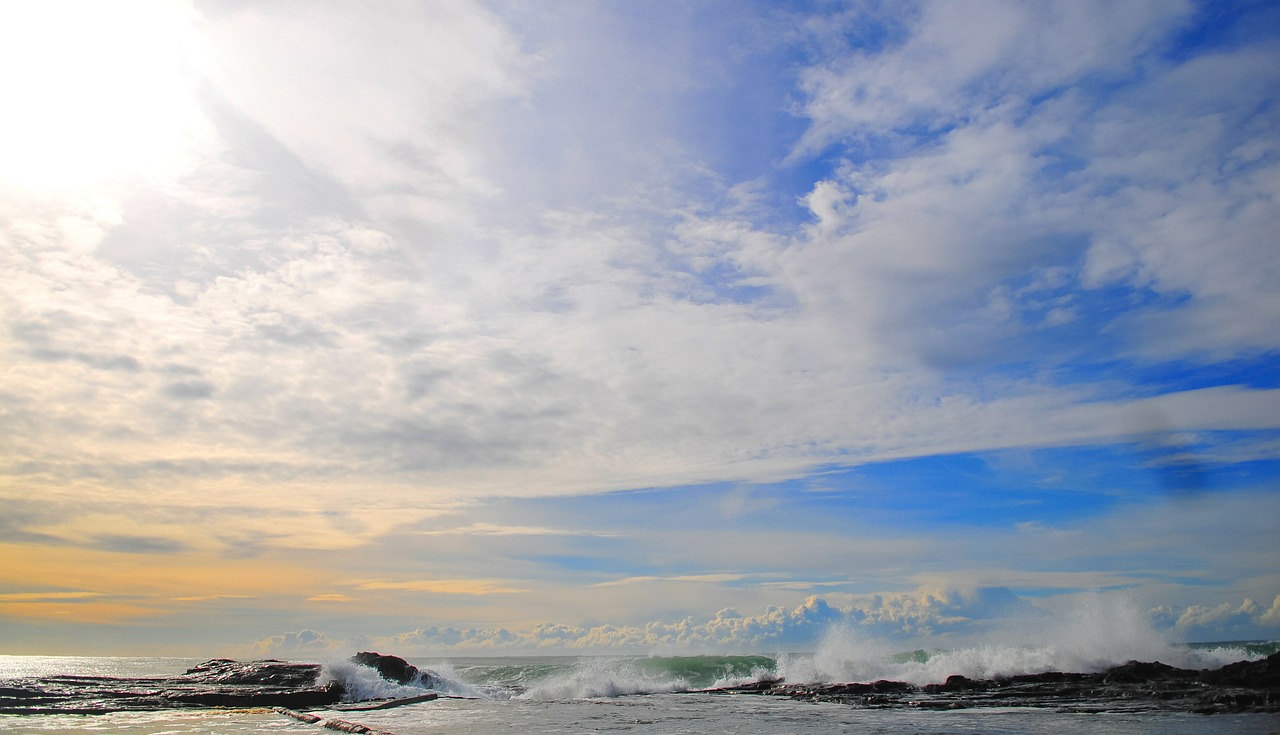
“As you walked on the beach the waves were enormous and they were breaking with magnificent curve and force. You walked against the wind, and suddenly you felt there was nothing between you and the sky, and this openness was heaven.
To be so completely open, vulnerable – to the hills, to the sea, and to man – is the very essence of meditation. To have no resistance, to have no barriers inwardly towards anything, to be really free, completely, from all the minor urges, compulsions, and demands, with all their little conflicts and hypocrisies, is to walk in life with open arms.
And that evening, walking there on that wet sand, with the sea gulls around you, you felt the extraordinary sense of open freedom and the great beauty of love which was not in you or outside you – but everywhere.”
Jiddu Krishnamurti
A few years ago I read some of the earliest Buddhist texts that we currently know of and was shocked at how different they are to what is generally taught as being Buddhism today. Even Theravada Buddhism, which has the claim of being the oldest surviving school of Buddhism, often presents its teachings in very different ways. These early teachings were direct, forceful and devoid of complexities and lengthy philosophising. They reminded me much more of the pithy statements of Zen and Dzogchen Buddhism, which is surprising as these Buddhist schools are chronologically much later developments that occurred roughly 1000 years after the Buddha’s time. Continue reading
Another wonderful Zen story, also one of my favourites, taken from the book ‘Zen Flesh, Zen Bones’:
❤
When Banzan was walking through a market he overheard a conversation between a butcher and his customer.
“Give me the best piece of meat you have,” said the customer.
“Everything in my shop is the best,” replied the butcher. “You cannot find here any piece of meat that is not the best.”
At these words Banzan became enlightened.
❤
How can everything be the best? It makes no sense, yet all is the best, everything is divine, sparkling with effervescent magic.
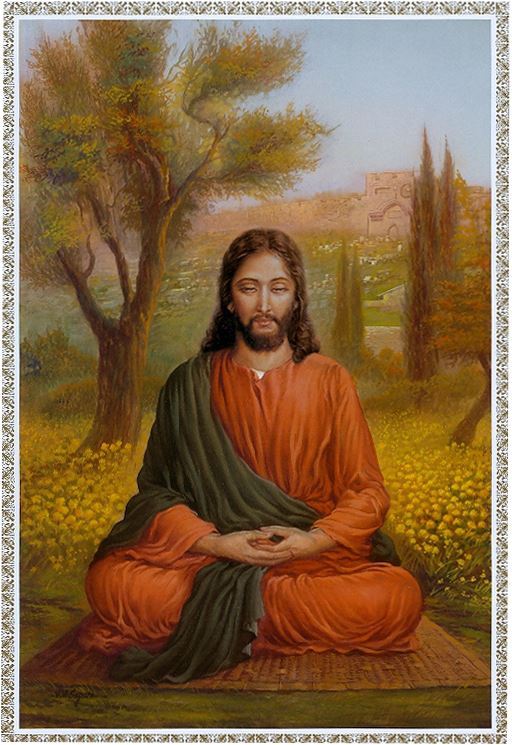
For me, the answer is he probably did. Let me preface this by stating the obvious: I don’t actually know for sure what Jesus did. I don’t even want to get into the ‘did Jesus exist’ debate in this post. But if we take the New Testament at face-value (I don’t want to get into this debate either) it seems to me that he did meditate, or at least engage in contemplative-meditative practices. Continue reading

