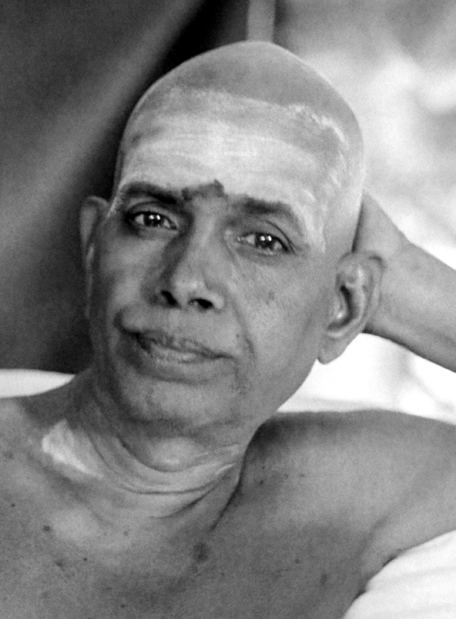
Self-enquiry is diving into the Self, Self-surrender is letting go of body, mind and world. Both these ways lead to Self-abidance and Liberation/ Self-Realisation.
This video was recorded live during an online meeting and put together by volunteers;
Section 3 of the Brihadarankaya Upanishad consists of a conversation between King Janaka and the Sage Yajnavalkya. Now for those of you who have not encountered Sage Yajnavalkya, he is quite a character at times, demonstrating the dry humour present in many of the Upanishads. Here is an example from Section 3.1 of the Brihadaranyaka Upanishad:
3.1.1: Om. Janaka, Emperor of Videha, performed a sacrifice in which gifts were freely distributed among the priests. Brahmin scholars from the countries of Kuru and Panchala were assembled there. Emperor Tanaka of Videha wished to know which of these brahmins was the most erudite Vedic scholar. So he confined a thousand cows in a pen and fastened on the horns of each ten padas of gold.
3.1.2: He said to them: “Venerable brahmins, let him among you who is the best Vedic scholar drive these cows home.” None of the brahmins dared. Then Yajnavalkya said to one of his pupils: “Dear Samsrava, drive these cows home.” He drove them away. The brahmins were furious and said: “How does he dare to call himself the best Vedic scholar among us?” Now among them there was Asvala, the hotri priest of Emperor Janaka of Videha. He asked Yajnavalkya: “Are you indeed the best Vedic scholar among us, O Yajnavalkya?” He replied: “I bow to the best Vedic scholar, but I just wish to have these cows.” Thereupon the Hotri Asvala determined to question him.
Here we have a scenario in which King Janaka effectively sets up a challenge to see who the best Vedic Scholar is, with the prize being one thousand cows. However before the challenge has even begun, Sage Yajnavalkya simply asks one of his students to take the cows. When challenged by the other scholars to see if he is really the most knowledgeable in the Vedas, Yajnavalkya dryly replies that irrespective of who the best scholar is, he just wants the cows! For me this demonstrates the humour, irony and rebellious spirit that is present throughout many of the Upanishads, but this humourous aspect of the teaching is often missed when the approach becomes overly intellectual and analytical.
The Guru wants to get paid!
Anyway, back to the three states and section 4 of the Brihadaranyaka Upanishad. In section 4.3 Yajnavalkya goes to King Janaka with the intent of not speaking, but because he had previously made a promise to King Janaka that he will answer any questions King Janaka asks, we obtain the dialogue of section 4.3 which pertains to the three states. In Shankara’s commentary on these verses he explains that the real reason Yajnavalkya visits King Janaka is to gain more wealth and cattle from the King, and throughout the following dialogue King Janaka keeps on gifting increasing numbers of cattle to Sage Yajnavalkya.
4.3.1 Yajnavalkya called on Janaka, Emperor of Videha. He said to himself: “I will not say anything.” But once upon a time Janaka, Emperor of Videha and Yajnavalkya had had a talk about the Agnihotra sacrifice and Yajnavalkya had offered him a boon. Janaka had chosen the right to ask him any questions he wished and Yajnavalkya had granted him the boon. So it was the Emperor who first questioned him.
Shankara’s commentary on the above verse reads as follows:
‘Yajnavalkya went to Janaka, Emperor of Videha. While going, he thought he would not say anything to the Emperor. The object of the visit was to get more wealth and maintain that already possessed….’
Note how this is contrary to how many nowadays state that a true teacher would not accept money or material objects for their teaching. In this, the oldest, longest and perhaps the most authoritative of Upanishads, we have the reverse situation! Again, such is the often dry humour of the Upanishads!
There is a beauty in honest natural expression. Self-censorship limits your honest expression and creates blocks. You must be honest with yourselves if you want to progress, develop, heal, free, liberate yourselves.
This video was recorded live during an online meeting and put together by volunteers;
‘The mind is by nature restless. Begin liberating it from its restlessness; give it peace; make it free from distractions; train it to look inward; make this a habit. This is done by ignoring the external world and removing the obstacles to peace of mind’
~Sri Ramana Maharshi, Talks with Sri Ramana Maharshi, talk no. 26
Objection: I have a slightly different view then Ramana perhaps did on ignoring the external world. It seems to me that the external world is the reflection of the inner. Becoming conscious of the beauty in nature resonates with the inner. This is perhaps a more indigenous view and is much older then even Vedanta and goes back even to the time when humans were Neanderthals as well as Homo sapiens when everything in nature was animating in presence.
Tom: Yes, being with nature is one of many things that can bring us in tune with the Self and bring us genuine peace and genuine insight, but ultimately for realisation to occur (and thus for suffering to end) one must turn within and all thoughts must cease. Otherwise the illusion of time and space are not seen through and suffering (and duality) continue, even if in a subtle way.
This is why Sri Ramana Maharshi writes in Who Am I?:
Q. When will the realization of the Self be gained? Sri Ramana: When the world which is what-is-seen [ie. objects] has been removed, there will be realization of the Self which is the seer. Q. Will there not be realization of the Self even while the world is there? Sri Ramana: There will not be.
~ Sri Ramana Maharshi, Who Am I?
Tom: What we call the world (ie. space and time and people) is actually a projection of mind/thought. Put simply, the world, space and time are simply thoughts. Again, this cannot be known unless we turn within, away from the world, towards the Self, and thoughts competely cease. From Sri Ramana Maharshi:
‘When the mind, which is the cause of all cognition’s and of all actions, becomes quiescent, the world will disappear…All the texts say that in order to gain release one should render the mind quiescent; therefore teaching is that the mind should be rendered quiescent.’
~ Sri Ramana Maharshi, Who Am I?
Tom: When thoughts completely cease, time and space disappear. If time and space are still appearing, it is because thought (namely the ‘I-thought’, which is the notion or thought or belief that ‘I am a body-mind’) still persists.
Therefore, when the world appears, the Self does not appear; and when the Self appears the world does not appear.
~ Sri Ramana Maharshi, Who Am I?
When the mind comes out of the Self, the world appears.
“In the scriptures, the importance of effort is really driven home as being very important. This is because, what they don’t want is people to say you are Brahman, you are the absolute so you can do what you like”
This video was recorded live during a Satsang meeting with Tom Das and put together by volunteers.
Q. I want to see if I comprehend properly, between the terms self-effort and self-inquiry, because what comes into my mind is letting go, which seems to be somehow in contradiction to the term effort.
This video was recorded live during a Satsang meeting with Tom Das and put together by volunteers.
What you are is what you are. It can never be known by the mind. The thinking mind can never discover what you are. This is knowledge, supreme knowledge, supreme realisation as opposed to mundane or worldly knowledge. This knowledge is your Being. It is known by being what you are. So when this question is asked, ‘Who am I? What am I?’ The answer is not the words ‘I am’, the answer is what those words signify.
This video was recorded live during a Satsang meeting with Tom Das and put together by volunteers.
Tom: Yes, ego-mind-thought must die for realisation to occur. Those who are still attached to the body-mind-world and still take themselves to be the body say otherwise.
Ego is ignorance. Ego is duality. It is the ego that creates/projects the body-mind and world, like in a dream. When ego goes, everything goes, and all that remains is the Self. It cannot be put into words or understood by the mind. In truth ego never existed at all.
Objections to this such as ‘how does the sage function without ego’ only occur in ignorance of taking the sage to be the body and in the presense of ego-ignorance seeing body-mind-world.
The paradox of this cannot be explained in words, but when the mind becomes so completely and utterly still so that time and space and personhood all cease to exist, this ‘Self’ is somehow ‘known without knowing’.
Now it is true that Sri Ramana often said that we should ‘be still’ [in Tamil – ‘Summa Irru’ which means ‘be still’ or ‘just be’] and that this is the practice, but what did he mean by ‘be still’? If we read and examine Sri Ramana’s written work ‘Who Am I?’, we will see what Sri Ramana means when he says ‘be still’ or ‘keep quiet’. Note that we can trust the teachings in ‘Who Am I?’ as an authentic rendition of Sri Ramana’s teachings as they were written by Sri Ramana himself.
Let us see: the first time we come across the notion of quieting the mind in ‘Who Am I?’ is as follows:
‘When the mind, which is the cause of all cognition’s and of all actions, becomes quiescent, the world will disappear.’
Now on the face of it this is quite a strange statement for Sri Ramana to make: that the world will disappear when the mind is still. Clearly, when Sri Ramana states that the mind is to be quiet, he is perhaps using these words in a different way to how they are normally used. How can it be that when the mind becomes quiet the world disappears?
Well earlier in ‘Who Am I?’ Sri Ramana explains that it is the mind is a power that creates or projects the entire body, mind and world*, so to ‘be quiet’ means not just to still the ordinary thinking mind, but to still this world-projecting power, ie. to remove all of Maya. Ramana repeats this, see here, also from ‘Who Am I?’:
Question: When will the realization of the Self be gained?
Sri Ramana Maharshi: When the world which is what-is-seen has been removed, there will be realization of the Self which is the seer
Question: Will there not be realization of the Self even while the world is there?
Sri Ramana Maharshi: There will not be.
I have a video here which explains the importance of this teaching. It fundamentally explains why some teachings are liberating and others are not:
Whilst some teachings may encourage us to still the mind, Sri Ramana is emphasising removing the entire body-mind-world from our consciousness. We can see that Sri Ramana’s teaching is far more extreme than many others – it is this extreme teaching that is needed to remove ignorance and realise the Self.
Sri Ramana emphasises Self-Enquiry as the only sadhana that will lead us to Liberation. Again, Sri Ramana’s teaching is more narrow and prescriptive in this way, as he maintains that Self-Enquiry is the only way. Let us see what else Sri Ramana writes in ‘Who Am I?’:
Question: Are there no other means for making the mind quiescent?
Sri Ramana Maharshi: Other than inquiry [Vichara; Self-Enquiry], there are no adequate means.
We can see that Sri Ramana is stating that sadhana or self-enquiry is essential to make the mind quiet, so that when Sri Ramana is asking us to ‘be still’ or ‘keep quiet’, he is actually asking us to do Self-Enquiry.
*What is called mind (manam) is a wondrous power existing in Self (atma-swarupam). It projects all thoughts…Other than thoughts, there is no such thing as the world….Just as the spider spins out the thread from within itself and again withdraws it into itself, so the mind projects the world from within itself and again absorbs it into itself. ~ from Who Am I? by Sri Ramana Maharshi
Sometimes to those who are on the spiritual path, it can seem like those who are in full ignorance are happier. It can feel like ignorance is bliss, but it isn’t. It’s deep, deep suffering.
There are few things about spiritual seeking…First, the spiritual seeker has a certain type of sensitivity, which makes them more sensitive to suffering, because they are more aware of it often. That self-aware aspect can intensify suffering that wouldn’t bother other people so much. Some spiritual seekers have fairly nice lives outwardly. But inwardly they are suffering intently because they are more sensitive to their suffering because the awareness is there.
The other thing about the spiritual path is that it is often an isolating path, which also makes it difficult. There is no one to share it with, very few people understand this, because most people are not seekers of liberation, they are seekers of other things.
The other thing is there is nothing you can do about it. Say ignorance was bliss, probably with this there is no turning back! I’m sorry to say, you can’t go back!
Sri Ramana Maharshi did not say you have to love me, you have to devote yourself to me – that is not the essence of the teaching at all. That is actually to miss the point to what he is actually pointing towards. He said you’ve got to follow my teachings. You have to follow the Guru’s instruction.
This video was recorded live during a Satsang meeting with Tom Das.