The Sermon on the Mount According to Vedanta (Jesus, Christanity, Advaita and Non-Duality)

Sermon on Mount Vedanta

Click here to download ‘The Sermon on the Mount According to Vedanta’ as a PDF file


From the Introduction of the above book:

Like Krishna and Buddha, Christ did not preach a mere ethical or social gospel but an uncompromisingly spiritual one. He declared that God can be seen, that divine perfection can be achieved.

In order that men might attain this supreme goal of existence, he taught the renunciation of worldliness, the contemplation of God, and the purification of the heart through the love of God.

These simple and profound truths, stated repeatedly in the Sermon on the Mount, constitute its underlying theme, as I shall try to show in the pages to follow.


From the back cover:

‘The Sermon on the Mount According to Vedanta’ is a spiritual document of the most profound significance and importance. Swami Prabhavananda, a leading modern exponent of the ancient Hindu religion of Vedanta, is a member of a Vedantic Order that pays equal respect to the teachings of Christ. His early training and subsequent years of meditation provide a background for an interpretation of the Sermon on the Mount that offers rare, two-fold enlightenment to the Western reader.

On the one hand, the author provides new illumination of the vital core truths of Christianity. On the other, he eloquently reveals the basis and meaning of Vedanta.

His work achieves a magnificent reconciliation of Eastern and Western thought – a supreme embodiment of a vision that truly see all things as part of the One within the universal scheme of being.

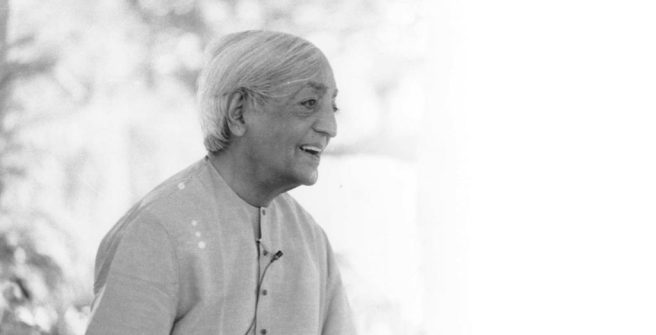
J. Krishnamurti: duality ceases

520382

Tom: When I was a teenager, I had my first conscious ‘awakening experience’ whilst reading  ‘The Only Revolution’ by Jiddu Krishnamurti (Click here to download the full text as a PDF file; I was actually reading the second Krishnamurti Reader, of which the Only Revolution comprises the first section).

After this initial awakening experience, I spent many years trying to chase this experience and recreate it, and in doing so read almost every single thing written by J Krishnamurti over the next few years. For some reason, I was not able to see what he was pointing at!

I still think The Only Revolution is one of the best of his works – here are some excerpts taken from the first few chapters, with bold type added by myself for emphasis:


Truth is never in the past. The truth of the past is the ashes of memory; memory is of time, and in the dead ashes of yesterday there is no truth. Truth is a living thing, not within the field of time.


When man is free, without any motive of fear, of envy or of sorrow, then only is the mind naturally peaceful and still. Then it can see not only the truth in daily life from moment to moment but also go beyond all perception; and therefore there is the ending of the observer and the observed, and duality ceases.

But beyond all this, and not related to this struggle, this vanity and despair, there is – and this is not a theory – a stream that has no beginning and no end; a measureless movement that the mind can never capture.

When you hear this, sir, obviously you are going to make a theory of it, and if you like this new theory you will propagate it. But what you propagate is not the truth. The truth is only when you are free from the ache, anxiety and aggression which now fill your heart and mind. When you see all this and when you come upon that benediction called love, then you will know the truth of what is being said.


Why do you want a theory at all, and why do you postulate any belief? This constant assertion of belief is an indication of fear – fear of everyday life, fear of sorrow, fear of death and of the utter meaninglessness of life. Seeing all this you invent a theory and the more cunning and erudite the theory the more weight it has. And after two thousand or ten thousand years of propaganda that theory invariably and foolishly becomes “the truth”.

But if you do not postulate any dogma, then you are face to face with what actually is. The “what is”, is thought, pleasure, sorrow and the fear of death.

When you understand the structure of your daily living – with its competition, greed, ambition and the search for power – then you will see not only the absurdity of theories, saviours and gurus, but you may find an ending to sorrow, an ending to the whole structure which thought has put together.

The penetration into and the understanding of this structure is meditation.


Meditation is not a means to an end. It is both the means and the end. The mind can never be made innocent through experience.

It is the negation of experience that brings about that positive state of innocency which cannot be cultivated by thought. Thought is never innocent. Meditation is the ending of thought, not by the meditator, for the meditator is the meditation. If there is no meditation, then you are like a blind man in a world of great beauty, light and colour.

Wander by the seashore and let this meditative quality come upon you. If it does, don’t pursue it. What you pursue will be the memory of what it was – and what was is the death of what is. Or when you wander among the hills, let everything tell you the beauty and the pain of life, so that you awaken to your own sorrow and to the ending of it. Meditation is the root, the plant, the flower and the fruit. It is words that divide the fruit, the flower, the plant and the root. In this separation action does not bring about goodness: virtue is the total perception.


You can’t find God; there is no way to it. Man has invented many paths, many religions, many beliefs, saviours and teachers whom he thinks will help him to find the bliss that is not passing. The misery of search is that it leads to some fancy of the mind, to some vision which the mind has projected and measured by things known. The love which he seeks is destroyed by the way of his life. You cannot have a gun in one hand and God in the other.

God is only a symbol, a word, that has really lost its meaning, for the churches and places of worship have destroyed it. Of course, if you don’t believe in God you are like the believer; both suffer and go through the sorrow of a short and vain life; and the bitterness of every day makes life a meaningless thing.

Reality is not at the end of the stream of thought, and the empty heart is filled by the words of thought. We become very clever, inventing new philosophies, and then there is the bitterness of their failure. We have invented theories about how to reach the ultimate, and the devotee goes to the temple and loses himself in the imaginations of his own mind. The monk and the saint do not find that reality for both are part of a tradition, of a culture, that accepts them as being saints and monks.

The dove has flown away, and the beauty of the mountain of cloud is upon the land – and truth is there, where you never look.


Meditation is not the repetition of the word, nor the experiencing of a vision, nor the cultivating of silence. The bead and the word do quieten the chattering mind, but this is a form of self-hypnosis. You might as well take a pill.

Meditation is not wrapping yourself in a pattern of thought, in the enchantment of pleasure. Meditation has no beginning, and therefore it has no end.

If you say: “I will begin today to control my thoughts, to sit quietly in the meditative posture, to breathe regularly” – then you are caught in the tricks with which one deceives oneself. Meditation is not a matter of being absorbed in some grandiose idea or image: that only quietens one for the moment, as a child absorbed by a toy is for the time being quiet. But as soon as the toy ceases to be of interest, the restlessness and the mischief begin again.

Meditation is not the pursuit of an invisible path leading to some imagined bliss. The meditative mind is seeing – watching, listening, without the word, without comment, without opinion – attentive to the movement of life in all its relationships throughout the day. And at night, when the whole organism is at rest, the meditative mind has no dreams for it has been awake all day. It is only the indolent who have dreams; only the half-asleep who need the intimation of their own states. But as the mind watches, listens to the movement of life, the outer and the inner, to such a mind comes a silence that is not put together by thought.

It is not a silence which the observer can experience. If he does experience it and recognise it, it is no longer silence. The silence of the meditative mind is not within the borders of recognition, for this silence has no frontier. There is only silence – in which the space of division ceases.


Meditation is the unfolding of the new. The new is beyond and above the repetitious past – and meditation is the ending of this repetition. The death that meditation brings about is the immortality of the new. The new is not within the area of thought, and meditation is the silence of thought.

Meditation is not an achievement, nor is it the capture of a vision, nor the excitement of sensation. It is like the river, not to be tamed, swiftly running and overflowing its banks. It is the music without sound; it cannot be domesticated and made use of. It is the silence in which the observer has ceased from the very beginning.


Has it ever happened to you, naturally, to find yourself in a state where thought is totally absent? In that state are you conscious of yourself as the thinker, the observer, the experiencer?

Thought is the response of memory, and the bundle of memories is the thinker. When there is no thought is there the “me” at all, about whom we make so much fuss and noise?

We are not talking of a person in amnesia, or of one who is day-dreaming or controlling thought to silence it, but of a mind that is fully awake, fully alert. If there is no thought and no word, isn’t the mind in a different dimension altogether?


There is the silence of the mind which is never touched by any noise, by any thought or by the passing wind of experience. It is this silence that is innocent, and so endless. When there is this silence of the mind action springs from it, and this action does not cause confusion or misery.

The meditation of a mind that is utterly silent is the benediction that man is ever seeking.


Again, sir, you have come back to the question of something that is timeless, which is beyond thought. What is beyond thought is innocence, and thought, do what it will, can never touch it, for thought is always old.

It is innocency, like love, that is deathless, but for that to exist the mind must be free of the thousand yesterdays with their memories. And freedom is a state in which there is no hate, no violence, no brutality. Without putting away all these things how can we ask what immortality is, what love is, what truth is?


If you deliberately take an attitude, a posture, in order to meditate, then it becomes a plaything, a toy of the mind. If you determine to extricate yourself from the confusion and the misery of life, then it becomes an experience of imagination – and this is not meditation. The conscious mind or the unconscious mind must have no part in it; they must not even be aware of the extent and beauty of meditation – if they are, then you might just as well go and buy a romantic novel.

In the total attention of meditation there is no knowing, no recognition, nor the remembrance of something that has happened. Time and thought have entirely come to an end, for they are the centre which limits its own vision.

At the moment of light, thought withers away, and the conscious effort to experience and the remembrance of it, is the word that has been. And the word is never the actual. At that moment – which is not of time – the ultimate is the immediate, but that ultimate has no symbol, is of no person, of no god.


Meditation is not the mere experiencing of something beyond everyday thought and feeling nor is it the pursuit of visions and delights. An immature and squalid little mind can and does have visions of expanding consciousness, and experiences which it recognises according to its own conditioning. This immaturity may be greatly capable of making itself successful in this world and achieving fame and notoriety. The gurus whom it follows are of the same quality and state. Meditation does not belong to such as these. It is not for the seeker, for the seeker finds what he wants, and the comfort he derives from it is the morality of his own fears.

Do what he will, the man of belief and dogma cannot enter into the realm of meditation. To meditate, freedom is necessary. It is not meditation first and freedom afterwards; freedom – the total denial of social morality and values – is the first movement of meditation.

It is not a public affair where many can join in and offer prayers. It stands alone, and is always beyond the borders of social conduct. For truth is not in the things of thought or in what thought has put together and calls truth. The complete negation of this whole structure of thought is the positive of meditation.


Sleep is as important as keeping awake, perhaps more so. If during the day-time the mind is watchful, self-recollected, observing the inward and outward movement of life, then at night meditation comes as a benediction.

The mind wakes up, and out of the depth of silence there is the enchantment of meditation, which no imagination or flight of fancy can ever bring about. It happens without the mind ever inviting it: it comes into being out of the tranquillity of consciousness – not within it but outside of it, not in the periphery of thought but beyond the reaches of thought. So there is no memory of it, for remembrance is always of the past, and meditation is not the resurrection of the past.

It happens out of the fullness of the heart and not out of intellectual brightness and capacity. It may happen night after night, but each time, if you are so blessed, it is new – not new in being different from old, but new without the background of the old, new in its diversity and changeless change.

So sleep becomes a thing of extraordinary importance, not the sleep of exhaustion, not the sleep brought about through drugs and physical satisfaction, but a sleep that is as light and quick as the body is sensitive. And the body is made sensitive through alertness. Sometimes meditation is as light as a breeze that passes by; at other times its depth is beyond all measure. But if the mind holds one or the other as a remembrance to be indulged in, then the ecstasy of meditation comes to an end.

It is important never to possess or desire possession of it. The quality of possessiveness must never enter into meditation, for meditation has no root, nor any substance which the mind can hold.

Ramana Maharshi: Abide as the Self – In His Own Words


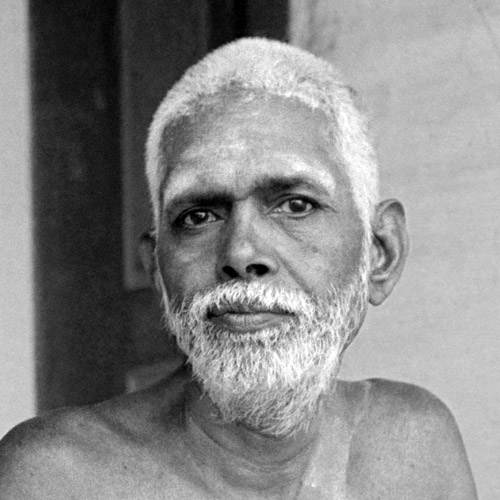
Ramana_3_sw

The following are all excerpts from works written by Sri Ramana Maharshi directly himself (as opposed to being teachings of Ramana’s noted down by others). Most of the teachings we have of Ramana’s were recorded and written down by others around him, and Ramana wrote very little himself. I have selected the following quotes only from texts that Ramana wrote directly himself.

Please take your time with each quote, there is no need to rush.

In this video below I have read each quote aloud, which I hope is of benefit for some of you:


Can the body, which is insentient as a piece of wood, shine and function as ‘I’? No. Therefore, lay aside this insentient body as though it were truly a corpse. Do not even murmur ‘I’, but enquire keenly within what it is that now shines within the heart as ‘I’.

Underlying the unceasing flow of varied thoughts, there arises the continuous, unbroken awareness, silent and spontaneous, as ‘I-I’ in the Heart. If one catches hold of it and remains still, it will completely annihilate the sense of ‘I’ in the body, and will itself disappear as a fire of burning camphor. Sages and scriptures proclaim this to be Liberation.

~Sri Ramana Maharshi, Vichara Sangraham (Self Enquiry)


It is true wisdom
For the mind to turn away
From outer objects and behold
Its own effulgent form.

~Sri Ramana Maharshi, Upadesa Saram, Verse 16


Having known one’s nature one abides
As being with no beginning and no end
In unbroken consciousness and bliss.

~Sri Ramana Maharshi, Upadesa Saram, Verse 28


For loosening Karma’s bonds and ending births,
This path is easier than all other paths.
Abide in stillness, without any stir
Of tongue, mind, body. And behold
The effulgence of the Self within;
The experience of Eternity; absence
Of all fear; the ocean vast of Bliss.

~Sri Ramana Maharshi, Atma-Vidya (Self-Knowledge), Verse 5


For him who is the Bliss of Self arising from extinction of the ego, what is there to do? He knows nothing other than this Self. How to conceive the nature of his state?

~Sri Ramana Maharshi, Ulladu Narpadu, Verse 31


The natural and true Reality forever resides in the Heart of all. Not to realise It there and stay in It but to quarrel ‘It is’, ‘It is not’, ‘It has form’, ‘It has not form’, ‘It is one’, ‘It is two’, ‘It is neither’, this is the mischief of maya.

~Sri Ramana Maharshi, Ulladu Narpadu, Verse 34


To discern and abide in the ever-present Reality is true attainment. All other attainments are like powers enjoyed in a dream. When the sleeper wakes, are they real? Those who stay in the state of Truth, having cast off the unreal – will they ever be deluded?

~Sri Ramana Maharshi, Ulladu Narpadu, Verse 35


!Om Guru Ramana!

Ramana Maharshi: Encouragement for Self-Enquiry

ramana maharshi

The following are teachings of Sri Ramana Maharshi taken from the text Guru Vachaka Kovai, a text which is widely considered to be the most precise, systematic and authoritative collection of Sri Ramana’s spoken teachings.

I have arranged them in an order with the aim of encouraging Self-Enquiry.

I hope these verses are of help to you,

best wishes

Tom

755.

If without wasting time one starts
And keeps up steady self-enquiry,
One’s life becomes at once ennobled,
One is no more this wretched body,
And there wells up within one’s heart
A sea of bliss supreme.

644.

Those who do not keenly seek
And recognise the Being Awareness
Shining incessant in the heart
Sink deep into delusive maya,
Thanks to the denotative knowledge
Piled up by the mounting ego.

393.

One who has wisely chosen the straight path
Of self-enquiry can never go astray;
For like the bright, clear Sun, the Self
Reveals itself direct to whoso
Turns towards it.

77.

What does one gain, you well may ask,
By giving up the wealth immense
Of worldly pleasure and seeking only
Mere Awareness?
The benefit of true Awareness
Is the unbroken prevalence
Of peace within the heart, the bliss
Of one’s own natural being.

71.

How piteous is the spectacle
Of people wandering in the world’s ways
Aimless, frisky like a goat’s beard
And chafing at the discipline
That leads to permanent freedom.

756.

Barring fruitful self-enquiry
There is, for real mind-control,
No other sadhana whatsoever.
The mind may seem to be controlled
By other methods. But after a while
It will spring up again.

692.

Since it was one’s own past effort
That now has ripened into Fate,
One can with greater present effort
Change one’s Fate.

1186.

Uninterrupted and whole-minded
Concentration on the Self,
Our true, non-dual Being, this
Is mouna, pure, supreme, the goal;
Not at all the lazy mind’s
Inertia which is but a state
Of dark illusion.

186.

Poor seer, who suffers endlessly
Because you still perceive the object,
Not the subject, please look inward,
Not without, and taste the bliss
Of non-duality

878.

The Self alone is the true Eye.
Only of the Self one has
Direct immediate knowledge.
But minds averted from the Self
Look through the senses at a world
Other than the Self and think it can
Be known directly.

190.

You pilgrims, who without discovering
What is within, proceed from place
To place, ever hovering bird-like,
Know Siva supreme is but Awareness,
Absolutely still, abiding
Centred in the Heart.

529.

The jiva’s thirst will vanish only
When the vasanas of the frenzied mind
Die and direct experience comes
Of Pure Awareness.
If mirage water could quench thirst
Then only would knowledge indirect
Satisfy the jiva’s longing.

921.

None can confront and overcome
The mind. Ignore it, then, as something
False, unreal. Know the Self
As the real ground and stand firm-rooted
In it. Then the mind’s movements will
Gradually subside.

694.

Even in this worldly life one’s labours bear
No fruit without abundant faith.
Hence till one merges in the bliss
Supreme and boundless, one’s strong zeal
In sadhana should never slacken.

695.

However great one’s former sins, if one
Repines not, sighing “A sinner am I”
But plunges straight into one’s own Being,
One reaches quick the ocean of bliss
And sports in it.

192.

For the man of dharma seeking
Experience of the state supreme,
The heroic action needed is
To draw in the outward-darting mind
And fix it firmly in the Heart.

193.

If the mind, turned outward and distracted,
Starts observing its own being,
Alienation ends, the vestige ego
Merges in the light of true
Awareness shining in the Heart.

697.

They say that Fate can never bind
Those heaven-bound. What does this mean?
Not an iota of the past can touch
Those who dwell unceasingly
In the firmament of Self-Awareness,
Vast, boundless, frontierless and full.

1059.

The Self, the home of blissful Awareness,
Is an ocean vast of peace serene.
And he whose mind turns inward and dives
Deep within it, gains the infinite treasure
Of its grace.

1062.

The ever-present Self, the radiant
Gem, this is the rarest, richest
Treasure. Look within and find
And hold it fast. Your penury,
The grand illusion, source of every
Trouble on earth, will vanish forthwith.

343.

Those who, diving deep within,
Have found the Self have nothing else
To know. And why? Because they have gone
Themselves beyond all forms and are
Awareness without form.

763.

Only a mind one-pointed, inward turned,
Succeeds in self-enquiry. Weak,
Faltering minds, like green banana trees,
Are not fit fuel to feed this fire.

531.

From questing inward in the heart
Comes knowledge which destroys
All false illusions. Searching books
For pure, clear wisdom is like trying
To cook and eat the picture of a gourd.

532.

Can hunger be appeased by eating
Food cooked over a painted flame?
The end of pain, the bliss of peace,
Results from egoless awareness,
And not at all from verbal wisdom.

533.

Never through argument, but only
By abiding in the heart as pure
Awareness, which lights up and shines
Within the mind, can one enjoy
The thrill, the throb, the bliss supreme
Of being the Self.

612.

Undeluded by whatever else
May come and go, unwinking watch
The Self, because the little fault
Of forgetting for one moment one’s true Being
As Pure Awareness brings tremendous loss.

750.

What we incessantly think of,
That we become. Hence, if we
Keenly seek the Self and think
Of nothing else, the malady
Of birth will cease and all thoughts end.

1029.

Bliss is the very nature of the Self.
Self is the infinitude of Bliss.
All Being is but Bliss.
Knowing this firmly, in the Self
Abide enjoying Bliss forever.