170. In dreams, when there is no actual contact with the external world, the mind alone creates the whole universe consisting of the experiencer etc. Similarly in the waking state also; there is no difference. Therefore all this (phenomenal universe) is the projection of the mind.
171. In dreamless sleep, when the mind is reduced to its causal state, there exists nothing (for the person asleep), as is evident from universal experience. Hence man’s relative existence is simply the creation of his mind, and has no objective reality.
Swami Chinmayananda writes in the introduction to his commentary upon the Ashtavakra Gita of how in a way it is superior to the Upanishads, Brahma Sutras and Bhagavad Gita (these are the Prasthana Traya or ‘Holy Trinity’ of scriptures in Advaita Vedanta) in communicating the nature of the Supreme Reality.
Note the final paragraph in which all concepts, including that of ‘Supreme Reality’ or ‘Brahman’ are also dissolved:
In communicating to the seekers the unsurpassing beauty and indefinable perfections of the Absolute, the Upanisads stammer; the Brahma sutras exhaust itself and the Bhagavat Gita hesitates with an excusable shyness. A theme, in dealing with which, even these mighty books of Hinduism are thus, at best, unsatisfactory; we must, in sheer gratitude, admire Astavakra Samhita for the brilliant success it has achieved in communicating, through words, perhaps, more clearly the nature and glory of the Supreme Reality, than by the Prasthana Traya.
The student of this Samhita is himself giving the autobio-data of the liberated in life. We have here in this book a revealing autobiography of the Saint, the Liberated-in-life in King Janaka.
Beyond all assertions and denial, beyond the concepts of bondage and liberation, lies this Realm of the Self, wherein there is neither the individual-ego(jiva), nor is there even the Supreme-Reality (Brahman)!
The above was written by Swami Chinmayananda, taken from his introduction to the Ashtavakra Gita
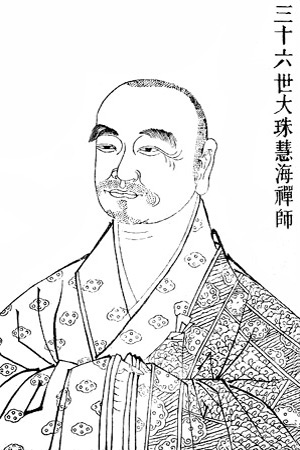
Before Zen spread to Japan and was known as Zen, it was in China and known as Chan. Here 8th Century Chan Master Hui Hai gives us a wonderful short-cut to enlightenment or nirvana:
Hui Hai: The Shurangama Sutra says: ‘Perceptions employed as a base for building up positive concepts are the origin of all ignorance (avidya); ‘perception that there is nothing to perceive – that is nirvana, also known as deliverance.’
Questioner: What is the meaning of ‘nothing to perceive’?
Hui Hai: Being able to behold men, women and all the various sorts of appearances while remaining as free from love or aversion as if they were actually not seen at all – that is what is meant by ‘nothing to perceive’.
Questioner: That which occurs when we are confronted by all sorts of shapes and forms is called ‘perception’. Can we speak of perception taking place when nothing confronts us?
Hui Hai: Yes.
Questioner: When something confronts us, it follows that we perceive it, but how can there be perception when we are confronted by nothing at all?
Hui Hai: We are now talking of that perception which is independent of there being an object or not.How can that be? The nature of perception being eternal, we go on perceiving whether objects are present or not. Thereby we come to understand that, whereas objects naturally appear and disappear, the nature of perception does neither of those things; and it is the same with all your other senses.
[Tom: what is being signified here by ‘eternal’ perception that is independent of objects? :-)]
Questioner: When we are looking at something, does the thing looked at exist objectively within the sphere of perception or not?
Hui Hai: No, it does not.
Questioner: When we (look around and) do not see anything, is there an absence of something objective within the sphere of perception?
Hui Hai: No, there is not.
Questioner: When there are sounds, hearing occurs. When there are no sounds, does hearing persist or not?
Hui Hai: It does.
Questioner: When there are sounds it follows that we hear them, but how can hearing take place during the absence of sound?
Hui Hai: We are now talking of that hearing which is independent of there being any sound or not. How can that be? The nature of hearing being eternal, we continue to hear whether sounds are present or not.
Questioner: if that is so, who or what is the hearer?
Hui Hai: It is your own nature, which hears, and it is the inner cogniser who knows.
Before Zen spread to Japan and was called Zen, it was known as Chan in China. In this dialogue the essential gateway to nirvana and enlightenment is revealed together with several other useful chan/zen teachings from the 8th century Chan Master Hui Hai himself. Bold type has been added by myself for emphasis of certain points I felt to be particularly important:
Questioner: Is the nature of the Absolute (Chan-ju) a true void, or not really void? To describe it as not void is to imply that it has form [Tom – and how can the formless absolute have form?]. Yet to describe it as void implies mere nothingness, so what would then be left for sentient beings to rely on in their practice for attaining deliverance?
Hui Hai: The nature of the Absolute is void and yet not void. How so? The marvellous ‘substance’ of the Absolute, having neither form nor shape, is therefore undiscoverable; hence it is void. Nevertheless, that immaterial, formless ‘substance’ contains functions as numerous as the sands of the Ganges, functions, which respond unfailingly to circumstances, so it is also described, as not void. A sutra says:
‘Understand the one point and a thousand others will accordingly grow clear; misunderstand that one and ten thousand delusions will encompass you. He who holds to that one has no more problems to solve.’
This is the great marvellous awakening to the Way. As one of the sutras says:
‘The myriad forms, dense and close, bear the imprint of a single dharma.’
How then can so many sorts of views arise from the one Dharma? All these karmic forces are rooted in activity. If, instead of pacifying our minds, we rely on scriptures to achieve enlightenment, we are under-taking the impossible. Ourselves deceived, deceiving others our mutual downfall is assured. Strive on! Strive on! Explore this teaching most thoroughly!
[Tom – here in the above paragraph the emphasis is clearly on stilling the mind as opposed to mere book/scripture reading and theory]
Just let things happen without making any response and keep your minds from dwelling on anything whatsoever; for they who can do this thereby enter nirvana. Attained, then, is the condition of no rebirth, otherwise called ‘the gate of non-duality, the end of strife, the samadhi of universality’. Why so? Because it is ultimate purity. As it is free from the duality of selfless and otherness, it no longer gives rise to love and hatred. When all relativities are seen as non-existent, naught remains to be perceived. Thus is the undiscoverable Bhutatathata revealed.
This treatise of mine is not for the skeptic, but for those sharing the same view and following the same line of conduct. You ought first to discover whether people are sincere in their faith and qualified to practice it without backsliding before you expound it to them so that they can be awakened to its meaning. I have written this treatise for the sake of those having a karmic affinity with it.
[Tom – traditionally this teaching is advised only to be taught to those who are genuinely seeking nirvana/enlightenment, who are genuinely open to the teachings and who are potentially able to take the teachings on board and see them through]
I seek neither fame nor wealth. I desire only to emulate the Buddhas who preached their thousands of sutras and countless shastras just for the sake of sentient beings lost in delusion. Since their mental activities vary, appropriate teachings are given to suit individual cases of perverse views; hence the great variety of doctrines.
[Tom – Now Hui Hai will unfold the essential teaching:]
You should know that setting forth the principle of deliverance in its entirety amounts only to this – when things happen, make no response: keep your minds from dwelling on anything whatsoever: keep them forever still as the void and utterly pure (without stain): and thereby spontaneously attain deliverance.
Oh do not seek for empty fame, mouthing forth talk of the Absolute with minds like those of apes! When talk contradicts action that is known as self-deception; it will lead to your falling headlong into evil states of rebirth. Seek not fame and happiness in this lifetime at the cost of un-enlightenment and suffering for long aeons to come. Strive on! Strive on!
[Tom – the key advice here is not to stop early but to continue on your path – ‘Strive on! Strive on!’. Specifically the advice is not to start talking about this and turning this into a talking shop about the Absolute for those with busy minds who have no intention of putting the above teachings into practice. The cost of this is to miss the ‘goal of enlightenment’]
Sentient beings must save themselves; the Buddhas cannot do it for them. If they could, since there have already been Buddhas as numerous as grains of dust, every single being must by now have been saved; then how is it that you and I are still being tossed upon the waves of life and death instead of having become Buddhas? Do please realize that sentient beings have to save themselves and that the Buddhas cannot do it for them. Strive on! Strive on! Do it for yourselves. Place no reliance upon the powers of other Buddhas. As the sutra says:
‘Those who seek the Dharma do not find it merely by clinging to the Buddhas.’
Tom’s concluding comments: ‘Strive on! Strive on!’ and ‘When things happen, make no response: keep your minds from dwelling on anything whatsoever: keep them forever still as the void and utterly pure (without stain): and thereby spontaneously attain deliverance.’
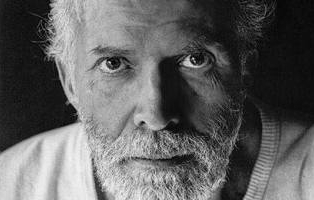
Recently someone briefly mentioned Robert Adams to me and for some reason it prompted me to take a look through some of his teachings. I chanced upon what I felt to be a highly powerful set of teachings given in Satsang in 1992, and this post is the result.
Here are a selection of quotes from Robert Adams that point the way to That which is beyond words and That which we already are/already is. The quotes are largely in order they were given during a single talk and I have inserted sub-headings which I hope makes the key points stand out more. Even though the teachings are largely self-explanatory, and there is something powerful in the phrasing of the actual quotes below, I have also summarised the teachings at the end of the post:
Trust in the Power that Knows The Way
The power that knows the way will take care of you. The one who makes the sun shine, the grass grow, the apples grow perfectly on apple trees, the food that sustains us, nourishes us. Everything has been lovingly provided for us. Have faith, trust the power that knows the way.
This is the first step, to have total faith and total trust in the infinite, the one. You may call this God, if you want to. Makes no difference what you call it. It is within you. It is without you. It is everywhere. All you have to do is to surrender to it. Surrender all of your doubts, your frustrations, your fears, everything that has besieged you for so long. Give it all up. It doesn’t belong to you. Be free of it.
No Body, no Mind, no World
When you’re able to do this, you can go further, and understand that there never was a body to begin with. The world, as it appears, does not exist. The universe, as it appears does not exist. Yet you are, and you will always be. What are you and what will you always be?
Silence.
There is no answer for that, for the mind can never comprehend the unknown, the transcendental, the Self. The mind can never know these things. The mind only knows itself as a body, as a doer. Therefore you have to transcend the mind, transcend the thoughts, transcend the world, transcend the universe, and enter the silence, where there is total bliss, and peace and harmony.
Do not be in conflict with yourself
Do not be in conflict with your thoughts and the self. When there is no conflict there are no thoughts. Thoughts only appear because there’s conflict. By conflict I mean, you’re worrying about getting rid of your thoughts, you’re doing sadhana, meditation, pranayamas, japa. All of these things cause conflict.
For aren’t you saying, ‘I’m doing these things to become liberated. I’m doing these things to become free.’ The reason there’s a the conflict is because you’re already free and liberated. Therefore when you give yourself the information that you have to do something to become liberated, there is immediately conflict.
Your programmed belief in being a body-mind causes this conflict
This is the only problem you have. It is your conflict. And this conflict comes from programming when you were a child, from samskaras, … This is where the conflict comes from. For it tells you, ‘I’m just a human being, I’m just a frail body. I have to suffer sometimes, sometimes I have to be happy.’ This is all a lie. There never was a you that has to suffer. There never was a you that has to be happy.
Nobody needs to be happy
There is no one in you who needs to be happy. There is no one in you who needs to be miserable. They are both impostors. So every time you try to exchange negative conditioning to positive conditioning, you’re causing conflict. This is the reason psychology and psychiatry does not work. For they’re trying to make you normal. Who wants to be normal? How boring.
Wish for nothing
The truth is do not wish to be anything. There is nothing you wish to be. There is nothing you have to become. There is no future, for you to become anything. Right this moment you are the one, and there never was another. Right this moment you are totally free, without thinking a thought, without trying to make anything happen.
Nothing to accomplish
Why not awaken to this truth? Why not awaken to the fact that there is nothing that you have to become, there are no goals to accomplish.
Your beliefs about karma
You want to believe everything is preordained, and it’s been mapped out for you. Or you believe that you’re just a victim of circumstance, going through many experiences, to learn a lesson. It’s really funny to me when people tell me, ‘Something happened in my life, but I guess that’s the lesson that I have to learn,’ or, ‘That’s my karma.’
Forget about karma.
Forget about lessons you have to learn. No one has to learn any lessons. No one has to go through their karmic experiences. Put an end to it all. Drop it all. After all, for whom is there karma? For whom are there experiences? Only for the I-thought, for the mind, not for you. You are bright and shining. You are the absolute reality, Brahman.
Words: ‘Reality’ and ‘Brahman’
Yet even those words are superfluous, redundant. For what do these words actually mean to you, absolute reality, Brahman? They’re just names that are given to the absolute reality, to the Self. Yet everything has to go. The absolute reality has to go. The Self has to go. The reason it has to go is because you’re thinking about this with your finite mind, and every answer you come up with is erroneous.
Always remember the finite mind can never know the infinite. It’s impossible. And there’s absolutely nothing you can do about it. Consequently the wise person becomes silent, quiescent. You’re not even trying to change your thoughts or stop your thoughts. For how can you try to stop something or change something that never existed to begin with.
The cause of conflict
Can you see now why you’re in conflict? You’re trying to correct something, you’re trying to become something, you’re trying to do something, and something does not exist.
Also what you’re trying to correct does not exist. What you’re trying to change does not exist. You get nowhere. This is why I tell you so often: leave everything alone. Have no opinions for or against. Do not be judgemental. Be nothing and you’ll be everything.
So why come to satsang?
Why do most of you come to satsang? As long as you have a reason it’s the wrong reason. There should be no reason. There shouldn’t be any valid reason why you come to satsang. For if you think back on what I’ve been referring to, you will see every reason is erroneous. For the reason that you’re trying to come to satsang doesn’t exist at all. You say you come to satsang to become enlightened, to know the truth. Who has to know the truth? Who has to become enlightened?
You come to sit with me. You can always sit with me, wherever you are. What I’m trying to tell you, do not look for reasons why you do something. When you start giving up all reasoning, all ambition, when you start surrendering all of your so called power, your human power that you think you have, this is when the mind begins to slow down.
Methods for stilling the mind
The mind will never slow down by trying to make it slow down. I don’t care what method you use. When you are using Vipassana meditation, when you’re using breathing, whatever method you’re using… Whatever method you’re using, you’re using your mind. It is your mind that you’re still using. That’s why you can never get anywhere.
You must use your mind, no matter what you do. Therefore stop doing anything. I know many of you have been practising sadhana for 25 years, 40 years, practising many forms of meditation, going to teachers, reading many books. And what becomes of you? You may get a good feeling, then it goes away, and you’re back where you started from.
The only practice
The only thing that you should do, or must do, is not to be in conflict with anything. Do not be in conflict with anyone or anything. When you’re not in conflict with anything, the mind begins to surrender itself, and goes back into the heart, and you become your Self. This is the easiest thing that you ever had to do. It’s simplicity itself. It’s simplicity itself because there’s nothing you have to do. There’s nothing you have to become. There’s no one you have to change. You are that.
Be open
Do not analyze what I am saying. Do not even agree with what I’m saying. Just be open. Open your heart by remaining still, silent. Allow the thoughts to come, do try not to stop them. Do not judge your thoughts, analyse your thoughts, or try to change your thoughts, or try to remove your thoughts. This will put you back in conflict with your thoughts.
No need to observe or be the witness
Do not even observe your thoughts. Do not even be the witness to your thoughts. Why? Because in reality there are no thoughts. The thoughts that you think you’re thinking, are an optical illusion. It is false imagination. Don’t you see? Everything that you’re thinking about is false. There is no thinker and there are no thoughts. So why have you been practising all these exercises all of your life? It’s like a person in the ocean going in search for water.
Awaken. Be free. Be yourself.
True Self
You are the joy of the world, the light that shines in darkness. You are a blessing to the universe. Love yourself always. When you love yourself, you love God. Forget about the past. Never dwell on the past. Remember, time and space does not exist. If time and space does not exist, then there cannot be a past or a future, for the past and the future is about space and time. If there is no time and space, there cannot possibly be a past or a future. So who thinks about the past? Who thinks about the future?
Beyond Self-Enquiry
Even to say the I does, the I-thought does, this again is mostly for beginners. Self-inquiry is very important, don’t get me wrong. But the day has to come when you go beyond self-inquiry, when you just realize and understand that there is no I-thought at all. It never existed. Therefore you do not have to get rid of it. There is nothing to get rid of, because nothing exists. You are total freedom, right this instant, right this minute.
The unreality of thoughts and things
Whenever your thoughts dwell on the past, do not become angry with yourself.
Leave them alone. Do not observe them. Do not watch them. Do not be the witness to them. Just leave them alone. They will disappear of their own volition, due to the fact that they never existed. This is an important point. This is the reason why you leave everything alone. Now if things existed, if there was such a thing as negative thinking, karma to get rid of, then you’d have a job on your hands. You’d have to do all sorts of things to get rid of your karma, your past sins. You’d be working continuously, practising all kinds of japa, mantras, everything, to remove all of these thoughts of the past. But I say to you since these things never existed to begin with, why do any work at all?
Oh, it’s okay, if you like to work, but I’m very lazy myself, and the less work I have to do, the better.
Do not look for results
Do not look for results. Because it’s your true nature, sooner or later the results must presume themselves, but it comes without your help. You cannot help God. God does not need your help. Just be yourself. It’s difficult to be totally honest with yourself, yet this is exactly what you have to do. Forget about being a Jnani, or enlightened, or having self-realisation.
Nobody becomes enlightened
First of all, what does the word enlightenment mean? I’m not talking about a dictionary definition. To the path of Jnana what does enlightenment mean? The answer is, there is no such word.
No one becomes enlightened. There is no body, no I, no me, there is no thing that can ever become enlightened. The word enlightenment is used by the ajnani, by students. Absolute reality, choiceless awareness, sat-chit-ananda, parabrahman, those are all words that do not exist, except to the student, in order to explain that there is a state beyond the so called norm, a state of total transcendence. And we give a name to this, enlightenment.
When this actually happens or transpires in a person the I has been totally destroyed, totally annihilated. The me no longer exists. And to that being there is absolutely no one who became enlightened. That being is resting in his true nature, in nothingness, absolute nothingness. No one can become enlightened. No one can be liberated, for the you that thinks it can be liberated doesn’t even exist. There is no you. There is no person.
There is no human being who is a human being one day and the next day becomes liberated. There is only the liberated Self and you are that. There is not you as you appear. The appearance of you, which you think you are, is false.
Your problems do not exist
This is why I say all of your problems, all of your nonsense that you go on with, all your worries, all your cares, all your emotions, they do not exist. They never have existed and they will never exist. It is all the game of maya, the leela. It doesn’t exist. No one in this room exists. There is no you and there is no me. There is only the Self. And when the self becomes the Self it is no longer the self, for there never was a real Self to begin with.
This is the reason why I emphasise, stop thinking. Your thoughts pull you deeper into maya, into illusion. Do not think of enlightenment, or awakening, or being liberated, or finding a teacher who can help you. You are beyond help. No one can do anything for you.
The process of Realisation
Actually what happens is this. As you begin to realise you are not your thoughts, you are not your body, you are not your mind, you are not the world, you’re not even liberated, you are nothing, as you begin to think this way whatever has to happen in your evolution will transpire without you doing anything. If you are meant to be with a teacher you will be with a teacher. If you are meant to be by yourself you will be by yourself, yet you have absolutely nothing to do with these things. Remain in the no-thought state.
No need to look for liberation
The worst thing you can ever do is to search for enlightenment, for liberation. This keeps you back. It keeps you back because there is a self that is searching. There is an I that is searching. There is a me that is trying to become something and the whole idea is to remove something from your consciousness.
You are No Thing
Therefore the process of realization is removal, not adding. Removing this and removing that. Removing all concepts and all preconceived ideas. Removing all of your thoughts, no matter what kind of thoughts they are.
Good thoughts, bad thoughts, they all must go, and what is left will be nothing, no thing.
You are that. You are that no thing.
Leave the world alone
Leave the world alone. Leave people alone. Do not come to any conclusion. Do not judge anyone. Everything will take care of itself.
Doesn’t it feel good to be nothing instead of believing you are thoughts, and you are human, and you have a job to fulfill, and you have a mission? There are many spiritual people you know who think they have a mission. They have come to save the world. They can’t even save themselves and they’re looking to save the world. The world will go on the way it’s going on without your help, for or against. Leave the world alone.
The Current That Knows The Way
There is a power and there is a presence, which I like to call the current that knows the way, that takes care of everything. It is all part of the grand illusion. And even in this illusion, which appears in front of your eyes, there is a presence and a power that lifts you up. It will lift you up as high as you can allow it to, until it lifts you up completely out of your body, out of your thoughts, out of the universe, to a completely new dimension.
You’ll appear to be the same person as always to people, but you’ll not be that person any longer, for that person is gone, no longer exists. You have become Brahman. You have become all-pervading. You have become your Self without trying to do so.
Give thanks and love thyself
You must always have gratitude for the way you are. Do not feel sorry for yourself. Love yourself just the way you are. By loving yourself just the way you are you will transcend those things that have appeared to annoy you, to bother you, to cause you pain.
They will all go. You’ll no longer be aware of them. Let go of everything. Have no desires whatsoever. Dive deep within the Self. Do not react to the outside world or to your body. All is well.
When you are without thoughts, you are God
When you are without thoughts, when you are without needs, without wants, without desires, then you are God. You are the universe. You are divine love. You are beautiful. Yet when you begin to think about these things you deny it, for you think about the past and the future instead of staying centred in the eternal now. You think of the mistakes you made in life. You think about the dastardly things going on in this world.
You think about your future, about the so called recession. You are enmeshed in Maya. Do not continue to think this way.
Tom’s Summary:
You will see that the essential themes are:
1) Do not take any phenomena such as Body, Mind (eg. thoughts and feelings), World, Time or Space to be real (ie. all is illusion, part of the Jnana yoga teachings such as ajata). This means there is no real ‘you’ or ‘me’ or thoughts or practices or teachings, etc.
2) Be still/silent/without thoughts (ie. be still or the Raja Yoga/Dhyana yoga teachings)
3) All is well and nothing is required as:
a) you are already Indestructible Eternal and Free Timeless Being beyond words and things so there is nothing to do and nothing to worry about (ie. the Self-Knowledge or Jnana yoga teachings)
b) in the illusory world there is an illusory power that is already doing everything and this power will continue to look after everything in the absence of an illusory ‘me’ or ego, so there is nothing to do and nothing to worry about (ie. the Surrender or Bhakti yoga teachings)
4) Give thanks have have gratitude for what comes your way (ie. the gratitude or Karma yoga teachings)
What do you think – are the points I summarised above a correct representation of the quotes below? (clue: if you take point (1) to heart, where is the need for (2), (3) and (4)?) Feel free to let me know your thoughts in the comments below.
Tom’s Super-Brief Summary:
Therefore trust in The Power that Knows The Way, allow the mind to be still, know all is well for you are the Self and be thankful! Do not take the world (including your phenomenal body-mind self) to be real – nothing needs to be done or not done – it is all illusion!
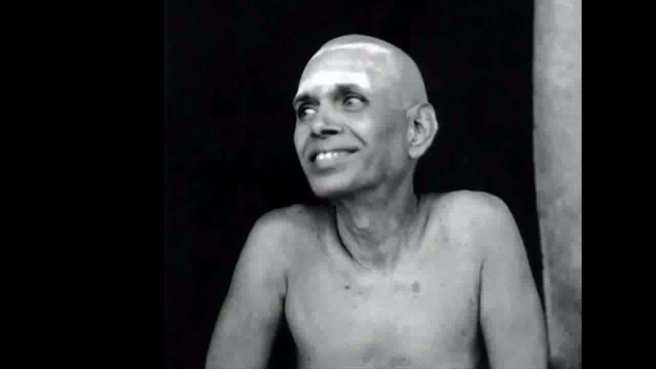
All of the following quotes were written by Bhagavan Sri Ramana Maharshi himself (as opposed to being recorded or compiled by someone else – of course translations from the original Tamil are presented here). Most of the quotes are taken from his short masterpiece ‘Who Am I?’, but I have also included two verses from Upadesa Saram (which he also wrote) which explains, in concise form, a method for liberation (click on the above links to find the texts together with them in PDF format for download).
If you read the quotes below carefully, you will see that Ramana also explains the nature of Jnana (Knowledge or Wisdom) and what it means to ‘abide as the Self’ or ‘resolve the mind in the Self’.
!Om Guru Ramana!
No thoughts
All the texts say that in order to gain release one should render the mind quiescent; therefore their conclusive teaching is that the mind should be rendered quiescent; once this has been understood there is no need for endless reading. Who Am I?
There will come a time when one will have to forget all that one has learned. Who Am I?
The mind should not be allowed to wander towards worldly objects and what concerns other people. Who Am I?
When there is no thought, the mind experiences happiness Who Am I?
As the meditation on the Self rises higher and higher, the thoughts will get destroyed. Who Am I?
Jnana
Remaining quiet is what is called wisdom-insight (Jnana-dristi). Who Am I?
Self-Abidance
To remain quiet is to resolve the mind in the Self. Who Am I?
No desire/attachment
Likes and dislikes, love and hatred, are equally to be eschewed. Who Am I?
As thoughts arise, destroying them utterly without any residue in the very place of their origin is non-attachment. Who Am I?
The world should be considered like a dream. Who Am I?
In no single one of the countless objects of the mundane world is there anything that can be called happiness. Who Am I?
The Mind
Apart from thoughts, there is no such thing as mind. Who Am I?
Doubts
Without yielding to the doubt ‘Is it possible, or not?’, one should persistently hold on to the meditation on the Self. Who Am I?
Even if one be a great sinner, one should not worry and weep ‘O! I am a sinner, how can I be saved?’ One should completely renounce the thought ‘I am a sinner’ and concentrate keenly on meditation on the Self; then, one would surely succeed. Who Am I?
A Method
Breath controlled and thought restrained,
The mind turned one-way inward
Fades and dies. Upadesa Saram
It is true wisdom For the mind toturn away From outer objects and behold
Its own effulgent form. Upadesa Saram
Silence
The Self is that where there is absolutely no ‘I-thought’. That is called ‘Silence’. Who Am I?
When one’s self arises all arises; when one’s self becomes quiescent all becomes quiescent. Who Am I?
Surrender
He who gives himself up to the Self that is God is the most excellent devotee. Giving one’s self up to God means remaining constantly in the Self without giving room for the rise of any thoughts other than the thought of the Self. Who Am I?
It is, in fact, the indefinable power of the Lord that ordains, sustains, and controls everything that happens. Why then should we worry, tormented by vexatious thoughts, saying: ‘Shall we act this way? No, that way,’ instead of meekly but happily submitting to that Power? Who Am I?
Closing ‘thoughts’
If only the mind is kept under control, what matters it where one may happen to be? Who Am I?
All the texts say that in order to gain releaseone should render the mind quiescent; therefore their conclusive teaching is that the mind should be rendered quiescent; once this has been understood there is no need for endless reading. Who Am I?
In the scriptures many types of Realisation are discussed. In some scriptures it states the world no longer appears after True Realisation, and in other scriptures it says the world continues to appear. Other scriptures describe two broad categories of Realisation, one in which the world does appear, and another in which the world no longer appears. Due to these confusing scriptural contradictions Ramana was asked many times about this.
In summary his answers usually went something like:
(1) Don’t worry about this question and instead do self-enquiry – this question is a mere intellectual distraction
(2) It doesn’t matter if the world appears or not
(3) Realisation is the removal of the ego-entity that asks this question
Here is one example of how Ramana responded to this question when it was asked to him directly. You can find other examples here:
A visitor: Is the jagat (world) perceived even after Self-Realization?
M.: From whom is this question? Is it from a Jnani or from an ajnani?
D.: From an ajnani.
M.: Realise to whom the question arises. It can be answered if it arises after knowing the doubter. Can the jagat or the body say that it is?
Or does the seer say that the jagat or the body is? The seer must be there to see the objects. Find out the seer first. Why worry yourself now with what will be in the hereafter?
[Tom – ie. Ramana is telling the questioner not to worry about this question of the nature of liberation and instead attend to himself ie. to do self-enquiry]
Sri Bhagavan continued: What does it matter if the jagat is perceived or not perceived? Have you lost anything by your perception of jagat now? Or do you gain anything where there is no such perception in your deep sleep? It is immaterial whether the world is perceived or not perceived.
[Tom: Now Ramana answers the question directly:]
The ajnani sees the Jnani active and is confounded. The jagat is perceived by both; but their outlooks differ. Take the instance of the cinema. There are pictures moving on the screen. Go and hold them.
What do you hold? It is only the screen. Let the pictures disappear.
What remains over? The screen again. So also here. Even when the world appears, see to whom it appears. Hold the substratum of the ‘I’. After the substratum is held what does it matter if the world appears or disappears?
The ajnani takes the world to be real; whereas the Jnani sees it only as the manifestation of the Self. It is immaterial if the Self manifests itself [Tom: as the world] or ceases to do so.
From Talks with Sri Ramana Maharshi, talk no. 65
Here is another example:
The non-dualist says that the world is unreal, but he also says, ‘All this is Brahman’. So it is clear that what he condemns is, regarding the world as objectively real in itself, not regarding it as Brahman. He who sees the Self sees the Self alone in the world also. It is immaterial to the Enlightened whether the world appears or not. In either case, his attention is turned to the Self. It is like the letters and the paper on which they are printed. You are so engrossed in the letters that you forget about the paper, but the Enlightened sees the paper as the substratum whether the letters appear on it or not.
Day by Day with Bhagavan, pages 307-8
In Ulladu Narpadu (Forty Verses On Reality by Sri Ramana Maharshi) Verse 3 states:
3. ‘The World is true’; ‘No, it is a false appearance’; ‘The World is Mind’; ‘No, it is not’; ‘The World is pleasant’; ‘No, it is not’ — What avails such talk? To leave the world alone and know the Self, to go beyond all thought of ‘One’ and ‘Two’, this egoless condition is the common goal of all.
Here we can clearly see that Ramana is telling us not to argue about such things such as the Reality of the world but instead it is wiser to leave such worldly things behind and instead know what you are through self-enquiry/self-attention, and ‘discover’ your true nature beyond thoughts and concepts, beyond objects and devoid of egotism.
Similarly, also from Ulladu Narpadu, the final verse, verse 40, states:
40. If asked, ‘Which of these three is final liberation: With form, without form, or with-and-without-form?’ I say, Liberation is the extinction of the ego which enquires ‘With form, without form, or with-and-without-form?’
These three types of liberation described in this verse are essentially the three in my opening paragraph of this post, namely some say in final liberation there are no forms present (ie. no world is perceived), others say forms still continue to appear in liberation (ie. the world is still perceived), and others says it is both (ie. that the world somehow both appears and does not appear depending on how you look at it or want to phrase it). Ramana concludes his Ulladu Narpadu by emphatically stating that true liberation is the extinction of the ego-entity that is wondering about such conceptual frivolities!
A text that Sri Ramana recommended that Annamalai Swami read was Ellam Ondre. Ramana said to Annamalai Swami ‘If you want moksha, write, read and practise the instructions in Ellam Ondre.’ In verses 7 and 8 of Chapter 2 it states the following:
7. Therefore your true state is that fourth one which is distinguished from the waking, dream and deep sleep states. You are that only. What is this fourth state? It is knowledge which does not particularise anything. It is not unaware of itself. That is to say, the fourth state is Pure Knowledge which is not conscious of any object, but not unconscious itself. Only he who has realised it even for a trice, has realised the Truth. You are that only.
8. What is there more for him who has gained the fourth state? Practically, it is not possible for anyone to remain forever in that state, that is, the state of no particular knowledge. He who has realised the fourth state later wakes up in this world, but for him this world is not as before. He sees that what he realised as the fourth state, shines forth as all this. He will not imagine this world as distinct from that Pure Knowledge. Thus what he saw within, he now sees without in a different form. In the place of the differentiation of old, he is now established in the state of non-differentiation everywhere. Now, he is all. There is nothing distinct from himself. His eyes closed or open, howsoever the things may change, his state remains unchanged. This is the state of Brahman. This is the natural eternal state. You are that ever-true state.
You will see there is a distinction made here between the method (verse 7) and the result (verse 8). The method here involves gaining the state of Turiya in which there are no objects seen and only pure consciousness remains. The result of this is dissolution of the ego, but that this objectless state of pure consciousness does not remain so forever, so when the word-image returns, there is no longer any duality and all is ‘seen as Self’.
There are however may types of liberation described by the scriptures, and this post here explores some of the ways liberation has been classified.
I will leave you with the following from Bhagavan Ramana’s short masterpiece, Nan Yar? (Who Am I?):
All the texts say that in order to gain release one should render the mind quiescent; therefore their conclusive teaching is that the mind should be rendered quiescent; once this has been understood there is no need for endless reading. In order to quieten the mind one has only to inquire within oneself what one’s Self is;
This image is taken from a story in the Mahabharata and represents the situation we are in if we are ignorant.
Our past deeds (elephant) are chasing us, our future karma (snakes) and eventual death (snakes) awaits us, the present moment (the branch) is being eaten away by mice – our time is slowly running out as days (white mouse) and nights (black mouse) pass by.
Meanwhile Vishnu holds out his saving hand of Moksha (liberation) to us but we are too entranced by the honey (pleasure) dripping from Maya (honeycomb) that we endure the pains of life (bees stinging us) and we stay in this ridiculous and precarious situation rather than take Vishnu’s hand of Moksha.
Feel His Love,
Allow His Love and Light to fill up your entire body,
Rest in His Presence,
Christ Within.
Our Constant Companion,
Our Divine Shadow,
Unshakeable,
Ever-dependable,
I lean on Him.
Allow Him to Console you,
Pray to Him in Secret,
This is your Secret Prayer:
Your Love for Him.
Your love for Him,
Merging in His Love,
Filling up your body with Love and Light,
Filling the Universe,
Made of Love and Light,
My Heart overflows,
With Your Divine Love.
.
.
.
.
Where are you not?
.
.
.
.
Where am I?
.
.
.
. ❤️❤️❤️







 Tom Das