What you are is what you are. It can never be known by the mind. The thinking mind can never discover what you are. This is knowledge, supreme knowledge, supreme realisation as opposed to mundane or worldly knowledge. This knowledge is your Being. It is known by being what you are. So when this question is asked, ‘Who am I? What am I?’ The answer is not the words ‘I am’, the answer is what those words signify.
This video was recorded live during a Satsang meeting with Tom Das and put together by volunteers.
Tom: Yes, ego-mind-thought must die for realisation to occur. Those who are still attached to the body-mind-world and still take themselves to be the body say otherwise.
Ego is ignorance. Ego is duality. It is the ego that creates/projects the body-mind and world, like in a dream. When ego goes, everything goes, and all that remains is the Self. It cannot be put into words or understood by the mind. In truth ego never existed at all.
Objections to this such as ‘how does the sage function without ego’ only occur in ignorance of taking the sage to be the body and in the presense of ego-ignorance seeing body-mind-world.
The paradox of this cannot be explained in words, but when the mind becomes so completely and utterly still so that time and space and personhood all cease to exist, this ‘Self’ is somehow ‘known without knowing’.
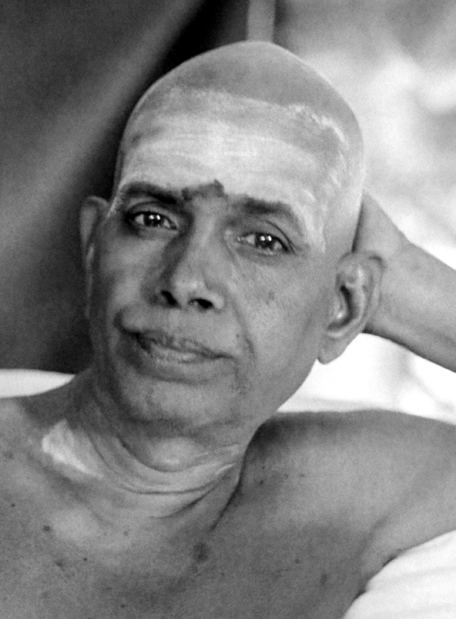
Now it is true that Sri Ramana often said that we should ‘be still’ [in Tamil – ‘Summa Irru’ which means ‘be still’ or ‘just be’] and that this is the practice, but what did he mean by ‘be still’? If we read and examine Sri Ramana’s written work ‘Who Am I?’, we will see what Sri Ramana means when he says ‘be still’ or ‘keep quiet’. Note that we can trust the teachings in ‘Who Am I?’ as an authentic rendition of Sri Ramana’s teachings as they were written by Sri Ramana himself.
Let us see: the first time we come across the notion of quieting the mind in ‘Who Am I?’ is as follows:
‘When the mind, which is the cause of all cognition’s and of all actions, becomes quiescent, the world will disappear.’
Now on the face of it this is quite a strange statement for Sri Ramana to make: that the world will disappear when the mind is still. Clearly, when Sri Ramana states that the mind is to be quiet, he is perhaps using these words in a different way to how they are normally used. How can it be that when the mind becomes quiet the world disappears?
Well earlier in ‘Who Am I?’ Sri Ramana explains that it is the mind is a power that creates or projects the entire body, mind and world*, so to ‘be quiet’ means not just to still the ordinary thinking mind, but to still this world-projecting power, ie. to remove all of Maya. Ramana repeats this, see here, also from ‘Who Am I?’:
Question: When will the realization of the Self be gained?
Sri Ramana Maharshi: When the world which is what-is-seen has been removed, there will be realization of the Self which is the seer
Question: Will there not be realization of the Self even while the world is there?
Sri Ramana Maharshi: There will not be.
I have a video here which explains the importance of this teaching. It fundamentally explains why some teachings are liberating and others are not:
Whilst some teachings may encourage us to still the mind, Sri Ramana is emphasising removing the entire body-mind-world from our consciousness. We can see that Sri Ramana’s teaching is far more extreme than many others – it is this extreme teaching that is needed to remove ignorance and realise the Self.
Sri Ramana emphasises Self-Enquiry as the only sadhana that will lead us to Liberation. Again, Sri Ramana’s teaching is more narrow and prescriptive in this way, as he maintains that Self-Enquiry is the only way. Let us see what else Sri Ramana writes in ‘Who Am I?’:
Question: Are there no other means for making the mind quiescent?
Sri Ramana Maharshi: Other than inquiry [Vichara; Self-Enquiry], there are no adequate means.
We can see that Sri Ramana is stating that sadhana or self-enquiry is essential to make the mind quiet, so that when Sri Ramana is asking us to ‘be still’ or ‘keep quiet’, he is actually asking us to do Self-Enquiry.
*What is called mind (manam) is a wondrous power existing in Self (atma-swarupam). It projects all thoughts…Other than thoughts, there is no such thing as the world….Just as the spider spins out the thread from within itself and again withdraws it into itself, so the mind projects the world from within itself and again absorbs it into itself. ~ from Who Am I? by Sri Ramana Maharshi
Sometimes to those who are on the spiritual path, it can seem like those who are in full ignorance are happier. It can feel like ignorance is bliss, but it isn’t. It’s deep, deep suffering.
There are few things about spiritual seeking…First, the spiritual seeker has a certain type of sensitivity, which makes them more sensitive to suffering, because they are more aware of it often. That self-aware aspect can intensify suffering that wouldn’t bother other people so much. Some spiritual seekers have fairly nice lives outwardly. But inwardly they are suffering intently because they are more sensitive to their suffering because the awareness is there.
The other thing about the spiritual path is that it is often an isolating path, which also makes it difficult. There is no one to share it with, very few people understand this, because most people are not seekers of liberation, they are seekers of other things.
The other thing is there is nothing you can do about it. Say ignorance was bliss, probably with this there is no turning back! I’m sorry to say, you can’t go back!
Sri Ramana Maharshi did not say you have to love me, you have to devote yourself to me – that is not the essence of the teaching at all. That is actually to miss the point to what he is actually pointing towards. He said you’ve got to follow my teachings. You have to follow the Guru’s instruction.
This video was recorded live during a Satsang meeting with Tom Das.
Tom: Traditionally Sravana refers to hearing the teaching.Manana refers to reflecting upon and thinking about the teaching which has been heard.Nididhyasana refers to prolonged meditation upon the Self, which culminates in Samadhi, which then leads to Moksha (Liberation).
The knot of the ignorance in the heart is broken completely only when one sees his Self as secondless through Nirvikalpa Samadhi
~Adhyatama Upanishad 1.17
Here is a quote from Sri Ramana Maharshi taken from Talks with Sri Ramana Maharshi, Talk no. 249 – all writing below in black type is from Sri Ramana, with my comments being in red:
The effects of sravana may be immediate and the disciple realises the truth all at once. This can happen only for the well-advanced disciple.
[Tom: later Sri Ramana explains that this means that the advanced/ripe seeker immediately goes into Samadhi, which is the same as abiding as the Self, as soon as the teaching is heard]
Otherwise, the disciple feels that he is unable to realise the truth, even after repeatedly hearing it. What is it due to? Impurities in his mind: ignorance, doubt and wrong identity are the obstacles to be removed.
(a) To remove ignorance completely, he has to hear the truth repeatedly, until his knowledge of the subject-matter becomes perfect
(b) to remove doubts, he must reflect on what he has heard; ultimately his knowledge will be free from doubts of any kind;
(c) to remove the wrong identity of the Self with the non-self (such as the body, the senses, the mind or the intellect) his mind must become one-pointed. All these things accomplished, the obstacles are at an end and samadhi results, that is, Peace reigns.
Some say that one should never cease to engage in hearing, reflection and one-pointedness. These are not fulfilled by reading books, but only by continued practice to keep the mind withdrawn.
The aspirant may be kritopasaka or akritopasaka. The former is fit to realise the Self, even with the slightest stimulus: only some little doubt stands in his way, it is easily removed if he hears the truth once from the Master. Immediately he gains the samadhi state. [Tom: Sri Ramana is stating that by listening alone, or by some other minimal stimulus, the ripe seeker spontaneously goes into samadhi without the need for the intermediary steps of reflecting upon the teachings or meditating upon them.] It is presumed that he had already completed sravana, reflection, etc. in previous births, they are no more necessary for him.
For the other all these aids are necessary; for him doubts crop up even after repeated hearing; therefore he must not give up aids until he gains the samadhi state. Sravana removes the illusion of the Self being one with the body, etc. Reflection makes it clear that Knowledge is Self. One-pointedness reveals the Self as being Infinite and Blissful.
Q. I want to see if I comprehend properly, between the terms self-effort and self-inquiry, because what comes into my mind is letting go, which seems to be somehow in contradiction to the term effort.”

 Tom Das