Ultimately, it is all just due to Grace. Hearing the teaching, being interested in it, meeting a teacher… It is all due to Grace. Just be open and receptive to it.
Advaita Vedanta
True Courage
True courage is not what we think it is. The real courage is not what we usually refer to in our everyday life. The real courage is to abide as the Self.
We are lucky to have Ramana and his teaching that give us all the needed instructions on how to do it and overcome potential difficulties with our practice.
So, the key is in our hands, to follow the teaching and end our suffering or not and see from your experience what that brings with it.
This video was recorded live during a Satsang meeting with Tom Das.
Attend to the Subject
Direct and Indirect Knowledge (Paroksha and Aparoksha Jnana) | Advaita Vedanta
First we hear the teachings (sravana), then we think about the teachings (manana), then we realise what they are pointing to (*paroksha jnana or understanding primarily on the level of the mind, ie. indirect knowledge;).
This naturally leads to abiding as the Self (nididhyasana), which leads to deeper and deeper silence (mouna or samadhi).
Eventually all of the egoic tendencies (vasanas) are removed (vasana kshaya) resulting in destruction of ignorance (manonasa or destruction of egoic mind) which is the same as liberation (moksha) or direct knowledge (*aparoksha jnana – direct knowledge) or self-realisation (atma sakshatkara)
This entire path is then seen to have been illusory (maya)!
Where is there to go? Who/what entity is there to go anywhere? What is there to do?
In the meantime suffering will continue until the Self is realised as your own very Being, and it is Abidance in that Being as that Being that fructifies as Moksha.


*Think of ‘paroksha’ as meaning ‘mediated’, so paroksha jnana means knowledge that is mediated by something, ie. it is indirect knowledge. Conversely think of aparoksha as meaning unmediated, so aporoksha jnana refers to unmediated or direct knowledge.
Shankara: how to Realise the Self (commentary on the Brihadaranyaka Upanishad)
Also see: Do we need to turn away from the world of objects to realise the Self?
This post is a long read, but definitely worthwhile if you are interested in understanding the teachings as given in the most authoritative of Vedanta Scriptures, with a commentary by Shankara himself. You can just read my comments in red together with text in bold if you wish to obtain an overview first, and then you can always dig deeper into the text if you want to read the original teachings in more detail.
From Sri Shankara’s introduction to the Brihadaranyaka Upanishad:
‘This concise commentary is being written on it [the Brihadaranyaka Upanishad] to explain to those who wish to turn away from this relative world (Saṃsāra), the knowledge of the identity of the individual self and Brahman, which is the means of eradicating the cause of this world (ignorance). This knowledge of Brahman is called ‘Upaniṣad’ because it entirely removes this relative world together with its cause from those who betake themselves to this study, for the root ‘sad’ prefixed by ‘upa’ and ‘ni’ means that.
Executive Summary
Tom: Here in Shankara’s Commentary on the Brihandaranyaka Upanishad (which is said to be the oldest and longest of the Upanishads, and Shankara’s commentary on this Upanishad is said to be the longest and greatest out of all of Shankara’s commentaries on the Upanishads), Shankara shows how this Upanishad is stating that first we are to intellectually know that ‘All objects are one with consciousness’, and then we are to go beyond this and realise the pure consciousness that we are devoid of all objects and appearances and know ourselves as That.
Shankara states that by associating with or attending to objects ignorance and suffering are perpetuated, and by turning our attention away from objects and merging all in the Self, all that remains is Pure Consciousness, homogeneous and One.
When that pure consciousness is known by being That, it cannot even be said to be consciousness anymore, the world consciousness just being a clue where we, in duality, should attend to, but once realised it is simply the Pure Unalloyed Self beyond dualistic concepts of consciousness and the like.
We can see that these teachings are in fact the same teachings given in other texts such as Shankara’s masterpiece Vivekachudamani (in which the Upanishadic teachings are all neatly summarised) and the same as the teachings of Sri Ramana Maharshi, eg. as given presented in the text The Path Of Sri Ramana.
Bold type formatting has been added by myself for emphasis and my comments are in italicised red.
Brihadaranyaka Upanishad, Chapter 2, Section IV – Yajnavalkya and Maitreyi
Tom: Shankara first summarises the teachings of the previous chapters, explaining how the world of objects is a creation of ignorance or maya, (ie. objects are illusion) and this is different to True Knowledge. Note that Knowledge is equated as being the same as The Self when devoid of any objective phenomena.
Shankara’s Commentary:
‘The Self alone is to be meditated upon’ (I. iv. 7); ‘Of all these, this Self alone should be realised” (Ibid.), for ‘It is dearer than a son’ etc. (I. iv. 8). In the course of explanation of the above passages already introduced, the aim of knowledge and its relation to that aim have been stated in the sentence. ‘It knew only Itself as, “I am Brahman.” Therefore It became all’ (I. iv. io). Thus it has been mentioned that the inner Self is the domain of knowledge. While that of ignorance is relative existence, which consists of the ends and means of rites with five factors, which again depend on the division of men into four castes.; it is by nature alternatively manifest and unmanifest like the tree and the seed, and is made up of name, form and action. This relative existence has been dealt with in the passage beginning with, ‘He (who worships another god thinking), “He is one, and I am another,” does not know’ (I. iv. io), and concluded in the passage, ‘This indeed consists of three things: name, form and action’ (I. vi. i). One aspect of it is in accordance with the scriptures and makes for progress leading up to the world of Hiraṇyagarbha; while the other aspect is not in accordance with the scriptures and causes degradation down to the level of stationary objects. All this has already been shown in the section beginning with, ‘Two classes of Prajāpati’s sons,’ etc. (I. iii. 1).
In order to show how a man disgusted with this domain of ignorance can qualify himself for the knowledge of Brahman, which deals with the inner Self, the entire domain of ignorance has been concluded in the first chapter.
Tom: Shankara then goes on to say that the world of objects cannot lead to liberation and must be renounced or given up. All actions or karmas, such as rituals, or any doing or thinking all belong to the domain of ignorance, ie. the realm of objective phenomena, so they are not able to lead to the Self, which is the objectless Subject.
But in the second chapter, after introducing the inner Self, which is the domain of the knowledge of Brahman, in the words, ‘I will tell you about Brahman’ (II. i. 1), and ‘I will instruct you about Brahman’ (II. i. 15), the Śruti has taught about that Brahman, the one without a second devoid of all differences, by eliminating, in the words, ‘Not this, not this,’ all material qualities summed up in the word ‘truth,’ which by its very nature comprises action, its factors and its results. As part of this knowledge of Brahman, the Śruti wishes to enjoin renunciation.
Rites with five factors such as wife, son and wealth constitute the domain of ignorance, because they do not lead to the attainment of the Self. If a thing calculated to produce a particular result is applied to bring about a different result, it frustrates its purpose. Running or walking is not the means to appease one’s hunger or thirst. The son and the rest have been prescribed in the Śruti as means to the attainment of the world of men, of the Manes and of the gods, not as means to the attainment of the Self. They have been mentioned as producing those specific results. And they have not been enjoined on the knower of Brahman, being classed by the Śruti as rites with material ends, in the passage, ‘This much indeed is desire’ (I. iv. 17). And the knower of Brahman has already attained all desires; he cannot for that very reason have any more desires. The Śruti too says. ‘We who have attained this Self, this world’ (IV. iv. 22).
Tom: Shankara goes on to make an emphatic statement about liberation and desire, and then a perhaps even more emphatic statement about liberation obliterating all karmas, all ignorance and all the effects of ignorance (ie. the appearance of separate objective phenomena and suffering). Lastly he states the importance of renunciation for liberation, a theme found throughout Shankara’s commentarial works.
But there are some who hold that even a knower of Brahman has desires. They have certainly never heard the Bṛhadāraṇyaka Upaniṣad, nor of the distinction made by the Śruti that the desire for a son and so forth belongs to an ignorant man, and that with regard to the domain of knowledge, the statement, ‘What shall we achieve through children, we who have attained this Self, this world?’ and so on, is applicable. They do not also know the contradiction, based on incongruity, between the attainment of knowledge, which obliterates all action with its factors and results, and ignorance together with its effects. [Tom: ie. all objects, duality, actions and suffering are removed with liberation, so there is no possibility of either desire or an object to desire in liberation] Nor have they heard Vyāsa’s statement (on the subject). The contradiction rests on the opposite trends of the nature of rites and that of knowledge, which partake respectively of ignorance and illumination. On being asked, ‘There are two Vedic injunctions: Perform rites, and give up rites. What is the goal of knowledge, and what of rites? I wish to be enlightened on this. So please instruct me. These two (it seems) are mutually contradictory and run counter to each other’ (Mbh. XIl. ccxlvii. i-2), Vyāsa replied, thereby showing the contradiction, ‘Men are bound by rites and freed by knowledge. Hence sages who have known the truth never perform rites,’ and so on (Ibid., verse 7). Therefore the knowledge of Brahman leads to the highest goal for man not with, but without the help of any auxiliary means, for otherwise there would be contradiction all round. It is to show this that renunciation of the world, which consists in giving up all means, is sought to be enjoined as a subsidiary step. For at the end of the fourth chapter it has been asserted, ‘This much indeed is (the means of) immortality, my dear’; and we have also a sign for inference (about this) in the fact that Yājñavalkya, who was a ritualist, renounced the world.
Moreover, the knowledge of Brahman as a means to immortality has been imparted to Maitreyī, who was without the means to perform rites. Also wealth has been deprecated. If rites were means to immortality, the derogatory remarks about wealth would be out of place, since on it rites with five factors depend. If, however, rites are desired to be shunned, then it is proper to decry the means to them. Besides (in the state of knowledge) there is an absence of the consciousness about caste, order of life, etc., which are the qualifications for the performance of rites, as we see in the passages, ‘The Brāhmaṇa ousts one’ (II. iv. 6; IV. v. 7), ‘The Kṣatriya ousts one,’ etc. (Ibid.). When one ceases to consider oneself a Brāhmaṇa, a Kṣatriya, or the like, there is certainly no room for such injunctions as that this is the duty of Brāhmaṇas, or that this is the duty of Kṣatriyas, for there are no such persons. For a man who does not identify himself as a Brāhmaṇa, a Kṣatriya, or the like, rites and their accessories, which are the effects of that consciousness, are automatically dropped because of the giving up of that consciousness. Therefore this story is introduced with a view to enjoining renunciation of the world as part of the knowledge of the Self.
Verse 2.4.1:
मैत्रेयीति होवाच याज्ञवल्क्यः, उद्यास्यन्वा अरेऽहमस्मात्स्थानादस्मि, हन्त तेऽनया कात्यायन्यान्तं करवाणीति || 1 ||
maitreyīti hovāca yājñavalkyaḥ, udyāsyanvā are’hamasmātsthānādasmi, hanta te’nayā kātyāyanyāntaṃ karavāṇīti || 1 ||
1. ‘Maitreyī, my dear,’ said Yājñavalkya, ‘I am going to renounce this life.’ Allow me to finish between you and Kātyāyanī.
Shankara: The sage Yājñavalkya addressing his wife, Maitreyī, said, ‘Maitreyī, I am going to renounce this householder’s life —I intend to take up the life of renunciation, which is the next higher life. Hence I ask your permission.—The particle ‘are’ is a vocative.—Further I wish to finish between you and my second wife, Kātyāyanī, i.e. put an end to the relationship that existed between you through me, your common husband; by dividing my property between you I will separate you through wealth, and go.’
Verse 2.4.2:
स होवाच मैत्रेयी, यन्नु म इयं भगोः सर्वा पृथिवी वित्तेन पूर्णा स्यात्कथं तेनामृता स्यामिति; नेति होवाच याज्ञवल्क्यः, यथैवोपकरणवतां जीवितं तथैव ते जीवितं स्यात्, अमृतत्वस्य तु नाशास्ति वित्तेनेति ॥ २ ॥
sa hovāca maitreyī, yannu ma iyaṃ bhagoḥ sarvā pṛthivī vittena pūrṇā syātkathaṃ tenāmṛtā syāmiti; neti hovāca yājñavalkyaḥ, yathaivopakaraṇavatāṃ jīvitaṃ tathaiva te jīvitaṃ syāt, amṛtatvasya tu nāśāsti vitteneti || 2 ||
2. Thereupon Maitreyī said, ‘Sir, if indeed this whole earth full of wealth be mine, shall I be immortal through that?’ ‘No,’ replied Yājñavalkya, ‘your life will be just like that of people who have plenty of things, but there is no hope of immortality through wealth.’
Shankara: Thus addressed, Maitreyī said, ‘Sir, if indeed this whole earth girdled by the ocean and full of wealth be mine, shall I be immortal through that, i.e. through rites such as the Agnihotra, which can be performed with the entire wealth of the earth? The particle ‘nu’ indicates deliberation. The word ‘Katham’ (how) indicates disbelief, meaning ‘never’; or it may have an interrogative force, in which case it should be construed with the slightly remote words, ‘Shall I be immortal?’ ‘No,’ replied Yājñavalkya. If the word ‘how’ indicates disbelief, Yājñavalkya’s word ‘No’ is an approval. If it has an interrogative force, his reply means, ‘You can never be immortal; as is the life of people of means filled with materials of enjoyment, so will your life be; but there is no hope, even in thought, of immortality through wealth, i.e. rites performed with wealth.’
Verse 2.4.3:
स होवाच मैत्रेयी, येनाहं नामृता स्यां किमहं तेन कुर्याम्? यदेव भगवान्वेद तदेव मे ब्रूहीति ॥ ३ ॥
sa hovāca maitreyī, yenāhaṃ nāmṛtā syāṃ kimahaṃ tena kuryām? yadeva bhagavānveda tadeva me brūhīti || 3 ||
3. Then Maitreyī said, ‘What shall I do with that which • will not make me immortal? Tell me, sir, of that alone which you know (to be the only means of immortality).’
Shankara: Thus addressed, Maitreyī said in reply, ‘If this is so, what shall I do with that wealth which will not make me immortal? Tell me, sir, of that alone which you know to be the only means of immortality.’
Verse 2.4.4:
स होवाच याज्ञवल्क्यः, प्रिया बतारे नः सती प्रियं भाषसे, एहि, आस्स्व, व्याख्यास्यामि ते, व्याचक्षाणस्य तु मे निदिध्यासस्वेति ॥ ४ ॥
sa hovāca yājñavalkyaḥ, priyā batāre naḥ satī priyaṃ bhāṣase, ehi, āssva, vyākhyāsyāmi te, vyācakṣāṇasya tu me nididhyāsasveti || 4 ||
4. Yājñavalkya said, ‘My dear, you have been my beloved (even before), and you say what is after my heart. Come, take your seat, I will explain it to you. As I explain it, meditate (on its meaning).
Shankara: When rites performed with wealth.were rejected as a means to immortality, Yājñavalkya, seeing that Maitreyī concurred with his views, was pleased and said, ‘O Maitreyī, you have been my beloved even before, and now you say what is just after my heart. Therefore come and take your seat, I will explain to you what you desire—that knowledge of the Self which confers immortality. But as I explain it, meditate, or desire to reflect steadfastly, on the meaning of my words.’ The particle ‘bata’ is suggestive of tenderness.
Verse 2.4.5:
स होवाच: न वा अरे पत्युः कामाय पतिः प्रियो भवति, आत्मनस्तु कामाय पतिः प्रियो भवति । न वा अरे जायायै कामाय जाया प्रिया भवति, आत्मनस्तु कामाय जाया प्रिया भवति । न वा अरे पूत्राणां कामाय पुत्राः प्रिया भवन्ति, आत्मनस्तु कामाय पुत्राः प्रिया भवन्ति । न वा अरे वित्तस्य कामाय वित्तं प्रियं भवति, आत्मनस्तु कामाय वित्तं प्रियं भवति । न वा अरे ब्रह्मणः कामाय ब्रह्म प्रियं भवति, आत्मनस्तु कामाय ब्रह्म प्रियं भवति । न वा अरे क्षत्रस्य कामाय क्षत्रं प्रियं भवति, आत्मनस्तु कामाय क्षत्रं प्रियं भवति । न वा अरे लोकानां कामाय लोकाः प्रिया भवन्ति, आत्मनस्तु कामाय लोकाः प्रिया भवन्ति । न वा अरे देवानां कामाय देवाः प्रिया भवन्ति, आत्मनस्तु कामाय देवाः प्रिया भवन्ति । न वा अरे भूतानां कामाय भूतानि प्रियाणि भवन्ति, आत्मनस्तु कामाय भूतानि प्रियाणि भवन्ति । न वा अरे सर्वस्य कामाय सर्वं प्रियं भवति, आत्मनस्तु कामाय सर्वं प्रियं भवति । आत्मा वा अरे द्रष्टव्यः श्रोतव्यो मन्तव्यो निदिध्यासितव्यो मैत्रेयि, आत्मनो वा अरे दर्शनेन श्रवणेन मत्या विज्ञानेनेदं सर्वं विदितम् ॥ ५ ॥
sa hovāca: na vā are patyuḥ kāmāya patiḥ priyo bhavati, ātmanastu kāmāya patiḥ priyo bhavati | na vā are jāyāyai kāmāya jāyā priyā bhavati, ātmanastu kāmāya jāyā priyā bhavati | na vā are pūtrāṇāṃ kāmāya putrāḥ priyā bhavanti, ātmanastu kāmāya putrāḥ priyā bhavanti | na vā are vittasya kāmāya vittaṃ priyaṃ bhavati, ātmanastu kāmāya vittaṃ priyaṃ bhavati | na vā are brahmaṇaḥ kāmāya brahma priyaṃ bhavati, ātmanastu kāmāya brahma priyaṃ bhavati | na vā are kṣatrasya kāmāya kṣatraṃ priyaṃ bhavati, ātmanastu kāmāya kṣatraṃ priyaṃ bhavati | na vā are lokānāṃ kāmāya lokāḥ priyā bhavanti, ātmanastu kāmāya lokāḥ priyā bhavanti | na vā are devānāṃ kāmāya devāḥ priyā bhavanti, ātmanastu kāmāya devāḥ priyā bhavanti | na vā are bhūtānāṃ kāmāya bhūtāni priyāṇi bhavanti, ātmanastu kāmāya bhūtāni priyāṇi bhavanti | na vā are sarvasya kāmāya sarvaṃ priyaṃ bhavati, ātmanastu kāmāya sarvaṃ priyaṃ bhavati | ātmā vā are draṣṭavyaḥ śrotavyo mantavyo nididhyāsitavyo maitreyi, ātmano vā are darśanena śravaṇena matyā vijñānenedaṃ sarvaṃ viditam || 5 ||
5. He said: It is not for the sake of the husband, my dear, that he is loved, but for one’s own sake that he is loved. It is not for the sake of the wife, my dear, that she is loved, but for one’s own sake that she is loved. It is not for the sake of the sons, my dear, that they are loved, but for one’s own sake that they are loved. It is not for the sake of wealth, my dear, that it is loved, but for one’s own sake that it is loved. It is not for the sake of the Brāhmaṇa, my dear, that he is loved, but for one’s own sake that he is loved. It is not for the sake of the Kṣatriya, my dear, that he is loved, but for one’s own sake that he is loved. It is not for the sake of the worlds, my dear, that they are loved, but for one’s own sake that they are loved. It is not for the sake of the gods, my dear, that they are loved, but for one’s own sake that they are loved. It is not for the sake of the beings, my -dear, that they are loved, but for one’s own sake that they are loved. It is not for the sake of all, my dear, that all is loved, but for one’s own sake that it is loved. The Self, my dear Maitreyī, should be realised—should be heard of, reflected on and meditated upon. By the realisation of the Self, my dear, through hearing, reflection and meditation, all this is known.
Tom: in this famous verse Shankara comments how the thing that is most dear to us is the Self and so the Self alone is most worthy to be realised. The method of sravana (hearing the teaching of the Self), manana (thinking about the teaching of the Self) and nididhyasana (meditation on the Self) is said to be the way to realise the Self. Later in this chapter what exactly nididhyasana is will be explained by use of several examples. Note that Shankara is clear that sravana alone will not lead to liberation.
Shankara: With a view to teaching renunciation as a means to immortality, Yājñavalkya creates a distaste for the wife, husband, sons, etc., so that they may be given up. He said, ‘It is not for the sake or necessity of the husband that he is loved by the wife, but it is for one’s own sake that he is loved by her.’ The particle ‘vai’ (indeed) recalls something that is well-known, signifying that this is a matter of common knowledge. Similarly it is not for the sake of the wife, etc. The rest is to be explained as before. Likewise it is not for the sake of the sons, wealth, the Brāhmaṇa, the Kṣatriya, the worlds, the gods, the beings, and all. The priority of enumeration is in the order of their closeness to us as sources of joy; for it is all the more desirable to create a distaste for them. The use of the word ‘all’ is for including everything that has and has not been mentioned. Hence it is a well-known fact that the Self alone is dear, and nothing else. It has already been said, ‘This (Self) is dearer than a son,’ etc. (I. iv. 8). The present text serves as a detailed commentary on that. Therefore our love for other objects is secondary, since they contribute to the pleasure of the Self; and our love for the Self alone is primary. Therefore ‘the Self, my dear Maitreyī, should he realised, is worthy of realisation, or should be made the object of realisation. It should first be heard of [sravana] from a teacher and from the scriptures, then reflected on [manana] through reasoning, and then steadfastly meditated upon. [nididhyasana]’ Thus only is It realised—when these means, viz. hearing, reflection and meditation, have been gone through. When these three are combined, then only true realisation of the unity of Brahman is accomplished, not otherwise—by hearing alone. The different castes such as the Brāhmaṇa or the Kṣatriya, the various orders of life, and so on, upon which rites depend, and which consist of actions, their factors and their results, are objects of notions superimposed on the Self by ignorance—based on false notions like that of a snake in a rope. In order to destroy these he says, ‘By the realisation of the Self, my dear, through hearing, reflection and’meditation, all this is known.’
Verse 2.4.6:
ब्रह्म तं परादाद्योऽन्यत्रात्मनो ब्रह्म वेद, क्षत्रं तं परादाद्योऽन्यत्रात्मनः क्षत्रं वेद, लोकास्तं परादुर्योऽन्यत्रात्मनो लोकान्वेद, देवास्तं परादुर्योऽन्यत्रात्मनो देवान्वेद, भूतानि तं परादुर्योऽन्यत्रात्मनो भूतानि वेद, सर्वं तं परादाद्योऽन्यत्रात्मनः सर्वं वेद; इदं ब्रह्म, इदं क्षत्रम्, इमे लोकाः, इमे देवाः, इमामि भूतानि, इदं सर्वं यदयमात्मा ॥ ६ ॥
brahma taṃ parādādyo’nyatrātmano brahma veda, kṣatraṃ taṃ parādādyo’nyatrātmanaḥ kṣatraṃ veda, lokāstaṃ parāduryo’nyatrātmano lokānveda, devāstaṃ parāduryo’nyatrātmano devānveda, bhūtāni taṃ parāduryo’nyatrātmano bhūtāni veda, sarvaṃ taṃ parādādyo’nyatrātmanaḥ sarvaṃ veda; idaṃ brahma, idaṃ kṣatram, ime lokāḥ, ime devāḥ, imāmi bhūtāni, idaṃ sarvaṃ yadayamātmā || 6 ||
6. The Brāhmaṇa ousts one who knows him as different from the Self. The Kṣatriya ousts one who knows him as different from the Self. The worlds oust one who knows them as different from the Self. The gods oust one who knows them as different from the Self. The beings oust one who knows them as different from the Self. All ousts one who knows it as different from the Self. This Brāhmaṇa, this Kṣatriya, these worlds, these gods, these beings, and this all are the Self.
Tom: Here in the next few verses everything is said to be nothing other than the Self. Later, these objects/maya will need to be removed for the Pure Self, ie. Self Knowledge, to be revealed. Note that when Shankara refers to Knowledge, he is referring to the Pure Self in which there is no trace of objective phenomena, and not some knowledge in the mind which has already been discarded or dismissed as being within the realm of ignorance.
Shankara:
Objection: How can the knowledge of one thing lead to that of another?
Reply: The objection is not valid, for there is nothing besides the Self. If there were, it would not be known, but there is no such thing; the Self is everything. Therefore It being known, everything would be known. How is it that the Self is everything? The Śruti answers it: The Brāhmaṇa ousts or rejects the man who knows him to be different from the Self, i.e. who knows that the Brāhmaṇa is not the Self. The Brāhmaṇa does so out of a feeling that this man considers him to be different from the Self. For the Supreme Self is the Self of all. Similarly the Kṣatriya, the worlds, the gods, the beings, and all oust him. This Brāhmaṇa and all the rest that have been enumerated are the Self that has been introduced as the object to be realised through hearing etc. Because everything springs from the Self, is dissolved in It, and remains imbued with It during continuance, for it cannot be perceived apart from the Self. Therefore everything is the Self.
Verse 2.4.7:
स यथा दुन्दुभेर्हन्यमानस्य न बाह्याञ्छब्दाञ्छक्नुयाद्ग्रहणाय, दुन्दुभेस्तु ग्रहणेन—दुन्दुभ्याघातस्य वा—शब्द्ō गृहीतः ॥ ७ ॥
sa yathā dundubherhanyamānasya na bāhyāñchabdāñchaknuyādgrahaṇāya, dundubhestu grahaṇena—dundubhyāghātasya vā—śabdō gṛhītaḥ || 7 ||
7. As when a drum is beaten one cannot distinguish its various particular notes, but they are included in the general note of the drum or in the general sound produced by different kinds of strokes.
Shankara: But how can we know that all this is the Self now? Because of the inherence of Pure Intelligence in everything, we conclude that everything is That. An illustration is being given: We see in life that if a thing cannot be perceived apart from something else, the latter is the essence of that thing. As, for instance, when a drum or the like is beaten with a stick etc., one cannot distinguish its various particular notes from the general note of the drum, but they are included in, taken as modifications of, the general note: We say these are all notes of the drum, having no existence apart from the general note of the drum. Or the particular notes produced by different kinds of strokes are included in the general sound produced by those strokes: They cannot. be perceived as distinct notes, having no separate existence. Similarly nothing particular is perceived in the waking and dream states apart from Pure Intelligence. Therefore those things should be considered non-existent apart from Pure Intelligence.
Verse 2.4.8:
स यथा शङ्खस्य ध्मायमानस्य न बाह्याञ्छब्दाञ्छक्नुयाद्ग्रहणाय, शङ्खस्य तु ग्रहणेन—शङ्खध्मस्य वा—शब्द्ō गृहीतः ॥ ८ ॥
sa yathā śaṅkhasya dhmāyamānasya na bāhyāñchabdāñchaknuyādgrahaṇāya, śaṅkhasya tu grahaṇena—śaṅkhadhmasya vā—śabdō gṛhītaḥ || 8 ||
8. As when a conch is blown one cannot distinguish its various particular notes, but they are included in the general note of the conch or in the general sound produced by different kinds of playing.
Shankara: Similarly, as when a conch is blown, connected or filled with sound, one cannot distinguish its various particular notes, etc.—to be explained as before.
Verse 2.4.9:
स यथा वीन्̣आयै वाद्यमानायै न बाह्याञ्छब्दाञ्छक्नुयाद्ग्रहणाय, वीन्̣आयै तु ग्रहन्̣एन—वीन्̣आवादस्̣य वा—शब्द्ō गृहीतः ॥ ९ ॥
sa yathā vīṇāyai vādyamānāyai na bāhyāñchabdāñchaknuyādgrahaṇāya, vīṇāyai tu grahaṇena—vīṇāvādaṣya vā—śabdō gṛhītaḥ || 9 ||
9. As when a Vīṇā is played on one cannot distinguish its various particular notes, but they are included in the general note of the Vīṇā or in the general sound produced by different kinds of playing.
Shankara: Similarly, as when a Vīnā is played on, etc. The dative case in ‘Vināyai’ stands for the genitive. The citation of many examples here is for indicating varieties of genus; for there are many distinct kinds of genus, sentient and insentient. It is to show how through a series of intermediate steps they are included in a supreme genus, Pure Intelligence, that so many examples are given. Just as a drum, a conch and a Vīṇā have distinct general and particular notes of their own, which are included in sound in general, so during the continuance of the universe we may know all things to be unified in Brahman, because the varieties of genus and particulars are not different from It.
Verse 2.4.10:
स यथार्द्रएधाग्नेरभ्याहितात्पृथग्धूमा विनिश्चरन्ति, एवं वा अरेऽस्य महतो भूतस्य निह्̣स्वसितमेतद्यदृग्वेदो यजुर्वेदह्̣ सामवेदोऽथर्वाङ्गिरस इतिहासह्̣ पुराणम् विद्या उपनिस्̣अदह्̣ श्लोकाह्̣ सूत्रान्यनुव्याख्यानानि व्याख्यानानि; अस्यैवैतानि निःश्वसितानि ॥ १० ॥
sa yathārdraedhāgnerabhyāhitātpṛthagdhūmā viniścaranti, evaṃ vā are’sya mahato bhūtasya niḥsvasitametadyadṛgvedo yajurvedaḥ sāmavedo’tharvāṅgirasa itihāsaḥ purāṇam vidyā upaniṣadaḥ ślokāḥ sūtrānyanuvyākhyānāni vyākhyānāni; asyaivaitāni niḥśvasitāni || 10 ||
10. As from a fire kindled with wet faggot diverse kinds of smoke issue, even so, my dear, the Ṛg-Veda, Yajur-Veda, Sāma-Veda, Atharvāṅgirasa, history, mythology, arts, Upaniṣads, verses, aphorisms, elucidations and explanations are (like) the breath of this infinite Reality. They are like the breath of this (Supreme Self).
Shankara: Likewise it may be understood that the universe, at the time of its origin as also prior to it, is nothing but Brahman. As before the separation of the sparks, smoke, embers and flames, all these are nothing but fire, and therefore there is but one substance, fire, so it is reasonable to infer that this universe differentiated into names and forms is, before its origin, nothing but Pure Intelligence. This is expressed as follows: As from a fire kindled with wet faggot diverse kinds of smoke issue. The word ‘smoke’ is suggestive of sparks etc. as well—meaning smoke, sparks, etc., issue. Like this example, O Maitreyī, all this is like the breath of this infinite Reality, the Supreme Self that is being discussed. ‘Breath’ here means, like the breath. As a man breathes without the slightest effort, so do all these come out of It. What are those things that are spoken of as issuing from It as Its breath? The Ṛg-Veda, Yajur-Veda, Sāma-Veda, Atharvāṅgirasa, i.e. the four kinds of Mantras. History, such as the dialogue between Urvaśī and Purūravas—‘The nymph Urvaśī,’ and so on (Ś. XI. iv. 4. 1); it is this Brāhmaṇa that is meant. Mythology, such as, ‘This universe was in the beginning unmanifest,’ etc. (Tai. II. 7). Arts, which treat of music, dancing, etc.—‘This is also Veda,’ etc. (Ś. XIII. iv. 3. 10-14). Upaniṣads, such as, ‘It should be meditated upon as. dear,’ etc. (IV. 1. 3). Verses, the Mantras occurring in the Brāhmaṇas, such as, ‘Regarding this there are the following verses’ (IV. iii. 11; IV. iv. 8). Aphorisms, those passages of the Vedas which present the truth in a nutshell, for example,. ‘The Self alone is to be meditated upon’ (I. iv. 7). Elucidations —of the Mantras. Explanations, eulogistic passages. Or ‘elucidations’ may be of the ‘aphorisms’ above. As the passage, ‘The Self alone is to be meditated upon, or the passage, ‘He (who worships another god thinking), “He is one, and I am another,” does not know. He is like an animal (to the gods)’ (I. iv. 1o), has this concluding portion of the present chapter as its elucidation. And ‘explanations’ may be of the Mantras. Thus these are the eight divisions of the Brāhmaṇas.
So only the Mantras and Brāhmaṇas are meant. It is the eternally composed and already existent Vedas that are manifested like a man’s breath—without any thought or effort on his part. Hence they are an authority as regards their meaning, independently of any other means of knowledge. Therefore those who aspire after well-being must accept the verdict of the Vedas on knowledge or on rites, as it is. The differentiation of forms invariably depends on the manifestation of their names. Name and form are the limiting adjuncts of the Supreme Self, of which, when they are differentiated, it is impossible to tell whether they are identical with or different from It, as is the case with the foam of water. It is name and form in all their stages that constitute relative existence. Hence name has been compared to breath. By this statement it is implied that form too is like breath. Or we may explain it differently: In the passage, ‘The Brāhmaṇa ousts one…. all this is the Self’ (II. iv. 6; IV. v. 7), the entire world of duality has been spoken of as the domain of ignorance. This may lead to a doubt about the authority of the Vedas. In order to remove this doubt it is said that since the Vedas issue without any effort like a man’s breath, they are an authority; they are not like other books.
Verse 2.4.11:
स यथा सर्वासामपां समुद्र एकायनम्, एवं सर्वेषां स्पर्शानां त्वगेकायनम्, एवं सर्वेषां गन्धानां नासिके एकायनम्, एवं सर्वेषां रसानां जिह्वैकायनम्, एवं सर्वेषां रूपाणां चक्षुरेकायनम्, एवं सर्वेषां शब्दानां श्रोत्रमेकायनम्, एवं सर्वेषां संकल्पानां मन एकायनम्, एवं सर्वाषां विद्यानां हृदयमेकायनम्, एवं सर्वाषां कर्मणां हस्तावेकायनम्, एवं सर्वाषां आनन्दानामुपस्थ एकायनम्, एवं सर्वेषाम् विसर्गाणाम् पायुरेकायनम्, एवं सर्वेषांअध्वनाम् पादवेकायनम्, एवं सर्वेषां वेदानां वागेकायनम् ॥ ११ ॥
11. As the ocean is the one goal of all sorts of water, as the skin is the one goal of all kinds of touch, as the nostrils are the one goal of all odours, as the tongue is the one goal of all savours, as the eye is the one goal of all colours, as the ear is the one goal of all sounds, as the Manas is the one goal of all deliberations, as the intellect is the one goal of all kinds of knowledge, as the hands are the one goal of all sorts of work, as the organ of generation is the one goal of all kinds of enjoyment, as the anus is the one goal of all excretions, as the feet are the one goal of all kinds of walking, as the organ of speech is the one goal of all Vedas.
Tom: Shankara will now describe how everything is to be dissolved in Brahman. Just as all rivers flow to the ocean, where they are no longer discernible as separate rivers, we are to merge or dissolve everything into Pure Consciousness so that all that remains is Pure Consciousness. The word homogenous is used to indicate the lack of any differentiation whatsoever, differentiation already above being shown to be a product of ignorance. We can also see that the words ‘merge’ and ‘dissolve’ refer to ‘destruction’ of objective phenomena so that only the ‘one and homogenous’ consciousness remains or as Shankara also puts it ‘there are no more limiting adjucts’, limiting adjuncts here being another term for objects or objective phenomena.
Shankara: Moreover, it is not only at the time of its origin and continuance that the universe, on account of its non-existence apart from Pure Intelligence, is Brahman, but it is so at the time of dissolution also. Just as bubbles, foam, etc. are non-existent apart from water, so name, form and action, which are the effects of Pure Intelligence and dissolve in It are non-existent apart from It. Therefore Brahman is to be known as Pure Intelligence, one and homogeneous. So the text runs as follows—the examples are illustrative of dissolution— As the ocean is the one goal, meeting place, the place of dissolution or unification, of all sorts of water such as that of rivers, tanks and lakes. Likewise as the skin is the one goal of all kinds of touch such as soft or hard, rough or smooth, which are identical in nature with air. By the word ‘skin,’ touch in general, which is perceived by the skin, is meant; in it different kinds of touch are merged, like different kinds of water in the ocean, and become nonentities without it, for they were merely its modifications. Similarly that touch in general, denoted by the word ‘skin,’ is merged in the deliberation of the Manas, that is to say, in a general consideration by it, just as different kinds of touch are included in touch in general perceived by the skin; without this consideration by the Manas it becomes a nonentity. The consideration by the Manas also is merged in a general cognition by the intellect, and becomes non-existent without it. Becoming mere consciousness, it is merged in Pure Intelligence, the Supreme Brahman, like different kinds of water in the ocean. When through these successive steps sound and the rest, together with their receiving organs, are merged in Pure Intelligence, there are no more limiting adjuncts, and only Brahman, which is Pure Intelligence, comparable to a lump of salt, homogeneous, infinite, boundless and without a break, remains. Therefore the Self alone must be regarded as one without a second.
Tom: Shankara states this merging or dissolution or destruction should occur until differences ‘can no longer be distinguished’. This dissolution should be for all objective phenomena, which includes the body, the sense organs and the mind. ie. all objective phenomena are to be dissolved until differences ‘can no longer be distinguished’ like various rivers flowing into the ocean.
Similarly the nostrils, i.e. odour in general, (are the one goal) of all odours, which are modes of earth. Likewise the tongue, or taste in general perceived by the tongue, of all savours, which are modes of water. So also the eye, or colour in general perceived by the eye, of all colours, which are modes of light. So also (the ear, or) sound in general perceived by the ear, of all sounds, as before. Similarly the generalities of sound and the rest are merged in deliberation, i.e. a general consideration of them by the Manas. This consideration by the Manas again is merged in mere consciousness, i.e. a general cognition by thè intellect. Becoming mere consciousness, it is merged in the Supreme Brahman, which is Pure Intelligence. Similarly the objects of the motor organs such as different kinds of speaking, taking, walking, excretion and enjoyment are merged in their general functions, like different kinds of water in the ocean, and can no more be distinguished. These general functions are again nothing but the vital force, which is identical with intelligence. The Kauṣītakī Upaniṣad reads, ‘That which is the vital force is intelligence, and that which is intelligence is the vital force’ (III. 3).
Objection: In everyone of those instances the mergence of the objects only has been spoken of, but not that of the organs. What is the motive of this?
Reply: True, but the Śruti considers the organs to be of the same category as the objects, not of a different category. The organs are but modes of the objects in order to perceive them, as a light, which is but a mode of colour, is an instrument for revealing all colours. Similarly the organs are but modes of all particular objects in order to perceive them, as is the case with a lamp. Hence no special care is to be taken to indicate the dissolution of the organs; for these being the same as objects in general, their dissolution is implied by that of the objects.
It has been stated as a proposition that ‘This all is the Self’ (II. iv. 6). The reason given for this is that the universe is of the same nature as the Self, springs from the Self, and is merged in It. [Tom: we can see here that the word ‘merge’ is synonymous with the notion of dissolution – ie. the universe springs from the Self and is then dissolved back into, or merged back into, the Self; we can see that to ‘merge’ means the reverse of creation, ie. disolution.] Since there is nothing but Intelligence at the time of the origin, continuance and dissolution of the universe, therefore what has been stated as ‘Intelligence is Brahman’ {Ai. V. 3) and ‘All this is but the Self’ (Ch. VII. xxv. 2), is established through reasoning. The Paurā-ṇikas hold that this dissolution is natural. While that which is consciously effected by the knowers of Brahman through their knowledge of Brahman is called extreme dissolution, which happens through the cessation of ignorance. What follows deals specially with that.
Tom: The next verse deals with what in bold above is referred to as ‘extreme dissolution’
Verse 2.4.12:
स यथा सैन्धवखिल्य उदके प्रास्त उदकमेवानुविलीयेत, न हास्योद्ग्रहणायेव स्यात्, यतो यतस्त्वाददीत लवणमेव, एवं वा अर इदं महद्भूतमनन्तमपारं विज्ञानघन एव | एतेभ्यो भूतेभ्यः समुत्थाय तान्येवानु विनश्यति, न प्रेत्य संज्ञास्तीत्यरे ब्रवीमीति होवाच याज्ञवल्क्यः || 12 ||
sa yathā saindhavakhilya udake prāsta udakamevānuvilīyeta, na hāsyodgrahaṇāyeva syāt, yato yatastvādadīta lavaṇameva, evaṃ vā ara idaṃ mahadbhūtamanantamapāraṃ vijñānaghana eva | etebhyo bhūtebhyaḥ samutthāya tānyevānu vinaśyati, na pretya saṃjñāstītyare bravīmīti hovāca yājñavalkyaḥ || 12 ||
12. As a lump of salt dropped into water dissolves with (its component) water, and no one is able to pick it up, but whencesoever one takes it, it tastes salt, even so, my dear, this great, endless, infinite Reality is but Pure Intelligence. (The self) comes out (as a separate entity) from these elements, and (this separateness) is destroyed with them. After attaining (this oneness) it has no more consciousness. This is what I say, my dear. So said Yājñavalkya.
Tom: Just as a lump of salt dissolves completely into water so that it’s very form is destroyed, its essence remains. Similarly, the Self, the Essence is revealed as being different from the diverse array of forms that appear. When this Essence is realised, thus far it has been denoted as being the Subject-Consciousness, but this is only in relation to objects, but when the objects are no longer present and the Self is Truly Revealed, this Self can no longer be thought of as even Consciousness.
Shankara: An illustration on the point is being given: As a lump of salt, etc. The derivative meaning of the word ‘Sindhu’ is water, because it ‘flows’ That which is a modification or product of water is ‘Saindhava,’ or salt. ‘Khilya’ is the same as ‘Khila’ (a lump). A lump of salt dropped into water, its cause, dissolves with the dissolution of (its component) water. The solidification of a lump through its connection with particles of earth and heat goes when the lump comes in contact with water, its cause. This is the dissolution of (the component) water, and along with it the lump of salt is said to be dissolved. No one, not even an expert, is able to pick it up as before. The particle ‘iva’ is expletive; the meaning is, none can at all pick it up. Why? Whencesoever, from whichsoever part, one takes the water and tastes it, it is salt. But there is no longer any lump.
Tom: Shankara explains that association with or paying attention to the various objects or adjuncts creates the ignorance of thinking you are a small separate limited entity.
Like this illustration, O Maitreyī, is this great Reality called the Supreme Self, from which you have been cut off by ignorance as a separate entity, through your connection with the limiting adjuncts of the body and organs, and have become mortal, subject to birth and death, hunger and thirst, and other such relative attributes, and identified with name, form and action, and think you are born of such and such a family. That separate existence of yours, which has sprung from the delusion engendered by contact with the limiting adjuncts of the body and organs, enters its cause, the great Reality, the Supreme Self, which stands for the ocean, is undecaying, immortal, beyond fear, pure, homogeneous like a lump of salt, Pure Intelligence, infinite, boundless, without a break, and devoid of differences caused by the delusion brought on by ignorance.
Tom: We can clearly see here that Shankara is stating that devoid of objects/ignorance, the pure Self is revealed. Again below Shankara states the same, namely that when the separate objects have merged back into or dissolved into their cause, ie. the Self, the Reality is revealed.
When that separate existence has entered and been merged in its cause, in other words, when the differences created by ignorance are gone, the universe becomes one without a second, ‘the great Reality.’ Great, because It is greater than everything else and is the cause of the ether etc.; Reality (Bhūta)—always a fact, for It never deviates from Its nature. The verbal suffix ‘kta’ here denotes past, present and future. Or the word ‘Bhūta’ may denote truth; the expression then would mean: It is great and true. There may be things in the relative world as big as the Himalayas, for instance, created by a dream or illusion, but they are not true; hence the text adds the qualifying word ‘true.’ It is endless. Sometimes this may be in a relative sense; hence the text qualifies it by the term infinite. Pure Intelligence: Lit. a solid mass of intelligence. The word ‘Ghana’ (a solid mass) excludes everything belonging to a different species, as ‘a solid mass of gold or iron.’ The particle ‘eva’ (only) is intensive. The idea is that there is no foreign element in It.
Question: If It is one without a second, really pure and untouched by the miseries of the relative world, whence is this separate existence of the individual self, in which it is born or dies, is happy or miserable, possessed of the ideas of T and mine,’ and so on, and which is troubled by many a relative attribute?
Tom: Shankara now explains again that all the objective phenomena, when destroyed, the sense of being a separate individual is also destroyed, and this is realisation of the Self.
Reply: I will explain it. There are the elements transformed into the body, organs and sense-objects, consisting of name and form. They are like the foam and bubbles on the limpid water of the Supreme Self. The mergence of these elements down to sense-objects in Brahman, which is Pure Intelligence, through a discriminating knowledge of the Truth has been spoken of—like the emptying of rivers into the ocean. From these elements called ‘truth,’ i.e. with their aid, the self comes out like a lump of salt. As from water reflections of the sun, moon and so on arise, or from the proximity of such limiting adjuncts as red cotton-pads a transparent crystal turns red and so forlh, so from the limiting adjuncts of the elements, transformed into the body and organs, the self comes out clearly as an individualised entity. These elements, transformed into the body, organs and sense-objects, from which the self comes out as an individual, and which are the cause of its individualisation, are merged, like rivers in the ocean, by the realisation of Brahman through the instruction of the scriptures and the teacher, and are destroyed. And when they are destroyed like the foam and bubbles of water, this individualised existence too is destroyed with them. As the reflections of the sun, moon, etc. and the colour of the crystal vanish when their causes, the water, the red cotton-pad, and so on, are removed, and only the (sun), moon, etc., remain as they are, so the endless, infinite and limpid Pure Intelligence alone remains.
Tom: Shankara has stated above that individualisation (ie. duality or separation or jivahood/being a person) is destroyed when the various objects, such as body, sense-organs and sense-objects (ie. body and world), have been ‘destroyed’ or removed, just like when bubbles and foam (ie. duality) are destroyed all that remains is the non-dual water. He now continues to affirm that any sense of individual identity is lost with liberation:
After attaining (this oneness) the self, freed from the body and organs, has no more particular consciousness, This is what I say, my dear Maitreyī. No more is there such particular consciousness as, ‘I so and so am the son of so and so; this is my land and wealth; I am happy or miserable.’ For it is due to ignorance, and since ignorance is absolutely destroyed by the realisation of Brahman, how can the knower of Brahman, who is established in his nature as Pure Intelligence, possibly have any such particular consciousness? Even when a man is in the body, particular consciousness is impossible; so how can it ever exist in a man who has been absolutely freed from the body and organs? So said Yājñavalkya —propounded this philosophy of the highest truth to his wife, Maitreyī.
Verse 2.4.13:
स होवाच मैत्रेयी, अत्रैव मा भगवानमूमुहत्, न प्रेत्य संज्णास्तीति; स होवाच न व अरे’हम् मोहं ब्रवीमि, अलं वा अरे इदं विज्ञानाय ॥ १३ ॥
sa hovāca maitreyī, atraiva mā bhagavānamūmuhat, na pretya saṃjṇāstīti; sa hovāca na va are’ham mohaṃ bravīmi, alaṃ vā are idaṃ vijñānāya || 13 ||
13. Maitreyī said, ‘Just here you have thrown me into confusion, sir—by saying that after attaining (oneness) the self has no more consciousness.’ Yājñavalkya said, ‘Certainly I am not saying anything confusing, my dear; this is quite sufficient for knowledge, O Maitreyī.’
Tom: Maitreyi is now confused when Yajnavalkya tells her what was previously indicated as being Pure Consciousness is not actually Consciousness at all. Shankara explains this further below stating that when the limiting adjuncts (ie. objects) have been ‘destroyed’ (ie. removed by meditation or nididhyasana), then the notion of consciousness, which implies a limited body and a subject-object relationship, is also destroyed. This is further explained in the next verse too.
Shankara: Thus enlightened, Maitreyī said, ‘By attributing contradictory qualities just here, to this identical entity, Brahman, you have thrown me into confusion, revered sir.’ So she says, ‘Just here,’ etc. How he attributed contradictory qualities is being explained: ‘Having first stated that the self is but Pure Intelligence, you now say that after attaining (oneness) it has no more consciousness. How can it be only Pure Intelligence, and yet after attaining oneness have no more consciousness? The same fire cannot both be hot and cold. So I am confused on this point.’ Yājñavalkya said, ‘O Maitreyī, certainly I am not saying anything confusing, i.e. not using confusing language.’
Maitreyī: Why did you mention contradictory qualities—Pure Intelligence and, again, absence of consciousness?
Yājñavalkya: I did not attribute them to the same entity. It is you who through a mistake have taken one and the same entity to be possessed of contradictory attributes. I did not say this. What I said was this: When the individual existence of the self that is superimposed by ignorance and is connected with the body and organs is destroyed by knowledge, the particular consciousness connected with the body etc., consisting of a false notion, is destroyed on the destruction of the limiting adjuncts of the body and organs, for they are deprived of their cause, just as the reflections of the moon etc., and their effects, the light and so forth, vanish when the water and the like, which form their support, are gone. But just as the sun, moon, etc., which are the realities behind the reflections, remain as they are, so that Pure Intelligence which is the transcendent Brahman remains unchanged. That has been referred to as ‘Pure Intelligence.’ It is the Self of the whole universe, and does not really pass out with the destruction of the elements. But the individual existence, which is due to ignorance, is destroyed. ‘Modifications are but names, a mere effort of speech,’ says another Śruti (Ch. VI. i. 4-6 and iv. 1-4). But this is real. ‘This self, my dear, is indestructible’ (IV. v. 14). Therefore this ‘great, endless, infinite Reality’—already explained (par. 12) —is quite sufficient for knowledge, 0Maitreyī. Later it will be said, ‘For the knower’s function of knowing can never be lost; because it is immortal’ (IV. iii. 30).
Verse 2.4.14:
यत्र हि द्वैतमिव भवति तदितर इतरं जिघ्रति, तदितर इतरं पश्यति, तदितर इतरम् श्र्णोति, तदितर इतरमभिवदति, तदितर इतरम् मनुते, तदितर इतरं विजानाति; यत्र वा अस्य सर्वमात्माइवाभूत्तत्केन कं जिघ्रेत्, तत्केन कं पश्येत्, तत्केन कं शृणुयत्, तत्केन कमभिवदेत्, तत्केन कं मन्वीत, तत्केन कं विजानीयात्? येनेदम् सर्वं विजानाति, तं केन विजानीयात्? विज्ञातारम् अरे केन विजानीयादिति ॥ १४ ॥
इति चतुर्थं ब्राह्मणम् ॥yatra hi dvaitamiva bhavati taditara itaraṃ jighrati, taditara itaraṃ paśyati, taditara itaram śrṇoti, taditara itaramabhivadati, taditara itaram manute, taditara itaraṃ vijānāti; yatra vā asya sarvamātmāivābhūttatkena kaṃ jighret, tatkena kaṃ paśyet, tatkena kaṃ śṛṇuyat, tatkena kamabhivadet, tatkena kaṃ manvīta, tatkena kaṃ vijānīyāt? yenedam sarvaṃ vijānāti, taṃ kena vijānīyāt? vijñātāram are kena vijānīyāditi || 14 ||
iti caturthaṃ brāhmaṇam ||14. Because when there is duality, as it were, then one smells something, one sees something, one hears something, one speaks something, one thinks something, one knows something. (But) when to the knower of Brahman everything has become the Self, then what should one smell and through what, what should one see and through what, what should one hear and through what, what should one speak and through what, what should one think and through what, what should one know and through what? Through what should one know That owing to which all this is known—through what, O Maitreyī, should one know the Knower ?
Tom: The idea here is that as long as you know or sense something (ie. know any object), that is ignorance. Ignorance creates or, as Shankara states, ‘conjures up’, objects such as the body and sense organs, and so there is an appearance of duality. But in the Pure Self, there are no objects, and no means to know objects – ie. no knowing and no known – only the knower remains.
Shankara drives the point home by also stating that in the Self, there are no actions, nothing that could produce an action (ie. no objects) and therefore no possibility of results. This is tantamount to stating that both space (in which objects appear) and time (in which actions occur) are both illusion conjured up by ignorance. Earlier in his introduction to this section Shankara has already stated that liberation results in obliteration of ignorance together with all of its effects when he writes: ‘…the attainment of knowledge, which obliterates all action with its factors and results, and ignorance together with its effects…’ so Shankara is clearly stating that the illusions of time and space and all objective phenomena are ‘obliterated’ in liberation.
Lastly Shankara states that the Self is not actually known at all, for what could know it? The implication is that the Self, the Subject, merely IS, and this is enough. Note here how Shankara again affirms that the body is an appearance ‘conjoured up by ignorance’ and that when the body appears, there is duality so to speak, and with it suffering. He then goes on to reiterate and summarise the same teachings we have already heard to drive the point home in case you were not listening properly first time round!
Why then is it said that after attaining oneness the self has no more consciousness? Listen. Because when, i.e. in the presence of the particular or individual aspect of the Self due to the limiting adjuncts of the body and organs conjured up by ignorance, there is duality, as it were, in Brahman, which really is one without a second, i.e. there appears to be something different from the Self.
Objection: Since duality is put forward as an object for comparison, is it not taken to be real?
Reply: No, for another Śruti says, ‘Modifications are but names, a mere effort of speech’ (Ch. VI. i. 4-6 and iv. 1-4), also ‘One only without a second’ (Ch. VI. ii. 1), and ‘All this is but the Self’ (Ch. VII. XXV. 2).
Then, just because there is duality as it were, therefore one, he who smells, viz. the unreal individual aspect of the Supreme Self, comparable to the reflection of the moon etc. in water, smells something that can be smelt, through something else, viz. the nose. ‘One’ and ‘something’ refer to two typical factors of an action, the agent and object, and ‘smells’ signifies the action and its result. As for instance in the word ‘cuts.’ This one word signifies the repeated strokes dealt and the separation of the object cut into two ; for an action ends in a result, and the result cannot be perceived apart from the action. Similarly he who smells a thing that can be smelt does it through the nose. The rest is to be explained as above. One knows something. This is the state of ignorance. But when ignorance has been destroyed by the knowledge of Brahman, there is nothing but the Self. When to the knower of Brahman everything such as name and form has been merged [dissolved] in the Self and has thus become the Self, then what object to be smelt should one smell, who should smell, and through what instrument? Similarly what should one see and hear? Everywhere an action depends on certain factors; hence when these are absent, the action cannot take place; and in the absence of an action there can be no result. Therefore so long as there is ignorance, the operation of actions, their factors and their results can take place, but not in the case of a knower of Brahman. For to him everything is the Self, and there are no factors or results of actions apart from It. Nor can the universe, being an unreality, be the Self of anybody. Therefore it is ignorance that conjures up the idea of the non-Self; strictly speaking, there is nothing but the Self. Therefore when one truly realises the unity of the Self, there cannot be any consciousness of actions, their factors and their results. Hence, because of contradiction, there is an utter absence of actions and their means for the knower of Brahman. The words ‘what’ and ‘through what’ are meant as a fling, and suggest the sheer impossibility of the other factors of an action also; for there cannot possibly be any factors such as the instrument. The idea is that no one by any means can smell anything in any manner.
Even in the state of ignorance, when one sees something, through what instrument should one know That owing to which all this is known? For that instrument of knowledge itself falls under the category of objects. The knower may desire to know not about itself, but about objects. As fire does not burn itself, so the self does not know itself, and the knower can have no knowledge of a thing that is not its object. Therefore through what instrument should one know the knower owing to which this universe is known, and who else should know it? And when to the knower of Brahman who has discriminated the Real from the unreal there remains only the subject, absolute and one without a second, through what instrument, O Maitreyī, should one know that Knower?
Q. Why does traditional Advaita Vedanta reject Ramana Maharshi’s Self Enquiry as a method to attain liberation
Question. Why do the traditional Advaita-Vedanta schools based solely on the Upanishads and Vedanta scriptures, etc, reject Ramana’s Self-Enquiry approach as a method to attain liberation?
Tom: I do not think this is true. Ramana’s teachings are the same as those found in the Upanishads and Vedanta Scriptures & Ramana teaches us the true Vedanta in my opinion.
However, there are several teachings that claim to teach Vedanta in a traditional way but do not really go beyond the mind or beyond duality, and so suffering and ignorance does not end. Their teachings distort the scriptures in my view. My advice therefore is to stick to Sri Ramana’s teachings. However, what teachings you prefer is of course for you to decide.
Namaste
Tom
Why faith IS required for liberation | Advaita Vedanta
I have heard some Advaita Vedanta teachers say that there is no need for faith in Vedanta. However, what do the Advaita scriptures say? Is faith simply blind belief? Is faith based on logic and conceptual knowledge? Or is faith something else?
Here we shall look at some selected quotes from Shankara and the Bhagavad Gita below which state both the importance and necessity of faith on the Path to Liberation, and explore why this is the case.
WHY IS FAITH IMPORTANT?
Why is faith important? Simply put, because without sufficient faith one will not have the dedication, love and perseverance to continue with self-enquiry (vichara), until liberation is attained. And Self-Enquiry, as taught by the Upanishads, by Shankara and by Sri Ramana Maharshi, is the only practice that ultimately leads to Moksha.
SOME TEACHERS SAY FAITH IS NOT REQUIRED
There are some teachers that say faith is not required for Vedanta as one can discover this all for oneself like a scientist can discover the various laws of nature.
Whilst this truth needs to be discovered for oneself and realised for oneself, I have noticed these teachings that push out the need for faith tend to be the teachings that predominately stay on the level of the mind. They tend to teach that prolonged meditation on the Self/Self-Enquiry is not required for liberation, and that essentially one can come to liberation through qualities such as having a keen intellect combined with exploring the nature of our present experience only.
This being the case, these teachings alone do not lead to the end of individuality, duality and suffering – ie. they do not actually lead to Moksha (liberation) at all, and the ego-separation remains.

‘FAITH PENDING RESULTS’?
Some say that Shraddha, the Sankrit word for faith, does not refer to blind faith or mere belief, but to a ‘faith pending results’, similar to the ‘faith’ required for a science student to follow a scientific experiment in order to discover the truth it yields.
Whilst there is some truth in this, it is not the whole truth, and also note that the scriptures do not define faith in this way (see the quotes section below). It is true that faith, as spoken of in the Advaita scriptures, is not the end goal in itself, meaning one doesn’t simply believe in God or in a dogma or creed of some kind and leave it at that, which would be rather superficial and on the level of the intellect predominantly. Rather faith is a ferry to take us to the shore of liberation, and this liberation is the goal, and this goal of liberation or God must be ‘experienced’ or ‘realised’ or ‘known’ for oneself, for want of a better phrase.
However, the faith spoken of in the Vedanta scriptures is much deeper than what has been described above. It is not just a mere willingness to try something until you see the results, like a scientist, or even a simple trust that the teachings will show you the way, but something that throbs in our very core, a deep conviction, in our very heart, in our Being. It is a deep resonance, a magnetic pull, intertwined with an intuitive knowing.
This faith cannot be taught, but is something that at some point in our journey springs into our very Being and takes us Home to Liberation. Perhaps it comes to us having listened to and studied the Advaita (or similar) teachings for some time, or perhaps faith dawns after having experienced the various ups and downs of life, or perhaps it comes to us unasked for, as Divine a Gift from God, a Gift of His Grace.
This true faith is inextricably linked with Bhakti, or devotional love of the Divine, which culminates in love to be with Self as Self, otherwise known as Self-Enquiry or Dhyana (meditation).
For me this Faith arose through the Presence and Teachings of Sri Ramana Maharshi, and for that I am forever grateful. His Presence and His Teachings unfailingly guide Homeward those who have come under His Spell and Grace. He is the Lord, He is the very Self, he resides within your very Heart – turn inwards and dis-cover (ie. uncover and reveal) your identity with Him.
QUOTES FROM THE VEDANTA SCRIPTURES
Let us see what kind of person, according to Vedanta, attains Jnana, or ‘divine knowledge’, otherwise known as liberation:
Bhagavan Lord Krishna states in the Gita Chapter 4, verse 39: ‘Those whose faith is deep and who have practiced controlling their mind and senses attain divine knowledge.’
But what if this faith is not present?
Lord Krishna also states in the Gita in the next verse, chapter 4, verse 40: ‘But persons who possess neither faith nor knowledge, and who are of a doubting nature, suffer a downfall. For the skeptical souls, there is no happiness either in this world or the next.’
In Chapter 5, Krishna further states in verse 17: ‘Those whose intellect is fixed in God, who are wholly absorbed in God, with firm faith in Him as the supreme goal, such persons quickly reach the state from which there is no return, their sins having been dispelled by the light of knowledge.’
What is the definition of faith?
Shankara defines faith and states it is necessary for realisation in Vivekachudamani: ‘Acceptance by firm judgment as true of what the Scriptures and the Guru instruct, is called by sages Shraddha or faith, by means of which the Reality is perceived‘
Shankara also writes in Aparokshanubhuti that Shraddha is required for liberation and defines Shraddha as follows: ‘Implicit faith in the words of the Vedas and the teachers (who interpret them) is known as Shraddha‘
Lets leave the last quote of this post to Bhagavan Sri Krishna, this time from the last verse of Chapter 6 of the Bhagavad Gita where he states: ‘Of all yogis, those whose minds are always absorbed in me, and who engage in devotion to me with great faith, them I consider to be the highest of all.’
Q. I read your articles about Tony Parsons and Rupert Spira and I was wondering how you feel about the teachings of Byron Katie?
Question: Dear Tom, how are you? I read your articles about Tony Parsons and Rupert Spira and I was wondering how you feel about the teachings of Byron Katie. Do you think with her saying ‘loving what is’, that she actually means devotion to the Self? Could this be the same? ‘Loving what is’ is like a surrender to what is, just like Bhakti devotion right? 
Is loving what is, kind of the same thing as giving it to God? The same surrender? I ask this question because I hope the the teachings of Byron Katie can help, but Sri Ramana is the one for me and I think I just want the teachings to be the same 

Tom: Hi _____, I’m well thanks. To answer your question, please note that most teachings that you are drawn/attracted to, as long as they are not unethical, are probably good teachings for you. There are many wonderful and varied teachings that can help us in a variety of ways. There are many ways of reducing ignorance and thinning the ego, and this will lead to less suffering and more happiness, relatively speaking. So any teaching that you are drawn to is probably right for you for now.
That said, there only very few teachings are ultimately liberating, that is, only very few teachings direct us to actually truly ending the ego and so ending duality and suffering completely by tackling the root issue.
These teachings of ‘ultimate liberation’ urge us, in essence, to turn away from objects towards the subject, and abide as the Self, as this is the only doorway to removing ignorance completely and thus end suffering, whereas all other teachings that do not advise this in some way or other perpetuate the ego and the suffering therefore continues. Here is an article on why other teachings are not ultimately liberating.
Not everyone’s ego-mind is able to accept this ‘ultimate teaching’ initially, due to attachment to worldly things and the body-mind, so often there is a process by which we gradually let go of worldly things and the body-mind until the ego-mind is ripe enough to be open to and fall in love with this True Teaching. Until then we will, generally speaking, be more attracted to other more-worldly type teachings that direct our attention to various gross and subtle objects.
Ramana Maharshi wrote down the basic sequential teachings that most go through in his text Upadesa Saram. Here is an article of mine that outlines the method to attain liberation in brief and also goes through several common objections to this teaching, as well as citing various ‘spiritual authorities’ in support of the teaching.
If you haven’t already, I also recommend you read The Path of Sri Ramana as it clearly explains both what the True Teachings are and what they are not in clear and simple language.
I hope this answer is helpful for you.
Namaste
Tom
Remove Nama-Rupa (Name & Form) to reveal Sat-Chit-Ananda (the Self)

Here we will see how a clear teaching is given and then distorted by the mind, only for Bhagavan Sri Ramana to make clear the essential teaching again in order to keep us on the clear and direct path. The following passage is taken from Day by Day with Bhagavan, page 193, recounting events from 10th April 1946:
Dr. Masalavala gave Bhagavan a letter addressed to him by a friend of his. Bhagavan perused it. Some portions of it were not cogent. With other portions there could be no quarrel.
The letter said that all is contained in asti (sat), bhati (chit), priya (ananda), nam and rup, that the first three constitute reality, and the rest the fleeting and unreal; that jnana consists in seeing only the reality and not the nam-rup, that the first three constitute aham and the next two constitute idam (this).
Tom: we can see here the teaching of ‘nama, rupa, sat, chit, ananda’. ‘Nama’ means name, ‘rupa’ means form, ‘sat’ means being or reality or truth, ‘chit’ means consciousness or knowingness and ‘ananda’ means happiness or bliss. Note that here the word ‘priya’ (which means beloved) is used instead of the more commonly used ‘ananda’,
The first two of these, nama-rupa (name and form) constitute the entire observable world of objects, including trees, cars, people, buildings (ie. gross objects), but also subtle objects such as thoughts, feelings, emotions, spiritual experiences, dreams, visions, etc, etc. These objects, gross and subtle, come and go, and together can be considered to be Maya (illusion).
The latter three, sat-chit-ananda, refers to the Self, the Unchanging Ever-Present Reality, the Pure Consciousness that you are. The text clearly states that Jnana (knowledge, ie. spiritual knowledge or liberation) consists of seeing only Reality and not nama-rupa, ie to remove objects and abide only as Self.
In the next line Ramana agrees that sat-chit-ananda refers to ‘aham’, aham meaning ‘I’, as the true ‘I’ is the Self, and nama-rupa refers to ‘idam’, idam meaning ‘this’, referring to all perceived phenomena, ie. all objects, gross or subtle:
Bhagavan agreed and said, “‘I’ and ‘this’ between them exhaust everything.” The letter also said that seeing Brahman alone in everything and everywhere is jnanottara bhakti. With reference to this, Bhagavan said, “This is a matter of mere words, whether you call the stage of seeing only Brahman, jnanottara bhakti or bhakti-uttara jnana.
Tom: Jnanottara bhakti means ‘Bhakti (love), which is higher than Jnana (knowledge)’. This term is often used by schools of vedanta that prefer Bhakti and state that Bhakti is superior to Jnana (knowledge). Bhakti-uttara Jnana means the opposite, namely ‘Jnana which is higher than Bhakti’. Ramana here makes it clear that this is all just linguistic juggling, implying that there is no need to quibble about which is higher, Jnana or Bhakti. In fact they are, ultimately, one and the same.
In reality, saying ‘We must see Brahman in everything and everywhere’ is also not quite correct. Only that stage is final, where there is no seeing, where there is no time or space. There will be no seer, seeing and an object to see. What exists then is only the infinite eye.”

Tom: many teachers state that we should see everything as Brahman and Brahman in everything, and this is true Jnana or Liberation. Here Sri Ramana corrects this mistaken view, stating that we must eventually go beyond this too and renounce name and form in order to discover and abide as the pure Self, devoid of objects, devoid even of notions or perception of time and space. That is which there are no triads of object, subject or seeing. In that ‘place’, there is only the Self and no objective universe whatsoever. Nama and Rupa are completely removed, as per the original teaching stated above.
This is where our sadhana should take us!
We should not get off the sadhana train at an earlier stop thinking we have reached the destination!
In Who Am I? Ramana is asked the following:
Question: How long should inquiry be practised?
Sri Ramana: As long as there are impressions of objects in the mind, so long the inquiry ‘Who am I?’ is required
Let us give thanks to Sri Ramana’s teachings that point out the direct path and encourage us not to leave the sadhana early and remain caught and bound in Maya’s clutches!
To learn more about this path please see:
The entire path explained: the Path of Sri Ramana
I also explain this is more detail in this video – many have said this video helped them understand the teachings in a deeper way – so please have a listen:
The Shining of My Lord – Quotes explaining the Essential Spiritual Practice
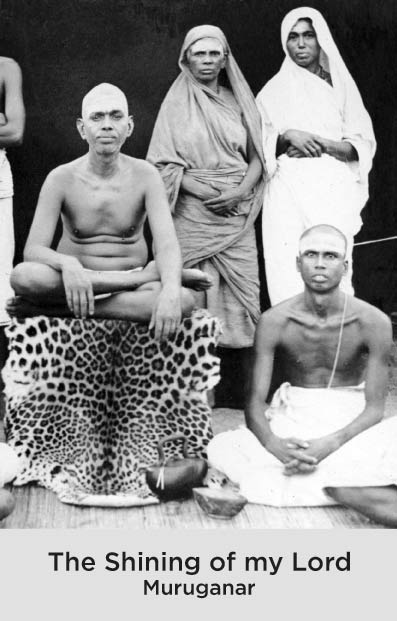
The following quotes, taken from the publication ‘The Shining of my Lord’ by Sri Muruganar, clearly and concisely explain the direct path to Self-Realisation.
In this context, the words ‘sadhana‘ and ‘tapas‘ both essentially mean spiritual practice.
‘Swarupa‘ means your own true nature, referring to the Self, the Ultimate Reality that you ARE.
The word ‘pure’ in the phrase ‘pure consciousness’ refers to consciousness devoid of any objects or arising phenomena, a reference again to the Self, your Swarupa.
I recommend you listen to this video in which the following quotes are read aloud for you, as this can often result in the same teachings being heard in a different and more powerful way:
502. The sadhana is to withdraw the mind from the sense objects of the world, which arise through the ignorance of taking the body to be ‘I’, and fix it in the feet of the Lord’s grace, pure consciousness. For those who are fully convinced of the efficacy of this sadhana, and who are able to practise it, there will be no need to abandon it to perform any other great tapas
503. Until everything shines wholly as swarupa, eschew all [perceived phenomena] as your enemies.
508. Those who abide as pure consciousness will experience the truth, the Self that exists as their own intimately close associate, but if the mind is allowed to move about among the senses through the pathways of the five senses, life will become shameful, losing its beauty.
509. If consciousness leaves the heart and manifests outwardly, it will experience perplexity through the false and deceitful sense objects. If it becomes extremely clear and remains firmly settled in consciousness-the-supreme, pure grace, and then merges with it, life will become blissful.
516. The ego deserves to be stigmatised whereas the Self alone deserves to be worshipped and saluted. Save and protect yourself completely from the treacherous maya, whose form is the ego, by the daily practice of abidance in the pure Self in order that the abidance may become firm and habitual.
492. For those who keenly desire as their principal priority a merger with the beauty of grace, the swarupa that abides in the heart as pure consciousness, it is not even slightly acceptable to have any connection with objects enjoyed by the senses, which are concepts of the fake entity, the deluding consciousness.
417. If we perform sadhana to the limit of our abilities, the Lord will accomplish for us that which is beyond our capabilities. If we fail to do even that which is within our capabilities, there is not the slightest fault in the grace of the Lord.
423. Devotion exists in many different forms, varying according to the quality of the devotee’s mind. However, only devotion to grace, the swarupa that shines as pure consciousness, enables one to reach directly the unsurpassed state of the supreme.

