Also see the wonderful text The Essence of the Ribhu Gita
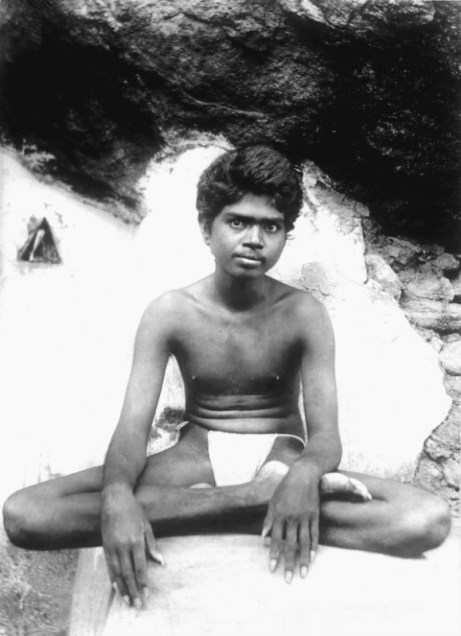
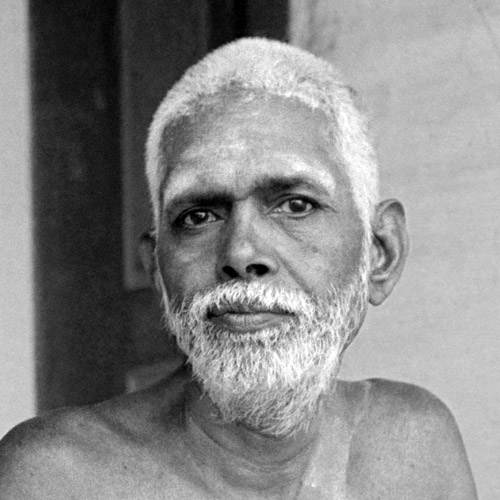
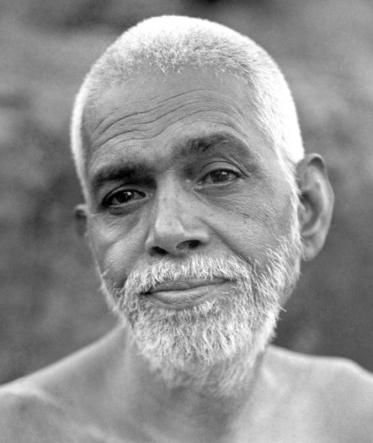
Sri Ramana Maharshi often mentioned the Ribhu Gita in his teachings. It is reportedly said that he especially recommended the recitation of chapter 26, and that reciting it could lead one directly to the natural state or sahaja samadhi.
I have subdivided the chapter into four sections: the introduction, ‘without a trace of sankalpa’, ‘I am that, that am I’ and the concluding portion of the chapter.
Recite and be free!
You can download the PDF version of Ribhu Gita Chapter 26 here:
PDF: Ribhu Gita Chapter 26

!Om Namo Bhagavate Sri Ramayana!
!Om Namo Bhagavate Sri Ramayana!
!Om Namo Bhagavate Sri Ramayana!
RIBHU GITA
Chapter 26
‘Undifferentiated Abidance in the Non-Dual Nature’
Translated from the Tamil version of the Ribhu Gita
Introductory verses
1.
Nidagha! in this explanation,
I shall tell you about being established in the Undivided,
Which has nothing apart from itself, which is full of itself.
May you be in the Bliss of being That itself, as being proclaimed to you.
This teaching is highly secret and rare to come by
In the Vedas and the scriptures.
Moreover, this is rare to come by for even the gods and yogis
And is dear to their hearts.
2.
Son ! it has been said by those who know fully
That being at one with the perfectly full non dual Brahman,
The mass of Existence Consciousness Bliss, the immutable
The Self of all, the serene,
With the vikalpas (imaginations, notions) of the fickle mind ended
And thought dissolved wholly and indistinguishably herein,
Like a solute such as cumin seed dissolved in water,
Is the abidance in That itself.
3.
When inquired into deeply, all the multitude of differences
Will be seen to be never existent.
All is the undivided Supreme Brahman, which is not different from the Self,
And That am I.
Be always correctly practicing
In this exalted certitude
And relinquishing all else,
Be in the Bliss of being ever That itself.
4.
That in which all these apparent differences of duality
Cease to exist when inquired into,
In which all cause and effect –
Even a trace thereof – cease to exist,
And in which not a trace of this fear of duality exists
When the mind is merged therein –
Being that itself,
Ever abide in unwavering Bliss.
5.
That in which there is neither a sankalpa (intention) nor vikalpa (notion)
In which there is neither peace nor perturbance,
In which there is neither mind nor intellect,
In which there is no confusion or conviction,
In which there is no bhava (conviction or feeling) or absence of bhava,
And in which there is no cognition of duality at all –
Being as That itself, without the least fear of duality
Ever abide in unwavering Bliss.
‘Without a Trace of Sankalpa (intention, volition, will)’
6.
That in which there is nothing bad or good,
In which there is neither sorrow nor pleasure,
In which there is neither silence nor speech.
In which there are no pairs of opposites.
In which there is no distinction of ‘I’ or ‘body’ (or I am the body)
And in which there is not the least thing to perceive –
Ever abide in Bliss, without a trace of sankalpa (intention).
In That itself as That itself.
7.
That in which there is no activity of body,
In which there is no activity of speech,
In which there is no activity of any other kind,
In which there is nothing sinful or meritorious,
And in which there is no trace of desire or its consequences –
Ever abide in Bliss, without a trace of sankalpa,
In That itself as That itself.
8.
That in which there is never any imagination,
In which there is no one who imagines,
In which he universe has not arisen,
In which the universe does not exist,
In which the universe does not get dissolved,
And in which nothing exists at any time –
Ever abide in Bliss, without a trace of sankalpa,
In That itself as That itself.
9.
That in which there is no appearance of maya (illusion),
In which there are no effects of maya (delusion),
In which there is neither knowledge nor ignorance,
In which there is neither Lord (Isvara) nor individual (jiva),
In which there is neither reality, nor unreality,
And in which there is not the least appearance of the world –
Ever abide in Bliss, without a trace of sankalpa,
In That itself as That itself.
10.
That in which there are no manifold gods,
In which there is no worship or service to these,
In which there is no differentiation as the triad of forms (Brahma, Vishnu, Siva),
In which there is no meditation on the triad of forms,
In which there is no form of the Supreme Siva,
And in which there is no meditation on the Supreme Siva –
Ever abide in Bliss, without a trace of sankalpa,
In That itself as That itself.
11.
That in which there is no action suggesting differentiation,
In which there is neither devotion nor knowledge,
In which there is no result to be obtained,
Bereft of which there is no supreme abode
In which there is nothing of means for attainment,
In which there is nothing to be attained –
Ever abide in Bliss, without a trace of sankalpa
In That itself as That itself.
12.
That in which there is nothing of the body or senses or life.
In which there is nothing of mind or intellect or thought,
In which there is nothing of ego or ignorance,
In which there is no experiencer of these,
In which there is no macrocosm or microcosm,
And in which there is not a trace of samsara (cycle of birth and death) –
Ever abide in Bliss, without a trace of a sankalpa –
In that itself as That itself.
13.
That in which there is no desire and no anger,
In which there is no covetousness and deluded infatuation,
In which there is no arrogance and envious malice,
In which there are no other impurities of the mind,
And in which there is no delusive notion of bondage,
And in which there is no delusive notion of liberation –
Ever abide in Bliss, without a trace of sankalpa
In That itself as That itself.
14.
That in which there is neither beginning nor end,
In which there is no bottom or middle or top,
In which there is neither shrine nor deity,
In which there is neither charity nor righteous conduct,
In which there is neither time nor space,
And in which there is no object to be perceived –
Ever abide in Bliss, without a trace of sankalpa,
In That itself as That itself.
15.
That in which the fourfold means for realisation of Brahman (sadhana chatushtaya) do not exist,
In which there is no Sadguru (true guru) nor diligent disciple,
In which there is no illustrious jnani (the Knower or sage).
In which there is neither of the two kinds of liberation (jivanmukti and videha mukti)
Ever abide in Bliss, without a trace of a sankalpa.
In That itself, as That itself.
16.
That in which there are no scriptures like Vedas and such,
In which there is no inquiring individual,
In which there is no confusion and clarification,
In which there is no position to be established,
In which there is no position to be rejected,
In which there is nothing at all except oneself –
Ever abide in Bliss, without a trace of sankalpa,
In That itself as That itself.
17.
That in which there is no disputation,
In which here are no victories or defeats,
In which there is no text or its meaning,
In which there are no words with which to give expression,
In which there is no differentiation of individual (jiva) and the Supreme,
and in which there are no conditionings –
Ever abide in Bliss, without a trace of a sankalpa
In That itself, as That itself.
18.
That in which there is no listening (sravana) or connected practices (manana, nididhyasana),
In which here is no exalted samadhi,
In which there is no differentiation between objects of the same particular group,
In which there is no differentiation as affording pleasure or otherwise,
And in which there are no words or their meanings –
Ever abide in Bliss, without a trace of sankalpa
In That itself, as That itself.
19.
That in which there is no trace of the fear of hell,
In which there is no pleasure of heaven, either,
In which there are no worlds of the Creator or others,
In which there are no fruits to be enjoyed there,
In which there are no other worlds,
And in which there exists no universe –
Ever abide in Bliss, without a trace of sankalpa,
In That itself as That itself.
20.
That in which there are no elements,
In which there is not even a trace of any derivatives of the elements,
In which there is no egoism or sense of possession,
In which there is no trace of the kingdom of the mind,
In which there is no defect of attachment,
And in which there is not the slightest trace of vikalpa
Ever abide in Bliss, without a trace of sankalpa
In That itself as That itself.
21.
That in which there is no triad of bodies (gross, subtle, causal),
In which there is no triad of states of existence (waking, dream and deep sleep),
In which there is no triad of souls (ever free, having attained freedom, bound),
In which there is no triad of afflictions, (caused by bodily and mental factors, caused by external factors, caused by supernatural and cosmic factors),
In which there is no pentad of sheaths, (physical, vital energy, mental, intellectual, blissful),
And in which there is no experiencer of any of these –
Ever abide in Bliss, without a trace of sankapa,
In That itself as That itself.
22.
That in which there is no sentient being,
In which there is no power of veiling,
In which there is no array of differences,
In which there is no power of false projection,
In which there is no delusion of a manifest world –
Ever abide in Bliss, without a trace of sankalpa,
In That itself as That itself.
23.
That in which there is nothing of action,
In which there is no performer of action,
In which arises unsurpassed Bliss,
Which is, indeed, the changeless state,
Knowing and realizing which none returns (to mortality or illusion)
And becoming which one is freed from bondage of worldly existence –
Ever abide in Bliss, without a trace of a sankalpa
In That itself as That itself.
24.
That by realizing which and in Bliss of which
All other joys appear to be the joys of That,
That after realizing which with very firm certitude as oneself
Nothing else will be something apart,
That by realizing which with very firm certitude as oneself
All kinds of jivas will attain Liberation –
Ever abide in Bliss, without a trace of a sankalpa
In That itself as That itself.
25.
That which by knowing firmly as oneself
One has no need to know anything else in the least,
By knowing which with full conviction as oneself
All is know for ever,
And by knowing which as oneself in complete certitude
All actions are accomplished in their entirety –
Ever abide in Bliss, without a trace of sankalpa,
In That itself as That itself.
26.
That which can be easily attained in an unimpeded manner
By the certitude that I am Brahman,
In which, by quiescence after such certitude,
One completely full, ineffable Bliss will reveal itself,
And by merger of the mind in which
One will be joined with unsurpassed, incomparable contentment –
Ever abide in Bliss, without a trace of sankalpa,
In That itself as That itself.
27.
That by merger of the mind in which
All sorrows will cease to exist in the least,
By merger of mind in which
Neither you nor I nor anything else will exist,
And by merger of the mind in which
All these differences will disappear –
Ever abide in Bliss, without a trace of sankalpa,
In That itself as That itself.
28.
That by merger of the mind in which
One abides as oneself with no sense of duality,
By merger of the mind in which
Not a trace of anything separate will remain,
and by merger of the mind in which
Incomparable Bliss alone will reveal itself –
Ever abide in Bliss, without a trace of sankalpa,
In That itself as That itself.
‘I Am That, That Am I’
29.
That which is, indeed, of the nature of undifferentiated Existence,
Which is, indeed, of the nature of undifferentiated Consciousness,
Which, is, indeed, of the nature of undifferentiated Bliss,
Which is, indeed, of the nature of non duality,
Which, is indeed, not different from the Self,
And which, indeed, is of the undivided Supreme Brahman –
In the firm certitude that ‘I am That’,
Abide in the Bliss of ever being That itself.
30.
That which, indeed, is ‘I’ and ‘you’,
Which, indeed, is everyone else,
Which, indeed, is the substratum of all,
Which, indeed, is One without a trace of anything else,
Which, indeed, is utmost purity,
And which, indeed, is the undivided, complete, perfect fullness –
By the conviction that ‘I am That’,
Be in the Bliss of ever being That itself.
31.
That in which there are no varying modes,
In which there is not the least thing different,
In which all egoism is extinguished,
In which all desires or imaginings get destroyed,
In which mind and such perish,
And in which all delusion is destroyed –
By the firm conviction that ‘I am That’,
Be in the Bliss of ever being That itself.
32.
That in which the body and others cannot be discerned,
In which there is no perception of manifestation whatsoever,
In which the thought itself is destroyed,
In which merges the jiva,
In which all the imaginings get dissolved,
And in which even certitude disappears –
By the deep conviction that ‘I am That’,
Be in the Bliss of every being That itself.
33.
That in which all meditation is merged,
In which all yoga is obliterated,
In which all ignorance is dead,
In which all knowledge is nullified,
In which there are no interactions involved,
And which is the state of Absolute Truth –
By the very firm conviction that ‘I am That’,
Be in the Bliss of ever being That itself.
34.
Merging in which one attains happiness always,
Merging in which one never experiences sorrow,
Merging in which one perceives nothing,
Merging in which one never takes birth at all,
Merging in which one never experiences a sense of being separate,
Merging in which one abides as the Supreme (Para) itself –
By this deep conviction of ‘I am That’
Be in the Bliss of ever being That itself.
35.
That which is verily the nature of the Supreme Brahman,
Which is verily is of the nature of Supreme Siva,
What verily is of the nature of the Supreme State,
Which is verily of the nature of the Knowledge of Reality,
And which verily is of the nature of the Supreme Truth –
That, indeed, am I.
By such conviction, be in the Bliss of ever being That itself.
36.
That which is verily of the nature of the Pure Absolute,
Which verily is of the nature of a mass of Bliss,
Which verily is of the nature of the subtle Supreme,
Which verily is of the nature of the non dual,
Which verily is of the nature of self luminous,
And which verily is of the nature of the meaning of the undifferentiated –
That, indeed, am I.
By such conviction, be in the Bliss of ever being That itself.
37.
That which is verily of the nature of Truth,
Which is verily of the nature of the peaceful Absolute,
Which verily is of the nature of the eternal,
Which verily is of the nature of the attribute-less,
Which verily is of the nature of the Self,
Which verily is of the nature of the undivided Absolute –
That, indeed, am I.
By such conviction, be in the Bliss of ever being That itself.
38.
That, indeed, which constitute the entirety of interactions,
That even the least of which, cannot indeed, be conveyed by the ‘highest truth’,
Which, indeed, is the Existence Consciousness Bliss,
Which, indeed, is ever peaceful,
From which, indeed, there is nothing apart,
And which, indeed, abides self existent, all by itself,
That, indeed, am I.
By such conviction, be in the Bliss of ever being That itself.
Concluding Verses
39.
Thus, have I explained to you, Nidagha!
The state of being established as That itself, without any duality.
You shall enjoy perpetual Bliss
By attaining this state by constant
Continuous, changeless certitude
Of the undifferentiated Absolute
There are no more miseries of mundane existence at all at any time in the future
For you are Brahman alone.
40.
Casting aside all impure Vasanas
By the pristine tendency left by the practice of
‘The Absolute Existence Consciousness Bliss, is all,
And That I ever am’,
And subsequently effacing even that tendency,
Son! You will be established in the perfect, full absorption
In and as the non dual Supreme Brahman itself
And attain the Liberation of being the undifferentiated, undivided One.
41.
All impure vasanas are of a state of the mind.
The tendencies (vasanas) about the Pure Absolute are also of a state of the mind.
The Supreme has no such tendencies (vasanas).
Hence, be established in this state,
Without any tendencies (vasanas) of the mind,
Whether considered pure or considered impure,
Like a motionless piece of stone or wood
And without any strain, be in Bliss.
42.
Having disassociated from the imaginings of all other thoughts,
By the conviction (bhava) of being the undivided Absolute,
And forgetting even the said conviction (bhava) of being the Absolute,
You yourself abide as the perfectly full Supreme Brahman.
Even if a great sinner in this world
Hears this explanation now proclaimed
And understands it, he shall, rid of all the great sins of his ego,
Abide as the nature of the undivided, undifferentiated Absolute
43.
The endless Vedas
In revealing here and there,
The means of meditation for mental purification,
Have indicated only rock-like, motionless merger with and absorption in
The unafflicted mass of Bliss,
The undivided, completely, perfectly full Siva,
As the means for the happy Liberation
Of those who are mentally purified.
44.
Therefore, one can here attain
The undifferentiated Liberation by abiding as just That itself
And with a purified mind arising out of the practice of the meditation
That whatever is known is Siva
And that Siva am I.
Whatever stated here is the Truth
Thus, the Sage Ribhu explained in full to Nidagha
The abidance in the True State.
45.
It is the undivided form of our Supreme Lord in a state of sublime, joyous dance that says:
By the conviction that I am ever the Reality, which is Existence Consciousness Bliss,
And by the state of abiding at one with That being That itself,
The empty bondage of the world can be cut asunder and pure Liberation attained.

 Tom Das