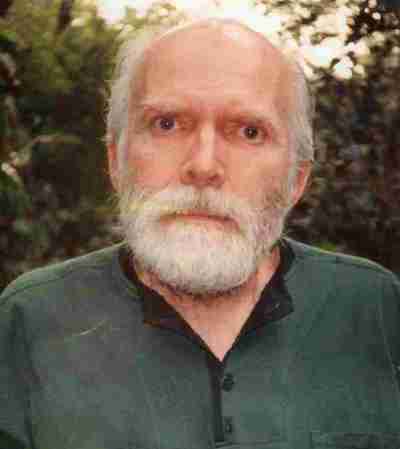
I love to read the words of Robert Adams. They fill me with warmth and truth. Here I have compiled what he has said on the topic of chanting. He, in his wonderful style, teaches in accordance with traditional Advaita Vedanta, in line with the teachings of Shankara and Ramana Maharshi, namely that chanting is a useful practice to quieten the mind and allow for self-inquiry to take place. But we find many nuances in his teaching, and so I humbly offer you this compilation. Best wishes and blessings to you, namaste, Tom ❤
The following are words of Robert Adams:
Good evening. I welcome you with all my heart.
Chanting has been known to calm the mind, to calm the nerves, and to calm the soul. It makes your mind one-pointed. When your mind becomes one-pointed, you can practice atma-vichara or self-inquiry. And the path of Jnana becomes easier. So let’s all join into the chant.
Chanting…makes your mind one-pointed. When your mind becomes one-pointed, you can practice atma-vichara or self-inquiry. And the path of Jnana becomes easier.
Good afternoon. Welcome. I know some of you aspiring Jnanis do not enjoy chanting too much. (laughter) You’re making a big mistake. In all of the traditions of the world there has been chanting. The Catholics, the Jews, the Protestants, the Baptists, the Hindus, the Islams.
Why? If it weren’t significant, why would they have it? Well, when you come in here, the world has had you for a week, influencing your behavior. The chanting sort of goes deep into the subjective, calms you down, prepares you for something higher. Even changes your consciousness lifts you up. Chanting is very good.
I know some of you aspiring Jnanis do not enjoy chanting too much. (laughter) You’re making a big mistake.
At Ramana ashram they always had two hours of chanting prior to anything else, in the morning and the evening. The same with Ramakrishna ashram. Everywhere.
So, aspiring Jnanis believe only in the word. The word is insignificant. Many of you just come to hear me talk. How do you know I know what I’m talking about? Words are words. Chanting is thousands of years old and has it’s value.
If you’re that far enmeshed in this world, again self-inquiry will be difficult for you to do. That’s when you sing bhajans and you have mantras, you chant, you practice pranayama. You do all these things to make your body pure enough so that you can practice self-inquiry.
You do all these things to make your body pure enough so that you can practice self-inquiry.
Before you can practice self inquiry the best thing you can do is think of God. As an example; If someone does something to make you angry, instead of reacting like you always do, start chanting “I-am,” to yourself with your respiration. Remember to do this. You are invoking the name of God. And if you do this everything will be worked out. Not worked out like you want it to perhaps but everything will be worked out, I can assure you of this. Everything will work itself out. Your job is to invoke the name of God. Not to react to the situation.
Before you can practice self inquiry the best thing you can do is think of God…You are invoking the name of God. And if you do this everything will be worked out…I can assure you of this.
Chanting is a very important process. It makes the mind one-pointed. When the mind becomes one-pointed, you can focus on the Self. And by focussing on the Self, the mind becomes annihilated, and you become free.
Do not take the things we do here for granted. Everything is important, everything. If you get involved in it, you will see the results in a short time. But if you just come here for amusement because you have nothing better to do, as I said before, 50 years will pass and you’ll still be running to teachers, running to India, going to different states looking for certain ways or methods of finding yourself.
But in truth, there is no way and there’s no method. The Self is the Self, just like the sun always shines. You just have to remove the clouds and the sun will shine once again like it always did. And so it is, that all you’ve got to do is remove the ignorance, the world and all its ramifications from your mind and you will be free.
But in truth, there is no way and there’s no method.
R: …there is nothing that can be explained. As long as you can explain it, it’s not it. So what is left? Silence, quietness.
Q: Why does the music or song help to realize the consciousness or unexplainable?
R: The music quiets the mind. It makes the mind quieter and quieter. It makes the mind one-pointed. So you can get rid of it and become still, quiet.
Q: So we can use music to quieten our mind?
R: Yes. If you come home after a hectic days work, if you listen to chanting music like this, you’ll become quieter and quieter. You’ll become more and more relaxed and you’ll be able to go deep within yourself. Deeper and deeper than you’ve ever gone before. That’s how the music helps.
So try to keep your mind quiet, keep it from thinking and everything will take care of itself.
So as long as we believe that we are the body, chanting, music makes you one-pointed. It mellows you out and makes you calm and cool and peaceful. Remember music soothes the savage beast.
So as long as we believe that we are the body, chanting, music makes you one-pointed…Remember music soothes the savage beast.
Yet it is paradoxical due to the fact that when we went to grammar school, we learned the multiplication table, and that was sort of the substratum for higher mathematics. Without a multiplication table we would never have gone on to higher mathematics.
So again, for some people these things are necessary, ritual worship, surrender to God, mantras, chanting. These things are sometimes important to some of us.
Yet, they do not liberate you. Liberation comes by itself, but if we have not practiced the ritualistic worship, the mantras, the chanting and the other things, we will become aggressive, arrogant, cynical, whereas we have to develop humility and compassion.
…for some people these things are necessary, ritual worship, surrender to God, mantras, chanting…Yet, they do not liberate you.
When we understand these things we stop playing games and we get down to spiritual work. We forget about all these human traits, and we begin to realize, “My true nature is consciousness. I am absolute reality. I am pure awareness, ultimate oneness. This is my real nature. And even if I do not feel it right now, I am going to work on myself continuously even if it takes me ten million lifetimes, I will work on myself diligently and do what has to be done, until I become free.” The rest is up to you.
Now let’s chant together Sri Ram, Jai Ram, Jai Jai Ram.
Robert: To know total happiness is to quiet your mind. When your mind becomes quiet, quiescent, happiness ensues all by itself. There are many ways to do this. One of the best ways that I know is chanting. Chanting has a positive effect upon the nervous system. It also has other subtle qualities that cause the mind to become still and quiet. So les prepare ourselves by doing a little chanting, shall we?
(Chanting)
I’m not really interested in any of your problems because I know that you are absolute reality. You believe that something is wrong with your life, you’re not being treated right, you don’t understand too much, or whatever it may be. It’s a lie.
I’m not really interested in any of your problems because I know that you are absolute reality. You believe that something is wrong with your life…It’s a lie.
Therefore silence is the best way to wake up, not by chanting mantras or prayers or incantations. Those things may bring you a little peace.
Q: Another question I think is important but is chanting more advantageous than listening to music? Like om, or any of that kind of music?
R: Again it depends on the person. Chanting is very, very good. The purpose of chanting is to make your mind one-pointed. So you can realize that you are in silence and you are quiet and you’re still and you’re able to sit in the silence. As you know when you chant for about fifteen-twenty minutes or a half hour, you feel very comfortable and very relaxed and very mentally still. Your mind becomes still. Then you can watch your mind more closely. You can ask, “Who am I?” more sincerely after a chant and the question will go deeper into the Self. But when you are doing worldly things for instance coming home from work. You have your mind on the TV and then you ask, “Who am I?” it’s more superficial.
It doesn’t go in deep enough. But when you chant for a while and then you say, “Who am I?” or then you say, “I am.” It goes much deeper into consciousness.
Q: So the question is: Is chanting better than listening to the music?
I should think so, yes. Because your entire being gets involved with the chant.
You can ask, “Who am I?” more sincerely after a chant and the question will go deeper into the Self. But when you are doing worldly things for instance coming home from work. You have your mind on the TV and then you ask, “Who am I?” it’s more superficial.
Chanting is very helpful to make you one-pointed, to put you into a state where you can absorb your own reality. So let’s do a little chanting together, shall we?
But I ask you to have an open heart and ponder the things that we discuss. I am not a philosopher. I am not a preacher. I am nothing. And our teaching is a teaching of silence. Even the words that I appear to speak are words of silence. If you listen to the silence you too will become silent and experience the bliss which you are.
To begin with, chanting is very efficacious. It is something that makes your mind one pointed and allows you to accept the realities as outlined. So we’re going to do a little chanting first. Everything we do is part of the unfoldment. All is well.
Now one of the ways of quieting the mind is chanting. It has been known for centuries that chanting makes the mind one-pointed. It works through the nervous system, bringing peace and tranquility to the mind. Then the mind disappears of its own volition.
Let’s do that now, shall we?
The closest thing you can come to, to having an experience of quiet mind, is chanting. Chanting has a vibration in the nervous system that actually causes the mind to slow down. There are many people who cannot do atma-vichara, self-inquiry too long. And for
those people who are practicing self-inquiry, sometimes you are meant to take a break. So put on a chanting tape and chant along with it to yourself, or out loud, and you will find that you go deeper within yourself and the mind begins to become quiescent, still, calm. So let’s do that right now, shall we.
(Chanting)
Some people tell me they like the talks better than anything else we do. Some people tell me they like the chanting better. Some people tell me they like the question and answers better. Some people tell me they like the silence better. Remember what this is. This is satsang. It’s not a lecture or a musical festival. Everything we do is important, even if I spoke about the weather and nothing else. It’s being at satsang that causes something to take place within your consciousness and lift you higher.
Everything we do is important, even if I spoke about the weather and nothing else. It’s being at satsang that causes something to take place within your consciousness and lift you higher.
To yourself. Even if someone is looking at you and screaming at you. As you watch the person screaming put a smile on your face, do not react and chant “I-am” to yourself.
Even if someone is…screaming at you…do not react and chant “I-am” to yourself.
Q: Robert, is the love that a person feels when they sing or they play an instrument, is that the love of the actual consciousness, the love bliss of consciousness coming through, even though it’s filtered through the mind?
R: Not really. Consciousness cannot be filtered through the mind. The mind has to be totally transcended for consciousness to be aware of itself. Consciousness is self-contained. It has absolutely nothing to do with the mind.
But, what you’re talking about, when you chant, when you play beautiful music, when you feel that feeling, it’s on the way towards that. It makes you one-pointed. If your mind is one-pointed, you can easily practice self-inquiry.
…when you chant…It makes you one-pointed. If your mind is one-pointed, you can easily practice self-inquiry.
When your mind is thinking about so many different things, about the world, about your job, about your family, about your car, about your dog, about all kinds of things, then it’s hard to get through. So we chant, we do yoga, we do different exercises, we sing bhajans, and the mind becomes calm, quiescent.
When the mind becomes quiescent it is like a clear lake. The clear lake reflects the sun and the moon and the stars. If the lake is murky and moving about, it does not reflect anything. And so it is when your mind is clear, quiescent. It reflects your divinity. When it’s murky, it reflects the world.
…when your mind is clear, quiescent. It reflects your divinity.
All these things are good, chanting, yoga, singing bhajans, everything is helpful. They all lead to atma-vichara.
Again, all these things simply make the mind quiet. Their purpose is to make the mind quiescent, calm, and peaceful, and then your Self, your real Self will shine through all by itself, when the mind becomes absolutely still. It will not happen during the singing or during the chanting. The purpose again is to quiet the mind. When the mind is quiet, when all the chanting has subsided, when all the music has subsided, when you have entered that place where there are no others, then you will awaken to your true Self.
…all these things simply make the mind quiet…It will not happen during the singing or during the chanting….when all the chanting has subsided…when you have entered that place where there are no others, then you will awaken to your true Self.
… As you keep practicing whatever method you’re using, you can practice meditation, you can practice mantras, whatever you’re doing to quiet the mind helps. Of course karmically if a person has been doing this in a previous existence, it will be much easier in this particular life, and you’ll fall right into it. But all these things are simply gimmicks to quieten the mind. They’re necessary for most people, but not for everyone.
But all these things are simply gimmicks to quieten the mind. They’re necessary for most people, but not for everyone.
Everything we do here is important. Every song we play, every chant we do, every word, every silence, it’s all important.
I know there are some people who would like to keep quiet all the time. They’d like me to shut up and not say a word, and just sit still. There’s a time for that also.
But remember, if you will, that the words that come out, are words of silence. Even though I may be appearing to talk to you, you’re sitting in the silence. Think about that. What I’m trying to say is, do not look for faults. Do not say to yourself, “Well, I’d rather be doing this,” or “Why don’t you give us more of this and less of that.” Remember it’s you that says this. This is coming out of your ego. Allow everything to be.
Do not say to yourself, “Well, I’d rather be doing this,” or “Why don’t you give us more of this and less of that.” Remember it’s you that says this. This is coming out of your ego. Allow everything to be.
That’s what I meant before when I said you have to become a bhakta first. That means you just give out love, compassion, joy, kindness. You become a living embodiment of that. Then Jnana starts to develop inside of you. But if you always find fault with others, you’re always trying to correct something. You always see what somebody else is doing.
…you have to become a bhakta first
When your mind is full of doubts, apprehensions and suspicions, all of this negative energy pays a price in your consciousness and you develop in reverse. As the years pass you wonder why you haven’t made too much progress. Give of yourself. Open up. Love. And then see what happens.
The chanting we do has a very positive effect on the nervous system. It clears the chakras. It makes you one-pointed, so you can turn into your original Self. The whole object of everything we do is to make you one-pointed, so you can ponder “Who am I?”
The mind becomes quiet and everything unfolds as it should. So let us do a little chanting.
The whole object of everything we do is to make you one-pointed, so you can ponder “Who am I?”
Think of some of the teachers that you know or heard about. Nisargadatta, he always prayed. He realized that he was consciousness. He was self-realized, but at the same time he chanted, he prayed, he had devotion. It sounds like a contradiction. For you may say, “If someone is self-realized and knows himself or herself to be all there is, to whom do they pray?” Try to remember that all spiritual life is a contradiction. It’s a contradiction because words cannot explain it. Even when you are the Self, you can pray to the Self, which is you.
Ramana Maharshi always had chanting at the ashram, prayers, devotional hymns. These things are very important. Many westerners, who profess to be atheists, come to listen to lectures on Advaita Vedanta, and yet nothing ever happens in their lives. As long as you do not have devotion, faith, love, discrimination, dispassion, it will be very difficult to awaken.
As long as you do not have devotion, faith, love, discrimination, dispassion, it will be very difficult to awaken.
Therefore those of you who become bored with practicing self-inquiry may become very devotional. Surrender everything. Give up your body, your thoughts, all the things that bind you, whatever problems you may believe you have. Surrender them to your favorite deity. You are emptying yourself out as you do this. Do a lot of it. Become humble. Have a tremendous humility. If you can just do that you will become a favorite of God and you’ll not have to search any longer. But of course the choice is always yours.
Have a tremendous humility. If you can just do that you will become a favorite of God and you’ll not have to search any longer.
Just being aware of this, your thoughts stop. There is nothing to think about. There is no thing you have to do. There are no mantras you have to keep chanting. There are no formulas that is going to turn you into ajnani. There are no yoga practices that you have to keep doing. You simply have to be aware that absolute reality is omnipresent, all pervading, and there is no room for anything else.
All of the things I shared for you, with you rather. What you ought to do is to pick out the one that appeals to you mostly. Part of it should always be reading the transcripts because the transcripts somehow set you off on the right path. And then the method you’ve got to use, whether it’s self-inquiry or chanting or becoming the witness that will come to you easier. In other words you will know what to do by reading the paragraph from the transcripts and pondering the paragraph
As you know, on Sunday we have puja and we have chanting. To whom are we chanting? To Hari, to Ram, to Krishna.
I must again tell you as long as you believe you are the doer, that you are the body and the mind do not fool yourself into thinking you’re not, for if you weren’t you wouldn’t react the way you react to situations.
So as long as you believe that things are real, then you have to pray to God, because God does exist for you. You can call God the law of karma. In reality karma does not exist. Yet how many of us have such reality?
So as long as you believe that things are real, then you have to pray to God
Therefore the best thing for you to do is to practice the Jnana practices, but keep doing your puja. Do not give it up. If you’re doing japa, whatever practice you have, keep it up.
Words are only to motivate you to keep quiet. That’s all words are good for. Chanting, words, they’re only to quieten the mind. Keep you still. In the stillness is your reality. In the quietness is your strength, not in the noise, not in the talk. Try to be quiet most of the time. Do not get involved in too many conversations.
Words are only to motivate you to keep quiet.
The guru is the Self. The guru is the I-am expressing. The Self and the guru and the I-am are all-pervading. So when you’re turning within yourself and you are chanting I-am and turning your so called problems over to I-am, you’re turning them over to the guru, to God and to the Self. They’re all one because it’s all-pervading.
The point I’m trying to make is that the Sages understood that at this age the way to realization, the way to unfoldment, the way to liberation, the easiest way is through namah japa, the chanting of God’s name. This they say was the thing to do in this age. This is the meditation to do in this age. Namah japa, chanting of God’s name. As an example, “Sri Ram, Jai Ram, Jai Jai Ram.” This is what human beings were supposed to do
in this age to awaken.
As the years went by people such as Buddha, Shankara, Jesus, some others, people that we know about like Sri Ramana Maharshi, Nisargadatta Maharaj and others including myself came to conclusion that what is needed in this age is a combination of teachings.
Jnana Marga, the path of wisdom is the highest stage of all yogas. That combined with bhakti Marga, the path of devotion and karma Marga, the path of service. These are the stages, these are the principles that we have to learn and understand. Therefore what I do is teach those three methods together, combined.
When you teach Jnana Marga by itself as many so-called beings, gurus are doing today it becomes a bunch of rhetoric. It builds up the ego, it doesn’t destroy it. Jnana Marga by itself becomes cold and calculating. People start to feel as if they are superior to others. It is called also the talking school. Where people talk to each other debate issues about Jnana Marga. Get involved in heated discussions, debates, arguments and you get absolutely nowhere.
If you teach and you learn bhakti Marga, the path of devotion by itself you can become a fool. Where you become devoted to all the statues and all the trees and become devoted to all the gurus and you have just blind devotion, without knowledge. So that is not sufficient.
When you practice karma bhakta, the path of service to humanity. You become the servant of other bodies. The servant of the people. Yet you become confused because you
don’t really know who to help. You really don’t know to whom to give service to. There are so many poor people, homeless people, deprived people, whom shall you serve? And
again you become confused.
But when you combine all of them together, Jnana Marga, bhakti Marga and karma Marga you have a beautiful teaching.
But when you combine all of them together, Jnana Marga, bhakti Marga and karma Marga you have a beautiful teaching.
Good Afternoon. It is good being with you once again on this beautiful Sunday afternoon. Everyone is sweating profusely. Chanters you are not. Why should we want to chant?
Jnana without bhakta is dry knowledge. You have to have Jnana with bhakta. You have to feel passion. You have to feel love. You have to feel loving kindness. This comes with bhakta. Unless you become a bhakta, you cannot be a Jnani. They both go together hand in hand. It’s like a man and a woman. You can’t have one without the other.
Jnana without bhakta is dry knowledge.
There are many people who profess to be Jnanis. They are very dry intellectuals. Very cold people. When you chant to the Goddess or the God, and you feel the chant in your heart, you will feel this way towards your fellow man. The same love you give to God you give to your fellow man. How can you love others if you do not love yourself? You love yourself by letting your heart open up and feel the passion, the joy, the harmony which is your divine real nature.
Become involved in the chanting. Feel it. Be it. And you will be amazed at the change that comes over you.
Become involved in the chanting. Feel it. Be it. And you will be amazed at the change that comes over you.
Until you come to the realization that there is no sadhana. All these years I’ve been spending standing on one foot with my arm in the air, chanting mantras, doing pranayamas has been unnecessary. Now you can only say this when you’ve arrived a certain place in life.
The stronger you’re attached to this earth the more sadhanas you have to do. But as you begin to lose attachment to this earth your form of sadhana changes. Your spiritual practices change. They become less and less. Since you’re beginning to realize that you are the pure awareness. Does the pure awareness have to do sadhana? Or does God have to do spiritual practices?
The stronger you’re attached to this earth the more sadhanas you have to do.
Now let’s talk about you. Many of you have been performing yoga practices, meditations, chanting, pranayama and various techniques in order to awaken. But I say to you that this will never cause you to awaken. It will bring you good feelings, it will bring you a semblance of peace, but you will never awaken through the practice of yoga unless the yoga leads to self-inquiry, or it leads to complete surrender of the ego. If you practice anything else it inflates the ego.
…you will never awaken through the practice of yoga unless the yoga leads to self-inquiry, or it leads to complete surrender of the ego. If you practice anything else it inflates the ego.
But do not make it hard for yourself by believing thoughts, that you have to do certain things or to say certain prayers or to do certain chants, drop all that kind of thinking. And just be! Just be yourself. You’re neither this nor that. If you’re nothing that you can talk about or imagine then your mind becomes still. And when your mind becomes still you’re already home. So learn to observe the part of you that tells you that there is something you’ve got to do, that it’s hard. Observe that in you. And when you do not respond to it, it will go away and you’ll be free. You’re already free.
But do not make it hard for yourself by believing …that you have to do certain things or to say certain prayers or to do certain chants…You’re already free.
In satsang there may be bhajans where you sing together, kirtans where you chant together, silence where you do nothing, just sit. Questions once in a while. This is what
satsang is all about. It really makes no difference what I say.
Consciousness has nothing to do. Absolute reality is absolute reality just the way it is. It doesn’t have to practice any sadhanas, chant any mantras, or do anything.
Absolute reality…doesn’t have to practice any sadhanas, chant any mantras, or do anything.
Why not awaken now? What are you waiting for? Make up your mind that you’re going to awaken right now, and allow your mind to turn into your heart, which is pure awareness. Do it. Some of you are still asking, how do you do it?
Through silence, experiencing the moment, the now, the reality. Nothing is happening now. No one is suffering. Now is the only moment you’ve got. Abide in the now.
Everything is perfect right now. Feel It. Don’t think about it. Feel it. There are no yesterdays, there are no tomorrows. All of your so called sins have been transcended. No past and no future. You are fully alive now. Right now. Enjoy.
Everything is perfect right now. Feel It. Don’t think about it…You are fully alive now. Right now. Enjoy.






 Tom Das