Buddhism
Shunryu Suzuki: How to achieve perfect calm

The following is an excerpt from the book Zen Mind, Beginner’s Mind by Shunryu Suzuki:
If you want to obtain perfect calmness in your zazen, you should not be bothered by the various images you find in your mind. Let them come, and let them go. Then they will be under control. But this policy is not so easy. It sounds easy, but it requires some special effort. How to make this kind of effort is the secret of practice.
Suppose you are sitting under some extraordinary circumstances. If you try to calm your mind you will be unable to sit, and if you try not to be disturbed, your effort will not be the right effort. The only effort that will help you is to count your breathing, or to concentrate on your inhaling and exhaling. We say concentration, but to concentrate your mind on something is not the true purpose of Zen. The true purpose is to see things as they are, to observe things as they are, and to let everything go as it goes. This is to put everything under control in its widest sense.
The true purpose is to see things as they are, to observe things as they are, and to let everything go as it goes.
Zen practice is to open up our small mind. So concentrating is just an aid to help you realise ‘big mind’, or the mind that is everything.
If you want to discover the true meaning of Zen in your everyday life, you have to understand the meaning of keeping your mind on your breathing and your body in the right posture in zazen.
You should follow the rules of practice and your study should become more subtle and careful. Only in this way can you experience the vital freedom of Zen.
Tibetan Buddhism: Free and Easy by Gendun Rinpoche
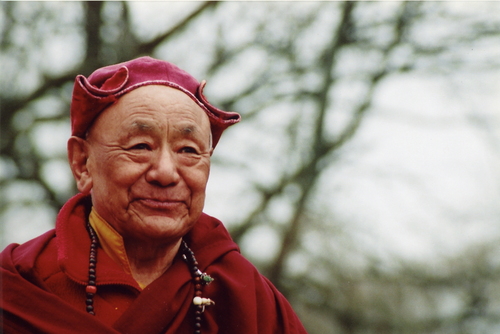
This is a beautiful and profound ‘vajra poem’. It was given spontaneously by Gendun Rinpoche, a late Tibetan Buddhist rinpoche (‘precious teacher’), during a talk to his disciples. A book of his teachings called Heart Advice from a Mahamudra Master is highly recommended and teaches all the essentials of Tibetan Buddhism from someone who has a genuine experience of the truth that lies behind the words. Sometimes expositions of Tibetan Buddhism become overly structured and conceptual, but Gendun Rinpoche has a way of not only teaching the concepts, but also of indicating that which is beyond concepts and is also immediate and vital.
Happiness can not be found
through great effort and willpower,
but is already present,
in open relaxation and letting go.
Don’t strain yourself,
there is nothing to do or undo.
Whatever momentarily arises
in the body-mind
has no real importance at all,
has little reality whatsoever.
Why identify with,
and become attached to it,
passing judgement upon it and ourselves?
Far better to simply
let the entire game happen on its own,
springing up and falling back like waves
without changing or manipulating anything
and notice how everything vanishes and reappears, magically,
again and again, time without end.
Only our searching for happiness
prevents us from seeing it.
It’s like a vivid rainbow which you pursue
without ever catching,
or a dog chasing its own tail.
Although peace and happiness
do not exist as an actual thing or place,
it is always available
and accompanies you every instant.
Don’t believe in the reality of good and bad experiences;
they are like today’s ephemeral weather,
like rainbows in the sky.
Wanting to grasp the ungraspable,
you exhaust yourself in vain.
As soon as you open and relax
this tight fist of grasping,
infinite space is there –
open, inviting and comfortable.
Make use of this spaciousness,
this freedom and natural ease.
Don’t search any further
looking for the great awakened elephant,
who is already resting quietly at home
in front of your own hearth.
Nothing to do or undo,
nothing to force,
nothing to want,
and nothing missing –
Emaho! Marvellous!
Everything happens by itself.
Not mine
Nothing is mine.
I did not create
This world,
This body,
Or this mind,
With its thoughts.
They were all given to me.
Yes – even my thoughts were given to me.
None of it has anything to do with me.
Then I look at the ‘me’:
There is no me.
Only this,
None of it mine,
All of it moving.
Tibetan Buddhism: The Mind Instructions of Khenpo Gangshar
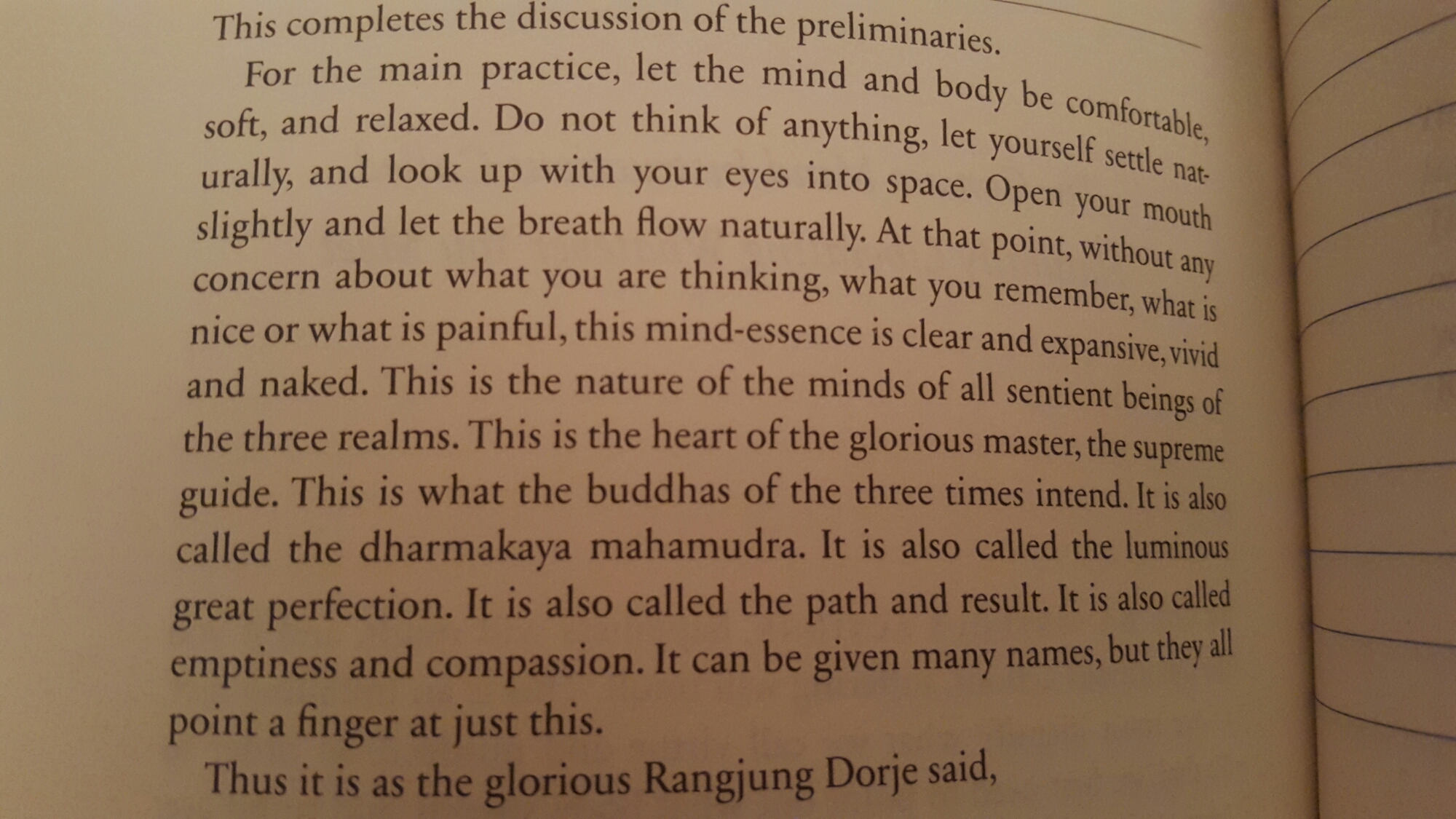
Above is an excerpt from a text called ‘The Concise Mind Instructions Called Naturally Liberating Whatever You Meet’ by Khenpo Gangshar, as found in the book Vivid Awareness by Khenchen Thrangu.
In this short text Khenpo Gangshar goes on to say:
Directly, whatever arises, do not change it – rest naturally. This fulfils the essence of all creation stages, completion stages, mantra recitations, and meditations.
This is the heart of the highest Tibetan Buddhist teachings: to rest naturally and be vividly aware. Just be. I would add that in this no sense of self is being created, and this is the practice. To simply be, and not to take yourself as being a ‘self’ or ‘doer’. To use a commonly used phrase in vedanta: do not take yourself to be ‘this or that’.
Khenpo Gangshar goes on to give advice on how to deal with difficulties along the way:
You must take sickness as the path, afflictions as the path, the bardo as the path, and delusion as the path. The heart of all these applications is to rest naturally in the essence.
This advice is very much in line with most of traditional Tibetan Buddhist teachings, but here it is stated in very concise form. When difficulties come along, just rest in your natural being. Don’t identify as being ‘this or that’, don’t start to create or believe in the concept of being a doer. This is the false concept that is rooted out and seen through in this practice.
When life throws us a challenge, don’t simply fall back into your old habits of self-identification. It is from this creation of an imaginary doer/self that all other afflictions and suffering follows. Instead, just rest, just be. Let your awareness shine, let it shine brightly. If the thought ‘I’ arises, let it, notice it, notice that it is empty and does not describe or pertain to any reality. There is no ‘I’, there is no self. Only the bright expanse of phenomena.
One final thought from me, a question:
Does any of this have anything to do with Freedom? Does Freedom depend on any practice? Does Freedom depend on any of this?
Don’t believe the hype

Public Enemy were onto something. They really were. Their song title ‘Don’t believe the hype’ has profound ramifications when applied to our own beliefs. We have consumed so many ideas of what will fulfill us, so much propaganda.
The mind churns out all sorts of formulas for what will make us happy. Don’t believe any of it. It’s all rubbish. All of it.
I’m not talking of practical issues of survival or health, etc. I’m talking about wanting more than that. I’m talking about dukkha, that insatiable existential itch that always comes back no matter how many times you scratch it.
The mind comes up with endless and repetitive ways of scratching that itch. But everything you think will make you happy – none of it will fill that deep dark hole inside you. Yes, it may give you some temporary pleasure, perhaps even some longer lasting pleasure too, but that void inside of you that tugs and tugs away at your insides returns saying “I want more, I want more…“:
I want a girlfriend/boyfriend
I want a degree/job/skill/to be able to dance better
I want to get drunk/get high/fall asleep
I want a bigger/new/better/faster ____.
I want a house/car/other object
I want to look better/bigger/thinner
I want curly/straight/blonde/brown hair
It’s even worse when people are involved. Then the “If onlys” start:
If only he did it this way
If only she shut up a bit
If only he was more considerate
If only she did not complain so much
If only he talked less
If only she talked more
Worse still are the “shoulds“:
I should have done ‘x’
He shouldn’t have done ‘y’
I can’t believe ‘z’ happened. ‘z’ so shouldn’t have happened
When it comes to spiritual matters, it’s just as bad, more hype:
I want to feel good forever and ever and ever
I want God to protect me and make me feel good (forever)…
I want to pray/meditate/go to church/satsang more…
I want to be able to do those yoga poses
I want to know all those scriptures and read all those books
I want the ultimate Understanding
I want Enlightenment
See, it’s all bogus. Phoney. Whatever you attain can be lost. I’ll repeat that – whatever you attain can be lost.
Any conceptual understanding gained is a concept that can be doubted or questioned. Eternal Happiness is right here and now. It is ever-present, just waiting to be noticed. And how do you notice it? Just by noticing the truth that you have believed the hype and created your misery.
Don’t believe the hype – then the misery and nagging itch inside that longs for more – that all disappears. And ‘you’ disappear along with it all, for all ‘you’ are is a bundle of thoughts. And what is left when ‘you’ disappear? Ahh, the sweetness of it all…indescribable
So next time you want something really bad, next time you think you know what will make you happy, take my advice: think again. What are you looking for? Will that really make you happy? As I said, it’s all rubbish. See through it all. Remember: don’t believe the hype.
Roadmap to enlightenment: a (fairly) comprehensive guide to spiritual practices
This is one of a series of introductory articles – please see the homepage of tomdas.com for more introductory articles. Also see:
In Brief: how to attain Liberation
The entire path explained: the Path of Sri Ramana (Parts 1 and 2; PDF downloads)
This is one of the most important posts I have written – it condenses years of spiritual seeking which has involved exploring dozens of spiritual teachings, reading hundreds of books and texts from spiritual teachers and spiritual traditions across the world, undergoing all sorts of spiritual practices and meditations over the years, entering samadhi’s and experiencing visions of infinite oneness, and a genuine realisation of the Freedom-that-already-is.
The aim of the post is to guide you to a Freedom beyond words, but also stay concise. For all those people who have asked me: ‘That’s all very well but how do I actually become enlightened? How can we free ourselves from suffering? What do we do?’, this is for you, and others like you.
Dzogchen: Self-liberation in the fundamental nature

Here are some more verses from the Kunjed Gyalpo (The Supreme Source), one of the most important texts in Tibetan Buddhism and Dzogchen. These words point the reader directly towards Enlightenment. See my earlier posts on the Kunjed Gyalpo here and here.
In the except below the first section initially directs us to listen to these teachings and realise the inherent liberation that is already present ‘without needing to alter anything’.
The second section indicates there is no need for special practices, or to speak or act in a particular way in order to get this.
In fact, as per the third section below, in trying to find your ‘authentic condition’ (which is self-liberation), you deny it and prevent liberation manifesting itself.
Listen!
As I am in the authentic condition,
all phenomena self-liberate in the fundamental nature.
Without needing to alter anything,
the teacher self-liberates in the fundamental nature.
Without needing to alter anything,
the teacher self-liberates in the fundamental nature.
Without needing to alter anything,
the retinue of disciples, too, self-liberates in the fundamental nature.
Listen!
As all self-liberates,
there is no need to correct the body posture or visualise a deity.
There is no need to correct the voice or speech.
There is no need to correct the mind through meditation.
By correcting oneself,
it is not possible to find the authentic condition,
and without finding the authentic condition,
one cannot self-liberate.
In this way one does not achieve the state of equality of the fundamental nature.
Excerpt from The Supreme Source (Kunjed Gyalpo), Chapter 29
So, what are we to do? We are essentially told that ‘you are already realised’ or ‘you are already whole’, but perhaps we don’t feel realised or whole.
We are told that no practice can take us to where we already are, but then what do we do?
The Kunjed Gyalpo exhorts us to listen to these teachings, absorb them, and see their truth directly!
But how to do this, the spiritual seeker asks.
There is no how, for in asking how you have already posited and given reality to the separate self that is looking for answer, that is looking to get somewhere. By asking how, there is already the implication that this is not it. But this is it!
The Supreme Truth and the way to it cannot be described. Only wrong ways can be described, hence the language is of negation – ‘no need to correct’….’By correcting oneself…one does not achieve’. The scripture tells us what not to do, not what to do.
The ancient method is to first listen (sravana) to the teachings repeatedly, then secondly to contemplate them and think them over (manana). This helps to develop an intellectual understanding of the teachings first, following which meditation and integration of the teachings (nididhyasana) can occur. This can occur gradually, or perhaps suddenly, without warning, a moment of clear seeing arises and the teachings that were once theoretical suddenly spring to life.
Zen Teachings: The Four Kinds of Spiritual People
“There are four kinds of people who study.
The highest are those with practice, with understanding, and with realization.
Next are those with understanding, and with realization but without practice.
Next are those with practice and understanding but without realization.
Lowest are those with practice, but without understanding or realization.”Zen Dawn, J. C. Cleary

Practice, understanding and realisation are all important, but we can deduce from the quote above that of these realisation is the most important. Next in importance is understanding, and least important is practice.
How can this be? How can understanding be more important than practice? Isn’t it often said that an drop of practice is worth an ocean of theory?
Continue reading
Dalai Lama: end suffering by developing insight
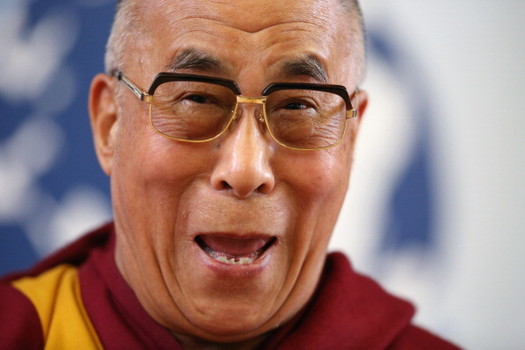
The following excerpt is taken from the book “How to see yourself as you really are” by the Dalai Lama:
What makes all this trouble in the world? Our own counterproductive emotions. Once they are generated, they harm us both superficially and deeply. These afflictive emotions accomplish nothing but trouble from beginning to end. If we tried to counteract each and every one individually, we would find ourselves in an endless struggle. So what is the root cause of afflictive emotions that we can address more fruitfully? Continue reading
 Tom Das