
No room for ‘you’ or ‘me’

Duality, in the context of the spiritual search, implies the existence of a separate ‘me-entity’, which we could call the seeker. And the seeker, is seeking something, a goal of some kind, which we could call Enlightenment or Liberation. So here are the two principle elements of the dualistic paradigm, a seeker and a goal to be reached.
The seeker can go by various names, such as the separate self, false self, ego, egotism, the ‘me’, being a ‘person’, the doer, the body-mind entity, being a mortal, and so on, but all these terms refer to the same essential seemingly separate seeker-entity.
Similarly the goal being sought goes by various names such as Enlightenment, Liberation, Nirvana, God, Spirit, Brahman, Self, Awakening, and so on. Now of course the the specifics of the imagined/projected goal differs depending on one’s conditioning and experiences, but for the purposes of outlining the principles of duality in the spiritual search, we can leave it at this rather than explore all the various notions of Enlightenment.
These two basic elements of duality, the seeker and the sought, imply a third entity, namely a path to be traversed, a method or system of spiritual enlightenment. So we now have three basic elements of the dualistic paradigm: the seeker, the method/path of seeking, and the sought.
In vedanta, the two basic elements of duality are sometimes known as dyads (ie. subject-object duality), and the three elements are called triads (ie. subject-process-object eg. knower, knowing, known). Sri Ramana Maharshi in his short text ‘Reality in Forty Verses’ (Ulladu Narpadu in Tamil) wrote in verse 9 ‘Dyads and triads depend upon one thing: the ego…’)
What about non-duality? Well non-dual expressions or teachings point out that these dyads and triads are all in fact fictions. There is no seeker or sought, or you could say there is only the seeker (eg. ‘all this is Self’, Self essentially meaning ‘me’, or ‘You are That’), or there is only the sought (eg. there is only Liberation, Liberation being the goal being sought), or you could equate the seeker with the sought (eg. I am Brahman, My nature is the Buddha nature). In all the above cases, the idea is that the dualistic paradigm, as outlined above, is a total fiction.
Now, if you look at the above paragraph, you can see several related methodologies emerging, all of which work slightly differently to produce the same end results of deconstructing the (false) dualistic conceptual paradigm:
1) Denial of the seeker/sought or subject/object duality
2) Resolving/merging all into the seeker/subject
3) Resolving/merging all into that which is sought/the goal. This is another way of stating that the goal one is seeking is already fully here and already one with everything.
4) Equating the seeker/subject with the sought/goal
In the methodological path of Vedanta, we can see all these methods in operation. Here are some examples:
1) ‘There is neither dissolution nor creation, none in bondage and none practicing disciplines. There is none seeking Liberation and none liberated. This is the absolute truth.’ We find this verse repeated in the Upanishads (Amritabindu Upanishad 10 and Atma Upanishad 2.31) and it is also repeated by Gaudapada (Mandukya Karika 2.32) and Shankara (Vivekachudamani verse 574) in their writings.
2) In Vivekachudamani, verse 356, Shankara writes: Those alone are free from the bondage of transmigration who, attaining Samadhi, have merged the objective world, the sense-organs, the mind, nay, the very ego, in the Atman [the self, ie. merged everything into the subject], the Knowledge Absolute – and none else, who but dabble in second-hand talks.
3) ‘Sarvam Khalvidam Brahma’ is a vedic mahavakya (great saying) taken from the Chandogya Upanishad (verse 3.14.1) which means ‘All of this is Brahman’, Brahman being the goal being sought.
4) ‘Aham Brahmasmi’ is another mahavakya, this time from the Brihadaranyaka Upanishad (verse 1.14.10) which means ‘I (the subject) am Brahman (the goal sought)’.
In other teachings, we see one or more of these methods of deconstruction of the dualistic paradigm, but we can also see that some teachings focus in on only one of the 4 above methods. eg. some teachings focus on stating there is no limited entity (1) or all this is already perfectly liberated and nothing needs to be done (3). You see, any single method, taken all the way to its logical end, reaches the same goal, and the teachings themselves self-deconstruct. Only the words used differ.
Why do and must the teachings eventually self-deconstruct? Because they too are part of the dualistic paradigm, the paradigm that presupposes a seeker-seeking-sought triad or seeker-sought dyad.
However, if the teachings are not taken to their final end, in which they eventually self-deconstruct, then the seeker may be left with a belief such as ‘there is no seeker’. We can term these beliefs dogma or doctrines. They are concepts mimicking a genuine ‘direct realisation of non-duality’. One person may believe ‘I am everything’ while another person believes ‘there is nobody here’. One person may believe there is no path, no seeker, no enlightenment, while another may state the only way is to merge all phenomenal objects into the Self-Subject. Now, armed with merely superficial concepts, we can argue about which of these doctrines or dogmas is true. Now we have a group of various false selves, all caught up within the (fictional) dualistic paradigm.
Such are the various traps of conceptual teachings when the teaching itself is not realised to be within the dualistic paradigm. Clinging to the words without the genuine realisation they point to means that the menu becomes more important than the meal.
So we can see that ALL teachings are dualistic, even the so-called non-teachings, and ALL teachings utilize fictions, at least initially, and your favourite non-dual teaching is no exception!
It’s just a matter of degree: some teachings are far less dualistic than others and point the way out directly and efficiently, which doesn’t necessarily mean they are better teachings, whereas others take a different route, which actually may be more helpful than the more direct teachings at certain points on the journey.
For example:
-Pointing out teachings or descriptions of what-is and teaching of any kind all imply duality. What is being pointed out (subject), and to whom (object)? Non-duality doesn’t need a teaching.
-To compare different teachings to each other is dualistic.
-To call one teaching truly non-dual and another dualistic is itself dualistic and relativistic, obviously.
Not that there is anything wrong with apparent duality!
So either ALL teachings/expressions/non-teachings are dualistic….or alternatively one could say that ALL teachings are essentially non-dualistic, as non-duality is all there ‘is’!
To have it any other way would be dualistic, and duality is a fiction!
Another way of putting is that there are not really lots of different teachers and teachings at all – although that is how it may appear from within the fictional dualistic paradigm – there is only Oneness Being ❤

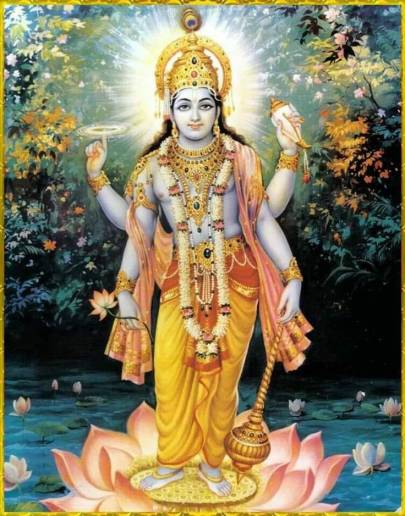
I am That,
That Awareness,
That unchanging eternal Consciousness,
That which is intrinsically different to and untouched by the myriad phenomena of body-mind-and-world,
That which does nothing, but in whose presence all is done,
That which is beyond the grasp of the fickle mind,
That which is beyond all experiences of bliss and suffering,
That which can never be known,
But always IS.
Yet all this is Me,
The all-pervading Vishnu,
Benevolently smiling,
Radiant with Blissful Love,
Protecting all,
Loving all and everything,
Encompassing all,
One with all phenomena,
Clear,
Pure,
The nature of Love,
Beauty itself,
Worthy of Ceaseless Devotion and Gratitude,
Self-shining,
Bright and ever-whole,
Ever-pristine and peaceful,
Always intuitively known by simply BEING,
Effortlessly present and ever-free.
Om Tat Sat
🕉🙏❤
Teachings/teachers which do not stress purification prior to or after awakening tend to be the ones in which you get the abuse scandals and the crazy-wisdom teachings in the worst cases. In better cases the teacher may just be a bit of an asshole at times, which is not the worst thing in the world, and to be honest, who isn’t an asshole at times? We are all human, after all (apparently), but it is a matter of degrees. With sattva, the chances of being rude, ignorant, abrasive and uncompassionate vastly decreases, but of course can occur from time to time, usually without the teacher intending to be offensive. When tamas and rajas predominate in a teacher, the distortion will be apparent in the teaching and its energy, and the teacher will likely act out their egoic vasanas from time to time and cause suffering to themselves and others accordingly.
You can often sense the energy of a particular teaching from energy the group of long-term seekers who are keyed into that particular teaching. Some teachers attract tamasic seekers, others attract rajasic ones, and others sattvic ones. Of course it doesn’t always work exactly like this – these are just general rules.
Take in these teachings, and see if they are true for you.
The above text was taken from a longer article which explains this in more detail.
You are innate divine power. You are naturally free. You are self-fulfilled: You need nothing to complete You.
Nothing can harm You. You, the essence, ever remain the same, unacting, unmoving, whole, unscathed and untouched.
You, pure consciousness, are one with everything and all-pervading, yet no individual object is You, the divine essence.
Discerning self from non-self, knowing this, realise your true nature as You. Then rest here, as the unacting, all-pervading, untouchable, self-fulfilled Self.
When this knowledge is firm, letting go of all thoughts, even thoughts of ‘I am That’, etc, simply be still and abide as the Self (ie. that which is denoted by ‘You’ above).
In the above lines, the first 3 paragraphs are when the teaching is verbally explained and listened to by the seeker (Sravana, which means listening in Sanskrit). This is the first step of the teachings in which the concepts of the teachings are delivered and explained by a teacher and thereafter retained by the seeker.
In the 4th paragraph the verbal teachings are contemplated (Manana in Sanskrit) by the seeker. This is the second step of the teaching and this eventually culminates in an experiential realisation or understanding of what the teachings are pointing towards. The conceptual understanding that occurs through Sravana of ‘Tat Tvam Asi’ (You are That) has now been transformed into a direct experiential understanding through examining ones direct experience in light of the conceptual teachings.
In the last paragraph the verbal teachings themselves are transcended once the ‘I am the body-mind’ concept is no longer present, and the instruction is simply to remain as That (Nididhyasana or meditation in Sanskrit).
It is this last stage that leads to lasting fulfilment and the end of suffering through (1) destruction of the habitual tendency (Vasana in Sanskrit) to identify as a limited entity (ie. ignorance or avidya in Sanskrit) ie.the body-mind) and (2) destruction of the egoic tendencies to seek pleasure and fulfilment through objects (Vishaya Vasanas in Sanskrit), including subtle objects such as experiences and knowledge /understanding /insights /intuitions, all of which are transient and so never lead to lasting satisfaction or lasting peace.
When suffering is no more, this is also known as ‘understanding’ or ‘knowledge’ or wisdom (Jnana), and it is also the culmination of devotional love (Bhakti) and the culmination of the path of meditation or yoga. It is also known as Self-realisation or liberation (Moksha).
Questioner: Usually this understanding stays for a while and then again gets muddled or covered by personality and it’s needs. How do we keep going back to the clear state…Although there is nothing called going back.
Tom: This is not a trick question: what covers up the ‘clear state’?
Q. The personality and it’s story.
Tom: Does it really get in the way? If so, how? If not, how?
Q. It’s like a forgetting of the clear state and thinking of ourself as a personality and the story it carries. This is taken as real and suddenly we are captured by it’s momentum unless some teaching or saying re-points to the clear state again. There is forgetting of the clear state.
Tom: Exactly. There is your answer. The force of habitually taking yourself to be a ‘me’ or a body-mind is ignorance. Letting that subside or seeing through that is enough. Eventually the habit will reverse and ignorance won’t reappear. It never really appears anyway. Namaste.
Many claim that to advise any kind of practice is to reinforce the ego and duality, and is therefore a dualistic expression. Now there is much truth in this. However to use the same logic against itself, isn’t this in itself a duality, distinguishing between dualistic and nondualistic expressions?
Ask yourself, what is more important to you: concepts of duality/nonduality or the cessation of suffering?
Ultimately the ‘truth’, so to speak, is not to be found in concepts of any kind, and is not really truth at all but simply the end of suffering.
Many expressions can help towards this end, both so-called dualistic and nondualistic expressions. To think otherwise is to artificially restrict yourself and close yourself to the endless variety of ways life teaches and guides us home – the home we never really left – you could even say the home we always already ARE.
While there is nothing wrong with discussing teachings (it can appear to be very helpful depending on where the seeker is – although a duality is also implied in the very discussion) – to argue endlessly about conceptual teachings often implies an egotism that is attached to certain expressions (ie. teachings), and this too can be an unhealthy source of egotism and suffering.
So if you find yourself tangled up in teachings and seeking, a suggestion is to simply relax and be as you are, free from worry, free to worry.
🙏❤
Q. Hypothetically speaking, if you were to start seeking Liberation all over again, what potential mistakes would you avoid this time?
Tom: I would relax more, much much more, and trust my own intuition in Silence, knowing that I already know this, what I am looking for is already totally and fully known, not with the mind, but intuitively effortlessly ‘known’. It is nothing else but my very BEING.

