84. Because the true Self is eternally perfect awareness-love-bliss and eternally free of all suffering, some people think there is no need for spiritual practice. Such a notion is an ego preservation strategy. The purpose of practice is not to gain the true Self. The purpose of practice is to remove the illusion of a body, a world, suffering, etc. so that what remains is only the eternal experience of the True Self.
85. In other words, those who have let the ego trick them into thinking there is no need for spiritual practice, because the True Self is eternally free of suffering, etc., are still having the experience of suffering, a body, a world, etc. Thus their experience is not consistent with their concept that the True Self is eternally free of suffering and perfectly blissful. This is an example of intellectual ‘spirituality’. This is an example of people confusing a journey through concepts, ideas, beliefs and opinions with an authentic spiritual journey. Practice leads to the direct experience of Infinite-Eternal-Awareness-Love-Bliss
86. A journey through spiritual concepts, ideas, beliefs, teachings and opinions is a journey through illusions.
87. Practice is what is essential. It must not be a spiritual practice that is creaed by the ego for the purpose of preserving the ego.
88. With the Awareness Watching Awareness Method, the practice is the progress. The habit has been developed of always looking outward towards the seen. The Awareness Watching Awareness Method reverses this. Every time a thought arises, or the tendency to look outward, the attention is taken away from the thought and turned towards the seer.
89. Thus with the Awareness Watching Awareness Method a new habit is developed and the practice is the progress…
The above is an excerpt from the book The Most Direct Means to Eternal Bliss by Michael Langford. You can download a copy of the entire book here.
Self-Attention is the key. Powerful teachings quotes of Sri Ramana Maharshi arranged for deep contemplation here in this video below. Each quote is initially repeated twice to drive the teachings home and later on more time is given between the quotes to enable one to dive deeper into the Silence-Self within.
For a full transcript of the featured quotes together with source text from which they are obtained, please see the final ‘Summary Verses’ section on this link.
For more videos like this see the playlist ‘Guided Meditations’ here.
Tom: In the following quotes Sri Ramana Maharshi gives us a teaching on the correct relationship between Deep Sleep & Self-Realisation or Jnana:
Questioner:Sushupti [deep sleep] is often characterised as the state of ignorance.
Sri Ramana Maharshi:No, it is the pure state. There is full awareness in it [deep sleep] and total ignorance in the waking state. It is said to be ajnana [ignorance] only in relation to the false jnana prevalent in jagrat [the waking state].
Really speaking jagrat [the waking state] is ajnana [ignorance] and sushupti [the sleep state] prajnana [wisdom]. If sushupti is not the real state where does the intense peace come from to the sleeper?
It is everybody’s experience that nothing in jagrat can compare with the bliss and well-being derived from deep sleep, when the mind and the senses are absent. What does it all mean? It means that bliss comes only from inside ourselves and that it is most intense when we are free from thoughts and perceptions, which create the world and the body, that is, when we are in our pure being, which is Brahman, the Self. In other words, the being alone is bliss and the mental superimpositions are ignorance and, therefore, the cause of misery. That is why samadhi is also described as sushupti in jagrat [sleep in the waking state]; the blissful pure being which prevails in deep sleep is experienced in jagrat, when the mind and the senses are fully alert but inactive.
~ Guru Ramana, pp. 112-13
Tom: Here are some verses from Sri Ramana Maharshi taken from Guru Vachaka Kovai that make similar points, namely that deep sleep is not actually ignorance at all but actually the Self. It is only our belief that the waking state is Reality (and that we are the body-mind) that makes us feel that Deep Sleep is a state of total ignorance. It is actually Pure Knowedge:
455.
Having experienced fully the great bliss of the sublime state of sleep where no other object exists, it is sheer ignorance not to value that state and to regard it as one’s salvation, but instead to desire something else, imagining it to be one’s defence against the misery one experiences.
457.
The ignorance of forgetfulness which makes you say that the waking state is a state of illumination makes you [also] declare that sleep is a sheath [kosa] of ignorance. If the belief that the waking state is the illustrious and unique state of truth goes, then sleep will become, andshine as, pure non-duality.
461.
Only in an intellect that has developed a desire for the waking state will the eminent state of deep sleep, which is all bliss, be classified as a state of ignorance: ‘I did not know anything during sleep.’ By failing to enquire into and realise the true experience that exists and shines in the same way forever, one becomes deluded and thinks, ‘I am the one who woke up’. If that powerful sheath of the intellect, the ignorance that is experienced in the waking state, is destroyed by the sword of vichara [that leads to the knowledge] ‘I am not the one who woke up’, then the eminent state of sleep will shine, remaining as pure bliss, its ignorance destroyed.
Tom: We see the same teaching in Talks with Sri Ramana Maharshi. The following is from talk number 314:
Again, sleep is said to be ajnana [ignorance]. That is only in relation to the wrong jnana prevalent in the wakeful state. The waking state is really ajnana [ignorance] and the sleep state is prajnana [full knowledge].
Tom: Here Bhagavan Ramana explains that the waking and dream states are mere projections of the minds habitual tendencies (vasanas), and when these are removed, only Deep Sleep remains, and this Deep Sleep is nothing but the Self (here called Turiya, the ‘forth’ state.):
460.
If the beginningless, impure vasanas that remain as the cause for waking and dream leave and perish, the state of sleep [previously perceived as] void-like and dull, and which led us into a state of ignorance and suffering, will become the transcendent state of turiya.
Tom: What about if we fall asleep during Self-Inquiry, what then? Bhagavan Ramana reassures us as follows:
462.
If the illumination that is awareness of your being exists so firmly that it remains unshaken until sleep overpowers you, then there will be no need to feel jaded and disheartened, lamenting, ‘Oh, the forgetfulness of nescient sleep has come and unsettled me!’
Tom: Note that the word nescience in the above verse is just a synonym for ignorance, the root meanings of the words being the same, ie. not-knowing. Ignorance negates the Greek word ‘gnosis’, which means knowledge, and nescience negates the Latin word ‘scientia’ which also means knowledge.
The above verses allow us to more fully understand the somewhat cryptic but important verse in the Bhagavad Gita Chapter 2, verse 69. It also reveals to us the depth of knowledge present in the Bhagavad Gita:
What all [ignorant] beings consider as night, is the day for the wise,
And what all [ignorant] beings see as day, is the night for the sage.
Tom: We can see that the above verse from the Bhagavad Gita is saying that most people consider deep sleep as being total darkness and ignorance, whilst the Sage considers this to be Knowledge, ie The Self. Conversely, what most people consider to be the ‘waking state’ is actually considered by the Sage to be a state of pure ignorance and delusion.
The waking state is considered by most to be a state in which we know things (other objects) and in which we ‘live our life’ as a human being – this is the meaning of ‘day’ for most people. The sage considers this ‘day time’ or ‘waking state to be pure illusion and delusion, or ‘maya’.
Because most people identify as being the body-mind in the waking state, and because most people consider the waking state to be a worthy state in which we experience ‘real life’ and gain ‘worthy life-experiences’, they therefore consider deep dreamless sleep as being a dull dark state full of ignorance. However the sage, who has lost the ego-identification as body-mind, sees Deep Dreamless Sleep only as the Pure Self in which there is only Perfect Love-Being-Bliss devoid of space, time, creation, body, mind, thoughts and concepts.
This same teaching that Bhagavan Ramana has made so clear to us above is also given in the Brihadaranyaka Upanishad, see here for details
Q. Would you say that samadhi is a mental state? If so would Self Realisation be possible while not in that state after experienced?
Tom: Samadhi is not a mental state. Mental states come and go and are part of maya (illusion). Samadhi is beyond this. Samadhi is abiding as Self.
Q. I’m not clear on this for myself. From my understanding there are many jivas the world considers Self Realized that did not constantly operate out of a state of absorbtion/samadhi but were able to access it at will. I think that if Realisation is confined to samadhi only one could be justified in forgoing the Advaita path and shravana (hearing the teachings) and manana (reflecting upon the teachings) aspects altogether and aspire straight to a more meditative or Raja yoga path.
Tom: Regarding your first point, the Jnani is not the body-mind, but the eternal Self Within. There is only one Jnani – the Self. This Self is also called ‘Samadhi’. It is non-dual. It cannot be understood properly by the mind. This is why the Self can only be attained by Samadhi. The various so-called ‘realised-jivas’ are just illusion, or maya, appearance.
See a quote from Sri Ramana Maharshi here:
A Swami asked: I feel toothache. Is it only a thought?
Sri Ramana Maharshi: Yes.
~Talks 451
Questioner: Now there is the Sino-Japanese war. If it is only in imagination, can or will Sri Bhagavan imagine the contrary and put an end to the war?
Sri Ramana Maharshi: The Bhagavan of the questioner is as much a thought as the Sino-Japanese war. (Laughter.)
~Talks 451
Now regarding your second point about yoga and meditation vs vedanta and sravana (hearing the teachings) and manana (reflecting upon the teachings):
’Fools, not the learned, speak of Sankhya [the path of knowledge] as being different to Yoga. Anyone who properly resorts to even one of these obtains the results of both’ ~Bhagavad Gita 5.4 ’The State that is reached by Sankhya is also reached by Yoga. He truly sees who sees that Sankhya and Yoga are one’ ~Bhagavad Gita 5.5
Krishna goes on to explain the path of yoga in the rest of chapter 5 and particularly in chapter 6 and how that leads directly to realisation. So yoga is another way. Have not all the great sages proclaimed this? It seems to be only the modern teachers with an intellectual appraoch who say otherwise. Sri Ramana Maharshi has said this – see the text he wrote called Self-Enquiry (Vichara Sangraham) where he describes how Raja Yoga can lead to liberation. Sri Ramakrishna, who was initiated and was taught Advaita Vedanta in a traditional way, also said the same, as did his disciple Swami Vivekananada. The purpose of Sravana and Manana is just to teach Nididhyasana (meditation). The purpose of all teachings is to come to Silence (mouna). Silence is just another word for Samadhi, or the Self, and is represented by the sacred symbol ‘Om’ above.
’All the texts say that in order to gain release one should render the mind quiescent; therefore their conclusive teaching is that the mind should be rendered quiescent; once this has been understood there is no need for endless reading.’ ~Who am I? by Sri Ramana Maharshi
See how much time Sri Ramana spends on Sravana and Manana in his teachings and writings – he always emphasised Nididhyasana, whereas the modern intellectual-type teachers of ‘Advaita Vedanta’ emphasise and spend most of the ri time on Sravana and Manana. Why do you think this is? As I said above, this point is also explained in the Bhagavad Gita Chapters 5 and 6 where Krishna explains how yoga leads to Moksha. It is also explained in a traditional text that Sri Ramana Maharshi recommended – Advaita Bodha Deepika – see Chapter 3 where this is also explained.
Please see these above texts if you wish to explore this further.
‘The mind is by nature restless. Begin liberating it from its restlessness; give it peace; make it free from distractions; train it to look inward; make this a habit. This is done by ignoring the external world and removing the obstacles to peace of mind’
~Sri Ramana Maharshi, Talks with Sri Ramana Maharshi, talk no. 26
Objection: I have a slightly different view then Ramana perhaps did on ignoring the external world. It seems to me that the external world is the reflection of the inner. Becoming conscious of the beauty in nature resonates with the inner. This is perhaps a more indigenous view and is much older then even Vedanta and goes back even to the time when humans were Neanderthals as well as Homo sapiens when everything in nature was animating in presence.
Tom: Yes, being with nature is one of many things that can bring us in tune with the Self and bring us genuine peace and genuine insight, but ultimately for realisation to occur (and thus for suffering to end) one must turn within and all thoughts must cease. Otherwise the illusion of time and space are not seen through and suffering (and duality) continue, even if in a subtle way.
This is why Sri Ramana Maharshi writes in Who Am I?:
Q. When will the realization of the Self be gained? Sri Ramana: When the world which is what-is-seen [ie. objects] has been removed, there will be realization of the Self which is the seer. Q. Will there not be realization of the Self even while the world is there? Sri Ramana: There will not be.
~ Sri Ramana Maharshi, Who Am I?
Tom: What we call the world (ie. space and time and people) is actually a projection of mind/thought. Put simply, the world, space and time are simply thoughts. Again, this cannot be known unless we turn within, away from the world, towards the Self, and thoughts competely cease. From Sri Ramana Maharshi:
‘When the mind, which is the cause of all cognition’s and of all actions, becomes quiescent, the world will disappear…All the texts say that in order to gain release one should render the mind quiescent; therefore teaching is that the mind should be rendered quiescent.’
~ Sri Ramana Maharshi, Who Am I?
Tom: When thoughts completely cease, time and space disappear. If time and space are still appearing, it is because thought (namely the ‘I-thought’, which is the notion or thought or belief that ‘I am a body-mind’) still persists.
Therefore, when the world appears, the Self does not appear; and when the Self appears the world does not appear.
~ Sri Ramana Maharshi, Who Am I?
When the mind comes out of the Self, the world appears.
Tom: Yes, ego-mind-thought must die for realisation to occur. Those who are still attached to the body-mind-world and still take themselves to be the body say otherwise.
Ego is ignorance. Ego is duality. It is the ego that creates/projects the body-mind and world, like in a dream. When ego goes, everything goes, and all that remains is the Self. It cannot be put into words or understood by the mind. In truth ego never existed at all.
Objections to this such as ‘how does the sage function without ego’ only occur in ignorance of taking the sage to be the body and in the presense of ego-ignorance seeing body-mind-world.
The paradox of this cannot be explained in words, but when the mind becomes so completely and utterly still so that time and space and personhood all cease to exist, this ‘Self’ is somehow ‘known without knowing’.
Now it is true that Sri Ramana often said that we should ‘be still’ [in Tamil – ‘Summa Irru’ which means ‘be still’ or ‘just be’] and that this is the practice, but what did he mean by ‘be still’? If we read and examine Sri Ramana’s written work ‘Who Am I?’, we will see what Sri Ramana means when he says ‘be still’ or ‘keep quiet’. Note that we can trust the teachings in ‘Who Am I?’ as an authentic rendition of Sri Ramana’s teachings as they were written by Sri Ramana himself.
Let us see: the first time we come across the notion of quieting the mind in ‘Who Am I?’ is as follows:
‘When the mind, which is the cause of all cognition’s and of all actions, becomes quiescent, the world will disappear.’
Now on the face of it this is quite a strange statement for Sri Ramana to make: that the world will disappear when the mind is still. Clearly, when Sri Ramana states that the mind is to be quiet, he is perhaps using these words in a different way to how they are normally used. How can it be that when the mind becomes quiet the world disappears?
Well earlier in ‘Who Am I?’ Sri Ramana explains that it is the mind is a power that creates or projects the entire body, mind and world*, so to ‘be quiet’ means not just to still the ordinary thinking mind, but to still this world-projecting power, ie. to remove all of Maya. Ramana repeats this, see here, also from ‘Who Am I?’:
Question: When will the realization of the Self be gained?
Sri Ramana Maharshi: When the world which is what-is-seen has been removed, there will be realization of the Self which is the seer
Question: Will there not be realization of the Self even while the world is there?
Sri Ramana Maharshi: There will not be.
I have a video here which explains the importance of this teaching. It fundamentally explains why some teachings are liberating and others are not:
Whilst some teachings may encourage us to still the mind, Sri Ramana is emphasising removing the entire body-mind-world from our consciousness. We can see that Sri Ramana’s teaching is far more extreme than many others – it is this extreme teaching that is needed to remove ignorance and realise the Self.
Sri Ramana emphasises Self-Enquiry as the only sadhana that will lead us to Liberation. Again, Sri Ramana’s teaching is more narrow and prescriptive in this way, as he maintains that Self-Enquiry is the only way. Let us see what else Sri Ramana writes in ‘Who Am I?’:
Question: Are there no other means for making the mind quiescent?
Sri Ramana Maharshi: Other than inquiry [Vichara; Self-Enquiry], there are no adequate means.
We can see that Sri Ramana is stating that sadhana or self-enquiry is essential to make the mind quiet, so that when Sri Ramana is asking us to ‘be still’ or ‘keep quiet’, he is actually asking us to do Self-Enquiry.
*What is called mind (manam) is a wondrous power existing in Self (atma-swarupam). It projects all thoughts…Other than thoughts, there is no such thing as the world….Just as the spider spins out the thread from within itself and again withdraws it into itself, so the mind projects the world from within itself and again absorbs it into itself. ~ from Who Am I? by Sri Ramana Maharshi
Sometimes to those who are on the spiritual path, it can seem like those who are in full ignorance are happier. It can feel like ignorance is bliss, but it isn’t. It’s deep, deep suffering.
There are few things about spiritual seeking…First, the spiritual seeker has a certain type of sensitivity, which makes them more sensitive to suffering, because they are more aware of it often. That self-aware aspect can intensify suffering that wouldn’t bother other people so much. Some spiritual seekers have fairly nice lives outwardly. But inwardly they are suffering intently because they are more sensitive to their suffering because the awareness is there.
The other thing about the spiritual path is that it is often an isolating path, which also makes it difficult. There is no one to share it with, very few people understand this, because most people are not seekers of liberation, they are seekers of other things.
The other thing is there is nothing you can do about it. Say ignorance was bliss, probably with this there is no turning back! I’m sorry to say, you can’t go back!
Sri Ramana Maharshi did not say you have to love me, you have to devote yourself to me – that is not the essence of the teaching at all. That is actually to miss the point to what he is actually pointing towards. He said you’ve got to follow my teachings. You have to follow the Guru’s instruction.
This video was recorded live during a Satsang meeting with Tom Das.
Tom: Traditionally Sravana refers to hearing the teaching.Manana refers to reflecting upon and thinking about the teaching which has been heard.Nididhyasana refers to prolonged meditation upon the Self, which culminates in Samadhi, which then leads to Moksha (Liberation).
The knot of the ignorance in the heart is broken completely only when one sees his Self as secondless through Nirvikalpa Samadhi
~Adhyatama Upanishad 1.17
Here is a quote from Sri Ramana Maharshi taken from Talks with Sri Ramana Maharshi, Talk no. 249 – all writing below in black type is from Sri Ramana, with my comments being in red:
The effects of sravana may be immediate and the disciple realises the truth all at once. This can happen only for the well-advanced disciple.
[Tom: later Sri Ramana explains that this means that the advanced/ripe seeker immediately goes into Samadhi, which is the same as abiding as the Self, as soon as the teaching is heard]
Otherwise, the disciple feels that he is unable to realise the truth, even after repeatedly hearing it. What is it due to? Impurities in his mind: ignorance, doubt and wrong identity are the obstacles to be removed.
(a) To remove ignorance completely, he has to hear the truth repeatedly, until his knowledge of the subject-matter becomes perfect
(b) to remove doubts, he must reflect on what he has heard; ultimately his knowledge will be free from doubts of any kind;
(c) to remove the wrong identity of the Self with the non-self (such as the body, the senses, the mind or the intellect) his mind must become one-pointed. All these things accomplished, the obstacles are at an end and samadhi results, that is, Peace reigns.
Some say that one should never cease to engage in hearing, reflection and one-pointedness. These are not fulfilled by reading books, but only by continued practice to keep the mind withdrawn.
The aspirant may be kritopasaka or akritopasaka. The former is fit to realise the Self, even with the slightest stimulus: only some little doubt stands in his way, it is easily removed if he hears the truth once from the Master. Immediately he gains the samadhi state. [Tom: Sri Ramana is stating that by listening alone, or by some other minimal stimulus, the ripe seeker spontaneously goes into samadhi without the need for the intermediary steps of reflecting upon the teachings or meditating upon them.] It is presumed that he had already completed sravana, reflection, etc. in previous births, they are no more necessary for him.
For the other all these aids are necessary; for him doubts crop up even after repeated hearing; therefore he must not give up aids until he gains the samadhi state. Sravana removes the illusion of the Self being one with the body, etc. Reflection makes it clear that Knowledge is Self. One-pointedness reveals the Self as being Infinite and Blissful.
Questioner: Tom, I’ve been reading a book on free will last week and the more I read through it, I came to the understanding there is no free will at all…
This video was recorded live during a Satsang meeting with Tom Das and put together by volunteers.


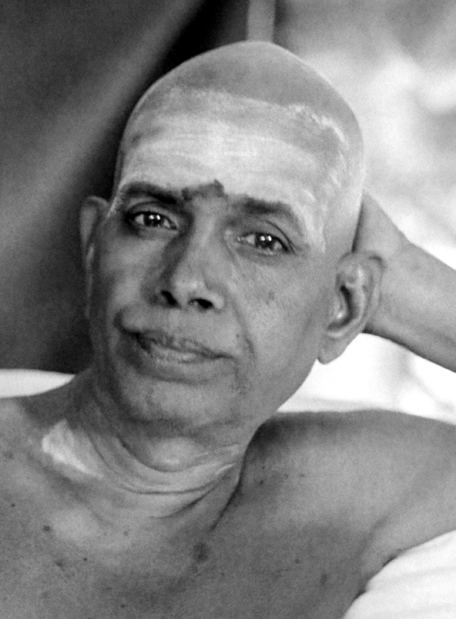

 Tom Das