Grace Alone is of Prime Importance | Sadhanai Saram | Sri Sadhu Om | Sri Ramana Maharshi

The following text is taken from the wonderful text Sadhanai Saram (The Essence of Spiritual Practice) written by Sri Sadhu Om. This text not only gives us the essence of Sri Ramana Maharshi’s teaching, but also directs us to the true Vedanta teachings. The notes are written by Sri Sadhu Om himself.
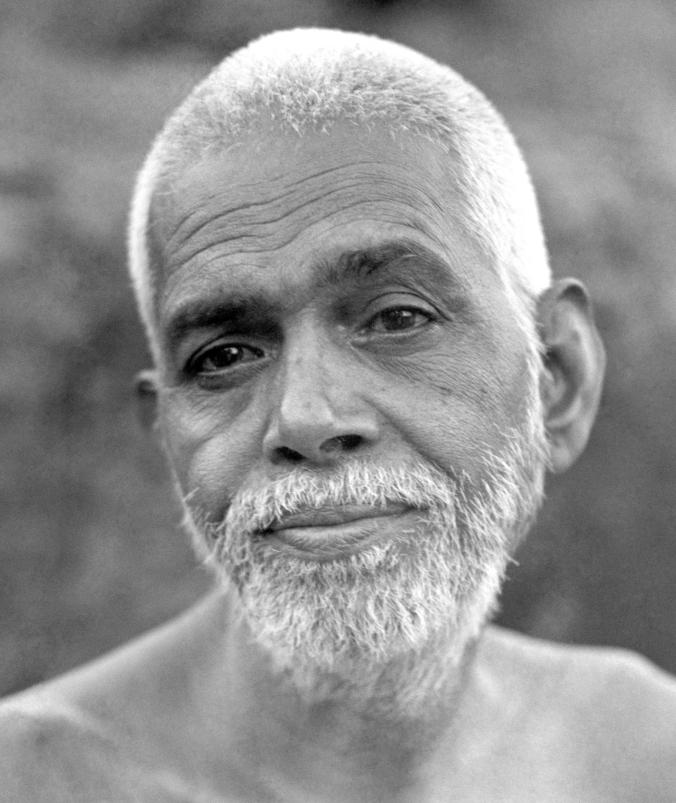
  1. The ego is only a trivial entity; besides, it is unreal (asat) and powerless (asakta). It is a mere adjunct which rises and subsides. Therefore, what foolishness it is to think, “The spiritual practice (sadhana) done by the strength of this ego will by itself bestow the goal of life; the supreme power of divine Grace is not of any consequence (and is not necessary in order for one to attain the goal)”!

Note: Not believing Grace, but thinking one’s own individual effort alone to be of very great consequence, is mere foolishness.

  1. Is not the unreal help which one unreal man renders to another unreal man, experienced by everyone in this world as real? Therefore, O Sadguru, the embodiment of Grace, the sole reality, is it impossible for You to save me by dispelling the unreal ego? What doubt or wonder is there in Your being able to help me thus

Note: A man or jiva is merely an unreal appearance, and hence whatever help he may seem to render to another man is also unreal. But when such unreal help rendered by an unreal man is experienced by everyone as real, why should we doubt the ability of the Sadguru, who alone is truly real, to render us the real help of destroying the unreal ego? Such help from the Sadguru will certainly be experienced by us as more real than the help that we feel is rendered to us by others.

  1. Unless our Lord, Sri Ramana, who is the form of God, Himself bestows His divine Grace, who can by his own effort attain that heroic state of firmly abiding as Self, having clearly known one consciousness other than the body to be the real “I”?

Online Satsang with Tom Das | Advaita with loving devotion to Sri Ramana Maharshi | Online Non-duality meetings | Advaita Vedanta

See here for more details

Please join us – all are welcome and no prior knowledge is required.

We meet ONLINE twice every week (every Thursday 8pm and Sunday 3pm UK time).

We meet IN-PERSON on the first Sunday of every month at 2pm UK time and this meeting is also livestreamed on Zoom.

Meetings often start with some Silence followed by some readings, a talk and some questions. The initial silence is a wonderful opportunity for stillness and to put the teachings into practice.

After the meeting there is an opportunity to stay and connect with other people attending the meeting.

To join or find out more please see this link.

The real meaning of Omniscience | Advaita Vedanta

See here for a PDF download of Upadesa Saram (The Essence of the Teachings written by Sri Ramana Maharshi) with brief explanatory notes: 

https://tomdas.com/2019/03/25/ramana-maharshi-upadesa-saram-the-essence-of-the-teachings/


This video was recorded live during a Satsang meeting with Tom Das and put together by volunteers.
To attend satsang, see here:

 https://tomdas.com/events

For guided meditations see the ‘guided meditation’ playlist here: https://www.youtube.com/c/TomDasNonduality/playlists

For recommended reading for liberation see here: https://tomdas.com/2020/10/19/recommended-reading-books-for-enlightenment-liberation-and-self-realisation/

To book a 1 to 1 session with Tom see here: https://tomdas.com/nondual-spiritual-counsellor

Multiplicity, plurality and polarity ARE duality | Non-duality | Sri Ramana Maharshi

Seeing multiplicity/plurality and seeing the underlying oneness within the plurality or multiplicity is not the real non-duality at all.

This false notion of non-duality, which is very commonplace, is actually an ego-preservation strategy where the notion of the ‘false-I’ is subtly continued, and suffering still continues in this state – seeking still continues too, as does a subtle sense of individuality.

Non-duality is that in which there is no duality/multiplicity/plurality/individuality whatsoever. Only then will seeking end. Only then will suffering end. Until this is discovered, seeking will continue, and with it the suffering and sense of individuality (ie. duality) will too. To discover the true non-duality one must turn within and discover the Self for oneself, which is indivisible Oneness-Love-Being-Bliss.

At least this is my experience.

This is why Bhagavan Sri Ramana Maharshi states in Guru Vachaka Kovai verse 931:

  1. “The mukta [liberated sage] like the rest of us perceives
    The world in all its vast variety
    And yet he sees non-difference in it”,
    So people say. This is not true.

Sri Sadhu Om comments upon the above verse as follows:
‘People have many wrong conceptions about the state of a Jnani or Jivanmukta, and one such misconception is refuted here. “What people see as water, the Jivanmukta also sees as water, and what they see as food, He also sees as food. Therefore, in His experience of sense-objects, the Jivanmukta is the same as other people. But even while the Jivanmukta thus sees these differences, He sees the non-difference in them” – are there not many pandits and lecturers who talk and write thus, even though they themselves have no experience of Advaita but have only read about it in books? But who is the proper authority to say what is the actual experience of a Jivanmukta? Only a real Jivanmukta! Thus Bhagavan Sri Ramana, who has actually experienced the reality and who is the true Loka Maha Guru, declares in this verse that such statements are wrong, and in the next verse He explains how and why they are wrong.’

In his commentary to the next verse Sri Sadhu Om continues, relating to us his own direct hearing of Sri Ramana’s teaching:
‘…Regarding this erroneous theory of bheda-abheda or unity in diversity, Sri Bhagavan used to say that if the least difference or diversity is perceived, it means that the ego or individuality is there, so if difference is experienced, non-difference or unity would merely be a theoretical proposition and not an actual experience.’