How yoga leads to Enlightenment

yoga.jpg
An illustration dated from the early 20th century, drawn to accompany Yoga Yajnavalkya, an imporant foundational text on yoga from the 12th century CE.

In my previous two posts (here and here) I’ve described the aims of the of yoga as being twofold:

  1. Knowledge: to see/know/realise that the notion of being a separate doer-entity is an illusion
  2. Peace: to become peaceful (sattvic) and remove compulsive desires

Each of these two aims of yoga are there to solve a basic problem. First, as long as you take yourself to be a doer, you suffer. This is corrected with Knowledge as defined above. Note that this Knowledge is not knowledge of something new (additive or positive knowledge) but it is realising something is false (negative knowledge).

And second, as long as you are a slave to compulsive desires, right action (ethical and intelligent action in accordance with natural law or dharma) will not fully manifest, and the flow of the innate natural intelligence will be impeded and distorted by these addictive and compulsive tendencies (vasanas). This is corrected by becoming sattvic (peaceful).

There are many forms of yoga and some can be very technical and detailed. However in general, some yogas work upon the body, others on the breath/voice, and some focus more on the mind. However the main purpose of yoga is to affect the mind, as this is where the core problems described above lie.  Those yogas that work primarily upon the body, voice or breath do so in order to directly or indirectly effect the mind to which they are connected.

Each type of yoga strives to achieve the two points mentioned above in a slightly different way. Often there is a conceptual framework within which the yoga operates. When the aim of the yoga has been achieved (ie. by achieving the two points above), then the conceptual framework within which the yoga operated can be dismantled and left behind.
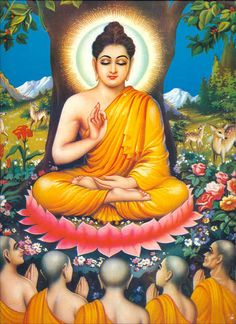
buddha.jpg
(1) Knowledge and (2) Peace, personified here by a visual and stylised  image of the Buddha

Improving your posture

Let’s give a simple example of how concepts, even when false, can aid us. If you want to improve your posture an expert may recommend you imagine a length of string attached to the crown of your head, pulling the top of your head upwards towards the sky/ceiling. When you imagine this, you naturally straighten your posture in line with the visualised imaginary piece of string.

After practicing this for sometime, your posture improved and now you no longer have to imagine a piece of string. At no point did you actually thinks there was a piece of string actually there, but you can see how this concept was useful to correct your posture.

Concepts in Yoga

Lets take a look at some of the main traditional forms of yoga to see how this works. In the sections below there are many aspects of the yoga I have not gone into, as the purpose of this text is to demonstrate how yoga can use concepts to achieve the two goals mentioned above, and then the concepts can be thrown away, to be picked up again only when this needs to be taught to someone else.

Jnana Yoga

Jnana means knowledge in Sanskrit, and Jnana Yoga is the Yoga of Knowledge.

In this yoga the concept of Brahman is introduced and is initially equated as being being-consciousness-bliss (sat-chit-ananda). Brahman is initially defined as being our basic sense of presence-awareness and the teachings show this to be (apparently) Unchanging, Ever-Present/Permanent, Eternal, Infinite and Indestructible. This is stark contrast to the subtle and gross objects that appear within it which are ever-changing, temporary, transient, limited and subject to creation and destruction.

The Jnana yogi is taught to identify him/herself as that Unchanging Absolute Brahman and not to identify as the ephemeral objects. Through this process of de-identification with the body-mind and identification with that which does not change, insight into experience occurs.

We start to realise that the body-mind entity that we formerly took ourself to be actually is not us at all. We thought that we we responsible for our thoughts and action, whereas from the point of view of Brahman or Absolute Consciousness, it is seen that there is no doer and the body-mind-entity functions by itself. At this point the doer-entity is seen to be non-existant, and Knowledge as defined above in objective (1) arises.

At this point the essential job of jnana yoga has been completed, and the concepts of Brahman as being an unchanging essence can then be dropped and life goes on, living itself. There is no attachment to concepts such as the relative and absolute or concepts of the infinite, all of which are ultimately unverifiable in our experience.

Incidentally, once the doer has seen to be non-existent, sattva tends to arise over time as the processes that fuel compulsive desires are slowly wiped away, and so objective (2) is also indirectly achieved.

We can see that in Jnana yoga the concept of an Absolute Brahman has been useful to us to serve a purpose. However ultimately we cannot know for sure from our experience alone that there is such as thing as the Absolute Unchanging Brahman. Because Knowledge, ie. seeing through the doer, has occurred, Freedom is innately realised, and concepts are not clung to, and no beliefs are required.

Karma Yoga

Karma means action in Sanskrit, and Karma Yoga is the Yoga of Action.

There are a few ways karma yoga can be performed according to the traditional scriptures, but one of them is to set up the concept of a personal God, an all-powerful entity that is responsible for everything and every action in the universe. The Karma yogi is taught to realise that it is this God that ultimately has control and not the limited body-mind that it thinks itself to be.

The karma yogi therefore practices gladly accepting everything that comes his or her way as a gift from God, working to the best of their ability, but not being attached to the results of their actions.

As the Karma yogi starts to learn to be happy regardless of what is happening, this has the direct result of eroding away compulsive desires, converting them into non-compulsive desires, and so eventually objective (2) is achieved.

Thereafter, over time, the sense of identification with the body-mind entity loosens and is seen through. It can become apparent to the Karma yogi that actions happen by themselves: thoughts happen by themselves, but there is no thinker, just a spontaneous thought occurring, one by one, in quick succession. Similarly actions happen by themselves: limbs move, lips speak in the same way that dogs bark, leaves rustle and clouds float by – all happens spontaneously, and there is no doer. Here Knowledge arises.

Now the yoga has completed its aims: Freedom has been realised and we are seen to be free from suffering – we are seen to have always been free from suffering and the world. Now we no longer have to worry about concept of an infinite all-powerful personal God that is ultimately unknowable and unverifiable.

Again, the concept of the infinite God, as with the concept of the Unchanging Indestructible Brahman for Jnana yoga, can be seen to have been a useful tool, aiding the seeker to attain Liberation, but now no longer needs to be believed in.


So here are just two examples of how concepts are utilised in yoga to achieve a greater end than perhaps could have been achieved without them.

Remember, don’t cling to concepts, beliefs and ideas. Use them by all means, but when you no longer need them, let them go. Ultimately, stay with what you know, stay with what’s true, question your beliefs, be unafraid to admit if you’re wrong, and don’t pretend to know something you don’t. Keeping to these guidelines will safeguard you from dogma, and the suffering that results from it.

Also see:
How spiritual teachings work
The essence of yoga
The paradox of yoga
Can you know something is infinite?

Enlightenment: is a teacher required?

buddha-lights

For many a teacher is essential.

For some no human teacher is required.

For some a teacher/teaching can even be detrimental.

Without the drive for truth, even with a good teacher you can get caught up in the teaching and never break free from its concepts and modes of expression.

Buddhism: How enlightenment happens

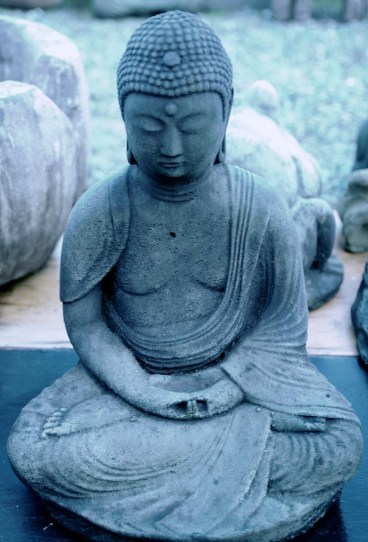
Buddha statue.jpg

If you read the earlier Buddhist texts (the Pali Suttas) you get a very different feel of the Buddha’s teachings compared to the systematised versions of Buddhism that are often more prominently on display today. It becomes apparent that the Buddha taught in different ways to different people and that the true Dhamma (teaching) cannot be grasped.

The eight-fold path that we most often hear about was very probably a central and important part of the Buddha’s teaching, and a truly wonderful teaching in my view, but it is clear that many people came to enlightenment in various ways according to the suttas (Buddhist texts).

We read that some attained enlightenment without practising, and some attained enlightenment simply upon hearing the Buddha speak. Some had a great awakening before practice, and then a practice naturally developed afterwards. Others followed the more traditional way of engaging with spiritual practises first and then attaining arahantship (full enlightenment) afterwards. The fact that arahantship was preceded by many years of practice for the Buddha himself may have affected the way he taught. However the suttas indicate that the Buddha realised that not all came to the Dhamma in the same way. In the Yuganaddha Sutta, Ananda explains the 4 main ways arahantship can arise:

Venerable Ananda said: “Friends, whoever — monk or nun — declares the attainment of arahantship in my presence, they all do it by means of one or another of four paths. Which four?
“There is the case where a monk has developed insight preceded by tranquility…He follows the path, developing it & pursuing it — his fetters are abandoned, his obsessions destroyed.
“Then there is the case where a monk has developed tranquility preceded by insight…He follows that path…his fetters are abandoned, his obsessions destroyed.
“Then there is the case where a monk has developed tranquility in tandem with insight…He follows that path…his fetters are abandoned, his obsessions destroyed.
“Then there is the case where a monk’s mind has its restlessness concerning the Dhamma well under control. There comes a time when his mind grows steady inwardly, settles down, and becomes unified & concentrated. In him the path is born. He follows that path, develops it, pursues it. As he follows the path, developing it & pursuing it — his fetters are abandoned, his obsessions destroyed.”
“Whoever — monk or nun — declares the attainment of arahantship in my presence, they all do it by means of one or another of these four paths.”

You can see here that two aspects of the teaching become very prominent, namely that of achieving tranquility and that of insight. The key is that both are required, but the order in which they are achieved varies. Some naturally are drawn towards becoming more tranquil and insight comes later. Others are more drawn to understanding and insight first and it is this insight that leads to tranquility as ‘fetters are abandoned’ and ‘obsessions destroyed’.

I explain in more detail what is meant by tranquility and insight here, but briefly insight is seeing there is no separate self (anatta in Pali), specifically that there is no separate doer entity. Tranquility when it is cultivated before insight usually refers to the lessening of thoughts and increasing of peace which in turn paves the way for insight. Tranquility after insight usually means a purification of the mind which naturally happens after insight; rather than reducing thoughts, this is the tranquility of freedom, of not being bothered by thoughts or circumstances and not depending on the mind, body or world (ie. anything) for one’s happiness.

In later Buddhist developments many schools developed ‘enlightenment first, practice later’ schools of teaching, notably in the Mahayana traditions, a prime example being Korean Zen master Chinul (1158-1210):

‘There are many avenues of entry into the Way…Sages since time immemorial have all first awakened then cultivated practice, attaining experiential proof based on practice.’
Chinul, Secrets of Cultivating the Mind, verses 19-20
‘If a real teacher points out a way of entry for you, and for a single instant you turn your attention around, you see your own original essence. This essence originally has no afflictions; uncontaminated wisdom is inherently complete in it. Then you are no different from the Buddhas; thus it is called sudden enlightenment.
As for gradual practice, having suddenly realised fundamental essence, no different from Buddha, beginningless mental habits are hard to get rid of all at once. Therefore one cultivates practice based on enlightenment, gradually cultivating the attainment to perfection, nurturing the embryo of sagehood to maturity. Eventually, after a long time, one becomes a sage; therefore it is called gradual practice. It is like an infant, which has all the normal faculties at birth, but as yet undeveloped; only with the passage of years does it become an adult.
Question: By what expedient means can we turn our minds around instantly to realise our inherent essence?
Answer: It is just your own mind; what further expedient means would you apply?’
Chinul, Secrets of Cultivating the Mind, verses 27-30

Chinul talks about the importance of first recognising your true original essence first (insight) before using this insight to purify the mind (tranquility after insight).

Going back to the Pali suttas, the Buddha also repeatedly warned against being attached to any particular teaching or teaching tradition:

‘Do not go by oral tradition, by lineage of teaching, by hearsay, by a collection of texts, by logic, by inferential reasoning, by reasoned cogitation, by the acceptance of a view after pondering it, by the seeming competence of a speaker, or because you think, ‘This ascetic is our teacher.’
AN 3.65 Kesaputti [Kālāma] Sutta

This really is quite a stark warning, and we could see this as a very ‘modern’ and scientific way of approaching this search for freedom from suffering. Again in the Atthaavagga, perhaps the earliest of all the Buddhist texts we know of, the Buddha warns about having any fixed views:

Atthaavagga, Chapter 6
5. Having abandoned what was acquired, not taking up anything, he would not be in dependence even upon knowledge. He truly is not a partisan among the schoolmen; he does not fall back on any view at all.
Atthaavagga, Chapter 10
7. He does not train himself through desire of gain, and he is not upset at lack of gain. He is not opposed to craving, nor is he greedy for savory stimulations.
8. An indifferent onlooker, always mindful, He imagines nothing in the world to be equal, nor superior, nor lower. For him there are no distinguished positions.
14. He for whom there is nothing his own in the world, and who does not sorrow over what is not there, And who does not go by philosophies— He truly is said to be “at peace.”

The Buddha stresses non-clinging, including non-clinging to doctrines, teachings, knowledge and points of view. In fact the Atthaavagga goes even further. Most of the very earliest Buddhist texts do not even mention the four noble truths, let alone the eight-fold path (which is the fourth truth of the four noble truths).

The Atthaavagga appears to go further here by denying much of what is commonly taught. We are not to find this deeper ‘truth’ through seeing, hearing or by any kind of knowledge. We are not to cling to morality or purity, nor their opposites. We are to depend on nothing. Of course, reading the following lines and having insight into them reveals a core ‘truth’, a more sublime Dhamma that is not opposed to the classic eight-fold path at all:

3. [The Buddha said:] There is nothing of which I say, “I declare this,”…But looking among the views, not taking hold of anything, examining, I saw inner peace.
4. [The questioner responds:]…This “inner peace,” whatever it means, How is it made known by the wise?
5. [The Buddha said:] Not by what is viewed, not by what is heard, not by inner knowledge…nor by morality and observances is purity said to be; by absence of what is viewed, by absence of what is heard, by non-knowledge, by amorality, by nonobservance—also not by that. So having let go of these, not taking hold of anything, A peaceful one, not being dependent, would not have longings for existence.
6. [The questioner responds:] Then I imagine that to be a confused philosophy indeed. Some do rely on purity by view.
7. [the Buddha responds:]And having depended upon view, enquiring…you have become confounded by what you have seized upon; And so you have not seen the slightest sense in this. Therefore you hold it to be confused.

So where does this leave us? Should we practice according to a path, or instead cultivate insight and wisdom? I answer this in more detail in this article, but for now, let’s go back to the Korean Zen Master Chinul for the last word:

To practice spontaneous concentration and insight is the sudden approach, using effortless effort, both operative yet both tranquil, spontaneously cultivation intrinsic essence, naturally fulfilling the Way of Buddhas.
To practice formal concentration and insight is the gradual approach taken before enlightenment by those of lesser potential, using curative work, striving to direct each thought toward cutting off confusion and grasping quietude.
…Among those who are suited to the sudden approach, there are also those whose potentials are superior and those whose potentials are inferior. Thus their practice cannot be judged by the same standard.
As for those whose afflictions are slight, who are light and easy in body and mind, who are detached from good in the midst of good and detached from evil in the midst of evil…they rely on spontaneous concentration and insight, which they cultivate simultaneously without effort, naturally real and uncontrived, always in meditation whether active or still, and fulfill the design of nature. Why should they pursue formal practices for curative purposes? When there is no illness, one does not seek medicine.
As for those who, in spite of having first realised sudden awakening, have deep afflictions and rigid mental habits…it is appropriate for them to make provisional use of formal concentration and insight.
Chinul, Secrets of Cultivating the Mind, verses 88-92

Jiddu Krishnamurti: We are talking of something entirely different

‘We are talking of something entirely different, not of self-improvement, but of the cessation of the self’
Jiddu Krishnamurti

Tom’s Comments:

Seeing there is no self (ie. no doer, no independent entity that is the author of thoughts and actions) is ‘cessation of the self’.

It is not something you have to do – that would be more self-improvement.

With this insight suffering falls away by itself, as a side-effect. Not that it matters, for there is no choice, just spontaneous happening.

Poetry: Cannot be lost, cannot be gained

water oceanic.jpg

If you got IT, then lost IT,
I’ve got news for you:
– That wasn’t IT.

If you experienced IT, once, perhaps twice,
I’ve got news for you:
– That wasn’t IT.

If you got IT, and have still got IT,
I’ve got news for you:
– That isn’t IT.

Whatever you get, is also liable to go.
What ever comes, can also go.
What is born, may also die.
That which is subject to appear, is also subject to disappear.

THIS cannot be got,
THIS cannot be lost,
THIS is already here,
(always was)
THIS just IS!


Practice vs no practice

Many ‘practice orientated paths’ just keep one going round and round samsara. Why? Because the assumption is that the Freedom we seek is not already here and that it has to be obtained.

Many instant-enlightenment teachings also do not result in fruition. Why? Because they shun the need for practice.

For some, diligent practice is required. For others, sporadic practice is required. For some, no practice is required.

For more read here:

Sufism: Infinite ways to an infinite god (even if you don’t believe in God)

Roadmap to enlightenment: a (fairly) comprehensive guide to spiritual practices

Poetry: no way to talk about this

crescent moon.jpg

When this is seen,
It is seen there are so many ways to talk about this,
So many ways to guide others to this,
So many helpful ways,
– yet all of them false.

Ultimately,
All ways are false,
All descriptions are false.
The Truth cannot be contained in words:
The best teaching is whatever works.

No self, True self, or just Self?
Freedom, Enlightenment or Bliss?
Emptiness, Fullness, or Infinite?
Personal, impersonal, or no story at all?
Duality, non-duality? Both, neither?

All can be helpful concepts pointing the way,
None are THE SACRED TRUTH.

The proverbial finger points at the moon,
Don’t cling to the finger!


Ramana Maharshi: To remain as you are, without question or doubt, is your natural state

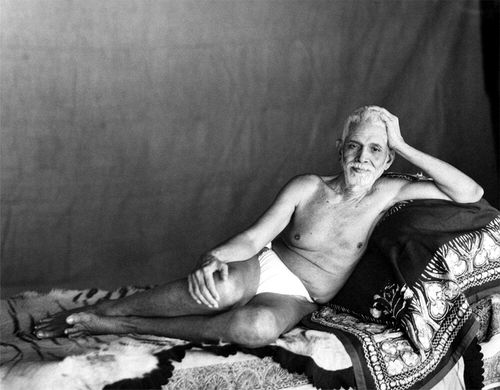
Ramana reclining

To remain as you are, without question or doubt, is your natural state
Ramana Maharshi

This is still an instruction for the spiritual seeker: ‘to remain as you are’.

With liberation, questions and doubts are irrelevant, as the natural state is simply whatever is. Nothing can obstruct it. It is always here and manifests as whatever is arising. It can never be obstructed and is always in plain sight.

However for the seeker, ie. the person that takes themselves to be the author of their thoughts and actions, the instruction to remain as you are and not worry about or get entangled with thoughts, questions and doubts, is one of the highest and most refined spiritual teachings available.

Be still, forget all concept of who you are, notice things as they happen. Regardless of what is happening, you know that you are, never what you are, only that you are.

When the mind and its concepts are no longer being believed, what use is there to talk of separation or no separation, self or no-self?