Everything is impersonal

moon in space

A person is an expression of the universe:
what we call ‘the personal’ is actually a specific/particular way in which ‘the impersonal’ is functioning.

So,

the personal is actually impersonal.

Or,

there is nothing personal.

Which means:
everything is impersonal.

Or,

There is no person.

What is this?

Spirituality is not physics

church door

Spirituality is not physics. Lots of people who are interested and immersed in spirituality get confused about this. Just because something feels/ is perceived/ is intuited a certain way, does not mean that it is actually like that. It’s obvious really. Spirituality deals with subjective experience. Science deals with learning how to predict what will occur in various different situations. Some examples:

eg. I have a feeling/perception that all is one and everything is interconnected. Therefore everything in the universe is actually one and interconnected.

Continue reading

Alan Watts: You and the universe are one

centaurus A

“It’s not true that you came into this world. You came out of it, in the same way a flower comes out of a plant or a fruit comes out of a tree. An apple tree apples, the solar system peoples…You are a function of this total galaxy”
Alan Watts

Continue reading

Do ‘greater works’ than Jesus

“Truly, truly, I say to you, whoever believes in me will also do the works that I do; and greater works than these will he do, because I am going to the Father.”
John 14:12

People often argue away this one, but it seems clear to me, especially in the context of John 14 and the other Gospels, that Jesus is saying if you follow his teachings, then you will do greater things than Jesus.

Jesus often claimed in John’s Gospel that he did nothing by himself and that it was the Father in him that did everything. Jesus’s constant message to humanity was to turn away from the world and towards God, realise that God is Love, to love one another, to see the Kingdom of Heaven is within, and to surrender to God’s will. Not the worst teachings in the world, eh?

Ramana Maharshi: Be still

buddha silver

All the texts say that in order to gain release one should render the mind quiescent; therefore their conclusive teaching is that the mind should be rendered quiescent; once this has been understood there is no need for endless reading.

Ramana Maharshi (from Who Am I)

One of the problems of Ramana’s teachings is that they are so simple. Most people do not want to be still and keep the mind quiet. They want to avoid themselves by discussing and understanding the concepts.

Now conceptual discussion has its place, but once one has understood the import of the teachings, namely silence, then it is time to sit down and shut up. Muruganar, who is regarded as Ramana’s closest and most influential devotee, says the same about Ramana’s teachings in his masterpiece Guru Vachaka Kovai:

What our Master clearly teaches by way of great, good, powerful tapas (spiritual effort) is only this and nothing more
BE STILL
Apart from this the mind has no task to do or thought to think

Guru Vachaka Kovai
(verse 773)

And in case you still haven’t got the message, here’s another quote from Who Am I, which is the publication that Ramana had issued at his Ashram as an introduction to his teachings. Note that the Sanskrit word ‘Jnana’ below literally means ‘knowledge’ and in a spiritual context refers to Self-Knowledge/Realisation or Liberation itself:

Questioner: What is wisdom-insight (jnana-drsti)?
Ramana Maharshi: Remaining quiet is what is called wisdom-insight.

Ramana Maharshi (from Who Am I)

Jesus and Krishnamurti: The importance of being alone

I was reading a passage from J. Krishnamurti’s slim book called meditations which reminded me of a passage from The Gospel According to Matthew. The language they use is strikingly similar. I’ll start with the biblical passage as it’s shorter:

But when you pray, go into your room, close the door and pray to your Father, who is unseen. Then your Father, who sees what is done in secret, will reward you.
Matthew 6:6

Continue reading

Maturing in our spiritual search: from experience to knowledge

abstract blue

Most of the great spiritual traditions claim that there is something eternal and supremely infinite, something that is all-knowing, all-powerful and present everywhere (omniscient, omnipotent and omnipresent).

If that is the case, then this Infinite must already be here, right now. If it isn’t already present right now, then it is not omnipresent. This is a vital point to grasp – if there is such a thing as the Infinite, then it must already be fully here, right now, otherwise it is limited and therefore not infinite.

It is not that certain mystical or transcendental experiences are experiences of the Infinite but our normal everyday experiences are not. No, all our experiences must be of Him. We must always be experiencing the Infinite.

This has several ramifications for the spiritual seeker. This means that the problem we face is not that we are apart from God and need to find Him or experience Him. No, the issue is that we are already always experiencing God but do not know it.

The issue is not one of acquiring a special experience or state of mind. It is that we do not correctly understand our current experience as it is right now. Even traditions that do not admit a God such Buddhism acknowledge that understanding, or insight, is what is key:

“If you do not have insight into the way you yourself and all things actually are, you cannot recognize and get rid of the obstacles to liberation from cyclic existence, and, even more important, the obstructions to helping others.”
Dalai Lama (from How to See Yourself as You Really Are)

Armed with this knowledge, we can mature in our spiritual seeking. So-called materialistic or worldly life is characterised by chasing experiences such as pleasure, power, fearlessness, pride and security. Many spiritual seekers just transfer this same pattern of yearning for worldly experiences into their quest for spiritual experiences. However as we mature in our spiritual search we can stop chasing states of mind and experiences – all of which are temporary – and instead start to try and understand our direct experience as it is right now.

This understanding or insight, whilst based upon our direct experience, is not a search for a particular experience, but an understanding of experience itself.

“That is why the insight that can liberate you from these afflictions is the key to happiness…Insight brings love, and love is not possible without insight, understanding. If you do not understand, you cannot love. This insight is direct understanding, and not just a few notions and ideas.”
Thich Nhat Hanh

Sufism: Infinite ways to an infinite god (even if you don’t believe in God)

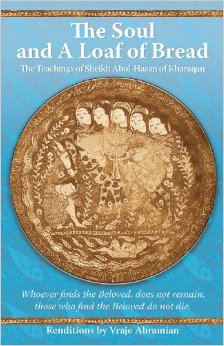
soul and loaf bread

There are infinite ways to an infinite God; there are as many ways to God as there are people or beings: I have often thought this to myself, so whilst leafing through a newly purchased book (pictured above), I was pleasantly surprised to read a quote by Sheikh Abol-Hasan, a Sunni Muslim and Sufi from 10th century Persia, saying just this:

There are as many paths to the Lord as there are grains of sand and drops of rain…whomever seeks, eventually finds his way There
Sheikh Abol-Hasan, saying 141 from ‘The Soul and A Loaf of Bread’

These infinite ways are just variations of the One Way. And this One Way, for the purposes of exposition, can broadly be subdivided into two: one path for those who believe in God and one path for those who do not. Continue reading