Ramana Maharshi: Q. How to surrender and how to live and survive if we have completely surrendered? Partial surrender vs total surrender | Aham Sphurana

3rd August, 1936

Q.: After conversing with several devotees here, I have arrived at a rough observation that Sri Bhagavan gives spiritual advice which pertains to every conceivable genre, depending upon the inclination, maturity or palate of the aspirant in question. What, if any, is his nativistic teaching?

B.: [no response]

Q.: Is it Silence?

B.: Yes.

Q.: For those unfit to understand it?

B.: They are advised to keep quiet. [Summa iru.]

Q.: For those even this?

B.: The inquiry ‘Who-am-I?’ is suggested.

Q.: For those like me who lack the determination to practise this inquiry?

B.: Unconditional surrender.

Q.: To whom shall I surrender? To Sri Bhagawan or to my Guru Sri Chandrasekara Barathi of the Sringeri Mutt?

B.: Does surrender need a recepient? Simply surrender or let go of everything.

Q.: If I let go of everything, is Mukti assured unto me?

B.: To let go of everything is to let go of this question also.

Q.: So, expecting a reward for surrender is not appropriate?

B.: How can one who has surrendered expect anything? To surrender is to give up the spurious ‘you’ once and for all. When you are not there at all, where is the question of expecting or anticipating anything? Who would be there to do the expecting or anticipating? If there is still anyone left to engage in expecting or anticipating, no surrender has really taken place.

Q.: If I give up everything, what will happen to my body? How then will it be able to find food for itself, leave alone earn a living or maintain a family?

B.: Were you asked to neglect the body? You were asked to not deliberately take care of the body – that is all. How is it that you translate the directive, ‘Let go of everything.’ into ‘Neglect the body and its duties.’? The problem in its totality lies in the fact that you are labouring under the delusive impression that it is you as the ego who are maintaining your body, attending to your vocation, taking care of the household and everything else that it has fallen upon the body’s prarabdha to execute in this lifetime. So, when asked to give up everything, that is to say give up the ego, you give yourself to understand that your regular routine will come to a standstill.

No. Whether you are aware of it or not, whether you like the fact or not, the truth is that it is the Higher Power that does everything. We imagine ourselves to be the doer. When asked to give up the personal self, we imagine that the body’s actions also should come to cessation, because according to us, it is the personal self that is the cause and source of all action. No. It is a mistake. The ego merely fraudulently assumes responsibility for the actions of the body. Doerless doing or actorless action is not for the Jnani only; it is true – as an actual fact – in the case of all. In the case of the ajnani, something called “I” rises up to falsely claim responsibility for the body’s actions. This fictitious accreation is absent in the case of the Jnani. That is the only difference between them.

If you give up the ego or ‘Body-am-I.’ idea completely, some power effortlessly takes over the body and makes it run through its ordained course of prarabdha without the need for the least mental involvement or participation on your part. This is a matter for experience. To surrender is to totally let go of everything. People attached to concepts of the intellect or things of the world cannot possibly let go; vairagyam is necessary to let go. How to cultivate vairagyam? Proximity to the Guru.

Worldly attachment and the Guru pull the mind in opposite directions. If Love for the Guru is unequivocal and unconditional, His pull eventually wins. Again, how to cultivate this Love? By nature the minds of most men are occupied with the problems of the personal self. What vocation shall I pursue? Shall I study further or shall I opt for employment? Shall I marry the girl I like, or shall I marry the other one, the rich, obese character that I was introduced to by my parents? What measures shall I take to safeguard myself from penury in old age? How shall I ideally invest my wealth so that it stands me in good stead when I am no longer in a position to actively work to earn a living? Will my children take care of me in old age or will they abandon me and go their seperate ways? And so on and so forth.

This is how lifetime after lifetime is wasted. If you would only keep quiet without thinking these thoughts, providence would admirably take care of you; but no, you must have your ‘knowledgeable say’.

It so happens that in rare cases a man ceases to take thought of his personal self and wholeheartedly gives himself to an ideal of beauty, be it sport, literature, art, patriotism or anything else. The quantum of importance attributed to the personal self becomes negligible when the loftier pursuit occupies the whole of his attention. Thus he begins, for the first time, to experience a Love in which the personal self has no space. Such is the sweetness of this passionate Love that he yearns to experience the pinnacle thereof. The desire for this feeling of Love is not motivated by the objective of personally experiencing it. The Love for the higher ideal eventually comes to dominate and possess the soul with such complete fervour that his desire for such Love is not on account of any motive to personally experience it, but simply for the sake of such Love itself.

He does not think, I must experience more of this Love. He thinks, this Love must shine forth with the utmost possible intensity! Then, the ideal towards which Love hitherto had been directed merges imperceptibly into Love itself. Thus, the man is left with Love and only Love in his hands: Love without rhyme or reason.

Feeling it but unable to attain it, he becomes crazed with longing. It is at this stage that God or Guru appears to him as the manifestation of his Love: the manifestation may or may not be an anthropomorphic form; it may be an abstract image or ideal altogether deviod of form or even name. Eager to consummate his Love, he surrenders totally to the Guru and Realisation devours him by operation of the Guru’s benevolent grace.

Swami Vivekananda has said, ‘Take up one idea. Make that one idea your life – think of it, dream of it, live on that idea. Let the brain, muscles, nerves, every part of your body, be full of that idea, and just leave every other idea alone. This is the way to success.’.

So, volitionless Love, which, allowed to wax indefinitely, surely leads to Kaivalyam, may as well come to an inveterate materialist or atheist: belief or faith in God is not of any considerable importance, for it stops at the level of the intellect – it is Love that matters, uncaused, blind, mad, unconditional Love. In the work The Pilgrim’s Progress by John Bunyan, when Christian is about to drown in the dreaded river of Death, he has a vision of the Christ who reminds him of the verse: ‘When thou passest through the waters, I will be with thee; and through the rivers, they shall not overflow thee…’. The next moment the Christian finds steady ground to stand upon, and he manages to ford the remaining strech of the river safely.

Likewise, when Vasudeva was travelling to the house of Nandagopa and Yashodha, carrying the infant Krishna in his arms, the Yamuna river was in full spate, ready to devour him should he behave so unwisely as to step into it. Vasudeva thought of God and was immediately assisted by the giant 10-headed celestial serpent, Vasuki; thus he managed to ford the flooded river without incident.

Again, when Sri Abbanacharyal heard the news that his Guru, Swami Raghavendra, was about to enter into his brindavanam, he forthwith rushed to Mantralayam, but did not know what to do when he was faced with the flooded Tungabhadra. He gathered courage, closed his eyes, thought of his Guru, and threw himself into the raging deluge. He was not swept away by the river, but landed safely on the other bank.

How did all this become possible? Is not genuine Love for the Lord on the part of the devotee the reason? Thus, develop a deep obsessive infatuation with any particular ideal, and of itself that will plunge you into unfathomable Love; such Love invariably leads to Kaivalyam.

Q.: I am too weak to surrender, in the total sense of the term that I find Bhagawan suggesting. Also, I do not feel attracted to any one particular ideal or idea. What am I to do?

B.: It is holding on or doing anything that requires strength. If you feel you are weak, letting go of everything should be very easy, for that alone is non-doing.

Nevertheless, if total surrender is found too hard, practise surrender as a sadhana. This is called partial surrender. In course of time it leads to complete surrender.

Q.: Various descriptions of God are given by scriptures belonging to the different religions. Which is the description that tallies with Bhagavan’s teachings?

B.: Words cannot convey the Real. Yet, the closest is, Ehyeh asher ehyeh.[Tom: Hebrew, from Exodus 3:14 meaning ‘I am that I am’]

Q.: What is the difference between attempting on one’s own to Realise the Self and taking the help of a Guru?

B.: Suppose you want to go to America. Which is the sensible method? Taking a spade in hand and digging into the Earth, saying, ‘I am confident that I shall eventually reach America, which must be located on the exact other side of this very spot.’ or booking a place for yourself on the next outbound steamer?

The above excerpt is taken from Aham Sphurana, 3rd August 1936, see here for more information on this text.
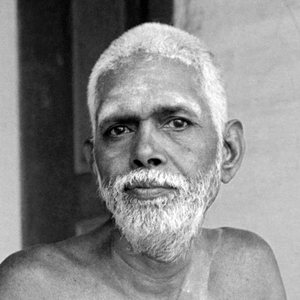
The Sage or Guru is the form of Ultimate Reality

“Those who say that the reality has no form are those who do not know the reality. For the form of the Sage [sahaja nishta] who correctly knows and abides in the reality, Self, the nature of which is like the [all- pervading] nature of space, is verily the form of the reality. Know this.”

Sri Ramana Maharshi, Guru Vachaka Kovai verse 656


Commentary by Sri Muruganar:

Through this verse, Sri Bhagavan disproves the saying, β€˜The reality has no form’. How? Since the Sage [sahaja nishtha] who has known the reality as it is, is none other than the reality, He Himself is the very form of that reality. This is what is meant by saying, β€˜Jnani Himself is Self’. Sri Muruganar here refers to the Bhagavad Gita, chapter 7, verse 18, in which Sri Krishna says that the Jnani is Atma.

What Do You Like About Bhagavan Ramana’s Teachings? What Do You Like About the way Tom shares them?

During this Satsang, Tom turned the tables on his Satsang participants, so to speak, and asked us the questions in the title above. The responses were rich and various.

How would you answer these questions? We would love to hear your response in the comments below.

-What do you like about Bhagavan Ramana’s teachings?
-What do you like about the way Tom shares them?
-How is it to hear other peoples responses? Do you resonate with some of them? Do you have a different response.

If moved, please let us know.

This video was recorded live during a Satsang meeting with Tom Das on March13th, 2025 and put together by volunteers.

To download full unedited satsang recordings see here: https://payhip.com/tomdas

To attend satsang, see here: https://tomdas.com/events

πŸ™πŸ™πŸ™

The Role of Guru Bhakti (Devotion to Guru-Self)

This is one of a series of introductory articles – please see the homepage of tomdas.com for more introductory articles.

The following was originally posted here on Facebook

For me, Guru Bhakti was such an important feature of my path. Worshipping the name and form of Bhagavan Sri Ramana took me, eventually, to the formless objectless Guru in my Heart, whereupon, through the revelation of self-inquiry, He consumed me, totally and utterly, making me One with Him:

(Non-Dual) Love, Being, Consciousness and Bliss, beyond (dualistic) love, being, consciousness and bliss.

It was only later, retrospectively, that I analysed and realised what had happened and what had been happening. The intellectual understanding and appreciation of His Teachings came later.

Prior to this I never cared much for Bhagavan Sri Ramana’s written/spoken teachings – in my mind I had actually dismissed them. I just, for some reason, had a love for Him. I actually preferred Buddhist-style teachings or intellectualised versions of Advaita Vedanta, or even the teachings of Sri Nisargadatta Maharaj, as they made more sense to my rational scientific mind. Before I thought I had seen many flaws and holes in His Teachings.

Now, in retrospect, I can see how perfect His verbal and written teachings in fact are! Now I love to share his teachings. Sharing his teachings for me is a spontaneous expression of devotion, not an act of teaching at all!

At the time I was simply loving my Beloved, at the time I simply felt compelled to surrender myself to my Beloved, throw myself down at his feet. Everything else, such as Self Enquiry and Silence, spontaneously flowed from this Love and Bhakti without my being conscious at the time of what was happening or why.

This is why I often say that if you have some kind of connection to Sri Ramana, nurture that, and surrender to that, and know you are already saved. Metaphorically speaking, once you have come to Sri Ramana, your head is now in the tiger’s mouth!

Thus, in my experience, is the power of Genuine Heartfelt Guru Bhakti in which you surrender yourself to Him.

πŸ™β€οΈ Om Nama Bhagavate Sri Arunachala Ramanaya Om β€οΈπŸ™
Q. I already know I am not the body-mind but I still have difficulty with the teaching and with aspects of daily life

This is one of a series of introductory articles – please see the homepage of tomdas.com for more introductory articles.

Q. I ALREADY KNOW I AM NOT THE BODY MIND BUT I STILL HAVE DIFFICULTY WITH THE TEACHING AND WITH ASPECTS OF DAILY LIFE

Also see: Look – there’s no one here! (And other false teachings)

This post was originally posted on Facebook here.

Tom: Many people say ‘I know that I am not the body-mind’, not realising that:

1) if that were truly known, genuinely known, then that is full liberation, and there would be no more questions (or answers) possible, and that is the end of the spiritual journey/search, that is unending bliss and the end of all suffering forever*, transcendence of time and space and the sense of individuality.

2) when someone says ‘I know I am not the body-mind BUT…’ (and then goes on to ask a question/express some kind of doubt or dissatisfaction), this means the entity that (thinks it) knows it is not the body-mind is in fact the mind. ie. it is the mind that is stating ‘I know I am not the body-mind’. This is essentially conceptual knowledge for the mind, even if it is based in some deeper intuitive knowing. This means the basic reference point for knowledge is still the mind, ie. we are still looking to our mind/thoughts for knowledge, and this indicates ongoing identification with the (body-)mind.

3) it is not truly or actually possible for the mind to understand ‘I am not the body-mind’. It is not something the mind can ever understand or know. The mind can repeat the phrase ‘I know I am not the body-mind’ and convince itself it knows something but this is not the true understanding at all.

TRUE UNDERSTANDING

The true understanding is not of the mind at all. It is beyond the mind. The true understanding is not of the mind at all. The true understanding is simply being the Self, also known as Silence.

HOW TO KNOW TRUTH?

How to know or be the Self? And are we not already always the self?

Yes, we are already the self. We are always the self. This self-knowledge we are looking for is always and already here. We already know, in our hearts, not in our minds, all we need for the spiritual journey. Self-knowledge is always and already here with us. There is never a need to discover anything new. Never.

THE PROBLEM

So what is the problem, and why does it appear that ‘I am not liberated’?

The issue is we ignore our self knowledge, and instead we pay attention to our thoughts, our mind, and we believe the contents of our thoughts. All we have to do is come back to our own inner self knowing.

Again, the issue is that we pay attention to our thoughts and we believe the contents of our thoughts.

**READ THIS PART CAREFULLY**

Now here is an important point that many people miss: it is not possible to pay attention to thoughts and not eventually start to believe the contents of the thoughts. I repeat, it is not possible to pay attention to thoughts and not eventually get involved in the contents of the thoughts.

This is an important point which many people miss. Try this for yourself and see.

You may feel you can dispassionately observe or witness your thoughts for a short time, but they will always draw you back in again. For placing attention to thoughts is ALREADY believing their content at the root level. Placing attention to thoughts means the root thought, ‘I am the body-mind’ is ALREADY there.

For it is not possible to dispassionately pay attention to thoughts and not believe already in the concept ‘I am the body mind’.

AS SOON AS YOU PAY ATTENTION TO THOUGHTS, THE ROOT THOUGHT, THE ROOT IGNORANCE ‘I AM THE BODY-MIND’ IS ALREADY THERE.

Yes, the root thought is the thought ‘I am the body mind’. It is this root concept or thought that gives rise to all other thoughts. This root thought, also known as ignorance, also gives rise to all perception of all objects, but more on this another time perhaps.**

As soon as we pay attention to thought, this root thought ‘I am’ or ‘I am the body mind’ is already fully there.

Also see: Look – there’s no one here! (And other false teachings)

**HERE IS ANOTHER POINT PEOPLE OFTEN MISS**

The same goes for gross and subtle objects. As soon as we are aware of objects, even gross objects such as cars and trees or the body, the root thought ‘I am the body mind’ is ALREADY fully there. Ignorance is ALREADY fully there.

If you are not sure about this, you can try it for yourself. You can try to remain aware of objects without the idea that you are a person and see how that goes!

AS SOON AS YOU PAY ATTENTION TO THOUGHTS, OR ANY OBJECT, INCLUDING GROSS OBJECTS SUCH AS A CAR OR A TREE, THE ROOT THOUGHT, THE ROOT IGNORANCE ‘I AM THE BODY-MIND’ IS ALREADY THERE.

If this is not understood, then the solution to this ignorance, which is outlined below, may not be accepted by the mind, and liberation may not ensue.

Also see: Self-Enquiry is not a doing but a BEING

And: For those attached to the world, the world is considered to be a divine manifestation. For the advanced seeker, the world is considered to be an illusion

HOW TO REMOVE THIS IGNORANCE

To remove ignorance we must turn away from all gross and subtle objects, meaning all names and forms and external objects, as well as all internal objects such as thoughts and feelings.

The only way to do this is to attend to the subject, your very own self, your own inner self knowing, that which always is, and that which is always known. The clear way to do this becomes clear through the practice, which I explain more about below.

See Sri Ramana’s teaching in Guru Vachaka Kovai verse 291. Note he says that this is the ‘essential’ advice. Notice also the use of the word ‘alone’:

291. ‘If one wants to be saved, one is given the following true and essential advice: just as the tortoise draws all its five limbs within its shell, so one should draw the five senses within and turn one’s mind Selfward. This alone is happiness.’

Compare with Bhagavad Gita 2.58:

2.58 β€˜One who is able to fully withdraw the senses from their objects, just as a tortoise withdraws its limbs into its shell, is established in Divine Knowledge’.

Many people try to distort the meaning of these verses, but the imagery of the tortoise is used to make the meaning clear. There are many more verses like this I could cite, and with these other verses, again the true meaning of these verses is very clear (see here for many more of these verses, and follow the links within that post for even more).

Please note THIS IS NOT A PATH OF SUPPRESSION OR REPRESSION OR AVOIDANCE. THIS IS NOT A PATH OF SPIRITUAL BYPASSING. It is actually a path of love, a flowering of love and self-knowledge. I touch upon this further below, and have written on this topic on tomdas.com (use the search bar). there are also many videos on this on my YouTube channel, explaining how this can be the case.

This is why all genuine spiritual traditions and teachings (ie. teachings that genuinely lead to liberation) tend towards introversion, meditation and silence in some way shape or form.

This is why, historically, many traditions across geography and time all end up in some form of silent contemplation or meditation.

It is also why, if we look inwards to our own hearts, we already intuitively know that the Truth (of ourselves) arises only in Silence, deep within our very own selves, and NOT through words, concepts or the mind.

This self-attention is also known as devotion or bhakti, for the true form of your self is God absolute, it is pure holiness, pure divinity, pure oneness devoid of ignorance and duality.

A PRACTICAL WAY FORWARD

How to practically put these teachings into practice? My suggestion, as this is what worked for me (you will need to find out what works for you!), is to listen to the teachings of Sri Ramana Maharshi. Personally I have not found another teacher or teaching that comes close, even though some other teachers and teachings sound very similar, as you go deeper you will start to see the differences more and more.**** At least this is my experience.

If you are lucky, you will feel some love and devotion and connection with Him. If this love, devotion and connection occurs, it is very wonderful and in my opinion this is something you should nurture and treasure. This connection and love and devotion is a very important part of the teaching in my experience. Unfortunately this aspect of the teaching cannot be taught and spontaneously arises when the time is right.

For most of my ‘seeking career’, not only did I NOT feel love and devotion for Ramana, but this is something I was not actively looking for, and something I actively looked down upon in fact. I never wanted a guru, I never wanted to follow another human being, I wanted to figure out for myself, like the Buddha or like J Krishnamurti. I share this as if you do not feel love or devotion in your hearts, please do not be deterred or discouraged, as this is how it was for me for many years.

But as the fates would have it, this was not to be my path, and the teachings I share are coloured by my own personal experience, so this is what I will share with you:

1) Allow the love and connection with Bhagavan Sri Ramana to develop and grow. Think about him, perhaps learn a little about his life, pray to him, praise him, adore him, prostrate yourself to him, bow to him, etc etc, as you please, find your way in this regard to connect with him and love him and, very importantly, surrender to him. This surrender is very important and often missed by some devotees. This is my view at least. At the same time know in your heart that He is You, meaning your true self. You are He, You are That, connect with that inner knowing that is your Self and that is also He.

2) regularly listen to his teachings (sravana, listening/being exposed to the teachings), regularly read his teachings, become familiar with his deeper teachings, not just the teachings he gave to the masses, many of whom were not truly interested in liberation***. See my recommended reading list for my suggestions of what to expose your mind to in terms of truly liberating teachings, and also read the introductory articles on the homepage of this site, which give a broad but thorough introduction to all aspects of the teaching. Everything you need for step two is available free of charge on tomdas.com and my YouTube channel. You will find the answer to almost any question you have somewhere on this website! There is enough content for about 20+ books on tomdas.com, all of it freely available, so use the search bar and explore the introductory articles too. Similarly my YouTube channel has hundreds of videos on it covering all aspects of the journey. Most of these videos were put together by volunteers, so hopefully the videos are particularly relevant to seekers as they have been selected and created by seekers. Do let me know if there are any areas that are not covered.

3) you will find that the more you do (1) and (2) above, the more your mind will be pulled inwards towards the self (nididhyasana, going towards or abiding as the self). When this happens, allow yourself to naturally go back to yourself. If you are unclear what this means, the more you do (1) and (2) above, the clearer it will become to you. Do not force this, allow it to happen naturally through exposure to Bhagavan Ramana’s Presence and His Teachings. (ie. nididhyasana naturally follows from sravana and manana) If you force this, it is just ego perpetuating itself. Everything should be allowed to happen naturally. THIS IS NOT A PATH OF SUPPRESSION OR REPRESSION (NO ‘SPIRITUAL BYPASSING‘ HERE PLEASE), but a natural outcome, a flowering of self-knowledge and love and bliss. πŸ™β€οΈ

4) consider attending a group, such as the satsang group I hold twice a week online, which supports both devotion (bhakti) to Sri Ramana and a knowledge and exploration of his deeper teachings (sravana and manana, manana means thinking about and reflecting upon the teachings), as well as allows time for meditation, silence and deep self attention (nididhyasana), ie. a group that supports (1), (2) and (3) above. Contact with a teacher can be very helpful, both for motivation, regular reminders and for clarification of the true way. This can supercharge and cut years off your spiritual path, as a teacher can often point something out in a few seconds that may have taken you years to realise yourself. If you don’t have access to a teacher, please don’t worry, as Devotion/Surrender and Connection will bring to you/attract to you all you need. See here for what Sri Ramana Maharshi said about satsang.

The above can be summarised as Intuitive Connection/Surrender/Bhakti, Satsang, Sravana, Manana and Nididhyasana, to use some of the traditional Sanskrit words. The term Self-Enquiry can be used to mean just Nididhyasana or alternatively it can mean the trio of sravana, manana and nididhyasana, depending on context. So we can summarise the above further as Bhakti, Satsang and Self-Enquiry being the essence of the path. Going further we will actually find that the true Satsang is to be with the Guru in our Heart, namely be with our Self as our Self, and that this is also the highest form of Bhakti, so all of these are actually One.

These are just my suggestions, and of course it is for you to decide if this is for you. My suggestion here is that if you resonate even slightly with this, then you should go with it, at least for a bit, give it a go. Of course if you do not resonate, there is likely a different way for you, at least for now… We all have our own path, at least superficially this is the way it seems. Eventually we have to come back to our self.

I hope this has been of help

Namaste and best wishes

Tom

β€οΈπŸ™ Om Namo Bhagavate Sri Arunachala Ramanaya Om πŸ™β€οΈ

β€οΈπŸ™β€οΈ

*Forever is used figuratively as it is beyond time, not infinite time

**Bhagavan Sri Ramana explains this clearly in the first few paragraphs of his short text, ‘Who am I?’ Which explains all the teachings you need to know for liberation. The book I recommend to understand this is a book called The Path of Sri Ramana (click here to download for free) which fully explains the teachings found in the small booklet, ‘Who am I?’. This book also has a very good translation of ‘Who am I?’ in the appendix of the book, as many other translations of ‘Who am I?’ contain distortions added by the translator that are not present in the original Tamil.

***When somebody asks a question, and that seeker is not truly interested in liberation, the sage, who is like a mirror, merely reflects a superficial teaching back at them. This is spontaneous response, and not a deliberate attempt to give a superficial teaching. The teaching is given spontaneously by the true teacher according to the earnestness and sincerity and degree of desire for liberation in the seeker who is asking the question. Therefore the deeper teaching is usually only given when a seeker who has a deep and genuine desire for liberation asks a question or approaches the teacher.

****Some people think I am being partial towards my own guru (and maybe I am, despite my best efforts to be objective) but this is my personal experience, so this is what I share. If there were other teachers whose writings and teachings were as clear, I would happily say so! See my recommended reading list for the teachers that I think are equally as clear. Note I am not saying that Sri Ramana Maharshi is the only truly liberated sage, but I am merely commenting here on the quality and fidelity of the teachings that have come down to us. There may be other realised teachers, but the verbal/written teachings that have come to us may be less clear. Because we are relatively close in time to Sri Ramana, because we have his written works in his own handwriting, and because of the clarity and simplicity in which he explained the teachings, this is a huge advantage for those who are interested in these written/verbal formulations of his teaching. Of course, if you have another Guru, then by all means stick with your Guru. Ultimately, all is One and there is only truly One Guru anyway.

πŸ™β€οΈ

Q. How to recognise a True Spiritual Teacher?

Tom: If we are honest with ourselves and earnest in our desire for freedom, we will only find the teacher/teaching that is right for us at any one particular time. We will only be able to discern the true teacher according to the wisdom that is flowing through us, which is inversely proportional to the strength of our ego-mind. However, more important than the teacher is the seeker – as long as your heart is pure and you are discerning, open and self-honest, then you will certainly find your way πŸ™

A True Teacher Doesn’t Foster Dependence | The Three Gunas | Shedding Negative Self-Concepts

This video was recorded live during a Satsang meeting with Tom Das and put together by volunteers.

To attend satsang, see here: https://tomdas.com/events.

For guided meditations see the ‘guided meditation’ playlist here: https://www.youtube.com/c/TomDasNonduality/playlists

For recommended reading for liberation see here: https://tomdas.com/2020/10/19/recommended-reading-books-for-enlightenment-liberation-and-self-realisation/

To book a 1 to 1 session with Tom see here: https://tomdas.com/nondual-spiritual-counsellor/