This video is an excerpt from a longer video – for the full video see here: https://youtu.be/fnhHxwONihY
liberation
A joyful spiritual practice for liberation: ‘Genuine Spiritual Feeling’
This is one of a series of introductory articles – please see the homepage of tomdas.com for more introductory articles.
Just to have and allow ‘genuine spiritual feeling’, just this is enough. If attended to and nurtured, if allowed to naturally deepen of its own accord, it will, in its own time and own way, overcome you with Love, destroying you, revealing All to be Divine Oneness-Love-Happiness-Bliss, your Own True Nature.
Like a tiny mustard seed that grows to overcome great city walls, simply by nurturing this ‘spiritual feeling’ or ‘connection with the Divine’, the vast ocean of duality is transcended, in time, effortlessly and with joy, without one even caring for concepts such as Spiritual Practice, Spiritual Progress, Liberation or Non-duality.
Beware to those who are stuck in the prison-house of concepts: those who cling to concepts of duality and non-duality, concepts doing and non-doing, concepts oneness and many – these people remain trapped in a prison of their own making, endlessly chattering to themselves, ignoring the Vast Open Fertile Pastures of Love that lie in their very midst.
❤️
That which perceives the limited body-mind is itself the Unlimited. Growing more and more still, feeling more and more Love, following your Heart within, Infinite Truth-Reality-Oneness-Bliss is gently revealed as your Own Being
❤️
To simply have ‘spiritual feeling’ moment by moment, to have this ‘spiritual connection’ of joy and love every day, whenever we remember, and to allow it to deepen of its own accord – this is a wonderful, intuitive & joyful way of effacing the ego and allowing the Divine Within that is All-Encompassing Love and our Own True Nature to blossom, flower and bloom.
❤️
Those overly reliant on intellectual arguments, scriptures and concepts will never connect to the true Spiritual Way which shines from Within* with Wholeness, Oneness and Love.
We must leave behind the barren field of words to discover the fertile pastures of the Divine that is All-Embracing Love.
(*’Within’ here just means you don’t have to go anywhere ‘outside’ to find it and that it is not dependent on any particular object of perception that arises or falls)
❤️
What is ‘Spiritual Feeling’? It is simply to feel good, wholesome, happy, connected. It is to connect with Presence. It is an Openness and Gentle Surrender to Life and Love and God and Self.
❤️
Question: But I thought the practice of Self-Enquiry is that of Self-Attention or Awareness Watching Awareness and for that we need to turn away from objects towards the Subject-Self. How does this fit in?
Tom: This simple practice of allowing Natural Spiritual Feeling to arise by itself will take you everywhere you need to go. It is the path of Love, the path of Surrender, the path of Bhakti. It will calm and purify the mind, filling it with joy and love, removing it of negative (tamasic) qualities. It will then quieten the mind, removing the passionate and anxious aspects of mind (Rajas). Thus far the practice has not turned away from the world – it is a Saguna or Savikalpa practice (ie. practice with objects being present). Then the practice, when it is ready, will naturally turn Nirvikalpa or Nirguna (ie. practice without objects being perceived or being present) , ie. there will be a natural turning towards Source or Self, also known as God or Sri Ramana (the Guru Within). All will happen in good time. It may well happen quicker than you think!
Only when you turn within through self-enquiry is your true nature revealed as not body nor mind, but Spirit, Love, God, Bliss.
For this to happen it is useful to have read and been aware of Bhagavan Ramana’s teachings, eg. as set out in The Path of Sri Ramana, and it can also be useful to adopt Vivarta Vada, which is the view that everything perceived (ie. mind, body and world) is actually an illusory projection of ignorance/ego/maya. Often if Bhagavan’s Teachings are not known, the mind will continue to cling to objects, taking them to be real and thinking objects will lead us to our goal.
❤️
As recorded in the text Sadhanai Saram (The Essence of Spiritual Instruction, a record of teachings from Sri Ramana Maharshi) by Sri Sadhu Om:
79.
To the extent to which love for God arises in one’s heart, to that extent will one acquire knowledge about Him. And to the extent to which one knows the nature of God, to that extent will the mind gain steadfast love for Him. Thus, knowledge (jnana) will be increased by devotion (bhakti), and devotion (bhakti) will be increased by knowledge (jnana).
80.
By means of our love for God, He will give us more knowledge of Him, and by means of our knowledge of Him, He will give us more love for Him. Therefore, of these two paths, bhakti and jnana, follow that one for which you first gain a liking, because that one path will lead you to follow the other one into the heart.
81.
In the life of an aspirant who is seeking liberation, bhakti and jnana will be experienced as inseparable, like the two sides of one sheet of paper. Hence, each one is equal to the other. They are not two different things, for the true nature of both of them is one and the same; know that bhakti and jnana are merely two names for that one thing. (Garland of Guru’s Sayings (Guru Vachaka Kovai) verses 722, 731)
82.
The state of abiding firmly in Self-alone is wisdom (jnana). Would it be possible to abide thus in Self if one did not have love for Self? Love for Self-alone is bhakti; abiding firmly in Self on account of that love alone is jnana. What difference is there between these two? Discriminate and know this truth. (Maharshi’s Gospel p.24)
❤️
Question. What is our Goal?
Tom: Our goal is One. It is simply to be Happy and Free, without any misery, as Sri Bhagavan states in the opening paragraph of Nan Yar? (Who am I?). We just want to feel good. There is nothing wrong with this. This desire for Happiness is an innocent desire and is the greatest of our desires. It is actually the Desire for Liberation, the Desire to Know and Be What We Truly Are.
For this, the only way is Self-Enquiry. The Path of Bhakti naturally and joyfully takes us to Self-Enquiry. The only danger on this path is that we remain caught up in objects and fail to transcend them. Eventually we must ‘go Nirvikalpa’ (ie. we must turn away from objects) in order to realise the Self, our true nature, the Divine Within.
This is why Bhagavan Sri Ramana writes in his text ‘Who am I?’:
Question: When will the realization of the Self be gained?
Sri Ramana Maharshi: When the world which is what-is-seen has been removed, there will be realization of the Self which is the seer.
Q. Will there not be realization of the Self even while the world is there?
Sri Ramana Maharshi: There will not be.
Question: When will the world which is the object seen be removed?
Sri Ramana Maharshi: When the mind, which is the cause of all cognition’s and of all actions, becomes quiescent, the world will disappear.
Question: How will the mind become quiescent?
Sri Ramana Maharshi: By the inquiry ‘Who am I?’. The thought ‘who am I?’ will destroy all other thoughts, and like the stick used for stirring the burning pyre, it will itself in the end get destroyed. Then, there will arise Self-realization.
Question: Are there no other means for making the mind quiescent?
Sri Ramana Maharshi: Other than inquiry, there are no adequate means. If through other means it is sought to control the mind, the mind will appear to be controlled, but will again go forth.
But all in good time. Bhakti will turn us within and lead us to Self-Enquiry when the time is right without us (the ego) having to worry about such things – practically speaking all we have to do is connect with ‘spiritual feeling’, have faith in it, let this feeling grow and guide us. Ultimately it will consume and destroy us (ego) and reveal to us the Divine Truth that is our very own Self. It will take us Home.
!!Om Namo Sri Arunachala Ramanaya Om!!
A key feature of a genuine teaching | Exporing false (non-liberating) teachings
This video describes a Key Feature of a Genuinely Liberating Teaching
This video was recorded live during a Satsang meeting with Tom Das and put together by volunteers.
To attend satsang, see here: https://tomdas.com/events.
For guided meditations see the ‘guided meditation’ playlist here: https://www.youtube.com/c/TomDasNonduality/playlists
For recommended reading for liberation see here: https://tomdas.com/2020/10/19/recommended-reading-books-for-enlightenment-liberation-and-self-realisation/
To book a 1 to 1 session with Tom see here: https://tomdas.com/nondual-spiritual-counsellor/
Exploring false (non-liberating) teachings
Note that False teachings may also be useful to us at times, and are often part of our (apparent) journey. ‘False’ here just means teachings that do not directly point to liberation.
Immediately below you will find a playlist of videos on YouTube all of which explore false or non-liberating teachings, starting with a video on savikalpa vs nirvikalpa teachings – this may sound quite obscure but many have found this video to be one of the most helpful videos they have listened to:
Here are some videos from the above playlist:
Do we need a Guru or Teacher? | Liberation & Self-Realisation | Advaita
Grace of God vs Sadhana (practice) for attaining moksha (liberation)
‘It is mainly through enquiry (vichara) that he who is competent achieves knowledge of the Self; circumstance, time, and the grace of the Lord are but aids to the quest.’
~ Shankara (Vivekachudamani)
Tom: Some say that grace of god is required for liberation and so slacken and shy away from their sadhana. Grace of God is certainly needed, but Grace of God is always here. Shankara reminds us that it is Sadhana ie. Self-enquiry, that is the foremost factor that leads directly to liberation
🙏
Sri Suresvara – Advaita Vedanta Summarised – |Download Naishkarmya Siddhi as PDF
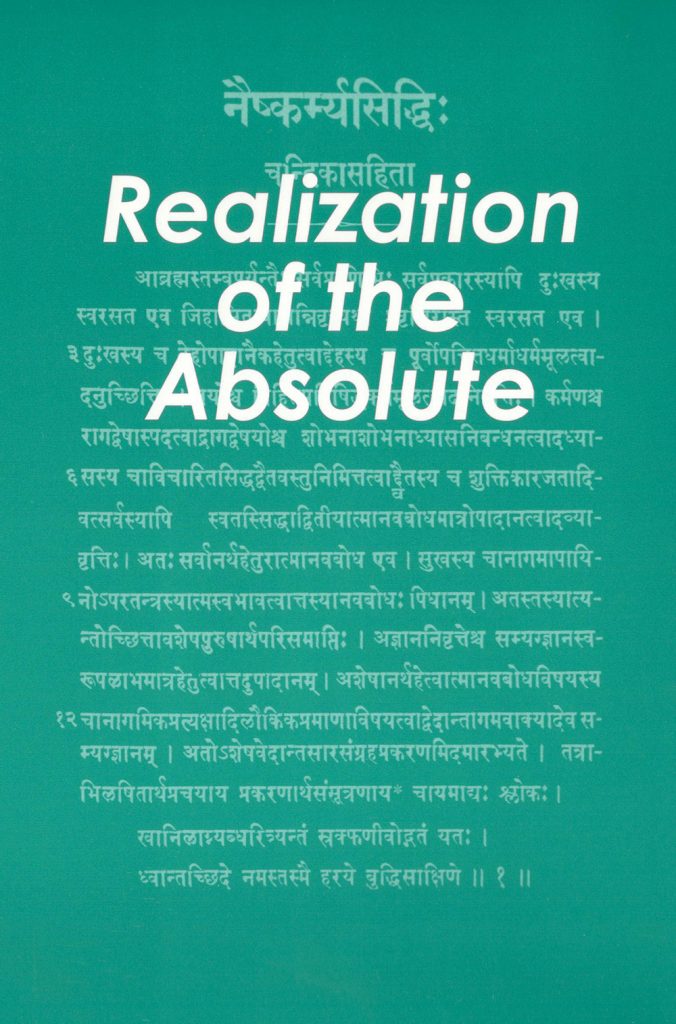
From performance of the daily rituals comes merit (dharma), from merit comes destruction of sin, from this comes purity of mind, from this comes a correct evaluation of transmigratory life, from this comes indifference to it, from this comes desire for liberation, from this comes a search for the means to the latter, from this comes the renunciation of all ritualistic action and its accessories, from this comes practice of yoga, from this the focusing of the mind within, from this a knowledge of the meaning of texts like ‘That thou art’, from this the eradication of nescience [ignorance], from this establishment in the Self alone, according to the texts ‘Verily, being the Absolute (Brahman), he attains the Absolute’* and ‘Released, he is released’**.
~Suresvara (Direct disciple of Adi Shankara) from the text Naishkarmya Siddhi 1.51
*Brihadaranyaka Upanishad IV.iv.6
**Katha Upanishad II.ii.1
The entire text of Sri Suresvara’s Naishkarmya Siddhi can be downloaded here as a PDF:
Tom’s comments:
I chose this verse as it forms a concise summary of the Advaita Vedanta teaching presented in the text. (There are also many other important points made in the text). We can see the progession to liberation Sri Suresvara outlines is as follows:
- Performance of selfless actions (daily rituals) leads to accrual of merit
- Merit leads to a pure peaceful (Sattvic) mind
- The pure mind is able to accurately reflect and understand that all objects are transient and temporary and so not lasting fulfillment or happiness can be derived from them
- This leads to Vairagya or dispassion for sense-pleasures
- Vairagya leads to desire for a lasting fulfilment that is not based on the temporary objects, ie. liberation
- Desire for liberation leads to a search for a method to attain it
- Which leads to renunciation of all action (becoming still) and focusing one’s attention on the Self within
- This leads to an understanding of ‘Thou Art That’ as is written in the scriptures, or that our true nature is that of Pure Objectless Consciousness, the Eternal Subject. This is the same as the removal of ignorance
- This is Moksha, liberation
Om Shanti, Shanti, Shanti Om

