Following lots of positive feedback from both the online and in person meetings over the last 2 weeks, I will continue to go over some essential basic teachings that focus in on directly pointing out one’s True Nature in upcoming meetings, both online and in person.
While these pointings are simple, there is something about experiencing them in person with a real-time direct interaction that makes these teachings so especially powerful. There are many teachings you can read in books or watch online, but the pointing out the true nature teachings usually have to be done in person to really hit home. This is why with this teaching I often get comments like ‘I’ve heard the same words before but this time it really made sense!’.
For those of you who already have come this far, we will take the teachings deeper still…
So, do come along to the next meeting if you are able to. If you have never been to a meeting before, I highly encourage you to attend this week’s meeting (London) or the week after (Online). We are going to meet at the Druid’s Head this Thursday at 7pm.
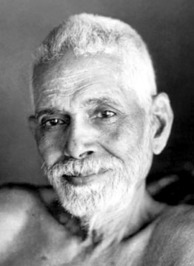
In Sri Bhagavan Ramana Maharshi’s Upadesa Saram (The Essence of Instruction), we have in concise form all we need to know in order to attain liberation in this life. The teaching is densely packed in, making the teaching all the sweeter for the ripe seeker of Truth.
Here you will find universal teachings for enlightenment, the true Vedanta.
That said, two other of Ramana’s texts which compliment this are Nan Yar? (Who am I?) and Ulladu Narpadu (Forty Verses on Reality). Together, in my view, these three texts form a comprehensive complete teaching for liberation in concise form. I also highly recommend reading The Path of Sri Ramana which explains in detail the entire path to liberation.
The translation into Engish from the original Sanskrit is by Professor K. Swaminathan – this is the same translation found in the Collected Works of Sri Ramana Maharshi published by Sri Ramana Ashramam. I have made some comments (in italicised red) which hopefully make the teachings clearer, but have attempted to keep these to a minimum so the actual force, beauty and true meaning of the text is not diluted and lost amidst my verbiage!
Action yields fruit, For so the Lord ordains it. How can action be the Lord? It is insentient.
Cause and effect (‘action’ and ‘fruit’ respectively, or karma) is essentially a mechanical process, insentient, subject to change, and not at all the Divine. Put differently, the world of cause and effect is not, in essence, the Self or the Lord. The world of cause and effect, or karma, is all non-Self.
2. The fruit of action passes. But action leaves behind Seed of further action Leading to an endless ocean of action; Not at all to moksha.
This here is a very important verse. All actions are limited, and therefore give rise to limited effects. These effects then in turn become the cause for another limited effect, and so on. Limited actions cannot give rise to That, in which there are no limits, so no limited actions can lead to Moksha. The unstated implication is THAT which we are looking for -The Absolute, Brahman, call IT what you will – THAT is already fully and completely here – no action is required to attain the Self, as we are already THAT. Delving around in the world of objects and cause and effect will not lead to Liberation, which already IS.
3. Disinterested action Surrendered to the Lord Purifies the mind and points The way to moksha.
Becoming increasingly disinterested in things that happen in the world, carrying out your social and ethical duties whilst surrendering all to Him – this is conducive to Liberation.
4. This is certain: Worship, praise and meditation, Being work of body, speech and mind, Are steps for orderly ascent.
Bhagavan gives us a hierarchy of spiritual practices, starting with worship (which utilises the body), then going to use praise (which utilises speech), and then to the higher practice of meditation (which utilises the mind).
We are not to greedily jump straight to meditation as it is the higher practice, unless we are naturally ripe for this, but to start where we are for ‘orderly ascent’. In the next few verses Bhagavan Sri Ramana Maharshi will explain these practices to us in greater detail:
6. Better than hymns of praise Is repetition of the Name; Better low-voiced than loud, But best of all Is meditation in the mind.
The practice becomes, in time, increasingly subtle, starting from coarser practices involving the body and then speech, to subtler practices of the mind, as per verse 4.
7. Better than spells of meditation Is one continuous current, Steady as a stream, Or downward flow of oil.
Over time, meditation should move from the sporadic to the continuous. A wonderful traditional metaphor of a continuous current of a river or a steady stream of oil as it is poured is used so there is no mistake as to what this means: continuous meditation means continuous meditation. What what exactly is this meditation, and how can it be done? Worry not! Bhagavan will explain all to us in later verses. How lucky we are to have these beautiful teachings of His!
8. Better than viewing Him as Other, Indeed the noblest attitude of all, Is to hold Him as the ‘I’ within, The very ‘I’.
A key part of the teachings is this – to realise that all is non-separate from Him. Furthermore, He is none other that the essence of You, the ‘I’ within. In earlier verses such as 5 and 6 it may be thought that God is an entity external to you. However here it is made clear that you are not praising a divine entity that is separate from your Being. All this is implied in verses 20 and 23, and more clearly stated in verse 26.
The next verse also continues this same theme, but going one step further, the form of devotion and worship becoming ever more subtle and direct:
10. Absorption in the heart of being, Whence we sprang, Is the path of action, of devotion, Of union and of knowledge.
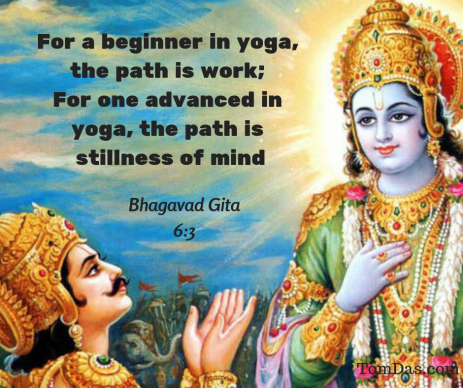
For the more intellectually inclined, this verse can be illuminating. Bhagavan is stating here, in line with the Upanishads (eg. Amritabindu Upanishad verses 2-5) and Bhagavad Gita (eg Chapter 5 verse 4), that all the main yogas are, at this stage in the practice, essentially one and the same.
Abiding as the Self IS the path of action, abiding as the Self IS Devotion, abiding as the Self IS Yoga (‘union’), abiding as the Self IS Knowledge.
Amritabindu Upanishad, verse 5: ‘The mind should be prevented from functioning, until it dissolves itself in the heart. This is Jnana, this is Dhyana, the rest is all mere concoction of untruth.’
Bhagavad Gita 5.4: ‘Only the ignorant say that the yoga of knowledge and the yoga of devotional action are different, wise people do not. One who is perfectly established in one, obtains the result of both.’
11. Holding the breath controls the mind, A bird caught in a net. Breath-regulation helps Absorption in the heart.
A key teaching that regulation of the breath is a useful aid to Abiding as Self. The invitation is to take up this advice an incorporate it into your practice.
12. Mind and breath (as thought and action) Fork out like two branches. But both spring From a single root.
Both the mind and breath or actions, in fact all phenomena, arise from a single Source. The implication is that finding the source of the mind can also be done by finding the source of the breath.
laya vinaśane ubhaya-rodhane
laya-gataṃ punar bhavati no mṛtam
13. Absorption is of two sorts; Submergence and destruction. Mind submerged rises again; Dead, it revives no more.
The implication is that death of mind is the goal, rather than just a mere temporary quiescence of mind. Next the method by which the mind can be killed is given:
naṣta-manasot-kṛṣṭa yoginaḥ
kṛtyam asti kiṃ svasthitiṃ yataḥ
15. Mind extinct, the mighty seer Returns to his own natural being And has no action to perform.
Yoga Vasishta, one of Ramana’s favourite traditional texts, says ‘Supreme Bliss cannot be experienced through contact of the senses with their objects. The supreme state is that in which the mind is annihilated through one-pointed enquiry.’ and elsewhere it also states ‘Every moving or unmoving thing whatsoever is only an object visualised by the mind. When the mind is annihilated, duality (i.e. multiplicity) is not perceived.’
Now we are half-way through the text. The essential teaching has already been given and the text could end here. However, in the second half further elucidation and clarification will be lovingly dispensed:
16. It is true wisdom For the mind to turn away From outer objects and behold Its own effulgent form.
What is true wisdom? It is for the mind to turn away from all objects and phenomena and abide as the Self.
Some confusion may arise as to how the mind, the nature of which is thought (verse 18), can behold it’s ‘own effulgent form’. When the mind is turn outward, occupied with objects such as thoughts, feelings, the body and the outer world of objects, it is called the mind. When the mind is no longer occupied with these things, it is none other than the Self.
Ramana states In Day by Day with Bhagavan: ‘The mind turned inwards is the Self; turned outwards, it becomes the ego and all the world’
Yoga Vasishta states: ‘Consciousness which is undivided imagines to itself desirable objects and runs after them. It is then known as the mind.’ and also elsewhere states: ‘After knowing that by which you know this (world) turn the mind inward and then you will see clearly (i.e. realize) the effulgence of the Self.’ and elsewhere states: ‘O Rama, the mind has, by its own activity, bound itself; when it is calm it is free.’
mānasaṃ tu kiṃ mārgaṇe kṛte
naiva mānasaṃ mārge ārjavāt
17. When unceasingly the mind Scans its own form There is nothing of the kind. For every one This path direct is open.
Another key verse here. The insight here is that the mind is not a real entity, just an imagined one. When searched for, it cannot be found as a distinct entity. What a wonderful and essential teaching is presented here! It is further expounded on in the next two verses:
19. When one turns within and searches Whence this ‘I’ thought arises, The shamed ‘I’ vanishes – And wisdom’s quest begins.
The above verse states this is but the beginning of self-enquiry, ‘the quest’. How do we proceed after we have searched for the source of the I-concept and found it to be non-existent? Let us see:
20. Where this ‘I’ notion faded Now there as I–I, arises The One, the very Self, The Infinite.
The Self is defined as that in which there is no I-concept, no concept of a ‘me’. This can only be realised non-verbally through practice and direct experience.
21. Of the term, ‘I’, the permanent import Is That. For even in deep sleep Where we have no sense of ‘I’ We do not cease to be.
A pointer here that what is known as ‘I’ is actually none other than THAT, ie. God or the Absolute, the Infinite – the Self. Ramana states in Who Am I? (Nan Yar?) ‘By a steady and continuous investigation into the nature of the mind, the mind is transformed into That to which ‘I’ refers; and that is in fact the Self’
Even in deep sleep, whilst there is no I-concept, we still exist do we not? This gives us a clue as to our True Essential Nature (True Self).
22. Body, senses, mind, breath, sleep – All insentient and unreal – Cannot be ‘I’, ‘I’ who am the Real.
Rather late on in the text Ramana introduces to us the teaching of discerning the Self from the non-Self (Viveka, or Atma-anatma-viveka). The essence of what we are, which does not change, which is ever-present and ‘Real’, cannot be that which changes and that which has no consciousness of its own (ie. ‘insentient’). The real is that which illuminates the unreal, ie. is consciousness or sentient.
23. सत्त्वभासिका चित्क्ववेतरा ।
सत्तया हि चिच्चित्तया ह्यहम् ॥ २३॥
sattva-bhāsika citkva vetarā
sattyā hi cit cittayā hyaham
23. For knowing That which is There is no other knower. Hence Being is Awareness; And we all are Awareness.
Awareness needs no second light to illuminate it. Indeed there is no second thing apart from the Self that can know the Self, for the Self is One and All, and there is nothing outside of or apart from it. We may need a light source to illuminate a common everyday object in darkness, but the sun needs no secondary light source to be seen. It is self-shining. Similarly the Self is self-shining. It needs no other to know itself. To know the Self, THAT, is not really a knowing in that there is no second object to be known (for the Self is non-dual), but ‘knowing the Self’ really is just BEING the Self, or BEING AWARENESS.
24. ईशजीवयोर्वेषधीभिदा ।
सत्स्वभावतो वस्तु केवलम् ॥ २४॥
īśa-jīvayor veṣa-dhī-bhidā
sat-svabhāvato vastu kevalam
24. In the nature of their being Creature and creator are in substance one. They differ only In adjuncts and awareness.
Ramana makes some clarifications here so we are clear on what is being said. He is stating that the nature of the individual or jiva (ie. ‘creature’ which is actually a translation of jiva) is the same as the essential nature of God or Ishvara (‘creator’, which is a translation of Isa or Isvara, ie. the Lord). The difference is only in the phenomenal appearance, but both are in essence BEING-AWARENESS. This reasoning is taken further in the next verse:
25. Seeing oneself free of all attributes [objects] Is to see the Lord, For He shines ever as the pure Self.
Therefore, if you ‘see’ yourself devoid of all phenomena and ‘attributes’, which means to be aware but to be devoid of thoughts, feelings, body and worldly objects, then you are seeing your essential nature, which is to see God (Isa or Ishvara). Your essential nature is Him. Remember, the word seeing doesn’t mean you are seeing something, for there is no duality here. Ramana, out of his love and compassion for us, tells us as follows:
26. To know the Self is but to be the Self, For it is non-dual. In such knowledge One abides as that.
He reminds us that this is not a dualistic knowing (of objects), but just BEING THAT. The word ‘know’ is just a dualistic phrase used, dualistic as it implies a knower and something that is known, whereas here there is no knower or known, just BEING-AWARENESS. Ramana continues to make it clear for us:
27. That is true knowledge which transcends Both knowledge and ignorance, For in pure knowledge Is no object to be known.
True Knowledge is simply a synonym for the Self, and there are no objects in the Self or apart from the Self. There is only the Self.
The Amritabindu Upanishad says, in verse 4: ‘The mind severed from all connection with sensual objects, and prevented from functioning out, awakes into the light of the heart, and finds the highest condition.’
28. Having known one’s nature one abides As being with no beginning and no end In unbroken consciousness and bliss.
Importantly, this state is to be ‘abided in’, for want of better wording, meaning that we are not to be attracted to sense-objects and become involved with thoughts and feelings and things (ie. the world) and so give birth to the mind (see verse 16 and commentary), but to remain in Truth as Truth, as BEING-AWARENESS (sat-chit) devoid of any objects, which is known as BLISS (written as sukha here, which means happiness in Sanskrit, often called ananda, which also means happiness.)
bandha muktyatītaṃ paraṃ sukham
vindatīhajī vastu daivikaḥ
29. Beyond bondage and release, Is steadfastness In service of the Lord.
Again, like in verse 28, verse 29 implies a continuance in remaining in this stateless state which is transcendent to both liberation and bondage, which are both to do with phenomenal existence. In verse 28 the language of knowledge is used, ‘Having known one’s nature…’. here in verse 29 the language of devotion is used. In verses 1 and 2 Ramana has hinted that the world of insentient objects is not the way, and in verse 10 Ramana has already told us that true devotion and true knowledge are simply to abide as sat-chit-ananda devoid of adjuncts or phenomena. This is written here poetically as ‘steadfast service of the Lord’. Continue to abide as the Self, That which is beyond dualities of liberation and bondage, That in which there is no change, That which is the nature of ‘unbroken Consciousness and Bliss’ (verse 28).
aham-apetakaṃ nija-vibhānakam
mahadidaṃ tapo ramaṇa vāgiyam
30. All ego gone, Living as that alone Is penance good for growth, Sings Ramana, the Self.
Remaining as the Self, that in which there is no ego, is the only way to Moksha. It is the culmination of the path of devotion, knowledge, yoga and action. It is both the highest Knowledge and highest Devotion and also beyond knowledge and devotion.
To abide as the Self that is of the nature sat-chit-sukha, until the ego is destroyed, never to arise again (cf. verses 13-15) is Moksha (liberation) itself.
Divine grace flows ceaselessly in silence, when the ego-mind is quiet and inactive.
——-
When thoughts quieten, and the identification as being a body-mind is no longer active, that is BEING: waves of bliss-peace-grace emanate from the spiritual heart, all consuming, all healing, all purifying, self-enlightening.
——-
When it is deeply realised that true peace does not come from worldly things including experiences and knowledge, and that our very essence is pure unalloyed happiness, the seeking mind naturally quietens as it no longer is seeking happiness outside of itself. Then what else shall we do but remain but as our Self, BEING, pure consciousness, overflowing in bliss?
——-
Seeking pleasure ‘outside’, that is seeking pleasure and fulfilment in objects, including subtle objects such as experiences and knowledge, only means you have not realised that happiness, love and grace are your essential nature and naturally manifest when the mind is still.
‘Be still’ (ie. Nididhyasana) or natural stillness (ie. Samadhi), and the eternal peace of mind/end of suffering that seemingly emerge from that (ie. Moksha) – these are not something you do or create, or necessarily need to strive to practice. They can be a natural outcome of insight into the experiential truths of ‘no-doer’ (both in ‘yourself’ and in ‘others’) and ‘nothing else needed’ or ‘nothing to get’.
Similarly, insight is not something you have to do or achieve or create. It is a natural outcome of listening to the teachings (ie. Sravana) and contemplating them in a (relatively) clear and quiet mind (ie. Manana).
Therefore listen to the teachings, remember them, relax, and let the mind contemplate them unhurriedly. The teachings need time and space to blossom and bloom. 🌿🌼🌷
Seeking out teachings to listen to, actually listening to them and subsequently contemplating them is not something you do or chose to do or ever did. It is a natural outcome of a desire to end suffering (ie. Mumukshutva) together with having heard the notion or possibility that suffering can end (ie. Hearing about the concept of enlightenment or liberation). These factors naturally and automatically lead to seeking a teaching/teacher.
The desire to end suffering is not something you have created or ever ‘done’. It is the natural consequence of and intelligent response to suffering.
This is all spontaneous action and response. No doer entity or separate entity doing, authoring or creating anything.
Suffering is not something you chose to happen, or something you have created/caused. It is a natural consequence of living life with concepts of ignorance deeply rooted into the body-mind.
Hearing about the notion or possibility that suffering can end is not something you chose to hear. It is a consequence of God’s Grace.
Ignorance was not something you chose. It too was and is God’s Grace.
All this, one could say, is God’s Grace, unfolding beautifully. It is the way it is. What is is what is.
There are many ways to liberation, and all true paths join together in the end. In the Advaita Vedanta framework, 4 attributes or qualities are required to be developed before one can sufficiently progress on the path of Jnana or Enquiry. Once these qualities or qualifications have been attained, then you can go on and partake in the main practice itself that leads to liberation (be sure to see the end of this post for details of this).
In Vivekachudamani
In Shankara’s Vivekachudamani he outlines four practices or qualifications (sadhana chatustaya) that are required in order for liberation to successfully occur. First he lists the qualifications, and then he explains each one in turn.
I’ve noticed there are a small but growing number teachers of Vedanta who claim to be traditional teachers but they change the definitions of the qualifications and so alter the meaning of the teachings to suit different ends. These teachers tend to downplay the need for prolonged meditation on the Self, whereas the actual Vedanta texts and true traditional teachers of Vedanta tend to emphasise this.
So, as always, it pays to read the source texts for yourself and learn how the teachings were originally defined if you want to understand the original intentions of the Vedanta teachings. As usual, my comments are in red:
Shankara states there are 4 things that are required to attain liberation. More than that, he states that without these 4 things, liberation will not be attained. So let us learn about these 4 qualifications and how they are defined:
18. Regarding this, sages have spoken of four means of attainment, which alone being present, the devotion to Brahman succeeds, and in the absence of which, it fails.
19. First is enumerated discrimination between the Real and the unreal; next comes aversion to the enjoyment of fruits (of one’s actions) here and hereafter; (next is) the group of six attributes, viz. calmness and the rest; and (last) is clearly the yearning for Liberation.
Traditionally the 4 Qualifications are: (1) Viveka or discrimination (2) Vairagya or dispassion (3) Samadi-satka-sampatti or the six disciplines consisting of Shama, Dama, Uparati, Titiksha, Shraddha and Samadhana in which the mind is progressively withdrawn from the sense objects and focused onto the pure sense of being (‘Sat’ or ‘Pure Brahman’) (4) Mumuksutva or the yearning for liberation.
Shankara also adds a further qualification – the most important in his view – Bhakti, or devotion, which he defines in verse 31 as seeking or turning away from what is unreal (defined in the next verse) and turning towards one’s True Nature.
20. A firm conviction of the mind to the effect that Brahman is real and the universe unreal, is designated as discrimination (Viveka) between the Real and the unreal.
This is a clear definition of viveka that forms the foundation for the rest of the qualifications. Next Shankara defines vairagya in a very absolute way, which is essentially renunciation of all worldly objects ranging from the everyday to desires to be reborn in the heavenly realm of Brahma (the creator-deity who resides in heaven).
21. Vairagya or renunciation is the desire to give up all transitory enjoyments (ranging) from those of an (animate) body to those of Brahmahood (having already known their defects) from observation, instruction and so forth.
The notion is that because all such worldly or heavenly objects are transient, they will eventually go and therefore not lead to the eternal ever-existing peace of Brahman or Moksha.
In another text called Aparokshanubhuti, Shankara describes Vairagya as follows in verse 4: ‘The indifference with which one treats the excreta of a crow – such an indifference to all objects of enjoyment from the realm of Brahma to this world (in view of their perishable nature), is verily called pure Vairagya.’
Verses 22-25 will outline the 6 disciplines of Shama, Dama, Uparati, Titiksha, Shraddha and Samadhana. We can see that the gist of the 6 disciplines is to turn away from objects and the world and turn towards the Self:
22. The resting of the mind steadfastly on its Goal (viz. Brahman) after having detached itself from manifold sense-objects by continually observing their defects, is called Shama or calmness.
In Aparokshanubhuti Shankara in verse 6 writes: ‘Abandonment of desires at all times is called Shama‘.
23. Turning both kinds of sense-organs away from sense-objects and placing them in their respective centres, is called Dama or self-control. The best Uparati or self- withdrawal consists in the mind-function ceasing to be affected by external objects.
24. The bearing of all afflictions without caring to redress them, being free (at the same time) from anxiety or lament on their score, is called Titiksha or forbearance.
25. Acceptance by firm judgement as true of what the Scriptures and the Guru instruct, is called by sages Shraddha or faith, by means of which the Reality is perceived.
26. Not the mere indulgence of thought (in curiosity) but the constant concentration of the intellect (or the affirming faculty) on the ever-pure Brahman, is what is called Samadhana or self-settledness.
Shama is an initial detachment from sense objects after contemplating how impermanent objects cannot give rise to (permanent) liberation. Dama is about withdrawing the sense organs from sense-objects and also reducing one’s activities in the world (‘both kinds’ refer to the sense organs and organs of action). Uparati is when the mind is no longer affected by objects at all.
We can see that Shama, Dama and Uparati represent a step-wise sequence in practicing different levels of vairagya (dispassion) which culminates in Samadhana, which is defined as constant concentration on Brahman devoid of objects as opposed to mere curiosity towards Brahman. We know that the Brahman spoken of is devoid of objects due to the above definitions of Shama, Dama and Uparati. This is further made clear by the verse quotes in Aporokshanubhuti below in which it is stated that the mind should be made to focus on ‘Sat’ (existence).
Titiksha and Shraddha are aids to this sequential process of introversion, which we could call Bhakti or svasvarupanusandhanam (see verse 31 below).
27. Mumukshutva or yearning for Freedom is the desire to free oneself, by realising one’s true nature, from all bondages from that of egoism to that of the body – bondages superimposed by Ignorance.
Shankara now talks of 3 grades of mumukshutva: low, medium and high. If the desire for liberation is low-to-medium, one is to cultivate vairagya and the 6 disciplines. Then the desire for liberation will increase:
28. Even though torpid or mediocre, this yearning for Freedom, through the grace of the Guru, may bear fruit (being developed) by means of Vairagya (renunciation), Shama (calmness), and so on.
If the desire for liberation is high, then the goal will be attained:
29. In his case, verily, whose renunciation and yearning for Freedom are intense, calmness and the other practices have (really) their meaning and bear fruit.
If the desire for liberation is low, then all this is mere superficiality and liberation will (likely) not result:
30. Where (however) this renunciation and yearning for Freedom are torpid, there calmness and the other practices are as mere appearances, like water in a desert.
Lastly Shankara extolls the magnificence of Bhakti, and defines it as ‘svasvarupanusandhanam’, which can be translated as striving to seek one’s nature or constantly turning towards one’s nature.
31. Among things conducive to Liberation, devotion (Bhakti) holds the supreme place. The seeking after one’s real nature is designated as devotion.
Interestingly Sri Ramana Maharshi was asked about the nature of svasvarupanusandhanam in Talks 642, and he stated that it referred to atma vichara or Self-enquiry itself. In Aparokshanubhuti verse 11 Shankara writes: ‘Knowledge is not brought about by any other means than Vichara [ie. enquiry], just as an object is nowhere perceived (seen) without the help of light.‘
Sri Ramana Maharshi also summarised the entire Vedanta teaching in an introduction to his translation of Shankara’s Vivekachudamani which you can read here.
In Aparokshanubhuti
In his text Aparokshanubhuti, which literally means ‘direct experience’ (paroksha = mediated; aparoksha = unmediated; anubhuti = experience), Shankara explains the same 4 qualifications (sadhana catustaya) in a more punchy way in verses 4-11:
4. The indifference with which one treats the excreta of a crow – such an indifference to all objects of enjoyment from the realm of Brahma to this world (in view of their perishable nature), is verily called pure Vairagya.
5. Atman (the seer) in itself is alone permanent, the seen is opposed to it (ie., transient) – such a settled conviction is truly known as discrimination.
6. Abandonment of desires at all times is called Shama and restraint of the external functions of the organs is called Dama.
7. Turning away completely from all sense-objects is the height of Uparati, and patient endurance of all sorrow or pain is known as Titiksha which is conducive to happiness.
8. Implicit faith in the words of the Vedas and the teachers (who interpret them) is known as Shraddha, and concentration of the mind on the only object Sat (i.e. Brahman) is regarded as Samadhana.
9. When and how shall I, O Lord, be free from the bonds of this world (i.e., births and deaths) – such a burning desire is called Mumukshutva.
10. Only that person who is in possession of the said qualifications (as means to Knowledge) should constantly reflect with a view to attaining Knowledge, desiring his own good.
11. Knowledge is not brought about by any other means than Vichara, just as an object is nowhere perceived (seen) without the help of light.
Vichara means Self Enquiry. It should be fairly clear that if you are correctly performing the third of the four qualifications (ie. the six disciplines consisting of Shama, Dama, Uparati, Titiksha, Shraddha and Samadhana) you need the first qualification (viveka), the second qualification (vairagya) as well as the fourth qualification (mumuksutva), so you can hopefully see how these are all interlinked.
The main practice
So here above are detailed the four so-called qualities or qualifications required to attain liberation. Once the qualifications have been attained, then you can go on and partake in the main essential practice itself that leads to liberation; see these links for more on this:
Now, once you have read the above posts, tell me what you notice about the qualifications required for liberation, and the main practice itself that leads to liberation? If you compare the two, what do you notice? Let me know your thoughts below, best wishes and namaste.
This video gives a summary of how the teachings often work, and explains about conceptual teachings and contrasts this to Silence. It also speaks of whether or not a teacher is required at all.
Please subscribe to receive more videos like this:
Vidyaranya Swami (1296-1386), author of the wonderful Advaita Vedanta text Panchadasi and Shankaracharya (head monk) of Sringeri Math, wrote another less well known text called Jivanmukti Viveka. In it he, in some considerable detail, outlines the path to Jivanmukti, or liberation in this life.
In Chapter 2 Vidyaranya repeatedly makes the point that liberation or jnana cannot occur without both manonasa (destruction of the mind) and vasana kshaya (destruction of the habitual tendencies). To support this view he quotes from the Amritabindu Upanishad, verses 2-5, as follows:
Mind alone is the cause of bondage or liberation; lost in enjoyment it leads to bondage, emptied of the objective it leads to liberation.
As mind emptied of the objective leads to liberation, one desirous of liberation must always try to wipe off the objective from the plane of his mind.
The mind severed from all connection with sensual objects, and prevented from functioning out, awakes into the light of the heart, and finds the highest condition.
The mind should be prevented from functioning, until it dissolves itself in the heart. This is Jnana, this is Dhyana, the rest is all mere concoction of untruth.
Jnana refers to liberation, and dhyana means meditation, stating this instruction refers to the means (meditation) and the fruit (liberation). The last line can alternatively be rendered as ‘…all else is mere argumentation and verbiage’.
Contrary to what some say about Sri Ramana Maharshi, he was very well-versed in the traditional Vedanta Scriptures including the Upanishads, the Bhagavad Gita, the Brahma Sutras and Shankara’s Commentaries upon these, often quoting verses verbatim by memory. The earliest of Bhagavan Sri Ramana Maharshi’s written works was his translation of Shankara’s Crest Jewel of Discrimination (Vivekachudamani in Sanskrit). He wrote it when he was still very young and was living in Virupaksha Cave. This was also to remain the single largest work of Sri Ramana’s.
In his introduction to the Vivekachudamani, Ramana explains that Vedanta, as written in the triple cannon (Upanishads, Brahma Sutras and Bhagavad Gita) points the way to attaining liberation, and that Shankara wrote commentaries on these three texts to make clear the path. However, Ramana also noted that for those who did not have the capacity for such scholarship, Shankara wrote the essence of his length commentaries and collated them together in the form of Vivekachudamani.
Below is Ramana’s introduction to the text, which gives in brief an overview of its teachings. Bold-type has been added by myself for emphasis of some key points. In another post I will post the full text of Ramana Maharshi’s translation of Vivekachudamani:
Introduction to Vivekachudamani, as written by Sri Ramana Maharshi:
Every being in the world yearns to be always happy and free from the taint of sorrow, and desires to get rid of bodily ailments, etc., which are not of its true nature. Further, everyone cherishes the greatest love for himself, and this love is not possible in the absence of happiness. In deep sleep, though devoid of everything, one has the experience of being happy. Yet, due to the ignorance of the real nature of one’s own being, which is happiness itself, people flounder in the vast ocean of material existence, forsaking the right path that leads to happiness, and act under the mistaken belief that the way to be happy consists in obtaining the pleasures of this and the other world.
Unfortunately, however, there is no such happiness which has not the taint of sorrow. It is precisely for the purpose of pointing out the straight path to true happiness that Lord Shiva, taking on the guise of Sri Shankaracharya, wrote the commentaries on the Triple Canon [Prasthana Traya] of the Vedanta, which extols the excellence of this bliss; and that he demonstrated it by his own example in life. These commentaries, however, are of little use to those ardent seekers who are intent upon realising the bliss of liberation but have not the scholarship necessary for studying them.
It is for such as these that Sri Shankara revealed the essence of the commentaries in this short treatise, The Crown Gem of Discrimination [Vivekachudamani], explaining in detail the points that have to be grasped by those who seek liberation, and thereby directing them to the true and direct path.
Sri Shankara begins by observing that it is hard indeed to attain human birth, and that, having attained it, one should strive to achieve the bliss of liberation, which is really only the nature of one’s being. By jnana or spiritual knowledge alone is this bliss to be realised, and jnana is achieved only through vichara or steady enquiry. In order to learn this method of enquiry, says Sri Shankara, one should seek the Grace of a Guru; and he then proceeds to describe the qualities of the Guru and his disciple and how the latter should approach and serve his master. He further emphasises that in order to realise the bliss of liberation one’s own individual effort is an essential factor. Mere book learning never yields this bliss; it can be realised only through Self-enquiry or vichara, which consists of sravana or devoted attention to the precepts of the Guru, manana or deep contemplation and nidhidhyasana or the cultivation of equanimity in the Self.
The three bodies, are non-self and are unreal. The Self, that is the Aham or “I” is quite different from them. It is due to ignorance that the sense of Self or the “I”-notion is foisted on that which is not Self, and this indeed is bondage. Since from ignorance arises bondage, from knowledge ensues liberation. To know this from the Guru is sravana.
The process of manana, which is subtle enquiry or deep contemplation, consists in rejecting the three bodies consisting of the five sheaths [physical, vital, mental, intellectual, and blissful], as not “I” and discovering through subtle enquiry of “Who am I?” that which is different from all three and exists single and Universal in the Heart as Aham or “I”, just as a stalk of grass is delicately drawn out from its sheath. This “I” is denoted by the word tvam [in the scriptural dictum “Tat Tvam Asi”, “Thou art That”].
The world of name and form is but an adjunct of Tat or Brahman [Reality] and, having no separate reality, is rejected as reality and affirmed as nothing else but Brahman. The instruction of the disciple by the Guru in the scriptural saying [mahavakya] “Tat Tvam Asi“, which declares the identity of the Self and the Supreme, is this upadesa [spiritual guidance]. The disciple is then enjoined to remain in the beatific state of Aham-Brahman, [I – the Absolute]. Nevertheless, the old tendencies of the mind sprout up thick and strong and constitute an obstruction. These tendencies are threefold and ego is their root. The ego flourishes in the externalised and differentiating consciousness caused by the forces of projection due to rajas [restlessness], and veiling due to tamas [dullness].
To fix the mind firmly in the Heart until these forces are destroyed and to awaken with unswerving, ceaseless vigilance the true and cognate tendency which is characteristic of the Self [Atman] and is expressed by sayings: “Aham Brahmasmi” [“I am Brahman”], and “Brahmaivaham” [“Brahman alone am I”] is termed nidhidhyasana or Atmanusandhana, that is constancy in the Self. This is otherwise called bhakti [devotion], yoga and dhyana [meditation].
Atmanusandhana has been compared to churning curds in order to make butter, the mind being compared to the churn, the Heart to the curds, and the practice of concentration on the Self to the process of churning. Just as butter is made by churning the curds and fire by friction, so the natural and changeless state of Nirvikalpa samadhi is produced by unswerving vigilant concentration on the Self, ceaseless like the unbroken flow of oil. This readily and spontaneously yields that direct, immediate, unobstructed, and Universal perception of Brahman, which is at once knowledge and experience and which transcends time and space.
This perception is Self-realisation. Achieving It cuts the knot of the Heart. The false delusions of ignorance, the vicious and age-long tendencies of the mind which constitute this knot are destroyed. All doubts are dispelled and the bondage of karma is severed.
Thus in this Crown Gem of Discrimination Sri Shankara has described samadhi or spiritual trance which is the limitless bliss of liberation, beyond doubt and duality, and at the same time has indicated the means for its attainment. To attain this state of freedom from duality is the real purpose of life, and only he who has done so is a jivanmukta, liberated while yet alive, not one who has a mere theoretical understanding of what constitutes Purushartha or the desired end and aim of human endeavour.
Thus defining a jivanmukta, Sri Shankara declares him to be free from the bonds of threefold karma [sanchita, agami and prarabdha]. The disciple attains this state and then relates his personal experience. He who is liberated is indeed free to act as he pleases, and when he leaves the body, he abides in liberation and never returns to this birth, which is death.
Sri Shankara thus describes realisation, that is liberation, as twofold, jivanmukti [liberation while alive] and videhamukti [liberation after death], as explained above. Moreover, in this short treatise, written in the form of a dialogue between a Guru and his disciple, he has considered many other relevant topics.
Tom’s summary and comments:
-Bhagavan Sri Ramana has stated that the text Vivekachudamani contains all the key points required for the earnest seeker to attain liberation, and that it is the essence of Vedanta and the essence of Sri Shankara’s commentaries of the triple canon [ie. the Upanishads, Brahman Sutras and Bhagavad Gita].
-One wrongly seeks happiness outwardly, when actually one’s own nature is that of happiness. Happiness obtained through limited external objects will also be limited and also result in suffering.
-Spiritual liberation is the ending of all sorrow. It is to be obtained by Jnana, or spiritual knowledge, the path to which is outlined below:
-Jnana is to be obtained by seeking the grace of a guru .
-Jnana can only be gained through self-enquiry.
–Individualeffort of the part of the seeker is required during this.
–Self-enquiry itself consists of sravana (listening to the teachings), manana (contemplating upon the teachings), and nididhyasana or Atmanusandhana (remaining constantly as the self/in the self).
–Manana consists of realising the import of the mahavakya or great saying ‘Tat Tvam Asi’ or ‘That Thou Art’. Tat or That refers to the Absolute, or Brahman. The arising transient phenomena that come and go are realised to be dependent on Brahman, nothing other than Brahman, but not real in that the objects themselves have no permanancy. Tvam or Thou refers to the ‘I’ that remains when all that is non-self is rejected and turned away from. Asi, or art means that this ‘I’ and ‘That’ are equated as being one in essence.
-This last step of abiding as the self/ Nididhyasana/ Atmanusandhana is also known as Bhakti (devotion), Yoga and Dhyana (meditation).
-Self-abidance is required due to age-old habitual tendencies (vasanas) which arise and block Self-Realisation. There are three types of vasanas [tamas, rajas and sattva], the source of which is the ego.
-The ego flourishes in the world of phenomenal objects. The implication here is that turning away from the body, mind and world is necessary to lead to the end of the ego and the resultant liberation.
-Through ceaseless unswerving concentration on the self, like the unbroken flow of oil, one achieves the state of Nirvikalpa Samadhi, which transcends space and time. The implication here is that as it transcends space and time, it is not really a state, nor is it an object or arising phenomena, but it is spoken of as such due to the limitations of language.
–Nirvikalpa samadhi directly and spontaneously gives rise to the unobstructed knowledge or experience of Brahman. This is what is known as Jnana or spiritual knowledge and is the same as direct experience of Brahman, which in turn is the same as Self-realisation. Again the implication is that it is spoken of as ‘knowledge’, ‘experience’ and ‘realisation’, all of which are used here as synonyms, due to the limitations of language, as this cannot really be put into words.
-In self-realisation, the knot of the heart is cut. The knot of the heart consists of ignorance and the habitual tendencies of the mind [vasanas]. These both are removed though samadhi and the subsequent self-realisation. Here there is no longer any further doubt.
-Ramana states that Samadhi is the same as liberation, and that this liberation is the true purpose of one’s life.
–Intellectual understanding alone is not enough. The implication here is not to make the mistake that many do and stop after manana or the teachings ‘Tat Tvam Asi’, but proceed to abide as the Self in order to remove ignorance and the vasanas, and not give up until Samadhi ‘arises’ and the knot of the heart is cut.
-Two forms of liberation are described by Shankara, that whilst alive (Jivanmukti) and that which occurs with death of the body (Videhamukti).
So the volunteer who usually edits and puts together my videos is no longer able to do so. This has resulted in me surfing the internet and learning how to edit videos myself! Below is my first video, edited and put together by…well…me! It was recorded live during Thursday’s online meeting, so the picture quality is not as good as it could be. Subscribe to the YouTube channel if you want to receive more of these videos, tell me what you think and enjoy 🙂
ps. if you know anyone who would be willing to help edit videos for me please let me know, with thanks 🙏
This is one of a series of introductory articles found on the homepage of tomdas.com. Please also see the recommended reading list here.
This post authoritatively summarises the essential liberating teachings of Sri Ramana Maharshi in relatively concise form. Please take the time to read and study this material in order to gain benefit from it.
The text ‘Guru Vachaka Kovai’, also known as ‘The Garland of Guru’s sayings’, is widely considered to be the most authoritative, reliable and comprehensive collection of the verbal teachings of Sri Ramana Maharshi. Here is what Ramana Ashram states about Guru Vachaka Kovai in the foreword of their publication of it:
‘[Guru Vachaka Kovai] provides the most precise, systematic and authoritative exposition of Sri Bhagavan’s teaching, explaining step by step the theory, the practice and the experience of jnana, the Truth supreme which is Being as Life Eternal, Pure Awareness, Perfect Bliss. Thus, the most comprehensive collection of the Maharshi’s sayings is Guru Vachaka Kovai.’
Bold text has been added by myself for emphasis, and I have included a few comments from Sri Sadhu Om when further explanation may be helpful. As usual my own comments are added in italicised red – I hope they are of benefit.
May these verses illuminate the path for earnest seekers of realisation!
I prostrate to Bhagavan Sri Ramana Maharshi, from whose lips these teachings graciously fell, and also to Dearest Muruganar who faithfully recorded these jewels
I bow to Sri Ramana, the Lord Himself, whose Grace is ever-present everywhere
I give myself unto dear Bhagavan, whose light shines as the Self within our Heart, whose true form is Pure Consciousness, Silence, the Sadguru (True Teacher) within and without
! Om Namo Bhagavate Sri Ramayana Om !
Introduction
The Self is ever-attained:
8. The benefit of this Light of Supreme Truth is the understanding that there is not the least thing such as ‘attainment’, since the Supreme Self is the Ever-Attained One Whole. Thus the mental wanderings caused by striving towards Dharma, Artha, and Kama are also removed.
Sri Sadhu Om: Up till now the shastras [scriptures] have prescribed, as the rightful goals of human life, the following four aims:
-Dharma: the practice of righteous social duties. -Artha: the acquisition of wealth through righteous means. -Kama: the satisfaction of desires within righteous limits. -Moksha: liberation, the natural state of abiding as Self.
This work, The Light of Supreme Truth shows us now that the first three worldly aims are futile and transitory, and thus it removes our wandering mental efforts to attain them. We may however still think, “Is not mental effort at least needed to obtain Moksha?” but again this Light shows us the meaninglessness of striving to ‘attain’ Self, which is ever-attained, and instead it recommends the cessation of all mental activity, thereby fixing us in the eternal, motionless and ever-attained State of Self.
The unreality of the world
The world does not exist:
23. The Realised who do not know anything as being other than Self, which is absolute Consciousness, will not say that the world, which has no existence in the view of the Supreme Brahman, is real.
28. O aspirants who hide yourselves away fearing this world, nothing such as a world exists! Fearing this false world which appears to exist, is like fearing the false snake which appears in a rope.
87. Self appearing as the world is just like a rope seeing itself as a snake; just as the snake is, on scrutiny, found to be ever non-existent, so is the world found to be ever non-existent, even as an appearance.
The world only appears to exist due to ignorance/maya/mind:
34. The deceptive I-am-the-body idea alone makes the world, which is an appearance of names and forms, seem real, and thereby it at once binds itself with desires [for the world].
35. Since this world of dyads and triads appears only in the mind, like the illusory ring of fire formed [in darkness] by whirling the single point of a glowing rope-end, it is false, and it does not exist in the clear sight of Self.
‘Dyads’ refers to seer/seen or perceiver/perceived or knower/known, ie. subject/object; ‘triads’ refers to seer/seeing/seen or perceiver/perceiving/perceived or knower/knowing/known, ie. subject/verb/object. Ramana is stating that this division of the world into dyads or triads only appears due to ‘the mind’, ie. ignorance. Another way of stating the above is that the world/ego/ignorance only exists due to a lack of self-enquiry/self-attention:
156. The reason for our mistake of seeing a world of objects in front of us is that we have risen as a separate ‘I’, the seer, due to our failure to attend to the vast perfection of Self-Consciousness, which is our Reality.
36. O worldly-minded man who is unable to understand the wise reasoning and the teachings of Sages about the Supreme Knowledge, if properly scrutinised, this big universe of delusion is seen to be nothing but the illusive play of the vasanas [mental tendencies] within you.
ie. like a dream, the world is merely a projection of the mind and is unreal, also see below:
84. All that is perceived by the mind was already within the heart. Know that all perceptions are a reproduction of past tendencies now being projected outside [through the five senses].
40. How does this false and villainous vast world, that cheats and ravages the minds of all people [except the wise], come into existence? Because of no reason other than our own mistake in falling away from, instead of clinging to, Self-attention.
ie. the world is created through ignorance, ie. it is maya, see below:
55. The appearance of this world, like the illusory appearance of a dream, is merely mental and its truth [therefore] can be known correctly only by the Supreme Consciousness that transcends Maya, the mind.
Ignorance is not real and never existed:
86. Do not ask, “Why does Self, as if confused, not know the Truth that It is Itself which is seen as the world?” If instead you enquire, “To whom does this confusion occur?”, it will be discovered that no such confusion ever existed for Self!
87. Self appearing as the world is just like a rope seeing itself as a snake; just as the snake is, on scrutiny, found to be ever non-existent, so is the world found to be ever non-existent, even as an appearance.
100. Although Guru Ramana taught various doctrines according to the level of understanding of those who came to Him, we heard from Him that ‘Ajata’ alone is truly His own experience. Thus should you know.
Sri Sadhu Om: ‘Ajata’ is the knowledge that nothing – neither the world, soul nor God – ever comes into existence, and that ‘That Which Is’ ever exists as IT is.
The body
The body, being part of the world, is also a non-existent illusion:
97. The body exists only in the view of the mind, which is deluded and drawn outwards by the power of Maya. In the clear view of Self, which is a single vast Space of Consciousness, there is no body at all and it is therefore wrong to call Self ‘Dehi’ or ‘Kshetrajna’ [the owner or knower of the body]
Kshetra means ‘field’ and ‘jna’ is the root of the verb ‘to know’, so kshetrajna means ‘knower of the field’. These terms were used by Sri Krishna in Chapter 13 of the Bhagavad Gita when he explains to Arjuna that the body is the ‘kshetra’ or field but what we really are is the knower of the body/field, kshetrajna. Here Bhagavan Ramana Maharshi goes one step further by stating that the idea of kshetra and kshetrajna or deha (body) and dehi (owner of the body) are too just dualistic ideas of the mind. Whilst they are useful teachings at one level, these dualistic notions are ultimately more ignorance.
B1. Give up thinking that the loathsome body is ‘I’. Know Self, which is eternal Bliss. Cherishing the ephemeral body as well as trying to know Self is just like using a crocodile as a raft to cross a river.
[Tom – compare to: ‘Whoever seeks to realise the Self by devoting himself to the nourishment of the body, proceeds to cross a river by catching hold of a crocodile, mistaking it for a log.’ Shankara, Vivekachudamani, verse 84]
126. Instead of attending to Sat-Chit-Ananda, the subtlest, which is beyond the reach of speech or mind, to spend one’s life attending merely to the welfare of the gross body is just like drawing water with great difficulty from a well in order to water some useless grass [instead of paddy].
127. Those who take to the petty life, mistaking the body as ‘I’, have lost, so to speak, the great life of unlimited Bliss in the Heart, which is ever waiting to be experienced by them.
The ego
The ego is another illusory phenomena, a ‘picture on the screen’:
159. The life of the filthy ego, which mistakes a body both as ‘I’ and as ‘my place’, is merely a false imagination seen as a dream in the pure, real, Supreme Self.
160. This fictitious jiva, who lives as ‘I [am the body]’, is also one of the pictures on the screen.
Happiness is not in the world
We all want to be happy; the easy way is to attend to the Self, ie. self-attention, which is the noble path of self-enquiry; the difficult way (that doesn’t work) is to attend to the world, ‘the field of the five senses’:
72. Longing for a tiny grain of pleasure, people toil so hard using the mind to plough the field of the five senses, but they never wish for the flood of Bliss which is the fruit that comes by ploughing the Heart, the Source of the mind, with [simple] Self-attention. Ah, what a wonder!
Do not seek happiness in the world – you will ‘drown’ in maya:
128. Not knowing that the world in front of them brings only great harm, those who take it to be real and a source of happiness will drown in the ocean of birth and death, like one who takes hold of a floating bear as a raft.
74. Only when the world’s allurement is lost will true Liberation be possible [and its allurement cannot be lost unless it is found to be unreal]. Hence, to try to foist reality upon this world is to be just like an infatuated lover who tries to foist chastity upon a prostitute.
Note, the above notion that we have to lose our allurement with the world may seem difficult, but by merely attending to the Self, as outlined below, dispassion (vairagya) towards the world and love for Self/Bhagavan will naturally develop:
The only true practice/teaching
The only true way is to attend to the Self. This means to turn within, away from phenomenal objects and towards the Subject-Self. This is Jnana (knowledge), this is Dhyana (meditation), this is Bhakti (devotion/love):
175. The only worthy occupation is to thoroughly absorb the ego by turning Selfward and, without allowing it to rise, to thus abide quietly, like a waveless ocean, in Self-Knowledge, having annihilated the delusive mind-ghost, which had been wandering about unobstructed.
Do not attend to objects – attend to the subject!
186. O miserable and extroverted people, failing to see the seer, you see only the seen! To dissolve duality by turning inwards instead of outwards is alone Blissful.
Do not attend to objects – how? By attending to the Subject-Self!
187. O mind, it is not wise for you to come out [in the form of thoughts]; it is best to go within. Hide yourself deep within the Heart and escape from the tricks of Maya, who tries to upset you by drawing you outwards.
189. Since it is only the notion of duality that spoils Bliss and causes misery, to avoid yielding to the attractions of that notion and to thus arrest all chitta vrittis is alone worthwhile.
‘Chitta’ means mind or consciousness and ‘vritti’ means ‘wave’. Chitta vrittis are therefore the various waves or modulation of our consciousness such as thoughts and perceptions. The famous phrase ‘yoga chitta vritti nirodha’ occurs in Verse 2 of Chapter 1 of Patanjali’s Yoga Sutras. Here Patanjali, the so-called Father of Yoga defines what yoga is. It roughly translates as ‘Yoga means stilling the modulations of consciousness’ or ‘Yoga means to still the mind’
190. O people, not knowing that Shiva is dwelling within you, you fly about like birds from one holy place to another [seeking His Darshan]. Consciousness, when abiding still in the Heart, is the Supreme Shiva.
This above verse refers to those spiritual seekers who, not realising that the True Teacher, Shiva, is within us, go from one teacher to another, from one holy place to another, instead of simply Being Still/Being What You Are/Attending to the Self.
Now Ramana will tell us how we can protect ourselves from the clutches of Maya:
191. The ship would be destroyed by the storm if its sails were spread outside, but it is safe when its anchor is sunk deep into the sea. Similarly, if the mind were sunk deep in the Heart instead of being spread outside, that would be Jnana.
What is true heroism?
192. To arrest the mind – which tries to rush outwards – securely within, is the truly heroic act of the ripe aspirant who wants to see the Supreme Lord in the Heart.
In the above verse ‘securely within’ implies that the mind has turned within towards the Self and is made to rest ‘securely’ there. This is further made clear in the next verse:
193. When the mind [ie. the ego’s attention] which wanders outside, knowing only other objects [2nd and 3rd persons] – begins to attend to its own nature, all other objects will disappear, and then, by experiencing its own true nature [ie. Self], the pseudo-‘I’ will also die.
The above verses described the path using the language of the path of Knowledge (Jnana). Below we will see this is also the path of devotion and love (Bhakti):
204. A peaceful attitude, together with a ‘silent-flow’ of mind towards undeviating abidance in Self, Sat-Chit, is the best worship of Shiva.
205. Saint Markandeya survived death by conquering even Yama, and lived beyond his destined time. Know, therefore, that death can be overcome by worshipping Shiva, the death-killer.
The message here that in worshipping Shiva we can overcome our karma and destiny just as Saint Markandeya overcame Yama, the Lord of Time and Death
291. If one wants to be saved, one is given the following true and essential advice: just as the tortoise draws all its five limbs within its shell, so one should draw the five senses within and turn one’s mind Selfward. This alone is happiness.
Compare with Bhagavad Gita 2.58: ‘One who is able to fully withdraw the senses from their objects, just as a tortoise withdraws its limbs into its shell, is established in Divine Knowledge’.
Here, once again, the method to attain Self-Realisation, which is perfect infinite eternal Happiness, is made clear:
293. Having known for certain that everything which is seen, without the least exception, is merely a dream, and that it [the seen] does not exist without the seer, turn only towards Self – Sat-Chit-Ananda – without attending to the world of names and forms, which is only a mental conception.
The ‘only raft’, meaning the only way:
294. Attention to one’s own Self, which is ever shining as ‘I’, the one undivided and pure Reality, is the onlyraft with which the jiva, who is deluded by thinking “I am the body”, can cross the ocean of unending births.
297. Do not wander outside, eating the scorching sand of worldly pleasures, which are non-Self; come home to the Heart where Peace is shining as a vast, everlasting, cool shade, and enjoy the feast of the Bliss of Self.
Pay homage to the Guru, to Bhagavan Ramana! How? Let us see:
319. One’s merging into the Heart – through the enquiry into the nature of the ego, which is a delusion in the form of mind – is the right worship of the Lotus-Feet of the supreme Mouna-Guru, who is beyond the mind.
Here the path of enquiry and devotion are shown to be the same One Path
Conduct in the world
The advice given is to live your life as a normal and ethical person in the society you find yourself in:
82. It is not right for the Wise One to behave improperly, even though He has known all that is to be known and attained all that is to be attained. Therefore, observe the code of conduct which is befitting to your outward mode of life.
Self-Realisation
296. Having annihilated the delusive mind which always dwells upon worldly things, having killed the restless ego, and having completely erased the worldly vasanas, shine as Shiva, the pure Consciousness Itself. In Self-realisation there is no sense of being a separate individual:
122. Whatever high and wonderful state of tapas one may have attained, if one still identifies oneself with an individuality, one cannot be a Sahaja-Jnani [i.e. One in the State of Effortlessness]; one is only an aspirant of, perhaps, an advanced stage.
Duality, or ‘the world’, which is ignorance and maya, disappears upon realisation of the Self:
114. When the limited light [which is used to project pictures on the cinema screen] is dissolved in the bright sunlight [which enters the cinema], the pictures also will disappear instantaneously. Similarly, when the limited consciousness [chittam] of the mind is dissolved in supreme Consciousness [Chit], the picture show of these three prime entities [God, world and soul] will also disappear.
If the above is true, why do religions talk of these three (ie. God, the world and the individual soul)?
115. Thus, since the Truth of the Source is One, why do all religions [and sometimes even Sages] start their teachings by at first conceding that these three prime entities are real? Because the mind, which is tossed about by objective knowledge, would not agree to believe in the One unless the Sages condescended to teach It as three.
True Knowledge vs intellectual knowledge
133. Enquiring, “Who is this ‘I’ that has learnt all these arts and sciences?”, and thereby reaching the Heart, the ego vanishes along with all its learning. He who knows the remaining Self-Consciousness is the true Pandit; how can others who have not realised It be Pandits?
Pandit is a word often used to describe a scholar who is well versed in all of the scriptures and in interpreting them in a logical way, but who does not necessarily Know the Self. Here Ramana redifined the word Pandit to be only he who Abides as the Self.
134. Those who have learnt to forget all that was learnt, and to abide within, are alone the Truth-Knowers. Others, who remember everything, will suffer with anxiety, being deluded by the false samsara.
141. After knowing that the purport at the heart of all scripture is that the mind should be subdued in order to gain Liberation, what is the use in continuously studying them? Who am I?
144. To be freed from ignorance by mere studies is as impossible as the horns of a horse, unless by some means the mind is killed and the tendencies are thus completely erased by the blossoming of Self-Knowledge.
145. For the jiva’s weak and unsteady mind, which is ever wavering like the wind, there is no place to enjoy bliss except the Heart, its Source; the study of scriptures is, for it, like a noisy shandai [a cattle fair].
Desire and security
149. The experience of Vedanta is possible only for those who have completely given up all desires. For the desirous it is far away, and they should therefore try to rid themselves of all other desires by the desire for God, who is free from desires.
150. The Wise, who know that all worldly experiences are formed by prarabdha alone, never worry about their life’s requirements. Know that all one’s requirements will be thrust upon one by prarabdha, whether one wills them or not.
Prarabdha refers to one’s destiny, which Ramana says will play out regardless of what one wills. Therefore worry not.
Summary verses
293. Having known for certain that everything which is seen, without the least exception, is merely a dream, and that it [the seen] does not exist without the seer, turn only towards Self – Sat-Chit-Ananda – without attending to the world of names and forms, which is only a mental conception.
294. Attention to one’s own Self, which is ever shining as ‘I’, the one undivided and pure Reality, is the onlyraft with which the jiva, who is deluded by thinking “I am the body”, can cross the ocean of unending births.
297. Do not wander outside, eating the scorching sand of worldly pleasures, which are non-Self; come home to the Heart where Peace is shining as a vast, everlasting, cool shade, and enjoy the feast of the Bliss of Self.
296. Having annihilated the delusive mind which always dwells upon worldly things, having killed the restless ego, and having completely erased the worldly vasanas, shine as Shiva, the pure Consciousness Itself.
! Om Namo Bhagavate Sri Ramayana Om !
This article does not go in depth into the nature of liberation. For more on this please see the introductory articles on tomdas.com