non-duality
Ramana Maharshi on people ‘Mutilating’ the Truth | The 2 levels of non-dual teachings | Advaita Vedanta
(SEE PENULTIMATE PARAGRAPH FOR THE ‘MUTILATING TRUTH’ PART)
One devotee of Sri Ramana Maharshi’s, a certain Lakshmana Sarma (LS), was unhappy about how Sri Ramana’s teachings had been misrepresented – even by other devotees – so after consulting with Sri Ramana Maharshi he wrote several texts aimed at correcting these distorting teachings.
Lakshmana Sarma, who was with Sri Ramana for over 20 years, was uniquely qualified to comment on Sri Ramana’s teachings as he was one of only 2 people who received personal 1 to 1 tuition from Sri Ramana on the deeper meaning of Sri Ramana’s teachings which went on for several years. He was also a Vedic and Sanskrit scholar, having studied the Upanishads and Shankara’s vast works as well as many other works too. Many of his books were published during Sri Ramana’s lifetime and were recommended by Sri Ramana himself. Ramana Maharshi said that LS’s commentary on Ramana’s work ’40 verses on reality’ was the best one availabile. Being fluent in English, LS translated his books himself into English so we can be sure the English translations are accurate.
In LS’s book entitled ‘Maha Yoga‘, he explains Sri Ramana Maharshi’s teachings in the context of the Upanishads and Advaita Vedanta; and he also gives Sri Ramana’s view on how the Sage sees the world.
In Maha Yoga LS explains there are 2 levels of the teaching, the higher (true) teachings for those who can accept there the world is not real and lower (ultimately untrue) teachings for those who cannot. Note that LS uses the English word ‘revelation’ to refer to Shruti (the revealed scriptures consisting primarily of the Vedas and Upanishads). Here is Maha yoga pages 59-60:
‘The ancient lore is twofold. One part of it is addressed to those who are not conscious of being in ignorance, and therefore have no use for a teaching intended to dispel that ignorance. The other part of the ancient lore is addressed to those that are conscious of the ignorance and are in earnest to escape from it. These two parts are quite distinct. But this feature of the ancient Revelation is not known to these believers. Besides they are offended by the inevitable corollary that theirs is a lower position; they also feel it a grievance that the world, which they believe to be real, should be dismissed as unreal, and often want to quarrel with us who are followers of the Sages; we however have no quarrel with them, as the Sages have pointed out, because we realise that for them it is all right to believe as they do, and, so believing, to make the best of the world while it lasts. They are like dreamers who are persuaded that their dreams are real, and do not want to awake.’
LS testifies about how he often saw Bhagavan Sri Ramana ‘water down’ the teachings to suit those who were unwilling or unable to hear the true teachings. Even many devotees of Sri Ramana were often not able to accept the higher teachings. See here in Maha Yoga pages 160-161:
‘Even among the Sage’s disciples, there are some who cannot understand the answer [that the world is not real and has never even actually appeared]; but that is so because they are believers in a fascinating, but complicated creed, in which the chief tenet is that the world is real as such; it is therefore quite natural that they should refuse to understand the Sage’s teachings, of which the essential part is that the world is not real as such. They are dualists in fact, and as such violent haters of Advaitic teaching.
‘In this connection we may take note of the tenderness the Sage shows for the weaknesses of believers. The Sage observes the rule enunciated in the Gita (3.26) that no one’s faith should be disturbed. Therefore when ardent dualists are present, the Sage is very careful in what he says. He does not, while they are present, give out clear Advaitic teaching. But as soon as the dualists go out, he turns round to the Advaitis that remain, and apologetically explains to them that he had to water down the teaching to suit the dualists.’
This is important to note, as Sri Ramana’s closest devotees were all in agreement about this point, that Sri Ramana’s highest teaching to those who knew him best was Ajata Vada (see here for more on this) and that the body-mind-world does not even appear to a Jnani, not even as an appearance. Lower teachings stating that the world still remained were often given out to those who were not willing or able to receive these higher teachings.
In the Bhagavad Gita verse 3.26, referred to above by LS, Lord Krishna recommends that we do not disturb the minds of the ignorant who are attached to a life of doing and action (karma) and who are not yet ready to hear the higher teaching:
3.26 Let not the wise disrupt the minds of the ignorant who are attached to action, they should not be encouraged to refrain from work, but to engage in work in the spirit of devotion
LS continues:
‘He thus treats the latter as immature ones, and the Advaitis as adults who can understand that allowances have to be made to the immature. But he leaves us in no doubt at all, that the Advaitic teaching is the highest there can be.
‘On many occasions the Sage has clearly testified to this. One such occasion was this. Somebody had written in a book, that the Truth would be whole only if the world be real as such – with all its variety – not else. When this writer was reading this, the Sage [Sri Ramana Maharshi] exclaimed: ‘As if the Truth would be mutilated otherwise.’’
How many times have we heard the (false) teaching that true non-duality would and must include the world! Here above Sri Ramana is clearly refuting this.
🙏🙏🙏
The most essential part of you | Belief vs attention| 24th Oct 2024
Getting Real About Kindness, Humility & Awakening | Non-duality and doing good deeds | 6th October 2024
Look – there’s no one here! (And other false teachings) The essentials of Self-Enquiry | Genuine non-dual realisation | Non-duality
This post was originally posted on Facebook here.
‘Looking at your own direct immediate experience and not being able to find a separate self – this exercise or practice or so-called ‘investigation’ has nothing to do with genuine self-inquiry.‘
Looking at your own direct immediate experience and not being able to find a separate self – this exercise or practice or so-called ‘investigation’ has nothing to do with genuine self-inquiry.
Many times I have seen how this teaching leads to confusion and dullness of mind, and actually ensnares you in a belief system called ‘non-duality’ or ‘there is no self’ or ‘there is no person, there is no one here’. These stock phrases are said by a body-mind entity and can create a belief system in the mind that leads you away from the genuine non-dual realisation.
AN EXPLANATION
It is just like saying ‘can you in your direct and immediate experience find air?’, and when you (in this example) cannot find air or see it or touch it or feel it, then you can triumphantly exclaim ‘there is no air!’.
If this was believed, then this would mean you have now entered into a conceptual belief system, and one that is not in line with reality, and therefore needs constant reinforcement and leads to confusion about how to live and act in the world.
Or it is like saying can you find loyalty in your direct experience? No? That means there is no such thing as loyalty! Or can you find a proton or electron in your own direct experience? No? This means you have now discovered there are no protons or electrons! Of course, this kind of exploration and investigation is superficial, non-scientific, irrational and ultimately absurd.
Like loyalty, a separate self cannot always be found in one’s own direct experience, but it emerges in relationship, in daily life and through actions. Merely saying ‘I cannot find my/a separate self’ and repeatedly coming back to this practice/inquiry, will not lead to genuine liberation at all. Whilst it does involve observation and seeing, it is a mental practice as its conclusion is in the mind; ironically it is egoic, as it is for the mind.
SEPARATE SELF KEEPS ON COMING BACK! (WITH THE FLAWED TEACHINGS)
Because the sense of separate self emerges during relationship and actions, it keeps on popping up again, leading the seeker to frustration – why at one point could they (allegedly*) see there was no self, but at another point self keeps on coming back to them again, causing them suffering?
(*If no ego-self was truly ‘seen’, it never comes back again. If ego comes back again, that means it never really went away, and that it was the ego claiming there was no ego all along)
OTHER SIMILARLY FLAWED TEACHINGS
This flawed teaching is similar to other forms of so-called ‘enquiry’ that conclude ‘all is consciousness’ after simply noticing that all they can be conscious of is consciousness, or all objects (that you are conscious of) appear within consciousness. This cannot be a proof that all there is is consciousness – it is merely proof that all you are aware of is within your own awareness, or all that you are conscious of is within your own consciousness, which is self-evident but which tells us nothing about reality per se. Again, this is superficial, irrational and flawed logic.
All is consciousness, but this is only known through a genuine self-enquiry.
More than this, this kind of so-called ‘enquiry’ will also take you away from a genuinely liberating teaching that leads one to genuine discovery of the actual non-dual truth (that is far deeper and also far simpler, more natural and more intuitive than these kinds of superficial, and ultimately conceptual/intellectual, teachings).
SRI RAMANA MAHARSHI SETS US ON THE CLEAR PATH
This is why genuine teachers such as Sri Ramana never gave these kinds of teachings at all. Instead, he always advised we turn our attention inwards, away from phenomenal and objective appearances, towards the sense of self or ‘I am’, the subject, and thereby discover the non-dual truth that we actually, already always are.
See in the text he wrote called ‘The essence of instruction‘ (Upadesa Saram), in verse 16 he writes:
’16. It is true wisdom for the mind to turn away from outer objects and behold its own effulgent form.’
See how he makes the teaching simple and clear!
WHAT ABOUT VERSE 17?
Now in verse 17, the next verse, there is a teaching which is often misunderstood. People do not usually realise that he explains what the actual meaning of verse 17 is in verse 18 and 19. He writes in verse 17:
’17. When unceasingly the mind scans its own form there is nothing of the kind. For everyone this path direct is open’
Whilst this verse seems to be an endorsement of the very teaching I’m saying here is not a genuine teaching, we can see in the next two verses he explains what verse 17 really means. In the next two verses, in verses 18 and 19, Ramana Maharshi explains the meaning of verse 17, namely that one must find the source of the ego and not simply say ‘I cannot find any separate self here’.
What is the source of the ego? It is the self, the subject, as he is already explained in verse 16 and in other verses in the same text.
(For brevity I will not quote all the verses here in this post, as you can easily look at them up yourselves here. The entire text of Upadesa Saram is only 30 verses long.)
THE TRUE TEACHING
The teaching is always to turn within, to turn away from objects, and sink and merge the mind into the Self, the pure subject, thereby attain liberation/self-knowledge. The point of a question such as the question ‘who am I?’, is only to drive one’s attention inwards towards the subject, as he is explained in his writings and verbal teachings.
Sri Ramana Maharshi assures us that this is the essential teaching when he says in The Garland of Guru’s Sayings (Guru Vachaka Kovai) verse 291:
- For those who seek eternal life the assurance stands: the senses five retracted tortoise-like, the mind turned homeward to the self and there abiding is pure bliss.
He also chides those who teach these intellectual teachings, who have never turned within and discovered their true nature:
- The innocent girl-bride thinking that betrothal is full conjugal union is filled with joy. Even so the learned who have yet to turn within and taste true bliss claim that the verbal wisdom which they prattle is Advaita Jnana (non-dual knowledge)
For an easy to read but comprehensive overview of the true teaching I recommend this book which you can download for free here, or alternatively check out my recommended reading list and/or introductory articles on the homepage of the same website:
Here are some more quotes from Sri Ramana Maharshi, also taken from Guru Vachaka Kovai (click here to download the entire text for free):
391. Those who do not dive into the Heart
And there confront the Self in the five sheaths hid
Are only students answering out of books
Clever questions raised by books,
And not true seekers of the Self.
835. Renouncing this phenomenal world
Which seems to, but does not, exist
We gain (the great ones say) the Self,
The Awareness shining all unseen.
See here for more verses like the ones above together with a guided meditation.
May we listen to Bhagavan’s teachings and thereby become one with him, discovering our own self, our own glorious true nature, which is found within, shining in the heart as I Am, I Am.
🙏🙏🙏
♥️ Om Namo Bhagavate Sri Arunachala Ramanaya Om ♥️
🙏🙏🙏
Gaudapada’s commentary on Mandukya Upanishad with further comments by Tom Das – Chapter 1
Tom: Here are most of the verses from Chapter 1 of Gaudapada’s commentary on the Mandukya Upanishad, as translated by Swami Nikhilananda. I have made comments on some of these verses in italicised red. See here for the full text of Gaudapada’s commentary on the Mandukya Upanishad.
See here for my translation of Shankara’s Introduction to this great work.
Translation by Swami Nikhilananda
The Mandukya Upanishad is 12 verses on AUM Mantra. It is often cited as the most important of the Upanishads. Gaudapada’s Karika is a commentary relating to those 12 verses and is one of the most important and authoritative texts in the Advaita Vedanta tradition.
Chapter I [of Gaudapada’s Karika] – Agama Prakarana (The Chapter based on Vedic Testimony)
Mandukya Upanishad – Verses I-VI:
I: Harih Aum! AUM, the word, is all this, the whole universe. A clear explanation of it is as follows: All that is past, present and future is, indeed, AUM. And whatever else there is, beyond the threefold division of time—that also is truly AUM.
Tom: all there is is AUM
II: All this is, indeed, Brahman. This Atman is Brahman. This same Atman has four quarters.
Tom: AUM is Brahman, they are one and the same. Brahman is Atman. It has 4 parts – we will see later that 3 of these 4 parts do not actually exist at all
III: The first quarter is called Vaisvanara (Tom: the waker), whose sphere of activity is the waking state, who is conscious of external objects, who has seven limbs and nineteen mouths and who is the experiencer of gross objects.
IV: The second quarter is Taijasa (Tom: the dreamer), whose sphere of activity is the dream state, who is conscious of internal objects, who is endowed with seven limbs and nineteen mouths and who is the experiencer of subtle objects.
V: That is the state of deep sleep wherein one asleep neither desires any object nor sees any dream. The third quarter is Prajna (Tom: the sleeper), whose sphere is deep sleep, in whom all experiences become unified, who is, verily, a mass of consciousness, who is full of bliss and experiences bliss and who is the door leading to the knowledge of dreaming and waking.
VI: He is the Lord of all. He is the knower of all. He is the inner controller. He is the source of all; for from him all beings originate and in him they finally disappear.
Tom: note that Prajna, or the sleeper or deep sleep, here is characterised as being the source of all maya, the seed of ignorance from which arises all manifestation/duality – ‘He is the source of all; for from him all beings originate and in him they finally disappear.’
Gaudapada’s Karika
1 Visva is all—pervading, the experiencer of external objects. Taijasa is the cognizer of internal objects. Prajna is a mass of consciousness. It is one alone that is thus known in the three states.
Tom: Vivsa is the waker – that which experiences the waking state, taijasa is the dreamer – that which experiences the dream state, and prajna is the sleeper – that which experiences the deep sleep state
2 Visva is the cognizer through the right eye; Taijasa is the cognizer through the mind within; Prajna is the akasa in the heart. Therefore the one Atman is perceived threefold in the same body.
3—4 Visva experiences the gross; Taijasa, the subtle; and Prajna, the blissful. Know these to be the threefold experience. The gross object satisfies Visva; the subtle, Taijasa; and the blissful, Prajna. Know these to be the threefold satisfaction.
5 The experiencer and the objects of experience associated with the three states have been described. He who knows these both does not become attached to objects though enjoying them.
6 Surely a coming into existence must be predicated of all positive entities that exist. Prana manifests all inanimate objects. The Purusha manifests the conscious beings in their manifold forms.
7 Some of those who contemplate the process of creation regard it as the manifestation of God’s powers; others imagine creation to be like dreams and illusions.
8 Those who are convinced about the reality of manifested objects ascribe the manifestation solely to God’s will, while those who speculate about time regard time as the creator of things.
9 Some say that the manifestation is or the purpose of God’s enjoyment, while others attribute it to His division. But it is the very nature of the effulgent Being. What desire is possible for Him who is the fulfillment of all desires?
Mandukya Upanishad Verse VII:
VII: Turiya is not that which is conscious of the inner (subjective) world, nor that which is conscious of the outer (objective) world, nor that which is conscious of both, nor that which is a mass of consciousness. It is not simple consciousness nor is It unconsciousness. It is unperceived, unrelated, incomprehensible, uninferable, unthinkable and indescribable. The essence of the Consciousness manifesting as the self in the three states, It is the cessation of all phenomena; It is all peace, all bliss and non—dual. This is what is known as the Fourth (Turiya). This is Atman and this has to be realized.
Tom: Turiya is here being equated with the Self, Atman, and it is this Turiya that is to be realised: ‘This is what is known as the Fourth (Turiya). This is Atman and this has to be realized’. This Atman is not conscious of the waking, dream or deep sleep state, nor is it mere ordinary consciousness – it is indescribable and it contains no phenomena within it, so states the Upanishad: ‘Turiya is not that which is conscious of the inner (subjective) world, nor that which is conscious of the outer (objective) world, nor that which is conscious of both…It is not simple consciousness…It is the cessation of all phenomena‘
Gaudapada’s Karika continued
10 Turiya, the changeless Ruler, is capable of destroying all miseries. All other entities being unreal, the non—dual Turiya alone is known as effulgent and all—pervading.
Tom: Turiya ends all suffering, everything other than turiya is unreal
11 Visva and Taijasa are conditioned by cause and effect. Prajna is conditioned by cause alone. Neither cause nor effect exists in Turiya.
Tom: there is no cause or effect in Turiya
12 Prajna does not know anything of self or non—self, of truth or untruth. But Turiya is ever existent and all—seeing.
13 Non—cognition of duality is common to both Prajna and Turiya. But Prajna is associated with sleep in the form of cause and this sleep does not exist in Turiya.
Tom: In both deep sleep and Turiya there is no cognition of duality or cognition of objects – we can see that Gaudapada equates perception of objects with perception of duality. However in deep sleep the Self is not known as there is a cause or seed of ignorance present (the Sanskrit word ‘bija’ used in this verse means both cause or seed). In Turiya this sleep-seed of ignorance is not present.
14 The first two, Visva and Taijasa, are associated with dreaming and sleep respectively; Prajna, with Sleep bereft of dreams. Knowers of Brahman see neither sleep nor dreams in Turiya.
Tom: in Turiya (or for the knower of Brahman or the one who is Self-realised), there is no perception or arising of waking, dream or deep sleep
15 Dreaming is the wrong cognition and sleep the non—cognition, of Reality. When the erroneous knowledge in these two is destroyed, Turiya is realized.
16 When the jiva, asleep under the influence of beginningless maya, is awakened, it then realizes birthless, sleepless and dreamless Non—duality.
Tom: the reality (ie. Self or Turiya) is without birth (objects arising), without sleep, and without dream. ie. the waking, dream and deep sleep states are not present, nor do they arise in reality. So, do they disappear in self-realisation? Let us see…
17 If the phenomenal universe were real, then certainly it would disappear. The universe of duality which is cognized is mere illusion (maya); Non—duality alone is the Supreme Reality.
Tom: this verse is often quoted by itself without the preceding verses, and so misinterpreted. We can see in context that it is saying the following: if the phenomenal universe ever appeared, then it would certainly disappear. However, since the universe is maya, it (paradoxically to the mind) never actually appeared at all. There was only the non-dual Turiya or Self, nothing else. See here for more on this teaching.
18 If anyone imagines illusory ideas such as the teacher, the taught and the scriptures, then they will disappear. These ideas are for the purpose of instruction. Duality ceases to exist when Reality is known.
Tom: The same point is being made again – ie. in truth duality or maya or appearances never actually ever came about. Note that Gaudapada here, like elsewhere, equates appearances with duality.
Mandukya Upanishad – Verses VIII-XI:
VIII: The same Atman explained before as being endowed with four quarters is now described from the standpoint of the syllable AUM. AUM, too, divided into parts, is viewed from the standpoint of letters. The quarters of Atman are the same as the letters of AUM and the letters are the same as the quarters. The letters are A, U and M.
IX: Vaisvanara Atman, whose sphere of activity is the waking state, is A, the first letter of AUM, on account of his all— pervasiveness or on account of his being the first. He who knows this obtains all desires and becomes first among the great.
X: Taijasa Atman, whose sphere of activity is the dream state, is U, the second letter of AUM, on account of his superiority or intermediateness. He who knows this attains a superior knowledge, receives equal treatment from all and finds in his family no one ignorant of Brahman.
XI: Prajna Atman, whose sphere is deep sleep, is M, the third letter of AUM, because both are the measure and also because in them all become one. He who knows this is able to measure all and also comprehends all within himself.
Gaudapada’s Karika continued
19 When it is desired to describe the identity of Visva and the letter A, the chief ground given is the fact that each is the first in its respective sphere. Another reason for this identity is the all—pervasiveness of each.
20 The clear ground for realizing Taijasa as of the same nature as the letter U is the common feature of superiority. Another plain reason for such identity is their being in the middle.
21 The indisputable reason given for the identity of Prajna and M is the common feature that both are the measure. The other reason for such identity is another common feature, namely, that both represent the state of mergence.
22 He who knows for certain the similarity of the three states and the three letters of AUM, based upon their common features, is worshipped and adored by all beings and also is a great sage.
23 Through meditation on A the seeker attains Visva; through meditation on U, Taijasa; and through meditation on M, Prajna. Meditation on the “soundless” brings no attainment.
Mandukya Upanishad – Verse XII:
XII: The Fourth (Turiya) is without parts and without relationship; It is the cessation of phenomena; It is all good and non—dual. This AUM is verily Atman. He who knows this merges his self in Atman—yea, he who knows this.
Tom: like in verse 7, Turiya is again equated with Atman and AUM – it is without any parts, meaning there are no objects that can arise in it, again emphasised by stating it is without relationship – meaning there is no relative ‘truth’ present and it has no relation to objects or phenomena. This is further emphasised when it states ‘It is the cessation of phenomena’, as per verse 7 which states the same. It is all good, meaning it is pure positivity without any negativity whatsoever, without any opposite. It is non-dual, meaning without any time, space, people or objects. It is what you are. Aum Tat Sat. This will be further explained and elaborated upon in the following verses. See here for more on this teaching.
See here for the full text of Gaudapada’s commentary on the Mandukya Upanishad.
Effort, effortlessness and choiceless awareness | Sri Ramana Maharshi
Sri Ramana Maharshi:

Effortless and choice-less awareness is our real nature. If we can attain that state and abide, that is all right. But one cannot reach it without effort, the effort of deliberation or meditation, whether it be upon Self inquiry, surrender or both. All the age-old vasanas (inherent tendencies) turn the mind outward to external objects. All such thoughts must be given up, the mind turned inwards. That, for most people, requires effort. Every teacher and every scripture tells the aspirant to keep quiet, but it is not so easy to do.

That is why all this effort is necessary. Even if we find somebody who has achieved this supreme state of stillness without seeming effort, you may take it that the necessary effort had already been made in a previous life. So effortless and choice-less awareness is attained only after deliberate meditation. That meditation can take whatever form that most appeals to you. See what helps you to be free of thought and adopt that for your meditation.

Bliss will ensue if you keep still, but however much you tell your mind this truth, it will not keep still. It is the ego-mind that tells itself to be still in order for it to attain bliss, but it will not do it. Though all the scriptures have said it and though we hear it daily from the great ones and even from our Guru, we are never quiet, always straying into the world of Maya (illusion) and sense objects. That is why conscious, deliberate effort is needed to attain that effortless state of stillness.

Indeed, until the supreme, effortless state is attained, it is impossible for a man not to make effort. His own nature compels him to, just as Sri Krishna in the Bhagavad Gita told Arjuna that his own nature would compel him to fight.

If you can keep still without engaging in any other pursuits, well and good. But for so long as you are obliged to be active, do not give up the attempt to realize the Self. Often glimpses of Realization are attained before it becomes permanent, and in all such cases effort remains necessary.

Yet, the belief that you have to make an effort to get rid of this dream of a waking state and attain Realization or real awakening is also a part of the dream. When you attain Realization you will see that there was neither the dream during sleep nor the dream during the waking state, but only yourself and your real nature.

~ Sri Ramana Maharshi.

🙏🙏🙏
‘It is wrong to call Self the Witness’ – Sri Ramana Maharshi
The following is an excerpt from this post: Is the Self a witness? Or is it everything? Or both?
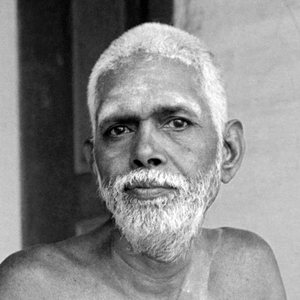
Sri Ramana Maharshi has taught us in Guru Vachaka Kovai verse 98 (Guru Vachaka Kovai is the most authoritative record of Sri Ramana Maharshi’s verbal teachings according to Sri Ramana Ashram):
98. Unless the body is taken to be ‘I’, otherness – the world of moving and unmoving objects – cannot be seen. Hence, because otherness – the creatures and their Creator – does not exist, it is wrong to call Self the Witness.
Sri Sadhu Om, a direct devotee of Sri Ramana Maharshi, writes in his commentary on this verse:
Descriptions of self as the ‘witness of the individual soul’ (jiva sakshi) or the ‘witness of everything’ (sarva sakshi), which can be found in some sacred texts, are not true but are only figurative (upacara), because only when other things are known would the one who knows them be a ‘witness’ of them. Since self does not know anything in the state of absolute oneness, which is devoid of any other thing, to what can it be a witness? Therefore describing self as a ‘witness’ is incorrect.
What both Sri Ramana Maharshi and Sri Sadhu Om are saying is that objects only appear when the ego/ignorance is present. In Self-realisation, there are no objects, only the Self, so in truth the Self cannot be said to be a witness.
In verse 869 of Guru Vachaka Kovai Sri Ramana teaches us:
869. ’Tis a foolish fancy to ascribe the role of ‘witness’ to the Self, the luminous Sun, the mighty sky of Pure Awareness. In the Self Immutable there is no room for maya’s darkness void. The Self is one sole whole without a second.
Here is an alternative translation of the same verse, with Sri Sadhu Om’s commentary, which essentially states in truth, ie. in realisation, there is no Maya in the Self. It is only for ajnani’s, ie. the ignorant, that consider the Self to be a witness of phenomena/maya:
869. The role [dharma] of seeing is ascribed to Self – the space of consciousness, the sun – only in the imagination of ajnanis, [because] maya, the empty ignorance [of seeing otherness], never exists in Self, the support [sthanu], [and also because] Self is without a second.
Sri Sadhu Om’s comments: Since Self is in truth that which transcends all roles and all qualities, and since It exists as one without a second, to glorify It as the ‘witness of all’ [sarva-sakshi] or as the ‘knower of all’ [sarvajna] is merely the folly of ignorant people.
 Tom Das