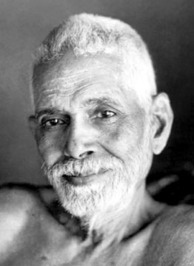
Here are some quotes of Sri Ramana Maharshi that contain perhaps the essence of his spoken teachings:
The state we call realisation is simply being oneself, not knowing anything or becoming anything.
Be still. Apart from this the mind has no task to do or thought to think.
If one has realised, he is That which alone is, and which alone has always been. He cannot describe that state. He can only be That. Of course we loosely talk of Self-realisation for want of a better term.
That which is, is peace. All that we need do is to keep quiet.
All the texts say that in order to gain release one should render the mind quiescent; therefore their conclusive teaching is that the mind should be rendered quiescent; once this has been understood there is no need for endless reading.
Peace is our real nature. We spoil it. What is required is that we cease to spoil it.
For instance, there is space in a hall (room). We are not going to create space anew. We fill up the place with various articles. If we want space, all that we need do is to remove all those articles and we get space. Similarly, if we remove all the rubbish from the mind the peace will become manifest. That which is obstructing the peace must be removed.
Questioner: What is wisdom-insight (jnana-drsti)?
Ramana Maharshi: Remaining quiet is what is called wisdom-insight.
The thought ‘I am the body’ is ignorance.
Gifts, penance (tapas), sacrifice, upright conduct (dharma), self-control (yoga), devotion (bhakti), heaven (the expanse of consciousness), substance (existence), peace, truth, grace, silence, the Supreme State, deathless death, knowledge, renunciation, Liberation, bliss—know that all these are only severance of the I-am-the-body consciousness.
Peace is the only Reality. Mukti or Liberation is our Nature. It is another name for us.
Our wanting mukti is a very funny thing. It is like a man who is in the shade voluntarily leaving the shade, going into the sun, feeling the severity of the heat, making great efforts to get back into the shade, and then rejoicing ‘At last I have reached the shade, how sweet is the shade!’ We are doing exactly the same. We are not different from the Reality. We imagine we are different, i.e., we create the bheda bhava (the feeling of difference) and then undergo great sadhanas to get rid of the bheda bhava and realize the oneness. Why imagine or create the bheda bhava and then destroy it?
Happiness is the very nature of the Self; happiness and the Self are not different. There is no happiness in any object of the world. We imagine through our ignorance that we derive happiness from objects. When the mind goes out, it experiences misery. In truth, when its desires are fulfilled, it returns to its own place and enjoys the happiness that is the Self. Similarly, in the states of sleep, samadhi and fainting, and when the object desired is obtained or the object disliked is removed, the mind becomes inward-turned, and enjoys pure Self-Happiness.
Thus the mind moves without rest alternately going out of the Self and returning to it. Under the tree the shade is pleasant; out in the open the heat is scorching. A person who has been going about in the sun feels cool when he reaches the shade. Someone who keeps on going from the shade into the sun and then back into the shade is a fool. A wise man stays permanently in the shade. Similarly, the mind of the one who knows the truth does not leave Brahman. The mind of the ignorant, on the contrary, revolves in the world, feeling miserable, and for a little time returns to Brahman to experience happiness. In fact, what is called the world is only thought. When the world disappears, i.e. when there is no thought, the mind experiences happiness; and when the world appears, it goes through misery.
It is false to speak of realisation. What is there to realise? The real is as it is, ever. How to realise it? All that is required is this: We have realise the unreal, i.e., regarded as Real what is unreal. We have to give up this attitude. That is all that is required for us to attain Jnana. We are not creating anything new or achieving something which we did not have before. The illustration given in the books is this: We dig a well and create a huge pit. The akasa (space) in the pit or well has not been created by us. We have just removed the earth which was filling the akasa there. The akasa was there, then, and is also there now. Similarly we have simply to throw out all the age-long samskaras (innate tendencies) which are inside us. When all of them have been given up, the Self will shine alone.
Effortless and choiceless awareness is our Real State. If we can attain It or be in It, it is all right. But one cannot reach It without effort, the effort of deliberate meditation. All the agelong vasanas (latent tendencies) carry the mind outwards and turn it to external objects. All such thoughts have to be given up and the mind turned inward. For most people effort is necessary.
Of course, everybody, every book says summa iru (be quiet or still). But it is not easy. That is why all this effort is necessary. Even if you find one who has effortlessly achieved the mouna (silence) or Supreme State indicated by summa iru, you may take it that the effort necessary has already been completed in a previous life. Such effortless and choiceless awareness is reached only after deliberate meditation.
People are afraid that when the ego or the mind is killed, the result may be a mere blank and not happiness. What really happens is that the thinker, the object of thought and thinking all merge into the one Source, which is Consciousness and Bliss itself, and thus that state is neither inert nor blank. I do not understand why people should be afraid of that state in which all thoughts cease to exist and the mind is killed. Every day they experience that state in sleep. There is no mind or thought in sleep. Yet when one rises from sleep one says, ‘I slept happily.’ Sleep is so dear to everyone that no one, prince or beggar, can do without it.
Dhyana [meditation], jnana [knowledge], bhakti [devotional love] and samadhi [meditative absorption] are all names for ourselves, for our Real State. Knowing one’s Self is only being one’s Self, as there is no second existence. This is Self-realisation.
Our Real Nature is Mukti. But we imagine that we are bound and are making strenuous attempts to become free, while we are all the time free. This will be understood only when we reach that stage. We will be surprised that we were frantically trying to attain something which we have always been and are.
An illustration will make this clear: A man goes to sleep in this hall. He dreams he has gone on a world tour, is roaming over hill and dale, forest and country, desert and sea, across various continents and, after many years of weary and strenuous travel, returns to this country, reaches Tiruvannamalai, enters the ashram and walks into the hall. Just at that moment he wakes up and finds he has not moved an inch, but was sleeping where he lay down. He has not returned to the hall after great efforts, but is and always has been in the hall. It is exactly like that. If it is asked, why being free we imagine we are bound, I answer, ‘Why being in the hall did you imagine you were on a world adventure, crossing hill and dale, desert and sea?’ It is all mind or maya.
Those alone who have found out the Real Nature of the ego have seen the Reality. They will have no more doubts or anxieties.
The body is a mental projection. The mind is the ego, and the ego rises from the Self.
The ego can have peace only when it merges back into its Source, the Self
The moral behind the story of Ashtavakra and Janaka is simply this: The disciple surrenders himself to the Master. That means there is no vestige of individuality retained by the disciple. If the surrender is complete, all sense of individuality is lost and there is no cause for misery. The Eternal Self is only happiness and that is revealed.
The whole of Vedanta is contained in the two Biblical statements ‘I am that I am’ and ‘Be still and know that I am God’.
There is a state beyond our efforts or effortlessness. Until that is realised, effort is necessary. After tasting such bliss even once, one will repeatedly try to regain it. Having once experienced the bliss of peace, no one would like to be out of it or engage himself otherwise. It is as difficult for a Jnani to engage in thoughts, as it is for an ajnani to be free from thought.
Any kind of activity does not affect a Jnani. He remains ever in eternal peace.
Ishta Devata (deity of one’s choice) and Guru are aids, very powerful aids on this path. But for an aid to be effective requires your effort also. Your effort is a sine qua non.
As explained in the Gita, sleep is the first obstacle for all sadhakas. The second obstacle is said to be vikshepa, or the sense objects of the world which divert one’s attention. The third is said to be kashaya or thoughts about previous experiences with sense objects. The fourth, ananda (bliss), is also called an obstacle, because in that state a feeling of separation from the source of ananda, making the enjoyer say, ‘I am enjoying ananda,’ is present. Even this has to be surmounted, and the final stage of samadhana or samadhi has to be reached, where one becomes ananda, or One with the Reality, and the duality of enjoyer and enjoyment ceases in the ocean of Satchidananda [Existence-Consciousness-Bliss] or the Self.
The power of a Jnani’s Self-Realisation is more powerful than all occult powers. To the Jnani there are no others. But what is the highest benefit that can be conferred on ‘others’ as we call them? It is happiness. Happiness is born of peace. Peace can reign only when there is no disturbance by thought. When the mind has been annihilated, there will be perfect peace. As there is no mind, the Jnani cannot be aware of others. But the mere fact of His Self-Realisation is itself enough to make all others peaceful and happy.

 Tom Das