ramana maharshi
Why do we find so many troubles in the world? The five types of Maya and how to remove them| Ramana Maharshi
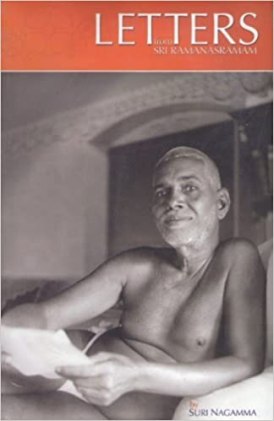
Tom: the following text is from Letters from Sri Ramanasramam, 21st May 1947. In the first part Ramana will tell us the basic theory. In the second part he will tell us how to realise this truth for ourselves:
Yesterday morning at 8 o’clock, Dr. Syed who is a worker for Arya Vignana Sangha and one of the disciples of Bhagavan, came here for Bhagavan’s darshan and asked “Bhagavan says the whole world is the swarupa of Atma. If so, why do we find so many troubles in this world?”
Tom: Swarupa, literally meaning form of the self (Swa = self; rupa = form), usually is translated as ‘essential nature’ or ‘true nature’. Atma or Atman means Self. The questioner above is therefore asking about the true nature of the Self – “if all is Atma Swarupa, then why all this trouble in the world?”
With a face indicating pleasure, Bhagavan replied “That is called Maya. In Vedanta Chintamani, that Maya has been described in five ways. One by name Nijaguna Yogi wrote that book in Canarese. Vedanta has been so well dealt with in it, it can be said to be an authority on the Vedanta language.
There is a Tamil translation. The five names of Maya are, Tamas, Maya, Moham, Avidya and Anitya.
Tamas is that which hides the knowledge of life.
Maya is that which is responsible for making one who is the form of the world appear different from it.
Moha is that which makes a different one look real: sukti rajata bhranthi — creating an illusion that mother-of-pearl is made of silver.
Avidya is that which spoils Vidya (learning).
Anitya is transient, that which is different from what is permanent and real.
On account of these five Mayas troubles appear in the Atma like the cinema pictures on the screen. Only to remove this Maya it is said that the whole world is mithya (unreal).
Atman is like the screen. Just as you come to know that the pictures that are shown are dependent on the screen and do not exist otherwise, so also, until one is able to know by Self-enquiry that the world that is visible is not different from Atma, it has to be said that this is all mithya.
But once the reality is known, the whole universe will appear as Atma only. Hence the very people who said the world is unreal, have subsequently said that it is only Atma swarupa. After all, it is the outlook that is important. If the outlook changes, the troubles of the world will not worry us. Are the waves different from the ocean?
Why do the waves occur at all? If asked, what reply can we give? The troubles in the world also are like that. Waves come and go. If it is found out that they are not different from Atma this worry will not exist.”
Tom: How many times have we heard the above metaphor about the movie and the screen? But do we truly understand? Are we truly free? The questioner therefore asks the following:
That devotee said in a plaintive tone, “However often Bhagavan teaches us, we are not able to understand.”
“People say that they are not able to know the Atma that is all-pervading. What can I do? Even the smallest child says, ‘I exist. I do; and this is mine’. So, everyone understands that the thing ‘I’ is always existent. It is only when that ‘I’ is there, the feeling is there that you are the body, he is Venkanna, this is Ramanna and the like. To know that the one that is always visible is one’s own self, is it necessary to search with a candle? To say that we do not know the Atma swarupa which is not different but which is in one’s own self is like saying ‘I do not know myself ’,” said Bhagavan.
Tom: Ramana above is stating that the Self is always realised – it is the knowledge ‘I am’. Everyone knows they exist! This is self-knowledge or self-realisation! However the problem is when you identify as being the body the trouble starts. Now the questioner has figured out the path laid out before him, and Ramana confirms the way forwards in order to secure removal of this wrong identification with the body. There is no need to gain self-knowledge, just to remove wrong identification (ignorance):
“That means that those who by sravana (hearing) and manana (repeating within oneself) become enlightened and look upon the whole visible world as full of Maya, will ultimately find the real swarupa by nididhyasana [meditation],” said the devotee.
“Yes, that is it. Nidi means swarupa; nididhyasana is the act of intensely concentrating on the swarupa with the help of sravana and manana of the words of the Guru. That means to meditate on that with undeflected zeal. After meditating for a long time, he merges in it. Then it shines as itself. That is always there. There will be no troubles of this sort if one can see the thing as it is. Why so many questions to see one’s own self that is always there?” said Bhagavan.
Ribhu Gita – Chapter 26 (as recommended by Sri Ramana Maharshi)
Also see the wonderful text The Essence of the Ribhu Gita
Sri Ramana Maharshi often mentioned the Ribhu Gita in his teachings. It is reportedly said that he especially recommended the recitation of chapter 26, and that reciting it could lead one directly to the natural state or sahaja samadhi.
I have subdivided the chapter into four sections: the introduction, ‘without a trace of sankalpa’, ‘I am that, that am I’ and the concluding portion of the chapter.
Recite and be free!
You can download the PDF version of Ribhu Gita Chapter 26 here:

!Om Namo Bhagavate Sri Ramayana!
!Om Namo Bhagavate Sri Ramayana!
!Om Namo Bhagavate Sri Ramayana!
RIBHU GITA
Chapter 26
‘Undifferentiated Abidance in the Non-Dual Nature’
Translated from the Tamil version of the Ribhu Gita
Introductory verses
1.
Nidagha! in this explanation,
I shall tell you about being established in the Undivided,
Which has nothing apart from itself, which is full of itself.
May you be in the Bliss of being That itself, as being proclaimed to you.
This teaching is highly secret and rare to come by
In the Vedas and the scriptures.
Moreover, this is rare to come by for even the gods and yogis
And is dear to their hearts.
2.
Son ! it has been said by those who know fully
That being at one with the perfectly full non dual Brahman,
The mass of Existence Consciousness Bliss, the immutable
The Self of all, the serene,
With the vikalpas (imaginations, notions) of the fickle mind ended
And thought dissolved wholly and indistinguishably herein,
Like a solute such as cumin seed dissolved in water,
Is the abidance in That itself.
3.
When inquired into deeply, all the multitude of differences
Will be seen to be never existent.
All is the undivided Supreme Brahman, which is not different from the Self,
And That am I.
Be always correctly practicing
In this exalted certitude
And relinquishing all else,
Be in the Bliss of being ever That itself.
4.
That in which all these apparent differences of duality
Cease to exist when inquired into,
In which all cause and effect –
Even a trace thereof – cease to exist,
And in which not a trace of this fear of duality exists
When the mind is merged therein –
Being that itself,
Ever abide in unwavering Bliss.
5.
That in which there is neither a sankalpa (intention) nor vikalpa (notion)
In which there is neither peace nor perturbance,
In which there is neither mind nor intellect,
In which there is no confusion or conviction,
In which there is no bhava (conviction or feeling) or absence of bhava,
And in which there is no cognition of duality at all –
Being as That itself, without the least fear of duality
Ever abide in unwavering Bliss.
‘Without a Trace of Sankalpa (intention, volition, will)’
6.
That in which there is nothing bad or good,
In which there is neither sorrow nor pleasure,
In which there is neither silence nor speech.
In which there are no pairs of opposites.
In which there is no distinction of ‘I’ or ‘body’ (or I am the body)
And in which there is not the least thing to perceive –
Ever abide in Bliss, without a trace of sankalpa (intention).
In That itself as That itself.
7.
That in which there is no activity of body,
In which there is no activity of speech,
In which there is no activity of any other kind,
In which there is nothing sinful or meritorious,
And in which there is no trace of desire or its consequences –
Ever abide in Bliss, without a trace of sankalpa,
In That itself as That itself.
8.
That in which there is never any imagination,
In which there is no one who imagines,
In which he universe has not arisen,
In which the universe does not exist,
In which the universe does not get dissolved,
And in which nothing exists at any time –
Ever abide in Bliss, without a trace of sankalpa,
In That itself as That itself.
9.
That in which there is no appearance of maya (illusion),
In which there are no effects of maya (delusion),
In which there is neither knowledge nor ignorance,
In which there is neither Lord (Isvara) nor individual (jiva),
In which there is neither reality, nor unreality,
And in which there is not the least appearance of the world –
Ever abide in Bliss, without a trace of sankalpa,
In That itself as That itself.
10.
That in which there are no manifold gods,
In which there is no worship or service to these,
In which there is no differentiation as the triad of forms (Brahma, Vishnu, Siva),
In which there is no meditation on the triad of forms,
In which there is no form of the Supreme Siva,
And in which there is no meditation on the Supreme Siva –
Ever abide in Bliss, without a trace of sankalpa,
In That itself as That itself.
11.
That in which there is no action suggesting differentiation,
In which there is neither devotion nor knowledge,
In which there is no result to be obtained,
Bereft of which there is no supreme abode
In which there is nothing of means for attainment,
In which there is nothing to be attained –
Ever abide in Bliss, without a trace of sankalpa
In That itself as That itself.
12.
That in which there is nothing of the body or senses or life.
In which there is nothing of mind or intellect or thought,
In which there is nothing of ego or ignorance,
In which there is no experiencer of these,
In which there is no macrocosm or microcosm,
And in which there is not a trace of samsara (cycle of birth and death) –
Ever abide in Bliss, without a trace of a sankalpa –
In that itself as That itself.
13.
That in which there is no desire and no anger,
In which there is no covetousness and deluded infatuation,
In which there is no arrogance and envious malice,
In which there are no other impurities of the mind,
And in which there is no delusive notion of bondage,
And in which there is no delusive notion of liberation –
Ever abide in Bliss, without a trace of sankalpa
In That itself as That itself.
14.
That in which there is neither beginning nor end,
In which there is no bottom or middle or top,
In which there is neither shrine nor deity,
In which there is neither charity nor righteous conduct,
In which there is neither time nor space,
And in which there is no object to be perceived –
Ever abide in Bliss, without a trace of sankalpa,
In That itself as That itself.
15.
That in which the fourfold means for realisation of Brahman (sadhana chatushtaya) do not exist,
In which there is no Sadguru (true guru) nor diligent disciple,
In which there is no illustrious jnani (the Knower or sage).
In which there is neither of the two kinds of liberation (jivanmukti and videha mukti)
Ever abide in Bliss, without a trace of a sankalpa.
In That itself, as That itself.
16.
That in which there are no scriptures like Vedas and such,
In which there is no inquiring individual,
In which there is no confusion and clarification,
In which there is no position to be established,
In which there is no position to be rejected,
In which there is nothing at all except oneself –
Ever abide in Bliss, without a trace of sankalpa,
In That itself as That itself.
17.
That in which there is no disputation,
In which here are no victories or defeats,
In which there is no text or its meaning,
In which there are no words with which to give expression,
In which there is no differentiation of individual (jiva) and the Supreme,
and in which there are no conditionings –
Ever abide in Bliss, without a trace of a sankalpa
In That itself, as That itself.
18.
That in which there is no listening (sravana) or connected practices (manana, nididhyasana),
In which here is no exalted samadhi,
In which there is no differentiation between objects of the same particular group,
In which there is no differentiation as affording pleasure or otherwise,
And in which there are no words or their meanings –
Ever abide in Bliss, without a trace of sankalpa
In That itself, as That itself.
19.
That in which there is no trace of the fear of hell,
In which there is no pleasure of heaven, either,
In which there are no worlds of the Creator or others,
In which there are no fruits to be enjoyed there,
In which there are no other worlds,
And in which there exists no universe –
Ever abide in Bliss, without a trace of sankalpa,
In That itself as That itself.
20.
That in which there are no elements,
In which there is not even a trace of any derivatives of the elements,
In which there is no egoism or sense of possession,
In which there is no trace of the kingdom of the mind,
In which there is no defect of attachment,
And in which there is not the slightest trace of vikalpa
Ever abide in Bliss, without a trace of sankalpa
In That itself as That itself.
21.
That in which there is no triad of bodies (gross, subtle, causal),
In which there is no triad of states of existence (waking, dream and deep sleep),
In which there is no triad of souls (ever free, having attained freedom, bound),
In which there is no triad of afflictions, (caused by bodily and mental factors, caused by external factors, caused by supernatural and cosmic factors),
In which there is no pentad of sheaths, (physical, vital energy, mental, intellectual, blissful),
And in which there is no experiencer of any of these –
Ever abide in Bliss, without a trace of sankapa,
In That itself as That itself.
22.
That in which there is no sentient being,
In which there is no power of veiling,
In which there is no array of differences,
In which there is no power of false projection,
In which there is no delusion of a manifest world –
Ever abide in Bliss, without a trace of sankalpa,
In That itself as That itself.
23.
That in which there is nothing of action,
In which there is no performer of action,
In which arises unsurpassed Bliss,
Which is, indeed, the changeless state,
Knowing and realizing which none returns (to mortality or illusion)
And becoming which one is freed from bondage of worldly existence –
Ever abide in Bliss, without a trace of a sankalpa
In That itself as That itself.
24.
That by realizing which and in Bliss of which
All other joys appear to be the joys of That,
That after realizing which with very firm certitude as oneself
Nothing else will be something apart,
That by realizing which with very firm certitude as oneself
All kinds of jivas will attain Liberation –
Ever abide in Bliss, without a trace of a sankalpa
In That itself as That itself.
25.
That which by knowing firmly as oneself
One has no need to know anything else in the least,
By knowing which with full conviction as oneself
All is know for ever,
And by knowing which as oneself in complete certitude
All actions are accomplished in their entirety –
Ever abide in Bliss, without a trace of sankalpa,
In That itself as That itself.
26.
That which can be easily attained in an unimpeded manner
By the certitude that I am Brahman,
In which, by quiescence after such certitude,
One completely full, ineffable Bliss will reveal itself,
And by merger of the mind in which
One will be joined with unsurpassed, incomparable contentment –
Ever abide in Bliss, without a trace of sankalpa,
In That itself as That itself.
27.
That by merger of the mind in which
All sorrows will cease to exist in the least,
By merger of mind in which
Neither you nor I nor anything else will exist,
And by merger of the mind in which
All these differences will disappear –
Ever abide in Bliss, without a trace of sankalpa,
In That itself as That itself.
28.
That by merger of the mind in which
One abides as oneself with no sense of duality,
By merger of the mind in which
Not a trace of anything separate will remain,
and by merger of the mind in which
Incomparable Bliss alone will reveal itself –
Ever abide in Bliss, without a trace of sankalpa,
In That itself as That itself.
‘I Am That, That Am I’
29.
That which is, indeed, of the nature of undifferentiated Existence,
Which is, indeed, of the nature of undifferentiated Consciousness,
Which, is, indeed, of the nature of undifferentiated Bliss,
Which is, indeed, of the nature of non duality,
Which, is indeed, not different from the Self,
And which, indeed, is of the undivided Supreme Brahman –
In the firm certitude that ‘I am That’,
Abide in the Bliss of ever being That itself.
30.
That which, indeed, is ‘I’ and ‘you’,
Which, indeed, is everyone else,
Which, indeed, is the substratum of all,
Which, indeed, is One without a trace of anything else,
Which, indeed, is utmost purity,
And which, indeed, is the undivided, complete, perfect fullness –
By the conviction that ‘I am That’,
Be in the Bliss of ever being That itself.
31.
That in which there are no varying modes,
In which there is not the least thing different,
In which all egoism is extinguished,
In which all desires or imaginings get destroyed,
In which mind and such perish,
And in which all delusion is destroyed –
By the firm conviction that ‘I am That’,
Be in the Bliss of ever being That itself.
32.
That in which the body and others cannot be discerned,
In which there is no perception of manifestation whatsoever,
In which the thought itself is destroyed,
In which merges the jiva,
In which all the imaginings get dissolved,
And in which even certitude disappears –
By the deep conviction that ‘I am That’,
Be in the Bliss of every being That itself.
33.
That in which all meditation is merged,
In which all yoga is obliterated,
In which all ignorance is dead,
In which all knowledge is nullified,
In which there are no interactions involved,
And which is the state of Absolute Truth –
By the very firm conviction that ‘I am That’,
Be in the Bliss of ever being That itself.
34.
Merging in which one attains happiness always,
Merging in which one never experiences sorrow,
Merging in which one perceives nothing,
Merging in which one never takes birth at all,
Merging in which one never experiences a sense of being separate,
Merging in which one abides as the Supreme (Para) itself –
By this deep conviction of ‘I am That’
Be in the Bliss of ever being That itself.
35.
That which is verily the nature of the Supreme Brahman,
Which is verily is of the nature of Supreme Siva,
What verily is of the nature of the Supreme State,
Which is verily of the nature of the Knowledge of Reality,
And which verily is of the nature of the Supreme Truth –
That, indeed, am I.
By such conviction, be in the Bliss of ever being That itself.
36.
That which is verily of the nature of the Pure Absolute,
Which verily is of the nature of a mass of Bliss,
Which verily is of the nature of the subtle Supreme,
Which verily is of the nature of the non dual,
Which verily is of the nature of self luminous,
And which verily is of the nature of the meaning of the undifferentiated –
That, indeed, am I.
By such conviction, be in the Bliss of ever being That itself.
37.
That which is verily of the nature of Truth,
Which is verily of the nature of the peaceful Absolute,
Which verily is of the nature of the eternal,
Which verily is of the nature of the attribute-less,
Which verily is of the nature of the Self,
Which verily is of the nature of the undivided Absolute –
That, indeed, am I.
By such conviction, be in the Bliss of ever being That itself.
38.
That, indeed, which constitute the entirety of interactions,
That even the least of which, cannot indeed, be conveyed by the ‘highest truth’,
Which, indeed, is the Existence Consciousness Bliss,
Which, indeed, is ever peaceful,
From which, indeed, there is nothing apart,
And which, indeed, abides self existent, all by itself,
That, indeed, am I.
By such conviction, be in the Bliss of ever being That itself.
Concluding Verses
39.
Thus, have I explained to you, Nidagha!
The state of being established as That itself, without any duality.
You shall enjoy perpetual Bliss
By attaining this state by constant
Continuous, changeless certitude
Of the undifferentiated Absolute
There are no more miseries of mundane existence at all at any time in the future
For you are Brahman alone.
40.
Casting aside all impure Vasanas
By the pristine tendency left by the practice of
‘The Absolute Existence Consciousness Bliss, is all,
And That I ever am’,
And subsequently effacing even that tendency,
Son! You will be established in the perfect, full absorption
In and as the non dual Supreme Brahman itself
And attain the Liberation of being the undifferentiated, undivided One.
41.
All impure vasanas are of a state of the mind.
The tendencies (vasanas) about the Pure Absolute are also of a state of the mind.
The Supreme has no such tendencies (vasanas).
Hence, be established in this state,
Without any tendencies (vasanas) of the mind,
Whether considered pure or considered impure,
Like a motionless piece of stone or wood
And without any strain, be in Bliss.
42.
Having disassociated from the imaginings of all other thoughts,
By the conviction (bhava) of being the undivided Absolute,
And forgetting even the said conviction (bhava) of being the Absolute,
You yourself abide as the perfectly full Supreme Brahman.
Even if a great sinner in this world
Hears this explanation now proclaimed
And understands it, he shall, rid of all the great sins of his ego,
Abide as the nature of the undivided, undifferentiated Absolute
43.
The endless Vedas
In revealing here and there,
The means of meditation for mental purification,
Have indicated only rock-like, motionless merger with and absorption in
The unafflicted mass of Bliss,
The undivided, completely, perfectly full Siva,
As the means for the happy Liberation
Of those who are mentally purified.
44.
Therefore, one can here attain
The undifferentiated Liberation by abiding as just That itself
And with a purified mind arising out of the practice of the meditation
That whatever is known is Siva
And that Siva am I.
Whatever stated here is the Truth
Thus, the Sage Ribhu explained in full to Nidagha
The abidance in the True State.
45.
It is the undivided form of our Supreme Lord in a state of sublime, joyous dance that says:
By the conviction that I am ever the Reality, which is Existence Consciousness Bliss,
And by the state of abiding at one with That being That itself,
The empty bondage of the world can be cut asunder and pure Liberation attained.
Ramana Maharshi: Peace is your true nature
Yesterday, two pandits came from Kumbakonam. This morning at 9 o’clock, they approached Bhagavan and said, “Swami, we take leave of you. We pray that you may be pleased to bless us that our mind may merge or dissolve itself in shanti [peace]”
Bhagavan nodded his head as usual. After they had left, he said, looking at Ramachandra Iyer,
“Shanti is the original state. If what comes from outside is rejected what remains is peace. What then is there to dissolve or merge? Only that which comes from outside has to be thrown out.
“If people whose minds are mature are simply told that the swarupa itself is shanti, they get jnana. It is only for immature minds that sravana (listening to the teachings) and manana (reflecting upon the teachings) are prescribed, but for mature minds there is no need of them. If people at a distance enquire how to go to Ramana Maharshi, we have to tell them to get into such and such a train or take such and such a path, but if they come to Tiruvannamalai, reach Ramanasramam and step into the hall, it is enough if only they are told, here is that person. There is no need for them to move any farther.”
“Sravana and manana mean only those described in Vedanta, don’t they?” asked some one. “Yes,” Bhagavan replied, “but one thing, not only are there outward sravana and manana but there are also inward sravana [listening] and manana [thinking]. They must occur to a person as a result of the maturity of his mind. Those that are able to do that antara sravana (hearing inwardly) do not have any doubts.”
Whenever any one asked what those antara sravanas are, he used to say, “Antara sravana means the knowledge of that Atma which is in the cave of the heart always illuminated with the feeling ‘aham, aham’ (‘I, I’), and to get that feeling to be in one’s heart is manana, and to remain in one’s self is nididhyasa [meditation].”
In this connection, it is worth while remembering the sloka [verse] written by Bhagavan bearing on this subject. In that sloka mention is made not only to Atma sphurana [the vibration of the Self] but also how to secure it. Securing means only remaining in one’s own self:
Brahman is glowing lustrously in the middle of the cave of the Heart in the shape of the Self, always proclaiming ‘I am, I am’. Become an Atmanishta, a Self-realised person, either by making the mind absorbed in the search of the Self or by making the mind drown itself through control of the breath.
19th July 1947, Letters from Sri Ramanasramam
Ramana Maharshi – Summa Irru (Be Still)

!Om Guru Ramana!
In this video below, the teachings of Sri Ramana Maharshi have been arranged and presented for deep contemplation. Each quote is repeated twice to increase the impact. If you like this type of video and would like me to make some more, or if you have any feedback for future video offerings, please let me know.
To hear the quotes, see the video below, to read the quotes, please see the text beneath the video.
Here are the quotes:
Be still. Apart from this the mind has no task to do or thought to think
Guru Vachaka Kovai, verse 773
If you remain still, without paying attention to this, without paying attention to that, and without paying attention to anything at all, you will, simply through your powerful attention to being, become the reality, the vast eye, the unbounded space of consciousness.
Guru Vachaka Kovai, verse 647
Because that state is taught by silence, and also because it is attained by remaining in silence, it is called silence. The sage is in silence always, even when he speaks.
Sri Ramana Paravidyopanishad, verse 539
Silence is the most potent form of work. However vast and emphatic the scriptures may be, they fail in their effect. The Guru is quiet and peace prevails in all. His silence is more vast and emphatic than all the scriptures put together.
Talks with Sri Ramana Maharshi, Talk 398
There is no reaching the Self. If the Self were to be reached, it would mean that the Self is not now and here, but that it should be got anew. What is got afresh will also be lost. So it will be impermanent. What is not permanent is not worth striving for. So, I say, the Self is not reached. You are the Self; you are already That.
Talks with Sri Ramana Maharshi, Talk 251
When one remains without thinking one understands another by means of the universal language of silence.
Talks with Sri Ramana Maharshi, Talk 243
There is a state when words cease and silence prevails
Maharshi’s Gospel, page 14
O foolish mind who is suffering due to the desire for the petty pleasures of this world and of the next, if you remain quiet [i.e. without desire] you will certainly attain that State of Bliss which surely transcends the pleasures of these two.
Guru Vachaka Kovai, verse 379
None can confront and overcome the mind. Ignore it, then, as something false and unreal. Know the Self-Awareness as the real ground and stand firm rooted in it. Then the mind’s movements will gradually subside. If the noise of thoughts rising incessantly within does not subside, the ineffable state of silence will not be revealed.
Guru Vachaka Kovai, verse 921
When one refrains from looking out and noting outward objects, and instead abides within the Heart in Self-Awareness, the ego disappears. The pure silence that then shines forth is the goal of Knowledge.
Guru Vachaka Kovai, verse 1194
The end of pain, the bliss of peace results from egoless awareness, and not at all from verbal wisdom.
Guru Vachaka Kovai, verse 532
Having become free from concepts, which are afflicting thoughts, and with the ‘I am the body’ idea completely extinguished, one ends up as the mere eye of grace, the non-dual expanse of consciousness. This is the supremely fulfilling vision of God
Guru Vachaka Kovai, verse 348
Having restrained the deceitful senses, and having abandoned mental concepts, you should stand aloof in your real nature. In that state of Self-Abidance in which you remain firmly established in the consciousness of the Heart, Sivam will reveal itself.
Guru Vachaka Kovai, verse 349
The true vision of reality that is free from veiling ignorance is the state in which one shines in the Heart as the ocean of bliss, the inundation of grace. In the mauna experience that surges there as wholly Self, and which is impossible to think about, not a trace of grief or discontent exists for the jiva.
Guru Vachaka Kovai, verse 350
Though that state of being the real Self is called the state of knowledge, it is one in which there is none of the three: the knower, the object known, and the act of knowing. That being the case, what does one know there, by what means, and who is there to know? It must be understood that knowledge is just a name for the state of being the Self.
Sri Ramana Paravidyopanishad, verse 40
Except for the one who has completely cut the tie of desires, the false appearance [that he is a suffering jiva] will not cease. Therefore, without any hesitation, one should cut even the desire for the great Divine Happiness.
Guru Vachaka Kovai, verse 378
There is a two-fold ignorance, named as knowledge and ignorance, which is experienced by those not aware of the real Self. This pair is unreal just like all else.
Sri Ramana Paravidyopanishad, verse 276
“In that state doubts do not arise since the sage is ever firm in his awareness of the true Self. There he remains without affirmations and vacillations, immersed in the depths of peace, the mind having become extinct.”
Sri Ramana Paravidyopanishad, verse 569
!Om Guru Ramana!
Abiding as the Self in Daily Life
Practical Tips on How to Abide as the Self
Ramana Maharshi quoting Shankara on Bhakti (The path of love and devotion)
In talk number 428 from the book Talks with Sri Ramana Maharshi, Ramana Maharshi selects 10 verses from Sivananda Lahari, a devotional work of 100 verses written by Sri Sankara. In it, Bhakti is described, and Ramana has provided his own free translations of the meaning of the verses. So, here in the following text we have in effect a combined statement on Bhakti from both Shakara and Ramana!
!Praise and blessings to Sri Ramana and Sri Shankara!

(1) What is bhakti?
Just as the ankola fruit falling from the tree rejoins it or a piece of iron is drawn to magnet, so also thoughts, after rising up, lose themselves in their original source. This is bhakti. The original source of thoughts is the feet of the Lord, Isvara. Love of His Feet forms bhakti. (Verse 61)
(2) Fruit of bhakti:
The thick cloud of bhakti, formed in the transcendental sky of the Lord’s Feet, pours down a rain of Bliss (ananda) and fills the lake of mind to overflowing. Only then the jiva, always transmigrating to no useful end, has his real purpose fulfilled. (Verse 76)
(3) Where to place bhakti?
Devotion to gods, who have themselves their origin and end, can result in fruits similarly with origin and end. In order to be in Bliss everlasting our devotion must be directed to its source, namely the Feet of the ever blissful Lord. (Verse 83)
(4) Bhakti is a matter only for experience and not for words:
How can Logic or other polemics be of real use? Can the ghatapatas (favourite examples of the logicians, meaning the pot and the cloth) save you in a crisis? Why then waste yourself thinking of them and on discussion? Stop exercising the vocal organs and giving them pain. Think of the Feet of the Lord and drink the nectar! (Verse 6)
(5) Immortality is the fruit of Devotion:
At the sight of him who in his heart has fixed the Lord’s Feet, Death is reminded of his bygone disastrous encounter with Markandeya and flees away. All other gods worship only Siva, placing their crowned heads at His feet. Such involuntary worship is only natural to Siva. Goddess Liberation, His consort, always remains part of Him. (Verse 65)
(6) If only Devotion be there – the conditions of the jiva cannot affect him.
However different the bodies, the mind alone is lost in the Lord’s Feet. Bliss overflows! (Verse 10)
(7) Devotion always unimpaired:
Wherever or however it be, only let the mind lose itself in the Supreme. It is Yoga! It is Bliss! Or the Yogi or the Bliss incarnate! (Verse 12)
(8) Karma Yoga also is Bhakti:
To worship God with flowers and other external objects is troublesome. Only lay the single flower, the heart, at the feet of Siva and remain at Peace. Not to know this simple thing and to wander about! How foolish! What misery! (Verse 9)
(9) This Karma Yoga puts an end to one’s samsara:
Whatever the order of life (asrama) of the devotee, only once thought of, Siva relieves the devotee of his load of samsara and takes it on Himself. (Verse 11)
(10) Devotion is Jnana:
The mind losing itself in Siva’s Feet is Devotion. Ignorance lost! Knowledge! Liberation! (Verse 91)
Ramana Maharshi: The Self is realised when thoughts subside
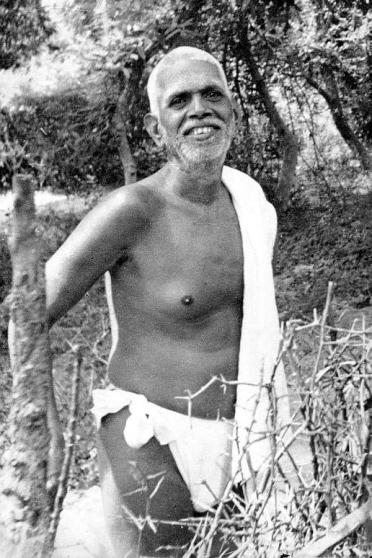
The following excerpt is from Talks with Sri Ramana Maharshi, Talk 376, bold type is added by myself for emphasis:
A learned Telugu visitor, who had composed a song in praise of Sri Bhagavan, read it out, placed it at His feet and saluted. After a time he asked for upadesa.
[Tom: Upadesa means spiritual teaching or instruction. The text Ramana refers to below, Upadesa Saram, means ‘The Essential Teaching’, and was written by Sri Ramana Maharshi himself. You can find the full text on the link below, together with a PDF version for download.]
Sri Ramama Maharshi: The upadesa is contained in Upadesa Saram.
Questioner: But oral and personal instruction is valuable.
Sri Ramama Maharshi: If there be anything new and hitherto unknown upadesa will be appropriate. Here it happens to be stilling the mind and remaining free from thoughts.
Questioner: It looks impossible.
Sri Ramama Maharshi: But it is precisely the pristine and eternal state of all.
Questioner: It is not perceived in our everyday active life.
Sri Ramama Maharshi: Everyday life is not divorced from the Eternal State. So long as the daily life is imagined to be different from the spiritual life these difficulties arise. If the spiritual life is rightly understood, the active life will be found to be not different from it.
Can the mind be got at by the mind on looking for it as an object? The source of the mental functions must be sought and gained. That is the Reality.
One does not know the Self owing to the interference of thoughts. The Self is realised when thoughts subside.
Questioner: “Only one in a million pursues sadhanas to completion.” (Bhagavad Gita, VII, 3).
Sri Ramama Maharshi: “Whenever the turbulent mind wavers, then and there pull it and bring it under control.” (Bhagavad Gita, VI, 26.) “Seeing the mind with the mind” (manasa mana alokya), so proclaim the Upanishads.
Questioner: Is the mind an upadhi (limiting adjunct)?
Sri Ramama Maharshi: Yes.
Questioner: Is the seen (drisya) world real (satya)?
Sri Ramama Maharshi: It is true in the same degree as the seer (drashta), subject, object and perception form the triad (triputi). There is a reality beyond these three. These appear and disappear, whereas the truth is eternal.
[Tom: Triputi here refers to the triad of subject/ object/ verb, or perceiver/ perceived/ perceiving or knower/ known/ knowing]
Questioner: These triputi sambhava are only temporal.
Sri Ramama Maharshi: Yes, if one recognises the Self even in temporal matters these will be found to be non-existent, rather inseparate from the Self; and they will be going on at the same time.
The Truth of Vedanta (Ramana Maharshi, Guru Vachaka Kovai) | ‘Dry Vedanta’
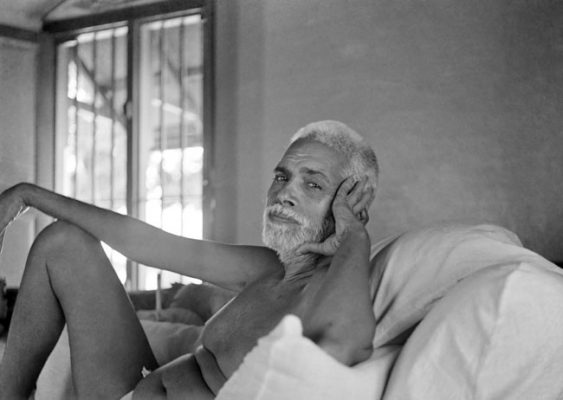
In the text Guru Vachaka Kovai are recorded some of the most important teachings of Sri Ramana Maharshi. Here are verses 148 and 149 which come under the heading ‘The Truth of Vedanta’ in the text. I have also included commentary from Sri Sadhu Om, a direct disciple of Sri Ramana Maharshi’s:
THE TRUTH OF VEDANTA
148. Those who know nothing but sense-pleasure,
To ruin and destruction doomed,
Resent transcendence of the senses
And call this fresh and fruitful wisdom
Dry Vedanta!
Tom’s comments: many seekers often resent the idea of turning away from sense pleasures, saying this is a dry or repressive path that is ‘anti-life’. Here Ramana calls this path ‘fresh and fruitful’ instead!
149. The experience of Vedanta comes
Only to those who are utterly
Without desire. Far, far it is
From those who still retain desires.
For such the penance is prescribed
Of longing for the Lord who knows
No desire, so as to end
Forever all desire.
Commentary from Sri Sadhu Om:
The term Vedanta is commonly understood to mean a particular system of philosophy, but its true meaning is the experience of Jnana which is gained as the conclusion [anta] of the Vedas.
The desire for sense objects, which are all 2nd or 3rd persons, is directly opposed to the desire for God, and so it is quite clear that God is not merely one among the many 2nd and 3rd personal objects, but that He must be the Reality of the 1st person. Therefore, we should understand that discarding all desires for 2nd and 3rd personal objects and having love for Self alone is the true devotion towards God.
Verse B 13 [which comes after verse 731] also asserts this same point.
731. The way of knowledge and the way of love
Are interwoven close. Don’t tear
Asunder these inseparables.
But practise both together holding
In the heart the two as one.
SRI BHAGAVAN 13: Meditation on the Self
Is devotion to the Lord
Supreme, since He abides as this,
Our very Self.
Tom: we see a similar teaching to verse 149 above from Sri Shankara, when he emphasises that the sage/jnani truly has no desires; this is from his commentary on the Brihadaranyaka Upanishad 2.4 (I have written a post on this here which explains the method of self-realisation outlined by both Shankara and the Brihadaranyaka Upanishad):
But there are some who hold that even a knower of Brahman has desires. They have certainly never heard the Brihadaranyaka Upanishad, nor of the distinction made by the Shruti that the desire for a son and so forth belongs to an ignorant man, and that with regard to the domain of knowledge, the statement, ‘What shall we achieve through children, we who have attained this Self, this world?’ and so on, is applicable. They do not also know the contradiction, based on incongruity, between the attainment of knowledge, which obliterates all action with its factors and results, and ignorance together with its effects [Tom: ie. all objects, duality, actions and suffering are removed with liberation, so there is no possibility of either desire or an object to desire in liberation].
 Tom Das