ramana maharshi
Sense-Pleasures are Worthless | Sri Sadhu Om | Sadhanai Saram | Sri Ramana Maharshi
The following is taken from the wonderful text Sadhanai Saram (The Essence of Spiritual Practice) written by Sri Sadhu Om, a direct devotee of Sri Ramana’s. This text not only gives us the essence of Sri Ramana Maharshi’s teaching, but also directs us to the true Vedanta teachings. The notes are written by Sri Sadhu Om himself. You can download the full text as a PDF using the above link.
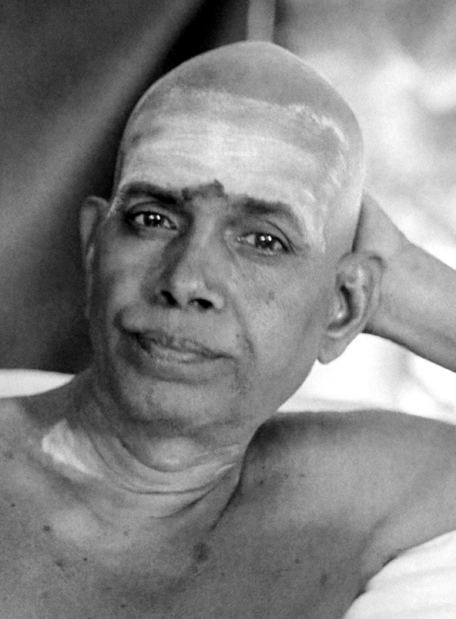
What is Worthy to be Desired?
- The great wealth that exists in enlightened sages (Jnanis) is only the subtle secret of how to be still, abiding in perfect peace as the mere thoughtfree existence-consciousness “I am.” Therefore, how wretched it will be if one greedily desires to attain from them mere worldly pleasures, such as gold, wealth or fame, which will only make one suffer in delusion.
Sense-Pleasures are Worthless
- Instead of eating the fruit that is in your hand, why do you desire to eat the unreal fruit which is seen in a mirror and which is merely a reflection of the fruit in your hand? Is the reflected fruit an object which can be eaten and give real enjoyment? Similarly, instead of drowning deep within the heart by keenly attending to Self and thereby enjoying the bliss of Self which is ever shining there, why do you desire to enjoy the pleasures experienced through the five senses of this perishable body, which are merely an unreal reflection of the true happiness within you?
Endeavor and Result
- For those who seek (and make effort to attain) Self, not only Self but also all other benefits will automatically be attained in full. But if one desires and makes effort to attain worldly objects (either through worldly endeavors or through spiritual practices), know that they will be attained only partially and to the extent of one’s endeavor, and that Self will not be attained at all.
The Goal
- If we deeply ponder over the natural yearning of all living beings to remove their miseries (through some means or other), it will be decidedly known that the sole aim for which the whole world is striving is only to remain always in perfectly imperishable bliss.
- If the people of the world still do not cease making efforts, the conclusion we must come to is, that they have not yet attained perfect happiness, is it not? Whoever among the people has obtained complete contentment and has therefore ceased making any kind of effort is truly one who has attained all that is to be attained.
The point of Self-Enquiry is to go into Sleep Consciously | Jagrat Sushupti | Sri Ramana Maharshi
Grace Alone is of Prime Importance | Sadhanai Saram | Sri Sadhu Om | Sri Ramana Maharshi
The following text is taken from the wonderful text Sadhanai Saram (The Essence of Spiritual Practice) written by Sri Sadhu Om. This text not only gives us the essence of Sri Ramana Maharshi’s teaching, but also directs us to the true Vedanta teachings. The notes are written by Sri Sadhu Om himself.
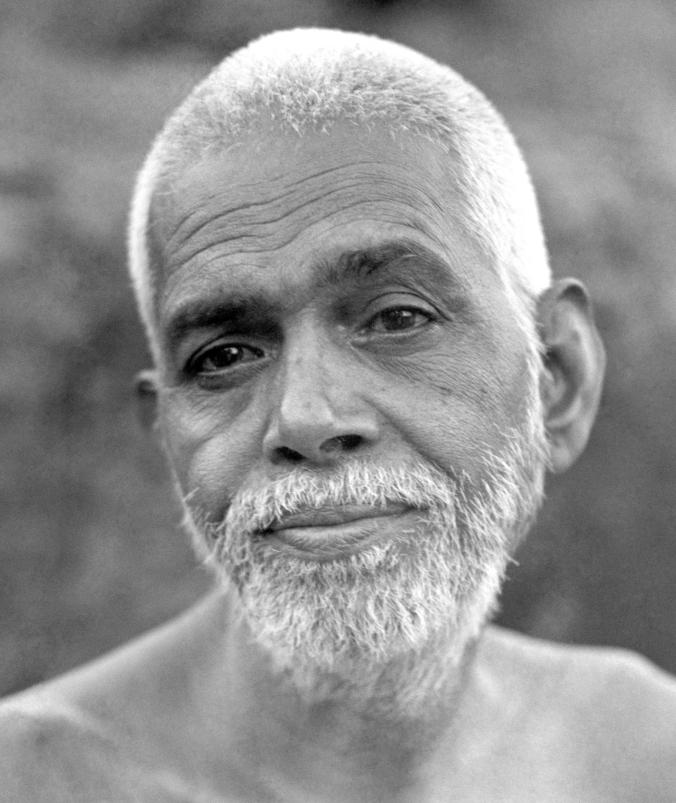
- The ego is only a trivial entity; besides, it is unreal (asat) and powerless (asakta). It is a mere adjunct which rises and subsides. Therefore, what foolishness it is to think, “The spiritual practice (sadhana) done by the strength of this ego will by itself bestow the goal of life; the supreme power of divine Grace is not of any consequence (and is not necessary in order for one to attain the goal)”!
Note: Not believing Grace, but thinking one’s own individual effort alone to be of very great consequence, is mere foolishness.
- Is not the unreal help which one unreal man renders to another unreal man, experienced by everyone in this world as real? Therefore, O Sadguru, the embodiment of Grace, the sole reality, is it impossible for You to save me by dispelling the unreal ego? What doubt or wonder is there in Your being able to help me thus
Note: A man or jiva is merely an unreal appearance, and hence whatever help he may seem to render to another man is also unreal. But when such unreal help rendered by an unreal man is experienced by everyone as real, why should we doubt the ability of the Sadguru, who alone is truly real, to render us the real help of destroying the unreal ego? Such help from the Sadguru will certainly be experienced by us as more real than the help that we feel is rendered to us by others.
- Unless our Lord, Sri Ramana, who is the form of God, Himself bestows His divine Grace, who can by his own effort attain that heroic state of firmly abiding as Self, having clearly known one consciousness other than the body to be the real “I”?
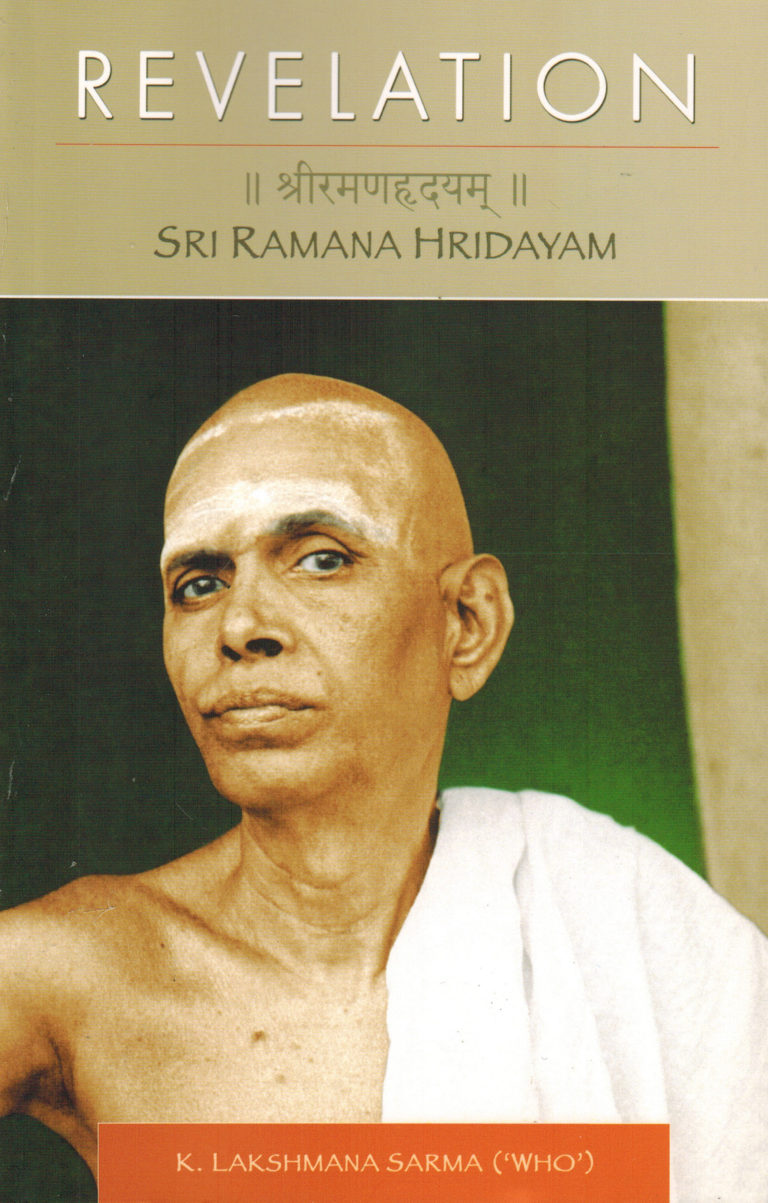
Ulladu Narpadu (40 verses on Reality) with commentary by K. Lakshmana Sarma ‘Who’| Revelation | Sri Ramana Hridayam | PDF download eBook
‘Sri Bhagavan [Sri Ramana Maharshi] once remarked that of all the commentaries on Ulladu Narpadu which then existed, Lakshmana Sarma’s Tamil commentary was the best.’
T. N. Venkataraman
(former president of Sri Ramana Ashram)
Also see: Recommended Reading: Books for Enlightenment, Liberation and Self-Realisation
Many have said that Ulladu Narpadu (The Forty Verses on Reality) is the most important of Bhagavan Sri Ramana’s own written works.
Many have said, including Bhagavan Sri Ramana himself, that K. Lakshmana Sarma’s commentary on Ulladu Narpadu is the best available commentary. It was published under the title ‘Sri Ramana Hridayam’ and later translated into English by K Lakshnama Sarma himself under the title ‘Revelation’.
However many have informed me that they have not been able to locate a copy of this text and so not been able to benefit from it. This here is an attempt to make this text more widely available – I hope it is of benefit to you.
You can download as a PDF it here:
Ulladu Narpadu with commentary by K. Lakshmana Sarma (PDF)
In the version of this text published by Sri Ramana Ashram, the entire commentary was included in a separate section after the verses. I have instead chosen to intersperse the commentary among the verses which I hope aids readability by preventing the reader having to flick back and forth through the text.
Words underlined in the commentary are words that Lakshmana Sarma (LS) himself chose to emphasise and not my own additions.
Throughout I have added a few comments in italiscised blue, but the aim has been to keep my comments to a minimum so the text speaks for itself.
I encourage you to read the text slowly in order to take in the depth of meaning. For most repeated readings will be necessary. And do not forget to put the teachings into practice.
I have seperately written a post in which LS himself explains the meaning of verse 18 of Ulladu Narpadu in greater detail, which may be of interest to you as this verse explains the nature of how the sage sees the world.
The accuracy, veracity and value of this work
Here are some reasons we should take this work to be an accurate and clear reflection of Sri Ramana’s teachings:
1) LS was a devotee of Bhagavan Sri Ramana for more than twenty years.
2) He was one of two people, the other being Sri Muruganar, who had the opportunity to study one-on-one with Bhagavan about the meaning of Bhagavan’s own written works.
3) Moreso, he was the only devotee who received extended and comprehensive instruction from the Master on the subject of Bhagavan’s master-work, Ulladu Narpadu.
4) Bhagavan repeatedly checked LS’s translation of Ulladu Narpadu from the original Tamil into Sanskrit verse by verse, and usually made him change the translation several times until he was satisfied that the meaning had been accurately conveyed. This process went on for 2-3 years.
5) Around 1931 a book purporting to be a commentary on Bhagavan Sri Ramana’s teachings was published. LS was unhappy to see that it had misrepresented Bhagavan Sri Ramana’s teachings. LS sought Bhagavan’s advice and thereafter proceeded to write a commentary on Ulladu Narpadu in Tamil in order that Sri Ramana’s teaching would be correctly understood.
6) This commentary was written and published during Bhagavan’s lifetime and Bhagavan often directed devotees to this particular commentary if they had questions regarding the meaning of the verses.
7) Bhagavan himself said that LS’s commentary was the best one available at the time.
8) Bhagavan personally requested that Ramana Ashram publish this work.
9) LS was a fluent in English, both speaking and writing, and the English translation of this work was done by himself.
The structure of the text
Ulladu Narpadu (40 verses on reality) was written in Tamil by Bhagavan Sri Ramana. K Lakshmana Sarma translated this text into Sanskrit and then wrote a Tamil commentary upon the text under Sri Bhagavan’s guidance which was published in 1936. How this was done has been described both above and below. K Lakshmana Sarma then translated these, namely the Sanskrit verses and his Tamil commentary, into English himself, and this is what is presented here in this text.
!Om Namo Bhagavate Sri Ramanaya!
For the Sri Ramana Ashram translation of Ulladu Narpadu found in the Collected Works of Sri Ramana Maharshi, see here.
Online Satsang with Tom Das | Advaita with loving devotion to Sri Ramana Maharshi | Online Non-duality meetings | Advaita Vedanta

See here for more details
Please join us – all are welcome and no prior knowledge is required.
We meet ONLINE twice every week (every Thursday 8pm and Sunday 3pm UK time).
We meet IN-PERSON on the first Sunday of every month at 2pm UK time and this meeting is also livestreamed on Zoom.
Meetings often start with some Silence followed by some readings, a talk and some questions. The initial silence is a wonderful opportunity for stillness and to put the teachings into practice.
After the meeting there is an opportunity to stay and connect with other people attending the meeting.
To join or find out more please see this link.
Exposing a false belief & the importance of Self-Enquiry | Sri Ramana Maharshi | Ending the ego

Some say that everything the ‘ego-me’ does simply perpetuates the ego-me, and thus the sense of separation and suffering that comes with the ego-me continues. If this is true, then there is nothing you can do to for ‘liberation to occur’ and for suffering to end. Note that this is a belief. Note that this is a conceptual view. Ask yourself: how do you even know this is true?
In order to know this is true, one would have to try every single practice in the world. It is a bit like saying no action can ever take you to the moon, as no action I’ve done so far has ever taken me to the moon. But it is possible to go to the moon!
Saying everything the ego does simply perpetuates the ego, is a bit like saying everything the body does simply perpetuates the body.
Just as there is a certain action the body can do that ends the body (ie. suicide), there is a certain effort of the ego-me that ends the ego-me (ie. self-enquiry).
Self-enquiry is ego suicide!
This is why Bhagavan Sri Ramana emphasised the need for practice and self-enquiry; see these teachings from Sri Ramana taken from Guru Vachaka Kovai (the second verse quoted summarises my points above, namely that there is a practise the ego can undertake that ends the ego):
385 When with the keen, unceasing quest
Of “Who am I?” one penetrates
The centre of oneself, the body-bound
Ego fades away, true Being
Rises clear as I, as I,
And puts an end to all diversity,
Illusive as the blueness of the sky.
388 The jiva searching “Who in truth am I?”
Subsides as the true Self without an ‘I’.
[Tom: jiva means the (conceiving of oneself as a) separate body-mind entity. Jiva essentially refers to the ego ie. the false sense of being a body-mind entity]
391 Those who do not dive into the Heart
And there confront the Self in the five sheaths hid
Are only students answering out of books
Clever questions raised by books,
And not true seekers of the Self.
402 Delusive thought now like a cloud
Conceals the boundless bright awareness
Of the Self. Enquiring “Who am I?”
Dispels the darkness and the splendour
Of the sky of Self shines clear.
403 As a ball of iron heated in the fire
Glows like a ball of fire, the jiva
Once impure is now ennobled
By self-enquiry and acquires
The very nature of the Self.
404 When the suffering fool turns inward,
Enquiring “Who am I?” the radiant
Truth is seen, confusion cleared,
And silence wells up as the bliss of peace.
405 The jiva’s terrible suffering is
The turbid folly of the mind
Unschooled and ignorant of the Self.
Practise unceasingly within the wise
Enquiry, “Whose is this dire suffering?
Who am I?”
406 By the transmuting touch of daily,
Methodical, untiring self-enquiry,
The base metal jiva shines forth clear
As Siva, freed from the mental rust,
The demon ego.
407 The jiva, son of God, forgetting
His real Being, cries “Alas” in anguish.
Then when he searches yearning inwards
He by experience knows the glory
Of oneness with the Self, his Father.
Please read the above verses carefully and slowly in order to fully gain their benefit.
Let us therefore first understand the proper technique of self-enquiry, and then let us be inspired and devoted to its practice.
Om Namo Bhagavate Sri Ramanaya Om
🙏🙏🙏
Ending Suffering & What should be emphasised in the teaching
If place A is ego, duality and suffering, and place B is liberation and the end of suffering, then Self-enquiry is the vehicle that takes you from A to B.
While many teachers and teachings spend much time describing Place A and Place B, ie. Discussing the body, the mind, and the world, the nature of ego, ignorance, and the various mechanisms that create duality and suffering, and also discussing the nature of liberation or self-realization and what happens in liberation, etc, etc…
…we see that Bhagavan Sri Ramana emphasises actually getting onto the vehicle that takes us from one (apparent) shore to the other, namely self-enquiry:
393 One who has wisely chosen the straight path
Of self-enquiry can never go astray;
For like the bright, clear Sun, the Self
Reveals itself direct to whoso
Turns towards it
~ Sri Ramana Maharshi, Guru Vachaka Kovai
Let us therefore understand the practise of self-enquiry and let us be blessed with the motivation to undertake it! Know that there is a ‘discipline that leads to permanent freedom’!:
71 How piteous is the spectacle
Of people wandering in the world’s ways
Aimless, frisky like a goat’s beard
And chafing at the discipline
That leads to permanent freedom.
~ Sri Ramana Maharshi, Guru Vachaka Kovai
Om Namo Bhagavate Sri Ramanaya Om
🙏🙏🙏
The real meaning of Omniscience | Advaita Vedanta
See here for a PDF download of Upadesa Saram (The Essence of the Teachings written by Sri Ramana Maharshi) with brief explanatory notes:
https://tomdas.com/2019/03/25/ramana-maharshi-upadesa-saram-the-essence-of-the-teachings/
This video was recorded live during a Satsang meeting with Tom Das and put together by volunteers.
To attend satsang, see here:
https://tomdas.com/events
For guided meditations see the ‘guided meditation’ playlist here: https://www.youtube.com/c/TomDasNonduality/playlists
For recommended reading for liberation see here: https://tomdas.com/2020/10/19/recommended-reading-books-for-enlightenment-liberation-and-self-realisation/
To book a 1 to 1 session with Tom see here: https://tomdas.com/nondual-spiritual-counsellor
 Tom Das