Non-duality, Self-Realisation and the appearance of the world | Sri Sadhu Om

The following is taken from the wonderful text Sadhanai Saram written by Sri Sadhu Om. My comments are in italiscised red:
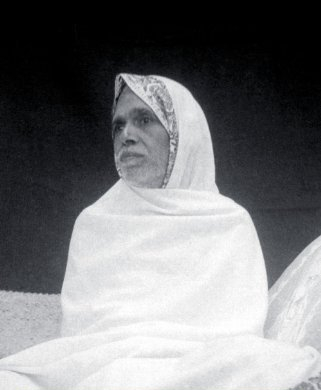
Duality only appears due to a lack of self-enquiry:

  1. Know that the world, soul and God have all seemingly come into existence only because of our pramada or slackness in Self-attention.

It is the unreal and illusory ego that sees the (illusory and unreal) world:

  1. The entire universe composed of the five elements, earth, water, fire, air and space, appears only due to our error of mistaking as ‘I’ the ego that rises from Self like a spark rising from fire, and which appears as different from Self whose nature is Being, and as identical with the mind, whose nature is rising.

Self-enquiry ends the ego illusion and duality:

  1. The entire appearance of this world that is seen, including we (the individual or jiva) who see it, is a mere false appearance like a dream. If we keenly scrutinize the source (the real ‘I am’) from which the seeing ego rises, and thereby enter the heart and firmly abide there, the reality will shine forth (and the appearance of the triad – the seer, seeing and object seen – will disappear).

There is no desire or fear in the Self (or in Self-realisation), both of these being due to ignorance/ego or illusion:

  1. If we attain the otherness-free knowledge (ananya jnana), that this world is nothing but our own Self, seen wrongly in our self by our self through our power of imagination, then the delusion of desire for or fear of the world (the objects we see in front of us), will never rise again; and we will merge in and become one with Self. This alone is our natural state.

The formless Self alone exists:

  1. Self alone exists. Except oneself, nothing exists. But if one takes this pure consciousness, which exists and shines as ‘I’ to be the body, every thing will assume a form and appear to exist. If one inquires, “Is this ‘I’ only the body, or is it something else?” and thereby sees the true nature of “I,” every thing will cease to exist. See thus.

A summary and reiteration of what has been stated above:

  1. If you ask, “For what reason is it said, that if one inquires and knows oneself, this entire world would disappear?” The reason is that the result at tained by the inquiry “Who am I?” is the destruction of the unreal individual (jiva), the ego, who is immersed in activity due to his taking the body to be himself. (That is, since the entire world-appearance depends for its seeming existence upon the ego who sees it, and since the ego itself has no real existence of its own, when the real ‘I’ is known, the ego will be found to be truly non-existent; where upon, the world-appearance will vanish, having no one to see it and thereby to give it a seeming exis tence).

The false ‘I’ is the ego, also known as maya. Enquire into the ‘I’, that is, do self-enquiry, and this illusion will vanish, along with the body, the mind and the world. Compare to Revelation Verse 31.

  1. The ‘I’ which cannot shine without being joined with a body-form, is alone the ghost-like ego ‘I’, the great illusion (maya). If one courageously and without fear inquires, “Who is this I?” it will become non-existent, and along with it everything else will cease to exist.

  1. If this ‘I’ the self-rising ego-appearance, is destroyed by the inquiry “Who am I?”, then everything else, which till then appeared only in him (in the mind) but which was seen as if existing outside of him, will cease to exist. The ever-existing Whole or purna, which then shines forth as ‘I-I’ the blissful existence which neither appears nor disappears, is the real Self, the true import of the word ‘I’.

The true Self does not come and go, unlike the body and mind and world:

  1. The ‘I’ which is the Whole, which is the true import of ‘I’, which shines by its own light without appearing due to the functioning of the five sense-knowledges (and disappearing when they cease to function); which is the exalted and ever unleaving experience of Self, and which is the true nature of everyone, alone is the one non-dual reality; it alone is true knowledge.

The true nature of Jnana (knowledge) is simply the Self. The Self is itself the nature of Knowledge.

  1. This true knowledge is not anything other than oneself; it is our own existence-consciousness ‘I am’. Why should we suffer by imagining and seeing the soul [Jiva or ego], world and God in this knowledge? Abiding firmly as mere Being, experience this knowledge correctly; then what thing other than oneself will appear there?

True destruction of maya/duality occurs with destruction of the ego:

  1. The destruction of the entire universe together with the space and other elements that constitute it is not the state of absolute destruction (pralaya). The state in which the wicked ego, which rises in the form of the feeling “This body of flesh is I” (abhimana), drowns in Self and is destroyed entirely, is alone the glorious state of absolute destruction (maha-pralaya).

  1. After being destroyed in the ordinary destruction at the end of an eon (yuga-pralaya), the heaven and earth will appear again at the proper time. The state in which the Fire of Knowledge (Jnanagni), which blazes forth on being ignited as the churning process of investigation “Who am I?” pervades and shines everywhere, having destroyed the feeling, “I am this body” (dehatma-buddhi), is alone the absolute destruction (maha-pralaya); be cause the ego, which is thus destroyed by the Fire of Knowledge (Jnana) will never appear again.

  1. The “I,” which continues to live even after the mind has died (as a result of the above said inquiry “Who am I?”) is indeed the Supreme Reality (Brahman), which alone exists after the universal destruction (pralaya). The mind expanding as everything, having risen from the heart (that is, the mind slipping down from the true state of Brahman due to inadvertence or lack of Self-attention (pramada), and thereby becoming the cause for the creation and sustenance of the false appearance of this en tire universe), is not the state of true power; the mind merging and abiding firmly in Self is alone the true state of supreme power.

Note by Sri Sadhu Om: The supreme and truly divine power is not the power of the mind (maya), which creates and sustains the false appearance of the universe, but is only the power of Self-abidance, which reveals the truth that illusion (maya) is ever non-existent.

The cause of duality and of liberation:

  1. Your appearance as an ego, an individual soul who rises in the form “I am this body,” alone is the root-cause for the appearance of this unreal world. If this root-appearance, the rising of yourself as an individual soul, does not rise even in the least, that state will be the state of liberation, which is completely devoid of the imaginary appearances of the world and God.

  1. If one has the ability to deny oneself and thereby to destroy the rising of the ego in its very source, what other tapas need one perform? The real Self, the source in which the ego thus subsides and dies, alone is the state which is worth to purchase and attain by selling (or renouncing) all the three worlds.

The paths of Devotion and Knowledge – Bhakti vs Jnana | Advaita Vedanta

The following is taken from the wonderful text Sadhanai Saram (The Essence of Spiritual Practice) written by Sri Sadhu Om, a direct devotee of Sri Ramana’s. This text not only gives us the essence of Sri Ramana Maharshi’s teaching, but also directs us to the true Vedanta teachings. The notes are written by Sri Sadhu Om himself. You can download the full text as a PDF using the above link.

The paths of knowledge and devotion are more fully explained in the text The Path of Sri Ramana which you can download for free here. This is one of the few texts that goes into detail into both the paths of knowledge and love.

Also see Recommended Reading: Books for Enlightenment, Liberation and Self-Realisation

The Paths of Devotion (Bhakti) and Knowledge (Jnana)

79. To the extent to which love for God arises in one’s heart, to that extent will one acquire knowledge about Him. And to the extent to which one knows the nature of God, to that extent will the mind gain steadfast love for Him. Thus, knowledge (jnana) will be increased by devotion (bhakti), and devotion (bhakti) will be increased by knowledge (jnana).

80. By means of our love for God, He will give us more knowledge of Him, and by means of our knowledge of Him, He will give us more love for Him. Therefore, of these two paths, bhakti and jnana, follow that one for which you first gain a liking, because that one path will lead you to follow the other one into the heart.

81. In the life of an aspirant who is seeking liberation, bhakti and jnana will be experienced as inseparable, like the two sides of one sheet of paper. Hence, each one is equal to the other. They are not two different things, for the true nature of both of them is one and the same; know that bhakti and jnana are merely two names for that one thing. (Garland of Guru’s Sayings (Guru Vachaka Kovai) verses 722, 731)

82. The state of abiding firmly in Self-alone is wisdom (jnana). Would it be possible to abide thus in Self if one did not have love for Self? Love for Self-alone is bhakti; abiding firmly in Self on account of that love alone is jnana. What difference is there between these two? Discriminate and know this truth. (Maharshi’s Gospel p.24)

83. If there did not exist the power of gravity, which attracts and pulls everything towards the earth, would anything remain stable on earth? On scrutiny, devotion (bhakti) is found to be similar to the gravitational power of attraction, while the state of wisdom (jnana) is found to be similar to the state of objects remaining stable on earth as a result of that attraction. If either one of these two, the power of attraction or bhakti and the state of abidance or jnana, were absent, the other one would not exist.

84. An aspirant who practices Self-inquiry, which is the path of jnana, denies his own individuality by knowing, “I, this insignificant ego, am not the doer of any action”; while a devotee denies his own individuality by knowing, “God alone is the doer of all actions.” Thus, since an aspirant who follows either of these two paths refrains from assuming the sense of doership, understand that these two paths are not different even during the time of practice, and follow either of them.

85. We should not allow our minds to become bewildered and confused by trying to deliberate and decide, “Which of these two, the practice of bhakti or the practice of jnana is the best means for attaining liberation?” For whichever path a liking arises in the heart of a person, for that person that path alone is the best.

86. According to the strength of habit continuing from former lives, in this life the mind will acquire a liking either for the path of devotion or the direct and unfailing path of Self-inquiry, and will feel that particular path to be the best and most suited to itself. Therefore, follow at least one of these two paths to its very end.

Inquiry Becoming Easy Due to Devotion

87. When, having wept and wept with intense yearning for a long time, unceasingly thinking of and adoring the Gracious Feet (of the Lord), the mind which rises (as “I am so-and-so”) dissolves and becomes pure, the blemishless Self-inquiry (jnanatmavichara) will become firmly settled (in the heart) and the experience of Self (swarupa-anubhava) will of its own accord arise very easily indeed. (Sri Muruganar, Sri Ramana Jnana Bodham v.1286)

88. O, you who say, “We have never seen you closing your eyes and practicing Self-abidance (nishtha); tell us, how did you attain the state of inner silence (mauna)?” Understanding the above verse, know the secret of (how to attain the true experience of) God, who is not seen even though one waits closing one’s eyes (for a long time in expectation of seeing His true vision).

Note: the previous verse is the answer to the above question

Tom: The paths of knowledge and love are more fully explained in the text The Path of Sri Ramana which you can download for free here. This is one of the few texts that goes into detail into both the paths of knowledge and love.

Also see:

Non-dual devotion, worship and prayer

Ramana Maharshi on those who ridicule idol-worship or image-worship

Does Jnana (or Self-Enquiry) lead to Bhakti (or Self-Surrender) or the other way round? Sri Ramana Maharshi

Bhakti Yoga as a complete path to Final Liberation

Sri Ramana Maharshi: the necessity of Meditation

Maya & Ignorance – how and why did they arise and how to remove them? | Sadhana Saram | Sri Sadhu Om

The following verses are taken from the excellent text ‘Sadhanai Saram‘ by Sri Sadhu Om. My (Tom’s) comments are written in italiscised red:

Question: How has ignorance or illusion (maya) come about?

  1. Listen now to the proper reason why, in answer to those people who asked due to bewilderment of thought, “Why has this illusion or phenomenal appearance (maya) come? How has it come?” Lord Ramana did not give a direct reply by telling why or how, but instead said, “See to whom illusion (maya) has come.”

Answer:

  1. He who says that phenomenal existence (maya) has come into being is only you, whereas enlightened Sages (Jnanis), who have attained the great experience of Self, never accept that maya has come or that it now exists. Therefore, you, who assert that maya has come and exists, alone are the one who has the duty to investigate the truth in that assertion in order to prove its validity. Investigate thus.

How to remove this ignorance?

  1. If you first attend to yourself, by investigating within yourself “To whom has this illusory appearance of the world (maya) come? To whom does it exist?” then in the mind that has merged in the state of Silence due to such Self-attention, the truth that you exist as the mere consciousness ‘I am’, devoid of any differentiation, diversity or imagination (vikalpa), will spontaneously reveal itself to you.

Maya never existed, not even as an appearance:

  1. When the truth is known that you, the person who identifies the body as ‘I’, and who raises doubts and asks questions about phenomenal existence (maya), do not exist even in the least, then you will know as a matter of direct experience that in no place, at no time and in no way did phenomenal existence (maya) ever come or exist, and that the existence of the illusory world (maya) cannot be accepted even as a false appearance.

The questioner is itself illusion (maya):

  1. He (the mind) who says that the illusion of phenomenal existence (maya) has come into existence is himself an illusion (maya). Therefore, the one path of Self-attention, which puts an end to the mind, is alone the means that the pure Jnana-Guru, Sri Ramana Bhagavan, has bestowed upon us as the apt medicine to put an end to all the arguments that arise about phenomenal existence (maya).

Instead of asking ‘why is this world as it is?’, etc, we should ask ‘Who am I?’ and discover the Truth-Self:

  1. Even though our Guru has instructed us, “See ‘Who am I’?”, people of dull intellect ask, “Why has this world and the pleasures and pains herein come into existence?” instead of investigating “Who am I?” within themselves; only for such dull-minded people who ask thus, the Guru and the scriptures say, “Ah! That is all illusion (maya).”

Concluding verse in this section:

  1. But since people of pure faith who sincerely engage in the practice of Self-attention as instructed by the Guru, drown in the true consciousness ‘I’ by turning their attention again and again towards the false self (the mind) whenever it rises, to raise any kind of further questions, this talk of maya is not intended for them.

Also see this video for more on this topic:

Love and Desire | Teachings for Self-Realisation | Sri Sadhu Om | Sadhanai Saram | Sri Ramana Maharshi

The following is taken from the wonderful text Sadhanai Saram (The Essence of Spiritual Practice) written by Sri Sadhu Om, a direct devotee of Sri Ramana’s. This text not only gives us the essence of Sri Ramana Maharshi’s teaching, but also directs us to the true Vedanta teachings. The notes are written by Sri Sadhu Om himself. You can download the full text as a PDF using the above link.

  1. When by one’s own inexpressible power one imaginarily sees the one real Self as many objects (the soul, world and God) and thinks oneself to be one among those objects, then one’s own natural self-love, which transcends thought, will assume the form of a thought and will appear to oneself, the individual who imagines thus, as desires for those objects, which are seemingly other than oneself.

Note: What is called “love” is truly nothing but the non-dual love (ananya priya), which the real Self has for itself in the state in which it alone exists and shines. And what is called “desire” is nothing but the dual love (anya priya), which springs towards other objects, which are truly not other than Self, in the state in which the one real Self seems to be many objects. Therefore, the only way to put an end to desire is for one, by means of one’s own perfect freedom (brahma-swatantra), to use one’s own inexpressible power to see Self as one and not as many. In order to see Self thus as One, as it ever really is, one must cease attending to the many objects which seem to be other than oneself, and must instead attend only to the first person singular feeling “I”.

  1. Of all things, is not oneself the most beloved? When one limits oneself by imagining oneself to be a body, one sees all these things (the world and God), which are truly nothing but one’s own Self, as objects other than oneself, and hence one has desire for those objects. That desire is only a distorted form of the true self-love that is one’s own very nature.
  2. The love, which one always has for oneself, is not a thought; that supreme love is one’s own real Self that is existence-consciousness-bliss (sat-chitananda). When a wrong knowledge rises in the form of a thought whereby one mistakenly sees the one Self as many objects which are seemingly other than oneself, even the true self-love will become a petty thought in the form of desire.
  3. When self-love, which is not a thought, forsakes its own real nature of mere being and springs towards other things in the form of desires, it becomes ever-moving thoughts. When love remains as the thought-free love for Self instead of becoming thoughts in the form of desires for other things, that state of Self-abidance is true tapas (austerities or severe spiritual discipline).
  4. This original love for Self, which has now become the three desires, will cease to assume the form of thoughts and will remain as supreme bliss only by means of Self-realization, the state in which one sees all the five elements and the entire world constituted by those elements, as not other than oneself.

Note: The three basic human desires are: (1) the desire for relationships (uravu-asai), that is, the desire for relatives, wife, husband, children, friends or any kind of human relationship, whether sensual, emotional or otherwise; (2) the desire for possessions in any form whatsoever (porul-asai); and (3) the desire for praise, that is, the desire for fame, honor, esteem or any kind of appreciation from others (puhazh-asai). The reason for classifying these three desires is explained in more detail in verses 102 to 109 of this text.

  1. The love for happiness is only the love for Self, because Self alone is happiness. But if one imagines that this world, which is nothing but Self, is something other than oneself, then on account of self-love the objects of the world will seem to be objects of pleasure, and hence the love for that Self, which appears as objects other than oneself, will assume the form of desire. This is the great wrong.
  2. When the true knowledge dawns that everything is only “I”, then the extroverted love which desirously springs towards other objects, will remain pervading everywhere in the form of mere Being and will no longer spring towards anything else. The love that thus remains as mere Being, having ceased to move in the form of thoughts, alone is Siva, who is Self.
  3. Since Self is happiness itself, so long as one sees other things, which are in truth only Self (but whose names and forms are a mere appearance), how can one not think that those other things are pleasurable? This alone is the reason why all living beings, beginning with celestial beings and including men and all other creatures, are drowning and burning in the great fire of desires for external objects.
  4. When our true nature of mere being is transformed into the nature of rising as an ego, know that the three real aspects of our nature, namely existence, consciousness and bliss, will seemingly become their opposites, namely non-existence, igno12 A Light on the Teaching of Ramana Maharshi rance and misery, and will thus assume the form of the dyads (the pairs of opposites).
  5. Just as a single ray of white light becomes seven different colors when it passes through a prism, so the single and undivided existenceconsciousness “I am” is seemingly diffracted into the triads (the triputis, or three factors of objective knowledge, namely the knower, the act of knowing and the objects known) when it passes through the petty senses.
  6. When we limit our true nature of undivided existence-consciousness-bliss by wrongly accepting an insignificant body to be “I”, desire arises for those objects of the world that are favorable to this limited “I”, and aversion arises for those objects which are not favorable to it. This desire and aversion are a twofold reflected shadow of our real nature, which is bliss (ananda) or love (priya).

Note: Though in the realm of cause and effect happiness and love appear to be two different things, each being the cause of the other, in the state of Self-knowledge they are realized to be one and the same. That is why existenceconsciousness-bliss (sat-chit-ananda) is alternatively known as being-luminosity-love, or asti-bhatipriya. When our nature to “be” is mistaken as a nature to “rise,” the bliss aspect of our nature appears as the dyad pleasure and pain, which automatically gives rise to desire and aversion, or likes and dislikes. Thus, likes and dislikes are a two-fold reflection of the bliss or love aspect of our true nature.

(Compare with Letters from Sri Ramanasramam of April 11, 1946 (pp. 55) and Sept. 25, 1947 (pp. 253-4); also with Sri Bhagavan’s Tamil translation of Drik-Drisya Viveka, v. 20).

  1. Likes and dislikes are a dyad which arises as a reflection of bliss (ananda); existence and nonexistence are a two fold appearance assumed by the ever-indestructible existence (sat); knowledge and ignorance are a dyad which arises as a reflection of consciousness (chit); know this truth by abiding as Self, which is existence-consciousness-bliss.
  2. Only by the experience of Self-knowledge will all desires be burnt and destroyed in such a manner that they can never again revive. Nobody has ever overcome the power of desires merely by fighting and struggling for any number of years against the wandering nature of the five senses.
  3. Know that this indeed is the reason why our Father, Guru Ramana, always gave the advice “Know yourself” and unfailingly taught the path of Self-inquiry as the most powerful practice (sadhana), and as the only weapon to destroy all the desires existing within us.

Sense-Pleasures are Worthless | Sri Sadhu Om | Sadhanai Saram | Sri Ramana Maharshi

The following is taken from the wonderful text Sadhanai Saram (The Essence of Spiritual Practice) written by Sri Sadhu Om, a direct devotee of Sri Ramana’s. This text not only gives us the essence of Sri Ramana Maharshi’s teaching, but also directs us to the true Vedanta teachings. The notes are written by Sri Sadhu Om himself. You can download the full text as a PDF using the above link.

What is Worthy to be Desired?

  1. The great wealth that exists in enlightened sages (Jnanis) is only the subtle secret of how to be still, abiding in perfect peace as the mere thoughtfree existence-consciousness “I am.” Therefore, how wretched it will be if one greedily desires to attain from them mere worldly pleasures, such as gold, wealth or fame, which will only make one suffer in delusion.

Sense-Pleasures are Worthless

  1. Instead of eating the fruit that is in your hand, why do you desire to eat the unreal fruit which is seen in a mirror and which is merely a reflection of the fruit in your hand? Is the reflected fruit an object which can be eaten and give real enjoyment? Similarly, instead of drowning deep within the heart by keenly attending to Self and thereby enjoying the bliss of Self which is ever shining there, why do you desire to enjoy the pleasures experienced through the five senses of this perishable body, which are merely an unreal reflection of the true happiness within you?

Endeavor and Result

  1. For those who seek (and make effort to attain) Self, not only Self but also all other benefits will automatically be attained in full. But if one desires and makes effort to attain worldly objects (either through worldly endeavors or through spiritual practices), know that they will be attained only partially and to the extent of one’s endeavor, and that Self will not be attained at all.

The Goal

  1. If we deeply ponder over the natural yearning of all living beings to remove their miseries (through some means or other), it will be decidedly known that the sole aim for which the whole world is striving is only to remain always in perfectly imperishable bliss.
  2. If the people of the world still do not cease making efforts, the conclusion we must come to is, that they have not yet attained perfect happiness, is it not? Whoever among the people has obtained complete contentment and has therefore ceased making any kind of effort is truly one who has attained all that is to be attained.

The Three states (Waking, Dream and Deep Sleep) and Turiya fully explained | Ajata | Self-realisation | Advaita Vedanta

The following is taken from the wonderful text Sadhanai Saram (The Essence of Spiritual Practice) written by Sri Sadhu Om, a direct devotee of Sri Ramana’s. This text not only gives us the essence of Sri Ramana Maharshi’s teaching, but also directs us to the true Vedanta teachings. The notes are written by Sri Sadhu Om himself. The sub-headings have been added by myself to aid readability. You can download the full text as a PDF using the above link.

Introduction

  1. If we did not have the good fortune of having attained a human body, which enables us to experience daily the three states of waking, dream and sleep, how could we have the fitness to do Selfinquiry? Therefore, this human birth is indeed superior to all other births.
  2. Except in this human body, all these three states are not experienced in one lifetime by any soul, whether deva (divine), animal or plant. Therefore, a very great boon indeed is the boon God has bestowed upon us in the form of this human birth, which is such a good opportunity enabling us to inquire and know the Self.

Note: Celestial beings (devas) experience only the waking state; animals experience only sleep and a dream-like waking state; plants experience only sleep**; and insentient objects like stones are always in a state like swoon. Only in the human birth, does one experience all the three states of waking, dream and sleep. Hence, even devas must take birth as human beings if they wish to attain Selfknowledge, the state of liberation.

**Note: Compare Talks, no. 617, p. 580.

  1. The three states of waking, dream and dreamless deep sleep are experienced daily by all human beings, are they not? If we keenly scrutinize the nature of these three states, knowledge of the state of liberation, which is the reality of these three states, will be attained by us as a direct experience.

The I AM

  1. In the waking state we exist as “I am”; but in this state, beside us, so many second and third person objects of various kinds are also known by the mind. How have all these come here?
  2. In dream also we exist as “I am”, having become the one who sees everything there; but in that state also so many second and third person objects of various kinds are again known by the mind. How did all those come there?
  3. In sleep also we exist as “I am”; however, in that state we do not see anything appearing as other than us. Therefore, our state of existing as “I am” alone shines always without ever slackening or being obstructed, whereas our state of knowing objects other than us undergoes change. Hence, our state of existing as “I am” is alone the one unchanging state.
  4. The state of our existing as “I am”, which shines in all the three states continuously and without ever coming to an end, is our exalted state of real knowledge; it is the state of purna (the Whole). Objects other than “I” do not exist in all the three states. Hence our own nature, the Self-existence “I am,” alone is the reality which ever exists.

Objects

  1. Since objects other than “I,” such as the body and world, do not exist unceasingly in all the three states, but rise and appear to exist only in between in the waking and dream states, they cannot be the reality, which exists always and without being obstructed. This conclusion arrived at by scrutinizing our experience in these three states, is the foundation for the practice of Self-inquiry.
  2. These objects other than “I,” which exist at one time and do not exist at another time, are truly non-existent even at the time when they appear to exist. When scrutinized, waking and dream are both found to be only one in nature, because the objects, which appear to exist in each of these states, unfailingly cease to exist in any other state.

Duality

  1. That state, in which any object seen is not experienced as other than the one who sees, is alone the state of reality. If the seer, who is an unreal ego, rises, then only will all the unreal objects other than “I” rise, and seem to exist.

The waking dream

  1. The dream-world – and the one who, living there identifying a dream-body as “I,” and sees that dream-world – both together constitute the dream. The waking state is also like that; that is, not only this seemingly vast world that is perceived in front of us, as if existing as other than us, and also we, the jiva who sees this waking world, both together constitute the appearance of this dream, which is called the waking state.
  2. In practice, waking and dream are only one and the same. Just as in waking the mind thinks, “I am this body,” so in dream also the mind projects a body by its creative power of imagination and functions there, feeling “I am this body.”

Ending the dream

  1. Until the root-tendency (mula-vasana) to identify a body as “I” ceases to exist, the appearances of the waking and dream states that arise due to delusion (maya) will not come to an end. If you, with a one-pointed mind keenly and incessantly attend to the consciousness of your existence, which shines as pure “I am,” the root-tendency “I am the body,” and all its products and other tendencies, will cease to exist.

Ignorance and deep sleep

  1. To remain inactive forgetting the feeling “I am the body,” is sleep. In the dense ignorance of this sleep, arises a creative imagination of the mind (mana-kalpana), and this alone is the cause for the appearance of dream. Therefore, it is the mind alone that projects a dream.
  2. Similarly, in the long sleep of ignorance (ajnana), which has engulfed us due to our forgetfulness of our true state of pure Self-consciousness, an imagination in mind (mana-kalpana) rises identifying a contemptible fleshy body as “I”, and this alone is the cause for the rising and appearance of this despicable waking state, which we are now experiencing.

Samsara (the cycle of birth and death)

  1. Just as sleep alone is the cause for the appearance of dream, so the sleep of forgetfulness of our true Self-Knowledge is alone the cause for the appearance of this waking state. In this long sleep of Self-forgetfulness, many dreams in the form of countless births come and go.
  2. Know that just like a person who without coming to the waking state, merges in deep sleep after the dream he was seeing has come to an end, if the dream of the present birth that this person has taken is brought to an end by death, before he attains the true waking state of Self-knowledge, he will merge again into the underlying ancient sleep of Self-forgetfulness.
  3. Just like a person who was seeing a dream and who then leaves that dream and falls into deep sleep without coming to the waking state, if the waking-body dies before we attain the state of Selfknowledge, we will fall into a state like deep sleep. Just as a dream appears as soon as the mind of a person immersed in sleep rises and begins to wander, so after the death of this waking-body, as soon as the mind rises and begins to wander on account of its former tendencies, a waking state will again arise in which a body will seemingly exist as if “I”.
  4. Taking birth again, having come out of the delusion-enfolded state of death, and living a life of whirling about in this waking state, and finally dying without attaining Self-knowledge, is just like a person rising as “I” from deep sleep, seeing a dream again, and finally once again merging in sleep. You will not take birth again only if you awaken into the true state of Self-knowledge. Awaken thus.

Awakening: Waking up from the dream & Turiya

  1. If a person who has fallen asleep and is seeing a dream suddenly wakes up, by his awakening he will attain a state in which sleep and dream have both been dispelled. Similarly, if a person awakens from the present so-called waking state by attaining the exalted state of Self-knowledge, the dream of birth and death and the underlying sleep of Self-forgetfulness will both be dispelled, and he will thereafter never again undergo either birth or death. The state of real awakening (turiya), which he thus attains, and which transcends the three ordinary states of waking, dream and sleep, is the state of liberation.

The method of Sadhana (spiritual practice) – Self-enquiry

  1. If the power of attention, which sees the second and third person objects existing in dream, turns to attend to itself, both the first person (who sees the dream) and the dream will disappear; the sleep that is the cause for the rising of that first person will be dispersed, and the worthy state of true awaking will be experienced.
  2. Similarly, if the power of attention, which knows the second person objects existing in the waking state, turns to attend to itself (the “I” who sees this waking state), the waking state will disappear; the long sleep of Self-forgetfulness which is the cause for the rising of the individual sense of “I” will be dispersed and the true waking state of Self-knowledge will be attained. Therefore, attend only to yourself, the first person consciousness “I.”

Karma and Self-Realisation

  1. Even before the experience of the current destiny (prarabdha karma) which caused the appearance of a dream has come to an end, if the mind is struck by intense fear, joy or suffering, its power of attention will be driven Selfwards and return to the heart, whereupon waking will result.

Note: Prarabdha is that part of one’s destiny (or karma) that has to be worked out in this life. Sanchita is one’s karma accumulated in former lives that has not yet taken effect.

  1. Similarly, even before all the accumulated sanchita karmas have been exhausted by being experienced in the form of prarabdha, if in this present life, which was started by prarabdha, the mind either gains firm dispassion (vairagya), being unable to bear the severe sufferings of life, or experiences intense fear of death, it will turn Selfwards and merge in the heart; whereupon the true awakening of Selfknowledge will result.

Fear, suffering and self-realisation

  1. When such intense fear or suffering are experienced, if the mind with mature discrimination (viveka) at once earnestly scrutinizes, “To whom does this fear or suffering arise?” then the extroverted power of attention, which was till then being dragged out towards objects other than itself, will turn inwards to face itself, whereupon the truly awakened life of Self-abidance will immediately be attained.

Self-knowledge: ending the dream

  1. Just as all that happens in dream is experienced as real so long as one is seeing that dream, so all that is now happening in this waking state is experienced as real. If the dream comes to an end, all that was seen there will be known to be unreal. Similarly, for those who have awakened from this so-called waking state by attaining Self-knowledge, all the happenings in this state are clearly known to be unreal.
  2. As soon as the inwardly awakened state of Self-abidance is attained, all the adjuncts in the form of the wrong identification that the actions of the body are one’s own actions will become devoid of reality, being found to be mere superimpositions upon one’s nameless and formless nature, just like the blue color superimposed upon the colorless sky; and the truth, that one is only the adjunct-free Self, will clearly shine forth.

Ajata

  1. Only in this real waking state of Self-abidance will true knowledge blossom in the form of the ajata experience, “No mundane dual activity such as birth and death has ever touched me; I am Self, the existence-consciousness which is ever devoid of the body and the senses.”
  2. The pure consciousness “I,” which exists in sleep devoid of all adjuncts, is the Supreme Reality (Brahman). If we do not slip down from that state of pure consciousness due to attachment to the body (dehabhimana), that itself is the Supreme Abode (parandhama). If we remain, without leaving Self, that itself is liberation.

Do you exist in deep sleep?

  1. Though we think sleep to be a state of darkness, because no other objects are known there, know that it is not possible for anyone to deny his own existence in sleep. When you are able to affirm your experience in sleep, “It was darkness,” “There were no thoughts” and “It was a happy state,” is it not clear that you existed in sleep? To be able to affirm thus, who was that “you” who existed in sleep? Tell me.
  2. Your ability to affirm all the three experiences mentioned above shows not only that you existed in sleep, but also that you knew these experiences there, does it not? This existence-knowledge, which existed and was known in sleep, is indeed the peerless existence-consciousness (sat-chit), your own state, and the real nature of self.

Deep sleep and bliss (ananda)

  1. In sleep, in which you existed solitarily as the mere existence-consciousness (sat-chit), you were the experiencer of sublime happiness devoid of even a single petty misery, even though you were separated from all the possessions and all the objects which you seek in the waking state for happiness, were you not? That happiness which you experienced in sleep is indeed bliss (ananda), your true nature.

Outro

  1. To become a hero who abides as Self, the infinite reality (paripurna Brahman) whose nature is existence-consciousness-bliss (sat-chit-ananda), devoid of the experience of any body or any world, is the fruit to be gained by proper scrutiny of the three states of waking, dream, and sleep.
  2. The supreme Guru Sri Ramana has given the above clues so that, having thoroughly scrutinized the three states, we may finally abide blissfully forever as Self, our own true nature which transcends the three states.

Grace Alone is of Prime Importance | Sadhanai Saram | Sri Sadhu Om | Sri Ramana Maharshi

The following text is taken from the wonderful text Sadhanai Saram (The Essence of Spiritual Practice) written by Sri Sadhu Om. This text not only gives us the essence of Sri Ramana Maharshi’s teaching, but also directs us to the true Vedanta teachings. The notes are written by Sri Sadhu Om himself.

  1. The ego is only a trivial entity; besides, it is unreal (asat) and powerless (asakta). It is a mere adjunct which rises and subsides. Therefore, what foolishness it is to think, “The spiritual practice (sadhana) done by the strength of this ego will by itself bestow the goal of life; the supreme power of divine Grace is not of any consequence (and is not necessary in order for one to attain the goal)”!

Note: Not believing Grace, but thinking one’s own individual effort alone to be of very great consequence, is mere foolishness.

  1. Is not the unreal help which one unreal man renders to another unreal man, experienced by everyone in this world as real? Therefore, O Sadguru, the embodiment of Grace, the sole reality, is it impossible for You to save me by dispelling the unreal ego? What doubt or wonder is there in Your being able to help me thus

Note: A man or jiva is merely an unreal appearance, and hence whatever help he may seem to render to another man is also unreal. But when such unreal help rendered by an unreal man is experienced by everyone as real, why should we doubt the ability of the Sadguru, who alone is truly real, to render us the real help of destroying the unreal ego? Such help from the Sadguru will certainly be experienced by us as more real than the help that we feel is rendered to us by others.

  1. Unless our Lord, Sri Ramana, who is the form of God, Himself bestows His divine Grace, who can by his own effort attain that heroic state of firmly abiding as Self, having clearly known one consciousness other than the body to be the real “I”?

Why is Self-Enquiry sometimes so difficult to practice? | Sadhana | Sri Sadhu Om | Sadhanai Saram

242. When we are lacking in earnestness or faith (sraddha), whatever practice (sadhana) we may take to will appear to be equally difficult. But if our earnestness is firm and one-pointed, no sadhana will be felt to be difficult, and without any aid we will be able to remain firmly established in the state of Self-abidance.

243. Where there is a will, there is a way. That is, if a sincere liking to attain something arises in one’s heart, a path whereby one can attain it will also be found, and because of that liking one’s mind will unceasingly seek the goal until it is attained. Only when the liking to attain that goal does not truly arise in one’s heart, will one experience difficulty in the practice (sadhana) or means adopted to attain it. Know that this is the secret underlying all methods of practice.

244. To the extent to which one approaches and lives close to true devotees, to that extent will the liking arise in one’s heart to attain salvation, the real goal of human life. By having more and more association with such true devotees, that liking will gradually increase until finally one will attain salvation by abiding firmly in Self.

The above are verses from the wonderfully clarifying text Sadhanai Saram, written by Sri Sadhu Om, a direct devotee of Bhagavan Sri Ramana Maharshi. You can read the full text here.

I have not written any commentary on the above verses as hopefully the meaning of the verses are self-evident, and any lack of clarity can hopefully be remedied by simply reading the verses more slowly and reflecting upon them.

Sadhanai Saram (the essence of spiritual practice): Devotion and Self-Enquiry | Ramana Maharshi | Advaita Vedanta | PDF download

The following are the first 21 verses from Sadhanai Saram (The Essence of Spiritual Practice) by Sri Sadhu Om. This text contains very beautiful and deep teachings for those who are genuinely seeking liberation. We find this text not only summarises the teachings of Bhagavan Sri Ramana as well as Advaita Vedanta teachings, but goes into them in tremendous depth with a clarity that is often not found elsewhere.

These initial verses presented below beautifully display both devotion to Bhagavan and the path of Self-Enquiry.

You can download the full text of Sadhanai Saram here as a PDF file

I have created an additional List of Contents for Sadhanai Saram which you can download here

Invocation

  1. O Sri Ramana, bestow Your Grace upon me so that I may in experience flawlessly attain the unequalled and unsurpassed essence of the practice (sadhana) of Self-knowledge, the excellent path “Who am I?” which you have discovered to be the central and foremost among all the various paths.
  2. O Sri Ramana, the Heart, who through Your Grace protects me at every moment by guiding me along the correct path, rise from within and teach me the true import of Your divine and unequalled teachings so that I may know them in their undefiled pristine purity.

The Greatness of This Birth

  1. Among countless births, one like this birth of ours is very rare to achieve. Ah! When Lord Ramana has assumed a sacred body on earth, we have attained the blessed boon of becoming slave to His Holy Feet.
  2. However many crores of births they may take, it is indeed very difficult for anyone to have the opportunity of gaining such a great benefit as that which is gained in this birth of ours, in which we have come to the Feet of Bhagavan Ramana, who is a rare treasure for the world. So great is the benefit of this birth.

The Wealth of Sri Ramana

  1. The wealth of the almighty Sri Ramana’s enlightenment (Jnana) is a treasure that is ever available to be plundered by all people who want it; and, however much it is plundered, it will never decrease even in the least. However, only good people who are true devotees know how to plunder it; and though other people who are too immature go near that treasure, they cannot see anything there.

The Grace of Sri Ramana

  1. Sri Ramana, the Bestower of Grace, will never give the least dissatisfaction to those who weepingly pray to Him, “Make me Your possession.” I know that our Lord uses countless inexpressible tricks in order to protect and save those who have become His slaves.
  2. What our Lord uses to save us are tricks of Grace. Even by the skill of our intellects, it is impossible for us to know all those tricks. If He wishes, even an ocean will enter and disappear into a mustard seed. Therefore, as soon as the glance of Sri Ramana’s Grace falls upon us, the Supreme Reality will be revealed.
  3. Since He is not bound by time or even by the limitation of place, He will not wait for some suitable time or suitable place to bestow His Grace upon His devotees. He has far greater compassion than even a compassionate mother, who has no plan that she will give her baby milk to drink only when it cries (and hence, even without our crying for it, He will bestow His Grace upon us of His own accord).
  4. O Bhagavan, innumerable are the wrongs (the mistakes and misfortunes) from which I, this poor creature, have escaped by Your Grace unknown to myself. You know all of them, but I do not know anything except enjoying the bliss of being saved by Your Grace.
  5. O Sri Ramana, those who have taken refuge at Your Feet are protected perfectly not only on one or two occasions but on more than a crore of occasions. From many incidents that happen in their life, this is a truth that is clearly known to the hearts of Your devotees.
  6. The state of abiding in the Heart as the Heart as it is (that is, as the adjunctless and thoughtfree existence-consciousness “I am”) is the ineffable and most excellent state. He, who nurtures the fruit of such Self-abidance by sowing the seed of clarity of mind and by watering it with divine Grace, is only our Self-realized or Celestial Preceptor (Sadgurudeva), Sri Ramana.
  7. We and all our possessions, beginning with the body, are in truth only the possessions of Sri Ramana. When the responsibility of saving us and protecting our possessions is borne by Him alone, why should we worry about anything in our life on this earth thinking it to be either pleasure or pain? Where is any such thing as wrong, evil, harm or suffering now?

All That He Does is Happiness for Me

  1. The almighty Sri Ramana, who exists within the heart of everyone, who unfailingly helps me at all times, and who cannot be banished from my mind even for a moment, has brought me close to Him only to take me as His slave. Therefore, whatever He now does with me is only happiness for me; how can anything that He does hereafter appear to me as something undesirable or painful?

Leave it to Him

  1. He knows the best of all,
    Leave it to Him, be calm;
    Believe Him most of all,
    Then rests the mental storm.

Explanatory paraphrase: Our Sadguru (Selfrealized Guru, or guide) Sri Ramana, alone knows what is best for us. Therefore, entrusting all our burdens and cares to Him, we should always remain peaceful and calm. If we believe Him more than we believe anyone or anything else, knowing that He alone is the Supreme all-knowing, all-powerful and all-loving reality, then, at that very moment, we will attain that perfect pace in which the raging storm of thoughts will have come to an end, forever.

Grace Alone is of Prime Importance

  1. The ego is only a trivial entity; besides, it is unreal (asat) and powerless (asakta). It is a mere adjunct which rises and subsides. Therefore, what foolishness it is to think, “The spiritual practice (sadhana) done by the strength of this ego will by itself bestow the goal of life; the supreme power of divine Grace is not of any consequence (and is not necessary in order for one to attain the goal)”!

Note: Not believing Grace, but thinking one’s own individual effort alone to be of very great consequence, is mere foolishness.

  1. Is not the unreal help which one unreal man renders to another unreal man, experienced by everyone in this world as real? Therefore, O Sadguru, the embodiment of Grace, the sole reality, is it impossible for You to save me by dispelling the unreal ego? What doubt or wonder is there in Your being able to help me thus?

Note: A man or jiva is merely an unreal appearance, and hence whatever help he may seem to render to another man is also unreal. But when such unreal help rendered by an unreal man is experienced by everyone as real, why should we doubt the ability of the Sadguru, who alone is truly real, to render us the real help of destroying the unreal ego? Such help from the Sadguru will certainly be experienced by us as more real than the help that we feel is rendered to us by others.

  1. Unless our Lord, Sri Ramana, who is the form of God, Himself bestows His divine Grace, who can by his own effort attain that heroic state of firmly abiding as Self, having clearly known one consciousness other than the body to be the real “I”?

What is Worthy to be Desired?

  1. The great wealth that exists in enlightened sages (Jnanis) is only the subtle secret of how to be still, abiding in perfect peace as the mere thoughtfree existence-consciousness “I am.” Therefore, how wretched it will be if one greedily desires to attain from them mere worldly pleasures, such as gold, wealth or fame, which will only make one suffer in delusion.

Sense-Pleasures are Worthless

  1. Instead of eating the fruit that is in your hand, why do you desire to eat the unreal fruit which is seen in a mirror and which is merely a reflection of the fruit in your hand? Is the reflected fruit an object which can be eaten and give real enjoyment? Similarly, instead of drowning deep within the heart by keenly attending to Self and thereby enjoying the bliss of Self which is ever shining there, why do you desire to enjoy the pleasures experienced through the five senses of this perishable body, which are merely an unreal reflection of the true happiness within you?

Endeavor and Result

  1. For those who seek (and make effort to attain) Self, not only Self but also all other benefits will automatically be attained in full. But if one desires and makes effort to attain worldly objects (either through worldly endeavors or through spiritual practices), know that they will be attained only partially and to the extent of one’s endeavor, and that Self will not be attained at all.

The Goal

  1. If we deeply ponder over the natural yearning of all living beings to remove their miseries (through some means or other), it will be decidedly known that the sole aim for which the whole world is striving is only to remain always in perfectly imperishable bliss.