silence
Can Everyone Benefit From This Silence?
From: Talks with Sri Ramana Maharshi, Talk 569.
Question: Can everyone benefit from this silence?
Bhagavan:
Silence is the true upadesa. (Teaching)
It is the perfect upadesa.
It is suited only for the most advanced seeker.
The others are unable to draw full inspiration from it.
Therefore they require words to explain the Truth.
But Truth is beyond words.
It does not admit of explanation.
All that is possible to do
is only to indicate It.
How is that to be done?
In this meditative Satsang talk by Tom, he gently guides us with words, presence and silence towards meeting and imbibing Ramana’s highest teaching.
This video was recorded live during a Satsang meeting with Tom Das on November 27, 2025 and put together by volunteers. To download full unedited satsang recordings see here: https://payhip.com/tomdas
True Silence Burns All Impurities — But Not All Silence Is True
Those Who Know Don’t Say. Those Who Say Don’t Know. Says Who?
This quote is used often in non-dual circles. Sometimes it’s quoted and put in social media comments in response to posts or other comments that someone else doesn’t like!
Tom concedes that there may be some deep wisdom to this popular phrase. But like all teachings, perhaps it is good to investigate when it is helpful, and when it is not, or when it may even be problematic.
After listening to Tom’s reflections on this, what do you think?
This video was recorded live during a Satsang meeting with Tom Das on March13th, 2025 and put together by volunteers.
To download full unedited satsang recordings see here: https://payhip.com/tomdas
To attend satsang, see here: https://tomdas.com/events
How Tom Became Consumed By Silence/Mouna | A Love Story
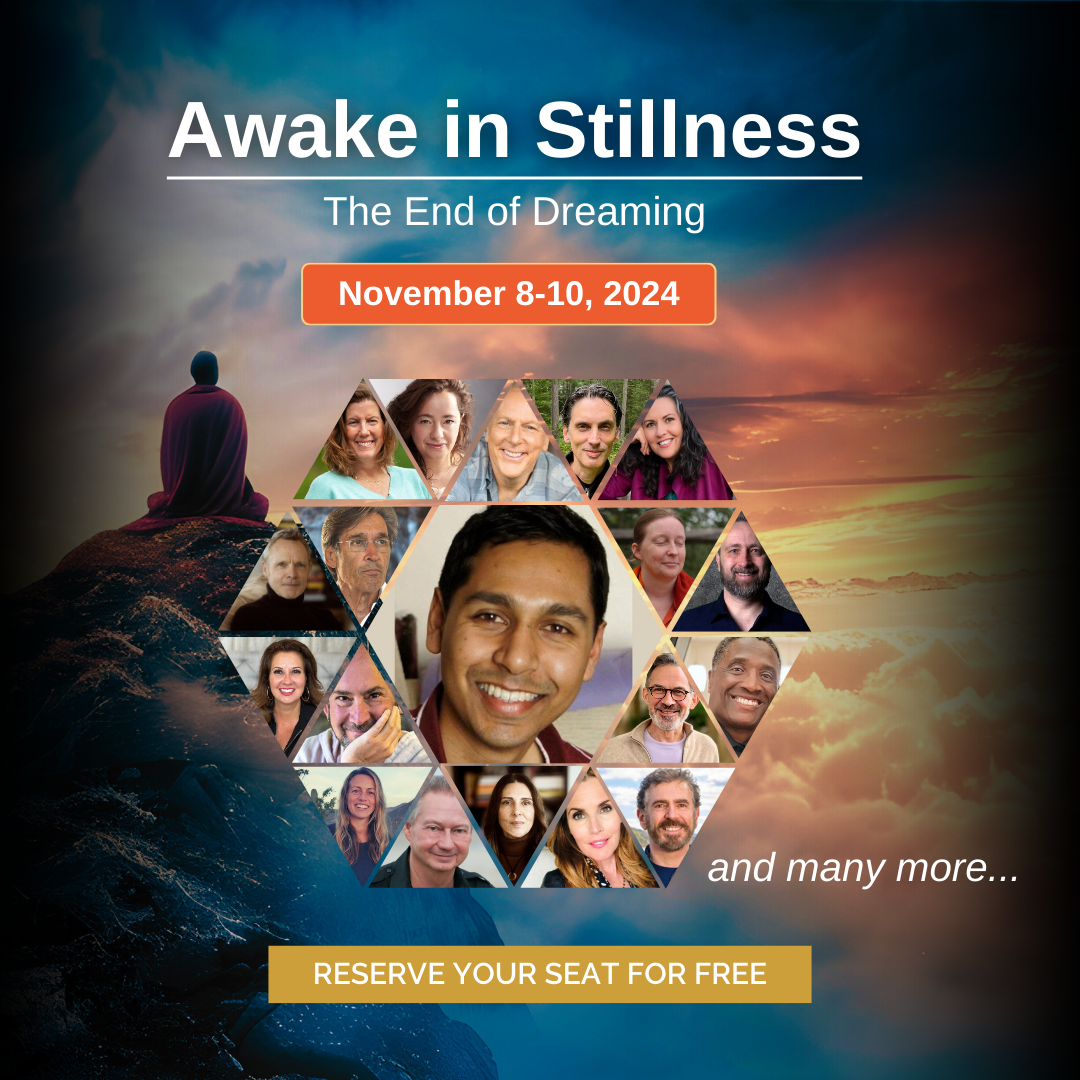
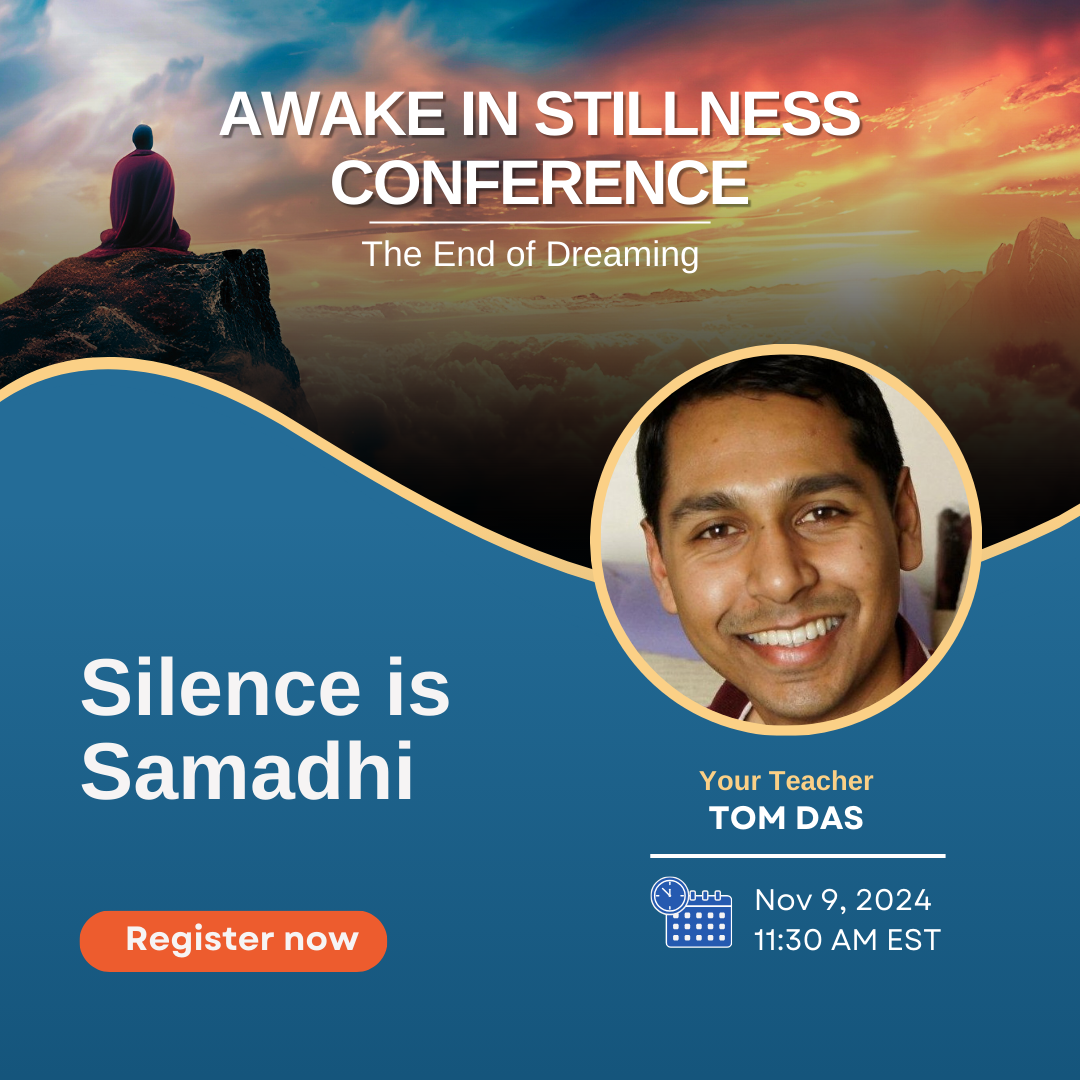
Tom Das speaking at Awake In Stillness Conference 9th November 2024
I’ll be speaking at the Awake in Stillness Conference on 9th November 2024. It’s FREE to register and watch live using this affiliate link, and if you buy a paid ticket to re-watch the event then I will receive some commission.
Please show your support by clicking on the above link – many thanks
Sri Ramana Maharshi on the importance of the Guru and power of Satsang | How to get the most out of Satsang | Silence and satsang | Paul Brunton
This is one of a series of introductory articles – please see the homepage of tomdas.com for more introductory articles.
The importance and power of satsang
The following are the first 5 verses of a composition by Sri Ramana Maharshi, all on the topic of ‘the company of sages’:
1. In the company of sages, attachment vanishes; and with attachment, illusion. Freed from illusion, one attains stability, and thence liberation while yet alive. Seek therefore the company of sages. (from Bhajagovindam, the “Mohamudagaram Hymn,” by Shankaracharya)
2. Not by listening to preachers, nor by study of books, not by meritorious deeds nor by any other means can one attain that Supreme State, which is attainable only through association with the sages and the clear quest of the Self. (a verse from the Yoga Vasishta, 5 – 12 – v.17)
3. When one has learned to love the company of sages, wherefore all these rules of discipline? When a pleasant, cool southern breeze is blowing, what need is there for a fan? (a verse from the Yoga Vasishta)
4. Fever is overcome by the cool light of the moon; want, by the good wish-yielding tree; and sin by the Holy Ganges. Those three – fever and want and sin – all flee at the august sight of the peerless sage. (Subhashita Ratna Bhandargara, chapt. 3, v. 6)
5. Holy rivers, which are only water, and idols, which are made of stone and clay, are not as mighty as the sages. For while they make one pure in course of countless days, the sage’s eyes by a mere glance purify at once. (from Srimad Bhagavatam, chapt. 48, v. 31, tenth canto)
~ above verses are taken from the Supplement to the 40 verses on Reality by Sri Ramana Maharshi. In these specific verses, rather than writing new verses himself, he incorporated verses from traditional scriptures (source given in brackets). You can read the original text in full here.
How to gain from satsang: Silence and Satsang
Questioner: I want to ask a question. May I do so?
Sri Ramana Maharshi: Yes, what question? You said you had read Paul Brunton’s book ‘The Secret Path’. Read it a thousand times — Paul Brunton has expressed me correctly; then why do you not practice it? Turn to page 73 and see if you don’t find an answer to your question in paragraph 2 [see later in the post for this text].
Silence is never-ending speech. Vocal speech obstructs silent speech. More things are achieved by silence and more thoughts are conveyed by silence to a wider world. Oral questions and answers may appear to benefit the questioner and a few listeners in this hall, but actually they obstruct, delay and interrupt the silent communication of thought-waves to thousands of spiritual aspirants all over the world.
So many sadhaks who come to me for inquiry and elucidation would amply benefit themselves and others by sitting before me silently — absolutely speechless. The greatest and most effective forces are those which are invisible, such as the ether or electricity. Any query you desire to make, ask your own mind or thought — you will, readily find the answer there. The most effective help is with silence.
– above dialogue taken from the book ‘Conscious Immortality’
In the above dialogue Sri Ramana Maharshi referred to page 73 paragraph 2 of Paul Brunton’s book ‘The Secret Path’, which you can read here:
Only in deep silence may we hear the voice of the soul; argument but beclouds it and too much speech stops its appearance. When you have caught your fish you may share it, but while you are angling for it, talk breaks the spell and frightens the fish away. If we could occupy ourselves less with the activities of the larynx and more with the activities of the deeper mind, we might arrive at something worth saying. Speech is an ajunct, no an obligation. To be is the prime duty of man.
Life teaches us silently while men utter their instruction in loud voices.
The treasure-trove of the real self is within us, but it can be lifted only when the mind is still.
– excerpt from ‘The Secret Path’ by Paul Brunton, pages 73-74
The importance of the Guru
Question 4. If it be true that the Guru is one’s own Self (atman), what is the principle underlying the doctrine which says that, however learned a disciple may be or whatever occult powers he may possess, he cannot attain self-realisation (atma-siddhi) without the grace of the Guru?
Sri Ramana Maharshi: Although in absolute truth the state of the Guru is that of oneself it is very hard for the Self which has become the individual soul (jiva) through ignorance to realise its true state or nature without the grace of the Guru.
All mental concepts are controlled by the mere presence of the real Guru. If he were to say to one who arrogantly claims that he has seen the further shore of the ocean of learning or one who claims arrogantly that he can perform deeds which are well-nigh impossible, “Yes, you learnt all that is to be learnt, but have you learnt (to know) yourself? And you who are capable of performing deeds which are almost impossible, have you seen yourself?”, they will bow their heads (in shame) and remain silent. Thus it is evident that only by the grace of the Guru and by no other accomplishment is it possible to know oneself.
~ Sri Ramana Maharshi, Spiritual Instruction (Upadesa Manjari)
The path of Being cannot be taught in words | Silence | Sri Sadhu Om | The Paramount Importance of Self Attendtion
The path of being (sat) cannot be taught in words, because the nature of this path is no different to the nature of its goal, and since the goal is absolute silence, untainted by the rising of the ego, it can be made known only by silence.
In other words, in this path there is nothing to be done, so there are no exercises that can be prescribed. In order just to be, the ego does not need to do anything, and must not do anything.
All that is required of it is just to die: that is, to subside and disappear forever.
~ the above is an excerpt from The Paramount Importance of Self-Attention by Sri Sadhu Om
 Tom Das