Nisargadatta Maharaj: Ignore your thoughts

Nisargadatta_Maharaj

“It is the mind that tells you that the mind is there. Don’t be deceived. All the endless arguments about the mind are produced by the mind itself, for its own protection, continuation and expansion. It is the blank refusal to consider the convolutions and convulsions of the mind that can take you beyond it.”

Nisargadatta Maharaj, I Am That

My comments:

The word ‘mind’ in the above quote is synonymous with the false sense of individual separate self. This self, this ‘I’, is just a notion, an idea reinforced by the mind. The ‘I’ is a thought, and it is reinforced by thoughts.

Trying to figure this all out (ie. more thought) is a function of the same mind that is ultimately false, imaginary: it is a fruitless endeavour.

A particularly effective sadhana (spiritual practice) is to ignore the content of thoughts as they appear within our consciousness. The energy of the sense of ‘I’ then begins to loosen and its mechanics are exposed and revealed. We can then start to see things as they actually are.

There are broadly two ways this can be done:

1) by concentrating on something else such as a mantra, the breath, or by chanting, etc – ie. a distraction from thoughts;

2) by allowing thoughts to wash past you like clouds in the sky, and in so doing not paying attention to the content of thoughts, eg. a surrender, acceptance, gratitude or mindfulness practice.

When looking for a sadhana, you will naturally be able to find the one that works for you by looking to see which one gives you greatest sense of peace and relief, and by seeing which practice you are naturally inclined towards.

For more about spiritual practices and how they work click here
A Christmas message: was Jesus ever Born?

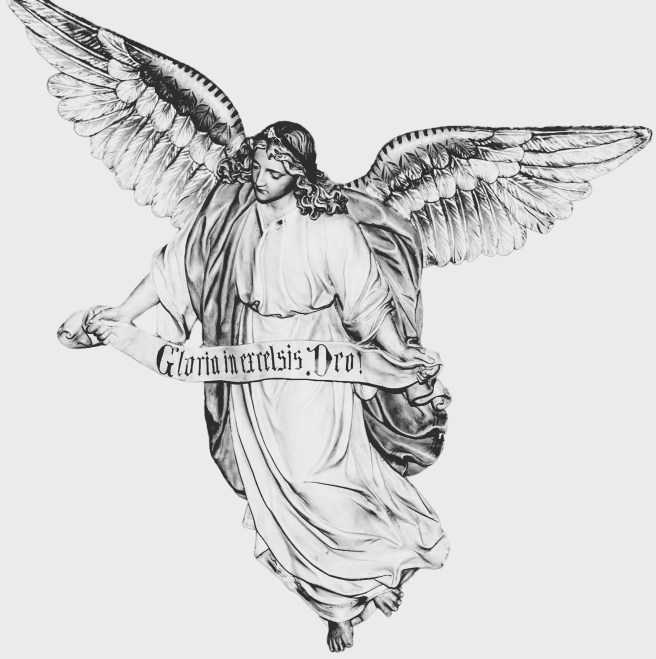
Glorio in excelsis deo.jpg

The true light that gives light to everyone was coming into the world. He was [already] in the world, and though the world was made through him, the world did not recognize him.
John 1:9-10

Christmas is meant to be about celebrating the birth of Jesus, and the above bible verse tells of his coming. But was Jesus ever born? I’m not asking whether or not he existed, I’m asking was Jesus an entity that was born into this world, or was Jesus something else?

In John’s gospel the opening chapter proclaims the coming birth of Jesus Christ. But in verse 10 (above) it clearly states that Jesus already existed prior to his birth, and prior to the existence of the world: he was already in the world, the world was made through him, but the world knew him not.

This is not referring to the human Jesus made of flesh and blood, but something else, something deeper, more subtle, more universal and more potent. This Christ is the True Light, as per verse 9 above, the deeper essence of Christ. A few chapters later in John’s Gospel Jesus himself testifies that he was never born:

Jesus said to them, “Truly, truly, I say to you, before Abraham was, I am.”
John 8:58

Note, Jesus doesn’t say ‘I was’, he says ‘I AM‘, again indicating he is and always has been beyond the notion of time. Anyone who has studied vedanta and other spiritual traditions would be familiar with similar sayings espoused by countless sages in ages gone past.

Jesus is not identifying himself as the body-mind entity, but as the Absolute, the Father, the unborn, that which always IS, that which is never not.

So here’s to wishing you all a very Merry Christmas, and when we come together to celebrate Jesus’s birth, let us remember the deeper import of Jesus’s teachings: to be with the Father, the Absolute, that to which we are all slaves whether we know it or not.

“Teacher, which is the great commandment in the Law?” And he [Jesus] said to him, “You shall love the Lord your God with all your heart and with all your soul and with all your mind.This is the greatest and first commandment.”
Matthew 22:36-38

And it is in discovering this slavery that we actually ‘become’ free.

So Jesus said to them, “Truly, truly, I say to you, the Son can do nothing of his own accord, but only what he sees the Father doing. For whatever the Father does, that the Son does likewise.”
John 5:19

Merry Christmas everyone!!!

❤ ❤ ❤

Direct ‘perception’

landscape-192987_1280.jpg

The mind cannot get this,
Just as it cannot deduce the existence of a tree.

The tree is perceived directly,
This is perceived directly.
Whatever is perceived is this.

Perception is just an idea,
That implies the existence of a perceiver,
A perceiver with some physiological apparatus.

There is no experience of perception,
Only an inference,
An inference based on the idea of a perceiver,
For which there is no direct evidence.

So,
There is only this,
Just this.

Perception is just another name
For our experience of life,
ie. this

Life,
Naked,
Is without conceptual overlay.

Unadorned,
It adorns itself,
creating its own beauty.

Life,
Unadorned by concepts,
But including concepts as they rise and fall:
– No thinker can be found.

Forget words, definitions, theories and beliefs:
– They are all useless here;
Just more conceptual overlay:
– It could all be entirely mistaken.

Dzogchen: Self-liberation in the fundamental nature

supreme-source

Here are some more verses from the Kunjed Gyalpo (The Supreme Source), one of the most important texts in Tibetan Buddhism and Dzogchen. These words point the reader directly towards Enlightenment. See my earlier posts on the Kunjed Gyalpo here and here.

In the except below the first section initially directs us to listen to these teachings and realise the inherent liberation that is already present ‘without needing to alter anything’.

The second section indicates there is no need for special practices, or to speak or act in a particular way in order to get this.

In fact, as per the third section below, in trying to find your ‘authentic condition’ (which is self-liberation), you deny it and prevent liberation manifesting itself.

Listen!
As I am in the authentic condition,
all phenomena self-liberate in the fundamental nature.
Without needing to alter anything,
the teacher self-liberates in the fundamental nature.
Without needing to alter anything,
the teacher self-liberates in the fundamental nature.
Without needing to alter anything,
the retinue of disciples, too, self-liberates in the fundamental nature.

Listen!
As all self-liberates,
there is no need to correct the body posture or visualise a deity.
There is no need to correct the voice or speech.
There is no need to correct the mind through meditation.

By correcting oneself,
it is not possible to find the authentic condition,
and without finding the authentic condition,
one cannot self-liberate.
In this way one does not achieve the state of equality of the fundamental nature.

Excerpt from The Supreme Source (Kunjed Gyalpo), Chapter 29

So, what are we to do? We are essentially told that ‘you are already realised’ or ‘you are already whole’, but perhaps we don’t feel realised or whole.

We are told that no practice can take us to where we already are, but then what do we do?

The Kunjed Gyalpo exhorts us to listen to these teachings, absorb them, and see their truth directly!

But how to do this, the spiritual seeker asks.

There is no how, for in asking how you have already posited and given reality to the separate self that is looking for answer, that is looking to get somewhere. By asking how, there is already the implication that this is not it. But this is it!

The Supreme Truth and the way to it cannot be described. Only wrong ways can be described, hence the language is of negation – ‘no need to correct’….’By correcting oneself…one does not achieve’. The scripture tells us what not to do, not what to do.

The ancient method is to first listen (sravana) to the teachings repeatedly, then secondly to contemplate them and think them over (manana). This helps to develop an intellectual understanding of the teachings first, following which meditation and integration of the teachings (nididhyasana) can occur. This can occur gradually, or perhaps suddenly, without warning, a moment of clear seeing arises and the teachings that were once theoretical suddenly spring to life.

The nature of Awareness

eye-881895_1920.jpg

This aware principle,
Is already always aware.
Without lifting a finger,
It is effortlessly present.

Within this awareness,
A multitude of phenomena spontaneously arise and fall.
Conceptually we say ‘multitude of phenomena’,
But in reality there is just One Seamless Experience.

Whatever phenomena awareness is aware of,
We can call ‘objects’.
No object is this aware principle,
No object is awareness.

There are no actual separate objects,
Just the appearance of separate objects.
The mind, using concepts like a sword,
Carves up our Seamless Experience into apparent parts.

Let us examine this awareness,
Which is not separate from the objects it observes.
Where does it come from?
What is its nature?

Observe, no particular object of awareness is awareness itself:
An object itself cannot be aware,
The perceived cannot perceive.
Therefore awareness is not an object.

There is no knowledge of awareness:
Awareness cannot be seen, touched, smelt, heard or tasted.
In this sense it cannot be known,
But awareness’s existence is self-evident.

What is this awareness?
– I don’t know!
But I know awareness exists. How?
– Because I am aware!

Observe, there is no awareness of awareness itself,
Only awareness of objects,
(Or in Deep Sleep or Samadhi,
the awareness of the absence of objects),
The existence of awareness,
Is inferred from the presence (or absence) of objects.

So what is awareness but an idea,
Based on the assumption of a subject, a seer?
Awareness is a merely a concept,
Indistinguishable from the objects it is aware of.

Objects are awareness,
Awareness is simply the presence of objects
(or the presence of an absence of objects,
as in Deep Sleep or Samadhi).
‘Objects’ and ‘awareness’ are two names for our One Total Seamless Experience.
See this at once!

All these words,
Simply trying to describe,
What is already our direct experience of life,
Right now.

Words simply point,
To the simplicity of this,
This which is so simple:
It is just our direct experience.

Truly,
What we conceive to be awareness.
Is nothing other than our everyday experience of objects,
This.

Truly,
What is conceived to be the Absolute (ie. the Subject)
Is none other than the relative (ie. objects),
This.

In this,
There is no object or subject,
No relative or absolute,
Just this, beyond words, beyond opposites.

There is only this,
Completely obvious,
Self evident,
Alive,
And elusive of conceptualisation.

Many thanks to you all. ropeandsnake.com is now tomdas.com

After receiving lots of feedback I’ve decided to combine my personal website (tomdas.com) together with my blog (ropeandsnake.com).

The result is that all my blog posts that were previously on ropeandsnake.com have now moved across to tomdas.com.

They can now be found under the ‘blog’ tab at the top of the screen.

Can I also take this opportunity to thank you all for your support. I love writing what I write and meeting you in person. It’s a real privilege and blessing to be able to share these teachings with you all!

With love

Tom


Bhagavad Gita: Krishna teaches that nature does everything

Arjuna Krishna

Under the influence of false ego one thinks himself to be the doer of activities, while in reality all the activities are carried out by nature as natural process

Bhagavad Gita, Chapter 3 verse 27

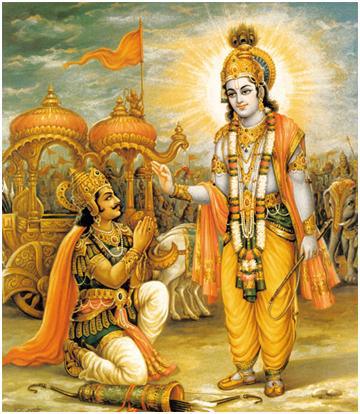
Here, in the Bhagavad Gita (The Lord’s Song), Krishna tells his friend Arjuna a great truth: that the notion of there being any separate entity that takes itself to be the doer is false. There is no doer, the ego is a false entity; there is only nature acting according to its own inherent principles.


Join us! Regular Non-Duality & Spirituality Meetings Online and In Person

tom-das-meetings-heart-flower

Why not join us? We meet online twice a week to discuss non-duality and spirituality. All are welcome, no prior knowledge is required.
Click here for more details or click on the ‘meetings tab above.

Transforming pleasure into joy

Please click here to read my second article for naturalhealthstar.com. It’s called ‘Transforming pleasure into joy’.

[Update – the above link no longer works so I have posted the article below in full; the first article called ‘The Two types of Happiness’ can be read here.]

In a previous article I wrote about joy as opposed to pleasure. Joy, as I defined it, is a natural feeling of warmth and connectedness we feel when we are with someone we love, when we are doing something we love, or when we are with nature. Pleasure on the other hand, I defined as being to do with acquisition, such as acquiring possessions, or even more subtle ‘objects’ such as acquiring pride, power, sex, certain experiences or respect.

With joy, our sense of self or ego is dimished and so we feel whole. The barrier and resistance of the ego is lessened allowing joy to emerge. With pleasure our sense of self is reinforced and strengthened, and whilst this feels initially positive, it is actually trying to cover up a deeper sense of lack or emptiness and it ultimately destructive and self-isolating. Pleasure becomes addictive whilst joy is deeply soothing.

It’s worth pointing out that in different situations joy goes by different names. When we feel joy whilst looking at a piece of art or listening to music we call it Beauty. When we are with someone we call it Love. When it is through our work we call it Service or Vocation. It is all Joy. It is all Love. These all happen when the sense of self is no longer at play.

So if you want to explore this further I suggest the first thing to do is to simply notice this. Not change it, but just gently notice it. Notice what pleasure feels like, notice how it comes about, notice your thoughts, notice how your body feels, notice the circumstances that gave rise to it, notice how you feel afterwards – you get the idea. The same with joy. Don’t accept my descriptions, but discover for yourself what these two types of experience are like.

The tendency when hearing a teaching like this is to shun pleasure and try to do more joyous things. Whilst this is on the one hand commendable, I would also advise caution. The very desire to maximise joy is actually the same drive for pleasure only in a different guise. Now joy has become an object to be acquired, and this acquisitive desire is the characteristic of pleasure. If you have spent time exploring what joy and pleasure actually feel like in your body you will get an immediate sense of this. So in trying to seek joy, the naturalness of joy is transformed into seeking pleasure. Notice how subtle this is.

On the other hand, if you don’t try to seek or repress pleasure, and instead just look at it, just being with the feeling is actually a form of love, self-love. We can love ourselves, embrace ourselves and not judge or chastise ourselves for seeking pleasure. We can embrace and be with our pleasure seeking. We can accept ourselves for who we are right now, just as we may accept a child or pet animal who is playing up. We are no longer trying to acquire something, we are no longer trying to be joyous. We are also no longer judging ourselves as being good or bad. Instead we are loving ourselves as we are, we are being tender with ourselves and our emotions, and in doing so we transform pleasure into Joy.

Experiment with this if you want, and let me know how it goes.

Love and blessings to you