tom das
You have done ENOUGH (You Don’t Have To Pretend To Be A Person Anymore)
Can I have the world and liberation? Why must I let go of the world for Liberation? Ramana Maharshi on Shiva and Shakti | Tantra and Vedanta | 1st August 2024
This video was excerpted from the Satsang dated 1st August 2024:
‘Why must I let go of the world for liberation?’ | Sri Ramana Maharshi’s teachings | Satsang from 1st August 2024
All blessings come from Guru Ramana
Q. The sage and the ignorant both have a body – what is the difference between them? Sri Ramana Maharshi | Aham Sphurana | Verse 17 Ulladu Narpadu 40 verses on Reality
The following is from the text Aham Sphurana from the entry dated 15th September, 1936. Some of the language is quite difficult so I have summarised the points in my comments which, as usual, are in italicised red:

Questioner: The Jnani [Tom: knower, enlightened sage] and ajnani [Tom: non-knower, the ignorant one] both have a body; what is the difference between them?
Tom: See Sri Ramana’s text ’40 Verses on Reality’ (Ulladu Narpadu), Bhagavan writes in verse 17:
17. To those who do not know the Self and to those who do, the body is the ‘I’. But to those who do not know the Self the ‘I’ is bounded by the body; while to those who within the body know the Self the ‘I’ shines boundless. Such is the difference between them.
Bhagavan Sri Ramana Maharshi: The mistake made by the ajnani is that he limits his “I” to the body. Both the Jnani and the ajnani have a body, and both say ‘I am the body’. The difference lies in the fact that in the case of the Jnani the diaphanous [Tom: subtle] stream of consciousness needed to sustain life in the body is an upadhi [Tom: adjunct, superimposed object], whereas in the case of the other, that macilent [Tom: thin or subtle] ray of reflected consciousness [known as body-consciousness] is the one and only consciousness he is aware of.
I Am is the truth. Body-consciousness is an obnubilating [Tom: obscuring] limitation which obscures Revelation of the Self in the case of the ajnani and an upadhi in the case of the Jnani. You are always the same “I”, whatever state it is that may be passing in front of you. In sleep “I” remains without a body. That same “I” remains undisturbed and unmutilated in the jagrat [Tom: waking] and swapna [Tom: dream] states also.
Tom: To summarise the above paragraph, which contains some convoluted language, Bhagavan says that for the Jnani, the body is a mere appearance in Consciousness (Upadhi) which doesn’t cover his true identity as Self/Consciousness, whereas for the ajnani, the body is the sole identity and this obscures the vision of Truth of ‘I’ or ‘I AM’ or ‘True Self’. However, we will see below that this description is only from the relative point of view, and that truly there is no body for the Jnani in Truth.
Only, in these states, we abandon our actual identity with “I” and imagine ourselves to be perishable bodies made of matter. Despite this confusion on our part, “I” remains happily without a body in truth always, although we assume that we are within the body. Although by us imagined to be within the body, the Real “I” ever is without any body or other limitation, being the Absolute Immutable Self Itself. One’s ignorant outlook is not merely ‘I am the body.’; it lies in having confounded the Self with the not-Self, such as the mind, intellect or body. Does the Real “I” formulate or proclaim the idea of it being this or that? Is it not always perfectly silent? It is the spurious “I” which is capable of rumbustiousness or obstreperousness, and which says, ‘I am this.’ or ‘I am that.’.The body is insentient and cannot say so. Our mistake lies in thinking “I” to be what “I” is not. “I” cannot be insentient; therefore “I” is not the inert body. What then is this “I”? “I” means Sentience or Awareness which is not adumbrated by the faculty of thought-manufacture- i.e., the aham vritti.
The body’s movements are confounded with “I” and excruciating agony is the result. Whether the body and mind work or not, “I” remains free and happy i.e., in its nativistic or intrinsic state of ecstatic, Eternal Emancipation. The ajnani’s “I” is limited to his body and mind only; that is where his whole error lies. The Jnani’s “I” includes the body and everything else. For the Emancipated-one there cannot be anything apart from “I” the Self. He sees no other. Verily everything is only Himself. In the case of the ajnani, some phantasmagoric, intermediate entity known as ahankaram [Tom: ego] arises between the body and the Self and gives rise to all sorts of trouble. If its source is sought, it disappears, leaving the Self alone behind, as the solitary residue. Continuous and intense inward-pointed scrutiny of the mind results in its disappearance.
Tom: similar to my previous comments, Bhagavan is saying essentially the same thing here, namely that the Jnani is not identified with the body whereas the ajnani is. There is also a hint that in truth there is no body, and this is made slightly clearer below.
Bhagavan also says that it is this phantom ego which arises and claims to be I and also claims to be the body, and it is this that ‘gives rise to all sorts of trouble’. The method of self-enquiry is thereafter briefly described – seek the source of this ego, and via this continuous intense inward pointedness of mind, the mind disappears and Self-knowledge remains.
Q.: Since the Jnani has a tangible body, what happens to the soul in that body after its death?
B.: Others say that the Jnani has a body, and talk of jivanmukti, videhamukti, mukti by means of making the body disappear in a flash of blazing light, etc.; the Jnani’s experience of Reality is altogether unconditioned and totally absolute. His experience is that he has no body. If others see him as being one with a body, or as possessing a body, can that affect him? He does not identify himself with the body even whilst the body is yet alive. Can the death of the body then affect him?
Tom: for a moment here Bhagavan Sri Ramana speaks in absolute terms, declaring that for the Self or Jnani, there is no body at all. Below, however, Bhagavan will flip back into speaking in relative terms, presumably due to the nature of the question and the state of the questioner:
Q.: But just now Bhagawan said that the Jnani also says “I am the body.”.
B.: Yes. His “I” includes the body. His experience is that for him there cannot be anything apart from “I”. If the body is destroyed there is no loss for the “I”. “I” remains the same as ever. If the body feels dead let it raise questions. Can it? No; being inert it cannot. “I” never dies and it does not ask any question. Who then dies and who asks questions?
Q.: For whom are all the sacred-books then? They cannot be for the real “I”. They must be for the unreal “I”. The real one would not require them. Am I correct?
B.: Yes, yes.
Q.: Is it not strange that an unreal entity should have so many sacred-books written for him?
B.: Quite so. Death is merely a thought and nothing more. He who thinks raises questions and experiences troubles. Let the thinker tell us what happens to him in death.
Om Namo Bhagavate Sri Ramanaya Om
The Attachment That Purifies You of All Attachments | 4th July 2024 | Sri Ramana’s devotional poetry
The Role of Guru Bhakti (Devotion to Guru-Self)
This is one of a series of introductory articles – please see the homepage of tomdas.com for more introductory articles.
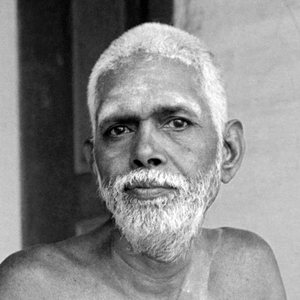
The following was originally posted here on Facebook
For me, Guru Bhakti was such an important feature of my path. Worshipping the name and form of Bhagavan Sri Ramana took me, eventually, to the formless objectless Guru in my Heart, whereupon, through the revelation of self-inquiry, He consumed me, totally and utterly, making me One with Him:
(Non-Dual) Love, Being, Consciousness and Bliss, beyond (dualistic) love, being, consciousness and bliss.
It was only later, retrospectively, that I analysed and realised what had happened and what had been happening. The intellectual understanding and appreciation of His Teachings came later.
Prior to this I never cared much for Bhagavan Sri Ramana’s written/spoken teachings – in my mind I had actually dismissed them. I just, for some reason, had a love for Him. I actually preferred Buddhist-style teachings or intellectualised versions of Advaita Vedanta, or even the teachings of Sri Nisargadatta Maharaj, as they made more sense to my rational scientific mind. Before I thought I had seen many flaws and holes in His Teachings.
Now, in retrospect, I can see how perfect His verbal and written teachings in fact are! Now I love to share his teachings. Sharing his teachings for me is a spontaneous expression of devotion, not an act of teaching at all!
At the time I was simply loving my Beloved, at the time I simply felt compelled to surrender myself to my Beloved, throw myself down at his feet. Everything else, such as Self Enquiry and Silence, spontaneously flowed from this Love and Bhakti without my being conscious at the time of what was happening or why.
This is why I often say that if you have some kind of connection to Sri Ramana, nurture that, and surrender to that, and know you are already saved. Metaphorically speaking, once you have come to Sri Ramana, your head is now in the tiger’s mouth!
Thus, in my experience, is the power of Genuine Heartfelt Guru Bhakti in which you surrender yourself to Him.

 Om Nama Bhagavate Sri Arunachala Ramanaya Om
The Grace that Reveals a Discovery in your Heart | Sri Ramana Maharshi
You can purchase the full unedited recording of this satsang from the ‘shop’ tab above. You will be provided with both the audio and video
‘All that is necessary is to be rid of the thought: “I have not realised”’ – the teaching explained | Sri Ramana Maharshi
‘All that is necessary is to be rid of the thought: “I have not realised.”’
~ Sri Ramana Maharshi, Talks with Sri Ramana Maharshi, talk no. 245
This teaching sounds so simple, but let us see what this teaching actually means. To do this, we have to take a look at the context in which this teaching was given, and not merely cling to a single quote taken out of context. The quote was taken from talk 245 from the book ‘Talks with Sri Ramana Maharshi’. Let us look at the talk in its entirely. We will see there are many wonderful and revealing teachings packed into this short talk. As usual my comments will be in italicised red and the text itself will be in black:
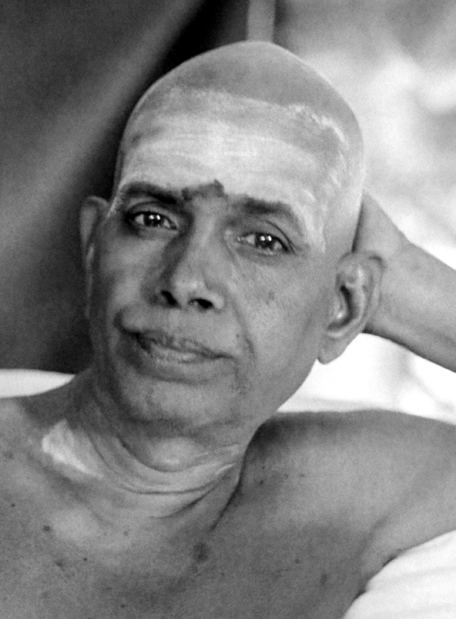
Devotee (D):“I understand that the Self is beyond the ego. My knowledge is theoretical and not practical. How shall I gain practical realisation of the Self?”
Sri Ramana Maharshi (M).: Realisation is nothing to be got afresh. It is already there. All that is necessary is to be rid of the thought: “I have not realised.”
Tom’s comments: we can see that the questioner is asking a very relevant question, namely how to covert their intellectual knowledge into genuine realisation. Bhagavan Sri Ramana is essentially pointing out that you are the Self already and that you simply have to remove any ideas of non-realisation. We will see below, based on the text itself, that this actually means removing the entirely of non-self, for any residue of non-self is synonymous with the idea ‘I have not realised’ or ‘the feeling of non-realisation’ (this term is used next below).
D.: Then one need not attempt it.
M.: No. Stillness of mind or peace is realisation. There is no moment when the Self is not.
So long as there is doubt or the feeling of non-realisation, attempt must be made to rid oneself of these thoughts.
Tom: As Sri Ramana has said that you are already the Self, the questioner naturally follows up by asking – if that is the case, then there is no need to seek, no need to search, and by extension, no need to practice, correct? Bhagavan replies by stating ‘No’, this is not the case. As long as there is ‘the feeling of non-realisation’, one must attempt to remove or ‘rid oneself’ of these thought. He goes on to define realisation as ‘stillness of mind’. We will see later that this means cessation of mind, or pure mind, which is Self. But what is this ‘feeling of non-realisation’? What thoughts do we have to remove, and how? Do we have to remove some thoughts or all thoughts? Sri Ramana continues:
The thoughts are due to identification of the Self with the non-self. When the non-self disappears the Self alone remains. To make room anywhere it is enough that things are removed from there. Room is not brought in afresh. Nay, more – room is there even in cramping.
Absence of thoughts does not mean a blank. There must be one to know the blank. Knowledge and ignorance are of the mind. They are born of duality. But the Self is beyond knowledge and ignorance.
It is light itself. There is no necessity to see the Self with another Self. There are no two selves. What is not Self is non-self. The non-self cannot see the Self. The Self has no sight or hearing. It lies beyond these – all alone, as pure consciousness.
Tom: there are a large number of points Sri Bhagavan makes in the above paragraph. Let us briefly go through them -each of the following can be derived from the above 2 paragraphs:
-Thoughts appears due to identification with the non-self (ie. the body, the mind, the world)
-Self alone remains when non-self disappears – Bhagavan gives the metaphor of clearing the rubbish from a room to make space. The idea is that we do not need to find the self or bring the self in from elsewhere, we just need to clear space and the self or room will remain over, self-shining. The junk we need to clear out is the non-self
-The absence of thoughts is not a mere blank, but instead we are to know the One who knows the ‘blank, that is we must know the Self.
-Knowledge and ignorance are both of the mind, whereas the Self is beyond the mind, Self is the Light that lights up knowledge and ignorance.
-Knowledge and ignorance are born of duality, ie. they are false, non-self, born of primal ignorance or ego. They too must disappear, like all non-self, is the implication, for liberation to ensue.
-The non-self (ie. body or mind in this case), cannot see the Self. It is the Self that ‘sees’ the Self by simply being the Self
-The self has no sight and no hearing (because it has no body or mind, both of which are non-self, both of which must disappear for realisation to occur).
-The Self is beyond all phenomena, it is Pure Consciousness. If we read carefully we will see that the word ‘Pure’ means without any objects or thoughts appearing in it. Bhagavan continues:
A woman, with her necklace round her neck, imagines that it has been lost and goes about searching for it, until she is reminded of it by a friend; she has created her own sense of loss, her own anxiety of search and then her own pleasure of recovery. Similarly the Self is all along there, whether you search for it or not. Again just as the woman feels as if the lost necklace has been regained, so also the removal of ignorance and the cessation of false identification reveal the Self which is always present – here and now. This is called realisation. It is not new. It amounts to elimination of ignorance and nothing more.
Tom: Here Bhagavan makes it very clear, using the traditional story of the woman and her necklace, that the Self is ever present. All we need to do is remove ignorance. This is the same as removal of the cessation of the false identification with non-self. Earlier Bhagavan said all we have to do is ‘be rid of the thought ‘I have not realised” and that we have to be rid of the ‘feelings of non-realisation’. It therefore follows that ignorance, identification with non-self, feelings or non-realisation and the thought ‘I have not realised’ are all the same thing. In each case, Bhagavan is simply saying ignorance must be removed. What does this actually mean? Bhagavan will explain further:
Blankness is the evil result of searching the mind. The mind must be cut off, root and branch. See who the thinker is, who the seeker is. Abide as the thinker, the seeker. All thoughts will disappear.
Tom: Bhagavan makes it clear: ‘The mind must be cut off, root and branch’. This is what Bhagavan means by removing the thought ‘I have not realised’. This is what it means to remove ignorance. This is what it means to remove identification with non-self and rid one of ‘feelings of non-realisation’. This is what he means when he says ‘realisation is stillness of mind’. He is speaking of manonasa. It is not just the peripheral thoughts (branches) that must go, but the root thought too, the thought ‘I am the body-mind’ – ‘The mind must be cut off, root and branch‘.
How to do this? Bhagavan says ‘See who the thinker is, who the seeker is’, meaning find out the Subject, the Self, know your Self, ie. Self-enquiry is the way. Bhagavan says then ‘All thoughts will disappear’. Not some thoughts will disappear, but all thoughts will disappear.
D.: Then there will be the ego – the thinker.
M.: That ego is pure Ego purged of thoughts. It is the same as the Self. So long as false identification persists doubts will persist, questions will arise, there will be no end of them. Doubts will cease only when the non-self is put an end to. That will result in realisation of the Self. There will remain no other there to doubt or ask. All these doubts should be solved within oneself. No amount of words will satisfy. Hold the thinker. Only when the thinker is not held do objects appear outside or doubts arise in the mind.
Tom: Does Bhagavan want us to hold onto thoughts or the thinker? Does he want us to hold onto the mind or the Self? Clearly when Bhagavan says ‘only when the thinker is held’, he is not speaking of the mind, but of the Self. Especially as he has already said ‘The mind must be cut off, root and branch’ and ‘all thoughts will disappear’ a few moments earlier. Self knowledge is the way. Self Enquiry is the way.
The questioner asks this very question – are we to hold onto the ego then? The thinker? Bhagavan gives us another wonderful and revealing answer: the ego purified or ‘purged of thoughts’ – that purified ‘ego’ or ‘I’ is Self. The Jiva (purified, purged of thoughts) is Siva.
In the Skanda Upanishad it is stated:
‘Jiva is Siva. Siva is Jiva. That Jiva is Siva alone. Bound by husk [non-self], it is paddy [jiva]. Freed from husk, it is rice [Self]‘
Shankara also wrote in verse 20 of Brahma Jnanavali Mala ‘Brahma satyam, jagat mithya, jivo brahmaiva naparah’ which means ‘Brahman is Truth/Reality, the world is illusion, the Jiva [when enquired into] is nothing but Brahman’
Concluding points
We have seen that Bhagavan has said ‘When the non-self disappears self alone remains‘ and ‘the mind must be cut off, root and branch‘ and ‘it amounts to elimination of ignorance, nothing more‘ and ‘the self has no sight or hearing‘.
We can therefore deduce that ‘the mind’, ‘non-self’ and ‘ignorance’ are essentially synonyms, as in each case Bhagavan has said only these have to be removed. Sure, these words may be used in different ways in different contexts, but essentially they are one, one ignorance, one maya (illusion).
How to do this? How to remove ignorance? How to end Maya? How to still the mind? How to remove non-self and clear ‘space in the room’? And to come back to our original question, How to be rid of the thought ‘I am not realised’? By going back to the Subject, all thoughts and objects disappear and only Self remains. This is known as Self-Enquiry and it results in liberation.
 Tom Das