Liberation or Self-Knowledge is not an understanding | Advaita Vedanta

Many erroneously think liberation is mere understanding in the mind ‘I am That’ or the ability to discern the difference (viveka) between what is lasting (nitya) and what is temporary (anitya), and thereby know in the mind that you are That which is lasting, and the temporary depends on you.

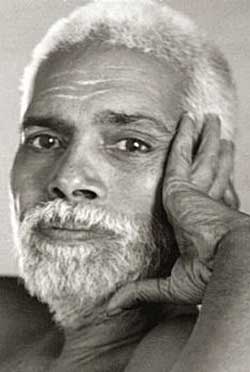
Sri Ramana Maharshi, completely in line with the vedanta scriptures, explains that Jnana or Liberation is nothing of the kind – it is not mere intellectual understanding or thoughts or discernment (viveka) in the mind, although this may be a useful precursor.

Here are two verses that Sri Ramana wrote himself:

‘Cease all talk of ‘I’ and search with inward diving mind whence the thought of ‘I’ springs up. This is the way of knowledge. To think, instead, ‘I am not this, but That I am,’ is helpful in the search, but it is not the search itself.’

~ Sri Ramana Maharshi, Ulladu Narpadu (Forty Verses on Reality), Verse 29

‘When the Vedas have declared, ‘Thou art That’ – not to seek and find the nature of the Self and abide in It, but to think ‘I am That, not This’ is want [ie. lack] of strength. Because, That abides forever as the Self.’

~ Sri Ramana Maharshi, Ulladu Narpadu (Forty Verses on Reality), Verse 32

If this is a new or strange teaching for you, please explore the recommended reading list here to understand these teachings in full.

UPANISHADS

In the Amritabindu Upanishad Jnana is defined as follows in verse 5:

‘The mind severed from all connection with sensual objects, and prevented from functioning out, awakes into the light of the heart, and finds the highest condition. The mind should be prevented from functioning, until it dissolves itself in the heart. This is Jnana, this is Dhyana, the rest is all mere concoction of untruth.’

Some people think I selectively quote merely to prove my own point, but note that this above verse was also quoted to make this very same point by Swami Vidyaranya (1296-1386), author of the wonderful Advaita Vedanta text Panchadasi and Shankaracharya (head monk and preserver of Advaita Vedanta) of Sringeri Math, in his work Jivanmukti Viveka.

GAUDAPADA AND SHANKARA

Sri Gaudapada wrote the following in his commentary on the Mandukya Upanishad, explaining how in liberation no mind exists:

3.32 When the Truth of Atman has been realised, the mind ceases to think; then the mind attains the state of not being the mind. In the absence of things to be perceived, it becomes a non-perceiver.

Shankara gives his commentary on this verse 3.31 explaining how the entire phenomenal existence is dependent on the mind and how mind is stilled or stopped in liberation, agreeing with Gaudapada above:

‘This duality as a whole, that is mano-drsyam, perceived by the mind; is nothing but the mind, which is itself imagined – this is the proposition [Tom: ie. meaning of the verse]. For duality endures so long as the mind does, and disappears with the disappearance of the mind.

‘For when the mind ceases to be mind when, like the illusory snake disappearing in the rope, the mind’s activity stops through the practice of discriminating insight and detachment, or when the mind gets absorbed in the state of sleep, duality is not perceived. From this non-existence is proved the unreality of duality. This is the purport. How does the mind cease to be the mind? This is being answered [in the next verse and commentary]’

The rest of the text continues in this manner.

MORE SHANKARA

We see the same teaching in Shankara’s masterpiece Vivekachudamani which explains all the teachings given in Shankara’s various commentaries in a much clearer form. Here is verse 169 where he equates the mind with ignorance:

169. There is no Ignorance (Avidya) outside the mind. The mind alone is Avidya, the cause of the bondage of transmigration. When that is destroyed, all else is destroyed, and when it is manifested, everything else is manifested.

Then he states the world is but an illusion projected by the mind, like a dream, essentially equating the mind with maya:

170. In dreams, when there is no actual contact with the external world, the mind alone creates the whole universe consisting of the experiencer etc. Similarly in the waking state also; there is no difference. Therefore all this (phenomenal universe) is the projection of the mind.

Shankara then warns the seeker to stay away from the mind:

176. In the forest-tract of sense-pleasures there prowls a huge tiger called the mind. Let good people who have a longing for Liberation never go there.

MANONASA

Shankara teaches us that the mind eventually must die (manonasa, a traditional synonym of self-realisation), and the method of how this is achieved:

277. The Yogi’s mind dies, being constantly fixed on his own Self.

407. This apparent universe has its root in the mind, and never persists after the mind is annihilated. Therefore dissolve the mind by concentrating it on the Supreme Self, which is thy inmost Essence.

481. My mind has vanished, and all its activities have melted, by realising the identity of the Self and Brahman; I do not know either this or not-this; nor what or how much the boundless Bliss (of Samadhi) is

502. How can there be merits and demerits for me, who am without organs, without mind, changeless, and formless – who am the realisation of Bliss Absolute? The Shruti also mentions this in the passage “Not touched”, etc.!

🙏🙏🙏

Ramana Maharshi: is intellectual or theoretical understanding required or even useful?

ramana maharshi

D.: Is intellectual knowledge enough?
M.: Unless intellectually known, how to practice it? Learn it intellectually first, then do not stop with that. Practise it.

Talks with Sri Ramana Maharshi, Talk 40


Questioner: Is a teacher necessary for instructions?
Ramana Maharshi: Yes, if you want to learn anything new. But here you have to unlearn.
Questioner: Yet a teacher is necessary.
Ramana Maharshi: You have already got what you seek elsewhere. So no teacher is necessary.
Questioner: Is there any use of the man of Realisation for the seeker?
Ramana Maharshi: Yes. He helps you to get rid of your delusion that you are not realised.

Talks with Sri Ramana Maharshi, Talk 434


Questioner: Is an intellectual understanding of the Truth necessary?
Ramana Maharshi: Yes. Otherwise why does not the person realise God or the Self at once, ie. as soon as he is told that God is all or the Self is all? That shows some wavering on his part. He must argue with himself and gradually convince himself of the Truth before his faith becomes firm.

Talks with Sri Ramana Maharshi, Talk 596


Question: Is the study of science, psychology, physiology, etc., helpful for attaining Yoga-liberation or for intuitive understanding of the unity of Reality?

Ramana Maharshi: Very little. Some theoretical knowledge is needed for Yoga and may be found in books, but practical application is what is needed. Personal example and instruction are the most helpful aids. As for intuitive understanding, a person may laboriously convince himself of the truth to be grasped by intuition, of its function and nature, but the actual intuition is more like feeling and requires practical and personal contact. Mere book learning is not of any great use. After Realisation all intellectual loads are useless burdens and are to be thrown overboard.

Talks with Sri Ramana Maharshi, Talk 28


It is those who are not learned that are saved rather than those whose ego has not yet subsided in spite of their learning. The unlearned are saved from the relentless grip of the devil of self-infatuation; they are saved from the malady of a myriad whirling thoughts and words; they are saved from running after wealth. It is from more than one evil that they are saved.

Reality in forty verses – Supplement, verse 36


‘Eventually, all that one has learnt will have to be forgotten’

From ‘Who am I?’


Tom comments: Intellectual understanding has a certain importance – it gives the seeking mind direction and structure. This enables one to peel back the illusion of egotism or Maya, the cause of apparent separation and suffering. Then, theoretical knowledge, once it has fully served its purpose, can be discarded, like the metaphorical thorn used to remove a thorn.

Is enlightenment an experiential or energetic shift?

hills and pool

Often enlightenment is taught as being some kind of experiential shift. But is this true? This post will attempt to explain and illustrate how it all works. So is enlightenment an experiential shift? Yes and no. The essential factor that changes occurs in the mind. Fundamentally the experience doesn’t change. What changes is the way experience is understood. Understanding is the key.

Let me illustrate this with an example:

eg. If you realise that Father Christmas doesn’t exist, and that he never existed, it will dramatically change the way you experience Christmas: the days before Christmas will feel different, it will feel different going to bed on Christmas eve, and it will be a different experience seeing your presents in the morning under the Christmas tree.

Now, is this an experiential shift?

Well it may seem that way, but actually what has happened is that a belief/thought that was once taken to be true is now seen to be false, and that understanding in turn has changed the way we experience the same set of events.

I italicise ‘same set of events’, as the raw sensory experience of life remains unchanged both before and after enlightenment. All that changes is understanding, and that change is at the level of the mind/thought. Understanding is the key.

To put it more simply perhaps, the experiential shift, if it occurs at all (it may not), is a symptom of right understanding, which is the essential underlying cause.

How this affects teaching enlightenment

Now, if a teacher who is genuinely enlightened does not understand what has happened to them, then they may teach that enlightenment is some kind of experiential shift. Because that’s how it can feel. This may happen if if they have not come to this realisation through a teaching such as Buddhism or Vedanta, both of which explicitly emphasise understanding on the level of the mind as being central, or if the teacher has not sufficiently analysed their experience well enough in order to teach it effectively. When the latter happens, the results is often a very vague teaching which is imprecise and difficult to understand. This reduces the effectiveness of the teaching.

This brings me to another point: just because someone is enlightened, doesn’t mean they can teach effectively. A comparable example is just because you can speak English, doesn’t mean you understand the grammar, syntax and other rules and techniques that are often very useful in teaching someone else English. This understanding of grammar, for example, greatly increases the efficiency of the teaching.

The same goes for enlightenment, the end of suffering: there are many beautiful techniques and lovely teachings that mean that the teaching works much more effectively at sharing this wonderful Understanding.