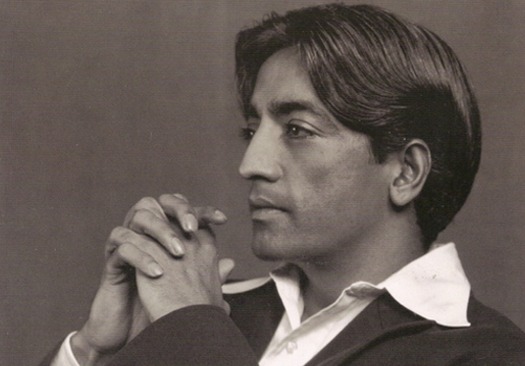
Jiddu Krishnamurti – on Sensitivity

520382

Here are some quotes from Jiddu Krishnamurti about ‘sensitivity’. Why is it that we are not sensitive to the many horrors and pains in the world, with all it’s suffering and strife? And what relevance does this have at all in daily life and in the spiritual quest?

Krishnamurti addresses these in his usual holistic manner, raising questions such as are we sensitive to the trees and birds, to nature? Do we notice not only beauty but also ugliness. Do we allow ourselves to feel both positive and negative emotions or do we run away from them, seeking solace in objects, entertainment and substances? Do we judge, condemn, label and see things through the veil of opinion and past knowledge, rather than see things afresh as they actually are? Do we seek security and knowledge in place of allowing ourselves to feel emotional content in our daily lives?

I hope you find the below quotes to be of benefit to you. If you would like to learn more about Krishnamurti’s approach to this I would recommend his short book Education and the Significance of Life, which I believe you can easily find as a free online download.

Best wishes

Tom


Without sensitivity there can be no affection; personal reaction does not indicate sensitivity; you may be sensitive about your family, about your achievement, about your status and capacity. This kind of sensitivity is a reaction, limited, narrow, and is deterioration. Sensitivity is not good taste for good taste is personal and the freedom from personal reaction is the awareness of beauty. Without the appreciation of beauty and without the sensitive awareness of it, there is no love.

This sensitive awareness of nature, of the river, of the sky, of the people, of the filthy road, is affection. The essence of affection is sensitivity.

But most people are afraid of being sensitive; to them to be sensitive is to get hurt and so they harden themselves and so preserve their sorrow. Or they escape into every form of entertainment, the church, the temple, the gossip and cinema and social reform. But being sensitive is not personal and when it is, it leads to misery. To break through this personal reaction is to love, and love is for the one and the many; it is not restricted to the one or to the many.

To be sensitive, all the senses must be fully alive, active, and the fear of being a slave to the senses is merely the avoidance of a natural fact. The awareness of the fact does not lead to slavery; it is the fear of the fact that leads to bondage. Thought is of the senses and thought makes for limitation but yet you are not afraid of thought. On the contrary; it is ennobled with respectability and enshrined with conceit.

To be sensitively aware of thought, feeling, of the world around you, of your office and of nature, is to explode from moment to moment in affection. Without affection, every action becomes burdensome and mechanical and leads to decay.

Jiddu Krishnamurti, Krishnamurti’s Notebook


If you say you will learn gradually about yourself, adding more and more,  little, you are not studying yourself now as you are but through acquired knowledge. Learning implies a great sensitivity. There is no sensitivity if there is an idea, which is of the past, dominating the present. Then the mind is no longer quick, pliable, alert.

Most of us are not sensitive even physically. We overeat, we do not bother about the right diet, we oversmoke and drink so that our bodies become gross and insensitive; the quality of attention in the organism itself is made dull. How can there be a very alert, sensitive, clear mind if the organism itself is dull and heavy? We may be sensitive about certain things that touch us personally but to be completely sensitive to all the implications of life demand that there be no separation between the organism and the psyche. It is a total movement.

To understand anything you must live with it, you must observe it, you must know all its content, its nature, its structure, its movement. Have you ever tried living with yourself? If so, you will begin to see that yourself is not a static state, it is a fresh living thing. And to live with a living thing your mind must also be alive. And it cannot be alive if it is caught in opinions, judgements and values. In order to observe the movement of your own mind and heart, of your whole being, you must have a free mind, not a mind that agrees and disagrees, taking sides in an argument, disputing over mere words, but rather following with an intention to understand – a very difficult thing to do because most of us don’t know how to look at, or listen to, our own being any more than we know how to look at the beauty of a river or listen to the breeze among the trees.

When we condemn or justify we cannot see clearly, nor can we when our minds are endlessly chattering; then we do not observe what is we look only at the projections we have made of ourselves. Each of us has an image of what we think we are or what we should be, and that image, that picture, entirely prevents us from seeing ourselves as we actually are.

It is one of the most difficult things in the world to look at anything simply. Because our minds are very complex we have lost the quality of simplicity. I don’t mean simplicity in clothes or food, wearing only a loin cloth or breaking a record fasting or any of that immature nonsense the saints cultivate, but the simplicity that can look directly at things without fear – that can look at ourselves as we actually are without any distortion – to say when we lie we lie, not cover it up or run away from it.

Jiddu Krishnamurti, Freedom From The Known


We are disturbed about life, politics, the economic situation, the horror, the brutality, the sorrow in the world as well as in ourselves, and from that we realize how terribly narrowly conditioned we are. And what shall we do? Accept that disturbance and live with it as most of us do? Get used to it as one gets used to living with a backache? Put up with it

There is a tendency in all of us to put up with things, to get used to them, to blame them on circumstances. `Ah, if things were right I would be different’, we say, or, `Give me the opportunity and I will fulfil myself’, or, ‘I am crushed by the injustice of it all’, always blaming our disturbances on others or on our environment or on the economic situation.

If one gets used to disturbance it means that one’s mind has become dull, just as one can get so used to beauty around one that one no longer notices it. One gets indifferent, hard and callous, and one’s mind becomes duller and duller. If we do not get used to it we try to escape from it by taking some kind of drug, joining a political group, shouting, writing, going to a football match or to a temple or church or finding some other form of amusement.

Why is it that we escape from actual facts? We are afraid of death – I am just taking that as an example – and we invent all kinds of theories, hopes, beliefs, to disguise the fact of death, but the fact is still there. To understand a fact we must look at it, not run away from it. Most of us are afraid of living as well as of dying. We are afraid for our family, afraid of public opinion, of losing our job, our security, and hundreds of other things. The simple fact is that we are afraid, not that we are afraid of this or that. Now why cannot we face that fact?

You can face a fact only in the present and if you never allow it to be present because you are always escaping from it, you can never face it, and because we have cultivated a hole network of escapes we are caught in the habit of escape.

Now, if you are at all sensitive, at all serious, you will not only be aware of your conditioning but you will also be aware of the dangers it results in, what brutality and hatred it leads to. Why, then, if you see the danger of your conditioning, don’t you act? Is it because you are lazy, laziness being lack of energy? Yet you will not lack energy if you see an immediate physical danger like a snake in your path, or a precipice, or a fire. Why, then, don’t you act when you see the danger of your conditioning? If you saw the danger of nationalism to your own security, wouldn’t you act?

The answer is you don’t see. Through an intellectual process of analysis you may see that nationalism leads to self-destruction but there is no emotional content in that. Only when there is an emotional content do you become vital. If you see the danger of your conditioning merely as an intellectual concept, you will never do anything about it. In seeing a danger as a mere idea there is conflict between the idea and action and that conflict takes away your energy. It is only when you see the conditioning and the danger of it immediately, and as you would see a precipice, that you act. So seeing is acting.

Most of us walk through life inattentively, reacting unthinkingly according to the environment in which we have been brought up, and such reactions create only further bondage, further conditioning, but the moment you give your total attention to your conditioning you will see that you are free from the past completely, that it falls away from you naturally.

Jiddu Krishnamurti, Freedom From The Known


To understand and to be free of any problem we need a great deal of passionate and sustained energy, not only physical and intellectual energy but an energy that is not dependent on any motive, any psychological stimulus or drug. If we are dependent on any stimulus that very stimulus makes the mind dull and insensitive. By taking some form of drug we may find enough energy temporarily to see things very clearly but we revert to our former state and therefore become dependent on that drug more and more. So all stimulation, whether of the church or of alcohol or of drugs or of the written or spoken word, will inevitably bring about dependence, and that dependence prevents us from seeing clearly for ourselves and therefore from having vital energy.

Jiddu Krishnamurti, Freedom From The Known


When you do not compare at all, when there is no ideal, no opposite, no factor of duality, when you no longer struggle to be different from what you are – what has happened to your mind? Your mind has ceased to create the opposite and has become highly intelligent, highly sensitive, capable of immense passion, because effort is a dissipation of passion – passion which is vital energy – and you cannot do anything without passion.

Jiddu Krishnamurti, Freedom From The Known


In the life we generally lead there is very little solitude. Even when we are alone our lives are crowded by so many influences, so much knowledge, so many memories of so many experiences, so much anxiety, misery and conflict that our mind become duller and duller, more and more insensitive, functioning in a monotonous routine. Are we ever alone? Or are we carrying with us all the burdens of yesterday?

Jiddu Krishnamurti, Freedom From The Known


To understand all this is not to be caught in it, not to depend on it. It means never to deny anything, never to come to any conclusion or to reach any ideological, verbal state, or principle, according to which you try to live. The very perception of this whole map which is being unfolded is already intelligence.

It is this intelligence that will act and not a conclusion, a decision or an ideological principle.

Our bodies have been made dull, just as our minds and hearts have been dulled, by our education, by our conformity to the pattern which society has set and which denies the sensitivity of the heart. It sends us to war, destroying all our beauty, tenderness and joy. The observation of all this, not verbally or intellectually but actually, makes our body and mind highly sensitive. The body will then demand the right kind of food; then the mind will not be caught in words, in symbols, in platitudes of thought. Then we shall know how to live  both in the valley and on the mountaintop; then there will be no division or contradiction between the two.

Jiddu Krishnamurti, The Only Revolution


It is opinion and belief that prevent the observation of what actually is. The seeing of what is is part of that intelligence which you are asking about. There is no intelligence if there is no sensitivity of the body and of the mind – the sensitivity of feeling and the clarity of observation. Emotionalism and sentimentality prevent the sensitivity of feeling.

Jiddu Krishnamurti, The Only Revolution


Sensitivity to beauty and to ugliness does not come about through attachment; it comes with love, when there are no self-created conflicts. When we are inwardly poor, we indulge in every form of outward show, in wealth, power and possessions. When our hearts are empty, we collect things. If we can afford it, we surround ourselves with objects that we consider beautiful, and because we attach enormous importance to them, we are responsible for much misery and destruction.

The acquisitive spirit is not the love of beauty; it arises from the desire for security, and to be secure is to be insensitive. The desire to be secure creates fear; it sets going a process of isolation which builds walls of resistance around us, and these walls prevent all sensitivity. However beautiful an object may be, it soon loses its appeal for us; we dull. Beauty is still there, but we are no longer open to it, and it has been absorbed into our monotonous daily existence.

Since our hearts are withered and we have forgotten how to be kindly, how to look at the stars, at the trees, at the reflections on the water, we require the stimulation of pictures and jewels, of books and endless amusements. We are constantly seeking new excitements, new thrills, we crave an ever increasing variety of sensations. Art is this craving and its satisfaction that make the mind and heart weary and dull. As long as we are seeking sensation, the things that we call beautiful and ugly have but a very superficial significance. There is lasting joy only when we are capable of approaching all things afresh – which is not possible as long as we are bound up in our desires. The craving for sensation and gratification prevents the experiencing of that which is always new. Sensations can be bought, but not the love of beauty.

When we are aware of the emptiness of our own minds and hearts without running away from it into any kind of stimulation or sensation, when we are completely open, highly sensitive, only then can there be creation, only then shall we find creative joy. To cultivate the outer without understanding the inner must inevitably build up those values which lead men to destruction and sorrow.

Jiddu Krishnamurti, Education and the Significance of Life


Sensitivity can never be awakened through compulsion. One may compel a child to be outwardly quiet, but one has not come face to face with that which is making him obstinate, impudent, and so on. Compulsion breeds antagonism and fear. Reward and punishment in any form only make the mind subservient and dull; and if this is what we desire, then education through compulsion is an excellent way to proceed.

Jiddu Krishnamurti, Education and the Significance of Life


…fear kills creative thinking. Fear dulls the mind and heart so that we are not alert to the whole significance of life; we become insensitive to our own sorrows, to the movement of the birds, to the smiles and miseries of others.

Conscious and unconscious fear has many different causes, and it needs alert watchfulness to be rid of them all. Fear cannot be eliminated through discipline, sublimation, or through any other act of will: its causes have to be searched out and understood. This needs patience and an awareness in which there is no judgement of any kind.

It is comparatively easy to understand and dissolve our conscious fears. But unconscious fears are not even discovered by most of us, for we do not allow them to come to the surface; and when on rare occasions they do come to the surface, we hasten to cover them up, to escape from them. Hidden fears often make their presence known through dreams and other forms of intimation, and they cause greater deterioration and conflict than do the superficial fears. Our lives are not just on the surface, their greater part is concealed from casual observation.

Jiddu Krishnamurti, Education and the Significance of Life


In our search for knowledge, in our acquisitive desires, we are losing love, we are blunting the feeling for beauty, the sensitivity to cruelty; we are becoming more and more specialized and less and less integrated. Wisdom cannot be replaced by knowledge, and no amount of explanation, no accumulation of facts, will free man from suffering. Knowledge is necessary, science has its place; but if the mind and heart are suffocated by knowledge, and if the cause of suffering is explained away, life becomes vain and meaningless. And is this not what is happening to most of us?

Jiddu Krishnamurti, Education and the Significance of Life


The love of beauty may express itself in a song, in a smile, or in silence; but most of us have no inclination to be silent. We have not the time to observe the birds, the passing clouds, because we are too busy with our pursuits and pleasures. When there is no beauty in our hearts, how can we help the children to be alert and sensitive? We try to be sensitive to beauty while avoiding the ugly; but avoidance of the ugly makes for insensitivity.

If we would develop sensitivity in the young, we ourselves must be sensitive to beauty and to ugliness, and must take every opportunity to awaken in them the joy there is in seeing, not only the beauty that man has created, but also the beauty of nature.

Jiddu Krishnamurti, Education and the Significance of Life
The Self is All/ Self Enquiry in daily life

201908

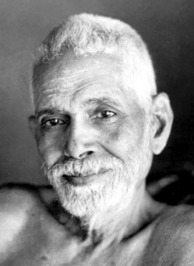
Ramana Maharshi: The Self is all. Are you apart from the Self? Or can the work go on without the Self? The Self is universal: so, all actions will go on whether you strain yourself to be engaged in them or not. The work will go on of itself. Thus Krishna told Arjuna that he need not trouble to kill the Kauravas; they were already slain by God. It was not for him to resolve to work and worry himself about it, but to allow his own nature to carry out the will of the higher power.

Q: But the work may suffer if I do not attend to it.

Ramana Maharshi: Attending to the Self means attending to the work. Because you identify yourself with the body, you think that work is done by you. But the body and its activities, including that work, are not apart from the Self. What does it matter whether you attend to the work or not? Suppose you walk from one place to another: you do not attend to the steps you take. Yet you find yourself after a time at your goal. You see how the business of walking goes on without your attending to it. So also with other kinds of work.

Q: It is then like sleep-walking.

Ramana Maharshi: Like somnambulism? Quite so. When a child is fast asleep, his mother feeds him; the child eats the food just as well as when he is fully awake. But the next morning he says to the mother, “Mother, I did not take food last night”. The mother and others know that he did, but he says that he did not; he was not aware. Still the action had gone on.

A traveller in a cart has fallen asleep. The bulls move, stand still or are unyoked during the journey. He does not know these events but finds himself in a different place after he wakes up. He has been blissfully ignorant of the occurrences on the way, but the journey has been finished. Similarly with the Self of a person. The ever-wakeful Self is compared to the traveller asleep in the cart.

Chan (Zen) Master Huang Po: How is it possible to develop the Supreme-Enlightenment Mind?

Huang Po Zen Teachings

Question: How is it possible to develop the Supreme-Enlightenment Mind?

Huang Po: Bodhi [enlightenment or enlightened mind]* means nothing to attain. Even now, just as you allow thought to arise, you get nothing. Thus, realising that there is absolutely nothing to attain is the Bodhi Mind.

The realisation that there is nowhere to abide and nothing to attain is the Bodhi.

Therefore, Shakyamuni Buddha [the original Buddha, also known as Gautama Buddha] said ‘…there was really no Dharma [teaching or method] by means of which the Tathagata [the Buddha] attained Supreme Enlightenment…’

*[Tom – square bracket comments added by me]

Almost got it?

mike

If you have found a spiritual or non-dual teaching that makes sense for you, or if you think you have ‘almost got it now’, know that it is way off the mark! This doesn’t make sense! 😂 Non-duality or advaita doesn’t make sense! Liberation or enlightenment doesn’t make sense! It cannot be understood!

What’s more – no learning is required. It just is! It is everything. It is ‘what is’. And ‘what is’ works all by itself without need for a ‘me’ or ‘you’. Simply THIS in its totality, beyond all concepts and including all concepts.

But words, even the most precise and wonderfully erudite words, may only give a flavour, an indication of what they are pointing to.

You CAN get quite a good conceptual understanding of liberation- eg. just THIS, as it is, empty of belief in separation/me/subject-object, empty of the personal stories, but allowing everything/all without exclusion (you can substitute in your own personal understanding of non-duality or liberation here if you like).

But the words and concepts are not it – they are never it. They are (initially at least) for the illusory ‘me’ that believes it lives in time and space and has free will. The ‘me’ now thinks it understands, and this conceptual understanding allows the perpetuation of this illusory ‘me’ as well as the concomitant suffering.

…yes, where the ‘me’ is, suffering follows…

There may, however, and apparently, be a ‘transmission’ beyond the words…’one Guru enlightening another Guru’ (not that there are really two)…and the ‘me’ may totally and completely collapse…it is Mystery…it is Grace in Action…what is left cannot be understood at all! It is Self-Celebrating and it doesn’t need to be understood.

…but, paradoxically, there is also no need for any transmission, no need for any collapse, no need for a ‘moment’ – for THIS cannot go anywhere or be lost – it is already whole and unfractured – it is already complete and not lacking a single thing – it has never been lost, and always IS whatever IS.

(How can you lose ‘whatever is’?)

Jesus – ‘do not love the world or things in the world’

Jesus walks water

Also see:

The Non-Dual Vision of Jesus Christ

Jesus and non-duality

The following quotes are taken from the Bible, and whilst they are taken out of context, together they do reveal a certain power of their own, pointing out the need to turn away from the world towards Source Within (‘the Father’):

Do not love the world or the things in the world. If anyone loves the world, the love of the Father is not in him.
1 John 2:15

You adulterous people! Do you not know that friendship with the world is enmity with God? Therefore whoever wishes to be a friend of the world makes himself an enemy of God.
James 4:4

And the world is passing away along with its desires, but whoever does the will of God abides forever.
1 John 2:17

If anyone comes to me and does not hate his own father and mother and wife and  children and brothers and sisters, yes, even his own life, he cannot be my disciple.
Luke 14.26

…the whole world lies under the sway of the wicked one.
1 John 5:19

…we look not to the things that are seen but to the things that are unseen. For the things that are seen are transient, but the things that are unseen are eternal.
2 Corinthians 4:18

For if you live according to the flesh you will die, but if by the Spirit you put to death the deeds of the body, you will live.
Romans 8:13

So then, none of you can be My disciple who does not give up all his own possessions.
Luke 14:33

…the light shines in the darkness, and the darkness did not comprehend it.
John 1:5

Jesus answered, ‘My kingdom is not of this world. If My kingdom were of this world, My servants would fight, so that I should not be delivered to the Jews; but now My kingdom is not from here.
John 18:36

No one can serve two masters, for either he will hate the one and love the other, or he will be devoted to the one and despise the other. You cannot serve God and money.
Matthew 6:24

Do not be surprised, brothers, that the world hates you.
1 John 3:13

Woe to you, when all people speak well of you, for so their fathers did to the false prophets.
Luke 6:26

If the world hates you, know that it has hated me before it hated you. If you were of the world, the world would love you as its own; but because you are not of the world, but I chose you out of the world, therefore the world hates you.
John 15:18-19

For all that is in the world—the desires of the flesh and the desires of the eyes and pride in possessions—is not from the Father but is from the world.
1 John 2:16

Tom’s interpretation: whilst all is from ‘the Father’ (ie. Source), this type of teaching exposition is given to show us that these types of desires for sense-objects and object-based happiness actually lead us away from liberation. i.e. all objective phenomena (‘all that is in the world’) are ephemeral manifestations of Maya. It is only when we lovingly attend to the Source Within, ‘the Father’, which is both the path of Knowledge and the culmination of the Path of Love, that we realise our already inherent unity with Him (or Her or That).

Keep your life free from love of money, and be content with what you have, for he has said, “I will never leave you nor forsake you.”
Hebrews 13:5

I have given them your word, and the world has hated them because they are not of the world, just as I am not of the world.
John 17:14

His dominion is an everlasting dominion, which shall not pass away, and his kingdom one that shall not be destroyed
Daniel 7:14

Peace I leave with you; my peace I give to you. Not as the world gives do I give to you. Let not your hearts be troubled, neither let them be afraid.
John 14:27

Set your minds on things that are above, not on things that are on earth.
Collosians 3:2

For whoever wishes to save his life will lose it, but whoever loses his life for My sake, he is the one who will save it. And He was saying to them all, “If anyone wishes to come after Me, he must deny himself, and take up his cross daily and follow Me.”
Luke 9:23-24

He [Jesus] turned and said to Peter, ‘Get behind Me, Satan! You are an offense to Me, for you are not mindful of the things of God, but the things of men.’”
Matthew 16:23

One day Jesus invited a man to follow Him and become His disciple—but the man refused. He said he would follow Jesus later, but first he wanted to go bury his father. Jesus responded, “Follow me, and let the dead bury their own dead”
Matthew 8:22.

For as in Adam all die, so also in Christ shall all be made alive.
1 Corinthians 15:22

The Ultimate or Highest Truth according to the Upanishads

There is a famous verse in the Upanishads that explicitly and specifically proclaims to hold the highest truth.

This verse was considered important enough that it was also incorporated into Shankara’s masterpiece Vivekachudamani and also Gaudapada‘s main work, his commentary on the Mandukya Upanishad (the Mandukya Karika).

In fact it is the only verse that I know of that is repeated not only in more than one Upanishad, but is also repeated by the two greatest traditional exponents of Advaita Vedanta (ie. Shankara and Gaudapada) in their subsequent works. Sri Ramana Maharshi also wrote a version of this verse.

Here is the verse:

There is neither destruction (Nirodha) nor creation (Utpatti), none in bondage (Bandha) and none practicing disciplines (Sadhaka). There is none seeking Liberation (Mumukshu) and none liberated (Mukta). This is the ultimate or highest truth (Paramartha).’

As I said above, this verse is found repeated in the Amritabindu Upanishad in verse 10, in the Atma Upanishad in verse 2.31. It was later incorporated by both Gaudapada (Mandukya Karika 2.32) and Shankara (Vivekachudamani verse 574) in their writings. Sri Ramana Maharshi also wrote a version of this verse himself which can be found as verse B28 in the text Guru Vachaka Kovai.

What do you think of this verse?

Powerful quotes from Sri Ranjit Maharaj

Sri Ranjit Maharaj was the guru-brother of the more famous Sri Nisargadatta Maharaj, that is they had the same guru – Sri Siddharameshwar Maharaj. Sri Ranjit Maharaj shared the same teachings but in a very direct way and with his own unique flavour. Here are some quotes from Sri Ranjit Maharaj:
Ranjit Maharaj

The body and the world

Everyone gives value to the world. The realised being, who has gone beyond the world, beyond knowledge, only gives value to zero. When you understand that the world is untrue and that everything is zero, then all that remains is Reality.

You reduce yourself to being a body and then you constantly worry for it. Why? By thinking “I am the body”, you have reduced yourself to such a small creature. The body is nothing. It comes from zero and will soon return to zero.

When you lose all love for the illusion, He automatically is there. You get absorbed into Reality because He and you are the same, nothing else. There is no “you” or “self” in Reality. Forget about self. The real understanding is, “I don’t exist.

The world is nothing but a long dream, take it for granted.

There’s nothing there, so what is there to say? As long as the body is there, he acts, no doubt. He calls his mother “mother”, and his wife “wife”, but still he knows. If somebody asks him, “What is your name?”, he gives his name, but he knows, “I am not this.”

The Master

The master is the greatest illusion because all that he says with full hear and frankness is false. But the false words that the master tells you can make you reach Reality.

The master takes you to that place where there is no one to understand anything. There is no knowledge nor ignorance and so understanding has no meaning. Let everything appear within That, but say that it is not true. There is no need to change anything because it doesn’t exist. When you forget the sense of the world, which is nonsense, then you will know the real sense and Reality opens up to you.

An enlightened person says at once, “One plus two is three! I know!” He says it so strongly. Understanding should come. Master awakens your understanding.

Nobody comes, nobody goes. All is a dream. In a dream you can become a great master, but when you wake up, you come back to your ordinary state. Who has gone there and who has come back? Nothing has happened.

The concept of a “great master” has come upon you, and you have become the “great master”, but when you wake up you feel, “All this is nonsense. How can I be a great master? I know nothing!” Still, in the dream, you were giving lectures and were talking easily about all these things, but when awakening comes, all this knowledge vanishes. It was only a dream.

The so-called sage who says, “I am the reincarnation of God”, doesn’t know Him, doesn’t know Reality. On the contrary, he is the slave of his ego, of illusion. When knowledge itself has no entity, there is no question of all these things.

Thinking that the master has a form is only ignorance. I tell you. When you accept what He tells you then you are always with Him.

The ego

The ego is like the son of a barren woman – it doesn’t exist. It is a false projection of a confused and ignorant mind.

Knowledge & Understanding

Understanding should come, and finally one should see that knowledge is also not true. Forget everything. Knowledge, ignorance . . . all is zero.

[Tom – see the same written in a traditional Advaita Vedanta text here.]

Understand this way: that you should be free from ignorance and finally from knowledge, also. Knowledge is the greatest ignorance. Understand this way and forget everything. In that moment, you are He.

First mental understanding is required and after that comes a practical understanding. Intellectual talent is the greatest thing. Without the intellect, one cannot understand. So, you have to understand with the full intellect and then, that knowledge, or that understanding will submerge, because knowledge is a thought. A good thought or a bad thought, both are thoughts. So, knowledge is a golden thorn, and ignorance is an ordinary thorn and both are bondage. Suppose your hands have been put in handcuffs. Maybe they’re iron cuffs or maybe they’re golden, but it’s still bondage. So, both are thorns. One should understand and throw them away. It is very difficult to throw out the knowledge, because ego remains up till knowledge. Knowledge is the ego, nothing else. To erase that knowledge, one should say, “I know nothing.”

Ignorance came by hearing and is dispelled by hearing. By words you have become bound and by words you can be free. Words are false, but their meaning is true. The illusion is needed in order to go beyond it.

The only way

There is only one way to know Reality – forget everything and instantly you are He. Short and sweet. There are no words for Reality. Forget the illusion and He is there. Do everything, but say that it is not true. That is the main point.

A disciple should put a zero on everything, including himself, otherwise he cannot advance. No one wants to put a zero on their self because they fear not being accepted by others. Be mad and do it!

The Ignorance and the wise

An ignorant person always sees the world as true. The realised sage sees the world as not true. That is the difference.

Nothing

When you feel that something can touch you, or harm you, it means that you are in the illusion. How can nothing touch you? Everything in the illusion is nothing.

Why to fear? Nothing is there. Everything is illusion. Keep your mind in that fearless state only. Just as the poisonous tooth is taken out, in the same way, play with the world, play with the illusion, there is no harm. It won’t affect your mind. Live fearlessly; no death, no fear, knowing that “I am that real power.” There is nothing! What will harm you?

In the same way, here we experience many things due to the objectivity of the mind. You see all the objects and immediately believe that they are real. At the moment you realise who you are, you see that everything is nothing. That is the main point. Mind should accept that everything is zero. Once the mind accepts that everything is nothing, then nothing remains and my Self is Truth.

God

The world is full of Him. Nothing is there except Him. What you see is Him.

No matter if you are poor, sitting on a throne or lying in the gutter, still you are always Reality. The outside appearance has nothing to do with who you are. Everyone is He, no matter what state you may be in.

Fearless

For example, when you sleep you dream, and in the dream somebody gives you a slap on the face. You feel the slap and immediately you you wake up to find only pillows. You then realise, “Oh, it was nothing ! Nobody slapped me.” In the dream, somebody kills you, “Ahhh, I am killed!” Then you wake up. “All is false, nobody was there to kill me.” Then your fear goes away. Awakening brings makes you fearless. One should realise that by nature you are fearless. Being fearless, the mind becomes completely naked and you know that nothing is true.


Q. Are we not an individual viewpoint of Cosmic Consciousness?

Q. We are all connected, like buds on a rosebush are all connected. And when a rosebud blooms, we do not state “there is no rosebud, there is no bloom.” And yet, you seem intent on denying the flowering of your own local focal point of consciousness. You are an individual viewpoint for the Cosmic Consciousness (aka Brahma). Like a rosebud, you have bloomed. 

I understand that awakening is unlike an academic or professional accomplishment. It’s not something that you have printed out on a sheepskin and get framed and hang on your wall. It’s not something to brag about. Its not something to check off on your spiritual “bucket list.” But to deny that the mind/body combination known as Tom Das has had his awakening to oneness makes as much sense as denying that a rosebud has opened and is in full bloom. Those Satsangs that you share with the world as part of your Sadhana are you sharing the fragrance of truth. What purpose does denying your awakening have?

Tom: I know it may appear that Tom Das has awakened, etc, but actually Tom Das is just an appearance, nothing. There is no-one here that knows anything, although it may appear that way within the waking dream. The ‘me’ identifies itself & believes itself to be a body-mind entity and projects that identity onto others, and so believes that Tom Das or whoever has ‘woken up’. But this is all part of the apparent dream. I agree there is no point denying the appearance (I do appear to be Tom Das), but it is empty and non-significant with respect to liberation/non-duality. The scriptures have tried to explain this in many ways, I will try to find you a few quotes…Namaste

Here are the quotes I later put together: Ramana Maharshi Quotes: Nobody here/ the jnani is not a person