


Thanks to all who attended Satsang with me this Thursday. It was a wonderful evening and it was wonderful to be in Presence with you.
❤️🙏❤️
A reminder: when confused or unsure in your seeking, or when too caught up in the mind and uncertain of where to turn, simply be still. All will become clear. All will be revealed unto you.
Another reminder:
The entirely of Vedanta can be summed up in the two statements: ‘I am that I am’ and ‘Be Still and know that I am God’ – so says Bhagavan Sri Ramana Maharshi
❤️🙏❤️
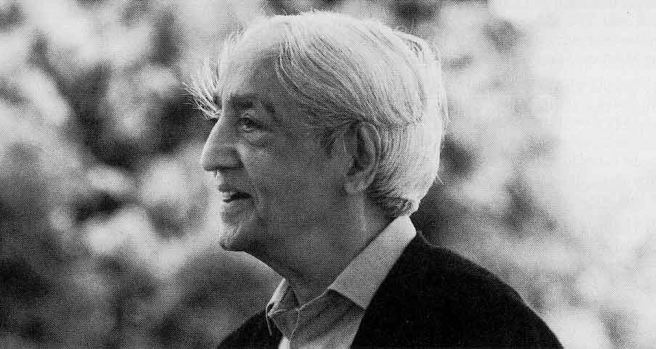
Jiddu Krishnamurti used words in a very specific and often unusual way. He, generally speaking, uses the word ‘attention’ to signify awareness without the presence of the ego or chooser, and therefore without resistance or direction. Below is an example, taken from The Book of Life, June 12th:
What do we mean by attention? Is there attention when I am forcing my mind to attend? When I say to myself, “I must pay attention, I must control my mind and push aside all other thoughts,” would you call that attention? Surely that is not attention.
What happens when the mind forces itself to pay attention? It creates a resistance to prevent other thoughts from seeping in; it is concerned with resistance, with pushing away; therefore it is incapable of attention. That is true, is it not?
To understand something totally you must give your complete attention to it. But you will soon find out how extraordinarily difficult that is, because your mind is used to being distracted, so you say, “By Jove, it is good to pay attention, but how am I to do it?” That is, you are back again with the desire to get something, so you will never pay complete attention. … When you see a tree or a bird, for example, to pay complete attention is not to say, ”That is an oak,” or, “That is a parrot,” and walk by.
In giving it a name you have already ceased to pay attention… Whereas, if you are wholly aware, totally attentive when you look at something, then you will find that a complete transformation takes place, and that total attention is the good.
There is no other, and you cannot get total attention by practice. With practice you get concentration, that is, you build up walls of resistance, and within those walls of resistance is the concentrator, but that is not attention, it is exclusion.
Also, see here: If you listen completely there is no listener

This post was originally posted here: https://www.facebook.com/tomdas.nd/posts/595152794243523
I have taken the following teaching statements of Sri Ramana Maharshi from the wonderful text Guru Vachaka Kovai. My advice is to stick to Sri Ramana’s teachings to keep your path straight:
To hear these quotes read out loud see this video here:
🙏❤️🙏
175. The only worthy occupation is to thoroughly absorb the ego by turning Selfward and, without allowing it to rise, to thus abide quietly, like a waveless ocean, in Self-Knowledge, having annihilated the delusive mind-ghost, which had been wandering about unobstructed.
186. O miserable and extroverted people, failing to see the seer, you see only the seen! To dissolve duality by turning inwards instead of outwards is alone Blissful.
187. O mind, it is not wise for you to come out [in the form of thoughts]; it is best to go within. Hide yourself deep within the Heart and escape from the tricks of Maya, who tries to upset you by drawing you outwards.
189. Since it is only the notion of duality that spoils Bliss and causes misery, to avoid yielding to the attractions of that notion and to thus arrest all chitta vrittis is alone worthwhile.
190. O people, not knowing that Shiva is dwelling within you, you fly about like birds from one holy place to another [seeking His Darshan]. Consciousness, when abiding still in the Heart, is the Supreme Shiva.
191. The ship would be destroyed by the storm if its sails were spread outside, but it is safe when its anchor is sunk deep into the sea. Similarly, if the mind were sunk deep in the Heart instead of being spread outside, that would be Jnana.
192. To arrest the mind – which tries to rush outwards – securely within, is the truly heroic act of the ripe aspirant who wants to see the Supreme Lord in the Heart.
193. When the mind [i.e., the ego’s attention] which wanders outside, knowing only other objects [2nd and 3rd persons] – begins to attend to its own nature, all other objects will disappear, and then, by experiencing it’s own true nature [i.e. Self], the pseudo-‘I’ will also die.
204. A peaceful attitude, together with a ‘silent-flow’ of mind towards undeviating abidance in Self, Sat-Chit, is the best worship of Shiva.
205. Saint Markandeya survived death by conquering even Yama, and lived beyond his destined time. Know, therefore, that death can be overcome by worshipping Shiva, the death-killer.
291. If one wants to be saved, one is given the following true and essential advice: just as the tortoise draws all its five limbs within its shell, so one should draw the five senses within and turn one’s mind Selfward. This alone is happiness.
293. Having known for certain that everything which is seen, without the least exception, is merely a dream, and that it [the seen] does not exist without the seer, turn only towards Self – Sat-Chit-Ananda – without attending to the world of names and forms, which is only a mental conception.
294. Attention to one’s own Self, which is ever shining as ‘I’, the one undivided and pure Reality, is the only raft with which the jiva, who is deluded by thinking “I am the body”, can cross the ocean of unending births.
296. Having annihilated the delusive mind which always dwells upon worldly things, having killed the restless ego, and having completely erased the worldly vasanas, shine as Shiva, the pure Consciousness Itself.
297. Do not wander outside, eating the scorching sand of worldly pleasures, which are non-Self; come home to the Heart where Peace is shining as a vast, everlasting, cool shade, and enjoy the feast of the Bliss of Self.
319. One’s merging into the Heart – through the enquiry into the nature of the ego, which is a delusion in the form of mind – is the right worship of the Lotus-Feet of the supreme Mouna-Guru, who is beyond the mind.
❤️ Om Namo Bhagavate Sri Ramanaya Om ❤️
🙏🙏🙏
This is one of a series of introductory articles – please see the homepage of tomdas.com for more introductory articles.
I received this question following this post: https://tomdas.com/2018/09/06/shankara-vasanas-and-the-nature-of-liberation/
Hi Tom,
Thank you for your wonderful posts, and teachings. I came across your work several months ago via BATGAP, and I quite enjoy them. I’ve also watched your satsangs with Roger Castillo – I’ve found both of your teachings very helpful.
I find this post very poignant for a question I have…
I have a question on desirelessness (which is a term that has been repeated in your posts, but without definition or description):
In some traditions, there is an emphasis on not being attached to any desires. In my experience, when cravings arise – it is apparent that the craving itself is the suffering. Yet it is just what is arising in the moment.
Assuming that “Truth” has been realized, both experientially as Awareness, and ‘seeing’ through that there is no ‘doer’ nor ‘self’ of any action… yet cravings still arise, and the only thing that seems sensible is a constant letting go, without feeding the desire/craving. Is there anything else that I’m missing?
Also, more importantly, how do you differentiate between the desires between, for example, being a father or husband and providing for yourself and your family, and say, the desire for worldly possessions, having physical relationship with a partner, attending to desires of others, etc.
What makes one ‘desire’ more worthwhile, wholesome, or ethical or than another? This seems dependent on cultural and social contexts.
Thank you kindly,
John.
Hi John,
I’m glad you have found benefit in ‘my’ words. I have ended up writing a fairly long answer, so I have concentrated on the first part of your question. (I have partly discussed the second part of your question on desires here). In fact I have been meaning to write something on this topic for a couple of years now, but for some reason it has never happened, so thank you for your question.
In terms of the way I talk about this, you are asking about purification post-awakening, or post-awakening sadhana.
There are several ways by which one can resolve one’s apparent vasanas (apparent, because they are a part of what appears).
The exact method varies from person to person, and essentially involves letting go and knowing that they do not fundamentally affect you or affect Freedom.
Another method involves entering into a deep meditative state, known as samadhi, which is an especially good way of purification.
Other methods may involve therapies, such as psychological therapies, physical techniques such as yoga, etc.
The exact method varies from person to person, depending on how strong the vasanas are, and what the energy of the vasana is.
There is a school of ‘Hinduism’ called Sankya, which is a yogic school, and it classifies the energies into three basic types. These are known as the three gunas. This teaching was later incorporated into other schools such as vedanta and taught in scriptures such as the Bhagavad Gita. Despite its apparent overly simple nature – there are only three energies – this classification can be incredibly useful for the seeker – do not underestimate it!
This classification can be incredibly useful for the seeker – do not underestimate it!
The three energies/gunas are:
1. Tamas (dull/negative)
2. Rajas (passionate/active)
3. Sattva (peaceful/intelligent)
1. If your energy is predominantly tamasic, you will, generally, feel negative, tired, and low. Your motivation and energy levels may be low, you may be lazy and lack direction. You may find it hard to understand things clearly, be confused, and lack clear On the positive side of tamasic energy, you may find it easier to rest, relax and sleep. Tamas is the lowest of the three energies.
2. If your energy is predominantly rajasic, then you will tend to be more active, eg. constantly doing things and achieving things, be much quicker at thinking, but you may perhaps have too many thoughts. (2a) On the positive side of rajasic energy you may achieve many things and do much good in your environment, whatever that may be. You may be dynamic, social, extroverted and a ‘mover and shaker’. (2b) On the negative side of rajasic energy, there can be much anxiety and stress, your mind may become exhausted from-over thinking, and your body may be exhausted too. You may find it difficult to find peace of mind, rest, calm and contentment. Rajas is the second lowest of the three energies.
3. If your energy is predominantly sattvic, then your mind is happy and calm, not low in energy, but not frenetic like rajas. The mind is calm and clear, and gives rise to seeing things clearly, with less bias. Both tamasic and rajasic energies distort perceptions, which in turn leads to poor judgement and greater suffering, but sattva is pure, clear, harmonious and intelligent. Sattva is the highest of the three energies.
What does this have to do with spiritual practice, you may ask? Well, knowing what energy predominates can help you understand what spiritual practice you need and vastly speed up your spiritual journey. It can also help you understand why different people are attracted to different paths at different times, and accordingly help you be more open and compassionate towards others on their path, as well as be more open and understanding towards other spiritual paths in general.
When you become experienced with these energies, you start to develop a ‘sixth sense’ about people and start to be able to sense where people are spiritually and start to become more intuitive about people’s spiritual needs.
…you start to develop a ‘sixth sense’ about people and start to be able to sense where people are spiritually
For me personally, I usually can very quickly get an energetic sense where a seeker is and what they need. This allows me to guide them in a way that can bypass years of worthless seeking – that’s the hope at least. Sometimes I don’t always get it completely right, but then an open dialogue with the seekers allows this to be quickly corrected.
This same intuitive sense deepens further with a fuller realisation and allows one to sense energetically where another teaching is coming from. Sometimes teachers have all the right words and say all the correct ‘nondual concepts’, but energetically they are overly tamasic or rajasic and are suffering accordingly. Similarly, one can also come across someone who outwardly does not seem to have any understanding of non-duality, at least verbally or conceptually that is, but you can sense that ‘sweet aroma of Freedom’ and Sattva (which are not the same thing) in which they are bathing.
Of course, all this is within the dream/illusory appearance.
Whilst most people will have some of all three energies present, one tends to predominate. See if you can honestly figure out which one is you.
The path goes like this:
What this means is that if you are tamasic, you, generally speaking, have to make yourself rajasic first, before you can become sattvic.
However, if you are predominantly rajasic, you can in general go straight to sattva.
This has huge implications in terms of your spiritual practice, and understanding this can dramatically speed up your journey towards peace, joy and love. Allow me to explain.
If you are predominantly tamasic, then you need to generally perform rajasic practices that make you feel good. In essence, you currently feel negative/bad/sad, so the practices that tend to be right for you are the ones that will make you feel positive/good/happy. Not only this, but these will tend to be the activities that you will be naturally drawn towards anyway, unless you are very tamasic in which case you may not be drawn to anything at all. In these situations it may be good to speak to an expert or specialist who can guide you further in these matters.
If you are tamasic and you try to do peaceful/sattvic practices such as meditation, mindfulness and resting as consciousness/’just being’, then what tends to happen is that you are left alone with your negative tamasic energy and this just drags you down. You end up not feeling too good and perhaps become one of those people that ‘meditation doesn’t work for’. You may also start to blame yourself or not understand why your meditation practice is not progressing for you, when it may seem to be for others. It is because you are tamasic and you need to convert tamas to rajas first before you can drop back down into sattva.
So the key aspect of spiritual practice for those who are tamasic is to do something that makes you feel happy and well. This often means doing something energising. This part of the spiritual journey can be characterised by the slogan ‘follow your bliss’, and as long as you are acting ethically and compassionately towards others and the world, you can take this up as your maxim during this stage in the journey.
This part of the spiritual journey can be characterised by the slogan ‘follow your bliss’
This part of the journey, ie. from tamas to rajas, is also the part of the path that contains the largest variety of activities/practices. It can range from evangelical Christianity to extreme mountain biking, from dynamic dance to primal scream therapy (not that I am advocating any of these!). Often people are at some point drawn to groups in order to gain acceptance and love from others. This is to heal tamasic energy and a negative self-concept/low self-esteem. I have personally found positive affirmations such as ‘I am worthy, I love myself, I am wonderful’ etc, to be especially useful to combat a negative self-concept that is often present in tamas.
If you are tamasic and if you are interested in spirituality, you will likely be drawn to something energising and uplifting (ie. rajasic). Try to find something that your heart wants to do, rather than what your head says you should do. Try also to find the activity that is most wholesome – ie. that is most good for you, your body and for others, with least risks to your body and to others and the environment around you (ie. least destructive to the body(ies), mind and world).
Rajasic practices may often be characterised by activity, energy, sound, colour, imagery, positivity, friendliness, focus on groups and building positive relationships, a focus on love, building self-esteem and building positive self-concept. Notions of a personal God and interactions with that God such as worship, prayer and devotion also have more importance in theistic rajasic practices. There may also be a role for ritual, pomp and ceremony. Can you think of rajasic spiritual practices or organisations that share a rajasic form of spirituality?
You can probably think of some spiritual groups that belong to this category. This is in contrast to groups and practices that are more sattvic, which I will discuss in the next section – here outward appearances, activity, colour and ritual, are less important and may even get in the way. Similarly there may be little focus on positivity, love, social groups and building a positive self-concept. Notions of a personal God may give rise to a non-personal God, or no concept of God at all.
Once you are predominantly rajasic, or if you are already predominantly rajasic, then you will tend to naturally be drawn to either more rajasic pursuits, which means that there is still underlying tamas that needs to be ‘burnt away’ with the ‘flame of rajas’, or you will start to tire of rajas, with the anxiety, exhaustion and ultimately emptiness and dissatisfaction, and you will naturally start to seek calmer or more sattvic pursuits – this means your underlying tamasic energy has, for the most part, been burnt away or healed/resolved.
You may start to prefer country walks, meditation and mindfulness in place of late night drugs and dancing (just an example!). You may feel like you now prefer a slower hatha yoga practice rather than your usual power-yoga routine. Your inclinations towards devotional practice may start to drop off as you descend towards ‘worship through being still‘.
Whereas before you were trying to become happier and improve your self-concept, now you are more inclined to letting go of self-identity/self-concept and rather than looking for pleasure, you are more inclined towards peace, balance and harmony (ie. sattva).
Before building, strengthening and empowering your sense of self was important (in order to root out tamasic energy), but now perhaps you are able to let go of this and start to see through the egoic sense of self and discover something deeper.
Here we are approaching the goal of spiritual practice – for the mind to become still, or sattvic. It is in a sattvic mind that the non-dual teachings are most able to hit home and deliver the realisation of freedom, which is the end of the ego-belief, together with its ego tendencies (vasanas) – ie. self-realisation.
Why do some people get it whilst others do not? Well, it is the grace of God, but also sattva. It is said that Sattva allows the grace of God to manifest, it is the quiet sattvic mind that is most receptive to Grace, no longer being (seemingly) covered by the dull veiling energy of tamas or being (seemingly) distorted by the passionate projecting energy of rajas.
The same goes for after awakening. It is the sattvic mind in which the egoic tendencies become fewer and fewer and suffering accordingly lessens and happiness accordingly arises within the phenomenal appearance.
The culmination of the sattvic mind is samadhi, where the mind becomes very calm and notions of self and other disappear, usually temporarily. Samadhi can be meditative and episodic (eg. nirvikalpa samadhi) or it can be permanent and natural during the waking state (sahaja samadhi; see here and here and here for a deeper teaching on this). Sahaja samadhi is equivalent to total liberation in which the egoic vasanas have dissolved into the Self, and only the Self remains.
When we say ‘sattva’ or ‘sattvic mind’, we are taking of the mind that is predominantly sattvic but also has traces of rajas and sattva (ie. ignorance) in it. When the mind is totally devoid of tamas and rajas, that mind is no longer the mind, but it is pure sattva, or the Self.
The mind refers to rajas and tamas, and when that is gone, that is self-realisation or self-realisation. This is explained in the traditional scriptures here and here, and Sri Ramana Maharshi also gave this explanation too here.
Rajas and Tamas are actually the two forms of ignorance, see here for more.
People who are tamasic, or those who are rajasic but still have outstanding tamas that needs to be burnt off – these people are often deeply affronted and perhaps even deeply offended by non-dual teachings which under-cut the importance and notions of self and free-will.
Some people are metaphorically hanging by a thread onto this life, struggling to gain some kind of control and positivity, and these teachings are just too much as they seem to be taking away their perceived method to drag themselves out of tamas toward their idealistic utopian goal of ‘rajas forever’ (everlasting socialising, excitement, pleasure, fun, worldy pursuits, the rajasic ‘Holywood’ dream).
In extreme cases, a very tamasic person or organisation may react violently to non-dual teachings for this very reason.
Their strategies to gain control, power and happiness are dependent on notions of separate-self. As non-dual teachings take away their only perceived method of escape, it is unsurprising that they find such notions offensive as it is a direct threat to their often subconscious hopes of happiness and liberation. In extreme cases, a very tamasic person or organisation may react violently to non-dual teachings for this very reason.
In my article Roadmap to enlightenment: a (fairly) comprehensive guide to spiritual practices I discuss the inter-relationship between insight and purification and liberation, so I won’t go into that here – please see that article for more information on this, but I would like to comment on one thing I often see in people who attend my meetings or who contact me for 1 to 1 meetings. It’s when the ego has the rug pulled out from underneath it but it still trying to regain its balance, tottering from left to right, sometimes disorientated, sometimes overwhelmed, lacking stability – in short – suffering.
This occurs when the mind is exposed to non-dual insight/knowledge teachings, ie. the radical teachings on no-self/no-person/no-free will, before the mind has achieved a degree of sattva and stability. When this happens, freedom is seen but the mind’s tendencies are now unleashed as if the ‘foot has been taken off the brake’. All the pre-existing egoic tendencies, previously held in check somewhat by notions of the ego, are now left to roam free, sometimes with riotous consequences.
Now, in a fundamental sense there is no problem in this, but from the point of view of the ego, which is still actually functioning out of habit (ie. the vasanas are still at play), this is quite troubling and can be very tumultous. It can lead to much suffering – both for the seeker and for those around them.
If the ego-mind is stable and sattvic with a health positive self-concept prior to being exposed to the radical non-dual teachings, such as the teachings of ajata vada, when the import of the teachings are realised, the sattvic qualities are naturally allowed to express themselves, namely love, peace, happiness, compassion, intelligence, clear thinking, clear seeing.
This was in essence what happened to me. I was lucky in that I had unwittingly spent many years purifying my mind through a combination of spiritual practices from a young age, readings spiritual books, being in a loving relationship and various forms of self-help to name a few factors. Awakening for me was not a difficult or tumultuous process. In retrospect I can see this was the case as my mind was already for the most part sattvic. The awakening was peaceful and gradual, permeated by love and light, so gradual I did not even realise it was happening. It was only when I started sharing this teaching with others that I realised how difficult the awakening process can sometimes be, when I saw how it affected others. Because I had read and studied traditional texts that spoke about about the energies whilst I was seeking, I was able to utilise these teachings for the benefit of those who came to me and my meetings.
If the mind is riddled with tamasic and rajasic energy, addictive vasanas and a negative self-concept, these aspects of the mind can flourish. Depending on the vasanas present, this can sometime cause much suffering. It can result in family/relationship problems, divorce, panic attacks and career and financial issues. Unconscious psychological insecurities that were not previously known can all surface at once leading to a crisis of confidence, disorientation and feeling overwhelmed. Tamasic impulses can increase, rajasic tendencies can increase, addictive tendencies can increase.
The general advice here is to not worry, remain calm and at peace, something that is easier to do if a degree of sattva has already been cultivated and most of the rajasic and tamasic energies have already been somewhat subdued. In time, these vasanas (tendencies) will naturally express themselves. If they are allowed to rise up, be experienced and felt (ie. not suppressed) without acting them out, then they will naturally purify themselves in time and the balance of sattva will naturally arise. However, if the vasanas are indulged in, then they may continue indefinitely, and the freedom-realisation may even be lost (apparently). Just knowing this information can make a huge difference (apparently).
It is for this very reason that most traditional approaches stress a period of purification prior to being introduced to the ‘higher’ non-dual teachings. Shankara often advised that seekers purify themselves with devotion to God and developing certain qualities prior to reading/listening to the higher teachings of Vedanta.
But what seeking ego wants to wait? And why should it, right! Most teachings are no longer guarded behind the secret screens of a religious patriarchy and are freely available on YouTube and Facebook, something which is largely good as far as I can see, but it is useful to be aware of the downsides and potential negative consequences.
Teachings/teachers which do not stress purification prior to or after awakening tend to be the ones in which you get the abuse scandals and the crazy-wisdom teachings in the worst cases. In better cases the teacher may just be a bit of an asshole at times, which is not the worst thing in the world, and to be honest, who isn’t an asshole at times? We are all human, after all (apparently), but it is a matter of degrees. With sattva, the chances of being rude, ignorant, abrasive and uncompassionate vastly decreases, but of course can occur from time to time, usually without the teacher intending to be offensive. When tamas and rajas predominate in a teacher, the distortion will be apparent in the teaching and its energy, and the teacher will likely act out their egoic vasanas from time to time and cause suffering to themselves and others accordingly.
You can often sense the energy of a particular teaching from energy the group of long-term seekers who are keyed into that particular teaching. Some teachers attract tamasic seekers, others attract rajasic ones, and others sattvic ones. Of course it doesn’t always work exactly like this – these are just general rules.
Why not take a look at teachers and teachings and see if you can tell if they are predominantly tamasic, rajasic or sattvic? And see if you can see what types of people they are catering for and attracting in terms of these 3 gunas.
Take in these teachings, and see if they are true for you.
Please note that these teachings are not meant to be judgemental in any way. Things are the way they are, everything has its place (apparently) and appearances not-withstanding, things generally work out in the end.
The teachings are meant to give one a framework within which one can orientate oneself towards becoming happier and more at peace. We all (the body-mind, that is) have different characteristics: some are tall, others short, some are more physically-abled, others less so, some have had opportunity and wealth, others grew up in poverty amidst domination and authoritarianism. Each of these brings certain strengths and weaknesses to our character and skill set.
The same with our gunas.
We are all dealt a unique ‘hand of cards’. Clearly seeing what we have been dealt with in life, acknowledging it, and then learning how we can make the most of where we are is what this teaching is all about. It is about providing tools for the ego to enable it to wade through illusion in a way that reduces unnecessary suffering and most effectively leads to realisation of what already is.
As I said, these teachings are just a guide. There are likely to be exceptions that do no follow the rules. Please let me know if they have been useful for you, or if there is anything I have glossed over or got wrong. I hope they are of benefit.
Wishing you peace, clear-seeing and love
Namaste
Tom
 Dear All
I’ll be speaking this Saturday 19th January 2019 at the Horse and Coaches Pub near Waterloo Station, London UK.
If you are interested in attending, details are on this link.
To be notified of any future events, please sign up to my meetup page which is where I list all my events.
In addition to this, I will be holding my usual online meeting this Thursday 17th January at 8pm UK time.
Best wishes
Tom
 Tom Das