Start the day with love, fill the day with love, end the day with love

 The following is an excerpt from a book rather modestly titled ‘The Most Direct Means To Eternal Bliss’.

Despite some tendency towards grandiosity, this book is actually pretty amazing in my opinion. I think it was written as a labour of love and has been uploaded to the internet for free viewing by the author here. You can also buy a hard copy here which contains a single extra chapter (which was written later).
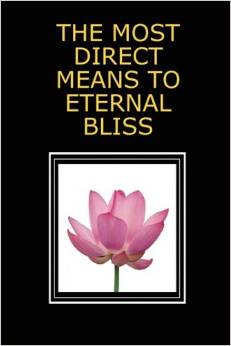
MDMTEB

Be warned, this book and its tone may not be for everyone. It is radical, focused, in some ways quite narrow, and not at all modest. However the advice dispensed is actually very good in the context in which it was written and the teachings are made extremely clear. The initial chapters alone are worth the purchase price in my opinion (plus it’s free online anyway)

Below is Chapter 12, blessings to you all ❤

Chapter 12 – THE LOVING-ALL METHOD

Continue reading

Ramana Maharshi: The 4 paths to freedom (the 4 yogas)

In this passage below Ramana Maharshi talks about the four traditional Hindu paths to ending suffering or moksha (liberation/freedom). The four paths are traditionally called the paths of knowledge (jnana), love or devotion (bhakti), meditation (raja yoga), and doing good works (karma).

Almost every spiritual tradition around the world will fit into one of more of these four paths Continue reading

Krishnamurti on The essence of meditation

ocean sky

“As you walked on the beach the waves were enormous and they were breaking with magnificent curve and force. You walked against the wind, and suddenly you felt there was nothing between you and the sky, and this openness was heaven.

To be so completely open, vulnerable – to the hills, to the sea, and to man – is the very essence of meditation. To have no resistance, to have no barriers inwardly towards anything, to be really free, completely, from all the minor urges, compulsions, and demands, with all their little conflicts and hypocrisies, is to walk in life with open arms.

And that evening, walking there on that wet sand, with the sea gulls around you, you felt the extraordinary sense of open freedom and the great beauty of love which was not in you or outside you – but everywhere.”

Jiddu Krishnamurti

Early Buddhist Writings

A few years ago I read some of the earliest Buddhist texts that we currently know of and was shocked at how different they are to what is generally taught as being Buddhism today. Even Theravada Buddhism, which has the claim of being the oldest surviving school of Buddhism, often presents its teachings in very different ways. These early teachings were direct, forceful and devoid of complexities and lengthy philosophising. They reminded me much more of the pithy statements of Zen and Dzogchen Buddhism, which is surprising as these Buddhist schools are chronologically much later developments that occurred roughly 1000 years after the Buddha’s time. Continue reading

Zen Story: Everything is Best

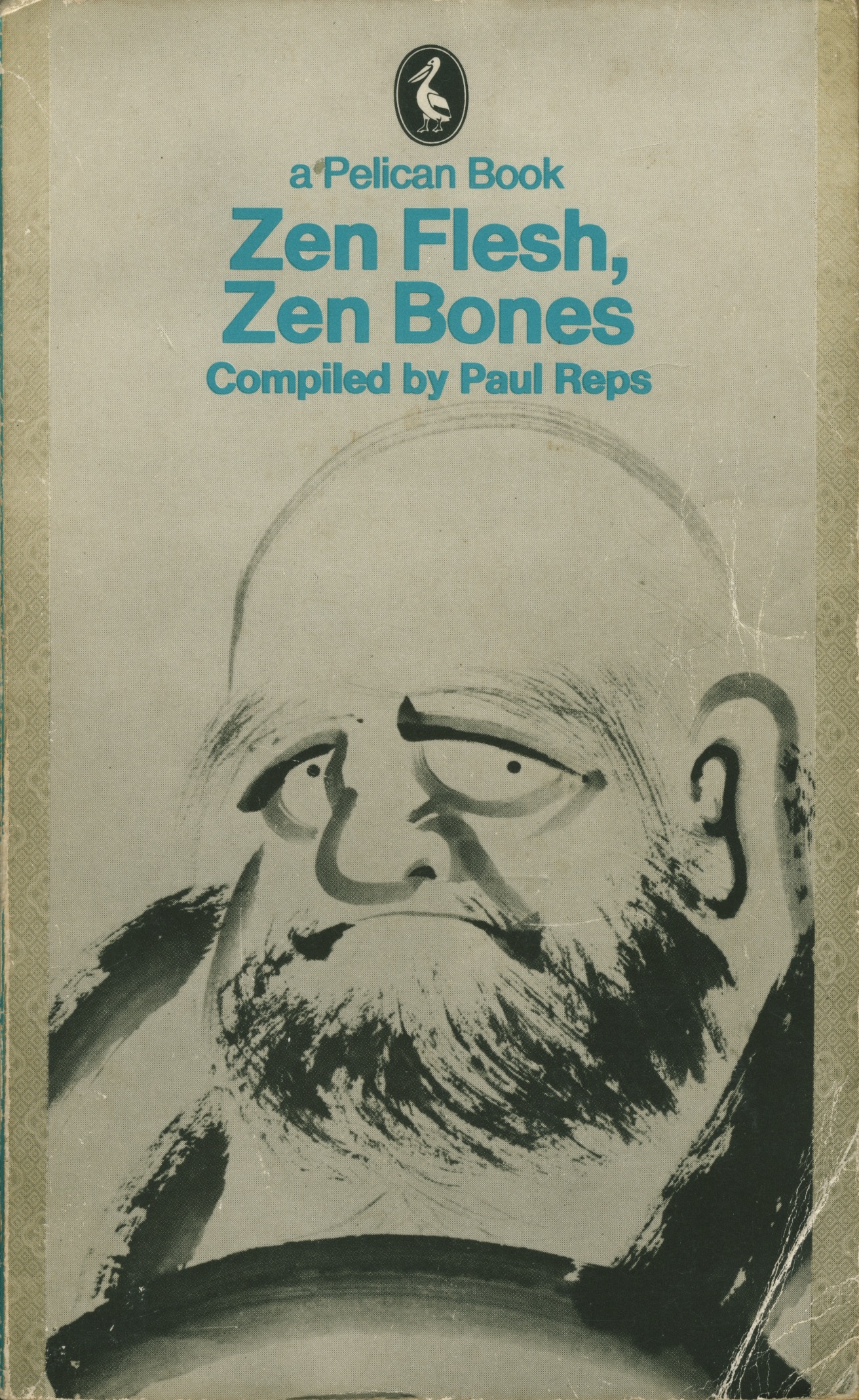
zen flesh zen bones

Another wonderful Zen story, also one of my favourites, taken from the book ‘Zen Flesh, Zen Bones’:

When Banzan was walking through a market he overheard a conversation between a butcher and his customer.

“Give me the best piece of meat you have,” said the customer.
“Everything in my shop is the best,” replied the butcher. “You cannot find here any piece of meat that is not the best.”

At these words Banzan became enlightened.

How can everything be the best? It makes no sense, yet all is the best, everything is divine, sparkling with effervescent magic.

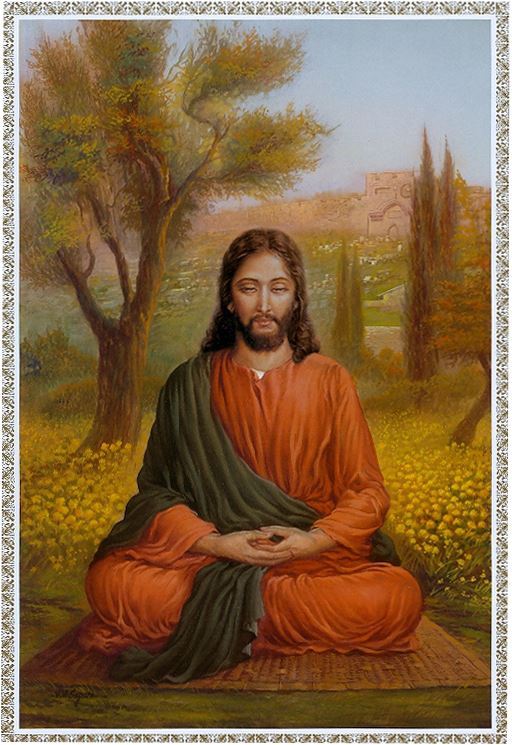
Did Jesus meditate?

Did Jesus meditate?
Did Jesus meditate?

For me, the answer is he probably did. Let me preface this by stating the obvious: I don’t actually know for sure what Jesus did. I don’t even want to get into the ‘did Jesus exist’ debate in this post. But if we take the New Testament at face-value (I don’t want to get into this debate either) it seems to me that he did meditate, or at least engage in contemplative-meditative practices. Continue reading

Ramen with Ramana

image
Mushroom Ramen from Bone Daddies, London

Wandering through Soho (London), I decided to treat myself to something a bit different for lunch. I soon stumbled across Bone Daddies. Not being au fait with these things I had no idea what this place actually was (restaurant? clothes shop?), but it looked pretty cool. My ears quickly picked up on a few guitar riffs emanating from inside and peeking through the windows I could see a plethora of men with beards, women clad in skin-tight pre-distressed jeans and thick rimmed black spectacles to boot. Oh, and they were eating – it seems that Bone Daddies is a restaurant after all. Continue reading

Zen Story: The Moon Cannot be Stolen

zen flesh zen bones

This is one of my favourite Zen stories, taken from the amazing book ‘Zen Flesh, Zen Bones‘. It oozes with love and wonderment

Ryokan, a Zen master, lived the simplest kind of life in a little hut at the foot of a mountain. One evening a thief visited the hut only to discover there was nothing to steal.

Ryokan returned and caught him. “You have come a long way to visit me,” he told the prowler, “and you should not return empty-handed. Please take my clothes as a gift.”

The thief was bewildered. He took the clothes and slunk away.

Ryoken sat naked, watching the moon. “Poor fellow,” he mused, “I wish I could have given him this beautiful moon.”

Overflowing love, the moon is here for everyone, it cannot be stolen, it can never be possessed, and need not be possessed. Why bother with worldly items when the metaphorical Moon is here?

A rant: kicking spiritual seekers in the balls

“And yet, even as I speak, Subhuti, I must take back my words as soon as they are uttered, for there are no Buddhas and there are no teachings.”

Buddha, Diamond Sutra

I’ve been reading several blogs and other writings aimed at spiritual seekers who have everything laid out so clearly. They have the map to spiritual enlightenment all put together ready for mass consumption. They say things like you are Pure Consciousness or Pure Awareness.

All the concepts are lined up ready to be taught by the bearded guru and gobbled up by the next willing namaste-wielding student greedy for the big E. Here, let the Kunjed Gyalpo metaphorically kick the spiritual-seeker-in-you in the balls (if you’ll forgive my sexism): Continue reading

Sufism: Infinite ways to an infinite god (even if you don’t believe in God)

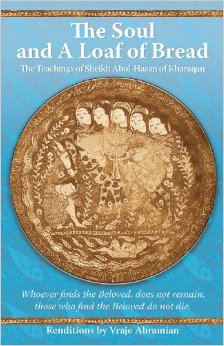
soul and loaf bread

There are infinite ways to an infinite God; there are as many ways to God as there are people or beings: I have often thought this to myself, so whilst leafing through a newly purchased book (pictured above), I was pleasantly surprised to read a quote by Sheikh Abol-Hasan, a Sunni Muslim and Sufi from 10th century Persia, saying just this:

There are as many paths to the Lord as there are grains of sand and drops of rain…whomever seeks, eventually finds his way There
Sheikh Abol-Hasan, saying 141 from ‘The Soul and A Loaf of Bread’

These infinite ways are just variations of the One Way. And this One Way, for the purposes of exposition, can broadly be subdivided into two: one path for those who believe in God and one path for those who do not. Continue reading