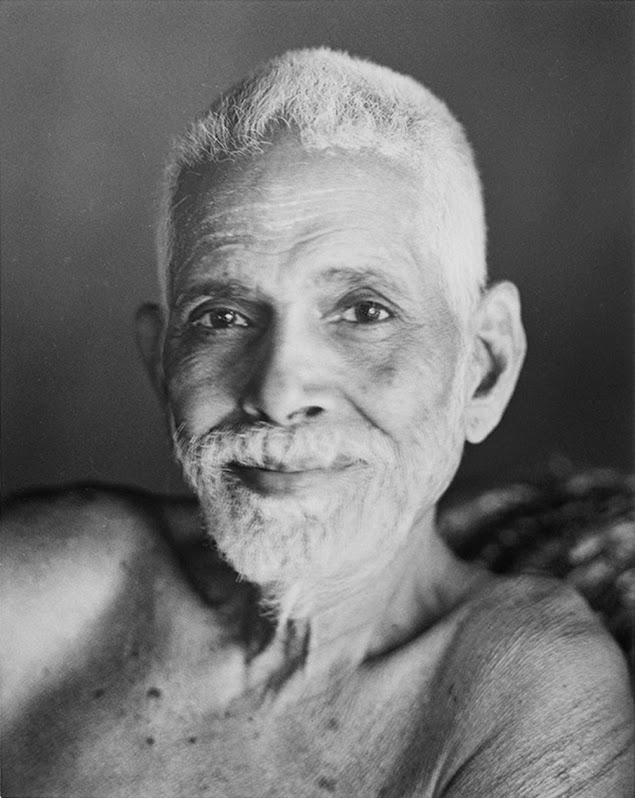
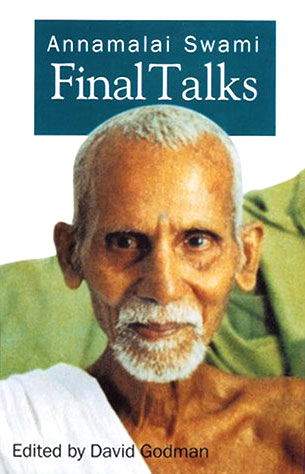
You should not go into Laya (trance)! Annamalai Swami | Ramana Maharshi

Here are some very important teachings from Annamalai Swami regarding some dangers of meditation and entering into laya, a trance-like state:

annamalai swami final talks

A foreign woman came to see Annamalai Swami. While she was prostrating to him she seemed to become unconscious of her surroundings and she remained lying on the floor at his feet for about ten minutes. This was not the first time that she had fallen into this state while in Annamalai Swami’s presence. After watching her for some time, he shouted at her:

Annamalai Swami: You should not go into laya [a trance-like state] like this! It is becoming a habit with you. It may give you some kind of temporary happiness, but it is not a happiness that helps you spiritually. It is the same as sleep. Even worldly activities are better than this laya. Get out of this habit!

[Addressing the other people present]

People occasionally went into states like this in front of Bhagavan [Sri Ramana Maharshi]. He never encouraged them, even the ones who appeared to be in deep meditation. I remember one occasion when Bhagavan noticed a man who had been sitting motionless in the hall for at least an hour, apparently in a deep meditation. Bhagavan was not fooled. He called to Kunju Swami and others who were present, ‘Shout at him, shake him, and when he wakes up, take him on giri pradakshina This is no better than sleep. This state is not good for him. He is just wasting his time sitting like this.’

Bhagavan warned us about this state, and he often cited stories of sadhus who had been stuck in this state for years. One of the most frequently told was a story about a sadhu who asked his disciple for a glass of water. While he was waiting for the man to return, he went into a deep laya state that persisted for many, many years. He was in this state so long, his disciple died, the river changed its course, and different rulers came and went. When he opened his eyes, his first comment was, ‘Where is my glass of water?’ Before he went into laya, this thought was uppermost in his mind, and decades later, this thought was still there.

Bhagavan’s comment on this story was, ‘These states are not helpful. They are not samadhi.’

[The woman who had been in laya then asked the next question:]

Question: Whenever I start meditating, soon after I start, I fall into these states. How can I prevent these laya states from coming and taking me over?

Annamalai Swami: Keep practising self-enquiry. This is the way to avoid laya. The mind usually has two habits; either it is occupied with many thoughts and engaged in activities, or it goes back to sleep. But for some people, there is this third option, falling into this laya state. You should not indulge in it because once it becomes a habit, it becomes addictive.

[Tom – note the habitual nature of going into laya which becomes familiar to the mind and so becomes a familiar state of consciousness:]

It is a pleasant state be in, but if you fall very deeply into it, it becomes very hard to get out of it. You know what this state is like because you have been in it many times. As soon as you feel the first symptoms of an approaching trance, get up and walk around. Don’t remain sitting or lying. Walk around or do some work, and above all, keep up the practice of self-enquiry.

If you practise self-enquiry constantly, you will never find yourself falling into laya. You can conquer this habit. You just need to be attentive and to do self-enquiry. 

[Tom – we see the same teachings in traditional Advaita texts too, eg. in Gaudapada’s commentary on the Mundakya Upanishad – see verse 3.44.]


Here Annamalai Swami gives a similar teaching, this time from the book Living by the Words of Bhagavan, page 345:

Questioner: It is clear that vasanas are not destroyed during sleep. Are they destroyed by nirvikalpa samadhi, or does this state have no effect on them?

Annamalai Swami: Bhagavan taught that we should aim for sahaja samadhi, not nirvikalpa samadhi. He said that it was not necessary to experience nirvikalpa samadhi prior to enjoying sahaja samadhi.

One form of nirvikalpa samadhi is like laya, like deep sleep. There is peace while the samadhi persists, but when the experience is over the mind rises and the vasanas become just as active as before.

Laya [temporary suspension of all mental faculties in a trance-like state] is virtually the same as sleep. Experiencing this state is not helpful to your sadhana. Laya is not meditation, it is unconsciousness; it is tamo-guna in a very strong form. Meditation needs an awake mind, not an unconscious one.

Sleep and laya increase the identification with the mind. You may feel a little peace during laya, but when you wake up from this state the mind becomes very active again and the peace is all lost.

Ulladu Narpadu (Reality in Forty Verses) by Sri Ramana Maharshi and the supplement

Also see: Recommended Reading: Books for Enlightenment, Liberation and Self-Realisation

Some say this is the most important original text that Sri Ramana Maharshi wrote, so I wanted to present you a standalone version of the text here without commentary. Below are links to a PDF version and also  PDF versions with commentary. Bhagavan reportedly said that K. Lakshmana Sarma’s commentary was the best of the commentaries that was available at that time.

Sri Bhagavan [Sri Ramana Maharshi] once remarked that of all the commentaries on Ulladu Narpadu which then existed, Lakshmana Sarma’s Tamil commentary was the best.

T. N.  Venkataraman (former president of Sri Ramana Ashram)

I have also included the Supplement to the Forty Verses on Reality (Ulladu Narpadu Anubandham). For me, these texts, together with Who Am I? and Upadesa Saram (both of which were also directly written by Sri Ramana Maharshi), contain all you need to know in order to attain liberation. Ramana has, in concise form, laid it all out for us.

I also highly recommend reading The Path of Sri Ramana which explains in detail the entire path to liberation.

So read and study these works to find the true teaching, the true practice and the genuine result!

All praise to Ramana!

Download PDF Version – Ulladu Narpadu with Supplement

PDF Version with commentary by K. Lakshmana Sarma

PDF Version with synopsis and commentary from SS Cohen

Ramana_3_sw

Introduction

Once Bhagavan composed twenty Tamil stanzas containing his important teachings. They were not written in any particular order to form a poem. Sri Muruganar therefore suggested that Bhagavan should write twenty stanzas more to make it the conventional forty. Accordingly, Bhagavan composed twenty more stanzas. Out of these forty, Kavyakanta Ganapati Muni selected two as the invocatory stanzas. Then Bhagavan wrote two more to complete the forty. Some of the stanzas were translations from Sanskrit, but as devotees wanted all the forty verses to be original they were eliminated and new stanzas composed in their place. The verses were all arranged in a continuous order to form a poem. Later, a supplement consisting of a second forty verses was added. So indifferent to authorship was Bhagavan that he did not write all those supplementary verses himself. When he came upon a suitable one he used it – mostly translations from Sanskrit – and when not, he made one. The verses eliminated from the original forty verses were included in the supplement.

These eighty verses are the most comprehensive exposition of the Maharshi’s teaching. A number of translations have been made and commentaries written on them. They have been published as separate books by the ashram under the titles Ulladu Narpadu, Sad Vidya and Truth Revealed. Bhagavan translated these verses into Telugu prose under the name of Unnadi Nalubadi and into Malayalam verse under the name of Saddarsanam.

Ulladu Narpadu

(Forty Verses on Reality)

Invocation

1. Unless Reality exists, can thought of it arise? Since, devoid of thought, Reality exists within as Heart, how to know the Reality we term the Heart? To know That is merely to be That in the Heart.

2. When those who are in dread of death seek refuge at the feet of the deathless, birthless Lord Supreme, their ego and attachments die; and they, now deathless, think no more of death.

The Text

1. Since we know the world, we must concede for both a common Source, single but with the power of seeming many. The picture of names and forms, the onlooker, the screen, the light that illumines – all these are verily He.

2. On three entities – the individual, God and the world – every creed is based. That ‘the One becomes the three’ and that ‘always the three are three’, are said only while the ego lasts. To lose the ‘I’ and in the Self to stay is the State Supreme.

3. ‘The World is true’; ‘No, it is a false appearance’; ‘The World is Mind’; ‘No, it is not’; ‘The World is pleasant’; ‘No, it is not’ – What avails such talk? To leave the world alone and know the Self, to go beyond all thought of ‘One’ and ‘Two’, this egoless condition is the common goal of all.

4. If Self has form, the world and God likewise have form. If Self is without form, by whom and how can form (of world and God) be seen? Without the eye, can there be sight or spectacle? The Self, the real Eye, is infinite.

5. The body is made up of the five sheaths; in the term body all the five are included. Without the body the world is not. Has one without the body ever seen the world?

6. The world is made up of the five kinds of sense perceptions and nothing else. And those perceptions are felt as objects by the five senses. Since through the senses the mind alone perceives the world, is the world other than the mind?

7. Though the world and mind rise and fade together, the world shines by the light of the mind. The ground whence the world and mind arise, and wherein they set, that Perfection rises not nor sets but ever shines. That is Reality.

8. Under whatever name or form we worship It, It leads us on to knowledge of the nameless, formless Absolute. Yet, to see one’s true Self in the Absolute, to subside into It and be one with It, this is the true Knowledge of the Truth.

9. ‘Twos’ and ‘threes’ depend upon one thing, the ego. If one asks in one’s Heart, ‘What is this ego?’ and finds it, they slip away. Only those who have found this know the Truth, and they will never be perplexed.

10. There is no knowledge without ignorance; and without knowledge ignorance cannot be. To ask, ‘Whose is this knowledge? Whose this ignorance?’ and thus to know the primal Self, this alone is Knowledge.

11. Without knowing the Self that knows, to know all objects is not knowledge; it is only ignorance. Self, the ground of knowledge and the non-Self, being known, both knowledge and ignorance fall away.

12. True Knowledge is being devoid of knowledge as well as ignorance of objects. Knowledge of objects is not true knowledge. Since the Self shines self-luminous, with nothing else for It to know, with nothing else to know It, the Self is Knowledge. Nescience It is not.

13. The Self that is Awareness, that alone is true. The knowledge which is various is ignorance. And even ignorance, which is false, cannot exist apart from the Self. False are the many jewels, for apart from gold, which alone is true, they cannot exist.

14. ‘You’ and ‘he’ – these appear only when ‘I’ does. But when the nature of the ‘I’ is sought and the ego is destroyed, ‘you’ and ‘he’ are at an end. What shines then as the One alone is the true Self.

15. Past and future are dependent on the present. The past was present in its time and the future will be present too. Ever-present is the present. To seek to know the future and the past, without knowing the truth of time today, is to try to count without the number ‘One’.

16. Without us there is no time nor space. If we are only bodies, we are caught up in time and space. But are we bodies? Now, then and always – here, now and everywhere – we are the same. We exist, timeless and spaceless we.

17. To those who do not know the Self and to those who do, the body is the ‘I’. But to those who do not know the Self the ‘I’ is bounded by the body; while to those who within the body know the Self the ‘I’ shines boundless. Such is the difference between them.

18. To those who do not know and to those who do, the world is real. But to those who do not know, Reality is bounded by the world; while to those who know, Reality shines formless as the ground of the world. Such is the difference between them.

19. The debate, ‘Does free will prevail or fate?’ is only for those who do not know the root of both. Those who have known the Self, the common source of freewill and of fate, have passed beyond them both and will not return to them.

20. To see God and not the Self that sees is only to see a projection of the mind. It is said that God is seen by him alone who sees the Self; but one who has lost the ego and seen the Self is none other than God.

21. When scriptures speak of ‘seeing the Self’ and ‘seeing God’, what is the truth they mean? How to see the Self? As the Self is one without a second, it is impossible to see it. How to see God? To see Him is to be consumed by Him.

22. Without turning inwards and merging in the Lord – it is His light that shines within the mind and lends it all its light – how can we know the Light of lights with the borrowed light of the mind?

23. The body says not it is ‘I’. And no one says, “In sleep there is no ‘I’.” When ‘I’ arises all (other) things arise. Whence this ‘I’ arises, search with a keen mind.

24. The body which is matter says not ‘I’. Eternal Awareness rises not nor sets. Betwixt the two, bound by the body, rises the thought of ‘I’. This is the knot of matter and Awareness. This is bondage, jiva, subtle body, ego. This is samsara, this is the mind.

25. Holding a form it rises; holding a form it stays; holding and feeding on a form it thrives. Leaving one form, it takes hold of another. When sought, it takes to flight. Such is the ego-ghost with no form of its own.

26. When the ego rises all things rise with it. When the ego is not, there is nothing else. Since the ego thus is everything, to question ‘What is this thing?’ is the extinction of all things.

27. ‘That’ we are, when ‘I’ has not arisen. Without searching whence the ‘I’ arises, how to attain the self-extinction where no ‘I’ arises? Without attaining self-extinction, how to stay in one’s true state where the Self is ‘That’?

28. Controlling speech and breath, and diving deep within oneself – like one who, to find a thing that has fallen into water, dives deep down – one must seek out the source whence the aspiring ego springs.

29. Cease all talk of ‘I’ and search with inward diving mind whence the thought of ‘I’ springs up. This is the way of wisdom. To think, instead, ‘I am not this, but That I am,’ is helpful in the search, but it is not the search itself.

30. When the mind turns inward seeking ‘Who am I?’ and merges in the Heart, then the ‘I’ hangs down his head in shame and the One ‘I’ appears as Itself. Though it appears as ‘I-I’, it is not the ego. It is Reality, Perfection, the Substance of the Self.

31. For him who is the Bliss of Self arising from extinction of the ego, what is there to do? He knows nothing other than this Self. How to conceive the nature of his state?

32. When the Vedas have declared, ‘Thou art That’ – not to seek and find the nature of the Self and abide in It, but to think ‘I am That, not This’ is want of strength. Because, That abides forever as the Self.

33. To say ‘I do not know myself’ or ‘I have known myself’ is cause for laughter. What? Are there two selves, one to be known by the other? There is but One, the Truth of the experience of all.

34. The natural and true Reality forever resides in the Heart of all. Not to realise It there and stay in It but to quarrel ‘It is’, ‘It is not’, ‘It has form’, ‘It has not form’, ‘It is one’, ‘It is two’, ‘It is neither’, this is the mischief of maya.

35. To discern and abide in the ever-present Reality is true attainment. All other attainments are like powers enjoyed in a dream. When the sleeper wakes, are they real? Those who stay in the state of Truth, having cast off the unreal – will they ever be deluded?

36. If we think we are the body, then to tell ourselves, ‘No, I am That’, is helpful to abide as That. Yet – since ever we abide as That – why should we always think, ‘I am That?’ Does one ever think, ‘I am a man’?

37. ‘During the search, duality; on attainment, unity’ – This doctrine too is false. When eagerly he sought himself and later when he found himself, the tenth man in the story was the tenth man and none else (ten men crossed a stream and wanted to make sure they were all safe. In counting, each one left himself out and found only nine. A passer-by gave each a blow and made them count the ten blows).

38. If we are the doers of deeds, we should reap the fruits they yield. But when we question, ‘Who am I, the doer of this deed?’ and realise the Self, the sense of agency is lost and the three karmas slip away. Eternal is this Liberation.

39. Thoughts of bondage and of freedom last only as long as one feels, ‘I am bound’. When one inquires of oneself, ‘Who am I, the bound one?’ the Self, Eternal, ever free, remains. The thought of bondage goes; and with it goes the thought of freedom too.

40. If asked, ‘Which of these three is final liberation: With form, without form, or with-and-without-form?’ I say, Liberation is the extinction of the ego which enquires ‘With form, without form, or with-and-without-form?’

Translated by Professor K. Swaminathan

Ulladu Narpadu Anubandham

Reality in Forty Verses: Supplement

Italicised verses are the verses written by Sri Ramana Maharshi, the others are verses he incorporated into the text from other texts.

Invocation

That which is the Support, the Soul, the Source, the Purpose and the Power of all this world, the Reality behind all this Appearance, That indeed exists. Let That, the Truth, abide in our Heart. (Yoga Vasishta, 8, v.12)

The Text

1. In the company of sages, attachment vanishes; and with attachment, illusion. Freed from illusion, one attains stability, and thence liberation while yet alive. Seek therefore the company of sages. (from Bhajagovindam, the “Mohamudagaram Hymn,” by Shankaracharya)

2. Not by listening to preachers, nor by study of books, not by meritorious deeds nor by any other means can one attain that Supreme State, which is attainable only through association with the sages and the clear quest of the Self. (a verse from the Yoga Vasishta, 5 – 12 – v.17)

3. When one has learned to love the company of sages, wherefore all these rules of discipline? When a pleasant, cool southern breeze is blowing, what need is there for a fan? (a verse from the Yoga Vasishta)

4. Fever is overcome by the cool light of the moon; want, by the good wish-yielding tree; and sin by the Holy Ganges. Those three – fever and want and sin – all flee at the august sight of the peerless sage. (Subhashita Ratna Bhandargara, chapt. 3, v. 6)

5. Holy rivers, which are only water, and idols, which are made of stone and clay, are not as mighty as the sages. For while they make one pure in course of countless days, the sage’s eyes by a mere glance purify at once. (from Srimad Bhagavatam, chapt. 48, v. 31, tenth canto)

6. Disciple: Who is God?

Master:Hewho knows the mind.

D:MySelf, the Spirit, knows my mind.

M: Therefore you are God; and also the sruti declares that there is only one God, the Knower.

M: By what light do you see?

D: The sun by day, the lamp by night.

M: By what light do you see these lights?

D: The eye.

M: By what light do you see the eye?

D: The mind.

M: By what light do you know the mind?

D: My Self.

M: You then are the Light of Lights.

D: Yes, That I am.(from Ekasloki, by Shankaracharya)

8. In the centre of the Heart-Cave there shines alone the one Brahman as the `I, I’, the Atman. Reach the Heart by diving deep in quest of the Self, or by controlling the mind with the breath, and stay established in the Atman.

9. In the lotus of the Heart is pure and changeless Consciousness in the form of the Self. When the ego is removed, this Consciousness of Self bestows liberation of soul. (Devikalottaram, v. 46)

10. The body is like an earthen pot, inert. Because it has no consciousness of `I’, and because daily in bodiless sleep we touch our real nature, the body is not `I’. Then who is this `I’? Where is this `I’? In the Heart-cave of those that question thus, there shineth forth as `I’, Himself, the Lord Siva of Arunachala.

11. Who is born? It is only he who asks `Whence am I born?’ that is truly born in Brahman, the Prime Source. He indeed is born eternally; He is the Lord of saints; He is the ever-new. (On celebrating Sri Bhagavan’s jayanti))

12. Cast off the notion, `This vile flesh am I,’ and seek the ceaseless bliss of Self. To seek the Self while cherishing this perishing flesh is like trying to cross a stream by clinging to a crocodile.

13. The way of charity, penance, sacrifice, dharma, yoga and Bhakti; and the Goal of Heaven, Reality, Peace, Truth, Grace, Silence, Stability, Deathless Death, Knowledge, Renunciation, Liberation, Bliss – all this is only ceasing to think that the body is the Self.

14. What is action, or devotion, or union, or knowledge? It is to inquire, `Whose is this action, or indifference, or separateness, or ignorance?’ Inquiring thus, the ego vanishes. To abide as the Self, wherein these eight have never been, this is True existence.

15. Not realizing that they themselves are moved by an energy not their own, some fools are busy seeking miraculous powers. Their antics are like the boasting of a cripple who says to his friends: `If you raise me to my feet, these enemies are nothing before me.’

16. Since the stilling of the mind is true liberation and miraculous powers are unattainable without an act of the mind, how can they whose mind is set on such powers enter the bliss of liberation which is the ending of all activity of the mind?

17. While God sustains the burden of the world, the spurious ego assumes its burden, grimacing like an image on a tower, seeming to support it. If the traveller in a carriage, which can carry any weight, does not lay his luggage down but carries it painfully on his head, whose is the fault?

18. Between the two paps, below the chest, above the stomach, there are six organs of various colours. Of these, one, looking like a lily bud, is the Heart, at two digits’ distance to the right of the centre. (from Ashtanga Hridayam, Malayalam)

19. Its mouth is closed. Within its cavity is seated a heavy darkness, filled with all desires; all the great nerves are centred there; the home it is of breath, mind, light of knowledge. (from Ashtanga Hridayam, Malayalam)

20. The Lord whose home is the interior of the Heart-Lotus is extolled as Lord of the Cave. If by force of practice the feeling `I am He, I am the Lord of the Cave’ becomes firmly established, as firmly as your present notion that you are the ego is established in the body, and thus you stand forth as that Lord of the Cave, the illusion that you are the perishable body will vanish like darkness before the rising sun. (composed by Bhagavan, employing the ideas of two verses found in the Prabhulinga Leela, v. 45, 46, Kannada)

21. When Rama asked, `Which is the great mirror in which we see these images of things? What is it that is called the Heart of all the beings in the world?’ Vasishta answered, `When we reflect we see that all the beings in the world have two different hearts.’ (Yoga Vasishta, 5 – 78 – v. 32, 33)

22. One of these is worth acceptance, the other worth rejection. Listen how they differ. The organ called the heart placed somewhere in the chest of the physical body is worth rejection. The Heart which is of the form of Pure Awareness is worth acceptance; it is both within and without — it has no inside or out. (Yoga Vasishta, 5 – 78 – v. 34, 35)

23. That indeed is the essential Heart and in it all this world abides. It is the mirror in which all things are seen.It is the source of all wealth. Hence Awareness may be termed the Heart of all beings. The Heart is not a part of the perishable body inert like a stone. (Yoga Vasishta, 5 – 78 – 36, 37)

24. Therefore by the practice of merging the ego in the pure Heart which is all-Awareness, the tendencies of the mind as well as the breath will be subdued. (Yoga Vasishta, 5 – 78 – v. 38)

25. By constantly meditating in the Heart, `That pure unconditioned Awareness that is Siva, That am I,’ remove all attachment of the ego. (Devikalottara, v. 47)

26. Having investigated the various states of being, and seizing firmly by the mind that State of Supreme Reality, play your part, O hero, ever in the world. You have known the Truth which is at the Heart of all kinds of appearances. Without ever turning away from that Reality, play in the world, O hero, as if in love with it. (Yoga Vasishta, 5 – 18 – v. 20 to 23)

27. Seeming to have enthusiasm and delight, seeming to have excitement and aversion, seeming to exercise initiative and perseverance, and yet without attachment, play, O hero, in the world. Released from all bonds of attachment and with equanimity of mind, acting outwardly in all situations in accordance with the part you have assumed, play as you please, O hero, in the world. (Yoga Vasishta, 5 – 18 – v. 24 to 26)

28. He who by Knowledge of the Atman is established in the Truth, he who has vanquished the five senses — call him the fire of knowledge, the wielder of the thunderbolt of Knowledge, the Conqueror of Time and the Hero who has slain death. (a verse from the Yoga Vasishta)

29. Just as on the earth with the coming of spring the tree shines in fresh beauty of foliage, even so he who has seen the Truth will shine with growing lustre, intelligence and power. (Yoga Vasishta, 5 – 76 – v. 20)

30. Like one to whom a tale is told while his thoughts are wandering far away, the mind which is free from attachment is inactive while it acts. But the mind immersed in attachments is active, though it does not act, like the sleeper lying motionless here, who in his dream climbs a hill and tumbles down. (Yoga Vasishta, 5 – 56 – v. 13, 14)

31. As the movement of the cart, its standing still and its being unyoked are to the passenger asleep in the cart, even so are action, contemplation and sleep to the Sage asleep in the cart of his body.

32. For one who seeks waking, dreaming or sleep there is a state beyond these three, a wakeful sleep, a fourth state called the turiya. But because this turiya state alone is real and the three apparent states are illusory, the `fourth’ state is indeed the transcendental state.

33. The statement that the jnani retains prarabdha while free from sanchita and agami is only a formal answer to the questions of the ignorant. Of several wives none escapes widowhood when the husband dies; even so, when the doer goes, all three karmas vanish.

34. For unlearned folk there is only one family consisting of wife, children and dependants. But in the mind of those with much learning there are many families of books, theories and opinions as obstacles to yoga(Subhashita Ratna Bhandagara, Prakarana VI, Shanta Rasa Nirdesha, v. 13)

35. What is the use of letters to those lettered folk who do not seek to wipe out the letters of fate by inquiring, `Whence are we born?’ What else are they but gramaphones, O Lord of Arunachala? They learn and repeat words without realizing their meaning.

36. The unlettered are easier saved than those who are learned but unsubdued. The unlettered are free from the clutches of the demon Pride, they are free from the malady of many whirling thoughts and words; they are free from the mad pursuit of wealth; they are free from many, many ills.

37. Though a man looks on the world as a wisp of straw and holds all sacred lore in his hand, it is hard for him to escape from thralldom if he has yielded to vile Flattery, the harlot. (from Sadhaka Avasta, by Sri Sadasiva Brahmendra)

38. Without thinking of oneself as apart from others,without swerving from one’s true state, if one abides always in one’s Self, who is there alien to one? What matters it what people say of one? What matters it if one praises or blames oneself?

39. Keep advaita within the Heart. Do not ever carry it into action. Even if you apply it to all the three worlds, O Son, it is not to be applied to the Guru. (Tattvopadesa, v. 87, by Shankaracharya)

40. I shall declare truly the essence of the final doctrine of the Vedanta: when the ego dies and becomes That, the Self of Pure Awareness, That alone abides.

Translated by Prof. K. Swaminathan
God, Guru and Christ

What is the role of the Guru and of God in spiritual liberation? What about devotion, bhakti and surrender? Faith in Jesus, faith in Ramana… This video was recorded live during a Satsang meeting with Tom Das

Please subscribe to my YouTube Channel and support these videos!

False Gurus & Finding the True Teacher – Nisargadatta Maharaj

The following are quotes from Nisargadatta Maharaj, taken from the book ‘I Am That’. The subheadings are my own additions; I have also added bold type where I felt emphasis would be useful:

I Am That

False gurus

Questioner: You were telling us that there are many self-styled Gurus, but a real Guru is very rare. There are many jnanis who imagine themselves realised, but all they have is book knowledge and a high opinion of themselves. Sometimes they impress, even fascinate, attract disciples and make them waste their time in useless practices. After some years, when the disciple takes stock of himself, he finds no change. When he complains to his teacher, he gets the usual rebuke that he did not try hard enough. The blame is on the lack of faith and love in the heart of the disciple, while in reality the blame is on the Guru, who had no business in accepting disciples and raising their hopes. How to protect oneself from such Gurus?

Maharaj: Why be so concerned with others? Whoever may be the Guru, if he is pure of heart and acts in good faith, he will do his disciples no harm. If there is no progress, the fault lies with the disciples, their laziness and lack of self-control.

On the other hand, if the disciple is earnest and applies himself intelligently and with zest to his sadhana, he is bound to meet a more qualified teacher, who will take him further.

Your question flows from three false assumptions: that one needs concern oneself with others; that one can evaluate another and that the progress of the disciple is the task and responsibility of his Guru. In reality, the Guru’s role is only to instruct and encourage; the disciple is totally responsible for himself.


On surrender to a guru

Q: We are told that total surrender to the Guru is enough, that the Guru will do the rest.

M: Of course, when there is total surrender, complete relinquishment of all concern with one’s past, presents and future, with one’s physical and spiritual security and standing, a new life dawns, full of love and beauty; then the Guru is not important, for the disciple has broken the shell of self-defence. Complete self-surrender by itself is liberation.


What if both guru and seeker are inadequate?

Q: When both the disciple and his teacher are inadequate, what will happen?

M: In the long run all will be well. After all, the real Self of both is not affected by the comedy they play for a time. They will sober up and ripen and shift to a higher level of relationship.

Q: Or, they may separate.

M: Yes, they may separate. After all, no relationship is forever. Duality is a temporary state.


Is meeting a guru a chance occurrence?

Q: Is it by accident that I met you and by another accident shall we separate never to meet again? Or is my meeting you a part of some cosmic pattern, a fragment in the great drama of our lives?

M: The real is meaningful and the meaningful relates to reality. If our relationship is meaningful to you and me, it cannot be accidental. The future affects the present as much, as the past.


How can I determine a True Guru?

Q: How can I make out who is a real saint and who is not?

M: You cannot, unless you have a clear insight into the heart of man. Appearances are deceptive. To see clearly, your mind must be pure and unattached. Unless you know yourself well, how can you know another? And when you know yourself – you are the other.

Leave others alone for some time and examine yourself. There are so many things you do not know about yourself – what are you, who are you, how did you come to be born, what are you doing now and why, where are you going, what is the meaning and purpose of your life, your death, your future? Have you a past, have you a future? How did you come to live in turmoil and sorrow, while your entire being strives for happiness and peace? These are weighty matters and have to be attended to first. You have no need, nor time for finding who is a jnani and who is not?

Tom: ie. knowing yourself is the chief aim, and this should be the focus of your attention, not concerning yourself about who is a real jnani/guru and who isn’t.

Q: I must select my guru rightly.

M: Be the right man and the right Guru will surely find you.

Video: how these teachings work

All spiritual concepts are ultimately illusion – they are more food for the ego, for the apparent separate identity, that actually is not real. Is the seeker willing to go beyond these concepts? This video below explores this.

It is mysterious how these teachings work and result in liberation. There is an ‘X-factor’ about how it happens. We can call it The Grace of God or just say it is a mystery. When liberation comes it is impossible to suffer basically.

Before, you try not to suffer and then it becomes impossible to suffer. There is still a whole range of emotions, but there is no suffering.

Please support these videos by subscribing to my YouTube Channel, liking and sharing

Namaste!

Ellam Ondre – a text recommended by Sri Ramana Maharshi

‘If you want moksha write, read and practise the instructions in Ellam Ondre.’

Sri Ramana Maharshi

ramana-maharshi face
Sri Ramana Maharshi

‘On another occasion when I asked Bhagavan [Sri Ramana Maharshi] to select some reading material for me, he gave me a short-list of six books: Kaivalya NavaneetamRibhu Gita, Ashtavakra Gita, Ellam Ondre, Swarupa Saram and Yoga Vasishtam. He laid particular stress on Ellam Ondre, telling me, “If you want moksha write, read and practise the instructions in Ellam Ondre.”’

~ Annamalai Swami ‘Living by the Words of Bhagavan’

A pdf version of Ellam Ondre can be found here

ELLAM ONDRE

Chapter I
Unity

[Tom – bold type has been added by myself for emphasis]

1. All including the world seen by you and yourself, the seer of the world, is one only.

2. All that you consider as I, you, he, she and it, is one only.

3. What you consider to be sentient beings and what you consider to be insentient, such as earth, air, fire and water is all one.

4. The good which is derived by your considering all as one cannot be had by considering each as separate from the other. Therefore all is one.

5. The knowledge of the unity of all, is good for you and good for others as well. Therefore all is one.

6. He who sees “I am separate,” “you are separate,” “he is separate” and so on, acts one way to himself and another way to others. He cannot help doing so. The thought “I am separate, others are separate” is the seed from which grows the tree of differing actions in relation to different persons. How can there be any lapse from righteousness for a person who knows the unity of himself with others? As long as the germ of differentiation is there, the tree of differing actions will flourish, even unawares. Therefore give up differentiation. All is one only.

7. Ask: “If in the world all things appear different, how can I consider all as one? Is there any way of gaining this knowledge?” The reply is: “In the same tree we see leaves, flowers, berries and branches, different from one another, yet they are all one because they are all included in the word ‘tree’. Their root is the same; their sap is the same. Similarly, all things, all bodies, all organisms are from the same source and activated by a single life principle.” Therefore all is one.

8. 0h good man! Is the statement that “All is one,” good or evil? Think for yourself. Just as the person will always be righteous who regards himself like others and others like himself, how can any evil attach itself to him who knows himself to be others and the others to be himself? Tell me if there is any better way for obtaining good than the knowledge of unity? Certainly other methods cannot be as good as this one. How can anyone love others more than when knowing them to be himself, to know them in unity-love as unity, for they are truly one.

9. Who can share the mental peace and freshness of the knower of unity? He has no cares. The Good of all is his own good. A mother considers her children’s well-being to be her own well-being. Still, her love is not perfect because she thinks she is separate and her children are separate. The love of a Sage, who has realised the unity of all, far excels even the love of a mother. There is no other means of gaining such love than the knowledge of unity. Therefore all is one.

10. Know that the world as a whole is your undecaying body and that you are the everlasting life of the whole world. Tell me if there is any harm in doing so? Who fears to go the harmless way? Be courageous. The Vedas teach this very truth. There is nothing but yourself. All good will be yours. Yea, you become the good itself. All that others gain from you will be good only. Who will work evil to his own body and soul? A remedy is applied if there is an abscess in the body. Even if the remedy is painful, it is meant to do good only. Such will be some of your actions; they will also be for the good of the world. For that reason, you will not be involved in differentiation. I put it briefly: The knower of unity will act as one should. In fact, the knowledge of unity makes him act. He cannot err. In the world, he is God made visible. All is one.

Chapter II
You

1. Who are you? Are you this body? If so, why are you not aware of a serpent crawling on it when you are in deep sleep? So then can you be this body? No, certainly not. You must be other than this body.

2. Sometimes in sleep you dream. There you identify yourself with someone. Can you be that one? You cannot be. Otherwise, what becomes of that individual on your waking? You are not he. Furthermore, you are ashamed of having identified yourself with him. Clearly, you are not that particular person. You are the one that stands apart from him.

3. Recall the state of dreamless slumber. What is your state then? Can that be your true nature? Surely you will not subscribe to this belief. Why? Because you are not so foolish as to identify yourself with the massive darkness which obstructs you from knowing the state you are in. Discerned by the intellect from the things around, how can you admit yourself to be the same as ignorance or blank? Or, how can it truly be your real nature? It cannot be. You are the knower who knows that this state remains one of dense darkness veiling your true nature. How can you be that which you have experienced and condemned? Therefore you are not the dark ignorance of deep sleep. You stand apart from this too.

4. When it is said that even this gross body is not you, can you be any other thing which is yet farther away from you? In the same way that you are not this gross body, you are not anything farther from the body, nor the dream person, nor the ignorance of deep sleep. You are distinct from these three states and this world.

5. These three states can be reduced to two conditions only-namely, the one of the subject and object, and the other is the unawareness of the subject itself. The former includes the waking and dream states, whereas the latter represents deep slumber. All your experiences are comprised in these two conditions only. Both of them are foreign to you. Your true nature remains distinct from them.

6. If you ask what that is, it is called turiya, which means the fourth state. Why is this name used? This name is proper because it seems to say the three states of your experience-waking, dream and deep sleep-are foreign to you and your true state is the fourth, which is different from these three. Should the three states, waking, dream and deep sleep, be taken to form one long dream, the fourth state represents the waking from this dream. Thus it is more withdrawn than deep sleep, also more wakeful than the waking state.

7. Therefore your true state is that fourth one which is distinguished from the waking, dream and deep sleep states. You are that only. What is this fourth state? It is knowledge which does not particularise anything. It is not unaware of itself. That is to say, the fourth state is Pure Knowledge which is not conscious of any object, but not unconscious itself. Only he who has realised it even for a trice, has realised the Truth. You are that only.

8. What is there more for him who has gained the fourth state? Practically, it is not possible for anyone to remain forever in that state, that is, the state of no particular knowledge. He who has realised the fourth state later wakes up in this world, but for him this world is not as before. He sees that what he realised as the fourth state, shines forth as all this. He will not imagine this world as distinct from that Pure Knowledge. Thus what he saw within, he now sees without in a different form. In the place of the differentiation of old, he is now established in the state of non-differentiation everywhere. Now, he is all. There is nothing distinct from himself. His eyes closed or open, howsoever the things may change, his state remains unchanged. This is the state of Brahman. This is the natural eternal state. You are that ever-true state.

9. There is nothing beyond this state. The words, ‘inward’ and ‘outward’ have no meaning for him. All is one. His body, speech and mind cannot function selfishly. Their workings will be grace for the good of all. The fragmentary “I” is lost forever. His ego can never revive. Therefore he is said to be liberated here and now. He does not live because his body lives, nor does he die because his body dies. He is eternal. There is nothing other than he. You are He.

10. Who is God? He is grace. What is Grace? Awareness without the fragmentary ego. How can one know that there is such a state? Only if one realises it. The Vedas laud such a one as having realised God and become one with Him. Therefore the greatest good that one can derive from the world and the greatest good which one can render unto it, is to realise this state. In fact, there are no states besides this. They appear in the state of ignorance. For him who knows, there is one state only. You are that.

Chapter III
God

1. Who is God? God is He who has transcended all that is seen by us. If transcending this world, is there no relation between Him and this world? Not a particle here is unrelated to Him. Then what is meant by transcending the world? The world comprises us and the objects seen by us. In other words, the animate and inanimate together form the world. What shall we say of Him who created the beings and things? Of these two, we say the conscious beings to be superior. All that we can apprehend is that He belongs to the highest order of beings known to us. Our intellect cannot proceed further. Thus, our Creator is superior to us; He cannot be apprehended by our intellect; therefore His Name, Transcended Being, ‘Kadawul’ means that He surpasses our intellect. Hence His Name is ‘Kadawul’ – Transcended Being.

2. Can God then not be made known to us? Not quite so. In a way, He is known to us. This much of His Grace is enough for us. We have no need for all His Greatness. He has made known so much of His Greatness as will suffice to eradicate our misery. There is no reason for Him to reveal a jot more of His Power than is necessary to remedy our defects in the present state. Thus He is known according to our needs. Nay, He is in our grasp. However limitless, He is within reach of our knowledge to some extent.

3. What is it which brings Him within reach of our knowledge? That He is known as Being-Consciousness-Bliss. Being denotes that which is imperishable, that which exists forever. Should He become nonexistent at any time, who is His Destroyer? Who created Him? Since the perishable nature of all leads to the inference that they are lorded over by One who is imperishable, this immortal Overlord is God. His imperishable nature is Being (Sat). Now, what is Consciousness (Chit)? By Consciousness we mean knowledge. This is absolute Knowledge, and not like our erring intellectual knowledge. Irregularity or mistake cannot stain its actions. It is Knowledge, pure and simple. Frequently He teaches us saying, “Your knowledge is irregular and erring.” How orderly are even the insentient objects of His creation! It is known to many how an atheist was taught a good lesson when he derided the scheme of things saying, “Why did He make the seed so small for the banyan tree which is so big?” That an insentient thing is found in good order and later becomes useful, implies a conscious agency at work. Can a simple, insentient thing do something which is possible for unfailing knowledge only? Or, can’t it be done by our inadequate knowledge? No, it can never be. Therefore God is said to be Consciousness (Chit) also. Now, what is Bliss? It is the state of being free from desire for anything. It is Peace which is ever full. Were He to desire anything, how could He be better than ourselves? How could we gain Bliss from Him? He Himself would require another being to fulfil His desires. But who would think Him to be so? The state of self-contentment is that of Bliss also. Therefore He is called Bliss (Ananda). The three — Being, Consciousness and Bliss — are inseparable; otherwise, they would become naught individually. Hence, He is known as Being-Consciousness-Bliss (Satchitananda). Thus God remains not only transcendent but also falls within the reach of our knowledge as Being-Consciousness-Bliss.

4. He who has gained the fourth state and sees all as one, only he knows God truly as Being-Consciousness-Bliss. Words cannot express nor the ears hear how such a one is united with God; it is a matter of realisation. But there are ways and means for such realisation. They can be spoken of, learned and acted upon.

5. He who can be realised thus, is God. He has no name; we give Him a name. He has no form; we give Him a form. Where is the harm in doing so? What name is not His, or what form is not His? Where is the sound or form in which He is not? Therefore, in the absence of true knowledge of Him you can name Him as you please or imagine Him as of any form so to remember Him. Your hope for His Grace without any effort on your part is utterly fruitless. Should it be possible to have His Grace without any effort on your side, all would be alike; there would be no reason for any difference. He has shown us the ways and means. Make effort, reach the goal, be happy. Your idleness and selfishness make you expect His Grace without your effort. The rule for all is for you too. Do not relax your efforts. God can be realised by your effort only.

6. There is an effort which excels all others. This may, however, appear to be less effective than devotion to God with name and form. Nevertheless, this is the more efficient. It is simply the love which you extend to all beings, whether good or bad. In the absence of such love to all, your devotion to God amounts to a mere parody. Of what use are you to God? That you seek fulfilment of your desires from God without doing your duty towards the needy in the world must be attributed to your selfishness. In God’s presence, there is no use for such. The workings that take place in His presence are all unselfish. Therefore, think that all the Centres are His and He is in all the Centres and thus be devoted to Him. God is truly bound by such high devotion.

7. As you go on ascribing names and forms to God and showing love to all because you have understood all names and forms to be His, your mind will gradually mature. Just as the taste improves with the ripening of a fruit, so also you will recognise the waxing of good and the waning of evil in you. As your mind matures, there will come a time when you should meet your Master. This is not to say that you go in search of him or he comes in search of you. At the right time the meeting will happen. All are moving in their own ways. Your fitness brings you together, makes you trust him, makes him teach you the right way, also makes you follow the his instructions. That is the straight way to reach God, which is to gain the fourth state. You will follow the way and reach your goal which is Being-Consciousness-Bliss, which is God.

8. The way shown by the Master is final, straight and making for unity. It is well-tried, natural, and free from pain. When you are following the way shown by the master, doubts will not arise; there will be no fear. Are not fear and doubt the characteristics of the ways of darkness? How can they meet you in the way of Truth shown by the Master? In this manner, the way will itself speak to you and say that it is the right one. In that way, there will be nothing more for you to do but to meet your Master and learn from him. That way will be familiar to you, as the Master and God have made it so. Before you, he had treaded the way. He has shown you the way and you are following him. To how many will you show the same way? And how many more will follow the same way later? Obviously fear and doubt have no place in the way of truth. When once you have taken a step forward you will step back. The master’s help is only for the first step forward. You need not do anything for your master in order to have the way shown to you. Know him to be the messenger of God sent down to disclose the way to the fit who have become ripe by their own efforts in either or both the directions mentioned earlier. It is God who sends this godly messenger just when you are ripe.

9. Practice with faith in the period of ignorance is called Bhakti; the same, with knowledge, is called Jnana. Of the two divisions of Bhakti, the one is devotion to God with name and form, and the other is karma which is love for all. Of the two divisions of Jnana, the practice of the true way shown by the Master is called yoga and the resulting state is called Jnana. It is natural for all to believe in something which is not seen and then to find it. Those who do not believe can never find. Therefore, the believers will gain something sometime or other and the unbelievers never gain anything. You can believe even for the simple reason that faith in God is not harmful. Thereby you can share the good effects. This world is meant only for creating faith in you. This is the purpose of creation. Have faith and you can reach God.

10. Though you may not believe all that is said of God, believe at least ‘There is God’. This seed is very potent in its growth. It is so mighty as to negate all else and fill all by itself. It is so almighty that you will not see anything besides God, not even yourself. Truly, God is all.

Chapter IV
Peace

1. What is peace? Although the world persists when a man is in deep sleep, does he have any cares concerning it? His mind is tranquil and refreshed. Should his mind be in the same degree calm and refreshed even when he is face to face with the world and is active therein, then there is peace.

2. Can the mind remain so even when the world confronts us? It depends upon our estimate of the world. The mind is more excited when one’s own property is plundered than when another’s property is similarly plundered. Of one’s own things, the loss of one thing causes greater concern than those of another. Why? Because our estimate of the things is the cause of the degree of the delight or anxiety concerning them. Therefore, should one learn to regard all equally, the mind will be extremely peaceful. Or should all things be considered as our own and highly prized, then too there is no cause for pain. Why? What will a man regret? The mind which knows that universal concern is beyond its capacity, must needs become tranquil. Also when one feels that one has no claim on anything or that everything is perishable, the mind will remain cool. Thus there will be lasting peace if one looks on all as of the same value. Peace is dependent upon one’s intellectual appraisals.

3. I shall now illustrate this. A man wakes up from a dream. His mind is happy or troubled according to his opinion of the things seen in the dream. But on waking, his mind remains unaffected by all the happenings in the dream; it remains the same. Why? Because, only now his mind has learned to value all the matters of the dream equally. He is not sorry for the cessation of the dream. Why? He is convinced that the dream is not everlasting and must end on waking. In the same manner, should a man be convinced that he cannot but wake up sometime from the long dream of the world, his mind will be unchanging. It is the state of freshness. This is the state of Peace.

4. This is not to say that his relation with the world will cease. Now only peace and freshness of the mind are his. His actions cannot but vary according to circumstances. The only change in him after the mind has become peaceful is this: his mind has known the truth and become unattached; therefore, it rests in peace. His actions though changeful will always be impartial. But the actions of others are changing and cannot be impartial. Thus, the coolness of the mind produces enormous good not only to himself but also to the world at large. Peace shows the way to right conduct.

5. A man walks with a lighted lamp in his hand. Can there be any hostility between the light and the ups and downs on the way? There cannot be. But light and darkness cannot be together. The light chases away darkness, it discloses the ups and downs on the way and makes the man walk carefully, whether he moves up, down, or sideways. It removes the cause of vain complaints, such as, “That snag hurt my foot” or “This hollow made me slip.” Similarly, after peace is gained, the state of peace makes the man neither hate nor antagonise the world. Rather it dispels the darkness which conceals from our view the true nature of the world and its snags. In the absence of the light of Peace which enables people to adjust themselves to varying circumstances, they condemn the world as full of misery, as they would complain of the snags on the road. Therefore a man who has gained the utmost peace after knowing the whole world as a complicated dream, should not be considered either unrelated to the world or unconcerned with its activities; he alone stands in effective concord with it; only he is competent to be a man of action. Thus Peace is that which regulates one’s duties.

6. The concern of a man of Peace in the actions of the world lies in rectifying them. Should he feel fear before this world, what hope of reformation can there be, especially from those who esteem it and want to possess it? They are in the grip of selfishness, blind to impartiality. To guide the blind on the way or treat the blindness of the eye, one’s eyesight must itself be good. Similarly, it is for him to reform the world who has already discerned his unchanging nature from the changeful nature of the world and become peaceful. These cannot help serving the world. Why? Can anyone be so hard hearted as not to lift up a child when it slips and falls? So also for the wise ones who can rightly appraise the troubles of the world and help the people. Because he has already withdrawn himself from the mind and body the sage feels no concern under the strain of service to the world, just as the life principle does not suffer even when loaded carts pass over the corpse it has left behind (by itself). He will not shrink from work or trouble. Only truly realised peace can bestow such courage and coolness.

7. To all appearances. Peace will look poor and quite weak. But in effect, it beats all. In tenacity and courage, it surpasses all. After all, success depends on these qualities. Even if Mount Meru should topple over, the incident will hardly produce a gentle smile in the man of peace, or it will leave him unmoved. This state is helpful both for worldly and spiritual matters. True happiness in the world is his, and that happiness comes out of release from bondage. Peace means doing good to any one in any manner.

8. The obstacles to peace are several. They are meant to prove the man. When they confront us we should be wide awake and keep the delicate flower of the mind distant from even their shadows. If the flower of the mind be crushed, it will lose its fragrance, freshness and colour; it will neither be useful to you, nor can it be presented to others, nor offered to God. Know that your mind is more delicate than even a blossom. By means of a peaceful mind, all your duties to yourself, to others and to God must be discharged. Let it release the same freshness throughout. All blessings for the mind are contained in Peace.

9. Unremittingly worship the God of your Self with the flower of your mind. Let the children of the mental modes watch this worship. Gradually they will learn to cast away their childish pranks and desire to delight like yourself. As they watch your Peace, they will themselves recoil from their vagaries. Continue the worship patiently. Be not led away by the vagaries of the mind. On the contrary, they should become peaceful by your peace. All must get peace.

10. I shall finish in one word: The essence of all the Vedas is “Peace.”

Chapter V
Action

1. All action is God’s. His power has fixed each thing into its own individual function. By His agency the insentient objects and the sentient beings do their work. All actions are His.

2. All are doing their respective work. So what has God to do with it? We will first consider the sentient beings and, later on, the insentient objects. We are sentient beings. Let us first see whose actions are ours. We all desire a higher state and work for it. But our achievements are not uniform. Sometimes the goal is the same and so is the work, but why is there a difference in the results? Here God makes us understand that the action is His. Otherwise all must be alike. The difference in the conditions cannot be accounted for. Can there be anyone who does not wish to improve his position? Whatever their intention towards others, their intention towards themselves is surely honest. The conditions of people of the same intention are yet different. This is because all actions are of God.

3. All beings have the same intention; yet their efforts are of different degrees, so also their states. After saying this, the question arises: What is effort? Is it not simply a mental image? All these images have the same origin, namely, the common intention of all. Why then should the image of effort differ in each? Here too God makes us see that all actions are His.

4. If it is said that notwithstanding the same intention, the effort can vary according to individual capacity, the question arises: What is the source of this capacity? It is of the body and mind. The environment may also affect it. One must take account of all the factors before one makes an effort. However, these factors are not under one’s control so that the effort may not be equal to the task. Therefore all actions are God’s.

5. Again, if it is said that the body, the mind and the environment will gradually be made equal to the task, it implies a present incapacity. This is to admit that all actions are God’s.

6. Now, is it for good or bad that people do not gain their objectives? It is certainly good. Why? Most of them are selfish. Judge for yourself if their success is for the good of the world or otherwise. You may ask: Should not the attempts of the unselfish be entirely successful? Though to all appearances they may look unselfish, yet they are not free from blemishes. These depend on the ego. If the imagined unselfishness has given rise to a sense of superiority over others, God frustrates their purpose and teaches them that “You are also like others and I govern you”. On the other hand, free from selfishness and free from ego is the representative of God, within whom the cloud of ego that conceals God does not exist and from whom God is ever shining forth. To such a one of true purpose (Sattva Sankalpa) all his intentions come out true. God shines forth directly in him. There is no darkness in him. Only he knows the Divine purpose as it is. Through him God fulfils the purpose of His creation. All actions are God’s.

7. If it is asked: Is there not a single person of true intent? And why should not the world have all blessings in full? The answer, which is a secret, is that the sages who are aware that all actions are God’s, wish to make it known to others as well. There is no greater good than to know that all actions are God’s and not our own. This knowledge contains all the blessings in itself. Therefore the intention of the sages is to clearly instruct others in the knowledge of God and His actions. Even so, they do not say “Know God this very instant,” but they teach the ways and means to knowledge and encourage us in right conduct – this much only. They do not say, “Be emancipated at once.” Why? Because this is not possible for the common people. Nor do the sages say to God, “Liberate the people at once.” Because the sages are free from the ego and think, “God knows what He should do and when to do it. What is there for me to say to Him?” Thus they wish only to do their work, without any interest in the fruits this work may produce. They have known that God alone dispenses the fruits of actions. Simply they watch the course of events in the world and do their work, never thinking of creating a world of their own. Why? To do so is a form of egoism. The creation is as it should be. Everything is in order. All actions are God’s.

8. Knowing their actions are subservient to the Higher Power, how could they hope to achieve something dear to their hearts? No, they cannot. They will do their work simply as a duty. The scriptures say, “Do work, but do not think of its fruits.” Just as anger unconsciously overpowers a man even though he is determined not to get angry, so also the sages of true intent (Sattva Sankalpa) may be shocked by the iniquities of the world and unwittingly think, “God, let that be made good!” If so, then it will certainly happen and good will prevail. This is the cause of some extraordinary events in the world. These extraordinary events are the results of a wish stealing into the mind of a sage. This is the law of nature. Who can change it? All actions are God’s.

9. Whatever takes place, it is in the natural order of things. Also, it is right. Everything happens by His will alone. In truth, it is not wrong to think “He makes the thief steal.” Why? Because at the time of punishment He also makes the thief suffer for the robbery. Thus, there should be no ill-will directed towards the thief. Such is the fruit of the knowledge that all actions are God’s. Although there is no ill-will towards the thief, there is a dislike of theft. This is also the result of our knowledge that all actions are God’s. How is this? Because the thief himself dislikes theft: Would he keep quiet if his own belongings were stolen by another? He would not. Who can be unaware that good is right and evil is wrong? Therefore the knowledge that all actions are God’s will bring into the world an era of orderly conduct. Our knowledge does not extend further. We can repeat only what we know. We need not worry about what lies beyond our knowledge. This too is God’s will.

10. One of the fruits of knowledge granted to us by God is the knowledge that all actions are God’s. We are powerless to ask God, “Why do you act thus?” Because the fruits of our actions are not always according to our desire, all religions admit similar states of our powerlessness. In other words, because our powers are limited, we cannot but say that all actions are God’s. The law which applies to us, applies to insentient objects also. Our law is no better than theirs. All is one. Even though some do not admit that all actions are God’s, yet they admit their own incapacity. This itself is the act of God.

Chapter VI
Ego

1. Oh ego, all the evils of the world are from you. To crush you, the kings make laws and the wise give lessons. In spite of their efforts from time immemorial, alas! you are yet alive; you simply go into hiding and reappear again and again. Can there be no end to you? Yea, it is surely approaching. Another Ego has started to kill you. It is the Universal Ego called “I am Brahman.”

2. Eh! Ego, think not that your enemy is of your kind. You are perishable whereas He is not. You are conceited as “I” because you always differentiate as “I”, “you” and “he,” but your enemy is free from this conceit. How? He harmonises all differences, resolves all into Himself. Moreover, you feel enmity towards Him because he has arisen to kill you. But He has no ill-feelings towards you. How is this? Because you are not to be found in His presence. He regards you as a part of His limbs. Your loss in his proximity is the working of your own falsity; He would not think of killing you because you are of no consequence in His sight. Therefore, ego, you are His enemy, but He is not yours. More briefly put, you are your own enemy. Why? Owing to your greed you flaunted yourself before the Great One as you would elsewhere. Instantly, you were lost; therefore, the Universal Self obscures you by devouring you and then shines forth as All-light.

3. Eh! Ego, the evils of your works have no limits. You are not content unless you are exalted above others and others are lowered before you. Endless are your desires, such as “By what title shall I gain honour?” “In what form shall I appear elegant?” “Do others bow to me? Do others obey me in silence?” “Do others say that no one excels me?”. Alas! How short is your life! And yet to how much do you aspire! And how much evil you do! You have deluded yourself that there is happiness in such ideas and in differentiating yourself from all others. This is not to your good. Why not? Are not others also entitled to all these? What is your share in things which are common to millions and millions of others? Such being the case, do not desire in vain to rule over all. By your vain desire you bring about evil to yourself and to others. Listen to my friendly advice. Truly speaking, He whom you regard as your mortal enemy is your friend. He knows how to make you worthy of true greatness and blessings. Surrender to Him. This Universal Ego does not treat you as an enemy but is your greatest benefactor.

4. By no means can you discover what He will make of you unless you surrender yourself to Him. However much I may speak of it, you cannot understand. It is a matter of experience. Doubtless He will do nothing less than exalt you to His state. Therefore, be not perplexed about your future; directly surrender yourself. You can always turn away if joy does not overtake you from the very instant of surrender. Just as the drinking of milk starts with an agreeable taste and ends with the satisfaction of hunger, so also surrender starts with delight and ends with Perfect Bliss, which lies beyond even pleasure and pain. Therefore your goal, without doubt, is this Universal Ego (I-am-Brahman).

5. What will be your new name after surrender? There is no name besides yours. The Vedas laud you; the world praises you; the essence of religious teachings is yourself. Then what is your form? All forms are yours. There is no form which is not yours. What is installed in the temples of worship is you; what is described in the Vedas is you; festivities and celebrations are all for you. Now what can be your power? In your presence the world is active; each is what it is, because of you. Briefly said, all things glorify you and bear witness to your being. They are duty bound to do so. You would not have even dreamt that this will be your state. Start at once, be not self-conceited. The Universal Ego awaits you.

6. Do you wish to wake up from your dream or continue in it? How long will the dream images last? Be not idle, shake off your sleep, wake up! You are witnessing your own mental images and imagining more and more. It is all in vain. Just find out who it is that sees the visions. Do not delude yourself that you are these that rise and sink in you. Wake up. The instant you wake up you will know that waking is better than this dream. Get up! The Universal Ego waits to rejoice at seeing you awake.

7. Fear not the cessation of the present ego dream. Once you are awake you will enjoy the same all the more. You will no longer be deluded and will observe it with cheerful detachment, unconfused. The folly of all appearances will be understood and you will have no burdens. In dream your mental imagery assumes shapes. On waking you know the dream as just a dream. Do not mistake dream for the waking state. Know the dream as dream. For doing so, you must reach the state of “I-am-Brahman” (Universal Ego) and wake from the illusion of the ego.

8. I have instructed you for your good and not in my own interest. If you believe me, you should act upon what I have taught you. On the other hand, if you see no good in what I have said, then turn away from this ideal. How can I help you if my advice and all the advice of the saints do not make any impression on you? No state is higher than this. Believe me, it is for your good that you realise this truth; and through you others may realise the same. Be free from self-conceit. Start at once. Realise that the Universal Ego is your own.

9. Oh ego, see how you are a slave to all and therefore suffer. How pitiable is your state! All are hostile to you! When you say “for me only,” all others will also contend “for me only, for me only.” When you say “I am great,” they protest, “Why? We are also.” All are hostile to you. Owing to the troubles caused by others, your mental images increase a million fold. Should you not rise above them and profit by surrendering to a Master? Then all your enemies will befriend you. If you say to others, “All these are yours,” everyone becomes your friend. There is only One who can make you that magnanimous and that is “I-am-Brahman” (Universal Ego).

10. I shall say one word only and this is not owing to my egoism. It is simply my duty. I do not say this word just for your or my good alone. It is for the good of all. The truth is “I-am-Brahman” (Universal Ego).

The importance of the inner teacher

Have you ever heard two aspects of the teaching contradicting each other? In this clip, recorded live during an online meeting, Tom Das explains the importance of Satsang and of being open to the Inner Teacher.

Please support the channel by subscribing to my YouTube Channel, liking and sharing, with thanks

Namaste

Q. Can you briefly define Jnana Yoga vs Bhakti Yoga and how they relate to Advaita and Vedanta?

Krishna The ignorant speak of yoga as different from the path of knowledge

Q. Can you briefly define Jnana Yoga vs Bhakti Yoga and how they relate to Advaita and Vedanta?

Tom: Jnana yoga usually refers to the use of (intellectual) knowledge in the mind used to remove ignorance, a thorn to remove a thorn, and then the thorn of ‘knowledge’ is itself allowed to fall away; Bhakti yoga is faith, love and devotion from the heart to Self/Guru/God. These 2 yogas seem different at first, but then they quickly merge together to remove ignorance and end suffering, which is what the word ‘yoga’ means of course. Both of the above are part and parcel of Advaita Vedanta as per the Upanishads, Gita, etc.

Q. What about Advaita vs. Jnana?

Tom: Advaita Vedanta, as a traditional teaching is the general term used to refer to the teachings of the Upanishads, Bhagavad Gita, Brahma Sutras and a few other traditional texts. Jnana yoga refers to one part of the teachings of Advaita Vedanta. Other aspects of Advaita Vedanta include Bhakti Yoga, Raja Yoga and several other teachings found in the above aforementioned texts.

Advaita, literally means not-two. Jnana means knowledge. Jnana can either mean relative knowledge in the mind, which is the means of jnana yoga, or it can refer to the Absolute, which is not really knowledge per se as it is beyond ideas/conceptualisation, but the word Jnana is sometimes used nonetheless. This ‘absolute Jnana’ is synonymous with Advaita and points to that which is beyond both Advaita and Jnana, ie. God or True Self! It is also known as Parabhakti (divine love), Aparokshanubhuti (direct experience), Moksha (freedom) and various other terms, none of which fully capture what is spoken of!