Shankara & Ramana Maharshi: First Know Thyself, then Be Still

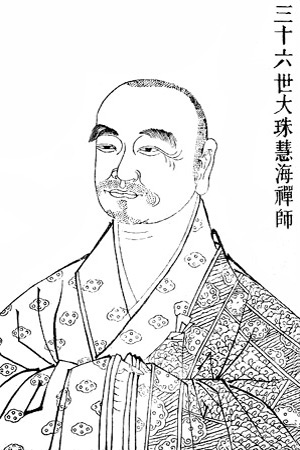
Shankara bondage is a mirage

In the traditional path of Knowledge or Jnana, first we are to know our True Self (Atman) and know this to be the same as the Absolute (Brahman). Then we are to be still and renounce all desires.

This spiritual knowledge (Jnana) of ‘I am Brahman’ (Aham Brahmasmi) allows the mind to become still and desireless. Note this does not mean that the body becomes totally inert – no – rather it continues to function naturally according to its destiny (Prarabdha Karma) until the body dies.

Shankara states this multiple times, eg, in Vivekachudamani, and also in his many commentaries, eg. in his commentary upon the Kena Upanishad – in his introduction to the Kena Upanishad Shankara writes:

And [the Self] being eternal, it is not to be secured by any means other than the cessation of ignorance. Hence the only duty is to renounce all desires after the realisation of the unity of the indwelling Self and Brahman.

This is akin to Self-Surrender, as spoken by Sri Ramana Maharshi:

There is no destiny. Surrender, and all will be well. Throw all the responsibility on God. Do not bear the burden yourself. What can destiny do to you then?”
(Talks 244)

and again here:

Question: Surrender is said to be Bhakti [the path of devotional love]. But Sri Bhagavan [Ramana Maharshi] is known to favour enquiry [ie. the path of Knowledge or Jnana] for the Self. There is thus confusion in the hearer.
Ramana Maharshi: Surrender can take effect only when done with full knowledge. Such knowledge comes after enquiry. It ends in surrender.
(Talks 462)
This above post was an excerpt from The ‘ultimate means’ to liberation

Annamalai Swami – How to abide as the Self and perform Self-Inquiry (Atma Vichara)

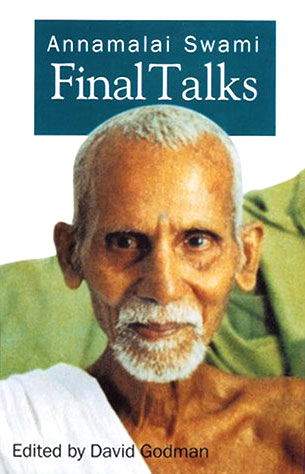
annamalai swami final talks

Annamalai Swami spent nearly 10 years of his life attending to Bhagavan Sri Ramana Maharshi, listening to Ramana’s teachings and bathing in Ramana’s Silent Presence. He himself attained self-realisation and we in turn are blessed to receive these teachings from him.

I present these excepts for the benefit of all who are earnestly seeking and highly recommend you buy this text to support the editor who enabled these teachings to be shared with us all.

Annamalai Swami Ch 18 1Annamalai Swami Ch 18 2Annamalai Swami Ch 18 3Annamalai Swami Ch 18 4Annamalai Swami Ch 18 5Annamalai Swami Ch 18 6Annamalai Swami Ch 18 7Annamalai Swami Ch 18 8

Devotional Love – The Sure Path of Bhakti Yoga

Ramana Maharshi downward gaze

In Guru Vachaka Kovai, Bhagavan Sri Ramana Maharshi tells us:

734. Those who have one-pointed devotion towards God, like the magnetic needle [of a ship’s compass] which always stands facing towards the north, will never be perplexed and go astray in the ocean of attachment of this world.

735. Those who live in the world, clinging whole-heartedly to God, are like children who whirl round and round a pillar holding it firmly. Since they have a strong and unshakeable hold on God, they are devoid of ego [anava] and therefore will never fall a prey to the delusion of the world.

736. If one fixes one’s mind firmly on that pure Supreme Reality which pervades all activities, one will not be affected by any number of activities that are done.

Merry Christmas to each and everyone!! Jesus – the greatest commandment

MERRY CHRISTMAS TO EACH AND EVERYONE!!
🌲🎁❄☃🌟🌨
🙏🙏🙏

THE GREATEST COMMANDMENT

28 One of the teachers of the law came and heard them debating. Noticing that Jesus had given them a good answer, he asked him, “Of all the commandments, which is the most important?”

29 “The most important one,” answered Jesus, “is this: ‘Hear, O Israel: The Lord our God, the Lord is one.

30 Love the Lord your God with all your heart and with all your soul and with all your mind and with all your strength.’

31 The second is this: ‘Love your neighbor as yourself.’ There is no commandment greater than these.”

32 “Well said, teacher,” the man replied. “You are right in saying that God is one and there is no other but him.

33 To love him with all your heart, with all your understanding and with all your strength, and to love your neighbor as yourself is more important than all burnt offerings and sacrifices.”

34 When Jesus saw that he had answered wisely, he said to him, “You are not far from the kingdom of God.” And from then on no one dared ask him any more questions.

(The Gospel of St. Mark, Chapter 12)

No need to force our views onto others

No need to force our views onto others. What is right for us in a certain time or place may not be right for someone else. We each have our own unique path to the Divine. Of course we should share Our Truth when it feels right for us to do so, but it is good to remain humble, uncertain in our verbal pronouncements, open to alternative views and ways and self-effacing throughout…at least that is my view! 🙏

Best wishes and blessings to you all

With love

Tom

Jnana vs Bhakti (The path of Knowledge vs Devotional Love)

Ramana Maharshi downward gaze

Bhagavan Sri Ramana Maharshi states in Guru Vachaka Kovai:

722. On scrutiny, supreme devotion [parabhakti] and Jnana are in nature one and the same. To say that one of these two is a means to the other is due to not knowing the nature of either of them.

731. Know that the path of Jnana and the path of Bhakti are inter-related. Follow these inseparable two paths without dividing one from the other.

B13. Attending to Self is devotion to the supreme Lord, because the Lord exists as Self.

What is the relationship between Desire and Realisation?

ramana escape the tricks of maya

Bhagavan Sri Ramana Maharshi states in his text ‘Who am I?’:

Question 26. What is the relation between desirelessness (nirasa) and wisdom (jnana)?
Sri Ramana Maharshi: Desirelessness is wisdom. The two are not different; they are the same. Desirelessness is refraining from turning the mind towards any object. Wisdom means the appearance of no object. In other words, not seeking what is other than the Self is detachment or desirelessness; not leaving the Self is wisdom.

The above was taken from the question and answer version of ‘Who am I?’. Note that the Sanskrit word Jnana, literally meaning knowledge or wisdom, is a synonym for Self-Realisation when used in spiritual texts. In the alternate essay version of ‘Who am I?’, which is the version Ramana wrote himself, the same essential teachings are given but phrased slightly differently. Here is this particular teaching from the essay version:

Not attending to what-is-other (anya, that is, to any second or third person object) is non-attachment (vairagya) or desirelessness (nirasa); not leaving Self is knowledge (jnana). In truth, these two (desirelessness and knowledge) are one and the same.

In Talks with Sri Ramana Maharshi, talk number 502, Ramana states the following:

There is room for kama (desire) so long as there is an object apart from the subject (i.e., duality). There can be no desire if there is no object. The state of no-desire is moksha.

In Guru Vachaka Kovai, verse 149, Ramana States:

149. The non-dual experience will only be attained by those who have completely given up desires. For those with desires, it is far, far away. Hence it is proper for those with desires to direct their desires towards God, who is desireless, so that through desire for God the desires that arise through the delusion that objects exist and are different from oneself will become extinct.

In verses 378-9 Ramana states:

378. Except for the one who has completely cut the tie of desires, the false appearance [that he is a suffering jiva] will not cease. Therefore, without any hesitation, one should cut even the desire for the great Divine Happiness.
379. O foolish mind who is suffering due to the desire for the petty pleasures of this world and of the next, if you remain quiet [i.e. without desire] you will certainly attain that State of Bliss which surely transcends the pleasures of these two.

As always, Ramana’s teachings are in line with the traditional Vedanta texts such as the writing of Shankara and the Upanishads. I have written some other posts that demonstrate this point, see below:

DESIRE, DISPASSION & LIBERATION with quotes from The Upanishads

Shankara: How to Meditate for Self-Realisation| Vivekachuhdamani

Does stillness of mind lead to liberation?