Questioner: Tom, I’ve been reading a book on free will last week and the more I read through it, I came to the understanding there is no free will at all…
This video was recorded live during a Satsang meeting with Tom Das and put together by volunteers.
Q. What is the difference between neo-advaita (or ‘radical non-duality’) and traditional advaita. Or are they just pointing to the same thing in different ways?
Tom: There is an essential difference.
This essential difference is one of SADHANA, or spiritual practice, and SUFFERING.
Neo-Advaita states there is no separate person or jiva that could engage in any sadhana, and that any sadhana perpetuates the illusion of duality. Neo-Advaita also does not claim to end suffering.
(Traditional) Advaita emphasises the importance of sadhana as being absolutely necessary (for most) in order to realise the Self and go beyond and END all suffering and duality.
Update 2024: Ramana Ashram have asked me to remove the PDF download of Maha yoga
From the Preface:
Maha Yoga or The Upanishadic Lore in the Light of the Teachings of Bhagavan Sri Ramana is both a profound exposition of Sri Ramana’s teachings and a lucid summary of the whole Vedantic philosophy, the ancient lore of the Upanishads.
Before an aspirant embarks upon the practice of Self-enquiry, which is the cornerstone of Sri Ramana’s teachings and the essence of the Upanishadic lore, it is extremely useful — if not essential — for him to have a clear and well-founded understanding of the theoretical background upon which the practice of Self-enquiry is based, and such an understanding is possibly not made available to aspirants anywhere so clearly as in this book, which elucidates many important aspects of Sri Ramana’s teachings.
The author of this book, Sri K. Lakshmana Sarma (‘WHO’), was amply qualified to write such an exposition, because he spent more than twenty years in close association with Bhagavan Sri Ramana and he made a deep study of His teachings under His personal guidance.
Author’s Note:
MAHA YOGA is the Direct Method of finding the Truth of Ourselves, It has nothing in common with what is commonly known as ‘Yoga’, being quite simple — free from mysteries — because it is concerned with the utter Truth of our Being, which is Itself extremely simple.
MAHA YOGA frees its follower from his beliefs, not to bind him with new beliefs, but to enable him to pursue with success the Quest of the True Self, which transcends all creeds.
MAHA YOGA has been described as a process of unlearning. Its follower has to unlearn all his knowledge, because, being in relativity, it is ignorance, and therefore a hindrance. This true Yoga is the subject-matter of the Upanishads. But the Truth that is to be found by this Yoga is eternal and needs to be testified to by living witnesses from time to time.
This book starts with the very reasonable assumption that only a living Teacher can tell us the Upanishadic Truth, not the Upanishads themselves, because they are just words and little more, while the Living Teacher is an Incarnation of the Truth we seek.
The Living Teacher of our age was the Sage of Arunachala, Bhagavan Sri Ramana, of whose life a brief sketch is given in the first Chapter. His teachings are treated in this book as the primary authority, and the Upanishadic lore as next in value — as amplifying and supplementing it. The reader need not accept anything that is set forth here, unless he finds it to be in consonance with the actual teachings of the Sage.
Q. Why do we suffer? Tom: Because we seek (something different to ‘what is’)
Q. Why do we both suffer and seek? Tom: Because we take ourself to be a separate vulnerable body-mind entity. So long as we do so we are compelled to both suffer and seek.
Q. Why do we take ourself to be a separate body-mind entity? Tom: Because we believe our thoughts that tell us so (ie. it is a belief that we are a body-mind entity – note that I call this belief ‘the ego’)
Q. What is the solution? Tom: The solution is to stop this type of thinking.
Q. How can we do that? A. We find, perhaps after much trial and error, there is only one essential method that consistently works, and that is to take one’s attention away from objective phenomena and place it upon the first person, the ‘I AM’, the Subject-Self. This practice is called Self-Enquiry. This process is explained in detail in the book The Path of Sri Ramana – Part 1
Q. My mind is too busy for this method Tom: Then try another preliminary practice such as mantra recitation, devotion, chanting, watching the breath, hatha yoga, etc, as suits you – try another calming practice first – preferably a practice you are drawn to, and then when the mind is calm go straight back to Self-Enquiry.
Q. What about other teachings or methods? Tom: You will find that other teachings methods (methods other than Self-Enquiry) at most only lead to a temporary effect that comes and goes. Don’t take my word for this, you can find out for yourself.
Q. Why do other methods not work? Tom: Other methods, which involve attending to objects (gross or subtle objects such as thoughts, feelings, the breath, or other objects) invariably give rise to egoic ‘body-based’ thinking as the ego only survives when it can think of objective phenomena. And when we attend to objective phenomena you will see that the ego always finds a way to rise and ‘take control’ or ‘take the reins’ and posit itself as the true ‘I’.
Q. Isn’t this quite an extreme practice? Tom: Yes, it is this extreme practice that is required, for most people, for the ego to end.
Q. Doesn’t this practice just perpetuate the separate ego-I? Tom: No, that too is just another belief, that all practice necessarily perpetuates the ego-I. Try it – with consistent daily application results are quickly seen.
Q. Ok thanks! Tom: You’re most welcome. Let me know how it goes!
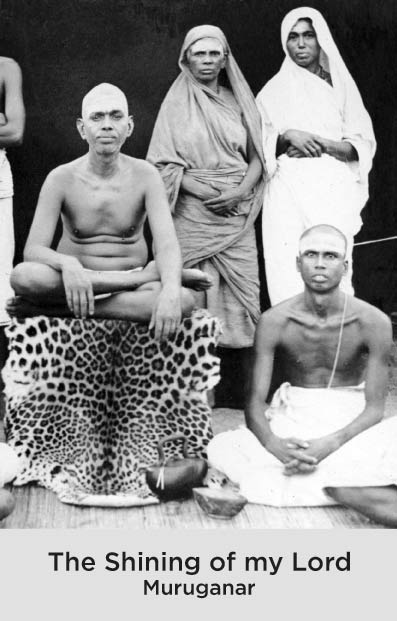
318. By thinking of my Lord, thought waves came to a complete rest. I was freed from attachment to action I performed. I separated from potential associations that approached me. I merged everywhere with mauna, the virtuous conduct of abiding as being.
319. Because thinking of my Lord yielded bliss for me, I realised that my Lord is the very form of bliss. By experiencing my lord through the mauna-consciousness in my heart, I too became, with delight, that [bliss]
320. Because the thought of our Lord destroys completely all other thoughts, devotees will come to experience the grace that is supreme tranquillity thought that thought of our Lord. The potency of the supreme power of our Lord’s mauna will destroy the ego of true devotees, bestowing on them the experience of our Lord’s very own real nature, the Self, jnana.
313. Why seek a tapas other than true love, the melting of the mind that comes from meditating on my Lord?
314. No other tapas is required for those whose minds have dissolved by meditating on the Lord.
315. Melting within by repeatedly thinking of him in a loving way became the cord with which the Lord tied me to himself. His ultimate real nature, existing as the unique pure being, surged forth as pure consciousness, absolutely blemishless grace.
The above verses are from The Shining of my Lord by Sri Muruganar
Guru Vachaka Kovai, Verse 659:
659. Those people who lack consciousness of being, the natural light [I am], and who consequently come, through ignorance, under the spell of karma and suffer, will have their delusion ended and reach the Self, the supreme reality, through meditation on a divine form that is dear to them.
Here Swami Advayananda of the Chinmaya International Foundation explains the need for Nirvikalpa Samadhi according to Advaita Vedanta and how to overcome the obstacles to it:
I suspect you mean that the ego, which is of the nature of ‘doing’ cannot ‘do resting’ as the I Am.
The resolution of this conundrum is that when the ego turns towards the I Am or the Self, it disappears.
A common objection is that anything the ego does, such as ‘trying to rest as the I AM’ just perpetuates the ego.
However, this is just a logical supposition, ie. it is a belief, based on logic, and is not actually the way it is.
In practice, when the ego-I turns inwards, it disappears. Ego is only of the nature of movement, or doing, and when it turns inwards, towards the I Am, which is of the nature of being (ie. no movement, not doing), the ego-I becomes still and disappears.
Being an illusion, it, the ego-I, never really was.
Sri Satchidanandendra Saraswati Swamiji (SSS, 1880-1975), was a vedic scholar who devoted much of his life to studying the works of Shankara (c. 7th century BCE), the great reformer of Advaita Vedanta. SSS came to the conclusion that many of the texts that are ordinarily attributed to Shankara are not genuine works of Shankara, and that the truly genuine works of Shankara are essentially the commentaries he wrote on the Bhagavad Gita, the Upanishads, the Brahma sutras and a non-commentarial text called Upadesa Sahasri. Whilst this view remains a controversial minority view, and personally I am not convined by the evidence brought forth, many are increasingly subscribing to it.
However, of those who do follow SSS’s teachings, I have noticed some have not actually read his teachings thoroughly, especially on what he says about Nididhyasana, or Vedantic Meditation.
The first thing to notice is that SSS states that Nididhyasana is the same as Dhyana Yoga as described in Chapter 6 of the Bhagavad Gita, and Mano-nigraha Yoga as described in Gaudapada’s Karika, and is also called Adhyatma Yoga:
‘This Adhyatma Yoga is called as ‘Nidhidhyasana’ and in the sixth chapter of the Gita this Nidhidhyasana is described as ‘Dhyana Yoga’. The complete sixth chapter of the Bhagavad Gita reveals the process of this Dhyana Yoga with its accessories. In this very Bhagavad Gita in the following contexts also this Dhyana Yoga or Adhyatma Yoga is prescribed: 13-24, 18-52. The same Adhyatma Yoga is also called as ‘Manoni-graha Yoga’ by Gaudapada in his Mandukya Karikas from 3.41 to 3.48. So in all these places the practice of Adhyatma Yoga, its accessories, the obstacles during the practice and the removal of the obstacles are described.’
The second thing to notice is that according to SSS this Nididhyasana (or Adhyatma Yoga) is a means to Self-Realisation.
The Theory of Vedanta by SSS, p. 153:
‘In addition to Karma and Upasana, there is a kind of concentrated contemplation called the Adhyatma-Yoga which leads to immediate intuition [of Brahman, ie. Self Realisation].’
This is further clarified in the introduction to the text Adhyatma Yoga. In this context the term ‘Vastu Tantra’ means Nididhysana is a means to Self-Realisation or Truth-Realisation. (‘Vastu Tantra’ means ‘a path to the truth’, which is independent of the person who is looking, so to speak, much like science – eg. the same independent scientific truth such as the speed of light or the gravitational constant can be discovered by various people from different places – this truth is independent of the person looking. Vastu Tantra means that this is the method that leads to the supreme truth, ie. liberation or Knowlege of Brahman/Atman. This is opposed to ‘Kartru Tantra’, also known as ‘Purusha Tantra’, which refers to ‘the path of an individual’ – eg. lifting weights to build up your muscles or meditating to gain specific special powers – it is a path that leads to specific results for an individual – eg. bigger muscles or specific powers – but it does not lead to discovery of an ‘objective’ non-personal universal truth). The following is from the introduction to the text Adhyatma yoga:
‘The subject dealt with here viz. Adhyatma Yoga, also known as Dhyana Yoga, Mano-nigraha Yoga, Samadhi Yoga and Nidhidhyasana, is treated these days as a Kartru Tantra Sadana. But in the Shankara Bhashya throughout, this Adhyatma Yogi or Dhyana Yoga is treated as a Vastu Tantra Sadhana.’
The third thing to notice is that the technique of Nididhyasana is to turn one’s attention away from objective phenomena and turn towards the Self until one ‘intuits’ the Self directly.
Here is a quote from The Method of Vedanta by SSS, p. 147, that summarises much of the above and also describes in brief the method of nididhyasana. Upasana is defined here as meditation upon objects, and nididhyasana is to turn away from objects (note that in some scriptures the word ‘upasana’ is used synonymously with ‘nididhyasana’ but here SSS is using the words in this particular way):
‘The aim of the one practising sustained meditation (nididhyasana) is different [to Upasana, defined here as meditation on forms/objects]. He tries to attain direct vision of reality (here in this very world) by turning his mind away from all else [ie. all objects].And there is the difference — as against upasana — that after the rise of knowledge nothing further remains to be done. It is this sustained meditation that is referred to at Kathha Upanishad I.ii.12 by the name ‘Adhyatma Yoga’. In the Gita it is sometimes called ’Dhyana Yoga’ (e.g. XVI11.52). In the Mandukya Karikas it is called ’restraint of the mind’ (G.K.III.41, etc.). Its nature is described there in that latter work. Everywhere its result is described in the same way as right metaphysical knowledge, and from this comes immediate liberation (sadyo-mukti).’
SSS then quotes from the Katha Upanishad and Shankara’s commentary on it to make is point clear:
‘The wise man comes to know God through mastering Adhyatma Yoga, and gives up joy and sorrow. (Kathha I.ii.12)
[Tom: ie. through Adhyatma Yoga the Self is realised; SSS then goes on to quote Shankara’s commentary – the following is as quoted by SSS:]
Sankara’s Commentary: Mastering Adhyatma Yoga: Adhyatma Yoga means withdrawing the mind from objects and concentrating it on the Self. Having meditated on the deity, the Self, through attainment of Adhyatma Yoga, the wise man gives up joy and sorrow because there are no gradations of value in the Self.’
On p.149 of The Method of Vedanta by SSS, SSS quotes from Chapter 6 of the Bhagavad Gita to explain in more detail the method of Nididhyasana – the following is quoted by SSS as a description of Nididhyasana:
‘That yoga should certainly be practised with resolute mind. Giving up without exception all desires that come from individual, will, restraining the sense-organs on every side through the mind, one should gradually withdraw from all activity, with will and intellect firmly controlled; keeping the mind fixed on the Self, one should not think of anything. Wherever the fickle mind wanders, one should bring it back and fix it on the Self alone, under firm control. Supreme joy comes to such a yogi, whose mind is at perfect peace, whose lusts have subsided, who is sinless and who has become the Absolute.’
I hope the above is useful and helpful to you
Namaste
Tom
Here are some other articles that speak on this topic:


 Tom Das