Welcome to this moment of Satsang. In today’s gathering, Tom shares the essence of the Highest Teaching — the truth that is always with us, closer than we can imagine with our minds. He reminds us that liberation from suffering and delusion isn’t something we accomplish on our own; true freedom arises through awakening to our True Nature.
To awaken to who we truly are, we must open up to connection, love, devotion, and silence. At our core, peace is our true nature. For many on this path, the guidance of Bhagavan Ramana, our beloved Guru, reveals the unchanging presence within—the heart’s ever-known reality.
Words and teachings are only signposts, pointing to a silent wisdom that cannot be spoken but is always present. Who we truly are is deeper than any concept and prior to all words. To realize this, Tom invites us to draw back the veil, to reveal what lives in the heart — the eternal flame of being in the hearth of our own true Self.
This is an invitation to truth, to life eternal, to beauty, peace, love, and light—so simple, so profound.
You Are Immensely Privileged – Your Head Is In The Tigers Mouth!
In this Satsang, a “shadow” questions and feelings arises—some many of us quietly carry: Am I truly an advanced seeker after all my reading, study, contemplation, practice, service… or just a beginner caught in ignorance and pride? Sometimes feelings of jealousy surface toward our teachers, those who seem to hold a light we can’t quite touch. But what if that jealousy is only the flip side of a deep longing for freedom – the desire to end suffering and discover lasting peace? Maybe it can better serve us to see this energy as inspiration.
Here, Tom responds with compassion and honesty, sharing his own journey of exhausting all teachings until only humility and surrender remained. True surrender begins when we see the futility of our own egos striving and allow the Self – Bhagavan – to move within us; to do what our minds simply cannot do.
And for Tom in his journey, liberation became secondary to simply being with Ramana, in love and gratitude. This is a powerful pointer for some of us!
Tom continues to inspire, by giving us his view, that if you have heard the name Bhagavan Sri Ramana Maharshi, you are deeply blessed. If his image has touched your heart, you are blessed even more. And if you resonate with the teachings and are drawn to them, you have won the spiritual lottery! “Your ego’s head is in the mouth of the tiger; it’s not a matter of if, but when, awakening apparently happens”.
Ultimately, nothing is missing. There is no need for jealousy—only inspiration, gratitude, and trust in your own unique unfolding.
This video was recorded live during a Satsang meeting with Tom Das on September 25th, 2025 and put together by volunteers. To download full unedited satsang recordings see here: https://payhip.com/tomdas
To attend satsang, see here: https://tomdas.com/events
Awakening Beyond Suffering – Understanding The Grip Of Samsara | Ramana …
Why is letting go of suffering such a challenge? In this Satsang, a participant reads from Aham Sphurana: A Glimpse of Self-Realization, from a passage titled Surrender written on July 17, 1936. The reading covers the first three questions and answers given by Bhagavan Sri Ramana Maharshi.
Following this, Tom offers a spontaneous response with presence, silence and words, that sheds fresh light on Bhagavan’s words, pointing out the subtle dilemma of the mind and it’s attachments and revealing both the medicine and the cure for our suffering; Bhakti/Devotion, Self Love, connection, stillness and sacred silence.
This video was recorded live during a Satsang meeting with Tom Das on August 31st, 2025 and put together by volunteers.
To download full unedited satsang recordings see here: https://payhip.com/tomdas
To attend satsang, see here: https://tomdas.com/events
Everyone Is Ready For This Teaching – There Is Nothing To Be Afraid Of
Welcome to Satsang with Tom. In the spirit and grace of Sri Ramana Maharshi’s timeless teachings, we are gently reminded that our true nature is formless and ever-present. This truth is not something to be gained, but to be recognized as what we already are. With devotion and compassion, Tom guides us to release fear and rest in the effortless peace of our own being; “it is just ourself”.
This video was recorded live during a Satsang meeting with Tom Das on September 4th, 2025 and put together by volunteers. To download full unedited satsang recordings see here: https://payhip.com/tomdas
To attend satsang, see here: https://tomdas.com/events
Ego Backlash! Suffering after silent meditation | The ego stikes back!
The Simplicity Of Self-Realization
Keeping Company With The Sages – A Shortcut To Bliss & Freedom
Faith vs Devotion | What is the difference between faith and devotion?
Why Self-Realization Is So Difficult: 3 of the Greatest Hindrances & the One Essential Cause
✨ Welcome to today’s exploration.
In this video, we’re diving into three of the greatest hindrances to Self-Realization — and uncovering what may be the one essential cause for awakening to liberation and true happiness.
To guide our journey, we turn to the writings of Maud A. Piggot, the first British woman known to have visited and spent time with Sri Ramana Maharshi in the 1930s. Through her reflections, we glimpse not only the words Maharshi offered, but a description of the living teaching she received in his presence — through his silence, his compassion, his humor, his glance, and his being.
Together, we’ll reflect on how these timeless insights may speak directly to us today, illuminating the inner obstacles that keep us from realizing our true nature, and supporting us in focusing on the essential ingredient for liberation.
This video was recorded live during a Satsang meeting with Tom Das on July 31, 2025, and put together by volunteers. To download full unedited satsang recordings see here: https://payhip.com/tomdas
To attend satsang, see here: https://tomdas.com/events
For guided meditations see the ‘guided meditation’ playlist here: https://www.youtube.com/c/TomDasNonduality/playlists
For recommended reading for liberation see here: https://tomdas.com/2020/10/19/recommended-reading-books-for-enlightenment-liberation-and-self-realisation/
For more on Maud A Piggot quoted in this video: https://archive.arunachala.org/newsletters/2015/mar-apr
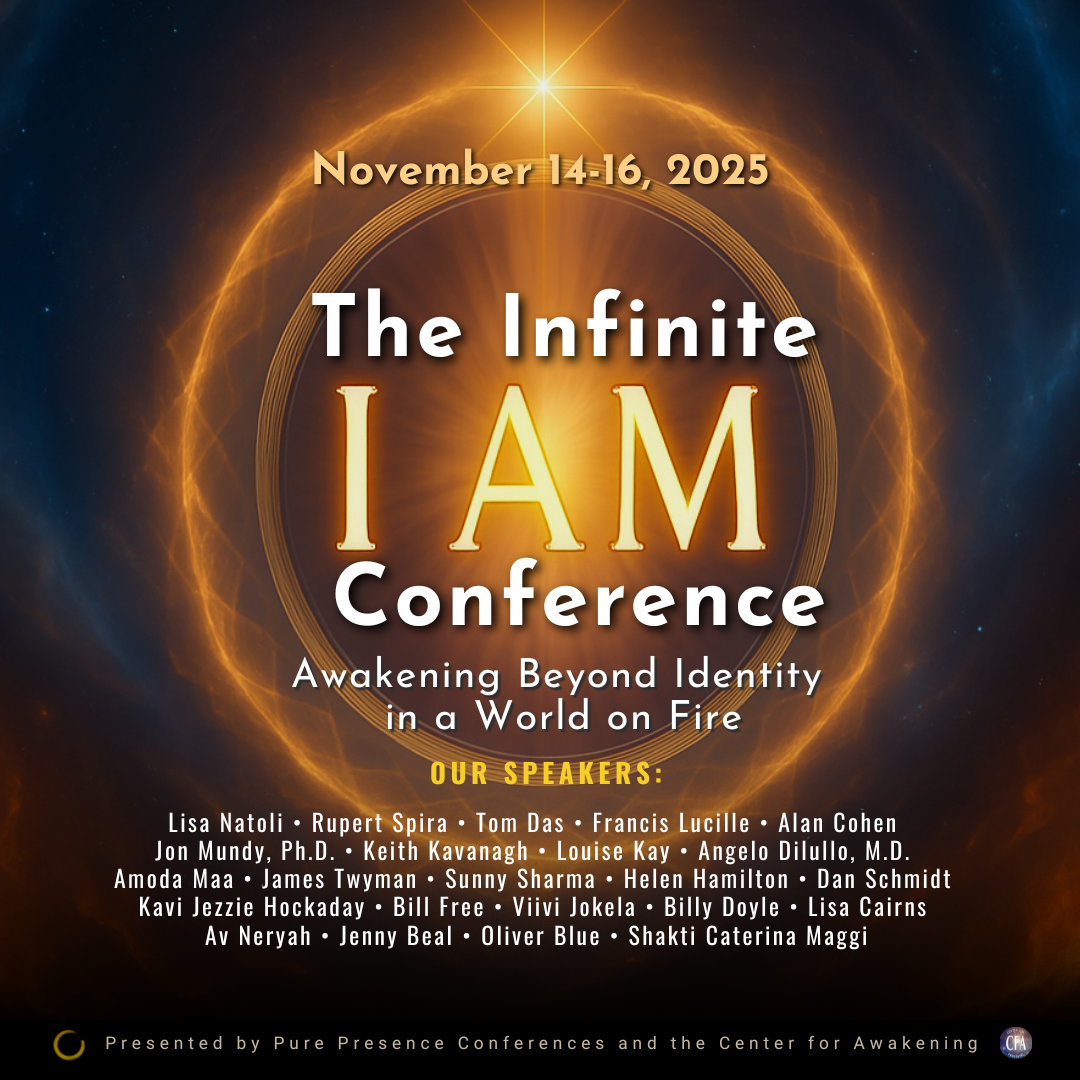
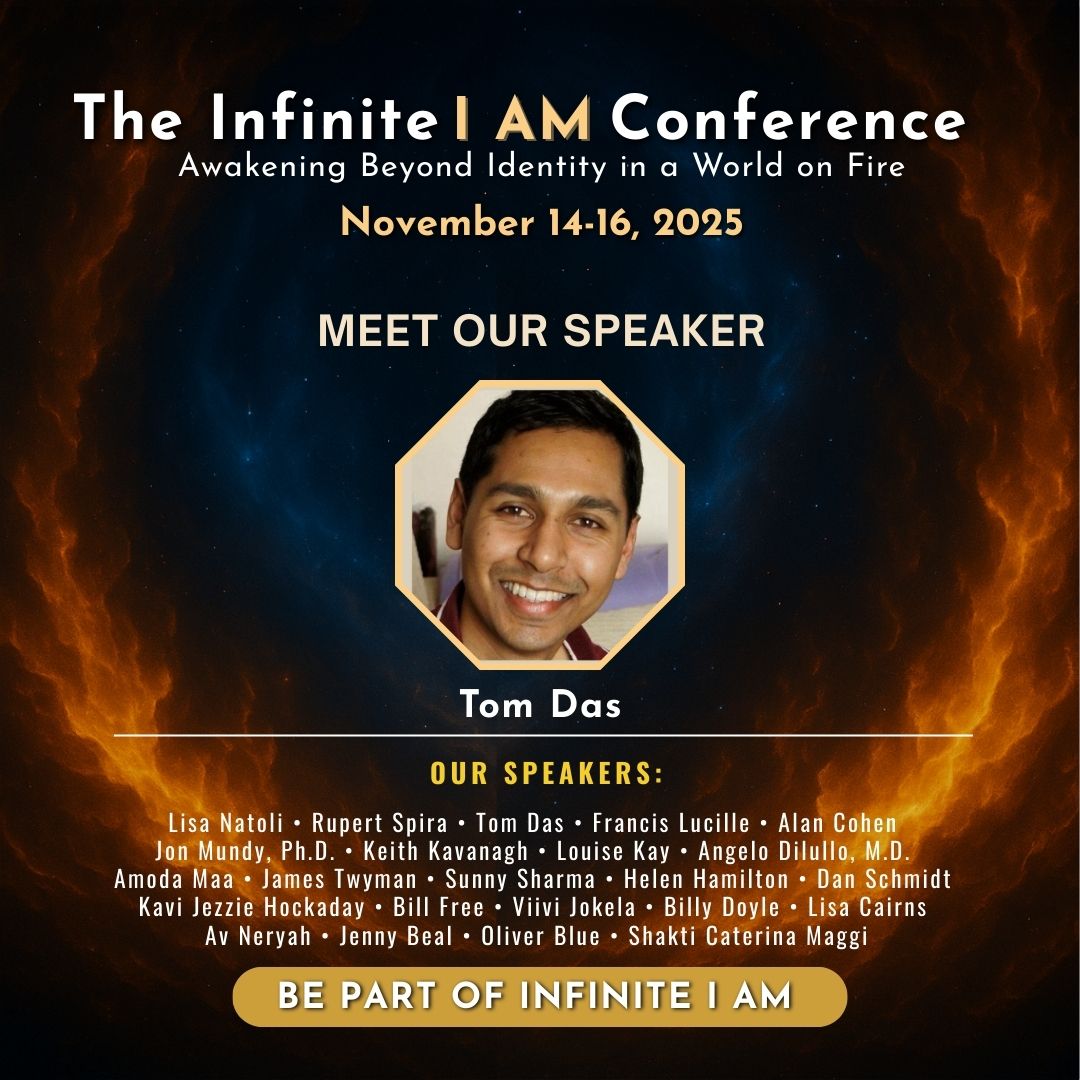
Tom Das will be speaking at the Infinite I AM conference Nov 15th 2025
Dear all, I will be speaking at this event on Sat 15th November 2025 at 16:30pm GMT – it is free to watch the event live, please click on this link below* to register:
https://the-infinite-i-am-conference.heysummit.com/?sc=xI8mSzLf&ac=wJqbtObV
* This is an affiliate link, so clicking on the link will support my attendence at the conference and I will receive some commision from any purchases made.
 Tom Das