FALSE VEDANTA – a warning from Shankara (Vivekachudamani)

5bcbc2e6adc6ac9dfb690a3edcb64ab2_l
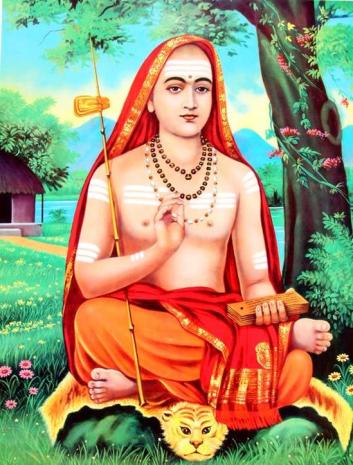
Sri Shankara

Perhaps the most important single text that traditionally outlines the Jnana Marga (Path of Knowledge) is Shankara’s Vivekachudamani.  This text has been used for centuries as a step by step manual to take one from (apparent) ignorance to Moksha (liberation) in which there is no suffering and it has been recommended by all the great Advaita sages including Sri Ramana Maharshi.

There are many gems littered throughout the text, and here is one of them which you may have missed:

160. The stupid man thinks he is the body, the book-learned man identifies himself with the mixture of body and soul, while the sage possessed of realisation due to discrimination looks upon the eternal Atman as his Self, and thinks, “I am Brahman”.

In verse 160 Shankara tells us that the one who is book-learned in Vedanta considers himself to be a mix of ‘body and soul’. In doing so, the one with mere book-learning still retains identification with the body, and so remains in ignorance and continues to suffer. In verse 162 Shankara, as is characteristic of the writing in Vivekachudamani, repeats his point and elaborates on it to make the meaning clear and beyond doubt:

162. As long as the book-learned man does not give up his mistaken identification with the body, organs, etc., which are unreal, there is no talk of emancipation for him, even if he be ever so erudite in the Vedanta philosophy.

There are many who know the scriptures, know the teachings, but still identify with the body in some way. These verses are a warning against this view. Shankara concludes this small section as follows, dispensing his sagely advice:

163. Just as thou dost not identify thyself with the shadow-body, the image-body, the dream-body, or the body thou hast in the imaginations of thy heart, cease thou to do likewise with the living body also.
164. Identifications with the body alone is the root that produces the misery of birth etc, of people who are attached to the unreal; therefore destroy thou this with the utmost care. When this identification caused by the mind is given up, there is no more chance for rebirth [ie. liberation is attained].

So don’t take yourself to be the body, just as you do not take your shadow to be yourself, do not take your body to be your-Self. Also, do not take yourself to be both the body and something else and in doing so retain a sense of limitation. You are That alone, you are the Self.

You are That alone,

You are the Self.

Spiritual, Emotional & Non-Dual Guidance & Counselling

Tom is the only one [teacher] I’ve seen who doesn’t come from his point of view, he always comes directly from the silence and meets the seeker exactly where they’re at. If they need a practice, he has it, if they already have one but are stuck he knows how to move them, if they’re just beginning he knows how to guide them…it’s wonderful to see.
Danny, UK

To arrange a 1 to 1 session with me please contact me via the contact page.

I offer 1 to 1 sessions either in person or via zoom. These sessions can be a wonderful way of clearing apparent blocks and confusion and can provide a much needed short-cut on your spiritual journey.

My Approach

I meet you wherever you are in your journey and guide you from there – whether you’re completely new to this or are a seasoned seeker, whether you want to focus purely on non-duality or instead want to heal emotional issues, deal with practical aspects of life or explore relationship issues.

Even if you don’t have a specific question or issue in mind, I often find I can intuitively feel where you are and advise you accordingly.

Guidance

Here are just some of the many things I have helped guide those who have approached me:

  • Total Freedom – right here, right now!
  • Clarity around the teachings with a focus on ending suffering in daily life
  • Awakening & enlightenment experiences: making sense of what may have happened to you and where to go from this
  • Going ‘in and out’ of enlightenment – why this is happening for you and what to do about it
  • Reconciling various traditional approaches such as Buddhism, Christianity, Gnosticism, Zen, Advaita, Vedanta as well as non-traditional approaches such as law of attraction, new-age teachings, direct teachings, neo-advaita, etc.
  • Dealing with practical issues such as various aspects of daily life and earning money
  • Relationship issues eg. with partners, family and children
  • Not really feeling happy, peaceful, whole & complete despite intellectually understanding the teachings
  • Healing emotional trauma and distress
  • Resolving addictive or habitual egoic tendencies (vasanas)
  • Addressing various issues related to being a ‘spiritual seeker’, eg:
    • a sense of isolation or loneliness
    • loss of interest or passion for various pursuits
    • other more specific issues such as psychic and energetic experiences.

Cost

Cost for an online 1 to 1 session: £75 for 1 hour; £50 for 30 minutes
Cost for in-person 1 to 1 meeting (in the London area, UK): £100 for 1 hour

To arrange a 1 to 1 session with me please contact me via the contact page

Disclaimer

Meetings and sessions are not intended as a substitute for professional therapy, medical care, or legal advice. Please consult a licensed professional in these matters.

Testimonials

Tom is the easiest person to talk to and he gave me the support I needed.
Outi, Finland

Tom’s teaching is unique. His guidance is a non-dual lighthouse emitting a bright light-beam across life’s turbulent expanse to steer the seeker from crashing on the rocks of ignorance, misunderstanding and delusion, to reach the shore of Timeless Being.
His gift is discerning where the individual seeker is at and what is required specifically for that ‘individual’ to support them in their thirst for freedom from suffering. His maturity, as a guide, is evident in how he can appreciate the wisdom teachings, the ‘treasure in the field’,  in traditions not generally associated with non-duality.
This breadth of understanding sets him apart from the smorgasbord of spiritual snake-oil merchants, pedlars, ‘evangelical’ non-dual purists and genuine teachers which, in practical terms, allows a welcoming and genuine spirit of inclusivity for anyone attending his satsangs.
Gerry, UK

I find Tom’s teachings clearer, simpler, and less encumbered by BS than just about anyone out there whom I have encountered. I’ve had teachers from Alan Watts to Adi Da, to Andrew Cohen, and others. Tom has the least ‘baggage’ I think…
Your words always affect me like a clear, clean breath of fresh air in the midst of what is often a lot of misconception and gobbledygook about what there is to ‘attain’ and all the rest of it.
Carl, USA

I chanced upon Tom’s website at a very interesting time in my journey. I had studied traditional Vedanta for many years. I had some good understanding about the concepts and was doing some serious self inquiry or Atma Vichara. That’s when I started tying myself into all sorts of knots. I wasted a lot of time confused by concepts and was in a very frustrated place until I spoke to Tom.
I believe things happen for a reason and you meet the right people at the right time in the journey. Within a couple of sessions, Tom was able to help me unravel some of these knots. As the layers started peeling off and more layers and depth opened up the journey started taking a different shape. Throughout this, Tom was able to ask just the right question and clarified many concepts that would have otherwise taken a life of their own.
I found his teaching style refreshingly down to earth and humble and since he was able to speak from his direct experience, it made everything so real and relatable.
Arvind, India

Click here to read more testimonials

Shankara & Ramana Maharshi: First Know Thyself, then Be Still

Shankara bondage is a mirage

In the traditional path of Knowledge or Jnana, first we are to know our True Self (Atman) and know this to be the same as the Absolute (Brahman). Then we are to be still and renounce all desires.

This spiritual knowledge (Jnana) of ‘I am Brahman’ (Aham Brahmasmi) allows the mind to become still and desireless. Note this does not mean that the body becomes totally inert – no – rather it continues to function naturally according to its destiny (Prarabdha Karma) until the body dies.

Shankara states this multiple times, eg, in Vivekachudamani, and also in his many commentaries, eg. in his commentary upon the Kena Upanishad – in his introduction to the Kena Upanishad Shankara writes:

And [the Self] being eternal, it is not to be secured by any means other than the cessation of ignorance. Hence the only duty is to renounce all desires after the realisation of the unity of the indwelling Self and Brahman.

This is akin to Self-Surrender, as spoken by Sri Ramana Maharshi:

There is no destiny. Surrender, and all will be well. Throw all the responsibility on God. Do not bear the burden yourself. What can destiny do to you then?”
(Talks 244)

and again here:

Question: Surrender is said to be Bhakti [the path of devotional love]. But Sri Bhagavan [Ramana Maharshi] is known to favour enquiry [ie. the path of Knowledge or Jnana] for the Self. There is thus confusion in the hearer.
Ramana Maharshi: Surrender can take effect only when done with full knowledge. Such knowledge comes after enquiry. It ends in surrender.
(Talks 462)
This above post was an excerpt from The ‘ultimate means’ to liberation

Annamalai Swami – How to abide as the Self and perform Self-Inquiry (Atma Vichara)

annamalai swami final talks

Annamalai Swami spent nearly 10 years of his life attending to Bhagavan Sri Ramana Maharshi, listening to Ramana’s teachings and bathing in Ramana’s Silent Presence. He himself attained self-realisation and we in turn are blessed to receive these teachings from him.

I present these excepts for the benefit of all who are earnestly seeking and highly recommend you buy this text to support the editor who enabled these teachings to be shared with us all.

Annamalai Swami Ch 18 1Annamalai Swami Ch 18 2Annamalai Swami Ch 18 3Annamalai Swami Ch 18 4Annamalai Swami Ch 18 5Annamalai Swami Ch 18 6Annamalai Swami Ch 18 7Annamalai Swami Ch 18 8

Devotional Love – The Sure Path of Bhakti Yoga

Ramana Maharshi downward gaze

In Guru Vachaka Kovai, Bhagavan Sri Ramana Maharshi tells us:

734. Those who have one-pointed devotion towards God, like the magnetic needle [of a ship’s compass] which always stands facing towards the north, will never be perplexed and go astray in the ocean of attachment of this world.

735. Those who live in the world, clinging whole-heartedly to God, are like children who whirl round and round a pillar holding it firmly. Since they have a strong and unshakeable hold on God, they are devoid of ego [anava] and therefore will never fall a prey to the delusion of the world.

736. If one fixes one’s mind firmly on that pure Supreme Reality which pervades all activities, one will not be affected by any number of activities that are done.

Jnana vs Bhakti (The path of Knowledge vs Devotional Love)

Ramana Maharshi downward gaze

Bhagavan Sri Ramana Maharshi states in Guru Vachaka Kovai:

722. On scrutiny, supreme devotion [parabhakti] and Jnana are in nature one and the same. To say that one of these two is a means to the other is due to not knowing the nature of either of them.

731. Know that the path of Jnana and the path of Bhakti are inter-related. Follow these inseparable two paths without dividing one from the other.

B13. Attending to Self is devotion to the supreme Lord, because the Lord exists as Self.

What is the relationship between Desire and Realisation?

ramana escape the tricks of maya

Bhagavan Sri Ramana Maharshi states in his text ‘Who am I?’:

Question 26. What is the relation between desirelessness (nirasa) and wisdom (jnana)?
Sri Ramana Maharshi: Desirelessness is wisdom. The two are not different; they are the same. Desirelessness is refraining from turning the mind towards any object. Wisdom means the appearance of no object. In other words, not seeking what is other than the Self is detachment or desirelessness; not leaving the Self is wisdom.

The above was taken from the question and answer version of ‘Who am I?’. Note that the Sanskrit word Jnana, literally meaning knowledge or wisdom, is a synonym for Self-Realisation when used in spiritual texts. In the alternate essay version of ‘Who am I?’, which is the version Ramana wrote himself, the same essential teachings are given but phrased slightly differently. Here is this particular teaching from the essay version:

Not attending to what-is-other (anya, that is, to any second or third person object) is non-attachment (vairagya) or desirelessness (nirasa); not leaving Self is knowledge (jnana). In truth, these two (desirelessness and knowledge) are one and the same.

In Talks with Sri Ramana Maharshi, talk number 502, Ramana states the following:

There is room for kama (desire) so long as there is an object apart from the subject (i.e., duality). There can be no desire if there is no object. The state of no-desire is moksha.

In Guru Vachaka Kovai, verse 149, Ramana States:

149. The non-dual experience will only be attained by those who have completely given up desires. For those with desires, it is far, far away. Hence it is proper for those with desires to direct their desires towards God, who is desireless, so that through desire for God the desires that arise through the delusion that objects exist and are different from oneself will become extinct.

In verses 378-9 Ramana states:

378. Except for the one who has completely cut the tie of desires, the false appearance [that he is a suffering jiva] will not cease. Therefore, without any hesitation, one should cut even the desire for the great Divine Happiness.
379. O foolish mind who is suffering due to the desire for the petty pleasures of this world and of the next, if you remain quiet [i.e. without desire] you will certainly attain that State of Bliss which surely transcends the pleasures of these two.

As always, Ramana’s teachings are in line with the traditional Vedanta texts such as the writing of Shankara and the Upanishads. I have written some other posts that demonstrate this point, see below:

DESIRE, DISPASSION & LIBERATION with quotes from The Upanishads

Shankara: How to Meditate for Self-Realisation| Vivekachuhdamani

Does stillness of mind lead to liberation?


Ramana Maharshi: The World and Self-Realisation

ramana escape the tricks of maya

Here are some verse from Guru Vachaka Kovai, perhaps the most comprehensive and accurate record of Sri Ramana Maharshi’s spoken teachings. I have used this version which contains comments from Sri Sadhu Om and Michael James. Much gratitude to them for making this wonderful text available. My comments are in italicised red:

71. Just as the goat’s beard wanders and wags for nothing, people roam about merrily but in vain, doing Karmas for the fulfillment of their worldly desires, while despising the disciplines [followed by aspirants] which lead to eternal Moksha in Self. Ah, what a pitiable spectacle is the condition of these worldly people!

Tom: Ramana states that people engaged in worldy actions (karmas; the work karma literally means ‘action’ in Sanskrit, often used to denote cause and effect, here just refers to action) are to be pitied, and notes the irony that those who are ignorant shun the very practice (ie. self enquiry) that leads to eternal Moksha (liberation)

72. Longing for a tiny grain of pleasure, people toil so hard using the mind to plough the field of the five senses, but they never wish for the flood of Bliss which is the fruit that comes by ploughing the Heart, the Source of the mind, with [simple] Self-attention. Ah, what a wonder!

Tom: Simple self-attention is all that is needed instead of chasing all these pleasures which not only takes so much effort, but also causes so much suffering.

73. The moon-like jiva [the mind], ever wedded to the sun-like Self, should always remain in her home, the Heart; to forsake the Bliss of Self and go astray for worldly pleasures, is like the madness of a wife who spoils her precious chastity.

Tom: note the seeker’s job here is to discern the teaching rather than be side-tracked by whether or not this verse is politically correct in today’s social landscape. Ramana equates seeking wordly pleasures with infidelity. Instead we are to remain faithful to ourselves and abide as the Self in the Heart.

74. Only when the world’s allurement is lost will true Liberation be possible [and its allurement cannot be lost unless it is found to be unreal]. Hence, to try to foist reality upon this world is to be just like an infatuated lover who tries to foist chastity upon a prostitute.

Sadhu Om: A lover foists chastity upon a prostitute only because of his infatuation with her, and similarly some schools of thought argue and try to insist upon the world’s reality, only because of their immense desire for the enjoyment of this world. Therefore Liberation, which is the fruit of desirelessness, is absolutely impossible for them. 

75. Only for the mad folk who are deluded, mistaking this fictitious world as a fact, and not for the Jnani, is there anything to revel in except Brahman, which is Consciousness.

Tom: There is only Consciousness

76. Will those who are rooted in the Knowledge of Truth stray to worldly ways? Is it not the base and weak nature of animals that descends to the sensual pleasures of this unreal world?

77. If you ask, “What is the benefit of sacrificing the innumerable sensual pleasures and retaining mere Consciousness?”, [we reply that] the fruit of Jnana is the eternal and unbroken experience of the Bliss of Self.

Sadhu Om: Any experience of worldly pleasure is small and interrupted, whereas the Bliss of Self attained through Jnana is eternal and unbroken, and is therefore the greatest benefit.

78. Truly there is not the least happiness in any single worldly objects, so how then is the foolish mind deluded into thinking that happiness comes from them?

79. Fools are now so proud and happy of the wealth and pleasure of this world, which may at any time abandon them in disappointment and distress.

80. Suffering from the heat of the three-fold desires, all living beings wander in the empty and arid desert of this dream-world, which is created by the whirl of past tendencies. The shade of the Bodhi-tree which can completely cool this heat is only Self, which shines as Turiya [the fourth state].

Michael James: The three-fold desires are for women, wealth and fame.

Tom: do not wander into the arid desert of the world, or ‘dream-world’ as is written above, instead be still, abide as the Self, That which you already are in your very Being.