The Natural Path to the Natural State

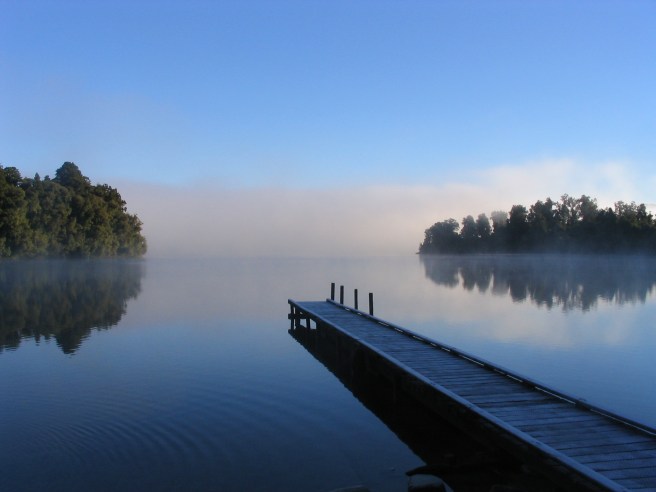
Lake calm new zealand meditation nonduality

Through the mind being increasingly more still, all is revealed, naturally and directly, non-verbally and non-conceptually, beyond any set of words or stock-phrases.

We don’t need to wrestle with ideas and questions such as:
– Is there a separate self?
– Is the world an illusion?
– Is everything really me?
– Do I survive after death?
– Am I really not the body?
– Is there free will?
– Are all these teachings actually just ramblings of self-deluded people? (It’s not impossible!)

All of the above is just ego-play, the mind perpetuating itself.

Through being still, as the thoughts lessen and lessen, the distorting veil of the ego lessens and its illusions are naturally seen through. Insight pours in all by itself, insight simply being the recognition of illusion for what it is, and the falling away of illusion.

All practices eventually take us to this stillness, so do what you need to do to be still. Often uplifting, blissfull, loving, positive and invigotating practices and techniques are needed first to root out negative tendencies (tamasic vasanas), and soothing calming practices are needed to calm passionate activated energies (rajasic vasanas) prior to allowing yourself to be still. Do what you need to do to allow stillness into your life.

Any teachings that have given you lasting benefit just bring you to this stillness, even if just momentarily. Through repeated prolongued immersion in stillness, the tendency to identify with the body-mind reduces then, after much time, eventually disappears, and with that the belief in the solidity of the world and other people also disappears, as does the notion of subject-object and time. This just happens by itself.

No need to take my word for it. Just be still and find out for yourself. Let go of belief in the ‘me’, the body, the world, the future, the past, etc, allow all thoughts to gently settle down and let go of all thinking. No need to push anything away or supress anything, just allow yourself (the ego-mind) to die…all will naturally work itself out.

Of course you will not find discover anything new or realise anything: the ego-illusion, the centre that is seeking – that will simply end. This is not about gaining new special knowledge or a new insight into reality, so if you are not getting special experiences/understanding or don’t appear to be ‘making progress’ through being still, don’t worry, that’s perfect. This is about the end of the ‘me’ that is seeking all of that.

Also, don’t underestimate the tenaciousness, endurance and pervasiveness of the ego. Even when thoughts do not appear to be consciously present, the ego is still fully there, dormant and in seed form, ready to sprout, just like in deep sleep. Therefore the stillness, even when thoughts appear not to be present, still needs to be be further deepened and the sadhana (spiritual practice) still needs to be continued until there is no individuality-duality left. A superficial absense of thoughts will not do. If this seems too difficult or daunting, don’t worry – just start, just start! What at first appears difficult or even impossible becomes easy with repeated attempts and practice. Take the example of a child learning to walk, ride a bike, swim or speak a language.

What remains when the ego/’me’ is gone can’t be put into words, and cannot be understood by the ego/mind. Thinking that this can be put into words such as ‘all is one’, or ‘Atman is Brahman’ or ‘there’s nobody here’ or any other set of words is seen to be false and just more toys for the ego. At the same time, it can be seen what these words may be trying (and failing) to point to.

So, no need to figure any of this out – that is more ego – instead be still. No need to cling to insights or words or knowledge or experiences – that too is more ego – instead be still.

Do not try to be still – that is just more activity, more ego. Seeing this, just allow everything to be as it is, not in order to get something, as that too is more ego.

Seeing the ego is always trying to gain, and intuitively non-verbally seeing this is just an unnecessary waste of energy, the ego can spontaneouly be let go of, for no reason, and not supressed, but just allowed, and in that the egoic drive has been removed, and this is being still. You need to try it and experiment to find this out for yourself.

Just like unplugging an electric fan, the blades of the ego-fan may appear to turn for a while, a good while, but no need to try to stop the blades rotating – that is more ego-effort and causes more issues – just be still and the ego-thoughts will naturally slow down when it is ready, just like the electric fan blades eventually stop by themselves when the power is taken away.

The other thing is don’t get stuck in a trance, a static feel-good state of mind. That is also another play of the mind looking for escape and pleasure. Stillness is not a trance, it’s much gentler than that – it’s the natural state. Try, experiment and practice and you will find the way, not by sitting on the sidelines thinking about it, but by actually doing it.

In summary: be still, all will be revealed.

Which means nothing will really be revealed, just the illusion/illusory seeker will die. The illusion-free state, the egoless state, the non-dual state, which of course is not a state, is the natural state.

If this is confusing, don’t worry. The words are never it. Instead just be still. Actually do it. Again and again forget everything, let go of your thoughts and thinking, bring yourself back to stillness, become nothing, let go of it all, be still.

This is the natural path to the natural state.

Wishing you peace.

Give up everything

Robert Adams Advaita

The following is by Robert Adams:

What happens is this. As you keep giving up all the reactions to life. As you begin to surrender everything to the one Self. The one Self which is the absolute reality, the pure awareness takes over.

And will do whatever you have to do, even better than you can do it yourself. This power that knows the way will take you over completely. And it will speak for you. Do everything for you that you have to do and yet you will feel that you are not the doer.

Yet everything will be done perfectly.

Many people are afraid to give up their senses. For they believe that they will turn into a vegetable. But this is not true. You will always function. You will always do what you came to this earth to do. And you will even do it better than you ever can imagine.

So do not concern yourself about these things. Simply go within, surrender everything to the Self.

Give up everything.

Life’s purpose

robert adams ramana maharshi

The following is by Robert Adams:

…you have not come to this earth to struggle, to fight, to become anything, to hurt anyone, to be hurt, you are here merely to be. Not to be this or to be that just to be. You allow this beingness to function properly when you get yourself out the way, that is your thoughts, your preconceived ideas.

When you keep the mind still, perfectly still and calm then you will always find that you are in the right place going through those experiences that are necessary for your unfoldment and your fulfillment.

“…you will always find that you are in the right place going through those experiences that are necessary for your unfoldment and your fulfillment”

Do not worry about the future or the past. Do not concern yourself with events in the present. Just be! Be the Self that you are. You will be satisfied. Everything will be okay.

“Be the Self that you are….
Everything will be okay”

There is nothing that wants to hurt you, cause you pain or give you any problems. It is only because you keep thinking continuously, constantly that you have this belief that somebody wants to hurt you, cause you problems, upset you.

There is only one. There are not two or three. There is only one Self and you are that

Does Karma really exist?

Robert Adams Advaita

The following is by Robert Adams:

Does Karma really exist? I know that you can say, “No it doesn’t.” But as long as you believe that you are a body and mind, as long as you feel the world to be real, you cannot fool yourself. Do not lie to yourself. If the world perturbs you, if people bother you, if things annoy you, if you are reacting to conditions this means that you believe you are a body going through these experiences. And as long as you are going through experiences you are in karma. You are experiencing the karma that put you here as a body. It is only  when you have realized the self that there is no karma.

Therefore do not go around telling people that there is no karma, it will give them license to do anything they like. Feeling there is no retribution, there is no effect for their deeds. This is not true as long as you believe you are a body. For there are laws of the universe that respond to your actions. Karma means action. And as long as you believe you are the actor you will have to experience the results of the karma.

So in this particular life you are experiencing the results of not only the karma of this experience but of previous lives. Previous lives also come into effect whenever you believe you are the body.

There are only two ways to destroy the karma.

One is to inquire, “To whom the karma comes? Who is experiencing this karma?”

And the other way is to surrender completely to God. Totally surrender your life to God. God is within you as you. You therefore surrender everything to the self. Thy will be done. You begin to see that as long as you have God to surrender to, you need not worry, you need not fear. Everything will be alright.

Spend less time on Facebook. Be still.

facebooknotificationta

This post was originally posted on Facebook (https://www.facebook.com/tomdas.nd)

Spend less time on Facebook. More time in Stillness. Stillness means absense of the ego, or absense of the ‘I thought’. So be still.

Use the question ‘Who am I’ to induce recognition that there is no ‘I’ or ‘me’, and then rest there, inStillness. Be Still.

Everything you do that is not Being Still is reinforcing the ego. Everything. So Be Still.

Focus on your own sadhana (practice). No need to argue with others. No need to save others. Don’t post-pone your own realisation. Be with yourSelf. Be Still.

Let go of the ‘I thought’. Gently, and persistently, allow it to dissolve in You, Stillness. It is through stillness that genuine insights occur, not through clever words or poetry. And even these insights are to be let go of, for insights are just more illusion, more ego. So be Still.

Everything you see/feel/touch/think/sense – this is all part of the dream, the ignorance, the ego. It’s all the ego. How to realise this? Be Still.

Every moment you are not being still, you are perpetuating the ego. The ego is always evil. Even nice egos are evil – it’s just a matter of degree – even nice egos contain the seeds of partiality, distortion, destruction and suffering. So let go, allow the ego to dissolve, in Stillness. Be Still.

Being Still is not something you do or try to do. That is just more Ego. Being Still is not-trying, not-doing, no ‘I thought’. It is a letting go, a release and thus a return to peace, to Stillness.

The ego will often try to find a way, a reason, an excuse, not to be Still. It will favour teachings that prevent stillness, that say stillness is not necessary. Notice this, see how canny the devil is, and be with God. Be Still.

If the ego is already an illusion, then why the need to be still? Because, through the force of habit, ignorance/the ego constantly rises up, creating the world and attachment to it, and lasting peace does not dawn. Ignorance continues and the teachings remain largely mental/intellectual. The mischief (and suffering) continues.

How to remedy this?

Be Still

READ THIS AGAIN SLOWLY SEVERAL TIMES, ENSURING THE MESSAGE OF EACH PARAGRAPH IS PROPERLY UNDERSTOOD

Was Sri Ramana Maharshi’s self-realisation final and complete when he was a teenager?

I recently got into an online conversation with someone about whether or not Ramana’s realisation when he was 16 years old (often written as being in his 17th year) was final, or if his realisation evolved and matured in the subsequent years in which he spent much time in silence.

I think I read an article, I think by David Godman, some years ago on this which from memory stated that Ramana was insistent that his realisation was final and complete when he was a boy, and that unusually no sadhana (spiritual practice) was required for him. I’ve tried to find the article and I think this is it:

http://sri-ramana-maharshi.blogspot.co.uk/2008/06/more-on-bhagavans-death-experience.html

Below are some quotes from it and the link to the article. I want to add that while I quite enjoy learning more about Bhagavan Ramana, in a way all of this discussion can be a detour from the essence of the teaching, so apologies if this kind of minutiae is not that interesting to you. Now, with that said, here are some quotes from the above mentioned article:

‘In answer to a question once put by D. S. Sarma, Bhagavan definitely said that in his case, there was no special sadhana, at any rate in this life, leading to Self-realisation, but that in his 17th year, while he was still a student at Madurai, enlightenment, jnana, came to him, suddenly, in the course of a few minutes, not as a result of laboured ratiocination but as a sudden flash of intuition, and that that jnana has remained with him ever since.’
(My Recollections, p. 135, by Devaraja Mudaliar)

Here Ramana says his vasanas (likes and dislikes) were removed as a teenager (removal of the vasanas implies a full enlightenment):

‘When I lay down with limbs outstretched and mentally enacted the death scene and realised that the body would be taken and cremated and yet I would live, some force, call it atmic power or anything else, rose within me and took possession of me. With that, I was reborn and I became a new man. I became indifferent to everything afterwards, having neither likes nor dislikes.’ (Day by Day with Bhagavan, 22nd November 1945)

From David Godman, who states his sadhana was over in that single ‘death experience’ when he was 16 years old:

‘When he [Ramana] went to Arunachala, it was not because he was spiritually incomplete in any way. His sadhana was over at the end of the death-experience.’

Some further quotes from Ramana Maharshi:

‘In the vision of death, though all the senses were benumbed, the aham sphurana (Self-awareness) was clearly evident, and so I realised that it was that awareness that we call “I”, and not the body. This Self-awareness never decays. It is unrelated to anything. It is Self-luminous. Even if this body is burnt, it will not be affected. Hence, I realised on that very day so clearly that that was “I”.’

(Letters from Sri Ramanasramam, 22nd November, 1945)

‘They say I gained realisation in twenty-eight minutes, or half an hour. How can they say that? It took just a moment. But why even a moment? Where is the question of time at all?’ I then asked Bhagavan if there was ever any change in his realisation after his experience in Madurai. He said ‘No. If there is a change, it is not realisation.’

As recorded by Balaram Reddy in My Reminiscences. p. 75

All praise to me!

Janaka ashtavakra
King Janaka receiving teachings from Sage Ashtavakra
From Chapter 2 of the Ashtavakra Gita, spoken by King Janaka after he has realised the Self:
11. Wonderful am I! Adoration to myself who know no decay and survive even
the destruction of the world, from Brahma down to a clump of grass.
12. Wonderful am I! Adoration to myself who, though with a body, am One,
who neither go anywhere nor come from anywhere but abide pervading the
universe.
13. Wonderful am I! Adoration to myself! There is none so capable as I, who am
bearing the universe for all eternity without touching it with the body.
14. Wonderful am I! Adoration to myself who have nothing or have all that is
thought and spoken of.

Ramana Maharshi: was the Buddha self-realised?

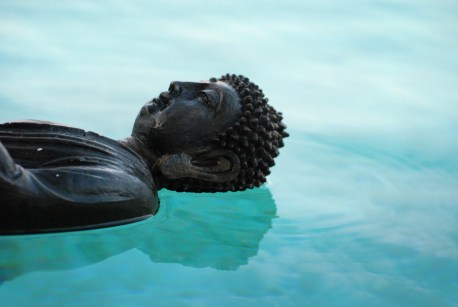
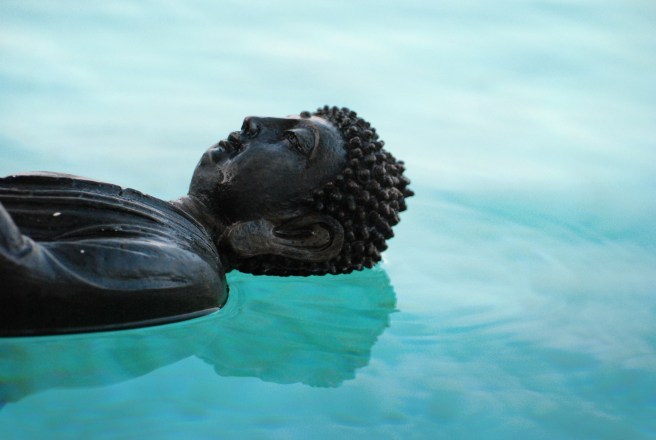
lying buddha.jpeg

Over the years I have heard some people say things such as ‘the Buddha was enlightened, but he was not self-realised’ or ‘the Buddha only had an insight into no-self, but he never discovered the Self’. Both of these imply somehow that the Self-Realisation of the Upanishads is somehow of higher status and fundamentally different to the Nirvana of the Buddha, and that the Buddha was not truly enlightened.

I have noticed that usually this view is put forwards either by academics who have analysed various texts but not fully embraced the traditions, or by religious teachers who teach that their way is the best or only way and tend to be attached to their methodology over and above others.

I remember that when I first came across this view I was quite shocked, as it always seemed obvious to me that both Buddhist and Vedic traditions were pointing at the same things in different ways. In fact all the great self-realised masters I had come across also said the same. Impurities naturally, and perhaps inevitably, creep into traditions as without a genuine realisation, the ego co-opts the teachings and slowly slowly dogma and beliefs form. Therefore teachings naturally reinvent themselves in each culture and age, and we can clearly see this if we study the history of the development of both Vedanta and Buddhism. In fact, there has been so much cross-fertilisation between these two traditions, with each tradition borrowing from the  others at some point, it is sometimes difficult to tell them apart!

The key thing for me is to realise that there exist various different methods by which the Supreme is approached. And, of course, some say there are no methods (you could say this is the method of directly pointing out what is already fully here). When the method has served its purpose, then why cling to the method? The main issue is for ignorance to be removed, and the various teachings serve various ways of doing this:

There is nothing to realise. There is nothing new to gain…On the other hand a man must lose his ignorance. That is all.

Ramana Maharshi, Talks 104

By the way, in the above quote, I assume that by ‘man’, he means any human. Here is what Ramana said about the Buddha and Self-Realisation:

Ramana Maharshi, according to verse 568 of the Sri Ramana Paravidyopanishad, states that the Buddha’s Nirvana is the same as the Self-Realisation that Ramana speaks of:

568. Guru [Ramana] has said that the state of nirvana that was taught by Buddha to be the state in which samsara and suffering are ended is the same as remaining in the supreme state, having discarded all the sheaths.

He reaffirms this in the following verses:

345. The sage Buddha taught this truth; also the great teacher Sankara taught the same; our own Guru [Ramana] also tells us the same; and this is also the essence of the Vedanta.

284. The Buddhas call that the state of right awareness. In it there is neither knowledge nor ignorance. That is the highest state, in which there is nothing, whether sentient or insentient, other than the Self.

So, there you have it: according to Ramana Maharshi, Nirvana = Self-Realization. Here is another quote of Ramana on Buddha taken from the book Maharshi’s Gospel:

Question: Buddha is said to have ignored questions about God.
Ramana Maharshi: Yes, and because of this he has been called an agnostic or nihilist. In fact Buddha was concerned with guiding the seeker to realise Bliss here and now, rather than with academic discussions about God and so forth.

So that’s Ramana’s view. What do you think?

Here is a more in depth post that looks at this: Self-enquiry and Buddhism/ the Jhanas and Ramana Maharshi 


lying buddha.jpeg

Robert Adams: a beautiful teaching

Robert_Adams

Robert Adams:

The point I’m trying to make is that the Sages understood that at this age the way to realization, the way to unfoldment, the way to liberation, the easiest way is through namah japa, the chanting of God’s name. This they say was the thing to do in this age. This is the meditation to do in this age. Namah japa, chanting of God’s name. As an example, “Sri Ram, Jai Ram, Jai Jai Ram.” This is what human beings were supposed to do in this age to awaken.

As the years went by people such as Buddha, Shankara, Jesus, some others, people that we know about like Sri Ramana Maharshi, Nisargadatta Maharaj and others including myself came to conclusion that what is needed in this age is a combination of teachings.

Jnana Marga, the path of wisdom is the highest stage of all yogas. That combined with Bhakti Marga, the path of devotion and Karma Marga, the path of service. These are the stages, these are the principles that we have to learn and understand. Therefore what I do is teach those three methods together, combined.

When you teach Jnana Marga by itself as many so-called beings, gurus are doing today it becomes a bunch of rhetoric. It builds up the ego, it doesn’t destroy it. Jnana Marga by itself becomes cold and calculating. People start to feel as if they are superior to others. It is called also the talking school. Where people talk to each other debate issues about Jnana Marga. Get involved in heated discussions, debates, arguments and you get absolutely nowhere.

It is called also the talking school. Where people talk to each other debate issues about Jnana Marga. Get involved in heated discussions, debates, arguments and you get absolutely nowhere.

If you teach and you learn Bhakti Marga, the path of devotion by itself you can become a fool. Where you become devoted to all the statues and all the trees and become devoted to all the gurus and you have just blind devotion, without knowledge. So that is not sufficient.

When you practice Karma Bhakta, the path of service to humanity. You become the servant of other bodies. The servant of the people. Yet you become confused because you don’t really know who to help. You really don’t know to whom to give service to. There are so many poor people, homeless people, deprived people, whom shall you serve? And again you become confused.

But when you combine all of them together, Jnana Marga, Bhakti Marga and Karma Marga you have a beautiful teaching.

But when you combine all of them together, Jnana Marga, Bhakti Marga and Karma Marga you have a beautiful teaching.