If enlightenment is dependent on special spiritual exercises or states of mind then it is conditional and limited
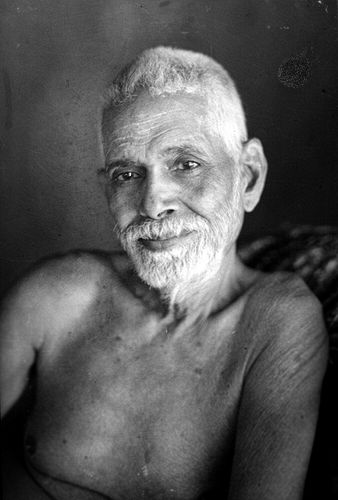
Time and time again I hear from spiritual seekers that they glimpsed the Self, they experienced that ecstasy, but it slipped through their fingers and fell away. Their question to me is how to get it back again. This is the wrong question, this is the wrong way, as it is based on a fundamental misunderstanding of the path.
Everything that comes can also go. Everything that comes, all experiences that have been attained, are not the Self.
The Self is no particular experience. It is always here, fully manifest, fully evident. Everything that is perceived is It. It is not different from whatever is being perceived to be happening.
Realising that ‘this is It’ is Self-realisation. It is simply seeing what already is the case. When it is seen, there is no desire to reach a new experience, and a seeing that everything happens spontaneously without the presence of a separate doer-entity. Here suffering falls away as the simple truth of no-doer is seen.
Actions, thoughts and desires continue to manifest themselves, spontaneously, but there is nobody doing it, just like the wind blowing or digestion happening. Things happen, no doer.
As long are you are alive, you always are, you always exist. No matter what happens, you are. This knowledge of (your) being is Self-knowledge. It is not something to attain, just something to be ‘acknowledged’. It is not separate from whatever is perceived to be happening. How can this ‘knowledge’ be lost?

“There will come a time when one will have to forget all that one has learned.”
from ‘Who am I’ by Ramana Maharshi
Ultimate truth is simply that which never changes. It is here, now, everywhere and always already in its full glory. It is not separate from whatever is happening or from what is currently being experienced. Ultimate truth does not require you to believe in it or even do anything for it. Just drop all wrong thoughts and whatever remains is It. It cannot be caught in concepts.
The main role of the spiritual path is not to learn about ultimate truth, as it cannot be accumulated, but to discard falsehood. Seeing through false assumptions is what is called ‘spiritual knowledge’. It is not knowledge in the conventional sense at all really.
Conventionally speaking, learning is about accumulation of knowledge, but spiritual learning is more like pruning a hedge or chipping away at a block of stone to reveal a beautiful sculpture beneath. Put simply, spiritual learning is unlearning. Spiritual knowledge is seeing through false ideas.
“The state of Self-realisation, as we call it, is not attaining something new or reaching some goal which is far away, but simply being that which you always are and which you always have been. All that is needed is that you give up your realisation of the not-true as true.”
Ramana Maharshi
Anything that is learnt as being true is in the realm of relative knowledge. Anything that is learnt can also be forgotten whereas the Ultimate neither comes nor goes. Any statement posited as being true can be questioned and doubted leaving with it the bitter taste of uncertainty.
The Ultimate cannot be conceptualised. Conceptualisation itself relies on the Ultimate for its existence. All statements of truth rely on supporting structures and logic, eg. underpinning scientific or philosophical reasoning. The Ultimate truth stands by itself without needing outside support. It is none other than what you truly are. Look and you shall see.
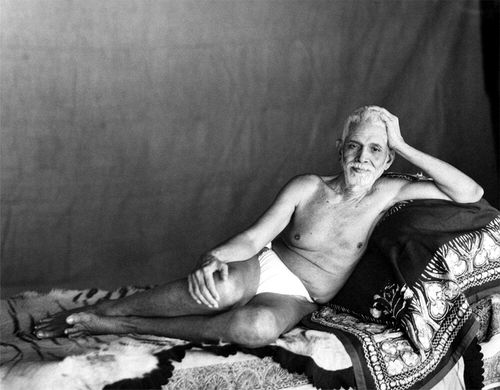
To remain as you are, without question or doubt, is your natural state
Ramana Maharshi
This is still an instruction for the spiritual seeker: ‘to remain as you are’.
With liberation, questions and doubts are irrelevant, as the natural state is simply whatever is. Nothing can obstruct it. It is always here and manifests as whatever is arising. It can never be obstructed and is always in plain sight.
However for the seeker, ie. the person that takes themselves to be the author of their thoughts and actions, the instruction to remain as you are and not worry about or get entangled with thoughts, questions and doubts, is one of the highest and most refined spiritual teachings available.
Be still, forget all concept of who you are, notice things as they happen. Regardless of what is happening, you know that you are, never what you are, only that you are.
When the mind and its concepts are no longer being believed, what use is there to talk of separation or no separation, self or no-self?
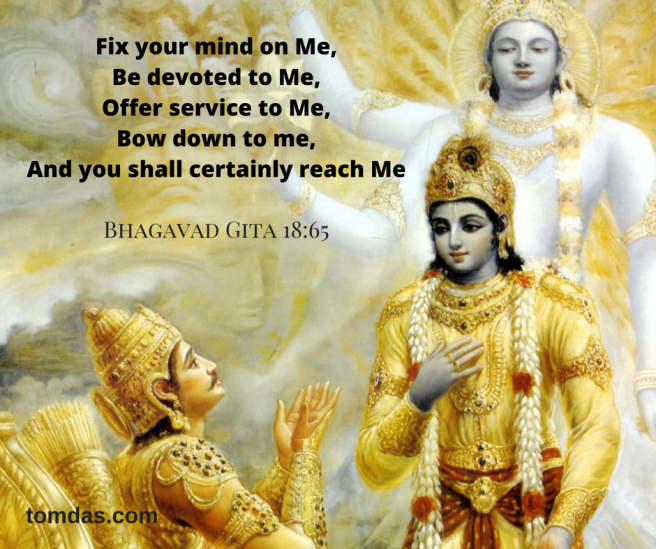
Lord Krishna states this is his most secret teaching: to love Him, to devote ourselves to Him, to be with Him knowingly.
He is already in each of our hearts, He is already everywhere and everything, everything is already done by Him.
Here knowledge, scripture and philosophy all crumble as, through our devotion, the heart opens. All are consumed by Him, and all we are left with is Him in all His glory.
We never were. All there ever was was Him.
❤ ❤ ❤
As Jesus said when asked:
“Teacher, which is the great commandment in the Law?”
And he [Jesus] said to him,
“You shall love the Lord your God with all your heart and with all your soul and with all your mind.This is the greatest and first commandment.”
Matthew 22:36-38
❤ ❤ ❤
Also, as Shankara sung in his Bhaja Govindam:
“Worship Govinda, worship Govinda, worship Govinda,
Oh fool! Other than chanting the Lord’s names, there is no other way to cross the life’s ocean.”
❤ ❤ ❤
So, all that’s left for me do to is bow down and praise Him
❤ ❤ ❤
Hare Krishna!
Om Namah Shivaya!
May all beings be happy and well!
Praise be to God!
❤ ❤ ❤
See also:
The pre-eminent form of worship

Tom’s comments:
Many truth seekers suppose that the ‘fully self-realised guru’ would act in a certain way:
speak, walk, dress in certain ways,
never angry, always kind,
never unhappy, ever-blissful
pure and faultless
What a prison!
Freedom does not care for that!
In Freedom our humanity naturally shines
❤
Also see All exist in me
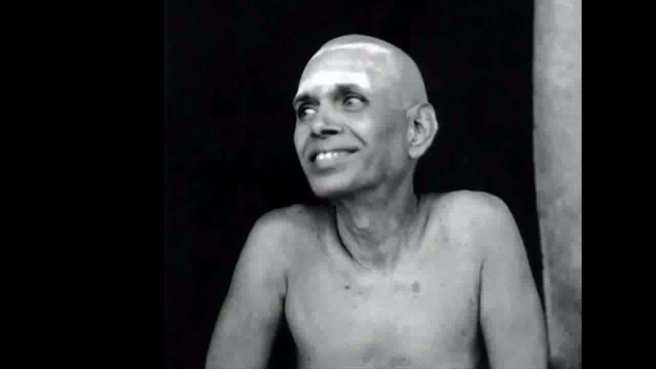
Talks with Sri Ramana Maharshi
Talk 183
See also:
Ramana Maharshi on non-doership and self-realisation
Ramana Maharshi: Self-inquiry (atma vichara) and doership
In my recent interview on Buddha at the Gas Pump, Rick asked me about Turiya, the 4th state of consciousness.
According to Vedanta, Turiya is that state of consciousness which lies beyond the 3 states of consciousness that we all ordinarily experience, namely the waking state, the dream state and the deep sleep state. In experiencing Turiya directly there is the possibility of liberation.
You can listen to our exchange on the video below. After the interview I decided to see what Ramana Maharshi had said about Turiya and was relieved to find that he agreed with me 🙂 😛 (at least on this occasion – he probably agrees with Rick on other occasions!)
Here is what Ramana had to say about Turiya:
From Talks with Sri Ramana Maharshi, Talk 353:
Questioner: What is turiya?
Ramana Maharshi: There are three states only, the waking, dream and sleep. Turiya is not a fourth one; it is what underlies these three. But people do not readily understand it. Therefore it is said that this is the fourth state and the only Reality. In fact it is not apart from anything, for it forms the substratum of all happenings; it is the only Truth; it is your very Being. The three states appear as fleeting phenomena on it and then sink into it alone. Therefore they are unreal.
This view is also the traditional view of Turiya in vendanta as expounded by Gaupada in his Mandukya Karika.
So does this mean that Rick’s view is wrong? I don’t think so. His view is also a useful view, but in a slightly different way. Thinking of Turiya as a 4th state distinct from the others can also be a beneficial teaching when used in the teachings of a skilled teacher with a genuine realisation. Rick’s notion of entering a (nirvikalpa) samadhi and this having a purifying effect on the waking state is also a valid way of approaching this realisation/freedom.
It’s important to note that these teachings are ways of describing our experience. They are concepts, and form conceptual ways of carving up our experience with the intended effect of leading the seeker to liberation. They are not intended to be based in physiology or ‘science’ in my view.
The point of these specific teachings/concepts is to point out the awareness-consciousness that does not come and go, regardless of what is happening. Whether or not they are successful in achieving that end is the test of how good the teaching is, not how well it is based in human physiology or scientific observations. It is therefore impossible to say one teaching is better than the other – the teaching that works is the ‘best’ teaching for that situation (this is the notion of expedient means in Buddhism)
Eventually, when you realise that consciousness is the essence of you, and remain as that, unidentified as body or mind, the illusory sense of doership is eventually destroyed. With it, the dualistic notion of a consciousness that is in some way distinct, underlying and permanent is also destroyed. What you are left with is what is already here: this, nameless, beyond words (and inclusive of words).
For a more detailed discussion of Turiya please see here:
http://www.advaita.org.uk/discourses/teachers/turiya_peter.htm

So many spiritual seekers start off on the wrong footing, so many spiritual teachings pander to the ego. If your main aim on the spiritual path is to gain super-powers, be permanently in a state of heightened bliss or to be the next great spiritual teacher, then you are primarily interested in accumulation and possession and perhaps not as deeply interested in truth as you may think. You should know this is the ego’s desire and the spiritual path you walk is not a genuine one.
So, first ask yourself honestly – do you want truth or pleasure? You may want both, but which one do you want more? If your perception is distorted by ego and desire, then the spiritual path you are attracted to will be similarly distorted. We get the spiritual teachings we deserve.
We get the spiritual teachings we deserve.
There is nothing wrong with seeking happiness of course. It is through suffering and seeking an end to suffering that most of us become spiritually inclined in the first place. But if we are clouded by our desires and insecurities then we become susceptible to false beliefs, magical thinking, exploitation and corrupt spiritual teachings. This ‘spirituality’ is in fact another form of materialism or hedonism in a different guise: the ego is still at play.
If you can see all of this, then you already know that you are apart from it. What is it that sees? Who are you at your innermost core? All that you have accumulated will pass away: pleasure, pain, psychic powers, fame, charisma and transcendental experiences. All are finite and transient. None of them are the Eternal.
The Eternal already is. Nothing is not It.
You can now watch me being interviewed by Rick Archer from Buddha at the Gas Pump below.
Hope you find it interesting!
❤
 Tom Das