When we find a way/teacher/path/’non-path’/’no-path’ that is right for us, it is natural to want to share that with others…but what is right for us is not necessarily right for others…ultimately we each find our own unique way…
Let us remain humble, acknowledge what works for us but not assume we know what is best for someone else or what will work for someone else…
By listening to others we allow them to teach us too, we allow the Divine to teach us through everyday interactions…
We learn from others, we allow others to become our teacher…
For everything and all are expressions of the Divine…
Words are just expression of something that is beyond words. Even if you don’t understand what they mean, it doesn’t matter. There is a power, there is a potency, there is something there…There is a force, that is there.
When the words are coming from truth, it doesn’t matter what the words are. These words will draw you in, there is a power beyond the words. Which is in the stillness, silence… That stillness, that silence is in your heart. It is your essential nature, it is always pristine and pure, no matter what is happening.
Each teaching has a utility, but no single teaching is right for everyone at any point in time. Sometimes the way is Bhakti (love and devotion), sometimes Silence, sometimes intellectual understanding, sometimes letting things be, sometimes none of these… sometimes the mere notions of a teacher, a teaching and someone to be taught is too much!
God/Life shows us ‘the way’ if we learn how to listen…
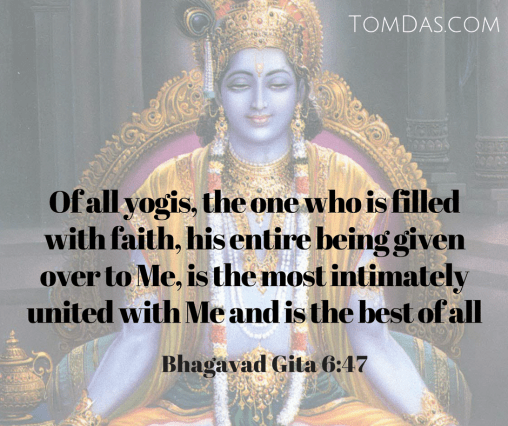
Have faith in the Lord, lean on Him, give yourself to Him, be with Him, love Him and thank Him – that is enough for those who are drawn to this path – He, who is Within and All (and beyond male or female), will lead you Home
Question: Thank you for this post on Laya and Samadhi. What is the difference between ‘Laya’ and Samadhi? And what is the difference between Nirvakalpa Samadhi, and Nirvakalpa Sahaja Samadhi? Thank you. 🙏
Tom: There are several different definitions of each term, depending on the scripture and school (eg. yoga, vedanta, etc). However, in essence, when the mind has been made still but I-thought (ie. ego) has NOT been removed, that is laya, so the ego remains latent and does not end up being destroyed. Instead, once the samadhi is over, the ego sprouts up again and causes suffering. This ‘Laya’ is sometimes known as Nirvikalpa Samadhi.
Abiding as the self is to remain as the Self without the I-thought. This is called Mauna (Silence), and naturally, over time, leads to Moksha once the vasanas (egoic tendencies) are rooted out. This is because the root cause of suffering, namely ignorance or the ‘I thought’ is directly attacked in this practice. Moksha is also called Sahaja Samadhi (which roughly translated means ‘the natural state’), as it is unforced and natural, but there is no sense of egotism/I-thought.
Confusingly, these terms are often used in different ways, even within a single philosophical school such as Advaita Vedanta. Sometimes the word Laya is used to mean Moksha, for example, and Mauna, Self-Abidance and Nirvikalpa Samadhi are also equated at times. At these times it will be said that Nirvikalpa Samadhi does lead to Moksha.
Remember, no teaching has a monopoly on truth. No teaching is totally true, as what is being shared is beyond words and cannot be captured in words. Rather the teaching is a method of removing ignorance, that it all…it is a thorn to remove a thorn. The teaching is also false, a thorn, a new form of ignorance that if clung to will cause suffering
The primary ignorance is the belief in a limited ‘me’ entity, or the notion ‘I am the body mind’, or I am a subject living in a world of objects (subject-object duality).
The teaching is there to remove that false belief.
We do not need to replace this with a new belief such as ‘all is illusion’, but the teaching may take many forms such as ‘all is illusion’.
Ultimately we do away will all teachings.
The best teachings are those that self-destruct once their work has been done!
Perfectionof Faith in God/Guru/Self is the same as Jnana (spiritual ‘knowledge’ or ‘enlightenment’).
You could say that one leads to another – faith and surrender leads to knowledge, or knowledge leads to surrender and faith – and these are both true on one level, but ultimately they are one and the same – where is the difference apart from on the conceptual level?
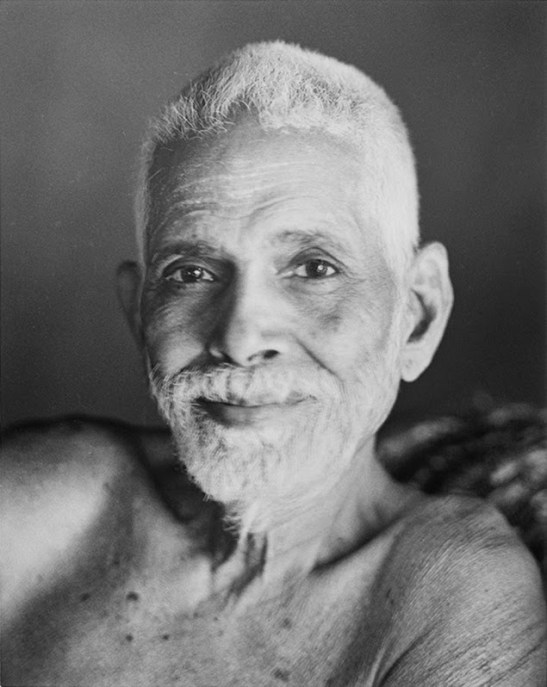
For me Faith in the Guru, my Beloved, Bhagavan Sri Ramana Maharshi, overcame me quite spontaneously, without my asking, and clinging to Him and Faith in his Word and dwelling in His Presence became the Way and the Law and my Self.
For me, whilst I like to learn a bit about Ramana’s life and I enjoy reading his teachings, gazing at His Image and feeling His Presence has often been more powerful than all the written teachings and all my efforts put together.
Someone recently approached me at the end of one of my Satsangs/meetings and asked me which book would I recommend as being the best one to understand Ramana’s teachings. I told him that Talks with Sri Ramana Maharshi and Be As You Are are two wonderful books, but when you open the book, the most important page is the one which has a photograph of Ramana on it (most of Ramana’s books contain a photograph of him in the first few pages).
Instead of reading all the teachings and trying to figure it all out, just look at His Image, feel His Presence!
We can read and listen to the teachings as much as we like, but I have found there is power in something else, something intangible – the Guru’s grace, the eyes of the Guru, His Divine Grace…
So, cling to the Guru, cling to His Teachings. For me, that means Sri Ramana Maharshi. If it suits you, if you are drawn to Him, Ramana, take Him up as your Guru. Look at His Image, give yourself to Him, if it feels right for you. Of if you have another Guru/God you are drawn to, do the same with him/her. Or if you cannot relate to a Guru or God, try relating to Life or the Universe or Universal Energy or something similar. See what happens and feel free to let me know too!
Ramana said that life often brings us to have faith in God, then God brings us a Guru, and the Guru then directs us back to our Self and we realise all is One. Of course, we do not really realise, rather the ‘we’ or the ‘me’ that is seeking Union disappears or ‘merges into Him’. There was only ever Him/Self/Guru/God/Oneness…use any word that suits you.
Ramana also said that if we are lucky enough to be blessed with faith in something, that is a blessing to us and we should seize that faith and lean on it with loving devotion, and not to allow it to wither away.
So I encourage you to look at His Image, surrender to Him, and let me know how it goes!
‘Perfection of Faith in God/Guru/Self is the same as Jnana’