Stay uninvolved

Below is a post I wrote on Facebook for which I ended up receiving a fair bit of criticism. I also received a lot of praise too. For this post I’ve focussed on the criticism as this is where the discussion lies – at the end I have added some of the criticisms, questions and clarifications from other readers that arose from this post. What do you think?


Your job is not to get involved with life. Stay out of it. Don’t get involved with the drama. Don’t get involved with life.

Allow the body and mind to do what it needs to do to get by, survive and be healthy. Take care of your responsibilities. No need to get involved. No need to identify as the images/appearance we call the body-mind. Allow the body and mind to come and go as it pleases.

The temptress Maya will try her best to get you back and involved you in her (evil) ways. She will try to seduce you with many things. These are your tests. You success will be judged by how well you are able to stay uninvolved.

Thoughts will come your way and give you apparently convincing logical and robust reasons why you must enter life and become involved with life’s ways. Maya tries to draw you back in in many ways. She is very convincing but ultimately has no actual power unless you concede your power to her.

Through all of this, your job is to just be. Relax. No need to push anything away. Allow all to come and go in this illusory and divine play that is supposedly our life. Allow maya to fill you up and run straight through you, you remaining totally unaffected, unaffected and uninvolved.

Only if you are able to overcome Maya’s seductive ways are you considered eligible and worthy for Self-Realisation. Walk bravely and survive this test through non-involvement. Only then are you deserving of receiving That Peace beyond all conditions which is already Your True Nature. It is already All-That-Is. In reality, there is only That.


Q: What is wrong with maya?

Tom: she is perfect as she is.

Q: …Including one’s drive to engage with it fully, coming full circle…

Tom:  It depends on what you mean by engage with it fully, but the ego usually doesn’t want to hear these teachings and instead tries to cling to the life it thinks it has. In that sense, continuing to engage with life can be a great way to stay stuck in illusion and suffering. It’s why all the great traditions say look within and consider the world to be empty. They are pointing out that running after worldly things and ‘engaging with life’ will never lead to the fulfilment the heart desires.

By the way, ‘perfect as she is’ means there is no need to ‘get involved’.


Q. Won’t this lead to spiritual bypassing?

Tom: If there is no supression/repression (of emotions), and things are allowed to arise naturally and be felt, there will be no emotional bypassing. Rather, what needs to be healed will rise to the surface, what needs to come out will come out 


Q.  I absolutely agree with you… but the whole challenge is about practising the “wisdom” … I fail miserably!
Tom: You cannot fail if you sincerely try. Just relax, be happy and allow stillness to arise.

Comment: Wonderful. God’s light shines through you! Ironically, I just read this by Robert Adams:

Let the world do what it does. Do not judge it. Do not condemn it. Do not love it. Do not hate it. Observe it. Watch it. But leave it alone. As you lose attachment to this world. The attachment to what we call God grows and grows.

Find your self. Look to yourself. Dive deeper, deeper within your self. Try to understand who you are by diving deep within yourself. Do not look to the universe. Do not look to things. Look to your Self. Only you can know yourself. No one can really help you.


Q. So no social involment? So no opening of the heart, no kindness, no empathy, no compassion

…remembering what said once Ch. Namkhay Norbu : “There is no difference between a Buddha and a herd of pigs”. Very deep insight, indeed, but when he is sick he goes to see the doctor. It is not selfish, it is, of course, for the transmission of the sacred teachings. So things are important without to be important but still are important without being important. Last words of Hassan I Sabba, the chief of the assassins (Haschishins) : “Nothing is real, everything is allowed”. What about playing freesbee with the good boy? 🙂 Freedom of choice, freedom of feeling. Just a matter to do one’s own thing. There will be volumes of sharp reasonnings proving that one is right and volumes of as sharp reasonnings proving that one is wrong.

Tom: Nice one. One post cannot capture everything, of course. There are many facets to this, so it seems. Opening of the heart, kindness, empathy and compassion all arise naturally when the ego is not. They are all natural manifestations of the natural state. As you mentioned Namkhai Norbu, let me ask you: are the 6 paramitas ultimately different from rigpa/dzogchen?


Comment: Nonsense! If “there is only That,” then passionate involvement is also That. You’re advocating for a dualistic paradigm while claiming to represent nonduality. Can’t have it both ways. The only way this position does make sense is if we interpret “stay uninvolved” non-literally. That is, we interpret it to mean that we always know “there is only That” even while we’re in the midst of passionate involvement in the world.

Tom: You make a good point. Initially it starts off dualistically – eg. be still, be uninvolved, let go, etc. These are all things for a ‘separate self’ to do. And this is how the spiritual search always starts. Then it can progress to ‘know you are that stillness’ or ‘know there is only that and all this is that’. This is the insight part of the teachings. Then from that knowing, relaxation emerges and stillness deepens. This is the purification part of the teachings, something often missed out in many contemporary expositions. Then eventually all is given up and any notion of ‘you’ disappears. This is surrender and being consumed by the divine. At this point the very idea of a teaching, such as my post above, is a joke. How can this ever be taught or put into words? Yet this is how the story apparently goes: from duality to non-duality, then realising that too was illusion 

Q.  I like that way of looking at it. Thanks, Tom. I suppose the trouble with a declarative-style post on Facebook is that people at every stage in the story will see it, and it may not be appropriate for all.

Tom: Yes, I agree, thank you.


Q. Bollocks. During my professional life I got totally involved and was very happy, while I also loved my wife, played tennis and golf and downhill skiing, travelled, enjoyed my dogs.So no.

Tom: This post, like all teachings, is a finite expression at a single point in time, and although I concede it is written in directive language, it will not be right for everyone. If what you write above works/worked for you then great. I am genuinely happy you have had/are having a nice life.


Q.  I have to be passionate about feeding my children and getting them into school. It won’t just happen if I stay “uninvolved”.  (Do you have children?). But similarly, on some level, I have to be passionate about transcending duality (as much as a drowning man wants air, Nisargadatta and others have said). So this passion and need for involvement are not unnecessary. Passion itself is a divine expression, whether it be to advance a worldly aim or to advance beyond the world.

Tom: My advice is to experiment with this for yourself. It’s easy to say things like ‘we need to be involved’, and of course this is true on one level, but that is approaching the words from an analytical/thinking point of view instead of taking them as practice instructions (or a suggestion as how one can practice).

Instead try to put the words into practice and see what happens. Experiment with the above. You will (perhaps) find that outwardly most everything carries on as before. You still do the school run, you still may have political views or meet up with and interact with society and your loved ones. Or perhaps many things will drop away (this often happens).

But at the same time we start to find a peace that lies amidst everything. The school run, once so tiring and grueling, suddenly becomes much easier (I do have children btw!). It can start quite small, but suddenly life starts to get easier, things start to flow. We may not understand why, but peace starts to infiltrate our life.

As peace comes in, we relax and let go. Whilst being totally uninvolved in life, we are simultaneouly in the thick of life. The appearance of the body continues to act. It’s like magic really. I hope that makes sense.

This is not philosophy or something to think about, but a call to action: to let go of and release our sense of restricted self and let go of our negative habitual tendencies and addiction to both thought and the world. As we let go, we start to see that the belief that we are the body-mind is an illusion, our minds attain natural calm and peace dawns. Life becomes a play of the Divine and we cannot but surrender to Him (Her/It) perpetually in Gracious Stillness. Namaste 

Q. I do see what you’re saying Tom. Is it what the ancient texts call “act without being attached to the results of your actions”? Because I think that might be a clearer way of expressing it than saying “stay uninvolved” – which opens itself up to misunderstandings and unnecessary objections.

Tom: Try it and let me know if there is a difference.

Q. Thanks for the clarification. I can see how being uninvolved with thought, or uninvolved with habitual tendencies can be helpful. But not so sure about “uninvolved with life?”. There are many who are uninvolved with life who are certainly not uninvolved with duality.

Tom: Sure. As I said, the teaching is not philosophically complete, nor is it intended to be. Instead, if you resonate, try to implement the teaching as much as is practical for you and your life. I’ve just added the phrase ‘Take care of your responsibilities.’ to the 2nd paragraph following this discussion. Many thanks to you. Ironically, the teaching is born through interaction 


Comment: This idea is completely unintegrated with ordinary human life in the world….and an awakened life need not be and ultimately cannot be…especially at this point in history where so much suffering calls for the mindful response and even skillful activism of people who live in presence.  Sorry, But this is not a good post Tom. Very misguided, disappointing and even harmful.

Tom: Hi XXX, thanks for speaking your mind on this, something I welcome very much. It would be helpful to me if you could explain what exactly you found to be misguided, disappointing and harmful and why. Many thanks.

Comment:  the idea that we need not or are somehow spiritually better off to not be engaged in life and the implication that ordinary life is somehow not “really real” and so unimportant enough for us to simply ignore……is a grave though quite common, misconception about what an awakened life looks like.
It is true that living in constant anxiety about life is not helpful and calls us to a deeper discovery of the surrender that is already within us….But being truly and unconditionally PRESENT to life also means allowing a skillful response to life to arise in our hearts and to function and act through us. And in some cases, this response to life is very active and engaged.

You seemed to be saying that the best approach is to not care anything for everyday phenomenal life in the world and to remain unengaged …..At least that is what I took away from your post. And from my perspective that is really encouraging irresponsibility and a rather insensitive attitude. And I am sorry, but that is harmful Tom. 

Tom: I hear what you are saying here, and it can sound like that when thought about. However when it is practiced it can be quite different in reality. My experience is that when life is approached with this attitude, a deep letting go can take place, peace dawns, and engagement with life by the body-mind may very well happen (or may not). As the ego is effaced, clarity and love arise in its place and these acts quite naturally by themselves when required. This is not the sentimental love, but something else…The clarity that can arise through this kind of practice is really quite astounding and the ego can be revealed to be totally illusory. Such freedom here!

The non involvement I talk of is mainly on the level of the mind and doesn’t necessarily preclude a busy involved life, although it may for some. I don’t recommend reliquinshing family or responsibilities in general. I also value ethical principles such as the golden rule, sound physical and mental health and often recommend counselling and professional help where applicable – I’ve found these not only improve one’s quality of life, but greatly enhances and quickens the spiritual journey: ie. the letting go of egoic and addictive tendencies and insight into no-self comes much more easily. I hope that clarifies my position.

Comment: Thank you…..that really does clarify your position and I appreciate and agree with that completely. For some reason I did not take this away from the original post and that is why I responded as I did.


Comment: What you are saying Tom is a complete misunderstanding of Vedic Text my dear brother. Consider this text: “The Lord is the seer, and the EXTERNAL ENERGY which is seen, works as BOTH cause and effect in the cosmic manifestation. This external energy is known as maya or illusion, and through her agency only is the entire material manifestation made possible.” (Srimad Bhagavatam) Krishna also calls it “My Yoga Maya” To deem Maya evil is surely mistaken, as Maya is considered the chief power of the Lord itself! It is the dynamic aspect of God.

At the same time I resonate with what you are trying to say: Mainly, stay uninvolved with the intense impulse to manipulate, coerce, and squeeze this dynamic aspect of God into a narrow self-serving vision.

Tom: Thanks for your comment and also for your later comment trying to see where I am coming from on this – much appreciated. I don’t think what I am writing is a misunderstanding of the vedic texts, but it is only part of the deal (a very important part for most) that is being stressed here. This kind of writing emphasising tyaga and vairagya is found throughout the vedic texts dealing with self-realisation (ie. the jnana kanda) and is an essential part of their methodology. In vedanta and buddhism there are many scriptures repeatedly saying how vile the body is and how we should turn away from the world. This, much like parts of my post, is rhetoric to drive the point home. It is not to be taken as philosophical truth, rather a guide to practice, and very helpful it can be too. Yoga Vasishtha talks about this in detail, as do more recent Jnani’s such as Ramana Maharshi. Shankara states this attitude is a pre-requisite for liberation as does the Srimad Bhagavatam that you yourself quoted from. See here for an example: https://tomdas.com/…/20/the-ultimate-means-to-liberation/

In fact, indifference to the world is the flipside of turning towards God, at least initially. Later on (much much later on for most), when the ego has been eschewed, all is seen to be One, but at that point there is no need for a teaching as all has been seen to be One and resolution has been ‘achieved’. But if we start saying all is one without negating the ego-world or turning towards the divine aspect, then all we have is an ego claiming all is one: suffering continues and the true depth insight never dawns. This is one reason why renunciation is so valued in all the scriptures of the great traditions of the world. My personal experience is that sharing this style of teaching allows the divine to pour in much more readily as the attachments have been wonderfully effaced. Ramana talks about this here: https://tomdas.com/2015/08/19/is-the-world-an-illusion/

I’ve always loved the gospels and I’ve been collecting some quotes of Jesus recently. I know you have affinity for the gospels too, so I hope you don’t mind if I add them here. Consider Jesus when he says the following in the Gospels – why does he say the following if all is God, if all is already One?:

“Do not love the world or the things in the world. If anyone loves the world, the love of the Father is not in him.” 1 John 2:15-17 or

“If anyone comes to Me, and does not hate his own father and mother and wife and children and brothers and sisters, yes, and EVEN HIS OWN LIFE, he cannot be My disciple.” Luke 14:26 or

“So then, none of you can be My disciple who does not give up all his own possessions.” Luke 14:33 or

“For whoever wishes to save his life will lose it, but whoever loses his life for My sake, he is the one who will save it. And He was saying to them all, “If anyone wishes to come after Me, he must deny himself, and take up his cross daily and follow Me.” (Luke 9:23-24) or

“Don’t you know that friendship with the world means enmity against God? Therefore, anyone who chooses to be a friend of the world becomes an enemy of God.”James 4:4 or

“He [Jesus] turned and said to Peter, ‘Get behind Me, Satan! You are an offense to Me, for you are not mindful of the things of God, but the things of men.'” Matthew 16:23 or

One day Jesus invited a man to follow Him and become His disciple—but the man refused. He said he would follow Jesus later, but first he wanted to go bury his father. Jesus responded, “Follow me, and let the dead bury their own dead” Matthew 8:22.

So, if all is one, why did Jesus value renunciation to such a high degree? His renunciation is much more extreme than suggested in my post, and he embodied an extreme renunciation in his life.

If you read it, what I have written above in the OP is not much different to practice instructions such as ‘be still’, or ‘be the witness’ or ‘surrender everything to the feet of the Lord’ or ‘rest as the I AM’. Blessings to you 


Comment: Hi Tom, in your elaboration above (thanks to various comments being placed) you demonstrate in my opinion a thorough understanding of how teachings work and a willingness to apply what is necessary when it is necessary – skillful means.

Wouldn’t you agree, that one of the ‘pitfall hallmarks’ on the spiritual journey is for a traveler to become overly identified with the particular part of the process they are in and when insight in that phase happens then there is the belief or assumption ‘this is it’ and then a focus which is exclusively on that tends to happen and inevitably any sharing becomes critical of anything different thinking ‘that’s not it’.

My view is that when this happens, it’s a display that someone’s ‘current truth’ has become the teaching without the holding of a broader perspective of what a teaching really is, what teachings really are – a process, requiring different means at different times along the way. It’s blatantly obvious that many different teachings say different things, even within a single teaching there are often many seeming contradictions, and yet, in practice they often act in unison supporting each other, dovetailing into one another, and taking over where another left off. The attitude amoung teachers and teachings would be better one of universal brotherhood where the whole is seen as needed and supporting the growth of everyone including the teachers and seekers.

If criticism of a teaching is lobed, it’s often because there has been a projection by the critic whereby the teaching pointers have been interpreted to have the intention of conveying ‘a truth’. And as I see it, what you are saying in the initial post, as far as I can tell having regard for your broader teaching, is not conveyed with the belief that it is ‘truth’ but with the understanding of how teachings work and what they are. If someone says it’s invalid it’s most likely because they have made the mistake of mistaking a concept as ‘truth’ (their interpretation and mistake of what you’re saying, and in my assessment this dynamic is forced to happen when they are mistaking what they are saying as ‘truth’).

Every concept has its opposite concept.

If it’s all seen as a bunch of concepts and not ‘truth’, then who cares what other people put forward as a teaching, it’s not truth, it’s part of a very magical and mysterious transformation process in which there is undoubtable trust if one has been ushered through it, this even if occasionally we slip into forgetting this and being critical of other teachings.

This issue of mistaking concepts for truth is not an issue confined to the narrow topic of teaching but rather runs deep all the way to the core of our mistaken self identity which is why I felt compelled to comment here, as well as to support what I feel is a very good teaching coming from an impressive understanding.

Keep it up, I know how much time it takes to compile such thorough responses and it’s a testament to you given you also have a family with young kids and full time job as an MD.

Well done Tom.


Q. Does liberation even exist? If it’s here and now, why don’t I experience it?

Q. Hey Tom. I had one question to ask, if you don’t mind. Is Mukti (liberation) even there? Is there something called Liberation? If it’s there here and now, why don’t I feel it? And when it should be the most obvious thing, that is my own existence, why don’t I experience it, or rather recognize it? And what is the purpose of the world if it exists but doesn’t exist. A complete paradox, isn’t it?

Tom: Liberation just means removal of wrong ideas/what is false. Nothing is gained, mistakes are lost. Make sense?

Q. Yes. I’m on the same page. But if it’s so evident, why am I missing it?

Tom: Who says you are missing it? The mind?

Q. Yes

Tom. Why believe the mind? Be still my friend ❤

Q. So belief is the reason for all misery, isn’t it?

Tom: Bondage is an illusion of the mind only. Bondage = suffering.

Q. Be still and know that I’m God. But I know this well, I experience it, sometimes. But when problems arise, I’m carried away with it. How to recollect the Self always?

Tom: Practice.

Q. What is the best way of practicing this? Apart from Self-enquiry?

Tom: See here:

https://tomdas.com/2018/06/24/spiritual-liberation-some-essential-instructions/

Or here:

https://tomdas.com/2018/06/13/letting-go-of-liberation/

Or here:

https://tomdas.com/2018/05/05/the-natural-path-to-the-natural-state/

Q. Okay. I will read it. But liberation itself is an idea that I have to let go to completely enjoy bliss, isn’t it?

Tom: Have a read 🙂

<Sometime later>

Q. Thanks. It was a great read. 🙂🙏🏻


Spiritual Liberation – Some Basic Practice Instructions

still waters.jpg

Take your time with each of these, really take your time with them…

1. Do not get involved with life. Allow the body-mind to look after itself. Allow everything to come and go.

2. Relax and be still.

3. Do not take yourself to be a person, a body-mind. Here the questions ‘Who am I?’ and ‘From where does ‘I’ arise?’ can be useful initially, as can the assertions ‘I am not the body-mind-world’ and ‘I am That’. Relaxation and stillness are also useful here.

4. To rest in that state where one is aware but no ‘I’ thought arises is stillness. In time resting here will lead to realisation, but there must be no thought of realisation as this itself is a disturbance, a distortion.

5. Know that all is nothing,
Everything is nothing,
Nothing is here…
There is only That…

…not even That.


Letting go of Liberation

sun barbed wire.jpg

It usually starts off with a ‘me’ or ‘I’ wanting to be happy.

If ‘I’ meditate ‘I’ will become happy or enlightened. If ‘I’ do the right practices, listen to the right teachers, read the right books, etc…’I’ will become liberated.

Here there is the triad of the ‘I’, the desire, and the desired object (that will bring the desired lasting happiness). All of these three are mental projections. Contemplate on this. Each one of the three: the me-subject, the desire, and desired object, are all mental projections.

Though almost everyone inevitably comes to spirituality and nonduality in this way, a true teaching encourages or facilitates a deep letting go, in which all our concepts of attainment (desired objects) and ‘me’ (conceptual subject) are let go of and ultimately lost.

This is the liberation that we were looking for, and it is never found by the me, and cannot be put into words.

Its depth is profound, as is its superficiality and obviousness. It is always here, as it were, as it is simply everything and all-inclusive.

There is no concept of freedom or bondage here, for both these are projections of the ‘I’, itself a projection. Or, if these concepts are here, they are not clung onto and taken seriously.

We could put it like this:
We start off as ‘I want to be happy/realised/free/enlightened’.
Later on it is seen more like: ‘no-I…only freedom…simply this’.

Now this too is liable to be made into a concept and grasped by the mind.

My advice is to listen and absorb and think about what is written above, so it is understood on a conceptual level initially by the mind. Ask questions if you need to and allow a teacher/teaching to resolve any major doubts (in Sanskrit: sravana and manana or listening and reflecting).

Then, once contemplated and understood, to let go and forget everything. Allow all notions and ideas of self and liberation to fall away. (in Sanskrit: nididhyasana or meditation/actualisation)

Perhaps sit still with a straight back, and after some chanting and simple deep breathing exercises to calm the energies, let go and simply relax. Maybe follow the breath (my preference) or use a mantra to allow the mind to become calm, then let go of these practices too.

Allow thoughts to settle down and do as they please.

Relax. Let go. Breathe. Be happy.

Allow everything to be as it is.

Notice awareness is untouched by everything and is one with everything, and you are that awareness.

Let go of all distinctions.

Notice that which was thought of as being ‘I’ or ‘me’ is actually just empty, objects on a screen, a play of colourful light and shadow, insubstantial.

The body and mind that were formally taken to be you, are just objects arising and not you at all.

Every-thing is like this, empty and formless, a play of awareness.

Don’t make this into a concept, but in letting go, let go of these phrases and allow a deep seeing to arise in its own time by itself.

Insight and clarity will naturally arise, naturally and spontaneously, in the depths of silence. There is no need to believe the teachings. Intend for any realisation to be genuine and not a mere copy of my or someone else’s words.

All insights too are just a play of Oneness, worthless and wonderful, just like everything else. Allow them to come and go in your Light.

In the midst of daily life allow yourself to meet life fully with the insight-intelligence that has been gained. This is just a letting go of the triad of me, desire and desired amidst daily living. (this is still nididhyasana)

Where there are no operative thoughts (in Sanskrit: samadhi), where are you? Where am I? Where is this precious teaching? Where is this bondage? Where is this liberation?

This cannot be put into words, but for some reason, right now, I am moved to express it like this: total peace, only peace, everything is peace, totally unattached yet excluding nothing. The illusory me not in play, plunged into the depths of stillness, one with everything. Pure innocence, total naivety, suffused with natural innate intelligence, natural, raw, ordinary, all-inclusive, no thing and simply this.

Yes, this really cannot be put into words. Re-reading the above paragraph is like reading the poetic rantings of an infatuated dog! Don’t be fooled by poetic sounding verbal expressions, no matter how nice or right they seem. It is all more illusion. Don’t get (too) involved in the poetry and words! They are a breeding ground for ego. Much better to let go of concepts, be still and be happy: allow all illusions and projections to fall away and see for yourself.

In Peace, Love and Light


3 stories of awakening: no path vs sudden path vs gradual paths to enlightenment. Is practice required for liberation?

Here are 3 stories for you:

Story 1

One morning God wakes up. She realises, non-verbally, intuitively, that she is whole-complete and lives happily ever after.

Story 2

One morning God wakes up. God thinks he is small, separate and vulnerable. This leads him to fear for his survival and desire security and relief from his fear (pleasure).

He meets a friend of his called Spiritual Seeker. Spiritual Seeker tells him to visit Guru.

God visits Guru and Guru says all is well, you are already whole and complete. Separation and the ‘small me’ are illusions.

God resonates with this teaching, intuitively sees what is being pointed at is already the present-reality, and the sense of inadequacy associated with the belief in separation dissolves. God realises that the separation between God, Guru and Life are themselves illusory. There is no teacher or teaching.

He lives happily ever after

Story 3

It is the same as story 2, except for the last line:

Once God’s meeting with Guru ends, due to the force of the momentum of past beliefs which have been so deeply ingrained over a lifetime, God quickly starts to re-believe that she is a separate ‘me’.

Every time she meets Guru, the ‘me’ temporarily collapses and great relief is experienced, but after sometime the false beliefs keep on rising up. The belief in the false me seems to have a mind of its own, rising up choicelessly, seemingly wreaking havoc and destruction.

Guru gives God some practices for her to do: chanting, devotion, meditation, being still, letting go, relaxing, mindfulness. Guru says pretend everything is an illusion, pretend everything is consciousness, pretend everything is God, have gratitude for everything that comes your way. Be still. Follow your heart and let your heart guide you Home, to Love and Peace.

Over time God’s mind becomes peaceful, happier and less interested in and addicted to thoughts and beliefs. The habitual tendency to believe in a ‘me’ is lessened.

Guru has also all the time has been saying all is well, you are already whole and complete. Separation and the ‘small me’ are illusions.

Now when God is away from Guru, the old beliefs in ‘me’ no longer arise. God sees that all practices are for the illusory ‘me’ and they perpetuate the illusory ‘me’, but they were still part of her apparent journey.

The sense of inadequacy associated with the belief in separation dissolves. God realises that the separation between God, Guru and Life are themselves illusory. There is no teacher or teaching.

She lives happily ever after.


The Sage tells us that disciples are of four grades,
comparable to gun-powder, dry charcoal, ordinary fuel, and wet fuel.
 
The first kind of disciple needs only a word, like a spark, to consume his ignorance at once.
 
The second kind needs some teaching and personal effort.
 
The third kind needs a long course of teaching, training and practice.
 
The fourth kind needs to be made fit for discipleship by practices suitable to his condition.”
 
Maha Yoga, Chapter 11

Q. What is the best spiritual practice for a busy mind?

Q. What is the best spiritual practice for a busy mind?

Tom: I don’t know exactly which practice is right for you. That is for you to find out.

What do you feel drawn to?

As we have already spoken about this before, the main thing for you is that you try something for a significant amount of time to see if it has a beneficial effect before dismissing it.

For an especially busy mind I would recommend trying physical exercise, singing, dancing, chanting a mantra, praying and devotion to God/something.

Also stay away from TV/media and adopt a diet that is as plant-based as possible.

These are all suggestions, not directives.

This allows the mind’s positive and negative energies to balance and for peace to arise, which in turn facilitates stillness and deep insight.

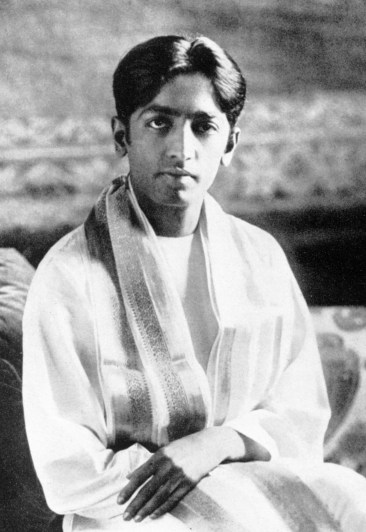
Jiddu Krishamurti: Silence, the Still Mind, Meditation

Krishnamurti young

I’ve compiled a few quotes by J. Krishnamurti on the subject of silence/stillness, and I’ve broadly arranged them so the initial quotes are more introductory and the latter quotes expand on the depth and subtleties of the teachings. Are we not blessed to have such teachings available to us? I hope you find these of use to you, with love and best wishes:

What lies beyond can be found only if the mind is still. There may be something or there may be nothing at all. So the only thing that is important is for the mind to be still.

What lies beyond can be found only if the mind is still…the only thing that is important is for the mind to be still.

Again, if you are concerned with what lies beyond, then you are not looking at what the state of actual stillness is. If stillness to you is only a door to that which lies beyond, then you are not concerned with that door, whereas what is important is the very door itself, the very stillness itself.

Therefore you cannot ask what lies beyond. The only thing that is important is for the mind to be still. Then what takes place? That is all we are concerned with, not with what lies beyond silence.

Eight Conversations


When you realize that there is no method, no system, no mantra, no teacher, nothing in the world that is going to help you to be quiet, when you realize the truth that it is only the quiet mind that sees, then the mind becomes extraordinarily quiet.

…it is only the quiet mind that sees…

It is like seeing danger and avoiding it. In the same way, seeing that the mind must be completely quiet, it is quiet.

Now, the quality of silence matters. A very small mind can be very quiet, it has its little space in which to be quiet; that little space, with its little quietness, is the deadest thing – you know what it is.

In that silence there is no observer at all.

But a mind that has limitless space and that quietness, that stillness, has no center as the ‘me’, the observer, is quite different. In that silence there is no observer at all. That quality of silence has vast space, it is without border and intensely active; the activity of that silence is entirely different from the activity which is self-centered.

If the mind has gone that far (and really it is not that far, it is always there if you know how to look), then perhaps that which man has sought throughout the centuries – God, truth, the immeasurable, the nameless, the timeless – is there.

…it is always there if you know how to look…

Without your invitation, it is there.

The Flight of the Eagle


There is no other fact but silence which has not been invited, induced, sought after, but which is the natural outcome of observation and of understanding oneself and the world about one. In this there has been no motive which has brought silence. If there is any shadow or suspicion of a motive, then that silence is directed and deliberate, so it is not silence at all.

If there is any shadow or suspicion of a motive, then that silence is directed and deliberate, so it is not silence at all.

If you can honestly say that that silence is free, then what actually takes place in that silence is our only concern. What is the quality and the texture of that silence? Is it superficial, passing, measurable? Are you aware of it after it is over, or during the silence? If you are aware that you have been silent, then it is only a memory, and therefore dead. If you are aware of the silence while it is happening, then is it silence?

Eight Conversations


If you have followed this inquiry into what is meditation, and have understood the whole process of thinking, you will find that the mind is completely still. In that total stillness of the mind, there is no watcher, no observer, and therefore no experiencer at all; there is no entity who is gathering experience, which is the activity of a self-centred mind.

In that total stillness of the mind, there is no watcher, no observer, and therefore no experiencer at all; there is no entity who is gathering experience, which is the activity of a self-centred mind.

Don’t say, “That is samadhi”, which is all nonsense, because you have only read of it in some book and have not discovered it for yourself. There is a vast difference between the word and the thing. The word is not the thing; the word door is not the door.

So, to meditate is to purge the mind of its self-centered activity. And if you have come this far in meditation, you will find there is silence, a total emptiness.

The mind is uncontaminated by society; it is no longer subject to any influence, to the pressure of any desire. It is completely alone, and being alone, untouched, it is innocent.

So, to meditate is to purge the mind of its self-centered activity…you will find there is silence, a total emptiness…The mind is uncontaminated by society;

Therefore there is a possibility for that which is timeless, eternal, to come into being. This whole process is meditation.

J. Krishnamurti, The Book of Life


Disciplines, renunciations, detachments, rituals, the practice of virtue, all these, however noble, are the process of thought, and thought can only work toward an end, toward an achievement, which is ever the known.

Achievement is security, the self-protective certainty of the known. To seek security in that which is nameless is to deny it. The security that may be found is only in the projection of the past, of the known.

For this reason, the mind must be entirely and deeply silent; but this silence cannot be purchased through sacrifice, sublimation, or suppression. This silence comes when the mind is no longer seeking, no longer caught in the process of becoming. This silence is not cumulative, it may not be built up through practice.

This silence comes when the mind is no longer seeking, no longer caught in the process of becoming. This silence is not cumulative, it may not be built up through practice.

This silence must be as unknown to the mind as the timeless, for if the mind experiences the silence, then there is the experiencer who is the result of past experiences, who is cognizant of a past silence, and what is experienced by the experiencer is merely a self-projected repetition. The mind can never experience the new, and so the mind must be utterly still.

The mind can never experience the new, and so the mind must be utterly still.

The mind can be still only when it is not experiencing, that is, when it is not terming or naming, recording or storing up in memory. This naming and recording is a constant process of the different layers of consciousness, not merely of the upper mind. But, when the superficial mind is quiet, the deeper mind can offer up its intimations. When the whole consciousness is silent and tranquil, free from all becoming – which is spontaneity – then only does the immeasurable come into being.

Commentaries on Living, Series I


That silence which is not the silence of the ending of noise is only a small beginning. It is like going through a small hole to an enormous, wide, expansive ocean, to an immeasurable, timeless state. But this you cannot understand verbally unless you have understood the whole structure of consciousness and the meaning of pleasure, sorrow and despair, and the brain cells themselves have become quiet. Then perhaps you may come upon that mystery which nobody can reveal to you and nothing can destroy.

…the brain cells themselves have become quiet. Then perhaps you may come upon that mystery which nobody can reveal to you and nothing can destroy.

Freedom from the Known


Is silence to be cultivated, carefully nurtured and strengthened? And who is the cultivator? Is he different from the totality of your being? Is there silence, a still mind, when one desire dominates all others, or when it sets up resistance against them? Is there silence when the mind is disciplined, shaped, controlled? Does not all this imply a censor, a so-called higher self who controls judges, chooses?

Is there silence when the mind is disciplined, shaped, controlled? Does not all this imply a censor, a so-called higher self who controls judges, chooses?

And is there such an entity? If there is, is he not the product of thought? Thought dividing itself as the high and the low, the permanent and the impermanent, is still the outcome of the past, of tradition, of time. In this division lies its own security.

Thought or desire now seeks safety in silence, and so it asks for a method or a system which offers what it wants. In place of worldly things it now craves the pleasure of silence, so it breeds conflict between what is and what should be. There is no silence where there is conflict, repression, resistance.

Q: Should one not seek silence?

K: There can be no silence as long as there is a seeker. There is the silence of a still mind only when there is no seeker, when there is no desire.

Q: Should one not seek silence?

K: There can be no silence as long as there is a seeker. There is the silence of a still mind only when there is no seeker, when there is no desire. Without replying, put this question to yourself: Can the whole of your being be silent? Can the totality of the mind, the conscious as well as the unconscious, be still?

Commentaries On Living Series II Chapter 50 


The mind is silent only with the abundance of energy, when there is that attention in which all contradiction, the pulling of desire in different directions, has ceased. The struggle of desire to be silent does not make for silence. Silence is not to be bought through any form of compulsion; it is not the reward of suppression or even sublimation.

The struggle of desire to be silent does not make for silence. Silence is not to be bought through any form of compulsion; it is not the reward of suppression or even sublimation.

But the mind that is not silent is never free; and it is only to the silent mind that the heavens are opened. The bliss which the mind seeks is not found through its seeking, nor does it lie in faith. Only the silent mind can receive that blessing which is not of church or belief.

But the mind that is not silent is never free; and it is only to the silent mind that the heavens are opened. The bliss which the mind seeks is not found through its seeking, nor does it lie in faith. Only the silent mind can receive that blessing which is not of church or belief.

For the mind to be silent, all its contradictory corners must come together and be fused in the flame of understanding. The silent mind is not a reflective mind. To reflect, there must be the watcher and the watched, the experiencer heavy with the past.

The silent mind is not a reflective mind. To reflect, there must be the watcher and the watched, the experiencer heavy with the past.

In the silent mind there is no centre from which to become, to be, or to think. All desire is contradiction, for every centre of desire is opposed to another centre. The silence of the total mind is meditation.

Commentaries On Living, Series III, Chapter 51

The silence of the total mind is meditation.


When you watch attentively, with diligence, there is nothing to learn; there is only that vast space, silence and emptiness, which is all-consuming energy.

Krishnamurti to Himself