Question: You mentioned earlier that the heart opens? That sounds rather fluffy and vague to me – what does it mean?
Tom: Yes, I know, it’s a bit of a vague term, but I like it! What I call heart opening is not the same as Freedom – it’s important to realise that – but there is a relationship between the two. The heart can open to a large extent without Freedom being realised, and conversely Freedom can be realised and the heart not be open. However the heart can only really fully open when Freedom has been realised, and by that I mean when the notion and sense of doership has been seen through and seen to be false.
So what is heart opening? Well it happens differently with different people, depending on their conditioning, but essentially it is an openness of the emotional centre and a tendency towards feeling open, loving, peaceful and joyous.
Question: What do you mean by ‘openness of the emotional centre’?
Tom: I mean a willingness to feel one’s feelings, really feel what you’re feeling. When this happens, when we allow feelings to come and go, over time our emotions start to balance out and a feeling of wellbeing and love can start to naturally emerge.
We start to feel happier, more grateful, more loving, kinder, and more considerate. A sense of wellbeing becomes our norm. These are the characteristics of an open heart, a loving heart, and as I said, it can occur before of after enlightenment (realising Freedom), or not at all.
Q: Does that mean that you become unconditionally loving all the time?
Good question. Of course, like all subtle objects (such as emotions, feelings and mental states), emotional love and compassion also come and go. This is quite natural. You are not necessarily loving 100% of the time, far from it! You remain thoroughly human: you can get irritated by relatively superficial things, you may feel grumpy if you haven’t had enough sleep, but the tendency is more towards those loving emotions.
You see in Freedom it doesn’t matter: you are not trying to be loving or kind, you are not trying to open the heart. It’s something that can’t be forced, and the heart is naturally more open at some times compared to at other times. That is fine, and that’s just how it goes. Sometimes it’s good for the heart to be closed. But, when it’s safe to do so, we can allow ourselves to feel whatever we are feeling, not pushing ourselves, not forcing our heart open or becoming overly sentimental, but by just being real with who we are at this moment in time.
This willingness to feel is a form of fearlessness. We are unafraid to feel, we are unafraid to feel unhappy, we are unafraid to feel even fear. When we are essentially unafraid of our feelings, we start to become extraordinarily sensitive. Lots of emotions and feelings can flood in, feelings we may have held back and suppressed for many years. Energetically and emotionally this can be a time of great ups and downs in our ‘spiritual-emotional’ journey.
Our emotional apparatus, over time, becomes more sensitive and we learn who we are on an emotional level. Over time our emotions start to balance our and come into alignment with the body and the world. At this point we can learn to better trust our emotions as a source of intelligence and allow them to guide us in our actions and relationships.
Q: Did you say that heart opening can come before or after Enlightenment? (To be continued in a future post)
Q: I’ve noticed that I often feel less than I did before, for example I care less about some things now (To be continued in a future post)
“Whenever you pray, go into your room, close the door, and pray to your Father who is hidden. And your Father who sees from the hidden place will reward you.”
(International Standard Version)
Here is the context of the quote:
And when you pray, you shall not be like the hypocrites, for they love to pray standing in the synagogues and on the corners of the streets so that they might be seen by men. Truly I say to you, they have their recompense.
But you when you pray, enter into your inner room, and having shut your door, pray to your Father, the One in secret. And your Father, the One seeing in secret, will reward you.
And when you pray, do not babble on like pagans, for they think that by their many words they will be heard.
Do not be like them, for your Father knows what you need before you ask Him.
Question: If there is no doer, then how does the notion of responsibility fit into this? If there is nobody here, then surely there can’t be anyone responsible?
Tom: This teaching is not an excuse to act irresponsibly or unethically. Responsibility is an important part of being human, and it is a phenomena that arises by itself from time to time, like any other phenomena we experience.
By responsibility I mean a natural sense of caring, affection, consideration, thoughtfulness and desire to take care of the people, animals and world around us.
As far as I can see, when we free ourselves from illusions of a separate doer/self, the energies in the human organism naturally tend to balance out. This is because the distorting centripetal factor of egotism (I define ego as the belief in being a separate doer-entity who creates thoughts and actions) is no longer at play. And when the energies in the body are harmonious and in balance, the body-mind naturally tends to become responsible, kind and loving.
It’s just what tends to happen, and it takes time, depending on your conditioning which in turn depends on the culture, environment, genetics, etc.
And it’s not just responsibility, it’s true for a whole load of so-called positive qualities such as love, sensitivity, kindness, thoughtfulness, empathy, openness, being non-judgmental. These just tend to arise, by themselves, when the doer/ego is seen to be non-existent.
Q: So there is no doer, but these things happen by themselves?
Tom: Yes, exactly. Of course it doesn’t have to be like that. Perhaps the energies in the body don’t balance out and the heart doesn’t open and these loving qualities do not express themselves. In Freedom it doesn’t really matter. There is no attempt to be more loving or to be more responsible – that would just be the ego striving for an ideal. Freedom doesn’t care for these artificial ideals and does not try to conform to imaginary notions. But precisely because there is no self-motive, these qualities naturally tend to arise.
And if these qualities don’t arise that’s ok too. This is Freedom: whatever happens is whatever happens, no judgement, no motive, total forgiveness, and nobody doing any of it.
Q. But I think there’s another type of responsibility, not just the sense of responsibility for others and caring for those around you, not just being responsible for the people and word, but a sense ‘I am responsible for my thoughts and actions’. And if you do something wrong, then you are ‘responsible’ and accountable for that. What about that? Does that exist if there is no doer? (To be continued in a future post)
Question: I find surrender is easier. I want to adopt that path.
Ramana: By whatever path you go, you will have to lose yourself in the One. Surrender is complete only when you reach the stage ‘Thou art all’ and ‘Thy will be done’. The state is not different from jnana (knowledge or understanding).
In soham there is dvaita (duality). In surrender there is advaita (non-duality). In the Reality there is neither dvaita nor advaita, but That which is, is.
Surrender appears easy because people imagine that, once they say with their lips ‘I surrender’ and put their burdens on their Lord, they can be free and do what they like. But the fact is that you can have no likes or dislikes after your surrender and that your will should become completely non-existent, the Lord’s Will taking its place.
Such death of the ego is nothing different from jnana. So by whatever path you may go, you must come to jnana or oneness.
Taken from Day by Day with Bhagavan, p.85
Tom’s comments:
Ramana states that the path of surrender and the path of knowledge (Jnana) lead to the same goal.
They lead us not to some state of duality or non-duality, but to ‘that-which-is’, ie. what is already here. This place is simply what is beyond concepts such as duality or non-duality, or indeed other concepts such as self/no-self, consciousness or even oneness.
He states that Jnana is simply the death of the ego. This is not some knowledge of metaphysics or consciousness, but the loss of the ego-illusion. What is the exact illusion that is lost? It is the loss of the illusion of doership and the self-centred compulsive desires that flow from that illusion. This is what is meant by ‘death of the ego’.
This understanding can be ‘gained’ through the path of surrender, or through self-enquiry: either give yourself to the Lord (surrender) or see that the doer is a fiction (through self-enquiry) and end up with Understanding (Jnana).
An illustration dated from the early 20th century, drawn to accompany Yoga Yajnavalkya, an imporant foundational text on yoga from the 12th century CE.
In my previous two posts (here and here) I’ve described the aims of the of yoga as being twofold:
Knowledge: to see/know/realise that the notion of being a separate doer-entity is an illusion
Peace: to become peaceful (sattvic) and remove compulsive desires
Each of these two aims of yoga are there to solve a basic problem. First, as long as you take yourself to be a doer, you suffer. This is corrected with Knowledge as defined above. Note that this Knowledge is not knowledge of something new (additive or positive knowledge) but it is realising something is false (negative knowledge).
And second, as long as you are a slave to compulsive desires, right action (ethical and intelligent action in accordance with natural law or dharma) will not fully manifest, and the flow of the innate natural intelligence will be impeded and distorted by these addictive and compulsive tendencies (vasanas). This is corrected by becoming sattvic (peaceful).
There are many forms of yoga and some can be very technical and detailed. However in general, some yogas work upon the body, others on the breath/voice, and some focus more on the mind. However the main purpose of yoga is to affect the mind, as this is where the core problems described above lie. Those yogas that work primarily upon the body, voice or breath do so in order to directly or indirectly effect the mind to which they are connected.
Each type of yoga strives to achieve the two points mentioned above in a slightly different way. Often there is a conceptual framework within which the yoga operates. When the aim of the yoga has been achieved (ie. by achieving the two points above), then the conceptual framework within which the yoga operated can be dismantled and left behind.
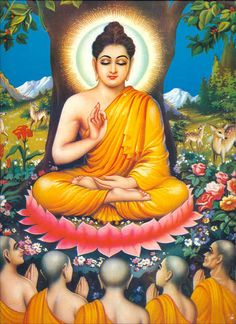
(1) Knowledge and (2) Peace, personified here by a visual and stylised image of the Buddha
Improving your posture
Let’s give a simple example of how concepts, even when false, can aid us. If you want to improve your posture an expert may recommend you imagine a length of string attached to the crown of your head, pulling the top of your head upwards towards the sky/ceiling. When you imagine this, you naturally straighten your posture in line with the visualised imaginary piece of string.
After practicing this for sometime, your posture improved and now you no longer have to imagine a piece of string. At no point did you actually thinks there was a piece of string actually there, but you can see how this concept was useful to correct your posture.
Concepts in Yoga
Lets take a look at some of the main traditional forms of yoga to see how this works. In the sections below there are many aspects of the yoga I have not gone into, as the purpose of this text is to demonstrate how yoga can use concepts to achieve the two goals mentioned above, and then the concepts can be thrown away, to be picked up again only when this needs to be taught to someone else.
Jnana Yoga
Jnana means knowledge in Sanskrit, and Jnana Yoga is the Yoga of Knowledge.
In this yoga the concept of Brahman is introduced and is initially equated as being being-consciousness-bliss (sat-chit-ananda). Brahman is initially defined as being our basic sense of presence-awareness and the teachings show this to be (apparently) Unchanging, Ever-Present/Permanent, Eternal, Infinite and Indestructible. This is stark contrast to the subtle and gross objects that appear within it which are ever-changing, temporary, transient, limited and subject to creation and destruction.
The Jnana yogi is taught to identify him/herself as that Unchanging Absolute Brahman and not to identify as the ephemeral objects. Through this process of de-identification with the body-mind and identification with that which does not change, insight into experience occurs.
We start to realise that the body-mind entity that we formerly took ourself to be actually is not us at all. We thought that we we responsible for our thoughts and action, whereas from the point of view of Brahman or Absolute Consciousness, it is seen that there is no doer and the body-mind-entity functions by itself. At this point the doer-entity is seen to be non-existant, and Knowledge as defined above in objective (1) arises.
At this point the essential job of jnana yoga has been completed, and the concepts of Brahman as being an unchanging essence can then be dropped and life goes on, living itself. There is no attachment to concepts such as the relative and absolute or concepts of the infinite, all of which are ultimately unverifiable in our experience.
Incidentally, once the doer has seen to be non-existent, sattva tends to arise over time as the processes that fuel compulsive desires are slowly wiped away, and so objective (2) is also indirectly achieved.
We can see that in Jnana yoga the concept of an Absolute Brahman has been useful to us to serve a purpose. However ultimately we cannot know for sure from our experience alone that there is such as thing as the Absolute Unchanging Brahman. Because Knowledge, ie. seeing through the doer, has occurred, Freedom is innately realised, and concepts are not clung to, and no beliefs are required.
Karma Yoga
Karma means action in Sanskrit, and Karma Yoga is the Yoga of Action.
There are a few ways karma yoga can be performed according to the traditional scriptures, but one of them is to set up the concept of a personal God, an all-powerful entity that is responsible for everything and every action in the universe. The Karma yogi is taught to realise that it is this God that ultimately has control and not the limited body-mind that it thinks itself to be.
The karma yogi therefore practices gladly accepting everything that comes his or her way as a gift from God, working to the best of their ability, but not being attached to the results of their actions.
As the Karma yogi starts to learn to be happy regardless of what is happening, this has the direct result of eroding away compulsive desires, converting them into non-compulsive desires, and so eventually objective (2) is achieved.
Thereafter, over time, the sense of identification with the body-mind entity loosens and is seen through. It can become apparent to the Karma yogi that actions happen by themselves: thoughts happen by themselves, but there is no thinker, just a spontaneous thought occurring, one by one, in quick succession. Similarly actions happen by themselves: limbs move, lips speak in the same way that dogs bark, leaves rustle and clouds float by – all happens spontaneously, and there is no doer. Here Knowledge arises.
Now the yoga has completed its aims: Freedom has been realised and we are seen to be free from suffering – we are seen to have always been free from suffering and the world. Now we no longer have to worry about concept of an infinite all-powerful personal God that is ultimately unknowable and unverifiable.
Again, the concept of the infinite God, as with the concept of the Unchanging Indestructible Brahman for Jnana yoga, can be seen to have been a useful tool, aiding the seeker to attain Liberation, but now no longer needs to be believed in.
So here are just two examples of how concepts are utilised in yoga to achieve a greater end than perhaps could have been achieved without them.
Remember, don’t cling to concepts, beliefs and ideas. Use them by all means, but when you no longer need them, let them go. Ultimately, stay with what you know, stay with what’s true, question your beliefs, be unafraid to admit if you’re wrong, and don’t pretend to know something you don’t. Keeping to these guidelines will safeguard you from dogma, and the suffering that results from it.
Just a reminder that I hold meetings weekly, both in London (UK) and online. The next meeting is today (Thursday 24th November 2016). Please see one of the links below for details:






 Tom Das