Non-duality
Can you know something is infinite, limitless, indestructible, eternal or unborn?
Concepts of infinity
Many spiritual teachings talk about the infinite. They talk about the eternal, the everlasting, the unborn, the indestructible, the infinite bliss and that which is limitless. All these are variations on the concept of infinity.
And there are different types of infinity. You can can infinity in terms of the three dimensions of space: infinitely tall or infinitely wide or both, ie. spatially limitless. You can have infinity in terms of time: something that is eternal or lasts forever, or something that has no beginning and is unborn. You can also have infinity in terms of power and knowledge where something is infinitely powerful or infinite in its wisdom. Both power and knowledge operate within space and time, and you can have infinities that apply to many other phenomena within space and time. There are still other types of infinity, but these are more in the realm of mathematics and we can set these aside for the purposes of this post.

The transcendent as ‘infinity’
Some people use the word infinity in a slightly different way. They say there is the transcendental type of ‘infinity’, that which transcends time and space, that which is timeless, spaceless, that which time and space do not affect. This is different to saying something is infinite in space and time. Instead they are saying this is something in a different dimension, something qualitatively different to space and time. This is not really infinity per se, but a creative use of the word ‘infinity’ to indicate transcendence and something that is unaffected by the forces, energies and rules of what we take to be the world around us.
Can we know anything is infinite
So the question is, can we actually know something to be infinite? My contention is that you can’t, and I’ll explain why. But before I do, let me say that this doesn’t mean that teachings that talk about infinity are not useful. They often are very useful, but ironically, in my view, their use is limited and ultimately these concepts of infinity can be a prison to keep us trapped. They can keep us from realising our own inherent freedom that is already here and already fully realised because we think that whatever is here and whatever we are is certainly not that great infinite thing spoken of by the sages and texts throughout the ages past and present.
The usefulness of concepts of infinity
Before I explain why you can’t know if something is infinite, let me briefly explain how these teachings can be useful. Firstly, such grand concepts of infinity can be motivators to start seeking for something more, and can encourage people on their spiritual journey. Secondly, if you are feeling low in some way, eg. low in mood, low in confidence, low in energy, low in inspiration or low in self-esteem (in vedanta teachings this low energy is called tamas or tamo-guna), visions of the infinite, the divine, the omnipotent and the eternal can be hugely uplifting and inspiring. Combined with the message that not only does this divinity exist, but you are also by nature divine, this message has the potential for profound benefit. It can raise the spirits of the depressed and disillusioned and inspire them and give them direction.
In fact in the Bhagavad Gita, in then end of Chapter 1 and start of Chapter 2, the protagonist Arjuna is feeling dejected and tamasic (dull and low). His body is weak and slumped and his limbs are quivering. He is the best archer in the entire universe and he has dropped his bow on the ground. His mind is confused and he is consumed with negative thoughts whirring around his mind, he has lost all idea of what to do and he is completely disillusioned with life. His friend, Krishna, who luckily happens to be a divine incarnation of God, calls Arjuna to pick up his bow, stand up and no longer be confused. How does he do this? Krishna’s first teaching is to tell Arjuna not to worry and inspire Arjuna with a vision of infinity, something that will raise Arjuna’s spirit, something that will motivate and energise Arjuna and take him out of this depression. He teaches Arjuna of ‘THAT’ which is infinite, eternal, indestructible and inconceivable.
If this is where you are, if you are following a teaching that talks of the infinite in some way and is bringing you positivity, energy and joy, then you don’t have to read any further. Continue on your path. If you find that this path is no longer serving you, or if you find you are interested to learn more, then read on.
Infinity is a concept, not a reality
Infinity is a concept. It’s an idea, born out of the human mind. The human mind has an ability to see things around it and then take aspects of what it sees and alter it. We call it human imagination or creativity. We see something really big, like a tall tree, then we imagine a tree that reaches into the sky, like in the fable of Jack and the Beanstalk. We see a horse and a rhino, and combine elements of each to imagine a creature such as a unicorn. We see death and imagine deathlessness. We see suffering and imagine eternal joy. This is how the concept of infinity is created.
A very very long rope
Now let’s come to the basic reason why it’s impossible to know that anything is infinite. Lets take the example of a very very long rope. Imagine you came across such a rope and you had to find out if it was infinitely long or just very very long. How would you do it? You may walk alongside the rope for days and days and see that the rope never ends. You could therefore justly conclude that it is a very very long rope (relatively speaking). However, and here is the crux of the matter, you have no way of knowing that the rope doesn’t end further along. You have no way of knowing that it is infinitely long.
And this is true for all the infinities mentioned at the start of this post. Just by firmly grasping this simple example of the ‘very very’ long rope, you will be able to see why it is impossible to know whether anything is infinite or not.
‘Very very’ vs. infinite
How can you know something is infinitely powerful or that it will last forever (ie. an infinite amount of time)? Just because it is very very powerful or has lasted a very very long time, doesn’t mean it is infinite in those dimensions. Similarly, just because something has been around for a very very long time or just because you can’t remember something beginning, doesn’t mean it was never born. Maybe it is very very old, but you have no way of knowing if it was infinitely old.
If you think something is infinite in some way, then I would say that’s a belief. Infinity is a concept, and we have no way of knowing if anything infinite actually exists at all.
What about ‘transcendent infinity’?
So far I have only talked about the non-transcendent forms of infinity. The same logic also applies to ‘transcendent infinity’, which as I said before is a creative use of words, as it is not what most people would ordinarily take infinity to mean.
The transcendent form of infinity essentially refers to something that is untouchable, un-stainable and indestructible. It is something that remains constant and unchanging amidst this world of ever-changing things. Again, for the same reasons it’s impossible to know this for sure. You may be able to say that something is relatively permanent or relatively unchanging, like a mountain or the world map, and that has some use, but you can never know for sure that something will never change.
Again, this is not to say that these teachings have no use. If you realise that your awareness/consciousness, for example, is relatively unchanging in that as long as you are in the waking or dream state it is there, this can provide huge amounts of relief and alleviation of suffering. It can also form the basis by which the mind (or subtle body in vedanta, suksma sarira in Sanskrit) can be purified and be released from the bondage of thinking ‘I am a doer’. This is the essential method of many schools of Mahayana and Tibetan Buddhism and also of Shankara’s Advaita Vedanta or Jnana Yoga, and for me was a very liberating teaching on my journey.

In conclusion…
In summary, my advice is to take teachings that talk about infinities in any form with a pinch of salt (or perhaps a large dollop of salt, depending on your inclination). Infinity, in all its various guises, can be useful to inspire, motivate and even purify our minds, but ultimately these concepts are not helpful as it is impossible for us to know for sure if they are true. Don’t let these grandiose concepts take you away from acknowledging the Freedom that is already here, right now, in everyday ordinary life.
See that the true teachings are not in elaborate words or clever definitions, but that they are pointing to something that is already present, here and now. The true teachings always eventually point you back to ordinary experience, life as it is.
❤
The essence of yoga
The other aim of yoga, in addition to seeing through the false concept of being a separate doer-entity described in my previous post, is to remove compulsive desires. When these have been removed, the result is peace of mind which in turn leads to the ending of suffering and moksha (freedom, liberation).
We could classify desires into two types, compulsive and non-compulsive. Compulsive desires are ones that you feel compelled to enact. Your happiness depends upon fulfilling these desires. Non-compulsive desires are ones which you could take or leave. While you may enjoy the consequences of acting out and fulfilling a non-compulsive desire, your sense of happiness and wellbeing does not depend on it. You could call non-compulsive desires preferences.
When a compulsive desire is not fulfilled, suffering is the result. When a non-compulsive desire is not fulfilled, it’s ok. You may have wanted it to pan out a certain way, but it’s fine that it didn’t happen the way you wanted it to.
When compulsive desires have been rooted out, our happiness no longer depends on objects, and the mind becomes peaceful (sattvic).
In the Bhagavad Gita, Krishna repeatedly advises Arjuna to practice yoga. By this Krishna means to practice not minding what happens regardless of the outcome of a situation. In his first lesson to Arjuna on the subject of yoga, Krishna defines yoga as follows, a definition that is often repeated in various ways throughout the text:
yogasthaḥ kuru karmāṇi saṅgaṃ tyaktvā dhanañjaya
siddhyasiddhyoḥ samo bhūtvā samatvaṃ yoga ucyate
Perform actions, Dhananjaya [Arjuna], giving up attachment, be steadfast in yoga, be equal in success and failure. This evenness of mind is called yoga.
Bhagavad Gita 2.48
So in summary, what is the essence of yoga? Well according to the Bhagavad Gita, yoga essentially means ‘evenness of mind’, or as I put it, not minding what happens. Practice of this leads to having a peaceful (sattvic) mind. All forms of yoga have this sattva and peace as their aim, with the exact methods and mechanisms varying depending on the type of yoga.
Also see:
How yoga works
The paradox of yoga
Ramana Maharshi: The 4 paths to freedom (the 4 yogas)
Is everything really consciousness?

Lots of spiritual teachers and teachings seem to be saying all there is is consciousness. But is this really true? And even if it was true, would we be able to know this as being true?
From the point of view of experience
Firstly, from the point of view of our experience, yes, everything is consciousness. Whatever you look at, smell, see, touch, feel, think or imagine, etc, appears within your consciousness or awareness. And all these things appear as modulations of that consciousness, so in effect, our entire experience is nothing but consciousness.
Also we cannot directly know or experience anything or go anywhere that is not within our consciousness. If we did then we would, by definition, be conscious of it, and so our experience of it would be consciousness.
Everywhere we go, no matter what we experience, consciousness is, it is always present, effortlessly shining.
So, there we have it. Everything is consciousness. Right? Well…
From the point of view of reality
Just because everything you experience is consciousness, doesn’t mean that everything is consciousness. You see, in one way this is just a play on words. In the way we are using the words, experience and consciousness are synonyms. You cannot have experience without consciousness. If you are conscious you are experiencing. Think about it. Can you have one without the other? So of course, in terms of experience everything is consciousness. But it’s a bit like saying in terms of vision everything is seeing.
You don’t have to be a genius to realise there may be things going on that we are not conscious of, and perhaps we will never be conscious of. From what we know of the universe (via our consciousness!) we know it is vast and complex. Of course all this vastness could be just all happening within our consciousness only, but we don’t know that for sure. It is easily foreseeable that there may exist something beyond our consciousness, something we can never sense (be conscious of) or understand.
From the point of reality, we do not know if all there is is consciousness, and to say that everything is consciousness is going too far. We can only say everything is consciousness in terms of our own experience, but not in terms of reality. If you think that everything is consciousness (and by implication that nothing exists outside of consciouness), I would say that is a belief. Ask yourself, do you know that for sure? How can you know that for sure?
Why is this important?
Does this actually matter? If all we experience is consciousness, then does it matter? If there is something beyond consciousness but we are not aware of it, who cares, right? Well, to me at least, it does matter. If you are interested in what’s true it does matter. If you are a spiritual seeker trying to figure this all out and it doesn’t make any sense, then it does matter. If you are interested in seeing through all false beliefs and discovering a genuine freedom, then yes, it does matter. And if you are interested in science and reducing human suffering through technology based on scientific discoveries, then yes, it does matter.
False beliefs breed suffering as they inevitability conflict with what is true, and false beliefs impede genuine philosophical, ethical and scientific inquiry. Beliefs like this affect how we approach and respond to life and how we treat each other. It affects the philosophical basis upon which scientific progress is made, and so it can affect the technologies we develop and how we develop them. The overall result of clinging to false beliefs is to the detriment of us as individuals and our society at large.
Does that mean that not everything is consciousness?
So, back to consciousness. Does that mean that not everything is consciousness? No! Perhaps everything is consciousness! Perhaps it isn’t. The point is that we do not know. Everything may or may not be consciousness. We don’t know. It’s actually a scientific question and we currently don’t have the evidence either way. It may be impossible to know, as how would you know that there is nothing beyond consciousness?
The point is we should be honest, with ourselves and each other, and not cling to beliefs unnecessarily and unknowingly. Whilst beliefs can be used to make us feel better and give us strength during hard times, clinging to them and thinking they are definately true and that we are definately right causes more suffering in the long term, both for us and often for those around us.
Can the teaching ‘everything is consciousness’ be useful?
Ironically, yes. Even though ultimately we don’t know, the teaching that everything is consciousness can still be useful. How so? Well the teachings aim to undermine the belief in a separate self, or the notion of being an independent doer-entity, and in that regard this philosophical idealism of everything being consciousness can be useful. The idea is that the teaching is an antidote to a fixed belief. More on how that works here. The key is that once the job of the conceptual teaching is done, we don’t cling to this new concept which simply becomes a new problem and a new way of perpetuating the ego.
The consciousness teachings or awareness teachings, as I call them, can also point to a still-point in our experience that is always present, at least whilst we are awake. It is that which never changes and is always ever-present, un-touched and ever-aware. Recognising this aspect of our being can be very liberating and can give us the emotional security to open up to our thoughts and feelings, and allow our emotional-spiritual hearts to open, and can allow us to feel happier and whole.
What about Freedom?
So if we don’t know whether or not everything is consciousness, what do we do now? A part of Freedom, which is already here, is that everything is allowed. It’s ok to not know. That’s ok. There are lots of things we do not know, many things we will never know, and probably many things that are impossible for us to know. Freedom doesn’t mind. It’s just the way things are.
❤
The paradox of yoga
The word yoga can be used to describe a series of specific methods which aid and direct the seeker towards the goal of the ending of suffering or of attaining realisation. So let me start by saying something quite obvious: all of the yogas* are practices to be performed or actions to be done. They are therefore meant to be performed by a person who thinks themselves to be a separate doer-entity.
The very existence of the (illusory) separate doer implies a duality – in fact the imagined doer is the essence of duality, the first conceptual step from which all other dualistic notions proceed from. The duality that it sets up is between that of the subject (the doer) and objects (the objects of the world in which actions are done).
The aim of all yogas is, through practice, to facilitate a seeing/realisation that the separate doer-entity is an illusion. And therein lies the apparent paradox. Yoga is action undertaken by the (imaginary) separate doer in order to see through this illusion of doership.
*Traditionally there are several key yogas outlined in the vedic texts, the main ones being Jnana Yoga (yoga of knowledge or understanding), Karma Yoga (yoga of action), Bhakti Yoga (yoga of devotion) and Raja Yoga (the king of yogas).
Also see:
How yoga works
The essence of yoga
Ramana Maharshi: The 4 paths to freedom (the 4 yogas)
Enlightenment: is a teacher required?

For many a teacher is essential.
For some no human teacher is required.
For some a teacher/teaching can even be detrimental.
Without the drive for truth, even with a good teacher you can get caught up in the teaching and never break free from its concepts and modes of expression.
Quote: God is just a word that points to that which is beyond words

Interview with Tom Das on Conscious 2
Action starts at 20 mins 30 secs into the video
Interview was streamed live on 18th Feb 2016
Buddhism: How enlightenment happens
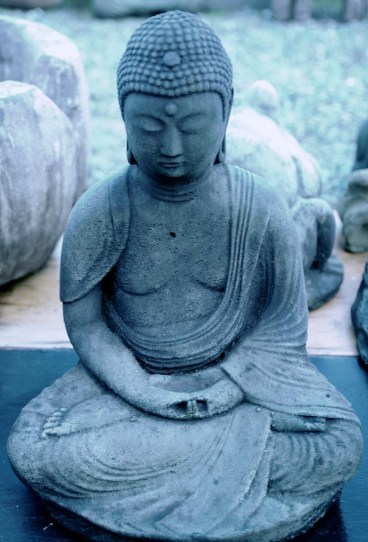
If you read the earlier Buddhist texts (the Pali Suttas) you get a very different feel of the Buddha’s teachings compared to the systematised versions of Buddhism that are often more prominently on display today. It becomes apparent that the Buddha taught in different ways to different people and that the true Dhamma (teaching) cannot be grasped.
The eight-fold path that we most often hear about was very probably a central and important part of the Buddha’s teaching, and a truly wonderful teaching in my view, but it is clear that many people came to enlightenment in various ways according to the suttas (Buddhist texts).
We read that some attained enlightenment without practising, and some attained enlightenment simply upon hearing the Buddha speak. Some had a great awakening before practice, and then a practice naturally developed afterwards. Others followed the more traditional way of engaging with spiritual practises first and then attaining arahantship (full enlightenment) afterwards. The fact that arahantship was preceded by many years of practice for the Buddha himself may have affected the way he taught. However the suttas indicate that the Buddha realised that not all came to the Dhamma in the same way. In the Yuganaddha Sutta, Ananda explains the 4 main ways arahantship can arise:
Venerable Ananda said: “Friends, whoever — monk or nun — declares the attainment of arahantship in my presence, they all do it by means of one or another of four paths. Which four?
“There is the case where a monk has developed insight preceded by tranquility…He follows the path, developing it & pursuing it — his fetters are abandoned, his obsessions destroyed.
“Then there is the case where a monk has developed tranquility preceded by insight…He follows that path…his fetters are abandoned, his obsessions destroyed.
“Then there is the case where a monk has developed tranquility in tandem with insight…He follows that path…his fetters are abandoned, his obsessions destroyed.
“Then there is the case where a monk’s mind has its restlessness concerning the Dhamma well under control. There comes a time when his mind grows steady inwardly, settles down, and becomes unified & concentrated. In him the path is born. He follows that path, develops it, pursues it. As he follows the path, developing it & pursuing it — his fetters are abandoned, his obsessions destroyed.”
“Whoever — monk or nun — declares the attainment of arahantship in my presence, they all do it by means of one or another of these four paths.”
You can see here that two aspects of the teaching become very prominent, namely that of achieving tranquility and that of insight. The key is that both are required, but the order in which they are achieved varies. Some naturally are drawn towards becoming more tranquil and insight comes later. Others are more drawn to understanding and insight first and it is this insight that leads to tranquility as ‘fetters are abandoned’ and ‘obsessions destroyed’.
I explain in more detail what is meant by tranquility and insight here, but briefly insight is seeing there is no separate self (anatta in Pali), specifically that there is no separate doer entity. Tranquility when it is cultivated before insight usually refers to the lessening of thoughts and increasing of peace which in turn paves the way for insight. Tranquility after insight usually means a purification of the mind which naturally happens after insight; rather than reducing thoughts, this is the tranquility of freedom, of not being bothered by thoughts or circumstances and not depending on the mind, body or world (ie. anything) for one’s happiness.
In later Buddhist developments many schools developed ‘enlightenment first, practice later’ schools of teaching, notably in the Mahayana traditions, a prime example being Korean Zen master Chinul (1158-1210):
‘There are many avenues of entry into the Way…Sages since time immemorial have all first awakened then cultivated practice, attaining experiential proof based on practice.’
Chinul, Secrets of Cultivating the Mind, verses 19-20
‘If a real teacher points out a way of entry for you, and for a single instant you turn your attention around, you see your own original essence. This essence originally has no afflictions; uncontaminated wisdom is inherently complete in it. Then you are no different from the Buddhas; thus it is called sudden enlightenment.
As for gradual practice, having suddenly realised fundamental essence, no different from Buddha, beginningless mental habits are hard to get rid of all at once. Therefore one cultivates practice based on enlightenment, gradually cultivating the attainment to perfection, nurturing the embryo of sagehood to maturity. Eventually, after a long time, one becomes a sage; therefore it is called gradual practice. It is like an infant, which has all the normal faculties at birth, but as yet undeveloped; only with the passage of years does it become an adult.
Question: By what expedient means can we turn our minds around instantly to realise our inherent essence?
Answer: It is just your own mind; what further expedient means would you apply?’
Chinul, Secrets of Cultivating the Mind, verses 27-30
Chinul talks about the importance of first recognising your true original essence first (insight) before using this insight to purify the mind (tranquility after insight).
Going back to the Pali suttas, the Buddha also repeatedly warned against being attached to any particular teaching or teaching tradition:
‘Do not go by oral tradition, by lineage of teaching, by hearsay, by a collection of texts, by logic, by inferential reasoning, by reasoned cogitation, by the acceptance of a view after pondering it, by the seeming competence of a speaker, or because you think, ‘This ascetic is our teacher.’
AN 3.65 Kesaputti [Kālāma] Sutta
This really is quite a stark warning, and we could see this as a very ‘modern’ and scientific way of approaching this search for freedom from suffering. Again in the Atthaavagga, perhaps the earliest of all the Buddhist texts we know of, the Buddha warns about having any fixed views:
Atthaavagga, Chapter 6
5. Having abandoned what was acquired, not taking up anything, he would not be in dependence even upon knowledge. He truly is not a partisan among the schoolmen; he does not fall back on any view at all.
Atthaavagga, Chapter 10
7. He does not train himself through desire of gain, and he is not upset at lack of gain. He is not opposed to craving, nor is he greedy for savory stimulations.
8. An indifferent onlooker, always mindful, He imagines nothing in the world to be equal, nor superior, nor lower. For him there are no distinguished positions.
14. He for whom there is nothing his own in the world, and who does not sorrow over what is not there, And who does not go by philosophies— He truly is said to be “at peace.”
The Buddha stresses non-clinging, including non-clinging to doctrines, teachings, knowledge and points of view. In fact the Atthaavagga goes even further. Most of the very earliest Buddhist texts do not even mention the four noble truths, let alone the eight-fold path (which is the fourth truth of the four noble truths).
The Atthaavagga appears to go further here by denying much of what is commonly taught. We are not to find this deeper ‘truth’ through seeing, hearing or by any kind of knowledge. We are not to cling to morality or purity, nor their opposites. We are to depend on nothing. Of course, reading the following lines and having insight into them reveals a core ‘truth’, a more sublime Dhamma that is not opposed to the classic eight-fold path at all:
3. [The Buddha said:] There is nothing of which I say, “I declare this,”…But looking among the views, not taking hold of anything, examining, I saw inner peace.
4. [The questioner responds:]…This “inner peace,” whatever it means, How is it made known by the wise?
5. [The Buddha said:] Not by what is viewed, not by what is heard, not by inner knowledge…nor by morality and observances is purity said to be; by absence of what is viewed, by absence of what is heard, by non-knowledge, by amorality, by nonobservance—also not by that. So having let go of these, not taking hold of anything, A peaceful one, not being dependent, would not have longings for existence.
6. [The questioner responds:] Then I imagine that to be a confused philosophy indeed. Some do rely on purity by view.
7. [the Buddha responds:]And having depended upon view, enquiring…you have become confounded by what you have seized upon; And so you have not seen the slightest sense in this. Therefore you hold it to be confused.
So where does this leave us? Should we practice according to a path, or instead cultivate insight and wisdom? I answer this in more detail in this article, but for now, let’s go back to the Korean Zen Master Chinul for the last word:
To practice spontaneous concentration and insight is the sudden approach, using effortless effort, both operative yet both tranquil, spontaneously cultivation intrinsic essence, naturally fulfilling the Way of Buddhas.
To practice formal concentration and insight is the gradual approach taken before enlightenment by those of lesser potential, using curative work, striving to direct each thought toward cutting off confusion and grasping quietude.
…Among those who are suited to the sudden approach, there are also those whose potentials are superior and those whose potentials are inferior. Thus their practice cannot be judged by the same standard.
As for those whose afflictions are slight, who are light and easy in body and mind, who are detached from good in the midst of good and detached from evil in the midst of evil…they rely on spontaneous concentration and insight, which they cultivate simultaneously without effort, naturally real and uncontrived, always in meditation whether active or still, and fulfill the design of nature. Why should they pursue formal practices for curative purposes? When there is no illness, one does not seek medicine.
As for those who, in spite of having first realised sudden awakening, have deep afflictions and rigid mental habits…it is appropriate for them to make provisional use of formal concentration and insight.
Chinul, Secrets of Cultivating the Mind, verses 88-92
Quote: remove the ego and reality shines
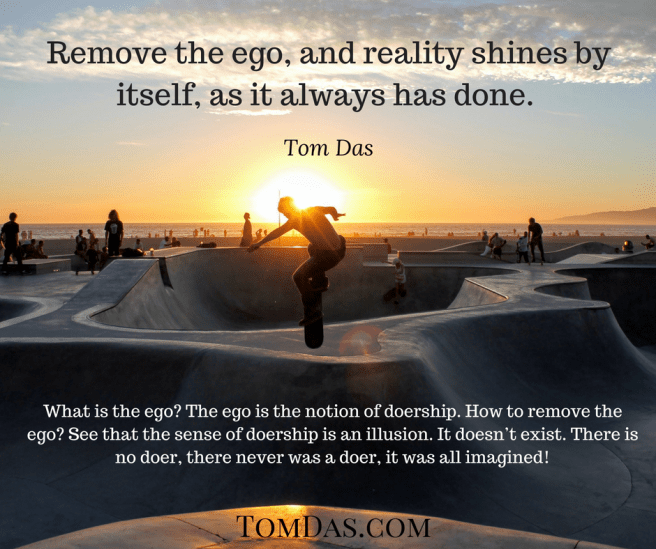
 Tom Das