Ramana Maharshi: Spiritual practices eventually fall away
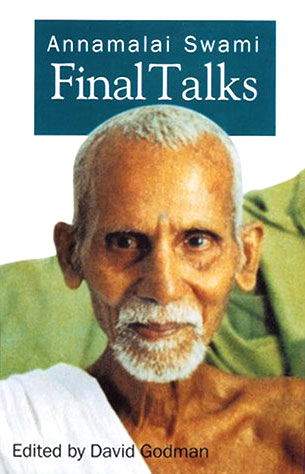
(The following is an excerpt from the above book and comprises most of Chapter 3):
A devotee who came to Annamalai Swami had so much pain in one of his legs, he found it very difficult to sit comfortably on the floor. Observing his difficulties, Annamalai Swami (AS) made the following remarks:
AS: Though the body is needed for Sadhana, one should not identify with it. We should make good use of it and look after it well,but we should not pay too much attention to it.
There are so many thoughts in the mind. Thought after thought after thought. They never stop. But there is one thought that is continuous, though it is mostly subconscious. ‘I am the body’ – this is one string on which all other thoughts are threaded. Once we identify ourselves with the body by thinking this thought, Maya follows. It also follows that if we cease to identify ourselves with the body, Maya will not affect us anymore.
‘I am the body’ – this is one string on which all other thoughts are threaded. Once we identify ourselves with the body by thinking this thought, Maya follows.
Maya is fundamentally non existent. Bhagavan said that Maya literally means ‘that which is not.’ It is unreal because everything that Maya produces is an outgrowth of a wrong idea. It is a consequence of taking something to be true that is not really true. How can something that is not real produce something that is real? If a barren woman says that she has beaten by her son, or that she has been injured by the horns of a hare, we would rightly take her to be deluded. Something that does not exist cannot be the cause of suffering or of anything else.
Maya is fundamentally non existent.
How to get rid of this ‘I am the body’ feeling and of the Maya that is produced by it? It goes when there is ‘saman bhava’ the equanimity or equality of outlook that leaves one unaffected by the extreme opposites such has happiness and unhappiness, pleasure and pain. When ‘saman bhava’ is attained, the idea ‘I am the body’ is no longer present and Maya is transcended.
Question: Is the body to be regarded as unreal, as ‘not me’? What attitude should I have towards this body and all the sensory information it provides me with?
AS: By itself, this body is jada, inert and lifeless. Without the mind, the body cannot function. And how does the mind function? Through the five senses that the body provides.
Mind and body are like the tongue and teeth in the mouth. They have to work in harmony with each other. The teeth do not fight with tongue and bite it. Mind and body should combine in the same harmonious way.
However, if we want to go beyond the body, beyond the mind, we have to understand and fully accept that all the information the senses provide is not real. Like the mirage that produces an illusory oasis in the desert, the senses create information that there is a real world in front of us that is being perceived by the mind. The apparent reality of the world is an illusion. It is merely a misperception. When the mind perceives a snake where in reality there is only a rope, this is clearly a case of the senses projecting an imaginary image onto a real substratum. This, on a large scale, is how the unreal appearance of the world is projected by the mind and the senses onto the underlying reality of the Self….
…Self Inquiry is the process by which attention is put on the substratum instead of on names and forms that are habitually imposed on it. Self is the substratum out of which all things appear to manifest, and the Jnani is the one who is continually aware of the real substratum. He is never deluded into believing that the names and forms that are perceived by the senses have any real existence.
Self Inquiry is the process by which attention is put on the substratum instead of on names and forms that are habitually imposed on it.
Whatever we see in this room, for example, that picture of Bhagavan over there, is unreal. It has no more reality than objects we perceive in our dreams. We think we live in a real, materially substantial world, and that our minds and bodies are real entities that move around in it. When the Self is seen and known, all these ideas fade away and one is left with the knowledge: Self alone exists.
Question: If I regard all the people that I see and meet as unreal projections, what do I base my moral sense on? I can go around killing then or robbing them without feeling guilty because i would know that they are just characters in my dream.
AS: Everything that we perceive is maya, an unreal dream, but one should not then think, “Since everything is unreal, I can do what I like”. There are dream consequences for the bad acts committed in the dream, and while you still take the dream to be the reality, you will suffer the consequences of your bad behaviour. Do no evil and have no hate. Have equanimity towards everything.
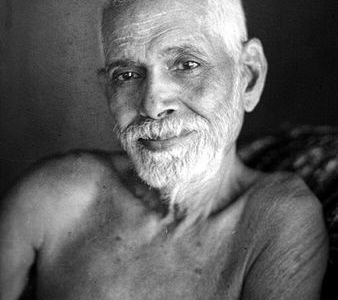
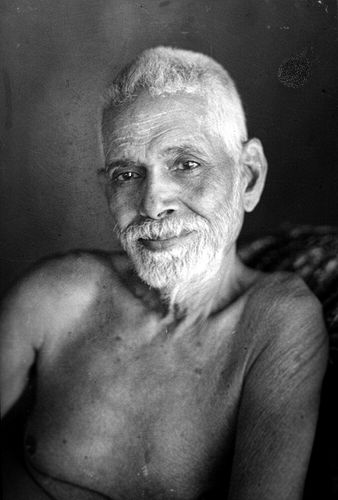
The following excerpt is from the wonderful book Annamalai Swami FINAL TALKS, Chapter 1:
Annamalai Swami: Mind is just a shadow. Attempts to catch it and control it are futile. They are just shadows chasing shadows. You can’t control or eliminate a shadow by chasing it or by putting a shadow hand on it. These are just children’s games.
Ram Tirtha once told a story about a small boy who ran down the street, trying to catch up with the head of his shadow. He never managed because no matter how fast he ran, the shadow of his head was always a few feet ahead of him.
His mother, who was watching him and laughing, called out, ‘Put your hand on your head!’
When the boy followed this instruction, the shadow hand caught up with the shadow head. This was enough to satisfy the boy.
This kind of advice may be enough to keep children happy, but it won’t produce satisfactory results in the realm of sadhana and meditation. Don’t chase your shadow thoughts and your shadow mind with mind-control techniques because these techniques are also shadows. Instead, go back to the source of the shadow-mind and stay there. When you abide in that place, you will be happy, and the desire to go chasing after shadow thoughts will no longer be there.
Bhagavan often told the story of a man who tried to get rid of his shadow by burying it in a pit. This man dug a hole and then stood on the edge of it in such a way that his shadow was cast on the bottom of the hole he had just made. After lining it up in this way, he started throwing soil on the shadow in an attempt to bury it. Of course, no matter how much soil he put in the hole, the shadow still remained on top of it.
Your mind is an insubstantial shadow that will follow you around wherever you go. Attempts to eliminate or control it cannot succeed while there is still a belief that the mind is real, and that it is something that can be controlled by physical or mental activity.
Question: But this shadow mind must still be eliminated by some means.
Annamalai Swami: When self-realisation happens, mind is no longer there. However, you do not get self-realisation by getting rid of the mind. It happens when you understand and know that the mind never existed. It is the recognition of what is real and true, and the abandonment of mistaken ideas about the reality and substantiality of this ephemeral shadow you call the mind.
This is why Bhagavan and many other teachers kept bringing up the analogy of the snake and the rope. If you mistake a rope on the ground for a snake, the snake only exists as an idea in your mind. That idea might cause you a lot of worry and anxiety, and you may waste a lot of mental energy wondering how to avoid the snake or kill it, but this fact remains: there is no snake outside your imagination. When you see the rope, the substratum upon which your false idea of a snake is superimposed, the idea that there is a snake, and that it is real, instantly vanishes. It is not a real snake that has disappeared. The only thing that has disappeared is an erroneous idea.
The substratum upon which the false idea of the mind has been superimposed is the Self. When you see the mind, the Self, the underlying substratum, is not seen. It is hidden by a false but persistent idea. And conversely, when the Self is seen, there is no mind.
Question: But how to give up this false idea that the mind is real?
Annamalai Swami: The same way that you give up any wrong idea. You simply stop believing in it. If this does not happen spontaneously when you hear the truth from a teacher, keep telling yourself, “I am not the mind; I am not the mind. There is no mind; there is no mind. Consciousness alone exists.” If you have a firm conviction that this is the truth, one day this firm conviction will mature to the point where it becomes your direct experience.
Consciousness alone exists. If you generate a firm conviction that this is the truth, eventually this firm conviction will become your own direct experience. Consciousness alone exists. That is to say, whatever exists is consciousness alone. Keep this in mind and don’t allow yourself to regard anything else as being real. If you fail and give even a little reality to the mind, it will become your own false reality. Once this initial wrong identification – ‘I am the mind, the mind is real’ – has happened, problems and suffering will follow.
Don’t be afraid of the mind. It’s a false tiger, not a real one. Something that is not real cannot harm you. Fear and anxiety may come to you if you believe that there is a real tiger in your vicinity. Someone may be making tiger noises as a joke to make you afraid, but when he reveals himself, all your fears go because you suddenly understand that there never was a tiger outside your imagination.
Question: One can have a temporary experience of the Self, the underlying reality, but then it goes away. Can you offer any guidance on how to stabilise in that state?
Annamalai Swami: A lamp that is lit may blow out if the wind is strong. If you want to see it again, you have to relight it. But Self is not like this. It is not a flame that can be blown out by the passing winds of thoughts and desires. It is always bright, always shining, always there. If you are not aware of it, it means that you have put a curtain or a veil in front of it that blocks your view. Self does not hide itself behind a curtain. You are the one who puts the curtain there by believing in ideas that are not true. If the curtain parts and then closes again, it means that you are still believing in wrong ideas. If you have eradicated them completely, they will not reappear. While these ideas are covering up the Self, you still need to do constant sadhana.
So, going back to your question, the Self does not need to stabilise itself. It is full and complete in itself. The mind can be stabilised or destabilised, but not the Self.
Question: By constant sadhana, do you mean self-enquiry?
Annamalai Swami: Yes. By strength of practice, by doing this sadhana, this veil will be removed completely. There will be no further hindrances. You can go to the top of Arunachala, but if you are not alert, if you are not paying attention, you may slip and end up at Easanya Math (a Hindu institution at the base of the hill).
You have to make an enormous effort to realise the Self. It is very easy to stop on the way and fall back into ignorance. At any moment you can fall back. You have to make a strong determined effort to remain on the peak when you first reach it, but eventually a time will come when you are fully established in the Self. When that happens, you cannot fall. You have reached your destination and no further efforts are required. Until that moment comes, constant sadhana is required.
Question: Is it important to have a Guru at this stage, this period when constant effort is required?
Annamalai Swami: Yes. The Guru guides you and tells you that what you have done is not enough. If you are filling a bucket with water, you can always add more if there is still space. But when it is completely full, full to overflowing, it is pointless to add even a single drop. You may think that you have done enough, and you may believe that your bucket is full, but the Guru is in a better position to see that there is still a space, and that more water needs to be added. Don’t rely on your own judgement in this matter. The state you have reached may seem to be complete and final, but if the Guru says, “You need more sadhana,” trust him and carry on with your efforts.
Bhagavan often used to say, ‘The physical Guru is outside, telling you what to do and pushing you into the Self. The inner Guru, the Self within, simultaneously pulls you towards itself.’
Once you have become established in the inner Guru, the Self, the distinction between Guru and disciple disappears. In that state you no longer need the help of any Guru. You are That, the Self.
Until the river reaches the ocean it is obliged to keep on flowing, but when it arrives at the ocean, it becomes ocean and the flow stops. The water of the river originally came from the ocean. As it flows, it is merely making its way back to its source. When you meditate or dosadhana, you are flowing back to the source from which you came. After you have reached that source, you discover that everything that exists – world, Guru, mind – is one. No differences or distinctions arise there.
Non-duality is jnana; duality is samsara. If you can give up duality, Brahman alone remains, and you know yourself to be that Brahman, but to make this discovery continuous meditation is required. Don’t allocate periods of time for this. Don’t regard it as something that you do when you sit with your eyes closed. This meditation has to be continuous. Do it while you are eating, walking, and even talking. It has to be continued all the time.
“The differences are the result of the sense of doership.
The fruits will be destroyed if the root is destroyed.
The differences will vanish and the essential reality will reveal itself.
Inquire within. The sense of doership will vanish.
Vichara (inquiry) is the method.”
Taken from Talks with Sri Ramana Maharshi, talk no. 429
Tom’s comments:
The root of suffering is the sense of doership, the sense that there is a doer-entity, the sense that you are a doer. The root is the notion ‘I am a doer’, the fruit is suffering and duality.
Let go of this sense of doership, either by simply relaxing and letting go, or, as suggested above, look and find out what the doer is. Look at your own direct experience: can you see the doer? Can you feel the doer? What does the doer look and feel like exactly? Where does the doer begin and end? How big is the doer? Where is the doer located?
When you look, as you keep on noticing, you may start to realise/see that there is no actual experience of a doer at all. All there are are sensations, feelings and thoughts. Specifically there may be the thought ‘I am the doer’ or ‘this is the doer’, but no actual doer is seen/experienced apart from the thought. The doer is seen to be an imagined entity. The doer (ie. ego) is revealed to be a fiction.
Ramana uses the word ‘reality’ above. What is reality? It’s just what’s left over when the sense of doership is seen through. It’s just what’s left over when false illusions are seen for what they are: false.
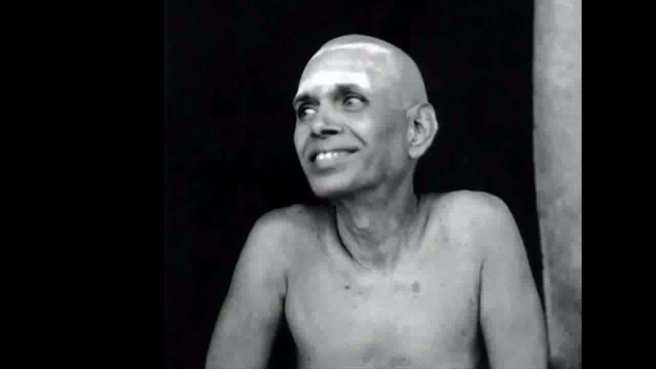
The following are verses from Guru Vachaka Kovai, one of the most authoritative texts of Ramana Maharshi’s teachings. The text was written by his disciple Muruganar and thereafter thoroughly checked and amended by Ramana. Here are some verses on the root cause of suffering, our notion of being a doer, with some commentary from Sri Sadhu Om, another devotee of Ramana:
466 The pure Bliss of peace will shine within only for those who have lost the sense of doership. For, this foolish sense of doership alone is the poisonous seed that brings forth all evil fruits.
467 Instead of going on, driven by the restless thoughts, performing actions such as ‘I should do this, I should give up that’ as if they were worthy to be done, acting according to how the Grace of God, the Lord of our soul, leads us, is the right form of truly worshipping Him
476 Whether or not one is performing actions, if the delusion of individuality – the ego, ‘I am the doer of actions’ – is completely annihilated, that is the attainment of actionlessness.
Sri Sadhu Om’s Comments: People generally think that the attainment of actionlessness is a state in which one should remain still, giving up all activities. But this is wrong. Sri Bhagavan Ramana proclaims that the loss of doership alone is the right kind of actionlessness, and this alone is nishkamya karma – action done without any desire for result.
470 The Lord who has fed you today will ever do so well. Therefore, live carefree, placing all your burden at His feet and having no thought of tomorrow or the future.
471 Know well that even performing tapas (spiritual practice) and yoga with the intention ‘I should become an instrument in the hands of the Lord Siva’ is a blemish to complete self-surrender, which is the highest form of being in His service.
Sri Sadhu Om’s Comments: Since even the thought ‘I am an instrument in the Lord’s hand’ is a means by which the ego retains its individuality, it is directly opposed to the spirit of complete self-surrender, the ‘I’-lessness. Are there not many good-natured people who engage themselves in prayers, worship, yoga and such virtuous acts with the aim of achieving power form God and doing good to the world as one divinely commissioned? It is exposed here that even such endeavours are egotistical and hence contrary to self-surrender.
In the following excerpts, Ramana Maharshi is telling us that we are already free, totally and completely. Can you accept this? Can you allow these words to move you? Can you intuit the truth to which they point?
If we talk of knowing the Self, there must be two selves, one a knowing self, another the self which is known, and the process of knowing. The state we call realization is simply being oneself, not knowing anything or becoming anything. If one has realized, one is that which alone is and which alone has always been. One cannot describe that state. One can only be that.
Questioner: How long does it take to reach mukti (liberation)?
Maharshi: Mukti is not to be gained in the future. It is there for ever, here and now.
Q: I agree, but I do not experience it.
M: The experience is here and now. One cannot deny one’s own Self.
Questioner: How shall I reach the Self?
Maharshi: There is no reaching the Self. If Self were to be reached, it would mean that the Self is not here and now and that it is yet to be obtained. What is got afresh will also be lost. So it will be impermanent. What is not permanent is not worth striving for. So I say the Self is not reached. You are the Self, you are already that. The fact is, you are ignorant of your blissful state. Ignorance supervenes and draws a veil over the pure Self which is bliss. Attempts are directed only to remove this veil of ignorance which is merely wrong knowledge. The wrong knowledge is the false identification of the Self with the body and the mind. This false identification must go, and then the Self alone remains. Therefore realization is for everyone; realization makes no difference between the aspirants. This very doubt, whether you can realize, and the notion `I-have-not-realized’ are themselves the obstacles. Be free from these obstacles also.
Q: There must be something that I can do to reach this state.
M: The conception that there is a goal and a path to it is wrong. We are the goal or peace always. To get rid of the notion that we are not peace is all that is required.
Q: All books say that the guidance of a Guru is necessary.
A: The Guru will say only what I am saying now. He will not give you anything you have not already got. It is impossible for anyone to get what he has not got already. Even if he gets any such thing, it will go as it came. What comes will also go. What always is will alone remain. The Guru cannot give you anything new, which you don’t have already. Removal of the notion that we have not realized the Self is all that is required. We are always the Self only we don’t realize it.
Q: When a man realizes the Self, what will he see?
M: There is no seeing. Seeing is only being. The state of Self-realization, as we call it, is not attaining something new or reaching some goal which is far away, but simply being that which you always are and which you always have been. All that is needed is that you give up your realization of the not-true as true…At one stage you will laugh at yourself for trying to discover the Self which is so self-evident.
Q: But how to do this and attain liberation?
M: Liberation is our very nature. We are that. The very fact that we wish for liberation shows that freedom from all bondage is our real nature. It is not to be freshly acquired. All that is necessary is to get rid of the false notion that we are bound. When we achieve that, there will be no desire or thought of any sort. So long as one desires liberation, so long, you may take it, one is in bondage.
Q: Is not the realization of one’s absolute being, that is, Brahma-jnana, something quite unattainable for a layman like me?
M: Brahma-jnana is not a knowledge to be acquired, so that acquiring it one may obtain happiness. It is one’s ignorant outlook that one should give up. The Self you seek to know is truly yourself.
Q: How to realize the Heart?
M: There is no one who even for a moment fails to experience the Self. For no one admits that he ever stands apart from the Self. He is the Self. The Self is the Heart.
Q: How can I attain Self- realization?
M: Realization is nothing to be gained afresh; it is already there. All that is necessary is to get rid of the thought `I have not realized’. Stillness or peace is realization. There is no moment when the Self is not. So long as there is doubt or the feeling of non-realization, the attempt should be made to rid oneself of these thoughts. They are due to the identification of the Self with the not-Self. When the not-Self disappears, the Self alone remains. To make room, it is enough that objects be removed. Room is not brought in from elsewhere.
Q: However often Bhagavan teaches us, we are not able to understand.
M: People say that they are not able to know the Self that is all pervading. What can I do ? Even the smallest child says, `I exist; I do; this is mine.’ So, everyone understands that the thing `I’ is always existent. It is only when that `I’ is there that there is the feeling that you are the body, he is Venkanna, this is Ramanna and so on. To know that the one that is always visible is one’s own Self, is it necessary to search with a candle ? To say that we do not know the atma swarupa (the real nature of the Self) which is not different but which is in one’s own Self is like saying, `I do not know myself.`
Q: But how is one to reach this state?
M: There is no goal to be reached. There is nothing to be attained. You are the Self. You exist always. Nothing more can be predicated of the Self than that it exists. Seeing God or the Self is only being the Self or yourself. Seeing is being. You, being the Self, want to know how to attain the Self. It is something like a man being at Ramanasramam asking how many ways there are to reach Ramanasramam and which is the best way for him. All that is required of you is to give up the thought that you are this body and to give up all thoughts of the external things or the not-Self.
Q: It is cruel of God’s leela (play) to make the knowledge of the Self so hard.
M: Knowing the Self is being the Self, and being means existence, one’s own existence. No one denies one’s existence any more than one denies one’s eyes, although one cannot see them. The trouble lies with your desire to objectify the Self, in the same way as you objectify your eyes when you place a mirror before them. You have been so accustomed to objectivity that you have lost the knowledge of yourself, simply because the Self cannot be objectified. Who is to know the Self ? Can the insentient body know it? All the time you speak and think of your `I’, yet when questioned you deny knowledge of it. You are the Self, yet you ask how to know the Self. Where then is God’s leela and where is its cruelty ? Because of this denial of the Self by people the sastras speak of maya, leela, etc.
Q: Yes, I still understand only theoretically. Yet the answers are simple, beautiful and convincing.
M: Even the thought `I do not realize’ is a hindrance. In fact, the Self alone is. Our real nature is mukti. But we are imagining we are bound and are making various, strenuous attempts to become free, while we are all the while free. This will be understood only when we reach that stage. We will be surprised that we were frantically trying to attain something which we have always been and are.
Q: Is mukti the same as realization?
M: Mukti or liberation is our nature. It is another name for us. Our wanting mukti is a very funny thing. It is like a man who is in the shade, voluntarily leaving the shade, going into the sun, feeling the severity of the heat there, making great efforts to get back into the shade and then rejoicing, `How sweet is the shade! I have reached the shade at last!’ We are all doing exactly the same. We are not different from the reality. We imagine we are different, that is we create the bheda bhava [the feeling of difference] and then undergo great sadhana (spiritual practices) to get rid of the bheda bhava and realize the oneness. Why imagine or create bheda bhava and then destroy it?
Q: Since realization is not possible without vasana-kshaya (destruction of mental tendencies/habits), how am I to realize that state in which the tendencies are effectively destroyed?
M: You are in that state now.
Q: Does it mean that by holding on to the Self, the vasanas (mental tendencies) should be destroyed as and when they emerge?
M: They will themselves be destroyed if you remain as you are.
Q: Is one nearer to pure consciousness in deep sleep than in the waking state?
M: The sleep, dream and waking states are mere phenomena appearing on the Self which is itself stationary. It is also a state of simple awareness. Can anyone remain away from the Self at any moment ? This question can arise only if that were possible.
Q: Is it not often said that one is nearer pure consciousness in deep sleep than in the waking state?
M: The question may as well be `Am I nearer to myself in my sleep than in my waking state?’ The Self is pure consciousness. No one can ever be away from the Self. The question is possible only if there is duality. But there is no duality in the state of pure consciousness.
The state we call Realisation is simply being one’s self, not knowing anything or becoming anything.
If one has realised, one is that which alone is and which alone has always been. One cannot describe that state, but only be That.
Of course, we talk loosely of Self-Realisation for want of a better term.
Ramana Maharshi
(taken from the book Day by Day with Bhagavan, p. 296)
Tom’s comments:
Notice that the search for ‘understanding’ and the search for becoming ‘enlightened’ or ‘self-realised’ are both pursuits of the ego. The ego is looking for security and pleasure and has projected/created these fantasies which it tries to attain.
Instead of trying to attain a projected fantasy, why not instead look at what is actually happening? Look at yourself, look at the ego, the ‘I’. Ask yourself ‘what is this ego? Who am I?’ Investigate for yourself repeatedly and you will see that the ego, the ‘you’ is illusory – it’s just a bundle of thoughts that occur by themselves, spontaneously. ‘Your thoughts’ are not yours at all: note how you cannot chose to stop thinking, stop worrying, stop your addictions. You cannot chose to believe something you don’t. You cannot chose to not believe something you do believe. You cannot stop your ‘bad thoughts’. In fact you probably do not even know what exactly you will be thinking in 5 minutes time let alone tomorrow or 5 days from now.
Another point: if you happen to think you are a dinosaur, it doesn’t necessarily make you one. Similarly if you think that you are an ego (a doer, a thinker, an agent who has authorship over his/her actions), it doesn’t make it true. Yes, the idea of being a doer is just that: it is an idea, a belief that has been tacitly repeated to us and drummed into us since childhood. An oft-repeated lie is then (mistakenly) taken to be true.
In seeing this first-hand, there is no specific intellectual understanding or state of mind gained. It’s just that an illusion has been seen through, like seeing that a frightening snake is in fact just a harmless rope in poor light (or like realising that you are not in fact a dinosaur after all!).
No dogmas, no metaphysics, no complex body-twisting acrobatics, no beliefs and no rituals are necessary (although they may be a part of the apparent journey).
Then all there is is ‘what’s happening’, and what you thought was you is actually just a part of that happening. Or as Bhagavan puts it, all there is is ‘simply being one’s self’.

If you think: “I know Brahman well,” then surely you know but little of Its form
Kena Upanishad
One of the astounding things about this is that it is impossible to put this into words. Put what into words you may ask?….this! Just this! Call it Tao, God or call it Brahman – these are really just meaningless words unless we understand what the words are pointing to.
All the great teachings have tried to express the Inexpressible. They have tried to indicate That which gives meaning to life but is beyond meaning, That which is transformative but at the same time nothing changes when It is ‘realised’ (how can that be?), That in which suffering and separation are seen to be imaginary and illusory. When That is understood, all the scriptures can be made sense of, and all of the scriptures are also seen to be ultimately inaccurate.
The Tao Te Ching, that wonderful poem from ancient China, starts with the confession that what it is writing about cannot be written about:
The Tao that can be spoken of is not the eternal Tao
Tao Te Ching, verse 1
What you are seeking is constantly being realised, whether you realise it or not! One of the advantages of the concept of God is that God is not meant to be knowable. However with the concept of self-realisation and the ever increasing preponderance of the all-knowing guru on the spiritual scene, it is often thought that this is something that can be known by the mind. Here’s what our Sufi friend Abol-Hasan has to say about it.
One may speak of those absent,
but one who is Ever Present,
one can say nothing of
Sheikh Abol-Hasan, saying 92
Throughout the ages, people from all walks of life have spontaneously awoken to this ‘understanding’: scholars and illiterates, men and women and children, those with a spiritual tradition and those without one.
All true knowers of truth are always fuzzy when it comes to how to realise this for oneself, for there is no single path and no single practice that has the monopoly here. This is not always a popular message, and certainly not one that is easy to grasp (it’s impossible to grasp) and pass on through the generations.
Here we can see the Kena Upanishad trying to express the futility of organising a spiritual system around this understanding:
The one who has thought it out does not know it.
It is not understood by those who understand it;
it is understood by those who do not understand it.
Kena Upanishad
This is ever present, it is none other than Our-True-Self, which is simply life devoid of the illusion of doership. It is here, yet cannot be known by the mind or senses. It cannot be captured in words.
I do not think I know It well, nor do I think I do not know It.
He among us who knows the meaning of “Neither do I not know, nor do I know”
— knows Brahman.
Kena Upanishad
This realisation is nothing to be gained. When you realise, there is no realisation at all. It all just falls away. What is there to realise? Who is there to realise? There is just this. This is enough. Realisations come and go in this. And this is not a concrete thing that you can grasp or possess, but it is life just happening right now as it is.
Boddhidharma, the Indian monk and founder of Zen (Chan) Buddhism tells us just this, and he says it repeatedly – here is just one example:
“To say he attains anything at all is to slander a Buddha. What could he possibly attain?”
Boddhidharma from the Bloodstream Sermon
Ramana Maharshi was someone who had a spontaneous realisation of all of this as a teenage boy. He had no guru and knew little of any spiritual teaching. Over the years he learnt the language of Advaita Vedanta and found that its teachings described that which he was already experiencing. Here’s what he has to say about self-knowledge (Atma-Jnana in Sanskrit):
Q: When a man realises the Self, what will he see?
M: There is no seeing. Seeing is only being. The state of Self-realisation, as we call it, is not attaining something new or reaching some goal which is far away, but simply being that which you always are and which you always have been.
All that is needed is that you give up your realization of the not-true as true…At one stage you will laugh at yourself for trying to discover the Self which is so self-evident.
Ramana Maharshi
And he repeats this again and again (italics added by me):
If we talk of knowing the Self, there must be two selves, one a knowing self, another the self which is known, and the process of knowing.
The state we call realisation is simply being oneself, not knowing anything or becoming anything. If one has realised, one is that which alone is and which alone has always been. One cannot describe that state. One can only be that.
Ramana Maharshi
So if this is unknowable, how to reach this ‘understanding’ at all? Let us listen to the Maharshi:
Q: But how is one to reach this state?
M: There is no goal to be reached. There is nothing to be attained. You are the Self. You exist always. Nothing more can be predicated of the Self than that it exists. Seeing God or the Self is only being the Self or yourself. Seeing is being.
You, being the Self, want to know how to attain the Self. It is something like a man being at Ramanasramam asking how many ways there are to reach Ramanasramam and which is the best way for him.
Ramana Maharshi

In many spiritual traditions, such as some schools of of Buddhism, vedanta and yoga, seekers are advised to consider the world to be like a dream: ephemeral, transient and illusory. But is the world really an illusion, or is this merely a teaching method?
Many well-versed pandits and scholars have debated this very issue over the centuries, but for those that have glimpsed the reality that lies beyond mere verbal assertions, such debates are missing the essential point.
Here are two powerful quotes from Ramana Maharshi explaining how the teachings work:
We can clearly see Ramana says the teaching that the world is an illusion is itself a ‘thorn used to remove a thorn’. The teaching is a concept, and it is used to remove another concept, before they are both thrown away.
Here is another instructive quote:
Here in the next excerpt Ramana is asked directly if the world is perceived after realisation:
[Tom – Ramana is telling the questioner not to worry about this question and rather attend to himself ie. to do self-enquiry]
[Tom: Now Ramana answers the question directly:]

The following is an excerpt from the book ‘Annamalai Swami Final Talks’ (bold added by me):
Annamalai Swami: ….Your mind is an insubstantial shadow that will follow you around wherever you go. Attempts to eliminate or control it cannot succeed while there is still a belief that the mind is real, and that it is something that can be controlled by physical or mental activity.
Question: But this shadow mind must still be eliminated by some means.
Continue reading
 Tom Das