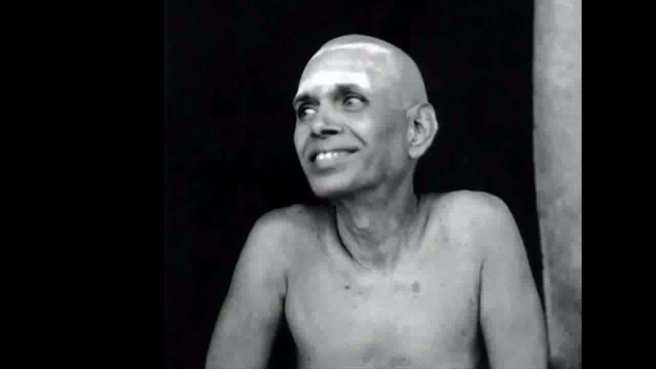
There is a notion going around some spiritual circles that ‘real gurus’ don’t advertise: they don’t have websites; they don’t go on Facebook or Twitter; and they definitely don’t have a blog. Of course, many genuinely awakened people don’t do any of these things – but the same could be said the the un-awakened too. ‘Real gurus’, apparently, sit around all day wearing nothing but a loin cloth, always speak in profound dolcit tones, and have a nice long wispy beard. Gotta have the beard.
Let me ask you, is life so limited? Is it really such a transgression to want to share something you’ve found? Listening to some people it does seem that way. I make no qualms about the fact that I do advertise, that there is a desire to reach out to others to share this wonderful discovery that I call Freedom. It’s not as if I try to hide it! And many people who have found ‘my teachings’ have benefitted from my sharing – not that I take any personal credit for any of this.
There is a natural desire to want to share what I have found. I don’t think this has to be the way it is for everyone, but it does seem to be the way it is over here in this body-mind called Tom. It doesn’t mean I’m not sharing something genuine. It doesn’t mean my realisation is only half-baked. It certainly doesn’t mean that I’m only in it for the money. If one day the desire to share this teaching stopped, and who knows, it might one day, then that would be fine too. For now, I’ll just keep on going. Why? Because that’s what’s happening.
Ramana Maharshi
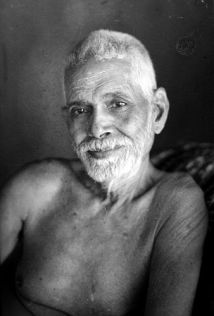
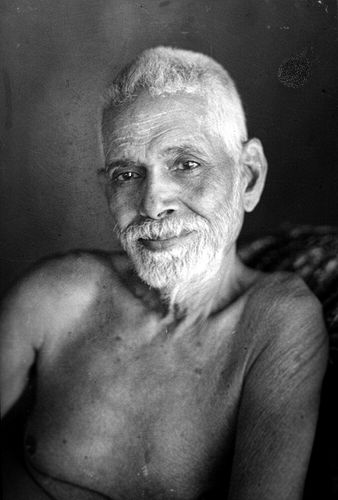
Let’s look at a good example where the myth of not advertising comes from – the example of Ramana Maharshi. Now, many of you know that I have a deep resonance with his teachings and that a sense of devotion towards him spontaneously arose in me quite unexpectedly towards the end of my seeking journey. So I mean no offense at all when I use him as an example. Ramana Maharshi primarily taught in silence and wasn’t obviously/outwardly trying to share any teaching to the masses in an evangelical kind of way. Ramana didn’t travel around the world or even around India – he never really left the mountain of Arunachala once he got there as a teenager, and when he wasn’t being silent, he sometimes talked about the power of silence. Here is an example:
‘Silence of a realised being is most powerful. He sends out waves of spiritual influence which draw many people towards him. Yet he may sit in a cave and maintain complete silence. He never needs to go out among the public. If necessary he can use others as his instrument.’
Here is another example, again from Ramana Maharshi:
‘Contact with an enlightened sage is good. They will work through silence. By speaking their power is reduced. Silence is most powerful. Speech is always less powerful than silence…’
So there we have it. One of the most revered enlightened sages of modern times has said it clear as day. We can therefore deduce that if you’re on Facebook, you’re definitely not realised…right? Well not quite. Let’s take a look.
Shankara

If we take the example of Shankara, a giant of Vedic spirituality and considered to be the founder of Advaita Vedanta, we have a very different character outwardly. Shankara fervently travelled the length and breadth of 8th century India preaching and debating those who disagreed with him, setting up schools all across the subcontinent and advertising how his teachings were better and superior to those around him.
Interestingly Ramana Maharshi clearly considered Shankara to be somebody who was fully awakened or self-realised, and yet Shankara clearly went out ‘among the public’. Ramana translated several of Shankara’s works from Sanskrit into Tamil for the benefit of his devotees who were unable to read Sanskrit and described how Shankara’s teachings could lead to liberation. In Ramana’s translation of Shankara’s vivekachudamai, Ramana says of Shankara ‘Sri Sankara, guru of the world (jagathguru), shines as the form of Lord Shiva‘. A worthy complement indeed.
And yet this was a person who certainly did not just stay quiet or stay silent, and he definitely did go out into the public, contrary to the quotes from Ramana Maharshi above. What can we make of this apparent contradiction?
Nisargadatta Maharaj and his lineage
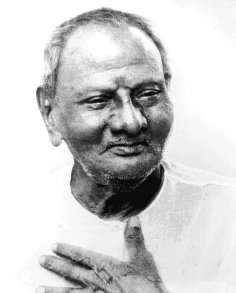
Lets take another example – that of Nisargadatta Maharaj, another revered sage from the 20th centuty. Whilst he did travel widely prior to his awakening, and a small amount afterwards too, he taught mainly from a room in a noisy street in Bombay. As far as I’m aware he didn’t really advertise much himself, but like Ramana, he permitted books about his teachings to be written and sold. So in this way, Nisargadatta would fit the model of a guru who did not solicit disciples and did not, overtly at least, go out to spread the word in public.
However, interestingly, Nisargadatta’s guru, Siddharameshwar Maharaj, travelled extensively around the state of Maharastra teaching those who came to him, sharing his teachings ‘out in the world’. He actively travelled around this part of India sharing his teahings with anyone who resonated with or who would listen to what he was saying.
In Nisargadatta’s lineage, they also teach using texts from Shankara. In verse 38 of Shankara’s Vivekachudamani it is written:
It is the very nature of the great souls to move of their own accord towards removing other’s troubles’
And in verse 37:
They themselves have crossed the dreadful ocean of the world. Without any selfish motive they help others to cross.
One of Ramana Maharshi’s favourite books is a Tamil Advaita classic called Kaivalya Navaneeta, or the Cream of Liberation. In verses 34 and 35 this is written:
I have already told you that the sages, liberated while alive, appear to be active in many ways according to their parabdha*. My good boy, hear me further, the activities of the sage are solely for the uplift of the world. He does not stand to lose or gain anything.
*Parabdha, refers to parabdha karma, which means the results of past actions that have not yet manifested. ie. the playing out of conditioning, or, if you want, destiny.
Samarth Ramdas

Sri Samarth Ramdas is one of the leading figures in Nisargadatta’s lineage from the 17th century. His written text Dasbodh became one of the main texts, perhaps the main text in Nisargadatta’s lineage. There is a story of Samarth Ramdas meeting Guru Hargobind, the sixth of the ten Sikh gurus. It goes like this:
Samarth Ramdas questions Guru Hargobind about his expensive attire, comparing him to the more austere Guru Nanak: “Guru Nanak was a Tyagi sadhu – a saint who had renounced the world. You are wearing arms and keeping an army and horses. You allow yourself to be addressed as Sacha Patshah, the True King. What sort of a sadhu are you?”
Guru Hargobind replied, “Internally a hermit, and externally a prince. Arms mean protection to the poor and destruction of the tyrant. Baba Nanak had not renounced the world but had renounced Maya, i.e. ego”
Ramdas responded by stating: “This appeals to my mind”.
Guru Hargobind here was teaching Ramdas that what is important is not the outward appearance, but the inward state of mind. Some saints are renunciates, like Guru Nanak, others are more ‘worldly’, at least in outward appearance. This is just the way it is. There is no choice in the matter.
Ramdas subsequently went on to do many things out in the world, contrary to what Ramana says in his statement above. Ramdas started to go out and gather many people around him in order to counter the recent Islamic teachings that had spread into India and convince people of the superiority of the Vedic traditions. He built temples, schools and even statues to promote his cause. In fact much of Ramdas’s magnum opus, Dasbodh, is about living in and dealing with the real world. Ramdas was also quite political, actively opposing the caste system, promoting women’s rights in both spiritual and non-spiritual arenas, recruiting female disciples and also backing a Hindu king to overthrow a Muslim one.
In start contrast to Ramana’s silent power, Ramdas said that sages who sat in one place were lesser saints than the ones who engaged in the world. Also in stark contrast to Ramana, Ramdas said that when he died it would be his books, ie. his words, that would carry the teachings forwards and these words should be cherished.
What a contrast! Here we have a silent sage promoting silence, and an active politically-inclined one promoting activity! What can we make of this?
Other examples in brief
I could go on: King Janaka is often given as an example of an enlightened sage who is wealthy and of the world. Vidyaranya, who wrote Pancadasi, a staple text in the Shankara’s Advaita Vedanta tradition, was very active politically and was political advisor to several kings of the day. More recently Swami Vivekananda and Swami Chinmayananda both set up ‘missions’ to spread the word and both travelled and advertised widely in order to do this.
Conclusion
I hope to any discerning reader, even without citing all these examples, it should be obvious that there is nothing intrinsically wrong with advertising, having a website or even, god-forbid, ‘tweeting’. These activities don’t automatically mean you are an ‘unenlightened’ waste of space. What is important is the purity of motivation and genuineness of insight-realisation. We don’t have to just believe what Ramana or Ramdas said, but we can think and see the reality of it all for ourselves.
As Guru Hargobind said, it is not about renouncing the world, but renouncing the ego. By this I mean seeing through the illusion of believing yourself to be a separate doer entity that authors its thoughts and actions (ie. insight), and the removal of the compulsive habitual tendencies (vasanas) that stem from that false belief (ie. purification).
I’ll leave you with a traditional description of an enlightened sage. It describes how a sage may be silent, but also may be active ‘like a python attacking its prey’! The point is that the unique conditioning of the purified body-mind of a ‘sage’ plays itself out in unique and often varied ways. Again we are quoting from Shankara’s Vivekachudamani, starting at verse 536 (apologies for the male chauvinist language assuming the sage is a ‘he’):
The enlightened sage (the knower of Brahman)…if people provide him with comforts and luxuries, he enjoys them and plays with them like a child. He bears no outward mark of a holy man…He may wear costly clothing or none…He may seem like a madman or like a child, or sometimes like an unclean spirit…Sometimes he appears to be a fool, sometimes a wiseman…Sometimes he is calm and silent. Sometimes he draws people to him, as a python attacks its prey. Sometimes people honor him greatly, sometimes they insult him. Sometimes they ignore him…He acts, yet is not bound by his action. He reaps the fruit of past actions, yet is unaffected by them.
❤ ❤ ❤