Sense-Pleasures are Worthless | Sri Sadhu Om | Sadhanai Saram | Sri Ramana Maharshi

The following is taken from the wonderful text Sadhanai Saram (The Essence of Spiritual Practice) written by Sri Sadhu Om, a direct devotee of Sri Ramana’s. This text not only gives us the essence of Sri Ramana Maharshi’s teaching, but also directs us to the true Vedanta teachings. The notes are written by Sri Sadhu Om himself. You can download the full text as a PDF using the above link.

What is Worthy to be Desired?

  1. The great wealth that exists in enlightened sages (Jnanis) is only the subtle secret of how to be still, abiding in perfect peace as the mere thoughtfree existence-consciousness “I am.” Therefore, how wretched it will be if one greedily desires to attain from them mere worldly pleasures, such as gold, wealth or fame, which will only make one suffer in delusion.

Sense-Pleasures are Worthless

  1. Instead of eating the fruit that is in your hand, why do you desire to eat the unreal fruit which is seen in a mirror and which is merely a reflection of the fruit in your hand? Is the reflected fruit an object which can be eaten and give real enjoyment? Similarly, instead of drowning deep within the heart by keenly attending to Self and thereby enjoying the bliss of Self which is ever shining there, why do you desire to enjoy the pleasures experienced through the five senses of this perishable body, which are merely an unreal reflection of the true happiness within you?

Endeavor and Result

  1. For those who seek (and make effort to attain) Self, not only Self but also all other benefits will automatically be attained in full. But if one desires and makes effort to attain worldly objects (either through worldly endeavors or through spiritual practices), know that they will be attained only partially and to the extent of one’s endeavor, and that Self will not be attained at all.

The Goal

  1. If we deeply ponder over the natural yearning of all living beings to remove their miseries (through some means or other), it will be decidedly known that the sole aim for which the whole world is striving is only to remain always in perfectly imperishable bliss.
  2. If the people of the world still do not cease making efforts, the conclusion we must come to is, that they have not yet attained perfect happiness, is it not? Whoever among the people has obtained complete contentment and has therefore ceased making any kind of effort is truly one who has attained all that is to be attained.

How Vedanta teachings work | Swami Satchitanandendra Saraswati (SSS) on the method of Shankara’s Advaita Vedanta to attain liberation (Moksha)

At the end of his book ‘The Salient Features of Sankara’s Vedanta’ (see link to download PDF below), Swami Satchitanandendra Saraswati (SSS) lists the key features of Shankara’s Advaita Vedanta.

Among them is the notion that liberation can result from either hearing the teachings (Sravana), reflecting upon the teachings (Manana) or meditating upon the teachings (Nididhyasana), depending on the maturity and fitness of the aspirant (we can see Sri Ramana Maharshi give the same teachings here). Not realising this, SSS notes that various commentators either say that sravana alone is the only way or that nididhyasana alone is the only way.

SSS then goes on to state that the way that these methods lead to liberation is by turning the mind inwards towards the Subject-Self (Atman).

Let us see what SSS writes on page 82:

6. Sravana (study of sacred revelation), Manana (reflective thinking) and Nididhyasana (concentrated contemplation), are all means for realizing Atman. Highly developed souls, however, who can immediately grasp the true meaning of the Vedic teaching, do not stand in need of any additional effort.

Not taking this principle into account is responsible for the divergence of opinion among commentators of Sankara Bhashya about the relation of Sravana and Nididhyasana. Of these, some assert that Sravana is the principal means and the other two are only ancillary to it; while others insist that nididhyasana is the one means to direct realization and without it mere Sravana would be of no avail.

7. Sravana and the other means are enjoined only so far as they turn the seeker inwards and direct him to stay his mind on Atman, but the resultant knowledge is no object of any injunction.

Tom: We can see that the purpose of Sravana, Manana and Nididhyasana are to turn the mind inwards, towards the Subject-Self (Atman), and that the resultant ‘Knowledge’ is not a result of any action or practice, but a synonym for the One Eternal Infinite Blissful Self that is ever-attained, ie. Liberation.

Please see here for Sri Ramana’s teachings on this same topic.

Also see:

What is Vedantic Meditation? How Swami Satchitanandendra Saraswati (SSS) defines Nididhyasana

Shankara teaches two methods to ‘attain liberation’ | Swami Satchidanandendra Saraswati (SSS)

Ramana Maharshi: how to abide as the Self

Sravana alone can result in Self-Realisation! Sri Ramana Maharshi on Sravana, Manana and Nididhyasana

The Three states (Waking, Dream and Deep Sleep) and Turiya fully explained | Ajata | Self-realisation | Advaita Vedanta

The following is taken from the wonderful text Sadhanai Saram (The Essence of Spiritual Practice) written by Sri Sadhu Om, a direct devotee of Sri Ramana’s. This text not only gives us the essence of Sri Ramana Maharshi’s teaching, but also directs us to the true Vedanta teachings. The notes are written by Sri Sadhu Om himself. The sub-headings have been added by myself to aid readability. You can download the full text as a PDF using the above link.

Introduction

  1. If we did not have the good fortune of having attained a human body, which enables us to experience daily the three states of waking, dream and sleep, how could we have the fitness to do Selfinquiry? Therefore, this human birth is indeed superior to all other births.
  2. Except in this human body, all these three states are not experienced in one lifetime by any soul, whether deva (divine), animal or plant. Therefore, a very great boon indeed is the boon God has bestowed upon us in the form of this human birth, which is such a good opportunity enabling us to inquire and know the Self.

Note: Celestial beings (devas) experience only the waking state; animals experience only sleep and a dream-like waking state; plants experience only sleep**; and insentient objects like stones are always in a state like swoon. Only in the human birth, does one experience all the three states of waking, dream and sleep. Hence, even devas must take birth as human beings if they wish to attain Selfknowledge, the state of liberation.

**Note: Compare Talks, no. 617, p. 580.

  1. The three states of waking, dream and dreamless deep sleep are experienced daily by all human beings, are they not? If we keenly scrutinize the nature of these three states, knowledge of the state of liberation, which is the reality of these three states, will be attained by us as a direct experience.

The I AM

  1. In the waking state we exist as “I am”; but in this state, beside us, so many second and third person objects of various kinds are also known by the mind. How have all these come here?
  2. In dream also we exist as “I am”, having become the one who sees everything there; but in that state also so many second and third person objects of various kinds are again known by the mind. How did all those come there?
  3. In sleep also we exist as “I am”; however, in that state we do not see anything appearing as other than us. Therefore, our state of existing as “I am” alone shines always without ever slackening or being obstructed, whereas our state of knowing objects other than us undergoes change. Hence, our state of existing as “I am” is alone the one unchanging state.
  4. The state of our existing as “I am”, which shines in all the three states continuously and without ever coming to an end, is our exalted state of real knowledge; it is the state of purna (the Whole). Objects other than “I” do not exist in all the three states. Hence our own nature, the Self-existence “I am,” alone is the reality which ever exists.

Objects

  1. Since objects other than “I,” such as the body and world, do not exist unceasingly in all the three states, but rise and appear to exist only in between in the waking and dream states, they cannot be the reality, which exists always and without being obstructed. This conclusion arrived at by scrutinizing our experience in these three states, is the foundation for the practice of Self-inquiry.
  2. These objects other than “I,” which exist at one time and do not exist at another time, are truly non-existent even at the time when they appear to exist. When scrutinized, waking and dream are both found to be only one in nature, because the objects, which appear to exist in each of these states, unfailingly cease to exist in any other state.

Duality

  1. That state, in which any object seen is not experienced as other than the one who sees, is alone the state of reality. If the seer, who is an unreal ego, rises, then only will all the unreal objects other than “I” rise, and seem to exist.

The waking dream

  1. The dream-world – and the one who, living there identifying a dream-body as “I,” and sees that dream-world – both together constitute the dream. The waking state is also like that; that is, not only this seemingly vast world that is perceived in front of us, as if existing as other than us, and also we, the jiva who sees this waking world, both together constitute the appearance of this dream, which is called the waking state.
  2. In practice, waking and dream are only one and the same. Just as in waking the mind thinks, “I am this body,” so in dream also the mind projects a body by its creative power of imagination and functions there, feeling “I am this body.”

Ending the dream

  1. Until the root-tendency (mula-vasana) to identify a body as “I” ceases to exist, the appearances of the waking and dream states that arise due to delusion (maya) will not come to an end. If you, with a one-pointed mind keenly and incessantly attend to the consciousness of your existence, which shines as pure “I am,” the root-tendency “I am the body,” and all its products and other tendencies, will cease to exist.

Ignorance and deep sleep

  1. To remain inactive forgetting the feeling “I am the body,” is sleep. In the dense ignorance of this sleep, arises a creative imagination of the mind (mana-kalpana), and this alone is the cause for the appearance of dream. Therefore, it is the mind alone that projects a dream.
  2. Similarly, in the long sleep of ignorance (ajnana), which has engulfed us due to our forgetfulness of our true state of pure Self-consciousness, an imagination in mind (mana-kalpana) rises identifying a contemptible fleshy body as “I”, and this alone is the cause for the rising and appearance of this despicable waking state, which we are now experiencing.

Samsara (the cycle of birth and death)

  1. Just as sleep alone is the cause for the appearance of dream, so the sleep of forgetfulness of our true Self-Knowledge is alone the cause for the appearance of this waking state. In this long sleep of Self-forgetfulness, many dreams in the form of countless births come and go.
  2. Know that just like a person who without coming to the waking state, merges in deep sleep after the dream he was seeing has come to an end, if the dream of the present birth that this person has taken is brought to an end by death, before he attains the true waking state of Self-knowledge, he will merge again into the underlying ancient sleep of Self-forgetfulness.
  3. Just like a person who was seeing a dream and who then leaves that dream and falls into deep sleep without coming to the waking state, if the waking-body dies before we attain the state of Selfknowledge, we will fall into a state like deep sleep. Just as a dream appears as soon as the mind of a person immersed in sleep rises and begins to wander, so after the death of this waking-body, as soon as the mind rises and begins to wander on account of its former tendencies, a waking state will again arise in which a body will seemingly exist as if “I”.
  4. Taking birth again, having come out of the delusion-enfolded state of death, and living a life of whirling about in this waking state, and finally dying without attaining Self-knowledge, is just like a person rising as “I” from deep sleep, seeing a dream again, and finally once again merging in sleep. You will not take birth again only if you awaken into the true state of Self-knowledge. Awaken thus.

Awakening: Waking up from the dream & Turiya

  1. If a person who has fallen asleep and is seeing a dream suddenly wakes up, by his awakening he will attain a state in which sleep and dream have both been dispelled. Similarly, if a person awakens from the present so-called waking state by attaining the exalted state of Self-knowledge, the dream of birth and death and the underlying sleep of Self-forgetfulness will both be dispelled, and he will thereafter never again undergo either birth or death. The state of real awakening (turiya), which he thus attains, and which transcends the three ordinary states of waking, dream and sleep, is the state of liberation.

The method of Sadhana (spiritual practice) – Self-enquiry

  1. If the power of attention, which sees the second and third person objects existing in dream, turns to attend to itself, both the first person (who sees the dream) and the dream will disappear; the sleep that is the cause for the rising of that first person will be dispersed, and the worthy state of true awaking will be experienced.
  2. Similarly, if the power of attention, which knows the second person objects existing in the waking state, turns to attend to itself (the “I” who sees this waking state), the waking state will disappear; the long sleep of Self-forgetfulness which is the cause for the rising of the individual sense of “I” will be dispersed and the true waking state of Self-knowledge will be attained. Therefore, attend only to yourself, the first person consciousness “I.”

Karma and Self-Realisation

  1. Even before the experience of the current destiny (prarabdha karma) which caused the appearance of a dream has come to an end, if the mind is struck by intense fear, joy or suffering, its power of attention will be driven Selfwards and return to the heart, whereupon waking will result.

Note: Prarabdha is that part of one’s destiny (or karma) that has to be worked out in this life. Sanchita is one’s karma accumulated in former lives that has not yet taken effect.

  1. Similarly, even before all the accumulated sanchita karmas have been exhausted by being experienced in the form of prarabdha, if in this present life, which was started by prarabdha, the mind either gains firm dispassion (vairagya), being unable to bear the severe sufferings of life, or experiences intense fear of death, it will turn Selfwards and merge in the heart; whereupon the true awakening of Selfknowledge will result.

Fear, suffering and self-realisation

  1. When such intense fear or suffering are experienced, if the mind with mature discrimination (viveka) at once earnestly scrutinizes, “To whom does this fear or suffering arise?” then the extroverted power of attention, which was till then being dragged out towards objects other than itself, will turn inwards to face itself, whereupon the truly awakened life of Self-abidance will immediately be attained.

Self-knowledge: ending the dream

  1. Just as all that happens in dream is experienced as real so long as one is seeing that dream, so all that is now happening in this waking state is experienced as real. If the dream comes to an end, all that was seen there will be known to be unreal. Similarly, for those who have awakened from this so-called waking state by attaining Self-knowledge, all the happenings in this state are clearly known to be unreal.
  2. As soon as the inwardly awakened state of Self-abidance is attained, all the adjuncts in the form of the wrong identification that the actions of the body are one’s own actions will become devoid of reality, being found to be mere superimpositions upon one’s nameless and formless nature, just like the blue color superimposed upon the colorless sky; and the truth, that one is only the adjunct-free Self, will clearly shine forth.

Ajata

  1. Only in this real waking state of Self-abidance will true knowledge blossom in the form of the ajata experience, “No mundane dual activity such as birth and death has ever touched me; I am Self, the existence-consciousness which is ever devoid of the body and the senses.”
  2. The pure consciousness “I,” which exists in sleep devoid of all adjuncts, is the Supreme Reality (Brahman). If we do not slip down from that state of pure consciousness due to attachment to the body (dehabhimana), that itself is the Supreme Abode (parandhama). If we remain, without leaving Self, that itself is liberation.

Do you exist in deep sleep?

  1. Though we think sleep to be a state of darkness, because no other objects are known there, know that it is not possible for anyone to deny his own existence in sleep. When you are able to affirm your experience in sleep, “It was darkness,” “There were no thoughts” and “It was a happy state,” is it not clear that you existed in sleep? To be able to affirm thus, who was that “you” who existed in sleep? Tell me.
  2. Your ability to affirm all the three experiences mentioned above shows not only that you existed in sleep, but also that you knew these experiences there, does it not? This existence-knowledge, which existed and was known in sleep, is indeed the peerless existence-consciousness (sat-chit), your own state, and the real nature of self.

Deep sleep and bliss (ananda)

  1. In sleep, in which you existed solitarily as the mere existence-consciousness (sat-chit), you were the experiencer of sublime happiness devoid of even a single petty misery, even though you were separated from all the possessions and all the objects which you seek in the waking state for happiness, were you not? That happiness which you experienced in sleep is indeed bliss (ananda), your true nature.

Outro

  1. To become a hero who abides as Self, the infinite reality (paripurna Brahman) whose nature is existence-consciousness-bliss (sat-chit-ananda), devoid of the experience of any body or any world, is the fruit to be gained by proper scrutiny of the three states of waking, dream, and sleep.
  2. The supreme Guru Sri Ramana has given the above clues so that, having thoroughly scrutinized the three states, we may finally abide blissfully forever as Self, our own true nature which transcends the three states.

Grace Alone is of Prime Importance | Sadhanai Saram | Sri Sadhu Om | Sri Ramana Maharshi

The following text is taken from the wonderful text Sadhanai Saram (The Essence of Spiritual Practice) written by Sri Sadhu Om. This text not only gives us the essence of Sri Ramana Maharshi’s teaching, but also directs us to the true Vedanta teachings. The notes are written by Sri Sadhu Om himself.

  1. The ego is only a trivial entity; besides, it is unreal (asat) and powerless (asakta). It is a mere adjunct which rises and subsides. Therefore, what foolishness it is to think, “The spiritual practice (sadhana) done by the strength of this ego will by itself bestow the goal of life; the supreme power of divine Grace is not of any consequence (and is not necessary in order for one to attain the goal)”!

Note: Not believing Grace, but thinking one’s own individual effort alone to be of very great consequence, is mere foolishness.

  1. Is not the unreal help which one unreal man renders to another unreal man, experienced by everyone in this world as real? Therefore, O Sadguru, the embodiment of Grace, the sole reality, is it impossible for You to save me by dispelling the unreal ego? What doubt or wonder is there in Your being able to help me thus

Note: A man or jiva is merely an unreal appearance, and hence whatever help he may seem to render to another man is also unreal. But when such unreal help rendered by an unreal man is experienced by everyone as real, why should we doubt the ability of the Sadguru, who alone is truly real, to render us the real help of destroying the unreal ego? Such help from the Sadguru will certainly be experienced by us as more real than the help that we feel is rendered to us by others.

  1. Unless our Lord, Sri Ramana, who is the form of God, Himself bestows His divine Grace, who can by his own effort attain that heroic state of firmly abiding as Self, having clearly known one consciousness other than the body to be the real “I”?

The importance of spiritual practice to attain liberation | Sri Ramana Maharshi | Sri Shankara

The following is from a text written by Shankara called Vivekachudamani, as translated by Sri Ramana Maharshi. We will see the following points being made:

  1. Merely stating ‘I am Brahman’ does not in itself lead to liberation. Similarly we can infer that by mere affirmation of other similar spiritual slogans such as saying ‘I am free’ or ‘I am already the Self’ or ‘there is no ego/self’ or ‘all is already one’, etc, mere affirmation of these does not lead to liberation.
  2. In order to attain liberation, ignorance must be removed and the Self must directly be experienced.
  3. Similarly, merely by hearing the truth ‘I am Brahman’ , liberation is not (usually) attained
  4. One must first hear the truth from someone who has experienced the truth first-hand (for only they will be able to tell you the way to truth)
  5. Then one must meditate upon the truth heard and experience the truth directly though constant meditation.
  6. Unless this practice is carried out, maya (aka ignorance) will not be removed and liberation will not be attained.
  7. Every effort must be made to root out ignorance for liberation to result

‘Just as a person’s sickness is not removed without taking medicine, so too his state of bondage is not removed by scriptural texts such as “I am Brahman” without his own direct experience of the Self. One does not become a king by merely saying, “I am a king”, without destroying one’s enemies and obtaining the reality of power.

Similarly, one does not obtain liberation as Brahman Itself by merely repeating the scriptural text “I am Brahman”, without destroying the duality caused by ignorance and directly experiencing the Self.

‘A treasure trove hidden under the ground is not obtained by merely hearing about it, but only by being told by a friend who knows it, and then digging and removing the slab that hides it and taking it out from below the ground.

Similarly, one must hear about one’s true state from a Guru who knows Brahman, and then meditate upon It and experience It directly through constant meditation.

‘Without this, the true form of one’s own Self, that is hidden by maya [“that which is not”], cannot be realised through mere argumentation. Therefore, those who are wise themselves make every effort to remove the bondage of individual existence and obtain liberation, just as they would to get rid of some disease.’

Also see: Sri Ramana Maharshi: the necessity of Meditation

Guru Stuti by Shankara translated into Tamil by Sri Ramana Maharshi | Advaita Vedanta Summarised

Have you ever wished that the entire Advaita Vedanta teachings were summarised in a very short traditional text, say eight verses long? Well here are eight verses of a work called ‘Guru Stuti’ or ‘Praise to the Guru’ written by Adi Shankara about 1400 years ago, and translated into Tamil by Sri Ramana Maharshi. If you read it carefully you will find the essence of the entire teaching is briefly given.

Here the Tamil verses and English translation of these are presented. For the original Tamil script see here. My commentary is in italiscised red – I have tried to keep my commentary brief and I hope it does not intrude on the beauty and terse nature of the text, enjoy!


Guru Stuti

Written by Sri Shankara, translated into Tamil By Sri Ramana Maharshi

Introduction written by Sri Ramana Maharshi

When Sankaracharya was going about the country debating with the exponents of the various schools of thought and overcoming them he once came to the town of Mahishmati in the north where Mandana Mishra the exponent of Vedic rituals lived. He overcame him in debate but his wife refused to concede victory until she was also defeated. So, Sankarachaiya argued with her and defeated her in all subjects except erotics. He then asked for a respite of one month and after shedding his body in a cave under the custody of his disciples, entered into the dead body of King Amaruka and sported among the hundred queens in the guise of their husband. When the disciples found that the period specified by their Guru had already expired they grew anxious. So some of them went to him in the disguise of minstrels and sang the following hymn to remind him.


1. Nēti-nēti yādi vākkā niḍē-dittu mūrttā p;ūrttam
Ēdumē taḷḷar killā edaissuva svarūpa māga
Vōdaruñ sādu vānōr uḷḷattil koḷḷu vārgaḷ
Ādimei aṛivā nanda avvastu vanḍṛō nīdān

1. That is the Truth which the wise realize as the Self, the residuum left over on withdrawing from external objects, with or without form (ether, air, fire, water and earth), by a careful application of the scriptural injunction ‘not this, not this’ — Thou art That!

Tom: The truth is what remains when one has withdrawn and discarded external objects. The truth, which is your very own Self, your own True Nature, is realised by those who withdraw their attention from all external objects so only Truth, or Pure Consciousness remains.

How to withdraw one’s attention? Through applying the teaching of ‘neti-neti’. What remains is the Self, devoid of objects and duality and suffering – You are That!

As our experiences consist of objective phenomena, we should not rely on our experiences, which are maya (illusion), to discover the truth, but we should turn within and discover that which is in ourself. This is further explained in the following verses, if you read carefully and discerningly.

‘With or without form’ I think refers to the need to withdraw attention from both gross objects (with form, eg. tables, chairs, experiences) and subtle objects (without form, eg. thoughts, feelings, imaginings, subtl realms, etc), or alternatively it could mean to withdraw from all objects perceived (with form) or imaginary (without form).


2. Uttiyāṅ kutti-nālē umiye num aindu kōsam
Buddhi-yāṛ pirittup pinnarp porundi-ḍum arisi pōlum
Ettinai sattukkaḷ kaṇḍu idayattil anuba vippar
Astamil nitta siddha avvastu vanḍṛō nīdān

2. That is the Truth which, after generating the fundamentals (ether, air, fire, water and earth), and entering the world, lies hidden beneath the five sheaths, and which has been threshed out by the wise with the pestle of discernment, just as the grain is recovered by threshing and winnowing the chaff — Thou art That!

Tom: The Truth, or the Self or Brahman, (apparently through Maya or through ignorance) generates or creates the five elements (the ‘fundamentals’), and pervades its own creation whilst simultaneously underlying the creation as the substratum. The next verse will explain that all this apparent creation of elements/objects is actually unreal.

The wise, with discrimination (viveka) discover the Self, the underlying substratum, by separating it from and discarding the five sheaths that constitute the body-mind-ignorance ‘covering’. Note the carefully chosen metaphor of threshing and winnowing which refers to the processes by which the grain is obtained by thoroughly and fastidiously removing all the outer coverings of the husk and chaff, and discarding them in order to reveal the treasure that lies within.

In the preceding verse it is said one’s attention is turned away from objects by ‘neti-neti’, whereas here it is said that it is with discernment or discrimination. We should therefore see that ‘neti-neti’, discrimination and discarding the coverings of gross and subtle objects go together.


3. Poṛi-gaḷām parigaḷ tammaip pulan-gaḷil viḷaṅgun dōsha
Aṛivenuṅ kasai yaḍittē ahamugak kayiṭṭṛāl īrttav
Aṛivaṛi aṛijñar ettil aṇaitton-ḍṛāyp piṇit tiruppar
Aṛiporuṭ katīta māna avvastu vanḍṛō nīdān

3. Just as wild horses are broken-in by whipping and stabling them, so also the unruly senses, straying among objects, are lashed by the whip of discrimination, showing that objects are unreal, and are tethered by the rope of pure intellect to the Self by the wise. Such is the Truth — Thou art That!

Tom: All objects, gross and subtle, are in Truth illusory, unreal, non-existent! Do not attend or pay attention to them!

The unruly senses wander and engage with sense objects, meaning the one intent on liberation should not allow their senses to stray from the path in this way.

How is this to be done? The intellect should hear this teaching and, using discrimination (viveka), cease to attend these unreal temporary objects, none of which can lead to Eternal Bliss. The pure intellect, meaning the intellect devoid of desire for sense object, transcends itself and unceasingly realises itself as Self by tethering the senses to the Self, ie placing ones pure loving attention onto your innermost Core, the Heart, the I AM, the Self – you are That!


4. Pūkkaḷi ninḍṛu vēṛāyp porun-diḍuñ sūtti rampōḷ
Jākki-ra mādi yāna sar-vattum vēṛa dāna
Sāk„hiyā nōkki yādais sattukkaḷ agatta ṇaivar
Ākkamu nīkka millā avvastu vanḍṛō nīdān

4. The Truth has been ascertained by the wise to be the substratum which is different from the waking, dream and deep sleep states, and from its own expanded modes, which indeed are held together by it like the flowers strung together on a garland — Thou art That!

Tom: Here a radical truth is proclaimed: in Truth you are not related to the three states of waking, dream or deep sleep. You have nothing to do with them or their contents. Truth or Self is different from the entire three states – they are false, untrue, illusory – they do not actually exist.

The three states only seem to exist due to ignorance (of Truth-Self). From the point of view of ignorance or duality, the three states are supported or held together by the Self, like the thread running though a garland of flowers.

You are the Substratum-Subject-Self that is devoid of objects and thoughts, that is without the three states of waking, dreaming and deep dreamless sleep! You are different to these superimpositions which only seem to exist due to ignorance! You are That!


5. Kaṭaka maku-ḍādi yāvuṅ kana-kamē yāgumā pōḷ
Jaḍa chittā mulagam yavuñ chaṭṭṛumē binna minḍṛi
Suḍarumav vaḍivā yenḍṛu choṭṭṛi-ḍum vēdam yadai
Aḍinaḍu muḍi villāda avvastu vanḍṛō nīdān

5. That is the Truth which the scriptures show to be the primal cause of all, elucidating the point clearly by such texts as ‘Purusha is all this’ and ‘like gold in ornaments of gold’ — Thou art That!

Tom: Purusha here means Self. You are That Self. This verse indicates that the Self is the primal cause of all (apparent) manifestation (ie. objects), and the quoted verses are to support this idea only.


6. Inanilit tanuvil yānā ilaṅgu-van ēkanȾ yenḍṛu
Anisa-mum vēda vādi āyinōr muyaṛchi yōḍum
Inimai-yāi eḍuttu raippar ettat-tuvattai nanḍṛāi
Anartta-mil edārtta māna avvastu vanḍṛō nīdān

6. The Truth has been forcefully proclaimed by the scriptures in such texts as ‘He who is in the sun, is in man.’ ‘He who shines in the sun, shines in the right eye’ — Thou art That!

Tom: The Self, which is the nature of Self Knowledge, is all pervading and is the essence of all. Discover this Essence – you are That Essence only. That which is the essence of the world is in fact within you. Therefore, the idea is, discover it within and not through objective phenomena.

That which is in the seemingly faraway and magnificent sun is actually also found within our ever-near and lowly self. This is the meaning here. You don’t need to travel to the faraway magnificent sun, or other such faraway magnificent places. Just go within yourself to discover the Highest of all Truths.


7. Arumaṛai vākki nālē ahatti-niṛ shraddai yōḍum
Arun-tavam yāgan dānam ādinal aṛaṅga ḷālē
Arumaṛai yavargaḷ ettai aṛin-diḍa avāvu ginḍṛār
Arumaṛaip poruḷāi ninḍra avvastu vanḍṛō nīdān

7. What pure brahmins seek so eagerly by the recitation of the Vedas, by religious gifts, by earnest application of their hard-earned knowledge and by renunciation, is the Truth — Thou art That!

Tom: All efforts of all spiritual practitioners are only to discover the Truth of Self that lies ‘within’. You are That Truth already! All you have to do is realise your Self! Nothing more is required!


8. Sānti muda lāna vuṭṭṛu santa-tan tannāṛ ṭannil
Āynde-dai aṛijñar kaṇḍav aṛivinba meyyā enḍṛu
Mīndela muḍittoḷir-var migu bavak kēda nīttē
Āzhndaṛi tatva māna avvastu vanḍṛō nīdān

8. That is the Truth which the valiant have gained by seeking, with controlled mind, with abstinence, penance, etc, and by diving into the Self. Realizing it, they are considered to be heroes with their highest purpose accomplished. That is the transcendental Sat-Chit-Ananda after gaining which there is nothing more to worry about since perfect peace reigns — Thou art That!

Tom: the valiant, meaning those who bravely turn inwards, away from gross and subtle objects as explained in previous verses, and undertake Self-Enquiry, those whose minds have become peaceful and quiet, those who Dive (or Sink) Inwards, ‘into the Self’- they realise the Self, which is the Truth. They are the True Heroes, those who have realised the Self, this is the True Accomplishment, as compared to what society considers to be worldly heroic deeds (in Maya).

Once this inward path has been undertaken, and the Self is Realised, that is the end of the path – there is no more to be done! No need to integrate the teachings with the world or daily life, no need to further purify the mind, no need for anything else! There is only That.

Integration of the teachings or further purification and the like simply mean genuine or full realisation has not occurred and the ego-entity still persists. This is simply more ignorance. Further practices ‘post-liberation’ are only for the ego-mind entity.

When Self has truly been realised, what has needed to be done has been done! That is realisation. That is liberation. That is the end of suffering. Nothing more needs to be done! That is perfect eternal Peace. You are That!


Sri Ramana Maharshi’s Outro

On hearing these verses the Acharya bade his disciples go away and promptly came out of the body of the King and re-entered his own. He then went to the wife of Mandana Misra and, after defeating her, made her and her husband his followers. Thereafter he went on his way enlightening the whole world.


Om Tat Sat
Vivekachudamani by Sri Shankara: Resources and PDF downloads | Translation by Sri Ramana Maharshi | Advaita Vedanta | Crest Jewel of Discrimination

Here are some resources and links relating to this superb traditional Advaita Vedanta text that gives us a step-by-step method for Self-Realisation and Liberation.

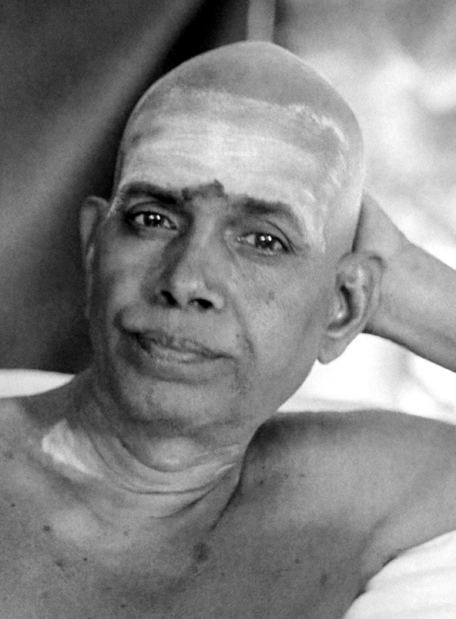
Attributed to Sri Shankara, written approximately 1400 years ago, Vivekachudamani (‘The Crest Jewel of Discrimination’ or the ‘The Highest Treasure of Wisdom’) was also recommended by Sri Ramana Maharshi who said this text explains ‘…in detail the points that have to be grasped by those who seek liberation, and thereby directing them to the true and direct path‘:

Shankara’s Vivekachudamani as translated by Sri Ramana Maharshi: https://tomdas.com/2019/03/04/vivekachudamani-as-translated-by-sri-ramana-maharshi/

Sri Ramana’s introduction to Vivekachudamani where he summarises the entire path to liberation: https://tomdas.com/2019/02/25/ramana-maharshis-introduction-to-shankaras-crest-jewel-of-discrimination-vivekachudamani-and-summary-of-its-teachings/

The 10 most important verses of Vivekachudamani as selected by Sri Ramana Maharshi: https://tomdas.com/2020/05/14/the-ten-most-important-verses-of-shankaras-vivekachudamani-according-to-sri-ramana-maharshi/

Is Vivekachudamani sexist? https://youtu.be/VPZw6cgczLw

A more traditional verse by verse translation of Vivekachudamani by Swami Madhavananda: https://tomdas.com/2018/10/01/vivekachudamani-crest-jewel-of-discrimination-by-shankara/

A more accurate verse by verse translation of Vivekachudamani with word for word transliteration and translation by Achyarya Pranipata Chaitanya:

Q. Is it your view that Nirvikalpa Samadhi leads to Liberation? | Advaita Vedanta | The 108 Upanishads PDF Download

See below for the link to download the 108 Upanishads as a PDF file

Tom: note this is not my view, but the view of Vedanta, ie. the Upanishads, also known as Shruti. The Upanishads and Jnanis state this again and again in various ways. The highest authority in the Vedanta teachings are the Upanishads. In fact, strictly speaking, ‘Vedanta’ simply refers to the teachings found in the Upanishads. If we actually read the Upanishads for ourselves – there are 108* classical Upanishads – we will see this same teaching being given again and again.

eg.

The knot of ignorance in the heart is broken completely only when one sees his Self as secondless through Nirvikalpa Samadhi

~ Adhyatma Upanishad 1.17

Hasn’t Guru Bhagavan Sri Ramana Maharshi told us that all paths must end in Silence, also known as Nirvikalpa Samadhi, also known as Jnana, which is nothing other than the Pure Objectless Self!

However, to answer your question directly, it is also my own view. My views on this remain unchanged – what made you think otherwise?**

Namaste and Pranams 🙏

*There are classically 108 Upanishads, all of which are considered to be authoritative in Vedanta teachings. However 10-12 of the Upanishads have more recently been designated ‘Major Upanishads’ as these are the ones that Sri Shankara wrote commentaries upon, and the remaining 96-98 Upanishads are often referred to as ‘Minor Upanishads’. However strictly speaking the so-called Minor Upanishads are no less important than the so-called major ones, and traditionally many think the Minor Upanishads are for the more advanced students of Vedanta. Often the ‘Minor’ Upanishads teach a very clear and direct approach to Vedanta, so perhaps Shankara just commented on those Upanishads that were less easy to understand? Either way, read them for yourself if you get the chance. You can find them here:

**This reply was given to someone who thought my views on this matter had changed