anxiety

Heart-Opening, Non-Duality & Freedom

(Continued from a previous post: Responsibility: if there is no doer and no-self, and if there no nobody here doing anything, then what about responsibility?)
Question: You mentioned earlier that the heart opens? That sounds rather fluffy and vague to me – what does it mean?
Tom: Yes, I know, it’s a bit of a vague term, but I like it! What I call heart opening is not the same as Freedom – it’s important to realise that – but there is a relationship between the two. The heart can open to a large extent without Freedom being realised, and conversely Freedom can be realised and the heart not be open. However the heart can only really fully open when Freedom has been realised, and by that I mean when the notion and sense of doership has been seen through and seen to be false.
So what is heart opening? Well it happens differently with different people, depending on their conditioning, but essentially it is an openness of the emotional centre and a tendency towards feeling open, loving, peaceful and joyous.
Question: What do you mean by ‘openness of the emotional centre’?
Tom: I mean a willingness to feel one’s feelings, really feel what you’re feeling. When this happens, when we allow feelings to come and go, over time our emotions start to balance out and a feeling of wellbeing and love can start to naturally emerge.
We start to feel happier, more grateful, more loving, kinder, and more considerate. A sense of wellbeing becomes our norm. These are the characteristics of an open heart, a loving heart, and as I said, it can occur before of after enlightenment (realising Freedom), or not at all.
Q: Does that mean that you become unconditionally loving all the time?
Good question. Of course, like all subtle objects (such as emotions, feelings and mental states), emotional love and compassion also come and go. This is quite natural. You are not necessarily loving 100% of the time, far from it! You remain thoroughly human: you can get irritated by relatively superficial things, you may feel grumpy if you haven’t had enough sleep, but the tendency is more towards those loving emotions.
You see in Freedom it doesn’t matter: you are not trying to be loving or kind, you are not trying to open the heart. It’s something that can’t be forced, and the heart is naturally more open at some times compared to at other times. That is fine, and that’s just how it goes. Sometimes it’s good for the heart to be closed. But, when it’s safe to do so, we can allow ourselves to feel whatever we are feeling, not pushing ourselves, not forcing our heart open or becoming overly sentimental, but by just being real with who we are at this moment in time.
This willingness to feel is a form of fearlessness. We are unafraid to feel, we are unafraid to feel unhappy, we are unafraid to feel even fear. When we are essentially unafraid of our feelings, we start to become extraordinarily sensitive. Lots of emotions and feelings can flood in, feelings we may have held back and suppressed for many years. Energetically and emotionally this can be a time of great ups and downs in our ‘spiritual-emotional’ journey.
Our emotional apparatus, over time, becomes more sensitive and we learn who we are on an emotional level. Over time our emotions start to balance our and come into alignment with the body and the world. At this point we can learn to better trust our emotions as a source of intelligence and allow them to guide us in our actions and relationships.
Q: Did you say that heart opening can come before or after Enlightenment? (To be continued in a future post)
Q: I’ve noticed that I often feel less than I did before, for example I care less about some things now (To be continued in a future post)
Please help me to deal with the agony I feel in connection with the suffering of animals in the world
Dear Tom
Could you please help me to deal with the agony I feel in connection with the suffering of animals in the world? I am so utterly moved by every sign of an animal’s suffering, that I don’t feel even glimpses of peace anymore. The latest news was how in some Asian country they use dogs’ fur, and to get it without having the cavaderic rigidity ruining the fur’s quality, the furs are pulled across the ears of the dog with alive body and unimaginable torments. And this is, of course, just one example of many. But I suffer even when I witness how an animal in my neighborhood is not treated with love and kindness.
Could you please share with me how you explain the suffering in the world and what you would recommend to someone like me?
Thank you so much for reading this!
Dear Questioner
There are indeed many terrible things happening in this world, and animal suffering, especially at the hands of humans, is certainly one of them.
So firstly, who says you shouldn’t feel upset when you see animals suffer? Who says you shouldn’t feel pain, sorrow and anger? What’s wrong with feeling so-called negative emotions? Perhaps these thoughts are natural and appropriate, perhaps it is natural for the human organism to feel angry or upset when it perceives injustice and cruelty, perhaps emotions are there to guide us and inform the quality and energy of our response to situations life throws at us – perhaps – who am I or anyone else to tell you otherwise? And more importantly, how will you find out for yourself what is true?
If you accept my or someone else’s answer, that’s second hand knowledge, that’s a belief, a theory to be stored away in your mind along with other theories it has collected. And beliefs and theories can always be doubted. If you are like me, there’s always a corner of your mind that can (and will) doubt the belief. What’s important is that you find out for yourself. So how will you do this?
I recommend you watch yourself, look at yourself, your reactions, how you respond. Write down and/or talk about how it makes you feel when you see animals suffer. Writing things down can be particularly powerful. Notice the thoughts that appear. Notice the words that appear in your head, the narrative. Are there angry thoughts? How do you feel about those who perpetrate these horrific acts? Be honest now, be honest with yourself. Do you judge them? Do you hate them? Do you understand them? Do you forgive them? Find out your genuine thoughts and feelings, allow your mind to speak its truth, find out for yourself. Feel how it feels in your body too. Discover the truth of your reactions on the mental, emotional, and feeling levels. Now you are learning about yourself, your psychology, who you are, discovering, uncovering. This is firsthand factual information, not based on beliefs.
Now, you say that you no longer even feel ‘glimpses of peace’ anymore. A level of emotion that regularly overwhelms you or prevents you functioning in daily life indicates to me that perhaps there are some unresolved issues in you (I say ‘perhaps’ because I do not know for sure – only you can know for sure, only you can find out if my words are true for you – maybe they are not true, maybe they do not apply to you).
Sometimes when we have unresolved issues with ourselves, for examples perhaps we have been mistreated in the past, we project our sadness and pain onto other beings, such as animals. When we see animals suffer, we not only respond to their suffering but we also project our past hurts and suffering onto them, thus adding to the pain felt. This distorts and clouds our emotional response. Again, see if this is true for you. Have you been mistreated in the past? Does the way you feel when you see animals suffering remind you of how you felt when you were younger? Is there still unresolved pain at play? If there is, then gently and lovingly healing this pain will go a long way to re-balancing your emotional response to animal suffering, or any other suffering for that matter, and allow your emotions to more effectively and accurately guide you through life.
In my own experience, when emotions are explored, felt, understood and allowed to flow, the unresolved hurts and pains often underlie them can be brought to the surface and lovingly healed. Distorted concepts and thinking can also be exposed and seen through. Our thoughts and feelings become aligned to reality. Then thoughts, feelings and emotions can become our friends, our guides. They can tell us when someone has crossed the line, when our boundaries have been trespassed, or when we perhaps have gone too far. They can also tell us when something is right, when something is good, when something is working well. This is all part of our intuitive sense, our natural intelligence.
For me personally, every now and then emotions pour through. For example when I see humans, animals or children suffer. Or when I watch a film or hear lyrics that touch something in me. The emotion pours in, and at the same time that’s ok. And because it’s ok on a deeply felt level, not just conceptually, there’s no suffering. Emotion, yes, but no suffering. Sometimes I chose to turn away from watching something cruel on TV to avoid that emotional response, and that’s ok too. I can see why I do it. It’s ok. I accept myself. Sometimes I can see how a past hurt or current attachment may be playing its role in distorting my emotions. And that’s ok. That’s naturally lovingly allowed. And sometimes healing, a deep healing comes from all of this loving acceptance, this Presence that naturally and effortlessly is. Or perhaps it doesn’t. Either way is fine.
It’s a wonderful mystery to me how this all works. Even though I could probably make sense of it psychologically and scientifically, at the heart of it, it’s all a wonderful mystery.
And why all this terrible suffering? I don’t know. I won’t give you some philosophical platitude or logical statement – because the truth is I don’t know. And it can be terrible. But we find ourselves on this world nonetheless, and we find ourselves living this life, having these feelings, dealing with what comes our way…
There is more I could say, but I’ll leave you with the above for now. Let me know how it all goes and please feel free to ask further questions.
With love and gratitude
Tom
Video: the present moment is free of suffering – Tom Das
Ramana Maharshi: Self-inquiry (atma vichara) and doership
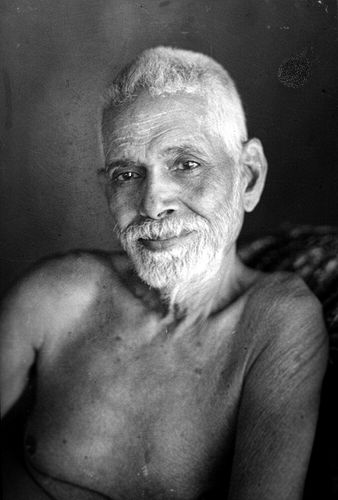
“The differences are the result of the sense of doership.
The fruits will be destroyed if the root is destroyed.
So relinquish the sense of doership.
The differences will vanish and the essential reality will reveal itself.
In order to give up the sense of doership one must seek to find out who the doer is.
Inquire within. The sense of doership will vanish.
Vichara (inquiry) is the method.”
Taken from Talks with Sri Ramana Maharshi, talk no. 429
Tom’s comments:
The root of suffering is the sense of doership, the sense that there is a doer-entity, the sense that you are a doer. The root is the notion ‘I am a doer’, the fruit is suffering and duality.
Let go of this sense of doership, either by simply relaxing and letting go, or, as suggested above, look and find out what the doer is. Look at your own direct experience: can you see the doer? Can you feel the doer? What does the doer look and feel like exactly? Where does the doer begin and end? How big is the doer? Where is the doer located?
When you look, as you keep on noticing, you may start to realise/see that there is no actual experience of a doer at all. All there are are sensations, feelings and thoughts. Specifically there may be the thought ‘I am the doer’ or ‘this is the doer’, but no actual doer is seen/experienced apart from the thought. The doer is seen to be an imagined entity. The doer (ie. ego) is revealed to be a fiction.
Ramana uses the word ‘reality’ above. What is reality? It’s just what’s left over when the sense of doership is seen through. It’s just what’s left over when false illusions are seen for what they are: false.
Who cares about Freedom/Enlightenment/Nirvana?
Who cares about Freedom/Enlightenment/Nirvana?
Who is it that cares? What is it that cares? Why do you want it?
Notice that this very teaching is pointing out that the entity that wants these things is itself a fiction. It is the false ego that cares. And the false ego does not exist. (Note that I use the word ‘ego’ as a synonym for ‘the doer’)
What do you imagine Freedom/Enlightenment/Nirvana to be?
How do you imagine it will benefit you? Any benefit you imagine enlightenment will give you is only temporary at best. What comes can also go. Freedom means that you are free from the need for any improvements to what is.
Will enlightenment make you happy?
Happiness can come, and it will also eventually go. Happiness and all states of mind are necessarily transient. Enlightenment is already present, and is not dependent on happiness or on your state of mind. Enlightenment doesn’t need to be happy.
Maybe you think enlightenment will give you the unshakable knowledge that you are immortal?
The problem here is that all knowledge is uncertain and can be doubted. Yes, all knowledge. If you think that you are Pure Consciousness, if you think it’s all about no-mind or no-ego, if you think it’s all about Jesus or Krishna, all of these are within the field of knowledge.
You may have cleverly deduced and convinced yourself that you are immortal using some kind of conceptual construct loosely based on your experience, but the truth is that you don’t actually know.
So, what happens when you die?
How can you know what happens when you die? No matter how you justify it, no matter how many psychic intuitions or spiritual experiences you have, the truth is that you don’t know for sure what happens after death. This question may perhaps be answered by science in the future, but we are not there yet.
Think of a time when you were utterly convinced something was true, but now you look back and realise how wrong you were. Knowledge also comes and goes. Perspectives change as we grow and mature and experience different things.
Enlightenment is beyond knowledge. Enlightenment does not depend on knowledge or the mind. Unlike knowledge and states of mind, Enlightenment cannot be attained – it is already here.
OK, then what’s left?
If enlightenment is not about attaining a particular state of mind or gaining some kind of knowledge, then what’s left? What’s left is simply what’s happening. That’s all. Enlightenment/freedom/nirvana is not about attaining anything at all. All we ‘know’ is whatever is happening is whatever is happening. Or, to be more accurate, whatever we perceive (to be happening) is what we perceive.
Pointing out mistakes
We can go a little further too: we can also point out mistakes in our thinking. If we think Father Christmas is real, we can notice and point out there is no conclusive evidence to support that, despite appearances to the contrary (eg. presents appearing beneath the tree on Christmas Day). Any happiness or pleasure we derive from believing in Father Christmas is similarly based on our wrong notions/illusion.
Similarly, if someone takes themselves to be a doer, an entity that is free to choose and take credit and blame for its actions, then we can point out that there is no evidence to support this position, despite appearance to the contrary. All suffering that results from belief in doership is similarly based on illusion.
Be honest and humble
So, we can ‘know’ (ie. perceive) whatever’s happening right now, and we can know what we don’t know.
Basically, let’s be honest and humble and not pretend we know things that we don’t. Let’s not pretend we are this or that, let’s not strive towards spiritual ideals which are just mental projections – it’s all fear based, ego-based.
No need to strive
Instead of striving towards projected notions of Enlightenment, why not look at where we are. Why not stay with what is?
The movement away from what is is based on aversion and fear. Can you see that? This movement away is the fear. This movement away is the suffering. It is all based on the notion ‘I am the doer’ or ‘I am the ego’.
When we stop striving, we become available to see things as they are, we become free to understand. When we see there is no ego/doer, there is no striving/desire. Even if there is desire, there is no identification with it, so there is no suffering.
Natural relaxation, emotions and intelligence
When we see that there is nothing to attain, we naturally relax. It happens by itself. As we relax, positivity and well-being flow into our system. We are free to be ourselves, which means we are free to let whatever happens happen – we have no choice in this anyway as there is no doer!
Emotions come and go: they are free to be felt and experienced.
The body-mind starts to balance itself, regulate itself and develop its natural sensitivity and intelligence.
Insights and understanding pours through, illusion falls away as it is seen through. Love starts to blossom.
Or maybe it doesn’t. It’s for you to find out for yourself, in freedom, if what I am saying is true.
The ‘miracle’ of life
Relax, notice and discover.
What are we left with? Just what’s happening. So simple, and beyond words. Just life, living, simply, spontaneously. The fact that it or anything is here at all is the ‘miracle’.
Watch Free Non-duality Livestream – Tom Das and Conscious 2
Watch my Livestream with Conscious 2 here, originally filmed on 18th February 2016:
Transforming pleasure into joy
Please click here to read my second article for naturalhealthstar.com. It’s called ‘Transforming pleasure into joy’.
[Update – the above link no longer works so I have posted the article below in full; the first article called ‘The Two types of Happiness’ can be read here.]
In a previous article I wrote about joy as opposed to pleasure. Joy, as I defined it, is a natural feeling of warmth and connectedness we feel when we are with someone we love, when we are doing something we love, or when we are with nature. Pleasure on the other hand, I defined as being to do with acquisition, such as acquiring possessions, or even more subtle ‘objects’ such as acquiring pride, power, sex, certain experiences or respect.
With joy, our sense of self or ego is dimished and so we feel whole. The barrier and resistance of the ego is lessened allowing joy to emerge. With pleasure our sense of self is reinforced and strengthened, and whilst this feels initially positive, it is actually trying to cover up a deeper sense of lack or emptiness and it ultimately destructive and self-isolating. Pleasure becomes addictive whilst joy is deeply soothing.
It’s worth pointing out that in different situations joy goes by different names. When we feel joy whilst looking at a piece of art or listening to music we call it Beauty. When we are with someone we call it Love. When it is through our work we call it Service or Vocation. It is all Joy. It is all Love. These all happen when the sense of self is no longer at play.
So if you want to explore this further I suggest the first thing to do is to simply notice this. Not change it, but just gently notice it. Notice what pleasure feels like, notice how it comes about, notice your thoughts, notice how your body feels, notice the circumstances that gave rise to it, notice how you feel afterwards – you get the idea. The same with joy. Don’t accept my descriptions, but discover for yourself what these two types of experience are like.
The tendency when hearing a teaching like this is to shun pleasure and try to do more joyous things. Whilst this is on the one hand commendable, I would also advise caution. The very desire to maximise joy is actually the same drive for pleasure only in a different guise. Now joy has become an object to be acquired, and this acquisitive desire is the characteristic of pleasure. If you have spent time exploring what joy and pleasure actually feel like in your body you will get an immediate sense of this. So in trying to seek joy, the naturalness of joy is transformed into seeking pleasure. Notice how subtle this is.
On the other hand, if you don’t try to seek or repress pleasure, and instead just look at it, just being with the feeling is actually a form of love, self-love. We can love ourselves, embrace ourselves and not judge or chastise ourselves for seeking pleasure. We can embrace and be with our pleasure seeking. We can accept ourselves for who we are right now, just as we may accept a child or pet animal who is playing up. We are no longer trying to acquire something, we are no longer trying to be joyous. We are also no longer judging ourselves as being good or bad. Instead we are loving ourselves as we are, we are being tender with ourselves and our emotions, and in doing so we transform pleasure into Joy.
Experiment with this if you want, and let me know how it goes.
Love and blessings to you
 Tom Das