Krishnamurti: to be aware of inattention is to be attentive.

Continuing the series of Krishnamurti posts this week, the following is written by Jiddu Krishnamurti, taken from BULLETIN 4, 1969:

The physical organism has its own intelligence, which is made dull through habits of pleasure. These habits destroy the sensitivity of the organism, and this lack of sensitivity makes the mind dull.

Such a mind may be alert in a narrow and limited direction and yet be insensitive. The depth of such a mind is measurable and is caught by images and illusions. Its very superficiality is its only brightness.

A light and intelligent organism is necessary for meditation. The interrelationship between the meditative mind and its organism is a constant adjustment in sensitivity; for meditation needs freedom.

Freedom is its own discipline. In freedom alone can there be attention. To be aware of inattention is to be attentive.

Complete attention is love. It alone can see, and the seeing is the doing.

Poetry: Know thyself

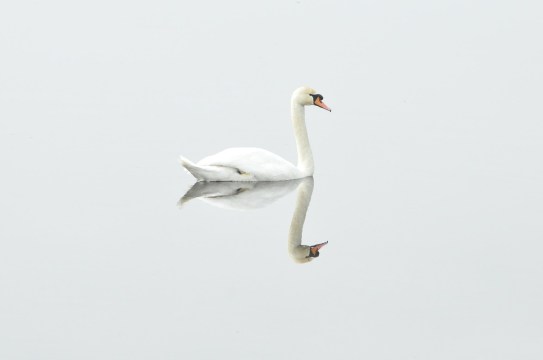
swan reflection

Not that which comes and goes,
But that which knows both comings and goings;

Not that which is confused or clear,
But that which sees both confusion and clarity;

Not that which is happy or depressed,
But that which knows both happiness and depression;

Not that which swells with pride, or is deflated by humiliation,
But that which sees both pride and humiliation, and their effects;

Not that which is damaged by disease or benefited by medicine,
But that which knows both disease and health;

Not that which has desires and fears,
But that which sees both attraction and aversion;

Not that which judges or is open-minded,
But that which knows judgement and open-mindedness.

Not that which thinks or acts,
But that to which both thoughts and actions appear;

Not the ear, tongue, skin, eyes or nose,
But that to which smell, taste, sensation, vision and sound appear;

That which, in our experience,
never changes,
is always present,
ever-aware,
and unblemished by experiences;

That which
looks with constancy,
is ever-patient,
unmoving,
always seeing things as they are;

That which
cannot be lost or removed,
is effortlessly present,
totally secure,
and is the innermost essence of your experience;

Know yourself to be that.

Creating then resolving the duality of awareness vs objects in awareness

The following are adapted from recent Facebooks posts of mine
http://www.facebook.com/tomdas.nd

The body-mind entity can accept, reject or be indifferent to things. This is relative acceptance and is an action that can be performed. Awareness is all-accepting, always embracing ‘what is’. This is total/absolute acceptance and is not something that you can do, but something that can be recognised as already being here.


Awareness cannot accept or reject anything, as it does nothing. It just is: present and aware. All actions occur at the level of the body and mind (and world).

Awareness could be said to unconditonally/choicelessly ‘accept’ everything that occurs within it, in the same way a mirror ‘choicelessly accepts’ the reflection within it.

…but actually, as this example illustrates, the mirror-like awareness is not actually doing anything apart from ‘being itself’.


In the way I speak about this, awareness cannot identify with anything. It is only the mind that identifies with/as the mind.

Or to put it differently, thought imagines it’s a thinker and believes itself.

Awareness is ever-free, just like the mirror in the example above


Through identifying with choiceless awareness/consciousness for sometime, the ego/doer is seen through and no longer identified with. Then the identification as being choiceless awareness/consciousness also can be dropped.

What we are left with is ‘just this’: simple, direct, beyond words. This is the ‘realm beyond verbal teachings’.
Here the apparent duality conceptualised by differentiating (viveka) between that-which-changes (objects) and that which doesn’t change in our experience (the subject, I) is resolved into non-duality.

Levels of reality

water oceanic
Are there levels of reality?

I have often seen people talk and write about various levels of reality. Typically, they talk of the level of the absolute and the level of the relative. On the level of the absolute, everything is one, so they say. Whereas on the relative level, the level of being a person different rules apply. On the relative level differentiation exists, we talk to each other, we love one another, we get annoyed and irritated, we buy fast-food from time to time, and yet ultimately, at the highest and truest level we are told this is all oneness.

Well let me start off by saying that I reject the notion of levels of reality. I think reality has various aspects, but not levels per se. Now this may seem like a minor difference, a play of semantics if you will, but let me explain the difference.

Talking about the same thing in different ways

When I say reality has various aspects, all I really mean is that there are various ways you can talk about reality – actually there are various ways you can talk about anything. That doesn’t mean there are different levels of reality.

Lets take a simple example: lets take a human body. You can talk about a human body  in different ways. You can talk about it in terms of its size: you can say it is big, small, medium. You can talk about its age: is it a young or older body. You can talk about it in terms of organ systems such as the cardiovascular system or digestive system and how they function and describe the body that way, or you can talk about its anatomy and how various parts of it fit together. You can talk about the body’s name and culture – eg. maybe it is called John and it comes from the United Kingdom, you can talk about its occupation. You could talk about its fashion sense, its muscularity…

…ok ok, hopefully you get the idea: there are different ways you can talk about things. There are different conceptual frameworks from where we can view the body. And this is true for anything. We can talk about a pebble in terms of its age, size, geology or how good it would be to skim on a lake’s surface. We can talk about a lake in terms of its scenic beauty, how choppy its water are, its phosphorus content, or remark how it is all made up (mainly) of water.

Now, how many levels does a body or a pebble have? It doesn’t actually have any levels at all – there is only one body or stone (in the above examples) – it’s just that we can talk about them in various ways. In the same way there are no levels in reality, just different ways of talking about it.

No particular conceptual framework is intrinsically higher than another

Also note that no particular way of talking about the body or a pebble is intrinsically better that any other way. It just depends on what you want the conceptual framework to achieve. For example, if you want to skim a stone on the surface of a lake, then it’s less useful to talk about the geology of the stone, and more useful to look at it in terms of its shape and size with respect to achieving your goal (skimming it across the lake). You can’t legitimately claim that one way of viewing something is intrinsically higher and another way is lower, which is something you often hear when talking about ‘ultimate reality’ or the ‘highest level’. It just depends on how well the way you are conceptualising and viewing the object(s) in question fits in with your goal.

It depends on what you want to achieve

Similarly, it is not necessarily better to talk about the body in terms on physiology or organ systems compared to it’s occupation or fashion sense. As previously stated, it just depends on what you want to achieve. If the body has a disease, then understanding the physiology and how to correct any imbalance or defect in this is useful. Conversely if you are going out on a first date, then perhaps a degree of fashion sense would be useful.

No paradoxes, no contradictions

Also there in no contradiction in talking about a single object in different ways depending on the context. There is no paradox that a stone has both an age and a shape, or that a river is a single system made up of a variety of different things, all of which are in motion. There is a consistent underlying reality that underpins the various ways we talk about it. No contradiction or paradox at all.

Different ways of talking about the same experience

Remember, what we are talking about here is our experience of reality. Our reality is our experience – that’s all we know. We can talk about how everything we perceive is non-different to our consciousness, and we can also talk of how things interact within this consciousness, and the rules and consequences thereof. These are just different ways of talking about our experience and our experiences. No particular way is higher or lower, and there are no actual ‘levels’ that exist apart from our conceptualisations.

The description is not the described

We can chose how to conceptually carve up and talk about our experiential reality in order to achieve certain specific aims. To that end these conceptual maps are useful and often necessary. However we must not mistake any particular conceptual map of (our experience of) reality for reality, just as no particular way of describing the body is the body itself.


Freedom is Absolute Total Forgiveness

(This question is continued from a prior post: Responsibility: if there is no doer and no-self…then what about responsibility?)

Question: OK, you mentioned total forgiveness? That’s confused me. Why do you say that?

Tom: Well everything is just unconditionally accepted, choicelessly. That’s just the way things are. Whatever happens is whatever happens, and in that sense it is totally accepted regardless of what the body-mind thinks of it.

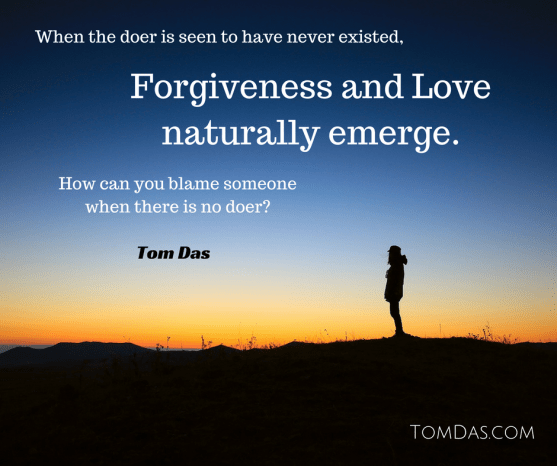
You could say our naturally awareness accepts and ’embraces’ everything within that happens within our awareness. In that sense there is constantly total forgiveness, or total  love, not the emotional love or forgiveness, though these phenomena tend to arise more frequently, but the choiceless acceptance/love/forgiveness of whatever is happening.

forgiveness-and-love-naturally-emerge

Heart-Opening, Non-Duality & Freedom

unafraid2

(Continued from a previous post: Responsibility: if there is no doer and no-self, and if there no nobody here doing anything, then what about responsibility?)

Question: You mentioned earlier that the heart opens? That sounds rather fluffy and vague to me – what does it mean?

Tom: Yes, I know, it’s a bit of a vague term, but I like it! What I call heart opening is not the same as Freedom – it’s important to realise that – but there is a relationship between the two. The heart can open to a large extent without Freedom being realised, and conversely Freedom can be realised and the heart not be open. However the heart can only really fully open when Freedom has been realised, and by that I mean when the notion and sense of doership has been seen through and seen to be false.

So what is heart opening? Well it happens differently with different people, depending on their conditioning, but essentially it is an openness of the emotional centre and a tendency towards feeling open, loving, peaceful and joyous.

Question: What do you mean by ‘openness of the emotional centre’?

Tom: I mean a willingness to feel one’s feelings, really feel what you’re feeling. When this happens, when we allow feelings to come and go, over time our emotions start to balance out and a feeling of wellbeing and love can start to naturally emerge.

We start to feel happier, more grateful, more loving, kinder, and more considerate. A sense of wellbeing becomes our norm. These are the characteristics of an open heart, a loving heart, and as I said, it can occur before of after enlightenment (realising Freedom), or not at all.

Q: Does that mean that you become unconditionally loving all the time?

Good question. Of course, like all subtle objects (such as emotions, feelings and mental states), emotional love and compassion also come and go. This is quite natural. You are not necessarily loving 100% of the time, far from it! You remain thoroughly human: you can get irritated by relatively superficial things, you may feel grumpy if you haven’t had enough sleep, but the tendency is more towards those loving emotions.

You see in Freedom it doesn’t matter: you are not trying to be loving or kind, you are not trying to open the heart. It’s something that can’t be forced, and the heart is naturally more open at some times compared to at other times. That is fine, and that’s just how it goes. Sometimes it’s good for the heart to be closed. But, when it’s safe to do so, we can allow ourselves to feel whatever we are feeling, not pushing ourselves, not forcing our heart open or becoming overly sentimental, but by just being real with who we are at this moment in time.

This willingness to feel is a form of fearlessness. We are unafraid to feel, we are unafraid to feel unhappy, we are unafraid to feel even fear. When we are essentially unafraid of our feelings, we start to become extraordinarily sensitive. Lots of emotions and feelings can flood in, feelings we may have held back and suppressed for many years. Energetically and emotionally this can be a time of great ups and downs in our ‘spiritual-emotional’ journey.

Our emotional apparatus, over time, becomes more sensitive and we learn who we are on an emotional level. Over time our emotions start to balance our and come into alignment with the body and the world. At this point we can learn to better trust our emotions as a source of intelligence and allow them to guide us in our actions and relationships.

Q: Did you say that heart opening can come before or after Enlightenment? (To be continued in a future post)

Q: I’ve noticed that I often feel less than I did before, for example I care less about some things now (To be continued in a future post)

Is everything really consciousness?

consciousness buddha.jpg

Lots of spiritual teachers and teachings seem to be saying all there is is consciousness. But is this really true? And even if it was true, would we be able to know this as being true?

From the point of view of experience

Firstly, from the point of view of our experience, yes, everything is consciousness. Whatever you look at, smell, see, touch, feel, think or imagine, etc, appears within your consciousness or awareness. And all these things appear as modulations of that consciousness, so in effect, our entire experience is nothing but consciousness.

Also we cannot directly know or experience anything or go anywhere that is not within our consciousness. If we did then we would, by definition, be conscious of it, and so our experience of it would be consciousness.

Everywhere we go, no matter what we experience, consciousness is, it is always present, effortlessly shining.

So, there we have it. Everything is consciousness. Right? Well…

From the point of view of reality

Just because everything you experience is consciousness, doesn’t mean that everything is consciousness. You see, in one way this is just a play on words. In the way we are using the words, experience and consciousness are synonyms. You cannot have experience without consciousness. If you are conscious you are experiencing. Think about it. Can you have one without the other? So of course, in terms of experience everything is consciousness. But it’s a bit like saying in terms of vision everything is seeing.

You don’t have to be a genius to realise there may be things going on that we are not conscious of, and perhaps we will never be conscious of. From what we know of the universe (via our consciousness!) we know it is vast and complex. Of course all this vastness could be just all happening within our consciousness only, but we don’t know that for sure. It is easily foreseeable that there may exist something beyond our consciousness, something we can never sense (be conscious of) or understand.

From the point of reality, we do not know if all there is is consciousness, and to say that everything is consciousness is going too far. We can only say everything is consciousness in terms of our own experience, but not in terms of reality. If you think that everything is consciousness (and by implication that nothing exists outside of consciouness), I would say that is a belief. Ask yourself, do you know that for sure? How can you know that for sure?

Why is this important?

Does this actually matter? If all we experience is consciousness, then does it matter? If there is something beyond consciousness but we are not aware of it, who cares, right? Well, to me at least, it does matter. If you are interested in what’s true it does matter. If you are a spiritual seeker trying to figure this all out and it doesn’t make any sense, then it does matter. If you are interested in seeing through all false beliefs and discovering a genuine freedom, then yes, it does matter. And if you are interested in science and reducing human suffering through technology based on scientific discoveries, then yes, it does matter.

False beliefs breed suffering as they inevitability conflict with what is true, and false beliefs impede genuine philosophical, ethical and scientific inquiry. Beliefs like this affect how we approach and respond to life and how we treat each other. It affects the philosophical basis upon which scientific progress is made, and so it can affect the technologies we develop and how we develop them. The overall result of clinging to false beliefs is to the detriment of us as individuals and our society at large.

Does that mean that not everything is consciousness?

So, back to consciousness. Does that mean that not everything is consciousness? No! Perhaps everything is consciousness! Perhaps it isn’t. The point is that we do not know. Everything may or may not be consciousness. We don’t know. It’s actually a scientific question and we currently don’t have the evidence either way. It may be impossible to know, as how would you know that there is nothing beyond consciousness?

The point is we should be honest, with ourselves and each other, and not cling to beliefs unnecessarily and unknowingly. Whilst beliefs can be used to make us feel better and give us strength during hard times, clinging to them and thinking they are definately true and that we are definately right causes more suffering in the long term, both for us and often for those around us.

Can the teaching ‘everything is consciousness’ be useful?

Ironically, yes. Even though ultimately we don’t know, the teaching that everything is consciousness can still be useful. How so? Well the teachings aim to undermine the belief in a separate self, or the notion of being an independent doer-entity, and in that regard this philosophical idealism of everything being consciousness can be useful. The idea is that the teaching is an antidote to a fixed belief. More on how that works here.  The key is that once the job of the conceptual teaching is done, we don’t cling to this new concept which simply becomes a new problem and a new way of perpetuating the ego.

The consciousness teachings or awareness teachings, as I call them, can also point to a still-point in our experience that is always present, at least whilst we are awake. It is that which never changes and is always ever-present, un-touched and ever-aware. Recognising this aspect of our being can be very liberating and can give us the emotional security to open up to our thoughts and feelings, and allow our emotional-spiritual hearts to open, and can allow us to feel happier and whole.

What about Freedom?

So if we don’t know whether or not everything is consciousness, what do we do now? A part of Freedom, which is already here, is that everything is allowed. It’s ok to not know. That’s ok. There are lots of things we do not know, many things we will never know, and probably many things that are impossible for us to know. Freedom doesn’t mind. It’s just the way things are.

J. Krishnamurti: The beauty of listening

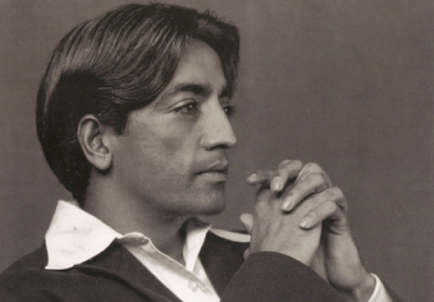
krishnamurti

‘The beauty of listening lies in being highly sensitive to everything about you: to the ugliness, to the dirt, to the squalor, to the poverty about you, and also to the dirt, to the disorder, to the poverty of one’s own being.
When you are aware of both, then there is no effort, that is, when there is an awareness which is without choice, then there is no effort.’
Jiddu Krishnamurti, The Collected Works, Vol. XV, page 61 ‘Choiceless Awareness’

Tom’s Comments:
Not trying to avoid the bad and ugly, not striving to reach the good and beautiful, the ego is no longer at play. We come into contact with things as they are, reality, the living truth. We are no longer afraid of what is, we are no longer trying to escape ourselves.

Then we can see that which already is, and always has been. How can this be put into words? Try it and see for yourself, then you too will be beyond the need for these pathetic words.