Listen to those crows. Do listen. If you listen completely, is there a centre from which you are listening? Your ears are listening. There is the noise, there is the vibration and all the rest of it, but there is no centre from which you are listening. There is attention.
Therefore if you listen completely, there is no listener; there is only the fact of that noise. To listen completely you must be silent, and that silence is not something in thought, created by thought.
When you listen to that crow that is making the noise before it goes to sleep, so completely that there is no listener, you will see that there is no entity that says, ‘I am listening.’
Listening is the same as seeing. It goes to the heart of the teachings, it is a complete teaching in itself. If this one teaching is fully understood, penetrated through and through, then that is the entire teaching.
When you truly listen, you are simple seeing things as they actually are, not as you project or interpret them to be. Without the verbiage of your mind with all its opinions and judgements, you see life as it truly is.
This is the living truth. And in that truth it can be seen there is no doer or thinker. The entity that we take ourselves to be can be directly seen to be false – it never existed apart from in our thoughts and imagination.
Stop thinking, and end your problems.
What difference between yes and no?
What difference between success and failure?
Must you value what others value, avoid what others avoid?
How ridiculous!
Tao Te Ching, verse 20
Tom’s comments:
Free of thoughts, where are your problems?
We do not need to shun thought in its entirety, just not buy into the suffering it creates through comparison and moral judgement.
We can see through the values, ideals and standards that other people and society dictate to us. We can see through the received wisdom of the day.
We can let go and be real, discover who we truly are – we can discover what it is to be human for ourselves and not simply force ourselves to fit into an ideological mould, no matter how reasonable it sounds. We can be who we are.
And who are we? Are we separate from the world that gave birth to us? Are we separate from the environment that shaped and influences us? Are we wholly good or bad? 0r can good come from bad and vice versa? Can failure lead to success?
I put it to you: all things are interdependent, and no things exist by themselves.
just for the purpose of breaking through obsessions, doubts,
intellectual interpretations & egocentric ideas
Yuanwu (1063-1135)
Tom’s comments:
If there was ever a dogma in Zen Buddhism* (and there is no dogma by the way) it is that there is no fixed Zen teaching. In Yuanwu’s letters, from which this quote was taken, Yuanwu gives us a no frills introduction and foray into the heart of Zen.
And so we hear of zen teachings ranging from reading the scriptures to simply hearing the sound of a ringing bell; from seeing an object drop to the ground to the admittedly extreme physical blows that are often dished out (and received) by zen masters as a form of teaching – not a method I would advocate, I hasten to add.
So the teaching methods and expressions of truth may vary from person to person and from time and place, forged out of the cultures and characters of the moment. This is why the teaching reinvents itself from generation to generation, and varies from teacher to teacher, even when the core teaching and core ‘realisation’ is the same.
*Yuanwu was actually Chinese, so strictly speaking he is a Chan Master. When Chan Buddhism spread to Japan it became known as Zen, Zen simply being the Japanese word for Chan.
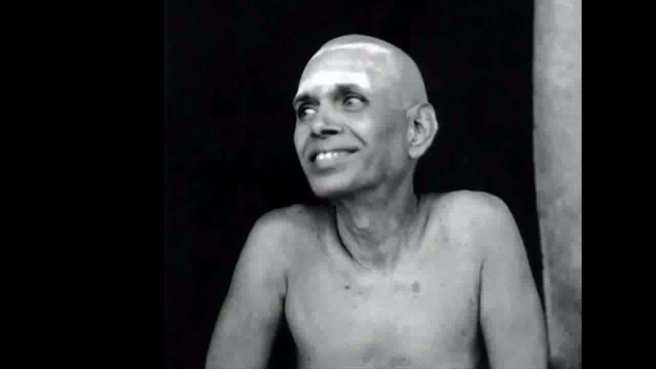
The following are verses from Guru Vachaka Kovai, one of the most authoritative texts of Ramana Maharshi’s teachings. The text was written by his disciple Muruganar and thereafter thoroughly checked and amended by Ramana. Here are some verses on the root cause of suffering, our notion of being a doer, with some commentary from Sri Sadhu Om, another devotee of Ramana:
466 The pure Bliss of peace will shine within only for those who have lost the sense of doership. For, this foolish sense of doership alone is the poisonous seed that brings forth all evil fruits.
467 Instead of going on, driven by the restless thoughts, performing actions such as ‘I should do this, I should give up that’ as if they were worthy to be done, acting according to how the Grace of God, the Lord of our soul, leads us, is the right form of truly worshipping Him
476 Whether or not one is performing actions, if the delusion of individuality – the ego, ‘I am the doer of actions’ – is completely annihilated, that is the attainment of actionlessness.
Sri Sadhu Om’s Comments: People generally think that the attainment of actionlessness is a state in which one should remain still, giving up all activities. But this is wrong. Sri Bhagavan Ramana proclaims that the loss of doership alone is the right kind of actionlessness, and this alone is nishkamya karma – action done without any desire for result.
470 The Lord who has fed you today will ever do so well. Therefore, live carefree, placing all your burden at His feet and having no thought of tomorrow or the future.
471 Know well that even performing tapas (spiritual practice) and yoga with the intention ‘I should become an instrument in the hands of the Lord Siva’ is a blemish to complete self-surrender, which is the highest form of being in His service.
Sri Sadhu Om’s Comments: Since even the thought ‘I am an instrument in the Lord’s hand’ is a means by which the ego retains its individuality, it is directly opposed to the spirit of complete self-surrender, the ‘I’-lessness. Are there not many good-natured people who engage themselves in prayers, worship, yoga and such virtuous acts with the aim of achieving power form God and doing good to the world as one divinely commissioned? It is exposed here that even such endeavours are egotistical and hence contrary to self-surrender.
Meditation is never the control of the body. There is no actual division between the organism and the mind. The brain, the nervous system and the thing we call the mind are one, indivisible. It is the natural act of meditation that brings about the harmonious movement of the whole. To divide the body from the mind and to control the body with intellectual decisions is to bring about contradiction, from which arise various forms of struggle, conflict and resistance.
Every decision to control only breeds resistance, even the determination to be aware. Meditation is the understanding of the division brought about by decision. Freedom is not the act of decision but the act of perception. The seeing is the doing. It is not a determination to see and then to act. After all, will is desire with all it’s contradictions. When one desire assumes authority over another, that desire becomes will. In this there is inevitable division. And meditation is the understanding of desire, not the overcoming of one desire by another. Desire is the movement of sensation, which becomes pleasure and fear. This is sustained by the constant dwelling of thought upon one or the other.
And meditation is the understanding of desire, not the overcoming of one desire by another.
Meditation really is a complete emptying of the mind. Then there is only functioning of the body; there is only the activity of the organism and nothing else; then thought functions without identification as the me and the non-me. Thought is mechanical, as is the organism.
Meditation really is a complete emptying of the mind. Then there is only functioning of the body
What creates conflict is thought identifying itself with one of its parts which becomes the me, the self and the various divisions in that self. There is no need for the self at any time. There is nothing but the body, and freedom of the mind can only happen when thought is not breeding the me.
What creates conflict is thought identifying itself with one of its parts which becomes the me…
There is no self to understand but only the thought which creates the self. When there is only the organism without the self , perception, both visual and non-visual can never be distorted. There is only seeing ‘what is’ and that very perception goes beyond what is. The emptying of the mind is not an activity of thought or an intellectual process. The continuous seeing of what is without any kind of distortion naturally empties the mind of all thought and yet that very mind can use thought when it is necessary. Thought is mechanical and meditation is not.
There is only seeing ‘what is’ and that very perception goes beyond what is.
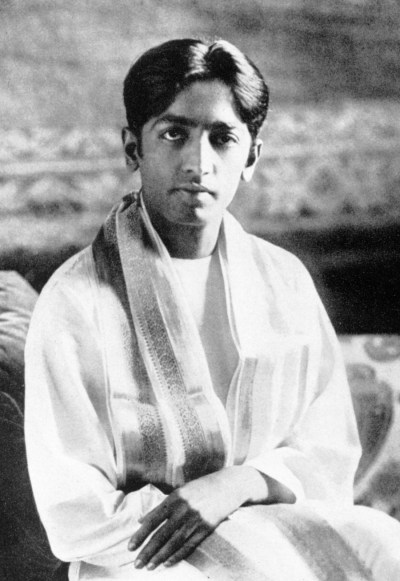
Excerpt taken from J. Krishnamurti, ‘The Beginnings of Learning’
My awakening experience whilst reading Krishnamurti:

 Stop thinking, and end your problems.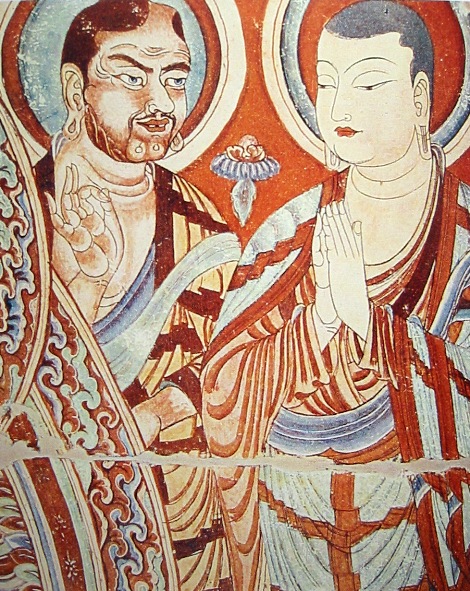


 Tom Das